Underwatering on Philodendron Gloriosum: Causes, Checks &
Quick answer
Underwatering on Philodendron Gloriosum shows when the top 3–5 cm stays bone dry too long and velvet leaves go limp with crispy edges. First step: water thoroughly until runoff, empty the saucer, and resume checking the top layer every few days.
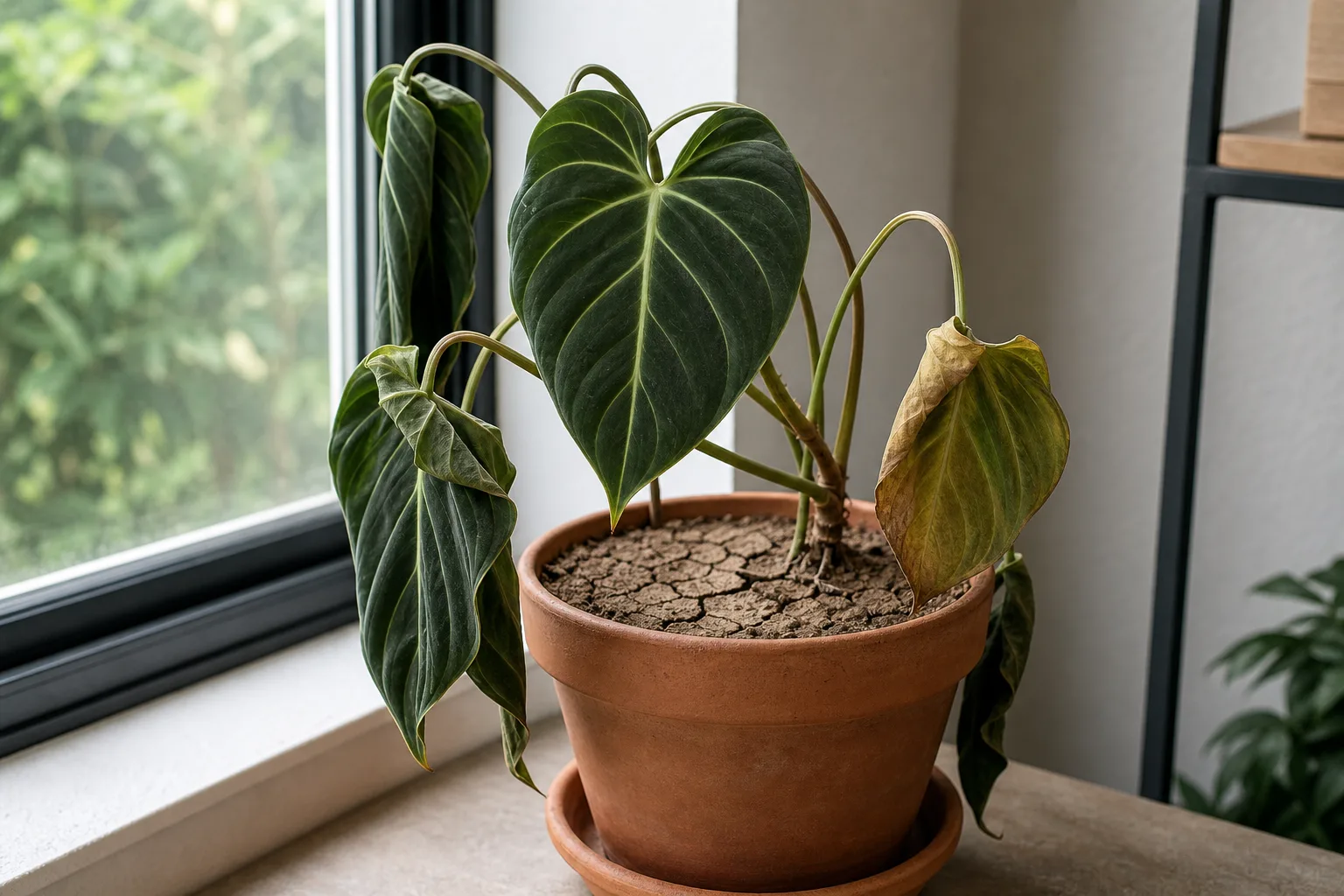
Underwatering on Philodendron Gloriosum: Causes, Checks & Fixes
This guide covers underwatering on Philodendron Gloriosum. See also the general Underwatering guide, watering, and light pages for this plant.
Underwatering on Philodendron Gloriosum: Causes, Checks & Fixes
Quick answer
Underwatering on Philodendron Gloriosum shows when the top 3–5 cm stays bone dry too long and velvet leaves go limp with crispy edges. First step: water thoroughly until runoff, empty the saucer, and resume checking the top layer every few days.
Use this page when the pot is light, mix is dry throughout, and the rhizome is still firm-classic thirst after missed checks or rot-anxiety withholding. Use the watering guide instead when you need the normal dry-down rhythm, seasonal frequency, and wide-pot geometry-not acute drought rescue. Use wilting when you cannot tell drought from wet-soil root failure; use dry-hydrophobic-soil when water runs through but the rhizome zone stays dry.
| Check result | Most likely cause | First action |
|---|---|---|
| Light pot + dry top 3–5 cm + firm rhizome | Underwatering (this page) | Thorough soak until runoff; drain saucer |
| Heavy pot + wet mix + sour smell | Root or rhizome rot | Stop water; open root-rot guide |
| Water runs through; center mix still dry | Hydrophobic soil | Bottom-soak per dry-hydrophobic-soil guide |
| Normal moisture + afternoon limp near vent | Heat or low humidity | Move away from draft; see low-humidity guide |
Gloriosum stores moisture in its horizontal rhizome-the thickened stem from which leaves emerge on creeping philodendrons-which leads some growers to underwater out of rot fear. Unlike upright self-heading philodendrons that tolerate buried stem tissue differently, this terrestrial crawler needs the rhizome on or above the mix surface with regular root-zone drinks when the top layer dries. Large velvet leaves transpire steadily in bright light; when the mix desiccates for too long, wilting occurs even on tough houseplants. Underwatering and overwatering both cause limp foliage-pot weight and top-layer moisture separate them.
A real recovery pattern
In March 2025, a single-leaf Gloriosum in a wide 6-inch pot returned from two weeks of travel neglect with a light container and a fully limp velvet blade. The top 3–5 cm was dusty dry; the creeping rhizome felt firm with no sour smell at drainage. A 45-minute bottom soak darkened the mix throughout, the saucer was emptied, and the petiole firmed within 18 hours. The leaf held turgidity through the next normal dry cycle-confirming simple drought, not rhizome rot. On this slow crawler with one prominent leaf, that overnight perk is the signal that roots still work.
Why Philodendron Gloriosum gets underwatered
Rot anxiety after a rhizome scare. After wet rhizome tissue or early rot, growers sometimes withhold water until the entire wide pot is desiccated. Gloriosum needs the top 3–5 cm to dry-not the whole root zone to turn dusty for weeks. That swing mirrors overwatering damage from the opposite extreme: both extremes stress roots on moisture-sensitive philodendrons.
Irregular checking in busy seasons. Because the plant grows slowly and may hold only one or two prominent leaves, each leaf shows stress clearly when dry-there is no spare foliage to hide drought.
Hydrophobic aged mix repels water. Surface watering runs down the pot sides without rewetting roots. Old peat-heavy substrate in a wide shallow pot can look “watered” while the rhizome zone stays dry-water can channel between the pot wall and a dried root ball instead of penetrating the center. That crossover belongs on the dry-hydrophobic-soil guide, not repeated surface splashes.
Low humidity plus missed watering. Tips crisp while the plant is also root-dry. Dry air causes brown leaf edges independently, but drought adds limp petioles and light pot weight-see low-humidity when humidity alone is the driver.
High light without matching water. A Gloriosum moved closer to a window for bright indirect growth may need water every 7–10 days when the top layer dries. A dim-corner specimen on a 14–21 day rhythm is not comparable-light shifts interval length, not the dry-top rule.
Winter dormancy stretch. Shorter days slow growth and evaporation; many keepers still water on summer memory and accidentally dry the mix for too long. Philodendrons prefer evenly moist but not wet soil-in low winter light, probe more often rather than assuming the rhizome alone will carry the plant through a month without drinks.
What underwatering looks like on Philodendron Gloriosum
Typical patterns:
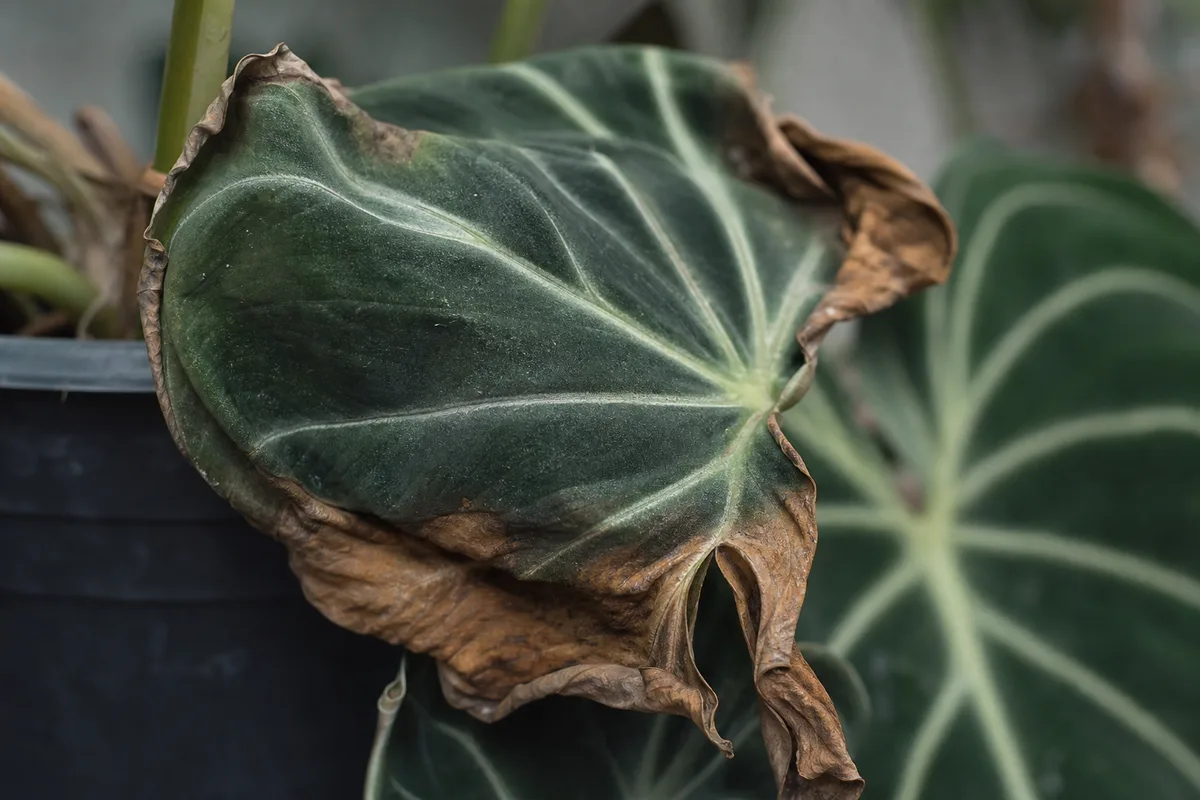
Underwatering symptoms on Philodendron Gloriosum - compare with healthy tissue on the same plant.
- Limp, drooping velvet leaves; pot feels unusually light
- Top 3–5 cm and deeper zones dusty dry-not merely surface dust on an otherwise damp core
- Crispy brown tips or edges on otherwise green leaves (permanent damage once desiccated)
- Slow or stalled new leaf development from the rhizome tip
- Mix shrinks away from wide pot edges; water runs straight through
- Firm rhizome (distinguishes from rot-no sour smell)
Underwatering rarely causes widespread yellowing with wet soil-that pattern points to overwatering instead. Gradual petiole hang without full collapse may fit drooping leaves better than this acute thirst page.
How to confirm the cause
- Top 3–5 cm probe - Bone dry throughout confirms drought path.
- Pot weight - Light compared with post-watering weight.
- Smell - Neutral or dry-earth smell, not sour.
- Rhizome firmness - Firm tissue supports underwatering over rot. Wear gloves if handling stressed tissue-philodendrons contain calcium oxalate crystals toxic to cats and dogs.
- Water absorption test - Pour slowly; if water channels out sides, mix may be hydrophobic-defer to the dry-hydrophobic-soil guide.
If soil is wet and heavy with yellow leaves, switch to overwatering or wilting wet-soil diagnosis-do not soak again.
First fix for Philodendron Gloriosum
Water thoroughly until water runs from drainage holes, then empty the saucer completely.
For hydrophobic mix that rejects the first pass, bottom-water: set the wide pot in a tray of room-temperature water for 30–60 minutes until the surface darkens, then remove and drain. Bottom watering may take an hour or more on stubborn dry root balls in shallow wide containers.
Do not leave the plant in standing water overnight-that swings toward overwatering. One full rehydration event, then return to top-layer dry checks per the watering guide.
Step-by-step recovery
- Soak thoroughly once (top-water or bottom-water as needed).
- Move to stable bright indirect light; avoid hot direct sun while stressed.
- Run a humidifier at 60–70% to reduce further leaf desiccation.
- Check top 3–5 cm every three to four days until you learn the rhythm-often every 10–14 days in active growth, longer when winter light slows evaporation.
- If mix repels water repeatedly, plan repot into fresh chunky aroid mix per the overview soil notes at the next opportunity.
- Trim fully crispy tips only for appearance after hydration stabilizes-velvet margins do not green up again.
Leaves should perk within one to two days if roots are intact. New velvet leaf development from the rhizome tip confirms long-term recovery over weeks.
What not to do
- Do not sprinkle small sips daily-that wets the surface without rewetting the rhizome zone evenly.
- Do not soak continuously for days out of guilt; one thorough drink plus drainage is enough.
- Do not fertilize a drought-stressed plant immediately.
- Do not confuse humidity misting with root-zone watering.
- Do not assume the rhizome “stores enough” to skip weeks of water in bright light-the reserve buffers short gaps, not chronic root-zone drought.
- Do not water a wilted Gloriosum when soil is already wet-open wilting for the wet-soil paradox instead.
How to prevent underwatering next time
Adopt a consistent top 3–5 cm check habit from the watering guide. Water when dry, not on calendar memory. Refresh mix every one to two years so it absorbs evenly in the wide shallow geometry this creeping philodendron needs. Keep 60–70% humidity to reduce leaf-edge loss while roots stay on schedule.
In brighter spots, expect shorter intervals between drinks. When days shorten, probe more often rather than assuming summer frequency still applies-philodendrons grow best with steady moisture during active seasons and slower dry-down in dim winter corners.
After a rhizome scare, owners often underwater into repeat drought cycles-trust firm roots and the probe, not fear alone.
When to worry
Escalate if leaves do not perk 48 hours after proper watering-possible root loss from prior rot or extreme drought damage. Repot to inspect if limp persists with newly moist mix. Hydrophobic soil that cannot be rewetted after two thorough soaks needs repotting per the dry-hydrophobic-soil guide, not repeated surface splashes.
If wet heavy soil, sour smell, or soft rhizome accompany collapse, stop soaking and open the root-rot guide the same day.
Related Philodendron Gloriosum guides
- Gloriosum overview - crawler biology, humidity targets, and full care map
- Watering - dry-down checks that prevent both drought and wet rhizome
- Wilting - wet-vs-dry collapse when you cannot tell thirst from root failure
- Overwatering - chronic wet mix before acute collapse
- Dry hydrophobic soil - runoff with dry rhizome zone
- Drooping leaves - gradual hang vs. acute thirst
- Low humidity - crispy margins without a light pot
- Root rot - trim, repot, and rhizome-surface rescue protocol
Conclusion
Underwatering on Philodendron Gloriosum is missed drinks and dry mix-not inherent drought tolerance. Confirm with a light pot, dry top 3–5 cm, and limp leaves on a firm rhizome; fix with one thorough soak and steady checks from the watering guide. If the pot stays heavy, mix smells sour, or the rhizome softens, stop soaking and follow overwatering or wilting wet-soil paths instead. When water runs through but leaves stay limp, open the dry-hydrophobic-soil guide before assuming another top splash will work.