Wilting on Philodendron Gloriosum: Causes, Checks & Fixes
Quick answer
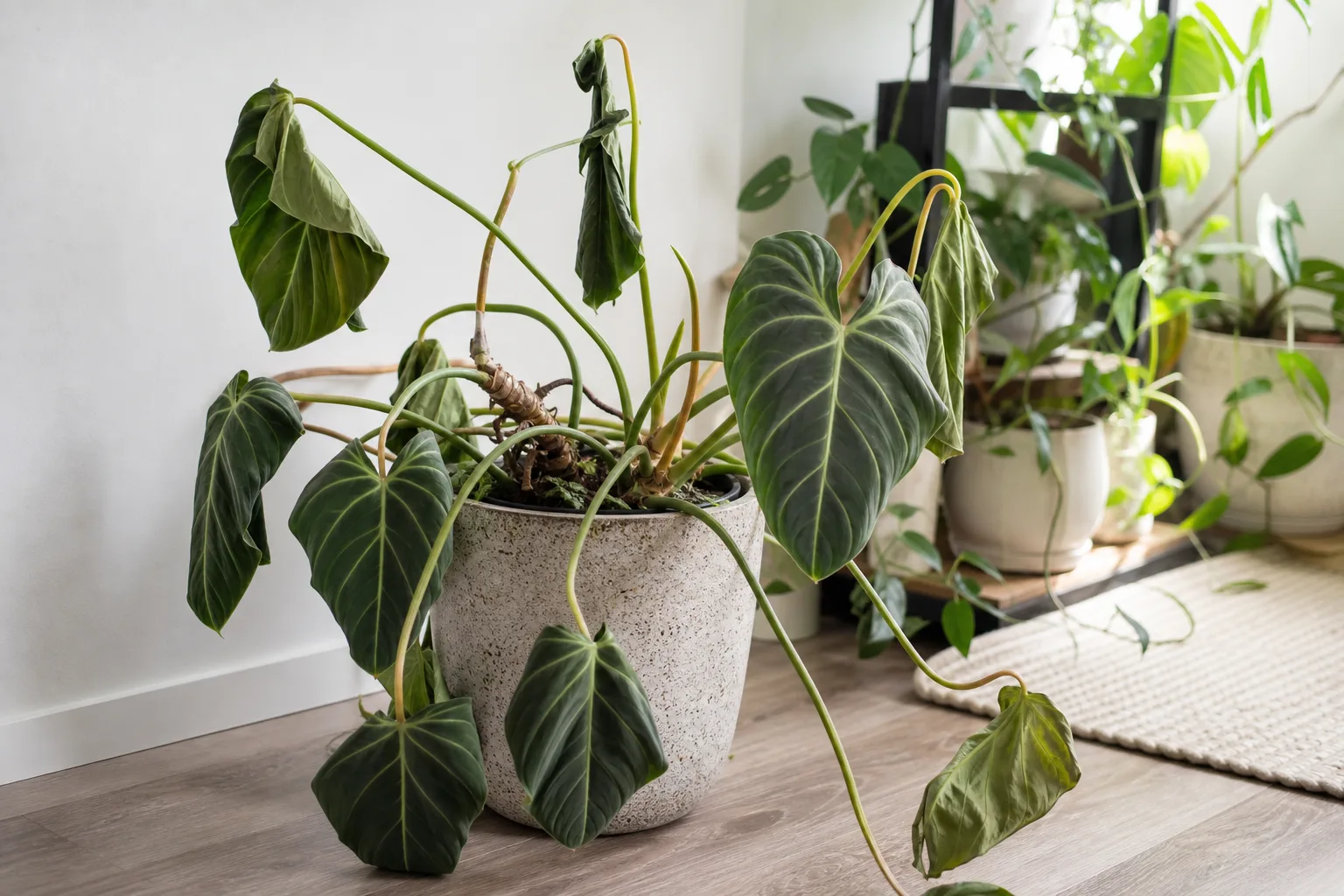
Wilting on Philodendron Gloriosum with a light dry pot means underwatering-water thoroughly once. Wilting with wet heavy soil means root failure-stop watering and inspect the rhizome the same day.
Wilting on Philodendron Gloriosum: Causes, Checks & Fixes
This guide covers wilting on Philodendron Gloriosum. See also the general Wilting guide, watering, and light pages for this plant.
Wilting on Philodendron Gloriosum: Causes, Checks & Fixes
Quick answer
Wilting on Philodendron Gloriosum with a light dry pot means underwatering-water thoroughly once. Wilting with wet heavy soil means root failure-stop watering and inspect the rhizome the same day.
Use this page when the velvet leaf or petiole loses turgor quickly-limp, collapsed tissue that may have looked fine yesterday. Use the drooping-leaves guide instead when foliage hangs gradually over several days without full collapse and you need petiole-angle patterns rather than acute turgor loss.
Wilting is the plant losing turgor pressure-the internal water tension that keeps leaf cells firm. On many indoor plants, wilt indicates drought or roots too damaged to absorb water from wet soil. Gloriosum’s single large velvet leaf makes wilt dramatic: unlike a multi-leaf climber, losing turgor on the only expanded leaf cuts photosynthesis to near zero until the rhizome tip produces the next cataphyll. Do not panic-water or panic-withhold without checking the root zone first.
| Check result | Most likely cause | First action |
|---|---|---|
| Light pot + dry top 3–5 cm | Underwatering | Thorough soak until runoff; drain saucer |
| Heavy pot + wet mix + sour smell | Root or rhizome rot | Stop water; unpot per root-rot guide |
| Normal moisture + afternoon limp near vent | Heat or dry-air stress | Move away from draft; raise humidity |
| Water runs through; center mix still dry | Hydrophobic soil | Bottom-soak per dry-hydrophobic-soil guide |
What wilting looks like on Philodendron Gloriosum
Gloriosum is a terrestrial crawler with one prominent velvet heart leaf at a time. Wilt patterns map to cause:
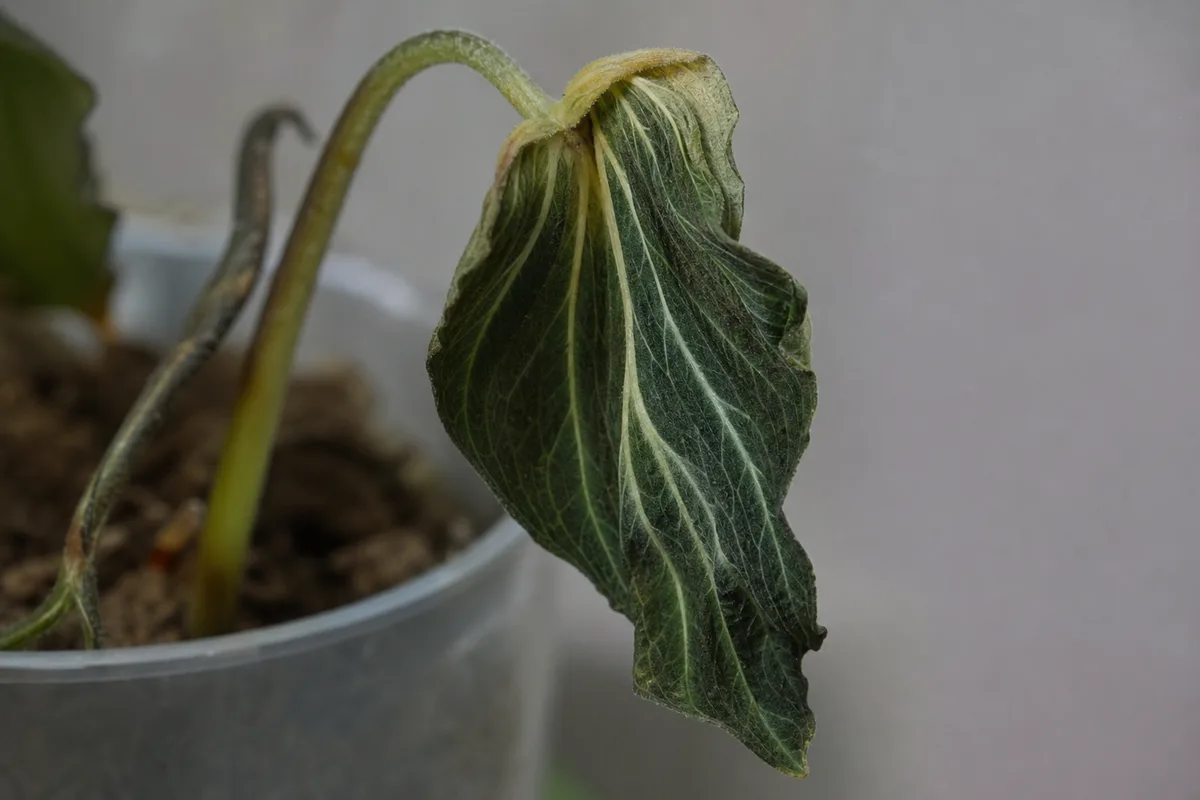
Wilting symptoms on Philodendron Gloriosum - compare with healthy tissue on the same plant.
Drought wilt
- Petiole and blade go limp; leaf may touch the pot rim
- Pot feels light; top 3–5 cm (1–2 in.) is dry
- Velvet surface dulls; edges may crisp if drought continued
- Often perks within 24–48 hours after one thorough soak if roots are firm
Wet-soil paradox wilt (root or rhizome failure)
- Same limp collapse while mix stays damp or heavy
- Yellowing may join wet wilt; sour smell at drainage
- Velvet leaf does not firm up after watering-damaged roots cannot transport water upward
- Soft or hollow rhizome tissue at the mix surface is the Gloriosum-specific red flag
Heat and low-humidity wilt
- Afternoon collapse near radiator, AC vent, or sunny glass
- Soil moisture reads normal; dry air increases transpiration from large leaves
- Perks overnight after relocation and humidity support
Repot or transplant shock
- Wilt appears 2–7 days after disturbance
- Rhizome firm; no sour smell-roots re-establishing
- Resolves with stable moisture and minimal handling, similar to transplant stress on houseplants
Rot-anxiety underwatering (common on Gloriosum)
- Owner withheld water after a past rhizome scare
- Light pot, dry mix, wilt plus crispy velvet margins
- One soak restores turgor; resume the watering guide dry-down rule-see also underwatering
On a wide shallow pot, the surface can read dry while the rhizome zone under buried stem tissue stays wet-false dry readings cause underwatering on top and rot underneath. Keep the creeping rhizome on or above the mix per the overview crawler biology section.
Why Philodendron Gloriosum wilts
Underwatering depletes available moisture; petioles soften and the blade hangs-dry soil causes wilting on indoor plants.
Overwatering rots roots and rhizome tissue-the classic wet wilt where damaged roots cannot supply leaves despite moist mix. Gloriosum concentrates risk at the horizontal rhizome; buried wet stem tissue decays faster than on upright philodendrons.
Heat shock and low humidity increase water loss from velvet surfaces faster than uptake-temporary afternoon wilt near vents.
Transplant shock after Philodendron Gloriosum repotting guide disturbs fine roots until they re-establish-usually resolves with stable moisture and firm rhizome, as with other philodendron houseplants.
Hydrophobic peat-heavy mix can leave the rhizome zone bone-dry while drainage water runs out-wilt persists after top watering until the mix is re-wetted throughout.
Rare rapid wilt with firm roots may follow extreme cold draft-philodendrons are very sensitive to cold; ideal temperatures run 65–85°F (18–29°C) and drafts should be avoided.
How to confirm the cause
- Lift pot - Light or heavy?
- Probe top 3–5 cm (1–2 in.) - Dry or constantly wet?
- Smell drainage - Neutral or sour?
- Press rhizome - Firm or soft?
- Note environment - Heat vents, recent repot, hours since last water.
- Test water uptake - If you watered recently, did mix darken throughout or channel down the sides?
Document before acting-a phone photo of soil surface and pot weight notes helps if symptoms shift overnight.
Checklist outcomes
- Dry/light + firm rhizome → drought or hydrophobic dry center
- Wet/heavy + sour smell + soft rhizome → root rot or advanced overwatering
- Wet soil + water-soaked spots or foul odor on velvet → bacterial wilt-isolate before handling
- Normal moisture + heat source nearby → environmental desiccation
First fix for Philodendron Gloriosum
Dry/light path: Soak until runoff; drain fully; wait 24 hours for perk. If water channels out and pot stays light, bottom-soak per the dry-hydrophobic-soil guide.
Wet/heavy path: Stop water immediately. Unpot the same day if sour smell or soft rhizome. Follow trim-and-repot steps in the root-rot rescue guide-cut mushy tissue back to firm green-brown rhizome, repot in fresh chunky aroid mix with the creeping stem on the surface, withhold water until mix dries throughout.
Heat/draft path: Move to stable 65–85°F (18–29°C) Philodendron Gloriosum light guide; raise humidity toward 60–70%; do not flood unless soil is also dry.
One action based on diagnosis-not alternating flood and drought experiments.
Step-by-step recovery
- Execute the correct path from confirmation checks.
- Support the large velvet leaf from underneath when moving the pot-creased petioles do not straighten.
- Avoid second major stress (fertilizer, repot, relocation) for two weeks unless rot demands repot.
- Run a humidifier at 60–70% for drought and heat wilt recovery.
- Track daily turgidity; watch the rhizome tip for new cataphyll activity-that is the real recovery signal on this single-front grower.
- Remove a leaf only if fully collapsed and blackened-keep partial green tissue for photosynthesis if rot is controlled.
Persistent wilt after a correct drought soak suggests hidden root damage or hydrophobic center-unpot and inspect.
Recovery timeline
| Cause | What improves first | Typical window | Judge success by |
|---|---|---|---|
| Drought | Petiole firms; velvet regains sheen | 12–48 hours after soak | Leaf holds turgidity through a normal dry cycle |
| Heat/draft | Afternoon limp resolves overnight | 1–3 days after move + humidity | No repeat collapse at same time of day |
| Repot shock | Gradual firming without sour smell | 3–10 days | Firm rhizome + stable moisture |
| Root or rhizome rot | Rot spread stops; no new mush | Weeks to months | New clean growth from rhizome tip |
| Hydrophobic soil | Mix darkens throughout after bottom-soak | 24–72 hours | Probe reads even moisture after watering |
Yellowed or damaged velvet tissue does not revert to perfect form-expect improvement on new growth, not cosmetic repair of the current leaf.
Lookalike symptoms
- Drooping without full collapse - Gradual petiole hang over days; see drooping-leaves.
- Bacterial wilt - Water-soaked velvet spots, foul odor, milky stem streaming; see bacterial-wilt.
- Hydrophobic dry center - Runoff after watering with light pot; see dry-hydrophobic-soil.
- Chronic overwatering without acute wilt - Yellow base leaves, heavy pot, no overnight collapse; see overwatering.
- Simple thirst cycle - Light pot, dry throughout, no repellent mix; see underwatering.
Wilting vs. drooping - symptom vocabulary
Both slugs sit in the moisture-failure cluster, but search intent differs:
| Symptom | Wilting (this page) | Drooping (drooping-leaves) |
|---|---|---|
| Speed | Hours to one day | Often days |
| Turgor | Cells lose firmness; leaf may feel floppy throughout | Petiole angle changes; blade may still feel somewhat thick |
| Reader question | ”Why did it collapse overnight?" | "Why won’t the leaf stand up?” |
| Wet-soil paradox | Central diagnostic fork | Same fork, less acute framing |
When in doubt, run the pot-weight and rhizome checks here first-both pages share the dry/light vs. wet/heavy split, but wilting emphasizes acute turgor loss and single-leaf emergency stakes on a slow crawler.
What not to do
- Do not alternate flood and drought guessing.
- Do not cut the only green leaf in panic-partial green tissue feeds recovery.
- Do not assume wilt always means “needs water.”
- Do not ignore wet wilt-rot spreads into the rhizome tip within days.
- Do not mist heavily as the sole fix-it does not rehydrate roots.
- Do not fertilize a collapsed plant before moisture is stable.
How to prevent wilting
Follow the watering guide top 3–5 cm dry rule in a wide shallow pot with chunky aroid mix. Keep the rhizome on the surface with airflow-not buried in wet peat. Maintain 60–70% humidity during active growth. Glance at pot weight weekly and adjust seasonal frequency when winter light slows evaporation.
After a rhizome scare, owners often underwater into repeat drought wilt-trust firm roots and the probe, not fear alone.
When to worry
Wet wilt with soft rhizome is same-day surgery-open the root-rot guide immediately. Dry wilt unresponsive after soak plus bottom-soak suggests dead roots or hydrophobic failure-inspect. Total leaf collapse on a single-leaf specimen is high stakes-prioritize rhizome rescue over cosmetics. Water-soaked spots with foul odor require bacterial-wilt isolation.
If a pet chews Gloriosum while you troubleshoot wilt, philodendrons contain insoluble calcium oxalate crystals toxic to cats and dogs-contact your veterinarian or the ASPCA Animal Poison Control Center at (888) 426-4435.
Related Philodendron Gloriosum problems
- Gloriosum overview - crawler biology, humidity targets, and full care map
- Watering - dry-down checks that prevent both drought and wet rhizome
- Drooping leaves - gradual hang patterns vs. acute wilt
- Underwatering - thirst cycles and rot-anxiety drought
- Overwatering - chronic wet mix before acute collapse
- Root rot - trim, repot, and rhizome-surface rescue protocol
- Bacterial wilt - water-soaked velvet and foul odor
- Dry hydrophobic soil - runoff with dry rhizome zone
When to use this page vs other Philodendron Gloriosum guides
- Philodendron Gloriosum watering guide - Use for routine moisture checks before assuming wilting is the main issue.
- Philodendron Gloriosum problems hub - Browse all 22 common issues on this species.
- Root Rot on Philodendron Gloriosum - Different entry point when symptoms overlap with wilting.
- Yellow Leaves on Philodendron Gloriosum - Different entry point when symptoms overlap with wilting.