Not Enough Light on Philodendron Gloriosum: Causes, Checks
Quick answer
Not enough light on Philodendron Gloriosum shows as long petioles, small pale leaves, and months without new growth. First step: move within bright indirect light of an east or filtered south/west window-avoid dark interior rooms.
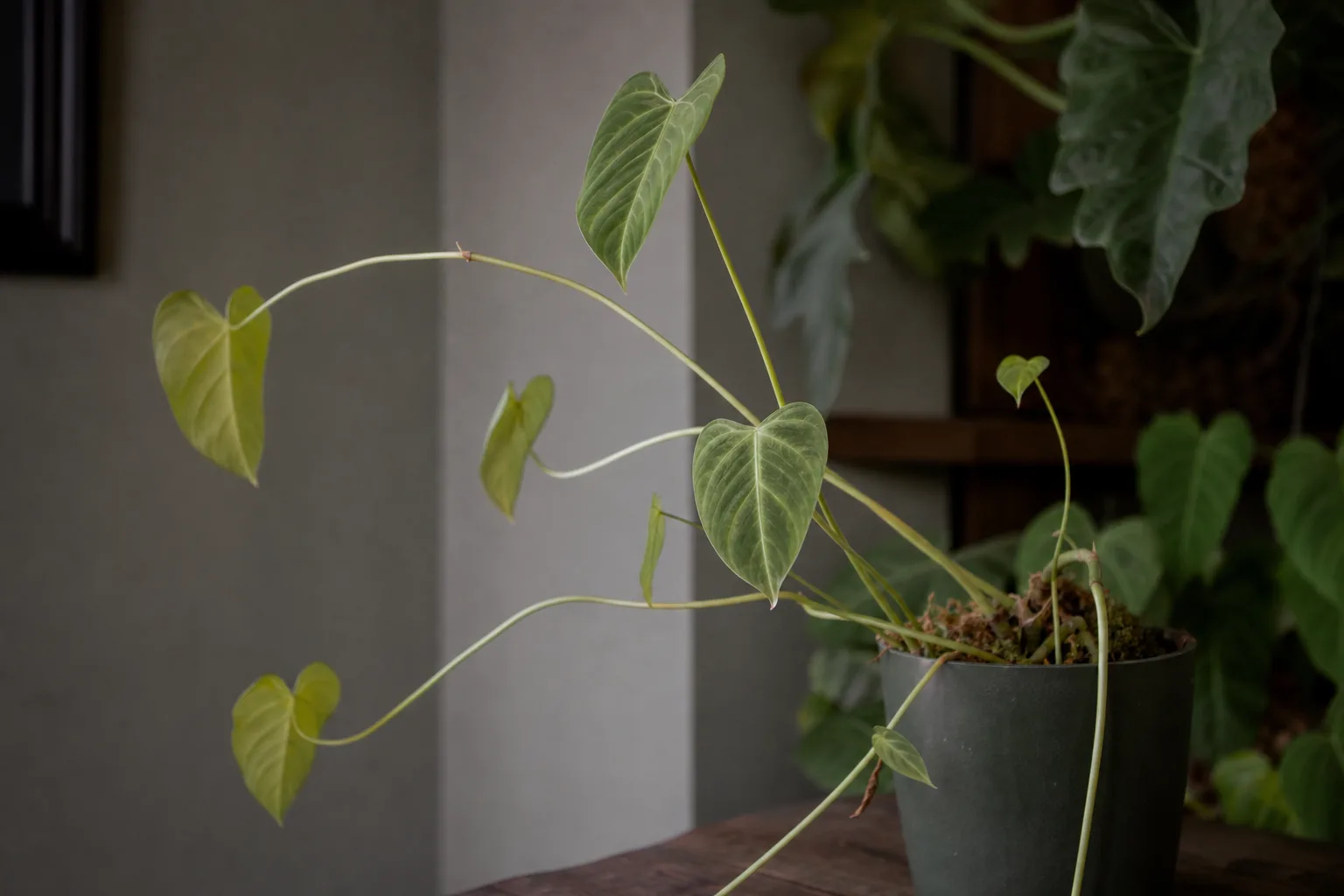
Not Enough Light on Philodendron Gloriosum: Causes, Checks & Fixes
This guide covers not enough light on Philodendron Gloriosum. See also the general Not Enough Light guide, watering, and light pages for this plant.
Not Enough Light on Philodendron Gloriosum: Causes, Checks & Fixes
Quick answer
Not enough light on Philodendron Gloriosum shows as long petioles, small pale leaves, and months without new growth. First step: move within Philodendron Gloriosum light guide of an east or filtered south/west window-avoid dark interior rooms.
Philodendrons can grow in relatively low indoor light-which helps them survive-but Gloriosum is a slow velvet crawler that needs brighter indirect exposure to produce large heart-shaped leaves. Most houseplants perform best in bright indirect light rather than dim interiors. Insufficient light also slows water use, making overwatering and rhizome rot more likely-wet soil persists longer when plants transpire slowly.
Why Philodendron Gloriosum gets too little light
Placement for aesthetics over photons-displayed across the room from windows-stretches and stalls growth.
Survival confusion: because philodendrons ” tolerate low light,” growers assume Gloriosum thrives there. It persists but does not flourish.
Winter without repositioning closer to windows reduces effective light while watering habits unchanged.
Obstructions: sheer curtains, tinted film, outdoor awnings, and neighboring buildings cut intensity at the sill.
Competing assumption that humidity alone drives velvet quality-light is equally required for leaf size.
What insufficient light looks like on Philodendron Gloriosum
- Long thin petioles on newer leaves
- Smaller, paler green velvet blades
- Strong lean toward brightest direction
- Rhizome advance slows or stops many months
- Soil stays wet longer-secondary yellowing possible
- No sun scorch-instead dull soft growth
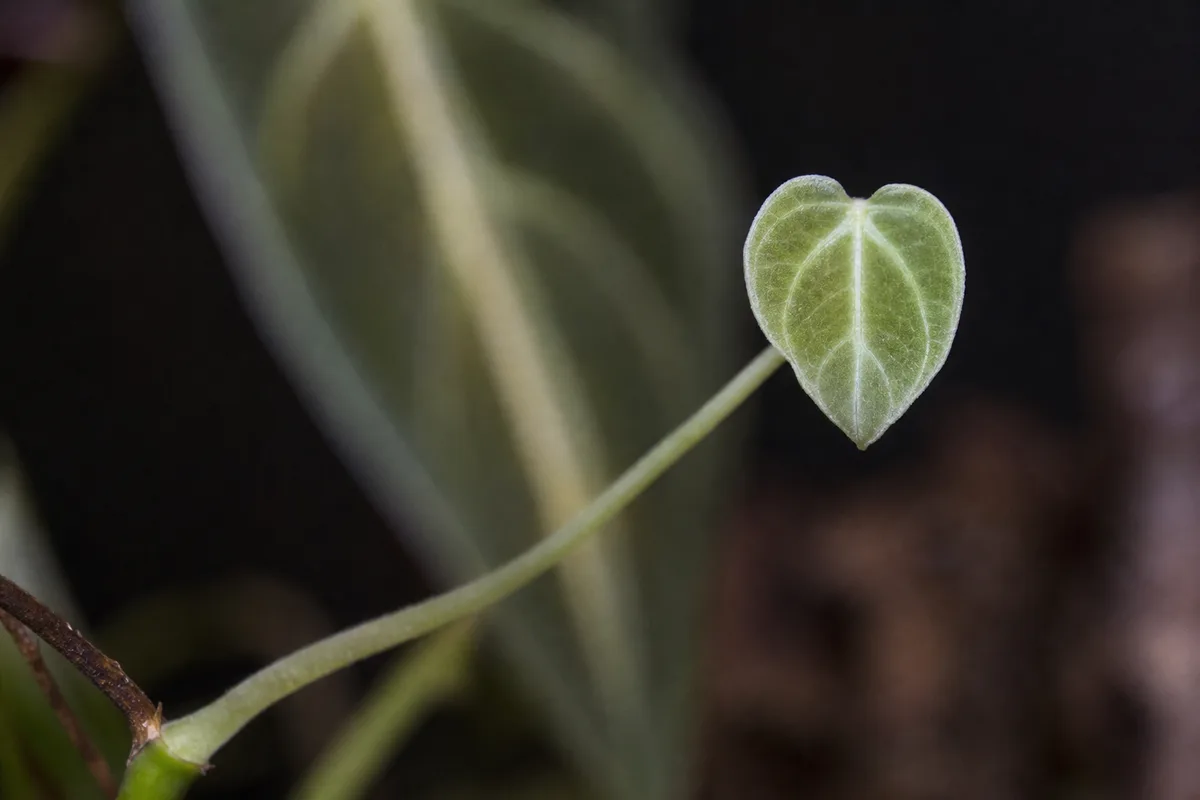
Not Enough Light symptoms on Philodendron Gloriosum - compare with healthy tissue on the same plant.
Distinguish from slow normal winter pause: insufficient light shows etiolation trend across seasons.
How to confirm the cause
- Shadow test at leaf height midday - Faint diffuse shadow means too dim for optimal Gloriosum growth.
- New vs old leaf comparison - Decreasing size indicates light deficit.
- Window distance - Beyond 2–3 meters (6–10 feet) from primary window often insufficient.
- Growth timeline - No new leaf four+ months in warm season with otherwise good care.
- Pair symptoms - Wet soil + yellow + dim location suggests dual light and water stress.
First fix for Philodendron Gloriosum
Move to bright indirect light-ideal placements include east-facing sill or several feet from filtered south/west window. Plants stretch toward light when exposure is inadequate-correct placement stops etiolation over subsequent leaves.
Acclimate gradually from very dark spots over five to seven days to prevent velvet scorch if new spot is substantially brighter. Maintain 60–70% humidity during transition.
Do not add a moss pole-Philodendron Gloriosum overview crawls horizontally; light fixes architecture, not support.
Step-by-step recovery
- Relocate to brighter indirect position; avoid direct midday sun on velvet.
- Rotate wide pot weekly for even exposure.
- Adjust watering-brighter light may require slightly shorter dry-top intervals; check don’t assume.
- Wait one to two leaf cycles (months) for visibly larger new foliage.
- Optionally supplemental grow light 10–12 inches above rhizome if window limited-12–14 hours daily at moderate intensity, following general indoor plant lighting guidance.
Remove only fully collapsed old leaves after healthier new leaf expands-never the sole photosynthesizing blade.
What not to do
- Do not leave in dark bathroom without window light.
- Do not jump to direct western sun without acclimation.
- Do not overwater slow-growing dim plants-rot risk rises.
- Do not fertilize heavily to substitute for photons.
- Do not expect heartleaf philodendron vigor in the same spot-Gloriosum is slower even with good light.
How to prevent insufficient light long-term
Window-adjacent bright indirect placement, seasonal move closer in winter, quarterly rotation, and grow-light backup in low-window homes. Monitor new leaf size trend-not calendar growth speed alone.
When to worry
Pale etiolated sole leaf in dim wet conditions-inspect rhizome for rot. If no improvement after two leaf cycles in corrected light, check roots and rhizome health-not all stall is light-only.
Conclusion
Not enough light limits Gloriosum’s signature large velvet leaves and rhizome advance. Confirm small pale stretched new growth; fix with bright indirect placement and acclimation. Pair light gains with adjusted watering and stable humidity. Measure success by leaf size on the next rhizome tip-not instant speed.
When to use this page vs other Philodendron Gloriosum guides
- Philodendron Gloriosum watering guide - Use for routine moisture checks before assuming not enough light is the main issue.
- Philodendron Gloriosum problems hub - Browse all 22 common issues on this species.
- Slow Growth on Philodendron Gloriosum - Different entry point when symptoms overlap with not enough light.
- Yellow Leaves on Philodendron Gloriosum - Different entry point when symptoms overlap with not enough light.