Peace Lily vs Anthurium: Spathe Lookalikes, Different Needs
Peace lily vs anthurium compared by spathe color, light, humidity, watering, and bloom habits so you pick the right flowering houseplant.
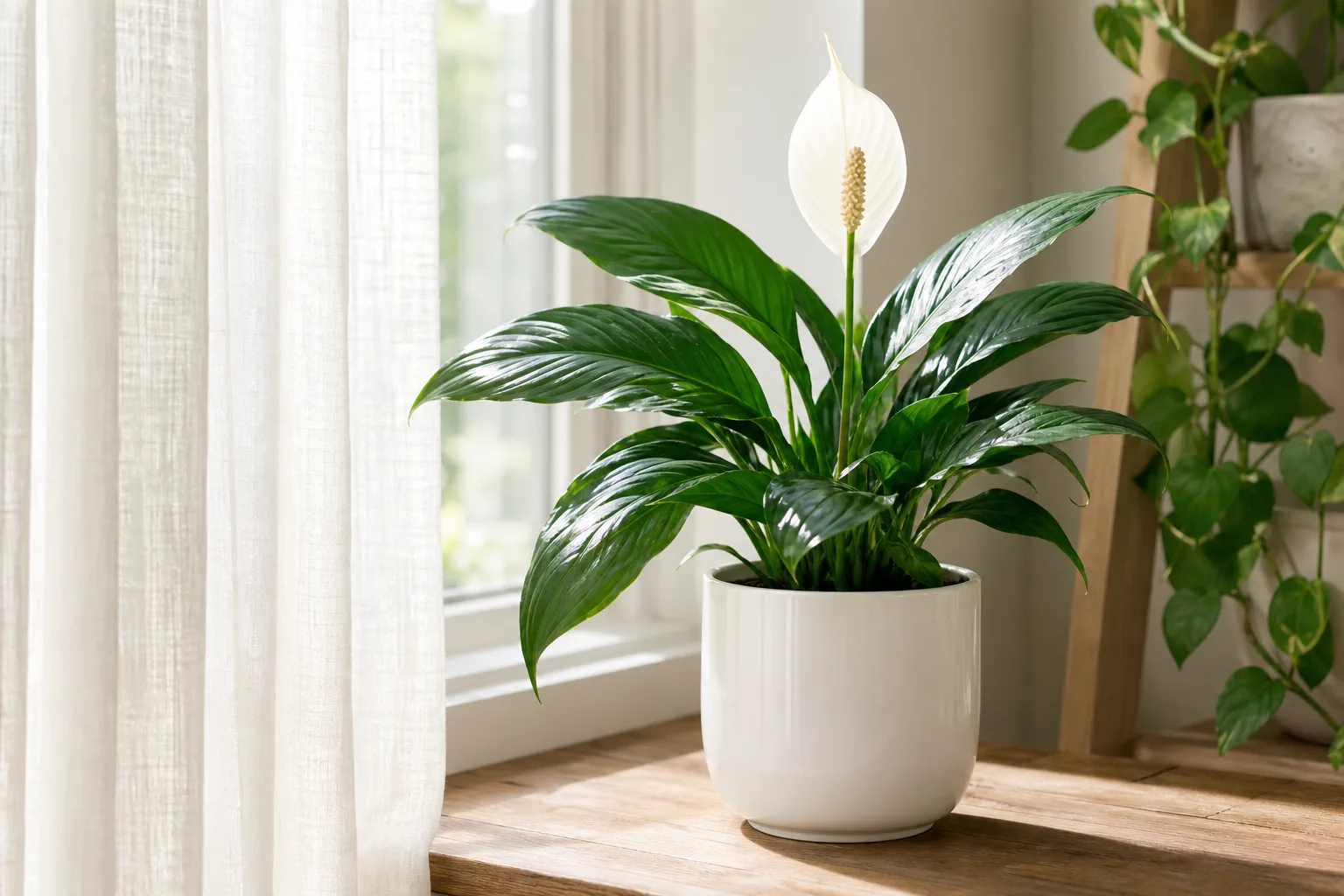
Peace lily (Spathiphyllum) and anthurium (Anthurium andraeanum, flamingo flower) both sell on glossy leaves and a colorful spathe — the modified leaf around a spadix. Shoppers confuse them constantly. Botanically they are different genera with opposite light budgets: peace lily survives office dim; anthurium wants brighter, humid air to keep waxy blooms coming.
We have kept peace lilies blooming in north-facing offices that would starve an anthurium, and watched anthuriums hold a single red spathe for eight weeks in a bright bathroom. We have also bought anthurium for a dim living room and gotten zero blooms for a year — just glossy leaves slowly losing their shine. The spathe shape tricks you into thinking they want the same spot. They do not.
Compare species routines on the peace lily hub and anthurium hub.
Same flower architecture, different genera
Both are Araceae — spathe plus spadix inflorescences — but leaf and bloom presentation diverge sharply.
NC State on Spathiphyllum describes dark green leaves and white spathes that sail above foliage; plants tolerate very low light indoors.
NC State on Anthurium andraeanum notes glossy heart-shaped leaves and showy red spathes; plants want bright indirect light, high humidity, and coarse, well-drained potting mix.
Missouri Botanical Garden details anthurium’s waxy spathe anatomy — the “flower” is a modified leaf built to last weeks. Peace lily spathes are thinner flags that age faster.
Bench ID: white flag vs waxy heart on a stalk
At the nursery, do not buy by color alone — both can have white spathes in some cultivars.
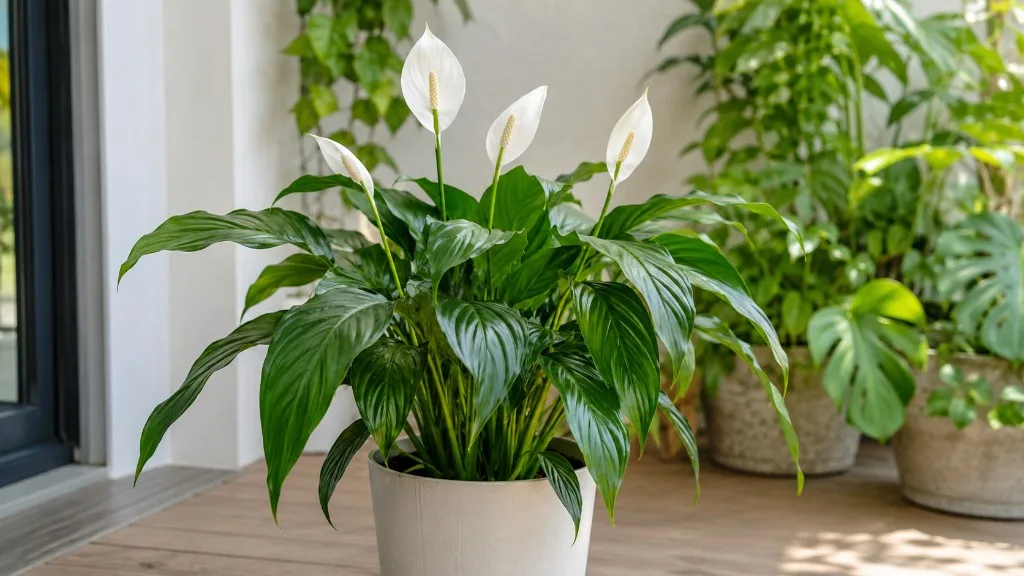
Peace lily: white curved spathe (flag-like) rising above dark green lance-shaped leaves. Spathe is smooth, not glossy-waxy. Plant stays compact — tabletop to medium floor pot.
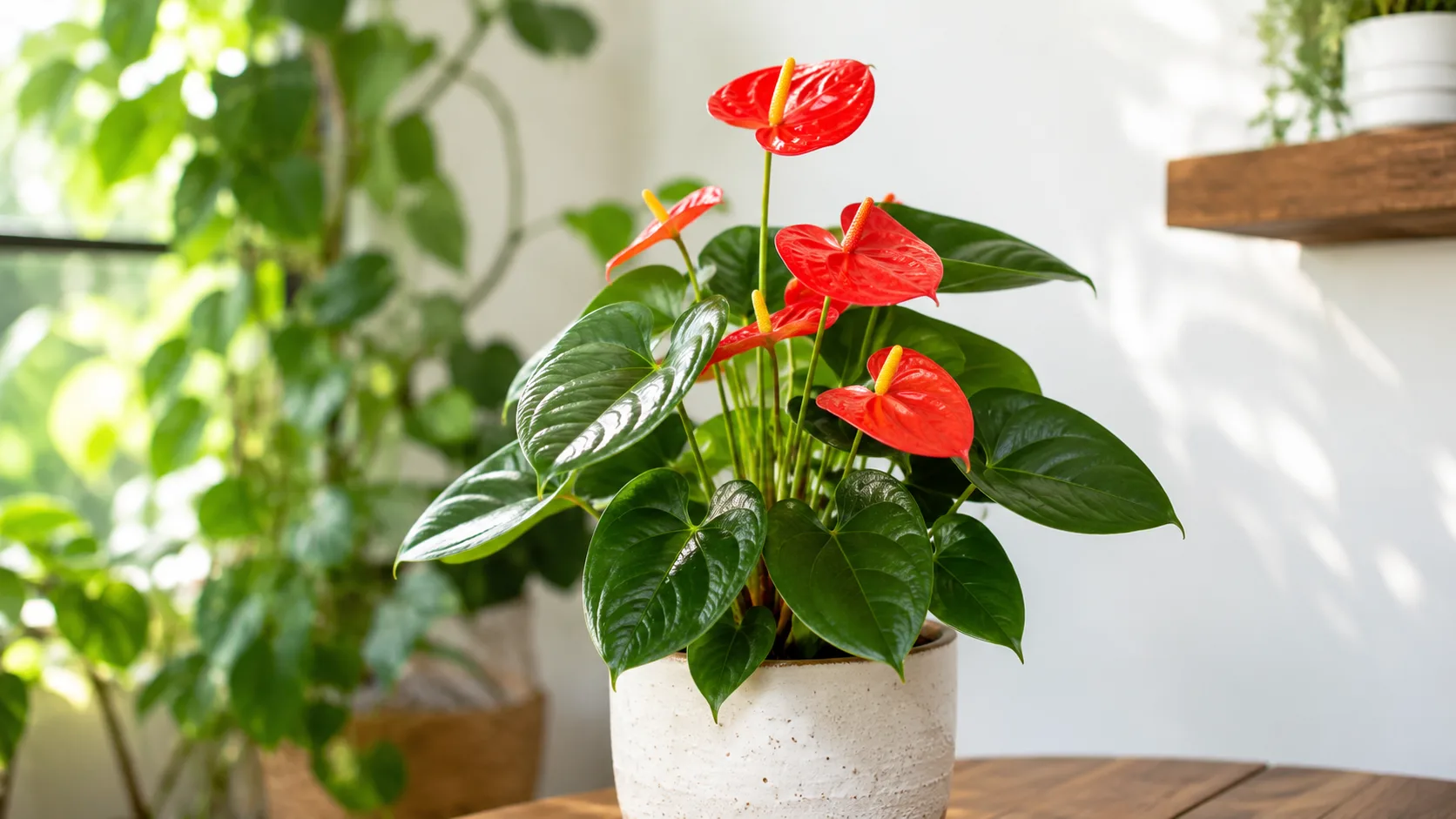
Anthurium: waxy heart-shaped spathe (red, pink, white, coral) on a longer stalk above glossy heart-shaped leaves. Spathe texture looks lacquered. Individual blooms last many weeks.
Touch the spathe. Peace lily feels like a stiff sail. Anthurium feels like plastic-coated leather.
Light and blooming: office vs sunroom
This is the decision point most buyers skip.
Peace lily blooms in dimmer rooms
Clemson HGIC on peace lily highlights performance away from harsh sun — a classic office and north-room plant. NC State notes very low light tolerance. Too much direct sun scorches leaves.
Peace lily may produce cycles of white spathes in moderate indoor light without a south window. Compare peace lily light.
Anthurium needs brightness to earn its name
NC State on anthurium specifies bright indirect light. RHS on Anthurium emphasizes warm, humid, bright conditions. Without usable light, you get foliage without trade-show spathes — the plant survives, the purchase reason does not.
Bright kitchen, east window, or bathroom with a window: anthurium territory. Dim hallway: peace lily territory. Compare anthurium light.
Watering and wilt feedback
Both prefer evenly moist, well-drained mix. Neither likes bone-dry pots nor standing saucer water. The stress signals differ.
Peace lily: dramatic wilt as a water meter
Peace lily is famous for collapsing flat when dry — leaves droop like cooked spinach, then perk within hours after a soak if you did not wait weeks. This makes it forgiving for forgetful waterers who notice visual cues.
Keep mix moist, not swampy. Chronic overwatering still rots roots — wilt is not always thirst. See peace lily watering.
Anthurium: wilts but rots faster in cool wet mix
Anthurium also wilts when thirsty but is less forgiving of overwatering in cool, dim rooms. Use chunkier, orchid-like mix, empty saucers within 30 minutes, and avoid cold water shock. Root rot in dense peaty mix is the common anthurium failure in apartments with AC.
See anthurium watering.
Humidity and winter air
Anthurium spathes and leaf edges crisp in dry winter heat without humidity boost. Peace lily tolerates average indoor air better, though both appreciate grouping or a humidifier in arid climates.
For anthurium, read pebble tray vs humidifier — pebble trays help modestly; humidifiers win for consistent bloom quality.
Bloom longevity vs bloom frequency
Anthurium wins individual bloom longevity — waxy spathes can last many weeks on the plant because the structure is built to persist.
Peace lily spathes fade and green over several weeks, then brown — shorter per bloom, but the plant may rebloom more readily in moderate light without conservatory conditions.
Buy anthurium for long-lasting color on one stalk. Buy peace lily for repeat white flags in a dimmer room.
Pet safety: neither is safe
ASPCA lists peace lily as toxic to cats and dogs via insoluble calcium oxalates — oral irritation, vomiting possible.
ASPCA lists flamingo flower (Anthurium) as toxic with the same crystal class.
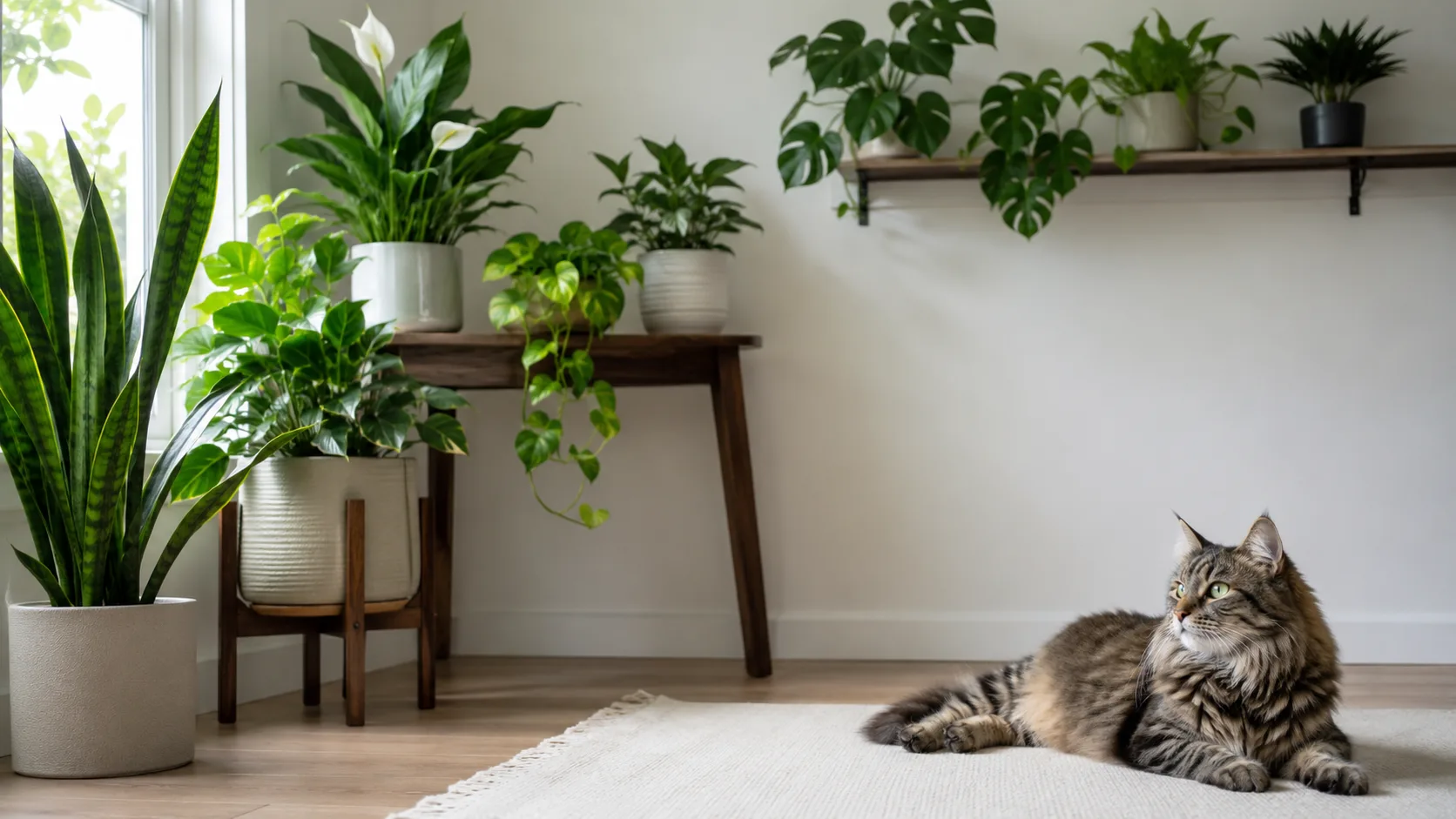
Neither belongs within chew range. For spathe look without toxicity, you need a different genus entirely — browse pet-safe houseplants. Do not assume white flowers mean safe.
Side-by-side comparison
| Factor | Peace lily (Spathiphyllum) | Anthurium (A. andraeanum) |
|---|---|---|
| Spathe color | White (green cultivars exist) | Red, pink, white, coral |
| Spathe texture | Smooth, flag-like | Waxy, heart-shaped |
| Light | Low to medium; office tolerant | Bright indirect |
| Humidity | Average room OK | Higher humidity for best bloom |
| Water | Evenly moist; wilts when dry | Evenly moist; rots if cold-wet |
| Soil | Peaty, well-drained | Coarse, airy, orchid-like mix |
| Bloom cue | White sail above leaves | Long-lasting waxy spathe on stalk |
| Toxicity | Toxic (calcium oxalate) | Toxic (calcium oxalate) |
Which plant to choose
Dim office or north room: peace lily.
Bright kitchen or east window with humidity: anthurium.
White minimalist look: peace lily spathes.
Bold color that lasts weeks: anthurium.
Forgetful waterer who notices wilt: peace lily gives a clear signal.
Pet household: neither — choose from pet-safe houseplants.
Already grow peace lily well in a dark corner: anthurium is not an upgrade in the same spot — it is a different light and humidity commitment.
Soil and repotting: peaty vs chunky
Peace lily thrives in standard peaty houseplant mix with perlite — well-drained but moisture-retentive. Repot when roots circle the pot or water runs straight through; every 1–2 years in active growth.
Anthurium wants coarser, airier mix — orchid bark, perlite, and peat in roughly equal parts. Dense bagged mix suffocates roots in cool AC rooms. Repot when the plant is root-bound but never into an oversized pot — anthurium rots in cold wet surplus soil.
We repot peace lily after a bloom cycle when roots peek from drainage holes. Anthurium repotting waits until spring warmth — cold repot plus wet mix is a common post-winter failure.
Related: bird of paradise vs peace lily, best low light indoor plants.
Conclusion
ID: white flag spathe + low-light fame → peace lily. Waxy colored spathe on a stalk + glossy leaves → anthurium.
Choose: office dim and wilt feedback → peace lily. Bright humid bloom display → anthurium.
Safety: both toxic to pets — ASPCA listings for both.
Follow the peace lily hub or anthurium hub for species care — not a generic “flowering aroid” schedule.