Mealybugs on Philodendron Gloriosum: Causes, Checks & Fixes
Quick answer
Mealybugs on Philodendron Gloriosum hide in leaf axils, cataphylls, and along the creeping rhizome as white cottony clusters. First step: isolate the plant and remove visible bugs with alcohol-dipped cotton swabs.
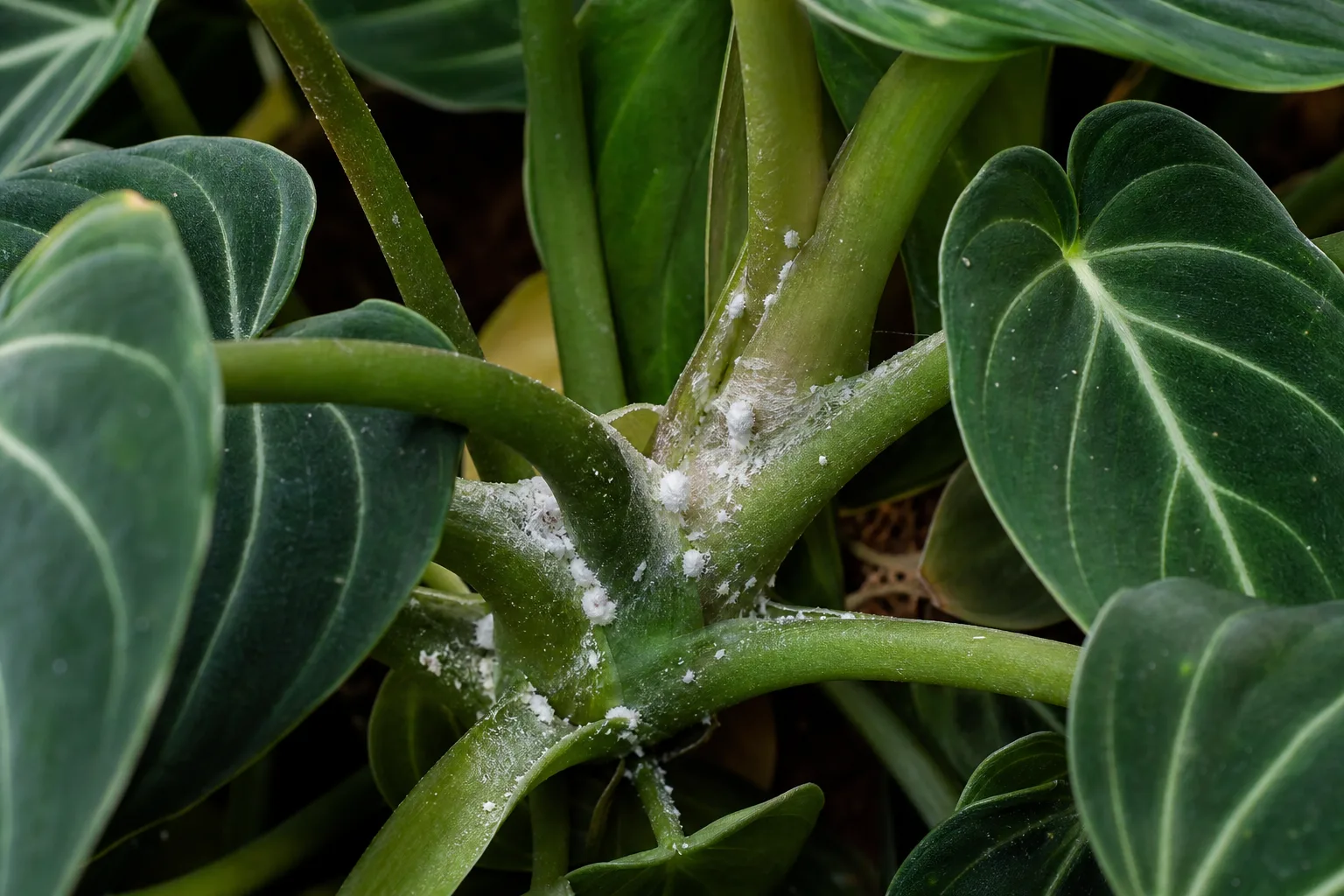
Mealybugs on Philodendron Gloriosum: Causes, Checks & Fixes
This guide covers mealybugs on Philodendron Gloriosum. See also the general Mealybugs guide, watering, and light pages for this plant.
Mealybugs on Philodendron Gloriosum: Causes, Checks & Fixes
Quick answer
Mealybugs on Philodendron Gloriosum hide in leaf axils, cataphylls, and along the creeping rhizome as white cottony clusters. First step: isolate the plant and remove visible bugs with alcohol-dipped cotton swabs.
Mealybugs are soft-bodied sap feeders common on houseplants. They excrete sticky honeydew that can lead to sooty mold on foliage. On Gloriosum, the rhizome’s protected cataphyll and velvet leaf bases offer ideal hiding spots-pests may be present long before the broad upper leaf surface looks affected.
Why Philodendron Gloriosum gets mealybugs
New introductions without quarantine spread mealybugs into collections. Penn State Extension advises isolating newcomers and plants returning indoors before mixing with established specimens.
Crowded aroid shelves let crawlers and leaves touch, transferring insects. Mealybugs walk slowly but persist on shared humidity trays and tools.
Over-fertilized soft growth can attract pests, though mealybugs occur on healthy Gloriosum too. Stressed plants from root rot on Philodendron Gloriosum may show heavier infestations because vigor is low.
Warm indoor temperatures year-round allow continuous mealybug reproduction-quarantine new houseplants before placing them near Gloriosum.
What mealybugs look like on Philodendron Gloriosum
Identification cues:
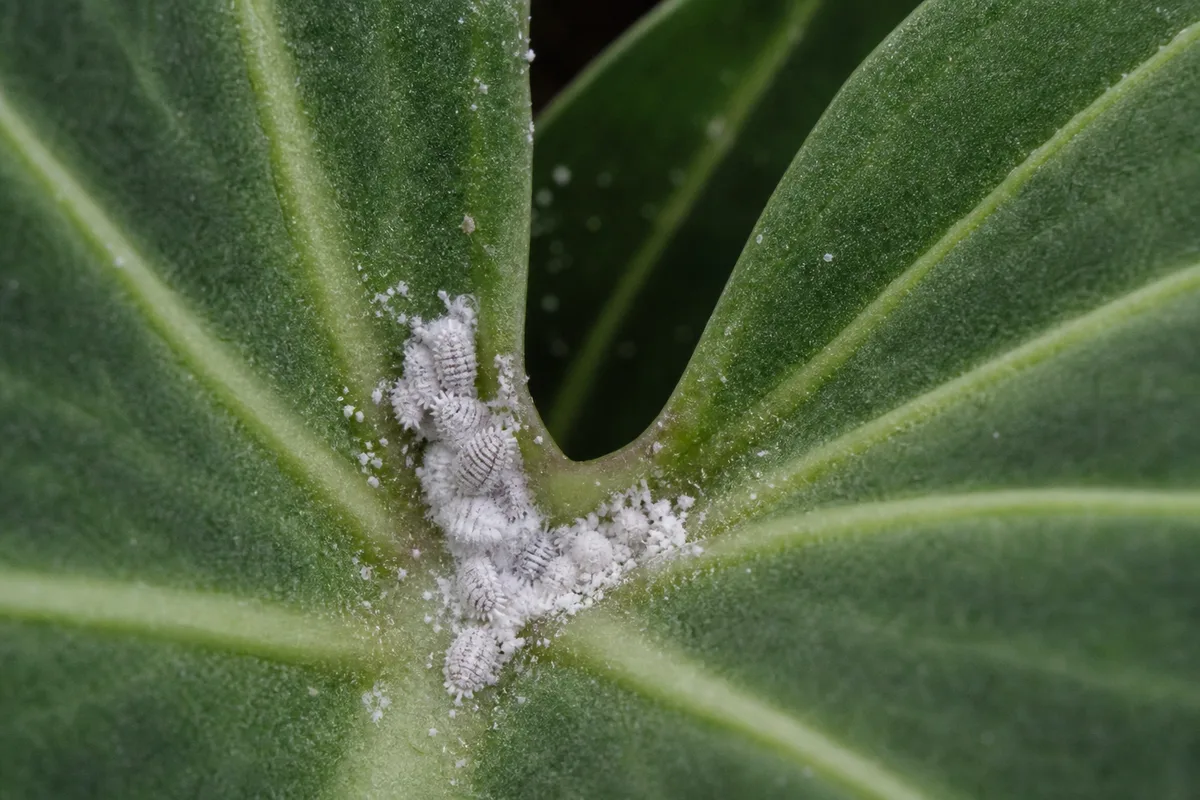
Mealybugs symptoms on Philodendron Gloriosum - compare with healthy tissue on the same plant.
- White cottony or waxy clusters at petiole bases and rhizome nodes
- Flat oval pinkish insects visible when cotton is parted
- Sticky shiny honeydew on velvet leaves
- Black sooty mold on honeydew in advanced cases
- Yellowing localized near heavy clusters
- Ant activity on pot or shelf (farming honeydew)
Unlike spider mites, mealybugs are visible without magnification when colonies establish.
How to confirm the cause
- Rhizome and cataphyll inspection - Part cataphyll gently; look for white wax.
- Axil check - Every leaf base where petiole meets rhizome.
- Underside edges - Mealybugs along midrib recesses on velvet.
- Honeydew test - Sticky shine confirms sap feeding.
- Neighbor plants - Scan entire aroid group.
First fix for Philodendron Gloriosum
Isolate and manually remove every visible cluster with 70% isopropyl alcohol on a cotton swab. Alcohol-dipped swabs reach difficult areas on houseplants-ideal for Gloriosum’s tight axils without soaking velvet leaves. Crush or wipe each bug; repeat every three to four days.
Do not return to the collection until two weeks with no live insects found on inspection.
Step-by-step recovery
- Isolate; treat visible mealybugs with alcohol swabs daily for one week.
- Rinse leaves gently if honeydew is heavy-avoid bruising velvet; honeydew supports sooty mold growth on affected foliage.
- Apply insecticidal soap to crevices if manual removal misses hidden nymphs; keep soap off velvety blade faces when possible.
- Inspect pot rim, saucer, and bench; clean or replace if pests shelter there.
- Check weekly for six weeks-eggs hatch in cycles.
- Resume normal care only after clean inspections; watch new leaf unfurling closely.
Systemic treatments are rarely needed on single specimen aroids if manual work is thorough and repeated.
What not to do
- Do not ignore one white speck-mealybugs multiply exponentially.
- Do not drench velvet leaves with undiluted alcohol; target clusters only.
- Do not compost pruned infested leaves indoors near other plants.
- Do not stop treatment at first visual clearance-inspect rhizome tip for two weeks.
- Do not fertilize heavily while fighting pests.
How to prevent mealybugs next time
Quarantine all new plants. Inspect rhizome and axils at each watering. Keep tools clean between plants. Treat neighboring aroids if one Gloriosum infests-shared air and trays spread pests. Early alcohol swabs beat heavy soap cycles on velvet foliage.
When to worry
Escalate if growth tip is encrusted and new leaves cannot emerge, or if infestation persists after six weeks of diligent treatment. Discarding severely infested single-leaf cuttings may protect the wider collection-propagate from clean rhizome sections only if salvage is worth the risk.
Conclusion
Mealybugs on Philodendron Gloriosum colonize rhizome crevices and leaf axils out of sight. Confirm cottony clusters and honeydew; fix with isolation, alcohol swabs, and repeated inspection. Prevention is quarantine and early manual removal before slow-growing velvet leaves accumulate damage.
When to use this page vs other Philodendron Gloriosum guides
- Philodendron Gloriosum watering guide - Use for routine moisture checks before assuming mealybugs is the main issue.
- Philodendron Gloriosum problems hub - Browse all 22 common issues on this species.
- Ants on Plant on Philodendron Gloriosum - Different entry point when symptoms overlap with mealybugs.
- Yellow Leaves on Philodendron Gloriosum - Different entry point when symptoms overlap with mealybugs.
- Slow Growth on Philodendron Gloriosum - Different entry point when symptoms overlap with mealybugs.