Spider Mites on Philodendron Gloriosum: Causes, Checks &
Quick answer
Spider mites on Philodendron Gloriosum thrive in hot, dry air and show as stippling and fine webbing on velvet leaf undersides. First step: isolate the plant and rinse all leaf surfaces-including undersides-with lukewarm water.
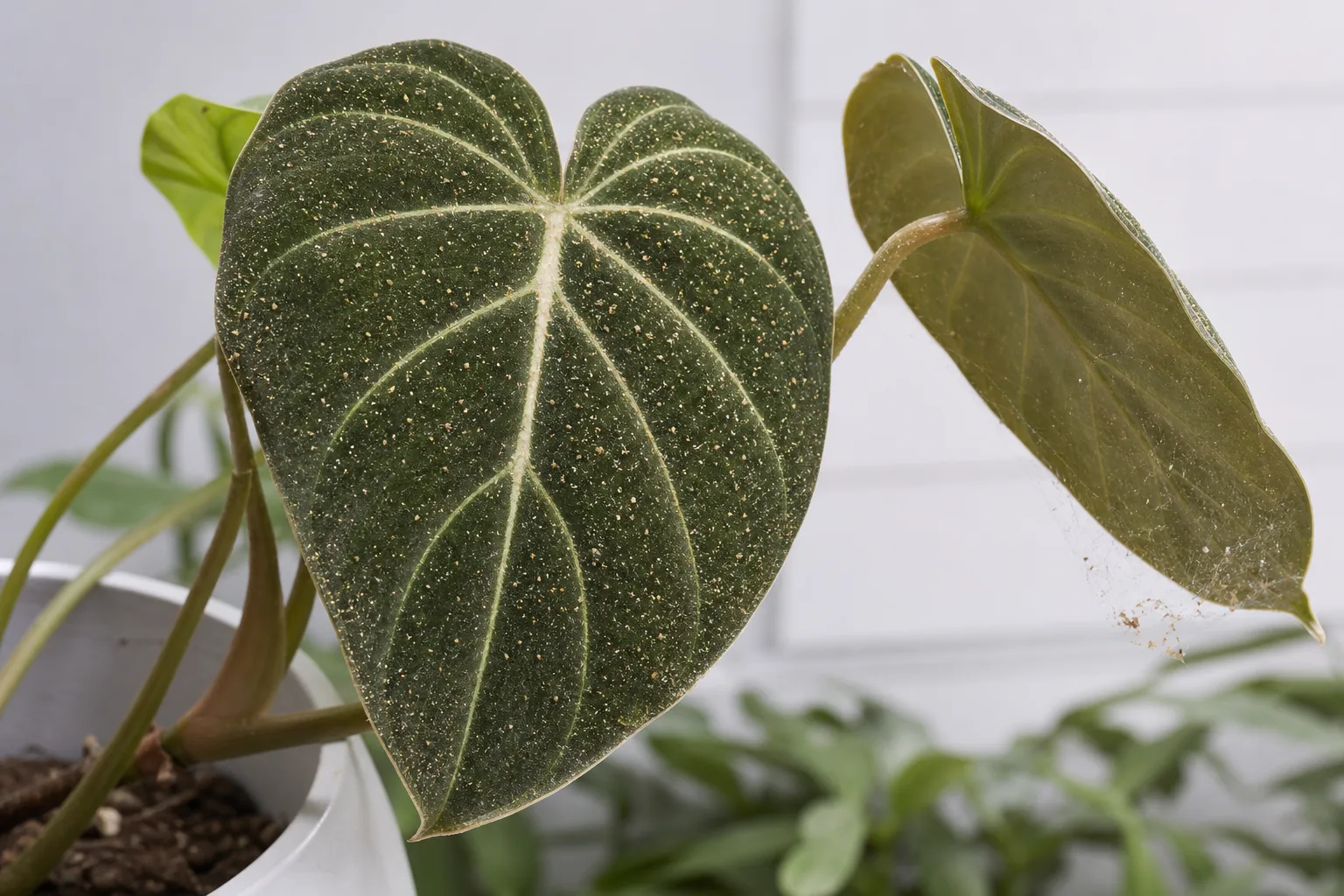
Spider Mites on Philodendron Gloriosum: Causes, Checks & Fixes
This guide covers spider mites on Philodendron Gloriosum. See also the general Spider Mites guide, watering, and light pages for this plant.
Spider Mites on Philodendron Gloriosum: Causes, Checks & Fixes
Quick answer
Spider mites on Philodendron Gloriosum thrive in hot, dry air and show as stippling and fine webbing on velvet leaf undersides. First step: isolate the plant and rinse all leaf surfaces-including undersides-with lukewarm water.
Spider mites are tiny arachnids, not insects, that pierce leaf cells and feed on sap. They flourish in hot, dry indoor conditions-exactly the opposite of what velvet Gloriosum prefers. When humidity drops near heating vents, mite populations can explode on the broad leaf undersides while the plant looks merely “dull” from above.
Why Philodendron Gloriosum gets spider mites
Dry winter air is the classic setup. Gloriosum wants 60–70% humidity; centrally heated rooms often sit near 25–35%. Mites reproduce faster as humidity falls and temperatures rise. Colorado State Extension notes the twospotted spider mite is the most important mite on houseplants and produces conspicuous webbing.
Velvet leaf texture makes stippling visible as a bronze or silvery dull patch rather than obvious yellow dots. Growers may blame watering or light before checking undersides with magnification.
Crowded aroid collections share mites on air currents and tools. New plants introduced without quarantine are a common entry point. Penn State Extension recommends isolating new houseplants before placing them among established specimens.
Water-stressed plants are more vulnerable. Both chronic drought and root rot on Philodendron Gloriosum weaken Gloriosum, though mites are primarily an dry-air pest issue indoors.
What spider mites look like on Philodendron Gloriosum
Signs to combine:
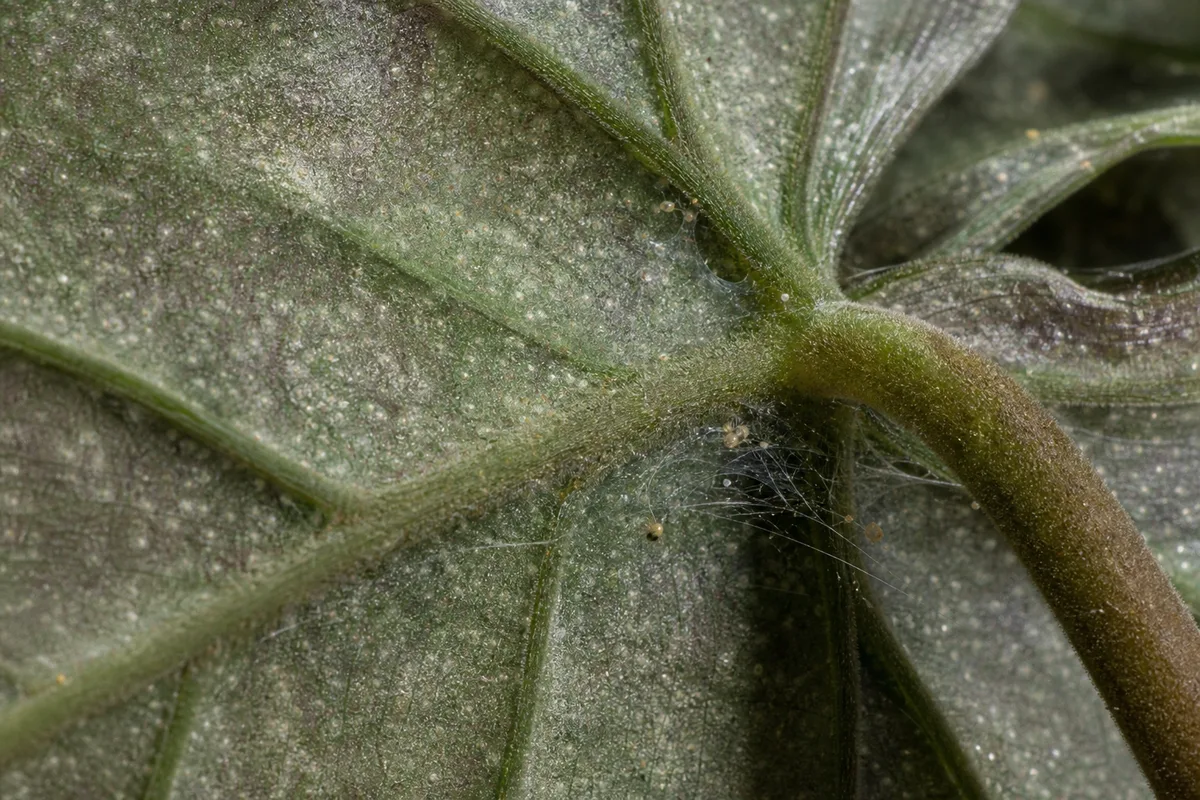
Spider Mites symptoms on Philodendron Gloriosum - compare with healthy tissue on the same plant.
- Fine stippling or bronze dull areas on velvet, worst on undersides
- Silky webbing at leaf bases, cataphyll, or between petiole and rhizome
- Leaves look dusty or gray despite clean room
- Tiny moving specks when leaf is tapped over white paper
- New leaf unfurling with deformed or stuck sections in heavy infestations
Mite damage differs from thrips scars (silver streaks) and mealybug cotton (visible white clusters).
How to confirm the cause
- Underside inspection - Use phone magnification or hand lens on newest leaf.
- Paper tap test - Hold white paper under a leaf; tap gently; watch for moving specks.
- Webbing check - Look at petiole axils and rhizome tip.
- Environment - Note humidity reading and proximity to heat vents.
- Spread scan - Inspect all aroids within a few meters.
First fix for Philodendron Gloriosum
Isolate immediately and wash down all foliage with lukewarm water, directing spray to undersides without bruising velvet tissue. Repeat every three to five days. Mites reinfest quickly if one generation survives on neighboring plants or leaf crevices.
For heavy infestations on tough older leaves, follow with horticultural oil or insecticidal soap labeled for mites-test sensitive foliage first and apply to undersides as extension guides recommend.
Step-by-step recovery
- Move Gloriosum away from other plants; treat neighbors if mites are found.
- Rinse leaves thoroughly top and bottom; support leaf from underneath to avoid tearing.
- Increase humidity to 60–70% with humidifier-helps plant health and discourages mites.
- Apply insecticidal soap or horticultural oil if wash-down alone fails after two cycles; repeat weekly per label.
- Remove a severely webbed leaf only if others remain for photosynthesis.
- Monitor weekly for six weeks-mite life cycles need repeated treatment.
Wear gloves when handling treated leaves; philodendrons contain irritating calcium oxalate sap.
What not to do
- Do not rely on misting alone-does not kill mites and can mark velvet leaves.
- Do not use harsh leaf shine products-they damage velvety surfaces.
- Do not stop after one rinse; eggs hatch and reinfest.
- Do not place back with collection until two weeks mite-free on inspection.
- Do not use broad indoor insecticides that harm beneficials without mite-specific label.
How to prevent spider mites next time
Run humidifier at 60–70% through heating season. Quarantine new plants two to three weeks. Monthly underside checks on Gloriosum and nearby aroids. Keep plant away from radiator blasts. Maintain even watering so stress does not compound pest pressure.
When to worry
Escalate if webbing returns within days after treatment, multiple plants infest, or growth tip is webbed and stalled. Severe velvet leaf loss on a slow grower slows recovery for months-early catch matters.
Conclusion
Spider mites on Philodendron Gloriosum are a dry-air pest problem on velvet undersides. Confirm with stippling, webbing, and tap tests; fix with isolation, repeated wash-downs, humidity increase, and labeled soap or oil if needed. Prevention is steady 60–70% humidity and quarantine discipline.
When to use this page vs other Philodendron Gloriosum guides
- Philodendron Gloriosum watering guide - Use for routine moisture checks before assuming spider mites is the main issue.
- Philodendron Gloriosum problems hub - Browse all 22 common issues on this species.
- Slow Growth on Philodendron Gloriosum - Different entry point when symptoms overlap with spider mites.