Why Is My Houseplant Leaning? Light, Roots & Support
Diagnose a leaning houseplant by checking firm vs soft lean, phototropism, etiolation, roots, pot stability, and support needs before staking.
A houseplant that tips toward the window, lists after watering, or suddenly cannot hold itself upright is sending a structural signal — not a single diagnosis. Leaning can be healthy phototropism, stretched low-light growth, a root or stem failure, an unstable pot, or a climbing plant that finally needs a support. Those causes look similar from across the room. They are not interchangeable in how you fix them.
Do not start by yanking the stem upright. Forcing a lean can crack healthy tissue, hide soft stems, or turn a manageable imbalance into permanent damage. Diagnose where the bend begins, whether the tissue is firm, which direction new growth faces, and how securely the root ball and pot hold the plant. Then choose rotation, brighter light, staking, pruning, or root care — in that order of least harm.
Use this guide when you need cross-species triage. Pair it with the shorter identification path at /symptoms/plant-leaning/ and with plant-specific pages when one species keeps repeating the same lean.
Quick Answer: Four Lean Types at a Glance
Classify the lean in under a minute before you buy a stake or move the plant. Match what you see to one of these four classes — then act on that class, not on a generic “prop it up” reflex.
1. Firm reach toward light — stems and leaves point at the brightest side; tissue feels solid; the pot and root ball stay put. This is usually phototropism or uneven exposure.
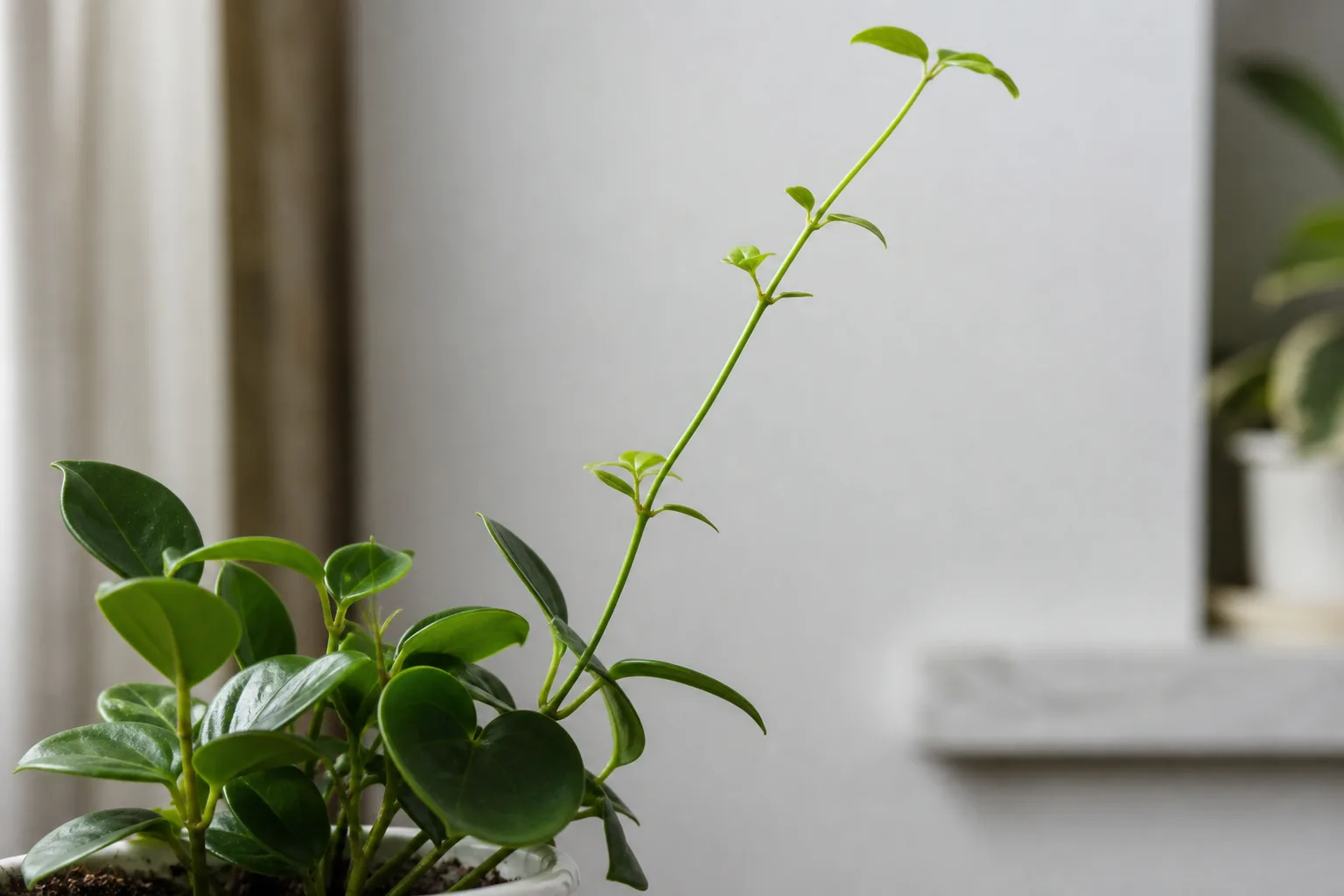
2. Weak stretch — long gaps between leaves, thinner new stems, smaller or paler new foliage, plus a lean. This is often etiolation from not enough light.
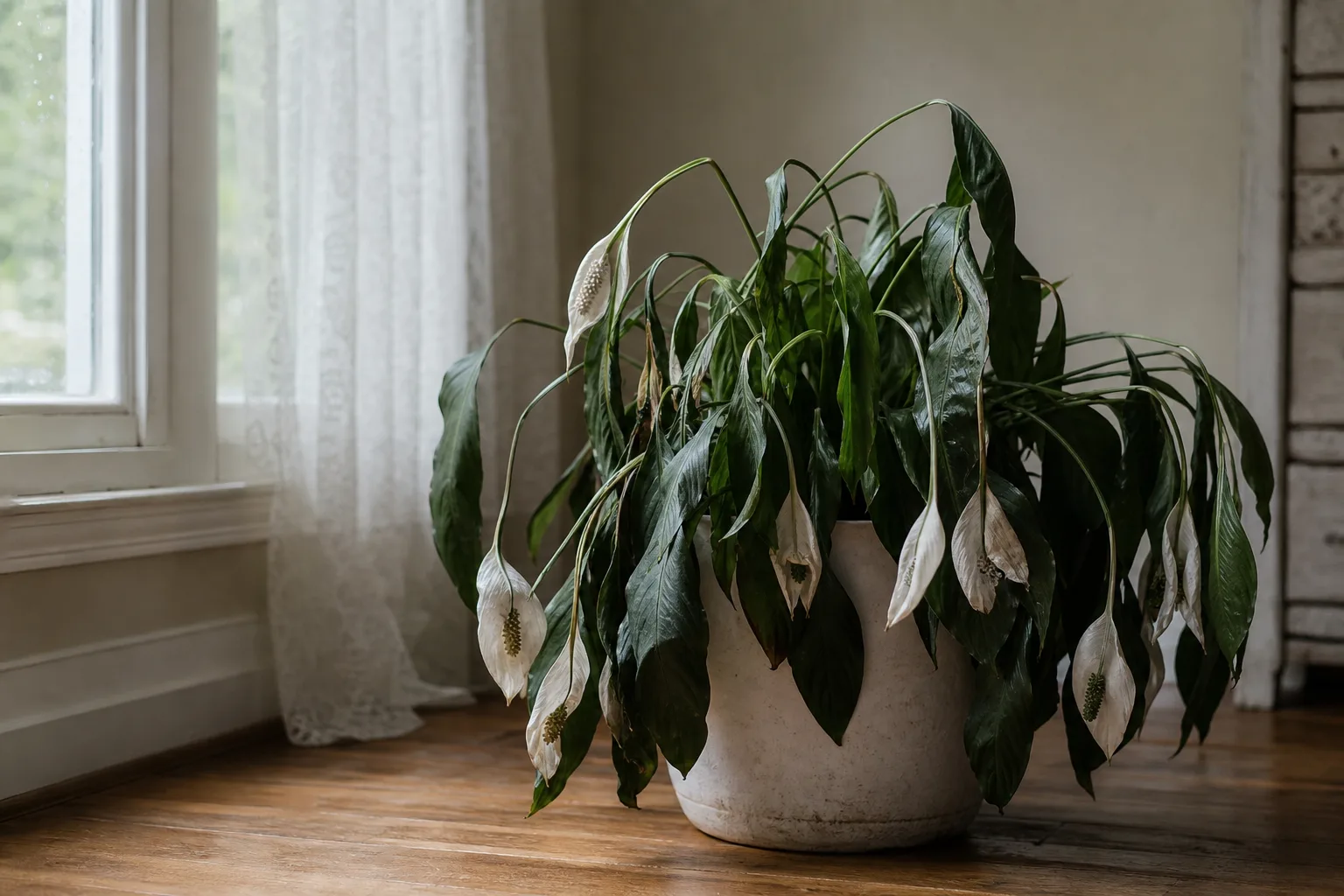
3. Soft collapse — stems or petioles feel limp or mushy; the plant may tip even when soil is wet. Check watering and roots before you stake — see plant drooping when limp tissue is the main cue.
4. Unstable base — the canopy is heavy, the pot is light or narrow, roots circle tightly, or the stem moves independently of the soil. Fix anchorage or support, not just the angle.
University of Connecticut Extension notes that plants short on light may bend toward a window while also showing pale leaves and spindly stems — a combined orientation-plus-weakness pattern, not a mystery disease. (UConn Home & Garden Education Center)
Firm Phototropism vs Soft Collapse
Separate orientation from failure before you water or stake.
Most houseplants grow toward usable light. That response is called phototropism. Penn State Extension explains that auxins stimulate cell elongation, and when cells on one side of a stem elongate faster than cells on the other, the shoot bends toward (or away from) the light source. (Penn State Extension) The RHS describes the same behavior: most plants grow and bend toward light, especially species adapted to brighter conditions, because auxin accumulates on the shaded side of the stem. (RHS)
Indoors, light almost always arrives from one side — a window, a glass door, or a grow light hung off-center. A plant that stays in one orientation for weeks will allocate new growth toward that side. The lean can look dramatic even when the plant is healthy: firm stems, normal leaf size, and evenly spaced nodes that simply face the window.
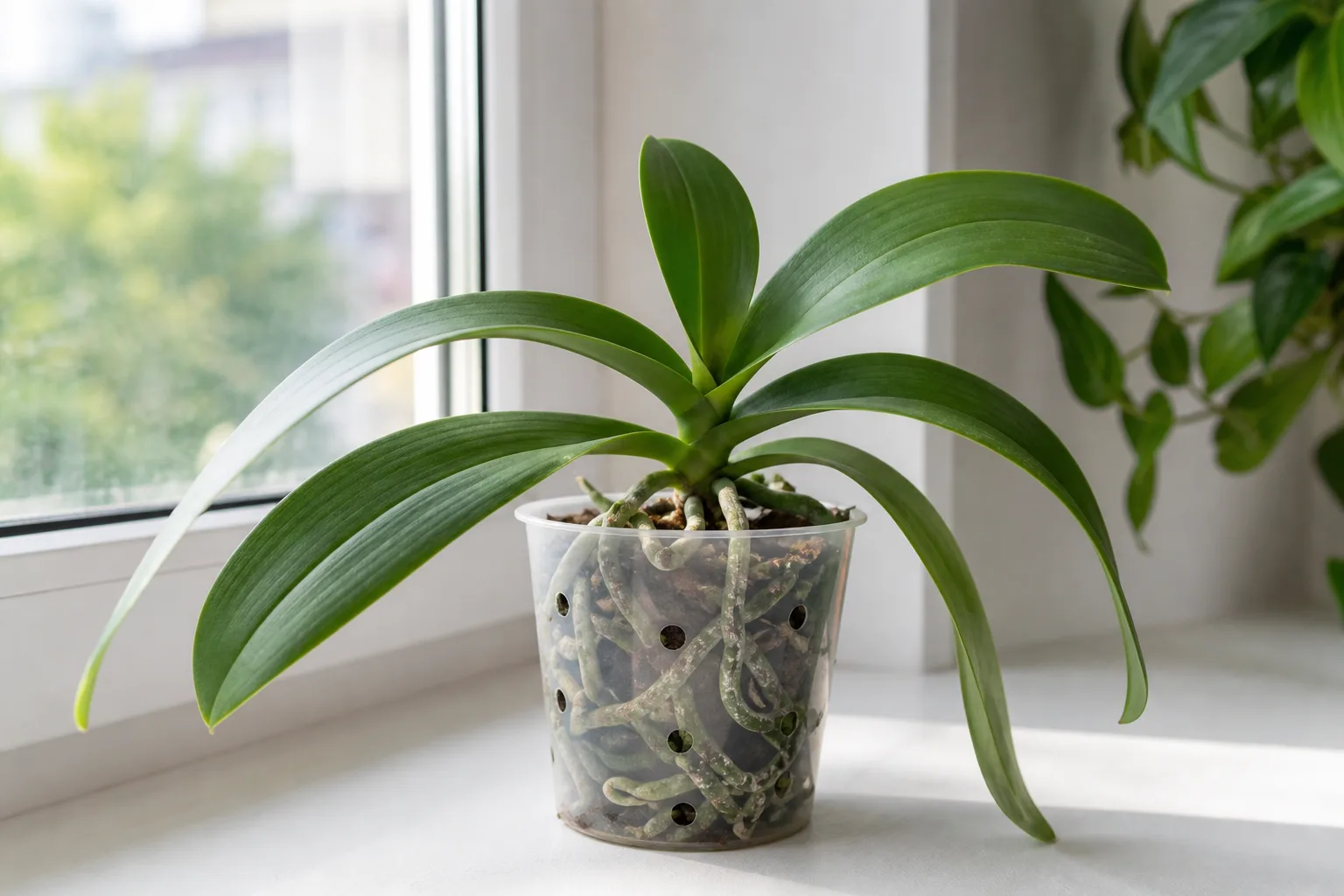
A firm lean holds its shape when you gently nudge the stem. Leaves may face the window, but petioles and stems feel turgid. New growth continues. Soil moisture may be normal. The plant is pointing, not collapsing.
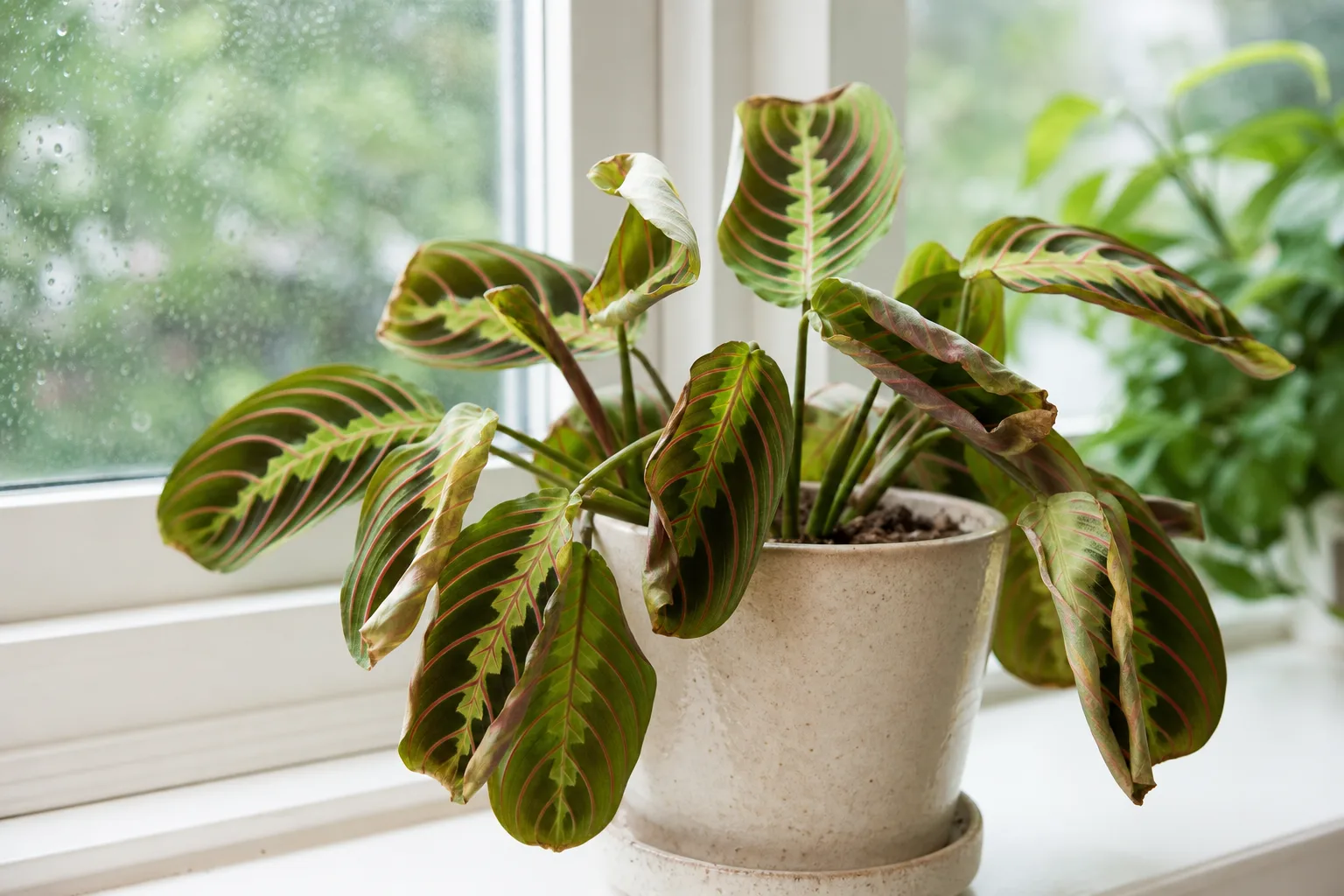
A soft collapse looks like leaning from across the room, but up close the tissue is limp. Clemson HGIC emphasizes that wilting is not always a cue to water: root injury — including root rot from excess moisture — reduces water uptake, so the plant wilts even when the mix is wet, and more water can make the problem worse. (Clemson HGIC) Missouri Botanical Garden makes the same warning: a wilted plant that was overwatered may have rotting roots that cannot take up water, and watering again can be the “death knell.” (Missouri Botanical Garden)
If the lean arrived suddenly after a soak, after the plant sat in a saucer of water, or alongside yellowing and a foul smell from the mix, treat it as a watering or root problem — not as a phototropism fix.
| Feel / look | Firm phototropism | Soft collapse / limp droop |
|---|---|---|
| Stem when nudged | Holds shape; springy | Limp, mushy, or folds |
| Soil cue | Often normal moisture | Often wet + heavy, or bone dry |
| Leaf size / internodes | Usually normal | May yellow; internodes not the story |
| First move | Rotate / even light | Moisture check → roots if wet wilt |
Low Light, Long Internodes, and Weak Stems
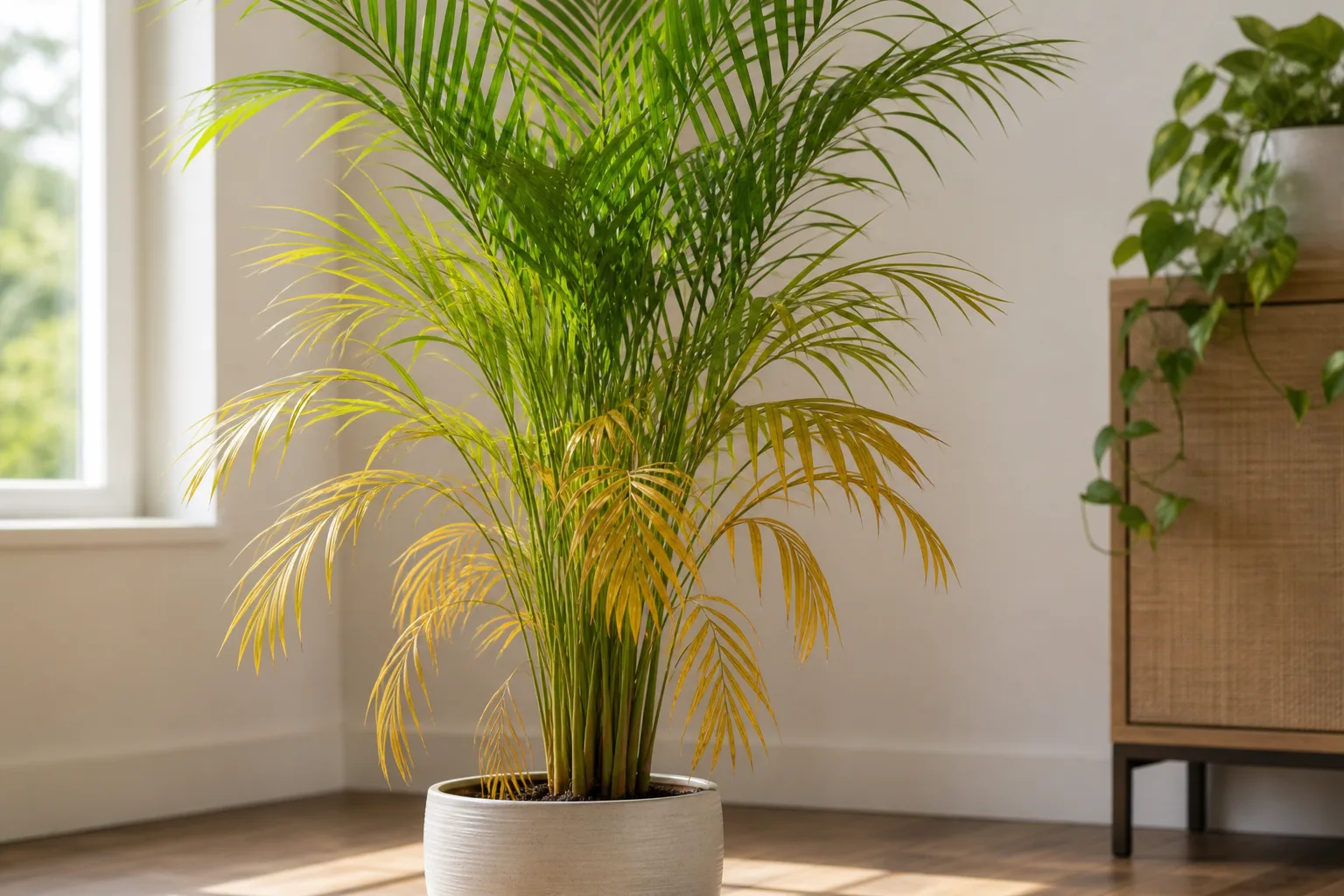
When light intensity is too low for the species, plants do more than lean. They stretch. The RHS notes that weak, spindly growth and pale leaves are signs a plant is not getting enough light, and that a plant stretching for light should be moved to a sunnier position. (RHS) University of Maine Cooperative Extension defines etiolation as elongated, spindly stems and pale leaves from low-light conditions, and notes it is common in houseplants grown in near-constant shade. (University of Maine Cooperative Extension)
Missouri Botanical Garden summarizes the indoor pattern plainly: plants with too little light turn pale and stretch for light — and may lean toward the light source. (Missouri Botanical Garden) Weak, elongated stems lean more easily because they have less mechanical strength per unit of canopy weight. A stake can prop that growth temporarily, but without better light the next flush repeats the stretch.
Pair this section with leggy plants when internodes are the main complaint, and with species pages such as Monstera not enough light when one plant keeps repeating pale, reaching growth.
Etiolation Is Not Temporary Wilt
Etiolation builds over weeks of new growth: longer spaces between leaves, thinner stems, often smaller new leaves. Temporary wilt from dry soil can make a plant look slumped for hours, then rebound after a thorough watering. If the plant perks up after watering and the internodes look normal, you fixed thirst — not light. If new growth keeps arriving thin and spaced out, light intensity at leaf height is still too low.
One-Sided Light and Pot Rotation
Even adequate light can create a lean if it arrives from only one direction. A plant on a bright sill still has a dark side. New leaves orient to the window; stems thicken unevenly; the canopy becomes heavier on the lit face. Rotation does not rewrite old woody bends, but it redistributes future growth so the plant stays balanced.
UF/IFAS reminds growers that human eyes adapt poorly to indoor intensity differences — a spot that “looks bright” may be far dimmer than the sill a few feet away — so placement and measurement matter more than room brightness. (UF/IFAS Gardening Solutions) Rotation helps most when the plant already sits in usable light; spinning a plant in a dark corner only shares inadequate light around the canopy.
How Often to Rotate Indoors
For most foliage houseplants in a one-sided window setup, a quarter turn every one to two weeks is enough to keep growth from locking into a permanent lean. Faster growers near a strong window may need a weekly turn. Slow growers in stable light can go longer. Always rotate after you check that the pot is stable — spinning a top-heavy plant on a narrow stand can tip it.
If you use a grow light, hang or place it so the canopy is lit evenly from above when possible. Side-mounted lights create the same one-directional lean as a window — see grow lights for indoor plants when you need intensity plus even coverage.
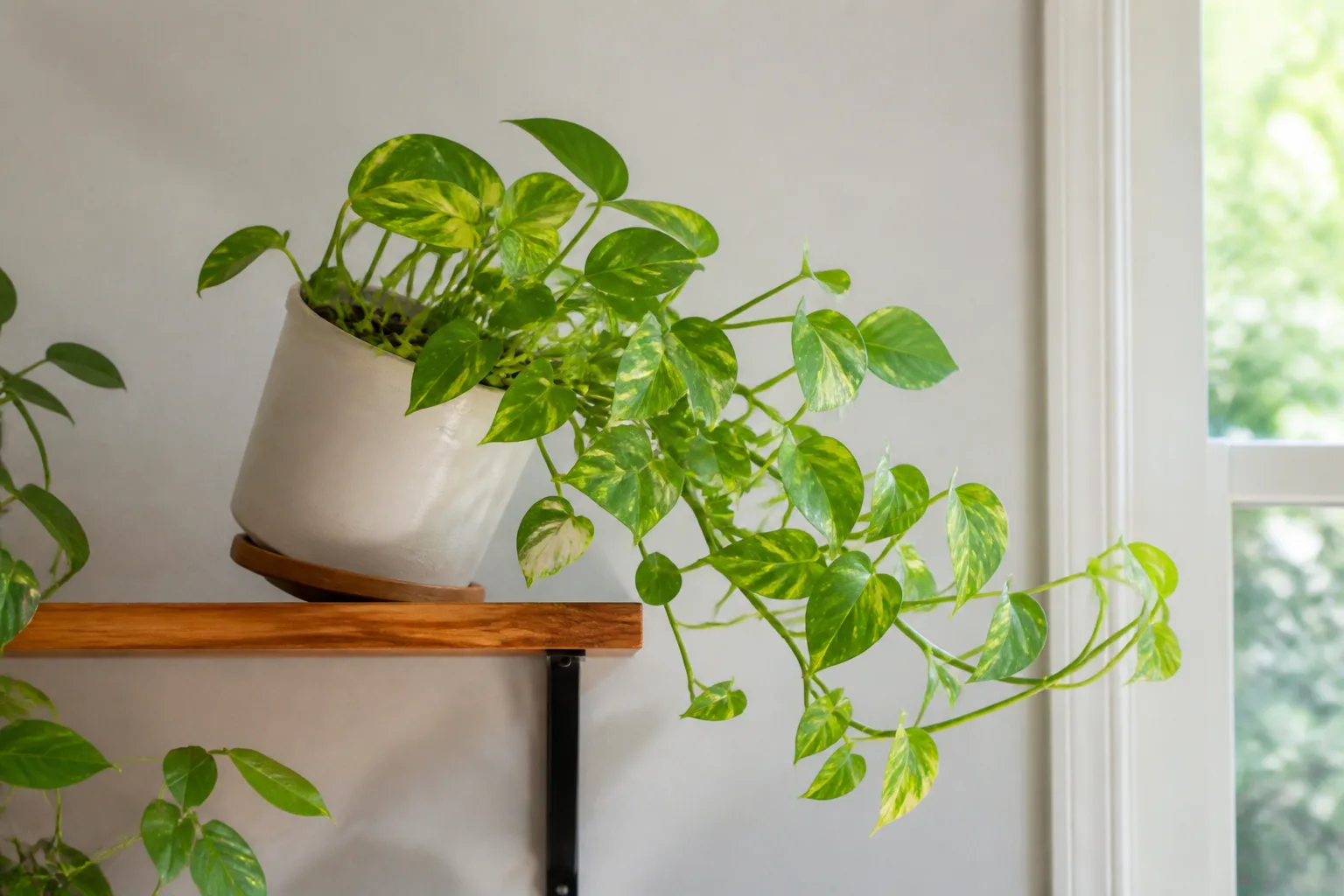
LeafyPixels note — firm window lean: A golden pothos on an east sill in a bright apartment leaned about 30° toward the glass after six weeks without rotation. Stems stayed firm; internodes looked normal. We photographed the side profile, then gave a quarter turn every two weeks. By week two, new leaves faced more evenly; the old bend stayed. That is the expected outcome — new orientation improves; woody or heavily bent stems usually keep their shape.
Roots, Pot Geometry, and Top-Heavy Canopies
Roots are the plant’s underground stake. When the root ball is healthy and fills the pot with a mix of roots and soil, the plant resists tipping. Problems show up as:
- Root-bound circling: roots coil tightly against the pot wall, leave little soil, and dry unevenly. The plant may rock as a solid plug inside a light pot.
- Root decline or rot: damaged roots no longer brace the stem; the top may list even while soil looks wet.
- Shrunken dry mix: soil pulls away from the pot wall after chronic drought, so the root ball rattles instead of anchoring.
- Wrong pot geometry: tall canopies in light plastic nursery pots tip easily; soil settled several inches below the rim raises the center of gravity; cachepots without a snug inner pot let the whole plant rock.
UConn advises checking drainage and inspecting roots when overwatering is suspected: trim brown or black roots and repot into a container sized for the remaining root system in a more porous mix if needed. (UConn Home & Garden Education Center) Missouri Botanical Garden notes that pots without drainage invite trouble and that going up only one pot size at a time (often about 2 inches wider) avoids leaving a small root ball in a large, persistently wet volume of mix. (Missouri Botanical Garden)
Practical stability fixes: move into a wider, heavier pot without jumping multiple sizes; top up settled mix so the root ball sits firmly without burying the stem deeper than it grew before; use a stable stand rated for the pot diameter; for very tall specimens, combine a heavier pot with a discreet stake or pole.
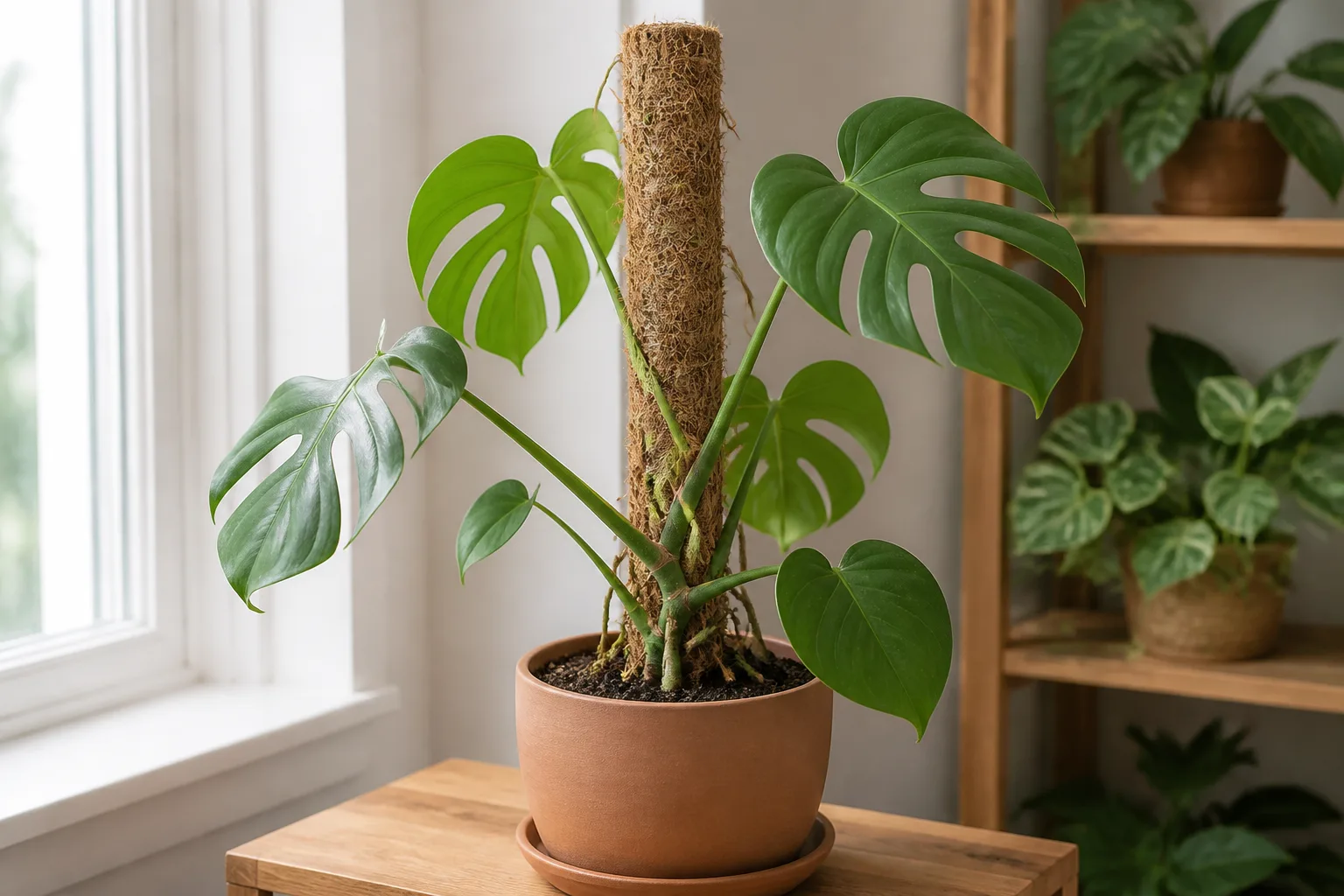
LeafyPixels note — tippy pot: A mature Monstera deliciosa in a light 8-inch nursery pot tipped whenever someone brushed the stand. Roots were circling but not rotten; light at the window was already adequate. We stepped up one pot size into a heavier ceramic base and added a moss pole. Within three weeks the canopy stopped rocking; new aerial roots began contacting the pole. The “lean” was anchorage and habit, not a light deficit.
Soft Stems and Root Failure That Look Like a Lean
Soft stems are a red flag. Healthy phototropic leans feel firm. Softness at the soil line, along petioles, or mid-stem often means cells have lost turgor or tissue is breaking down. Clemson HGIC’s watering guidance is the practical filter: confirm moisture with finger, pot weight, and drainage rather than leaf posture alone, because overwatering and underwatering can both produce wilt-like symptoms through poor root health. (Clemson HGIC)
Urgent soft-stem patterns:
- Stem base dark, mushy, or collapsing at the soil line
- Plant tips over with little resistance when nudged
- Yellowing lower leaves plus a heavy, wet pot
- Sour or swampy smell from the mix
In those cases, remove the plant from the pot, inspect roots, and stop automatic watering. Staking a rotting stem only delays the cleanup and can hide how far the damage has traveled. Escalate to root rot on houseplants when roots are brown, black, or foul-smelling.
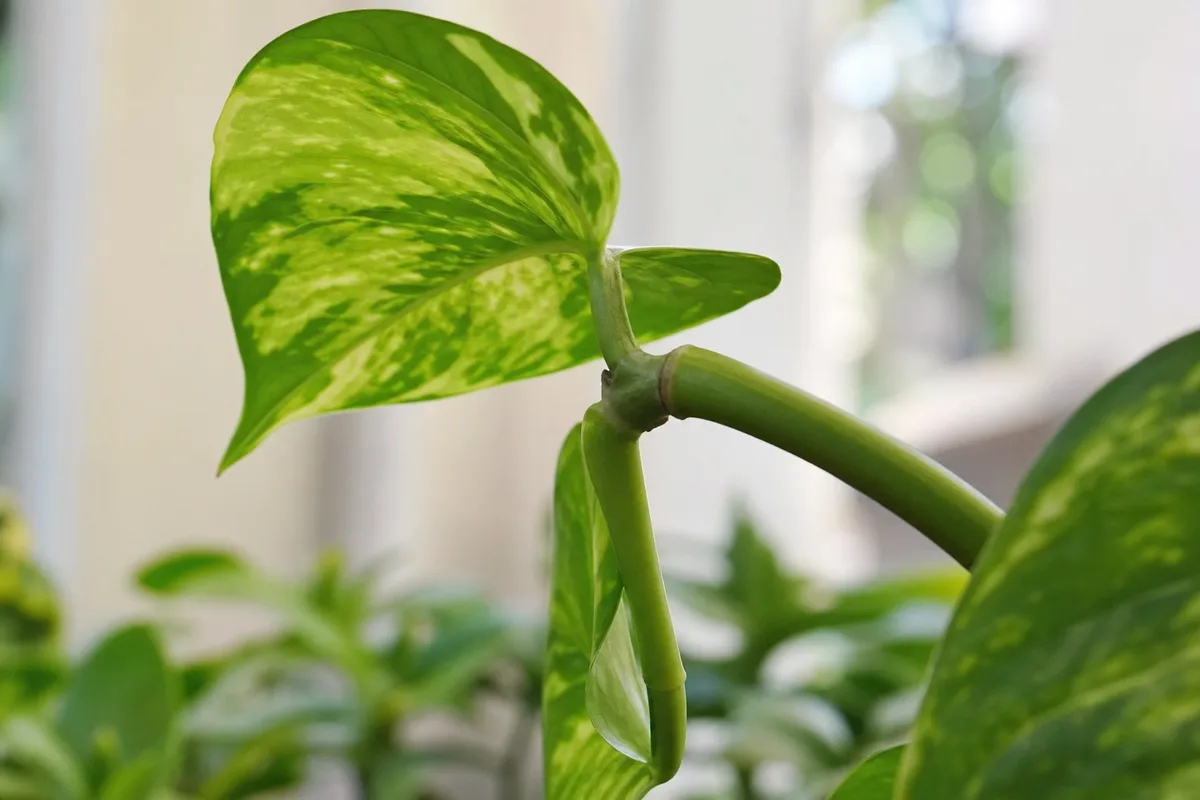
LeafyPixels note — soft wet collapse: A pothos sat in a flooded saucer for several days after a deep water. The vine listed overnight; stems near the soil line felt soft. We emptied the saucer, unpotted, trimmed mushy roots, and repotted into an airier mix one size smaller than the soggy volume suggested. New growth firmed over the next three weeks. A stake would have propped dead tissue — root rescue was the real fix.
Climbing and Trailing Habits: When Support Is the Fix
Not every lean is a mistake. Aroids and vines — monstera, many philodendrons, pothos, syngonium — evolved to climb. Penn State Extension notes that contact responses (thigmotropism) let tendrils and climbing stems curl around supports once they touch a rigid surface. (Penn State Extension) The RHS similarly advises giving climbing plants with tendrils canes or wires and tying them on initially so they can wrap and hold. (RHS)
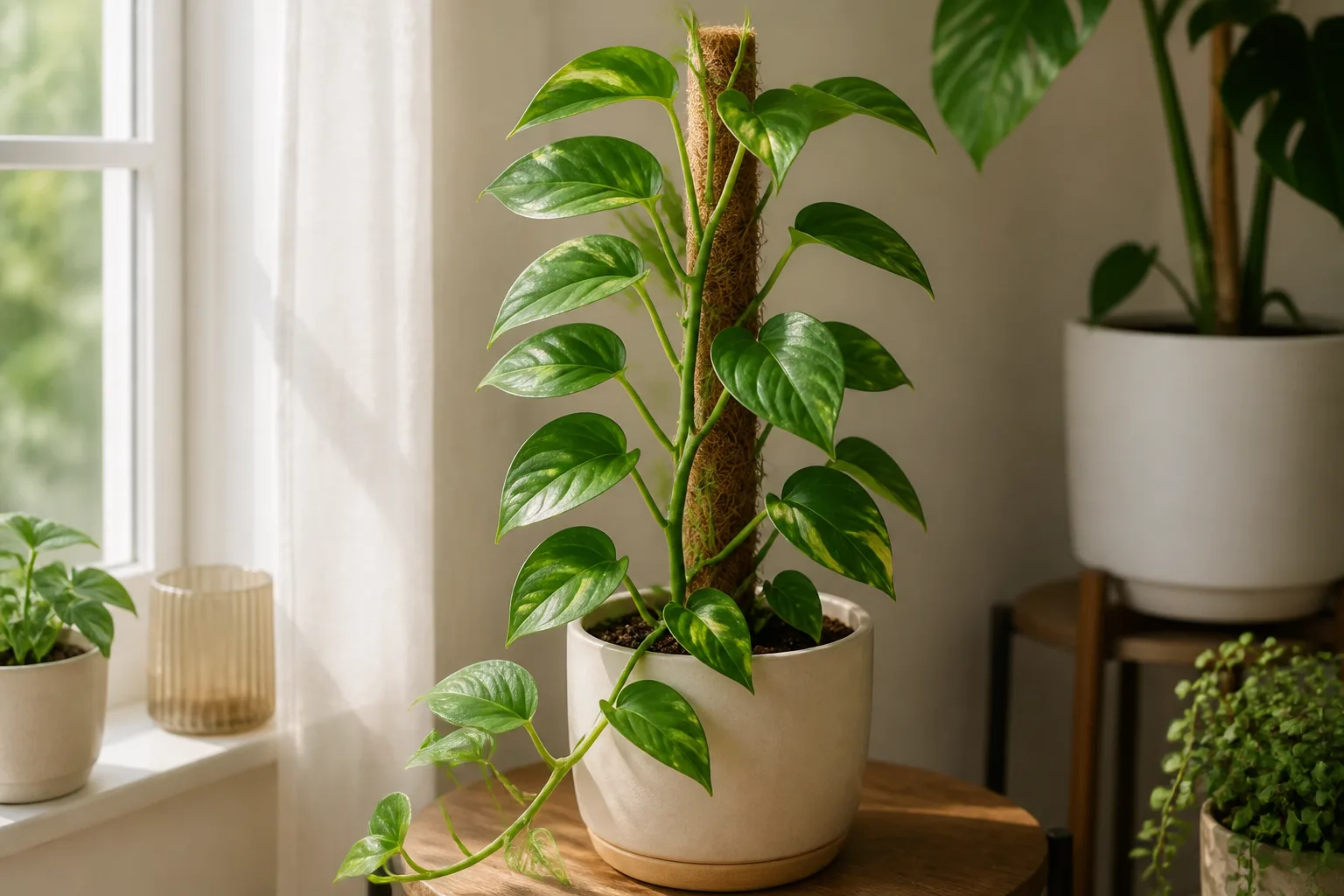
If your plant produces long internodes and seeks vertical contact, a moss pole, coir pole, or trellis is often the correct “lean fix,” not brighter light alone. See DIY moss pole for a support build that matches climbing aroids, and plant-specific pages such as Monstera plant leaning or pothos plant leaning when one species keeps flopping. Trailing plants in hanging pots that “lean” over the rim may simply need pruning or a fuller pot — fighting the trail with a rigid stake usually looks worse than training the vines.
Habit Cheat Sheet: Self-Heading, Climber, Trailer
| Habit | Typical plants | What “leaning” often means | First structural move |
|---|---|---|---|
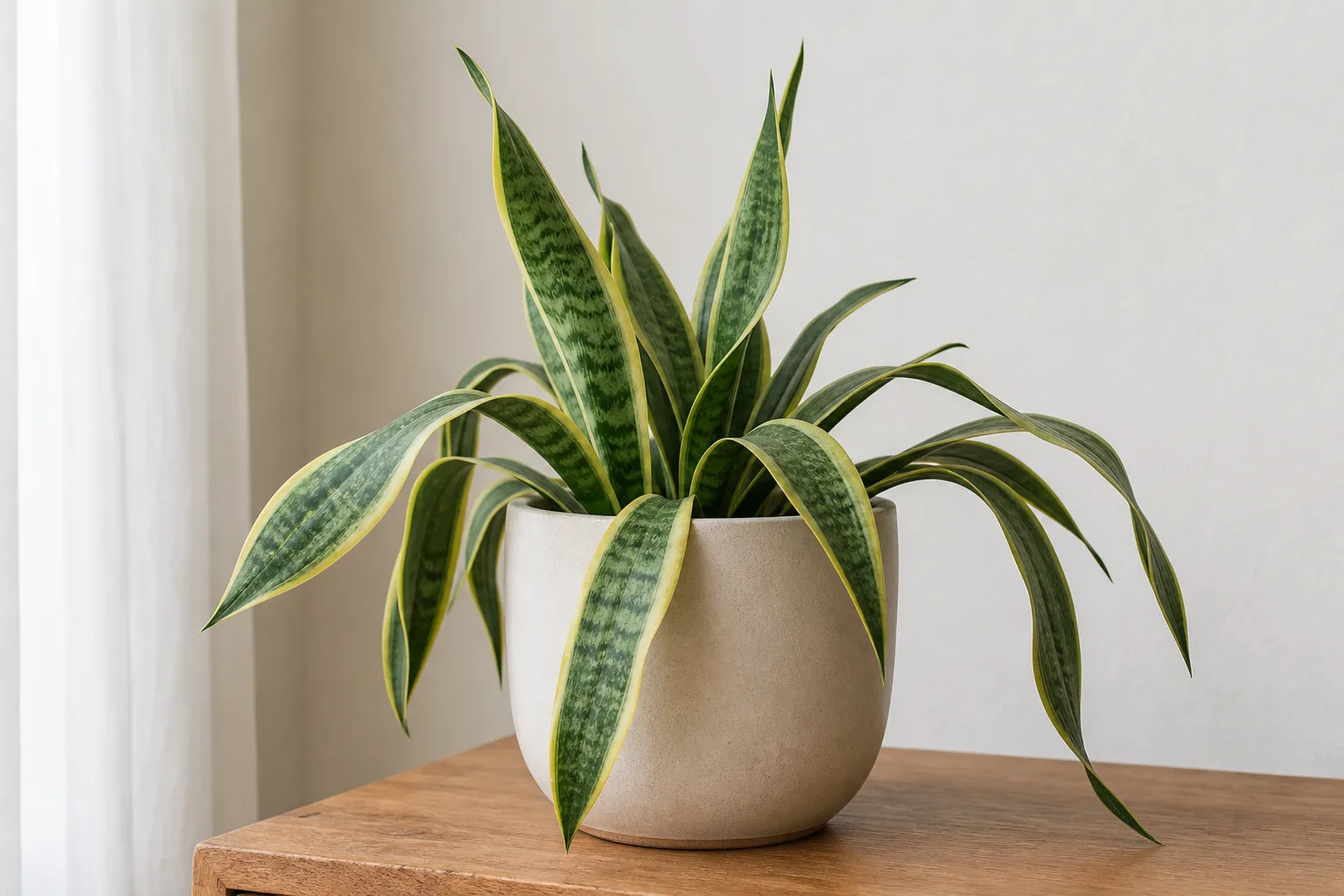
| Self-heading / upright | Many dracaenas, snake plant, ZZ, rubber plant | One-sided light, top-heavy pot, weak stretch | Rotate; heavier pot; prune after light improves |
| Climber | Monstera, many philodendrons, pothos, syngonium | Missing pole/trellis even when light is fine | Moss pole or trellis; soft ties; train new growth |
| Trailer | Pothos in hanging pots, string-of plants, some philodendrons | Gravity + long vines, not a disease | Prune, fuller pot, or intentional cascade — avoid stiff staking |
Hands-On Inspection Before You Intervene
Work through this order once, then act:
- Direction: Does new growth face a window or lamp?
- Firmness: Pinch a leaning stem and a petiole. Firm or soft?
- Internodes: Compare the last few leaf gaps with older growth on the same stem.
- Soil moisture: Finger test 1–2 inches down; lift the pot for weight.
- Drainage: Holes clear? Saucer empty? Inner pot not sitting in water?
- Root clues: Roots at the surface or through holes? Foul smell? Plant rocks as a plug?
- Pot geometry: Narrow base? Settled soil? Top-heavy canopy?
- Habit: Is this species a climber, trailer, or self-heading upright plant?
Photograph the plant from the side before you rotate or stake. At week two, compare three things in that photo: lean angle of the newest growth, internode length on the newest flush, and whether the pot still rocks. That baseline makes recovery judgment honest.
Decision Table: Pattern, Cause, First Move
| What you see | Likely cause | First move |
|---|---|---|
| Firm lean toward window; normal leaf size | Phototropism / one-sided light | Rotate on a schedule; optionally improve even lighting |
| Long internodes, pale thin stems, lean | Low light / etiolation | Increase light gradually; prune after light improves |
| Soft limp lean; wet heavy soil | Overwatering / root stress | Stop watering; inspect roots and drainage |
| Soft limp lean; bone-dry mix | Underwatering | Water thoroughly; confirm recovery before staking |
| Pot tips; circling roots; dry plug | Root-bound / light pot | Repot one size up; use heavier container |
| Climber sprawling or flopping | Missing support | Add moss pole or trellis; soft ties |
| Sudden tip with mushy base | Stem or crown rot | Unpot, trim damage, assess whether salvageable |
Use the table as a triage tool, not a substitute for looking at roots when tissue is soft.
Fix Path: Light First, Then Support, Then Surgery
Work in this order unless soft tissue forces you to roots first:
- Correct the cause — light intensity/direction, moisture, drainage, or pot stability.
- Support only firm tissue — stake or pole after stems feel solid and roots are viable.
- Prune or propagate — remove etiolated or damaged sections once the environment can grow stronger tissue.
Repot when roots circle, the plant rocks as a plug, or the pot is too light for the canopy. Step up one size, refresh mix, and seat the plant at its previous soil depth.
Prune when etiolated sections will never look compact again. Cut above a node once light is corrected so new shoots form closer and stronger. UConn notes that after moving a light-starved plant brighter, some spindly stems can usually be pruned out once new growth appears. (UConn Home & Garden Education Center)
Propagate when the base is weak but upper nodes are healthy — common on leggy pothos and philodendron. Root cuttings under better light and retire the exhausted mother stem.
Do not fertilize to “force” an upright plant in low light. Extra nutrients cannot replace photons, and salts add stress while growth is already compromised.
How to Stake or Pole a Firm Stem
Stake after you know the stem is firm and the roots are viable. Support is a brace, not a cure for soft rot or chronic low light.
Materials: bamboo or coated metal stake, moss or coir pole for climbers, soft plant ties or velcro strips (not wire that cuts), scissors.
Steps:
- Water lightly a day ahead if the mix is extremely dry, so the root ball is less brittle — skip this if the mix is already wet or you suspect rot.
- Insert the stake into the pot near the stem, deep enough to hit pot bottom stability, without spearing the main stem or mushy crown.
- For climbers, place a moss pole behind the main growth and gently gather stems toward it.
- Loosely tie at two or three points below the heaviest foliage. Leave a little give so stems can thicken.
- Train new growth to the support; do not crank old woody bends into a straight line in one session.
RHS guidance on supports for climbing plants emphasizes giving contact and an initial tie so the plant can respond by wrapping itself. (RHS) Check ties monthly and loosen anything that starts to girdle.
Correct Light Without Scorch
Improving light is the most common permanent fix for reaching and etiolated leans — and the easiest way to create a new problem if you rush.
Missouri Botanical Garden warns that moving a plant from shade into bright sun can cause sunburn, though sun-loving plants usually adapt and produce new leaves that handle the brighter spot. (Missouri Botanical Garden) University of Maine Extension recommends acclimating etiolated plants gradually — increasing exposure over several days rather than dumping a shade-grown plant into harsh midday sun. (University of Maine Cooperative Extension)
Practical sequence:
- Move closer to the same window exposure first (same direction, stronger intensity).
- If the window cannot deliver enough intensity, add a full-spectrum grow light on a timer.
- Keep newly moved plants out of hot midday glass until they adjust.
- Wipe dusty leaves so available light reaches the leaf surface; RHS houseplant guidance notes dust can reduce light reaching foliage. (RHS)
UF/IFAS foot-candle ranges are a useful reality check: many indoor spots away from windows fall into low ranges that stretch plants even when the room feels bright to human eyes. (UF/IFAS Gardening Solutions)
Mistakes That Make Leaning Worse
- Forcing stems upright until they kink or split
- Staking over soft, rotting tissue instead of inspecting roots
- Sudden full-sun moves that scorch shade-acclimated leaves
- Oversized repots that stay wet and undermine new roots
- Ignoring habit — staking a trailer into a stiff column, or denying a climber a pole
- Rotating without stable footing on a tall, top-heavy specimen
- Watering every lean without checking soil moisture first
- Wire ties that girdle stems as they thicken
- Burying the stem deeper when topping up soil to “stabilize” a lean
- Staking into a mushy crown and calling it a fix
Each mistake either damages tissue or recreates the original cause. The slower path — diagnose, then light, then support, then prune — recovers more plants.
Recovery Timeline by Lean Type
Judge success by new growth, not by whether an old bend disappears overnight.
| Lean type | What improves first | Typical window | What usually stays |
|---|---|---|---|
| Firm phototropism | New leaf orientation after consistent rotation | 2–4 weeks | Old woody bends |
| Etiolation / weak stretch | Shorter new internodes and stronger leaf size after brighter light | 3–6+ weeks of corrected light | Already-stretched stems (prune later) |
| Soft collapse / root stress | Firmer tissue once roots recover | Days to several weeks | Damaged sections may need trim |
| Unstable base / missing pole | Less rocking; new growth trained to support | Immediate stability; 2–4 weeks of training | Prior trail shape until pruned |
Prevention that actually works: match species to real light at leaf height; rotate on a simple calendar reminder; repot before roots form a solid coil; add poles early for known climbers; keep drainage honest — empty saucers, use pots with holes; reassess placement when seasons change and windows deliver less winter light.
Related Guides
- Not enough light for houseplants — pale stretch and window-reaching growth
- Why is my plant leggy? — long internodes after light improves
- Why is my plant drooping? — limp wilt vs firm directional lean
- Root rot on houseplants — soft stems and tipping with wet soil
- Grow lights for indoor plants — even intensity when windows are not enough
- DIY moss pole — support climbing aroids instead of fighting the lean
- Plant leaning symptom hub — plant-by-plant pages for this symptom
Conclusion: Next-Step Checklist
Before you stake, finish these eight checks: direction of new growth, stem firmness, internode length, soil moisture, drainage, root/plug clues, pot geometry, and species habit. Firm window leans get rotation and even light. Soft wet leans get root inspection, not a decorative stake. Long internodes get brighter light before pruning. Climbers get a pole on purpose.
Old bends may stay. That is normal. The recovery metric that matters is upright, balanced, strong new growth — shorter internodes, firmer tissue, and a pot that no longer tips when you walk past.