Moss Rose (Portulaca) Care: Sun, Dry Soil, Bloom Problems
Moss rose care for hot terraces: full sun, dry sandy soil, dry-down watering, monsoon pauses, and full fixes for closed blooms and crown rot.
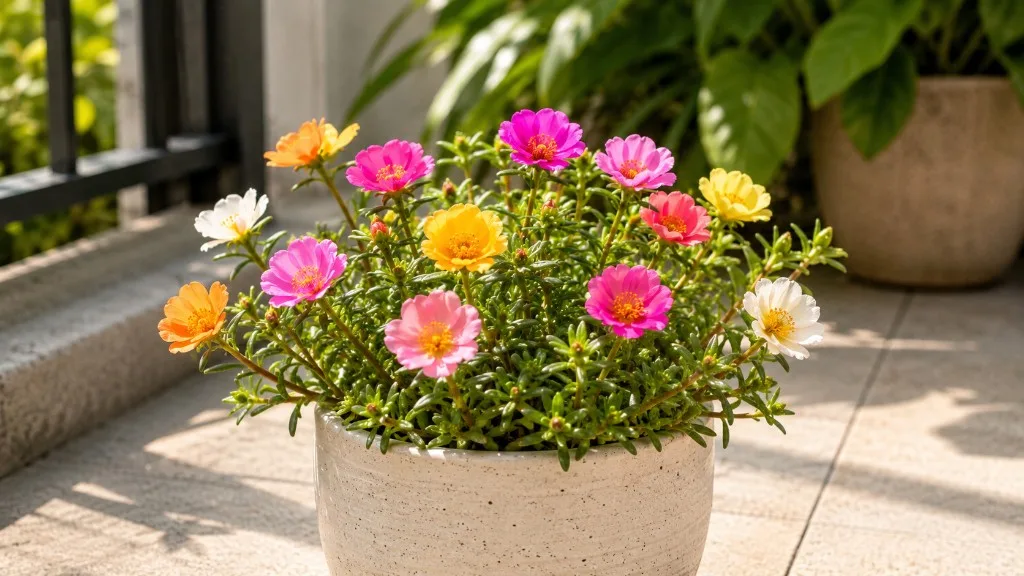
Moss rose (Portulaca grandiflora) is the summer annual you plant when concrete radiates heat by noon and softer bedding plants collapse. Good portulaca care is not complicated — it is easy to get backwards. The plant wants unfiltered full sun, sandy or gritty soil that empties fast, and a watering rhythm that lets the mix dry completely between soaks. Heat is a feature. Shade, peat-heavy “annual mix,” and daily sympathy sprinkles are the usual killers.
If your flowers stay shut on a clear afternoon, stems stretch into pale spaghetti, or the crown turns soft and sour, this page walks the diagnosis and the fix on the spot. Treat moss rose like a flowering succulent, not like thirsty impatiens. Fleshy needle-like leaves store water; shallow roots rot just as quickly in wet peat. Match placement and drainage to that physiology, and the rest of the season is mostly observation.
Moss Rose Care Decisions at a Glance
| Care factor | Baseline target | What failure looks like |
|---|---|---|
| Light | Full sun, 6–8+ hours direct | Closed midday blooms, leggy pale stems |
| Water | Soil fully dry, then soak and drain | Mushy stems, sour mix, sudden collapse |
| Soil | Sandy/gritty, low fertility, fast drain | Crown rot in peat or clay pockets |
| Heat | Thrives ~70–90°F (21–32°C) | Stress below ~50°F / extreme wet cool weeks |
| Feed | Little or none; lean conditions | Soft leafy growth, shy buds |
| Multiply | Surface-sown seed or tip cuttings | Transplant shock on fragile seedlings |
| Pets | Toxic (soluble calcium oxalates) | Keep out of reach; call vet / ASPCA if chewed |
Pet households first: moss rose is not a safe floor-level plant for chewing cats or dogs. See the toxicity section below before you hang a basket at paw height. For a verified non-toxic indoor shortlist, use our pet-safe houseplants guide.
When you need topic depth after this overview — light diagrams, mix ratios, or a single symptom — open the Portulaca care hub. This guide is written so you can set a working routine and rescue a failing plant without bouncing through five URLs first.
What We Grew and Observed on Hot Terraces
We grow moss rose as a heat-season annual on Bengaluru terrace rails and in shallow bowls (roughly 20–25 cm / 8–10 inch terracotta, and one 30 cm hanging basket). The mix that held up through May–June heat was about 40% coco or light potting mix, 40% coarse sand or perlite, 20% fine gravel — the same lean recipe we recommend below. In full sun with afternoon highs near 32–36°C, finger checks at 2–3 cm depth were bone-dry every 3–5 days; after a soak until runoff, blooms opened reliably by late morning.
Two failure cases taught more than the successes:
- Peat-heavy nursery pack + monsoon week. A pack left in its retail peat mix under partial eave shade stayed wet for more than a week of cloudy rain. Crowns softened within about 10–14 days; salvage failed once the center felt mushy. Restart from cuttings into gritty mix was faster than nursing the parent.
- “Bright” balcony that was morning-only sun. Stems stretched, internodes lengthened, and flowers stayed closed after 10 a.m. even on clear days. Moving the same cultivar to an unobstructed rail restored open blooms within a week without fertilizer.
Open flowers in midday sun are the visual goal. Closed petals on a cloudy morning are normal photonasty — not disease. Closed petals on a clear, hot afternoon usually mean shade, wet roots, or excess nitrogen. Compare open color against problem photos in the diagnosis section below (overwatering, root rot, and leggy shade growth).
These notes are observational, not a controlled trial. Your pot size, wind, and humidity change dry-down. Use the finger test and bloom behavior as the meter, not our calendar.
Moss Rose Is Not Edible Purslane
Moss rose is Portulaca grandiflora, a member of the Portulacaceae family native to hot, dry plains in Argentina, southern Brazil, and Uruguay. NC State Extension describes a low-growing annual with fleshy narrow leaves that typically reaches about 8 inches tall and about 1 foot wide, forming a dense mat of single, semi-double, or double flowers. Wisconsin Horticulture places the same South American range and notes worldwide use as a low-care summer bloomer.
Garden-center tags often say “portulaca,” “purslane,” or “moss rose” interchangeably. Common purslane (Portulaca oleracea) is a related species with flat, paddle-shaped leaves and small yellow flowers, often eaten as a leafy green or appearing as a summer weed. Classic ornamental moss rose has cylindrical, needle-like succulent leaves and large rose-like blooms in red, pink, orange, yellow, white, and violet. Both like sun and drainage, but moss rose is grown for display and is far less forgiving of shade and wet soil.
| Trait | Moss rose (P. grandiflora) | Common purslane (P. oleracea) |
|---|---|---|
| Leaves | Needle-like / cylindrical | Flat, paddle-shaped |
| Flowers | Large, showy, many colors | Small, usually yellow |
| Garden job | Ornamental bedding / containers | Edible green / weed / groundcover |
| Wet shade | Fails fast (rot, closed blooms) | More opportunistic |
Do not eat ornamental moss rose because a tag said “purslane.” If you bought a plant for flowers and got flat leaves with tiny blooms, you may have edible purslane genetics or a flat-leaf hybrid rather than classic P. grandiflora. Cornell Home Gardening lists moss rose as an easy annual that “needs hot, dry conditions, but otherwise not fussy,” with height roughly 0.33 to 0.66 feet and spread 0.5 to 2 feet.
In USDA zones 10–11 and frost-free tropics, moss rose can behave as a short-lived perennial. Everywhere frost hits, treat it as a warm-season annual: plant after nights stay warm, enjoy summer color, refresh mix next year.
Pet Toxicity Warning Before You Plant
Moss rose is not pet-safe. The ASPCA moss rose entry and the ASPCA portulaca entry both list Portulaca as toxic to dogs, cats, and horses because of soluble calcium oxalates. Clinical signs on the moss rose listing include tremors, salivation, and kidney failure (rare in dogs and cats); the portulaca listing includes muscle weakness, depression, and diarrhea.
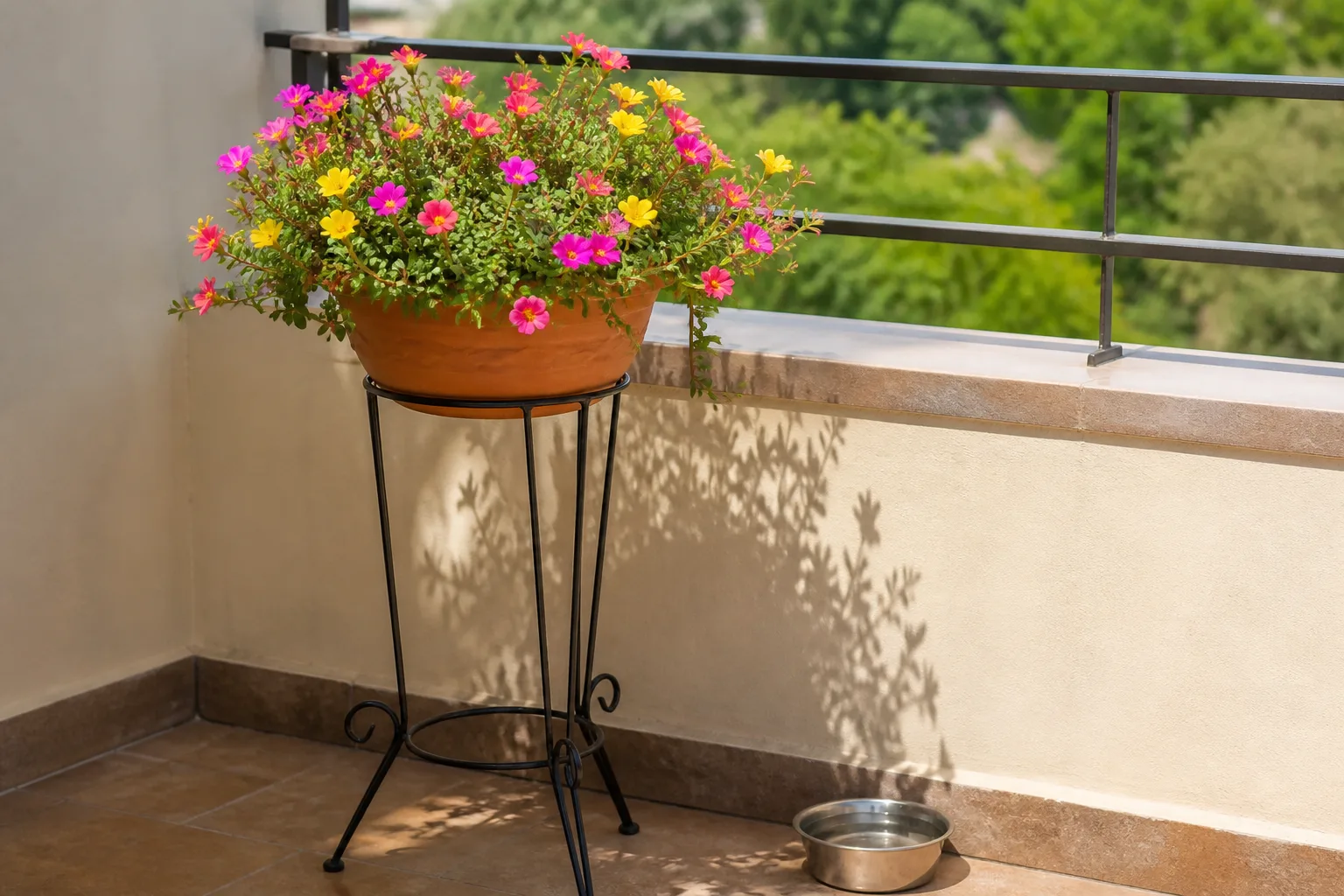
Keep pots and hanging baskets out of reach of chewing pets. Bitterness will not reliably stop grazing. If ingestion is suspected, call ASPCA Animal Poison Control at (888) 426-4435 (US; a consultation fee may apply) and your veterinarian promptly. This is general safety information, not a substitute for veterinary advice.
Full Sun and Why Flowers Open Only in Bright Light
If you remember only one rule of moss rose care, make it this: full direct sun for at least six to eight hours a day. NC State Extension specifies full sun and well-drained sandy or rocky soils. Proven Winners states portulaca needs full sun to produce flowers, and that too little light yields leggy growth and fewer blooms that will not stay open. Cornell lists sunlight simply as full sun. This is not a bright-indirect houseplant.
Place pots on the sunniest rail, wall, or terrace edge you have. In beds, site moss rose where neighbors will not cast afternoon shade as they fill in. In hanging baskets, avoid eaves and covered patios that filter midday light. The plant handles intense reflected heat from concrete and masonry better than most annuals — which is why it thrives in rock gardens, pool decks, paved courtyards, and rooftop bowls. UF/IFAS Nassau County notes moss rose grows well in hot, dry areas in rock gardens and as edging, and that a sunny site with light soil gives the best growth. For placement diagrams and honest indoor limits, see the portulaca light guide.
Acclimate nursery packs grown under shade cloth over one to two weeks, but do not keep plants in partial shade long term. Stretchy internodes and closed midday blooms are a light problem first. Fertilizer will not open flowers that never see enough sun.
Closed blooms that are normal vs a problem
One of moss rose’s charming habits — and the source of the ten o’clock plant nickname — is that flowers open in bright sunlight and close at night or when it is cloudy. Cornell and NC State both describe this photonastic rhythm as normal, not disease. Wisconsin Horticulture adds that blooms are only open in bright sunlight, closing at night and on cloudy days, and that when open they can nearly hide the foliage.
Normal: petals shut at dusk, at dawn before the sun hits, or under monsoon cloud cover.
Problem: petals stay shut on a sunny afternoon after the plant has had hours of direct beam. Check shade first (taller neighbor, umbrella, roof edge), then moisture and nitrogen — cool wet weeks and overfeeding push soft leafy growth and shy buds.
Indoor windowsills rarely deliver enough unfiltered sun for season-long flowering unless the plant sits against hot south- or west-facing glass for many hours, or under strong grow lights. Treat indoor moss rose as a short display unless you can match outdoor photon levels.
Cultivar differences: Sundial, Afternoon Delight, and classic types
Not every moss rose closes on the same schedule. Wisconsin Horticulture notes that most newer hybrids remain open longer through the day. Useful named examples:
- ‘Afternoon Delight’ — about 2-inch flowers that stay open longer into the afternoon than the species.
- ‘Sundial’ series — early blooming doubles that remain open in cooler and cloudier weather; compact plants in many colors (including striped ‘Peppermint’).
- ‘Sundance’ series — semi-double flowers that remain open most of the day.
- Classic species types — more strictly morning-open / midday-close in heat.
No cultivar replaces a dim balcony with reliable color. If blooms stay shut whenever the sky is clear, move the plant into stronger sun before you change fertilizer or buy a different series. Cornell also lists ‘Margarita’ and ‘Calypso’ mixes as compact, early performers — useful when you want mound habit rather than a sprawling mat.
Water Only After Full Dry-Down (Containers, Beds, Monsoon)
Portulaca is extremely drought-tolerant once established. Cornell Home Gardening notes it tolerates droughty soil, requires well-drained soil, and needs hot, dry conditions. Wayne County Extension calls moss rose very drought tolerant, with fleshy leaves that store water during dry periods. Proven Winners adds the useful nuance: the plant prefers dry conditions but flowers best with some periodic moisture during heat waves — meaning deep, infrequent soaks, not constant dampness.
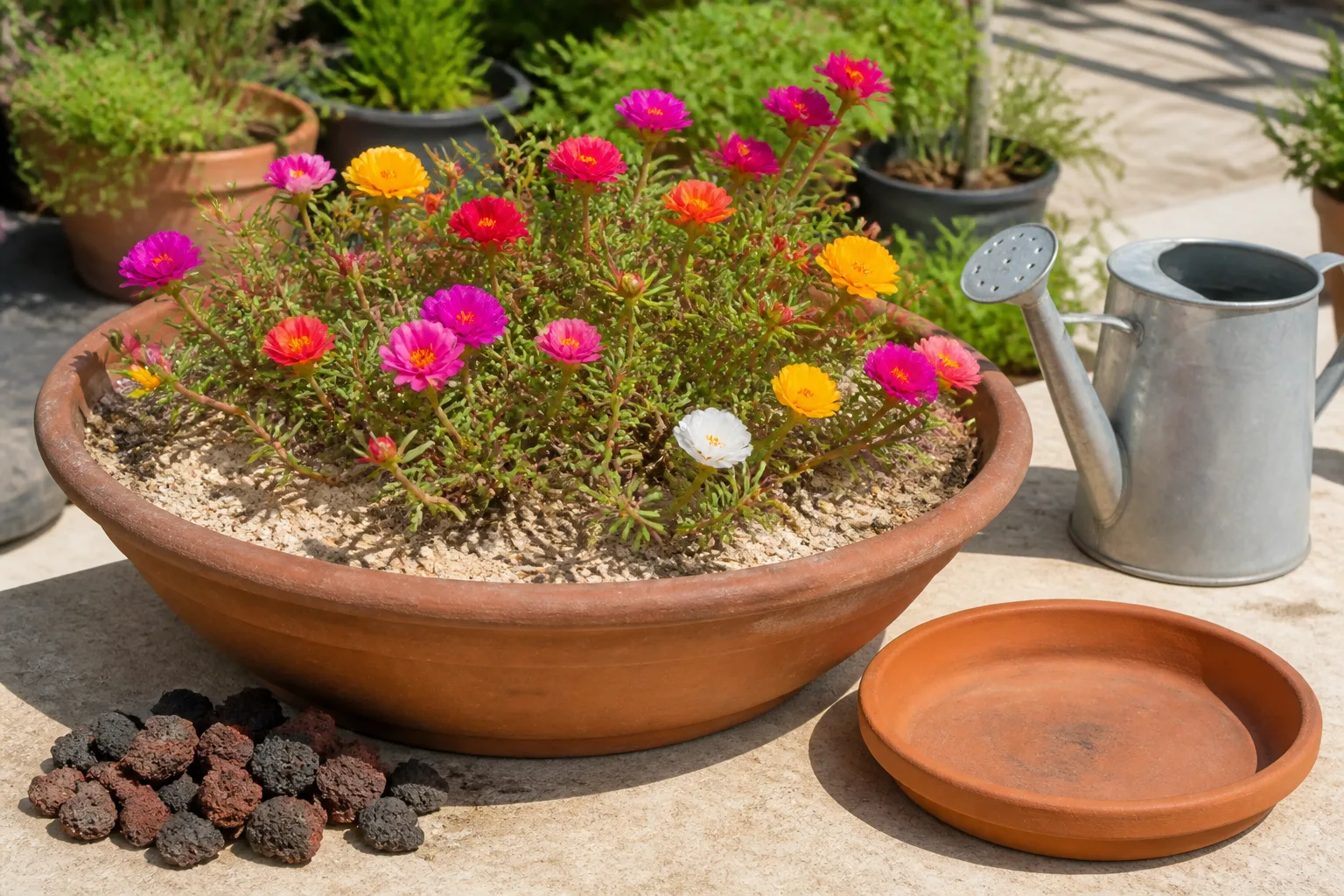
The practical rule: water only when the soil is completely dry, soak until excess drains from the holes, then wait for full dry-down again. A starting interval of every 3–5 days in full-sun summer containers and about once a week in cooler weather helps beginners, but always let the pot decide. Proven Winners also warns that portulaca is shallow rooted and more prone to root rot if overwatered — the failure mode is almost always too much water, not too little.
Do not water on sympathy. Midday limp on bone-dry soil often recovers by evening as tissue draws on stored moisture. Midday limp on heavy wet soil is a root-oxygen emergency. Empty saucers and cachepots after every soak. The same dry-down mindset is covered more generally in how to water indoor plants the right way — apply it even more strictly here because moss rose is a heat-loving succulent annual. Seasonal rhythm detail lives on the portulaca watering guide.
Monsoon / cool cloudy weeks: pull irrigation back hard. Rain may replace watering entirely. Check the crown after multi-day rain — if the mix stays cool and clingy past your usual dry-down, tip pots to drain, move under temporary cover if possible, and skip the next scheduled soak. On our terrace, July cloudy stretches that kept a peat pack wet for over a week were the crown-rot timeline; gritty terracotta bowls dried enough between showers to stay firm.
Container vs bed watering in real heat
Containers and hanging baskets dry fastest on windy rails. Push a finger 2–3 cm into the mix. If you feel coolness or cling, wait. If the tested depth is dry, water thoroughly until runoff. Lift small pots when you can; a dry moss rose pot is noticeably lighter than one watered yesterday. Prefer soil-line watering over dusk overhead sprays that leave the crown wet overnight. Bottom watering works if you drain residual water afterward. Never leave the grow pot sitting in a decorative cachepot full of runoff.
Beds and rock pockets need a deeper check — 3–5 cm in several spots, because stone mulch and slope drainage vary. Sandy beds may need water more often than clay pockets that hold moisture. If native soil is dense, water less often than you think and improve drainage rather than “helping” with frequent sips. If you are debating whether to water, you probably should not.
Gritty Soil, Crown Rot Prevention, and Container Mix
Moss rose wants sandy, rocky, or gritty soil with exceptional drainage and low to moderate fertility. NC State Extension says plant in well-drained sandy or rocky soils in full sun, and notes poorly drained soils may lead to crown rot. Cornell requires well-drained soil and lists rock gardens, outdoor containers, and xeriscapes as good fits. Wisconsin Horticulture recommends full sun in most soil types as long as they are well-drained, and calls moss rose a good choice for lean, sandy, gravelly, or rocky areas.
Heavy clay, moisture-retentive peat mixes, and richly composted beds are poor fits. They hold water around the crown, encourage fungal issues, and push soft leafy growth instead of flowers. If native soil is dense, amend planting pockets with coarse sand, fine gravel, perlite, or crushed granite, and raise beds slightly for runoff. In rock and crevice gardens — one of moss rose’s best settings — plant into gaps with almost no organic matter beyond what settles naturally. A practical pH target is about 5.5–7.0, which most lean garden soils and cactus mixes already meet. Mix ratios and drainage tests: portulaca soil guide.
For pots and hanging baskets, use a succulent-leaning mix, not standard peat-heavy houseplant soil. A reliable home recipe is 40% potting mix or coco coir, 40% coarse sand or perlite, and 20% fine gravel or pumice. Proven Winners recommends an all-purpose potting mix with added perlite for container drainage. Choose pots with large drainage holes; terracotta helps on humid terraces because it breathes. Avoid sealed decorative pots without drainage unless they are cachepots and you lift the grow pot out to water.
Shallow wide bowls suit the plant’s shallow root habit better than deep narrow cylinders of wet mix. Space hanging-basket plants about 6–12 inches apart depending on variety vigor so the mat fills without trapping humidity in a dense wet core. Refresh container mix each warm season for annual plantings, or whenever the drainage test fails and the mix smells sour. Mid-season crown rot costs more than a bag of grit. When you need a plug-intact move, follow the portulaca repotting guide. Related drainage logic for other succulents appears in indoor succulent care.
Heat, Timing, and When Frost Ends the Season
Moss rose is a heat specialist. Proven Winners describes a tender succulent that prefers hotter temperatures around 70–90°F (21–32°C), with stress more likely above about 100°F or below about 50°F, and notes the plant thrives in full sun, heat, humidity, drought, and poor soils — the combination that kills many traditional bedding plants. Wayne County Extension frames it as a low-care flowering annual for hot summer months. On Indian terraces and rooftops, that heat tolerance is why moss rose stays cheerful when marigolds flag.
Frost is the hard stop. Cornell and other extension sources treat moss rose as frost-tender; wait until frost danger has passed and soil has warmed before planting out. Cornell lists germination temperatures of 70–85°F (21–29°C) with emergence in 10 to 14 days. In practice, set plants after nights stay above about 60°F (15°C). In much of India, sow or plant from March onward when daytime highs are regularly above 25°C (experience-aligned seasonal timing — confirm with local nursery practice for your city). During cool late-season nights, growth slows, flowers close more often, and replacement is usually smarter than rescue. University of Arkansas Extension similarly describes a spreading succulent about 6 inches tall and a foot across, with fleshy leaves that store moisture between rains — built for hot slabs, not cool shade.
Lean Feeding, Light Pruning, Seed and Cuttings
Moss rose is not a heavy feeder. Proven Winners says it prefers lean conditions and needs little or no supplemental fertilizer; soil that is too rich or overfertilizing may produce foliage at the expense of flowers. NC State lists maintenance as low. One slow-release application at planting — or a balanced liquid at quarter to half strength once or twice mid-season on already-moist soil — is enough for most displays. Skip feeding stressed, rotting, or cold-stalled plants. If stems are green and thick but buds stay shy, suspect shade or overwatering before hunger. Depth: portulaca fertilizer guide.
Pruning is light. Pinch tips early if plants look sparse to encourage branching. Proven Winners notes spent flowers are largely self-cleaning, and that leggy plants can be cut back by up to half in mid-summer to stimulate new growth. NC State says deadheading deters self-seeding but is not required for plant health. UAEX adds that if plants stop blooming under heavy seed set, shearing seed heads can restart flowering; reseeding is common but rarely weedy in beds. Grooming steps: portulaca pruning.
From seed: Surface-sow tiny seeds on moist, well-draining mix; do not bury them, because light aids germination. Cornell recommends scattering outdoors after frost danger or starting indoors 6–8 weeks before the last frost, handling seedlings carefully because they dislike transplanting. Wisconsin Horticulture suggests mixing seed with sand for even sowing and notes germination in about 1½–2 weeks. Keep seedlings lightly moist until established, then switch to the dry-down adult rhythm.
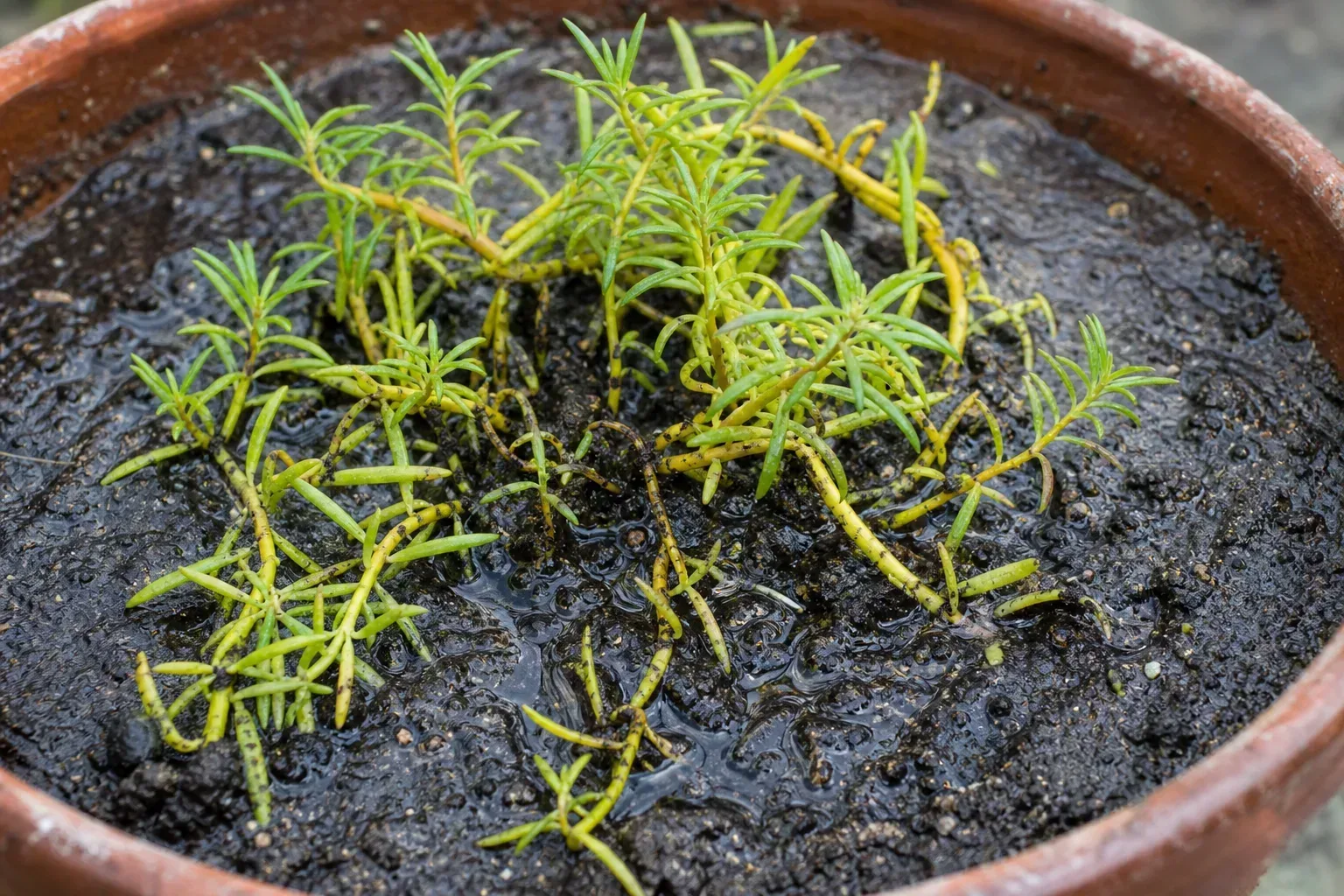
From stem cuttings: Take short non-flowering tip cuttings, strip lower leaves, and insert into moist sandy mix. Broken pieces often root when soil is warm enough — Wisconsin notes stems can be fragile but root readily. Cuttings are the fastest mid-season refresh when parent mats go leggy in August. Full steps: portulaca propagation guide.
Diagnose Closed Blooms, Leggy Growth, and Mushy Crowns
Most moss rose problems trace to too much water, too little sun, or too-rich soil. Diagnose in that order before reaching for fertilizer or pesticide. Aphids and slugs appear occasionally per NC State and Wisconsin Horticulture; stem or root rots show up in wet soils. Deer usually leave the plant alone.

Sixty-second triage
- Is today sunny at midday? If yes and flowers are open → care is roughly right.
- Sunny but closed → check shade, then wet soil, then recent fertilizer.
- Soft, yellow, or collapsing stems with wet mix → crown/root rot path (discard).
- Stretched pale stems with few buds → shade / legginess path (move + prune).
Closed flowers and no buds on sunny days
What you see: buds stay popcorn-tight after hours of clear sun; foliage may look okay or slightly soft from wet soil.
Do this now (on-page):
- Walk the light path at noon — remove umbrellas, trim overhanging leaves, or move the pot to an unobstructed rail.
- Finger-test the mix. If cool/clingy, skip watering for several days; empty saucers; improve airflow.
- Hold fertilizer for at least two weeks. Soft leafy growth from rich mix or weekly feed often delays opening.
- Wait 5–7 clear days. If blooms still refuse to open in strong sun, take tip cuttings into a sunnier, grit-heavier pot rather than waiting on the parent.
Deeper symptom pages if needed later: no flowers, not enough light, faded flowers.

Shade legginess: prune-and-move workflow
What you see: long pale internodes, sparse branching, few buds, flowers that open briefly then quit.
Do this now:
- Move the plant into full sun immediately (acclimate over 3–5 days only if the plant came from deep shade cloth — otherwise prioritize photons).
- Cut stems back by up to half with clean shears, keeping a few leaf nodes. Proven Winners endorses mid-summer hard prune for leggy plants.
- Root the healthiest tip cuttings in moist sandy mix in the new sunny spot as insurance.
- Water only after dry-down. Optional: one very light half-strength feed after new growth appears — not before.
- Expect denser branching in 1–2 weeks of heat and sun. If the parent stays weak, discard it and grow on the cuttings.

More detail: leggy growth.
Mushy crown: discard-and-replace workflow
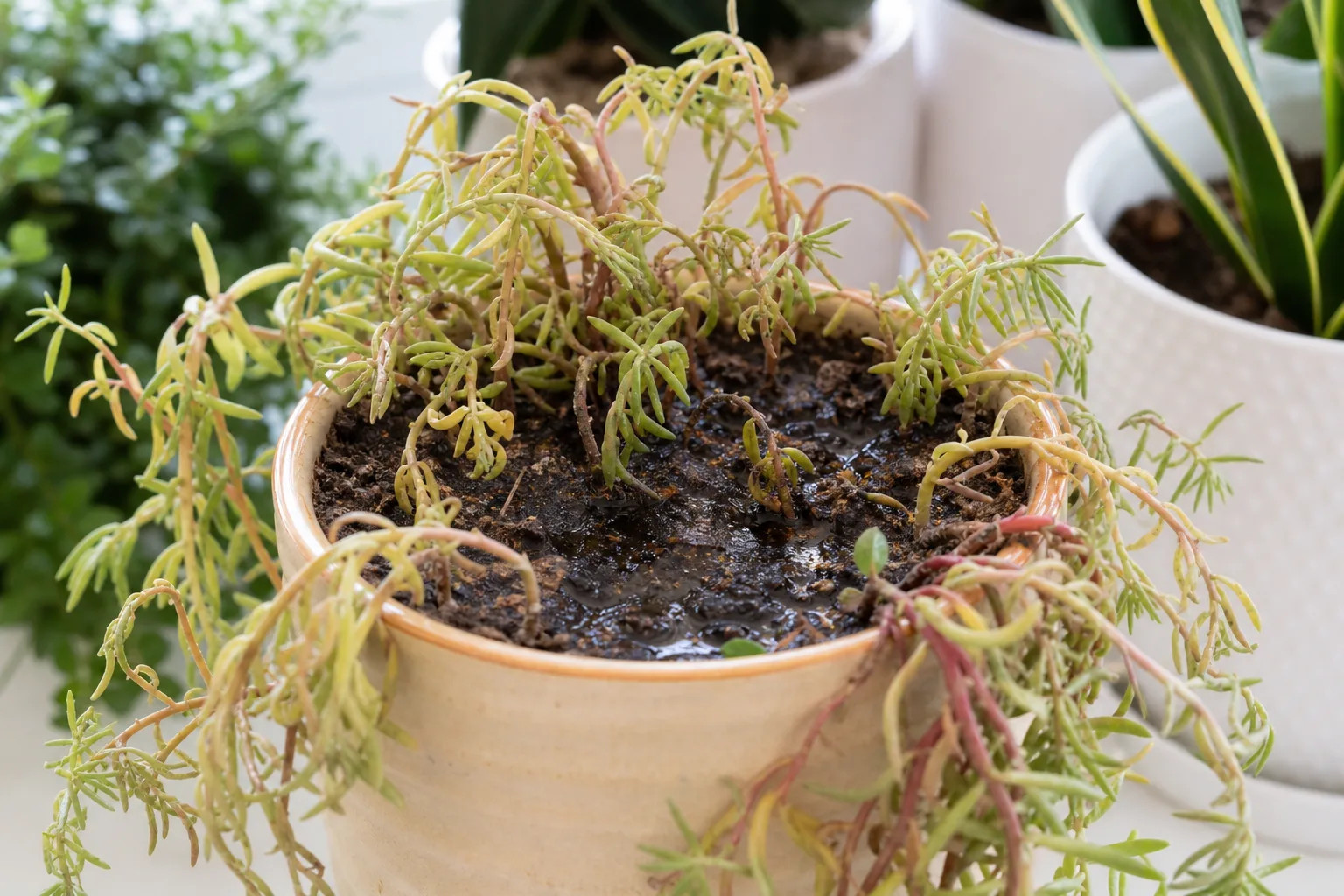
What you see: yellowing mushy stems, sour smell from the pot, sudden collapse, soft center at the soil line.
There is no reliable rescue once the crown is soft. Act to protect other pots and restart:
- Isolate the pot. Do not share saucers or tools with healthy plants until cleaned.
- Confirm: gently squeeze the crown. Soft + wet + foul = rot. Firm + dry limp = drought (soak once, then dry-down).
- Discard the plant and the soggy mix — do not try to “dry it out” for weeks hoping for recovery.
- Scrub the pot with soapy water; rinse; dry. Prefer terracotta with large holes next time.
- Replant fresh seed or tip cuttings into the 40/40/20 gritty mix in full sun.
- Water lightly to settle cuttings, then wait for full dry-down. Resume the soak-and-dry rhythm only after roots grab.
Prevention remains the real fix: grit, full dry-down, no dusk overhead watering, and monsoon pauses. Supporting pages: overwatering, root rot, wrong soil mix, wilting.
Hot-Sun Color Without Moss Rose for Pet Households
If you want blazing-terrace color but share the home with chewing pets, skip moss rose at floor and low-rail height. Use the pet-safe houseplants list for ASPCA-verified indoor options (for example haworthia on a high sunny sill), and keep any Portulaca in hanging baskets pets cannot reach — understanding that fallen leaves and tipped pots still create risk. When in doubt, choose a confirmed non-toxic species instead of relying on height alone.
Seasonal Checklist for Hot Terraces
Late winter / early spring: order seed or buy packs; prepare grit; wait for warm nights (~15°C+).
Planting window (often March+ in much of India; after frost elsewhere): set in full sun; space 6–12 inches; water to settle, then dry-down.
Peak heat: finger-check every few days; soak only when dry; skip rich feed; watch for open midday blooms as the health meter.
Monsoon / cool cloudy stretch: pause irrigation; tip pots after storms; cover only if crowns stay wet for days.
Mid-season sag: prune up to half or take cuttings; shear heavy seed heads if bloom stalls.
First hard frost / end of heat: compost annual plants; save seed if desired; refresh mix for next year.
Zones 10–11 only: optionally overwinter in place with reduced water — still keep drainage excellent.
Related guides
- Portulaca watering — monsoon pause details and seasonal dry-down rhythm when your pot dries slower than this overview assumes
- Portulaca soil — grit ratios and drainage tests if peat-heavy mix keeps the crown wet
- Portulaca light — placement diagrams when “bright balcony” still leaves flowers shut at noon
- How to water indoor plants the right way — the check-then-soak habit that moss rose needs even more strictly than tropical houseplants
- Pet-safe houseplants — ASPCA-verified swaps when you want color without oxalate risk
Conclusion
Moss rose succeeds when you stop treating it like a soft bedding annual and start treating Portulaca grandiflora like the South American heat-and-drought specialist it is. Give it full sun all day, sandy well-draining soil, complete dry-down between waterings, minimal fertilizer, and warm-season timing without frost. Flowers that open in blazing light and close at night are normal. Stems that stretch and stay shut are a sun problem — move and prune. Mushy crowns are a water-and-drainage problem — discard and restart, do not nurse.
Keep the plant away from pets, refresh mix each season in containers, and site it where other flowers fail — hot rails, rock pockets, hanging baskets in unfiltered sun. Use the seasonal checklist above as your calendar; return to the Portulaca hub only when one variable needs its own deep dive. Get those boundaries right, and moss rose will repay you with weeks of saturated color in the driest, brightest corner of the garden.