8 Peony Companion Plants for Spring Gardens
Pair peonies with hydrangeas, daffodils, lilacs, salvia, catmint, foxglove, iris, and delphinium using a bloom-time plan that keeps your bed interesting all season.
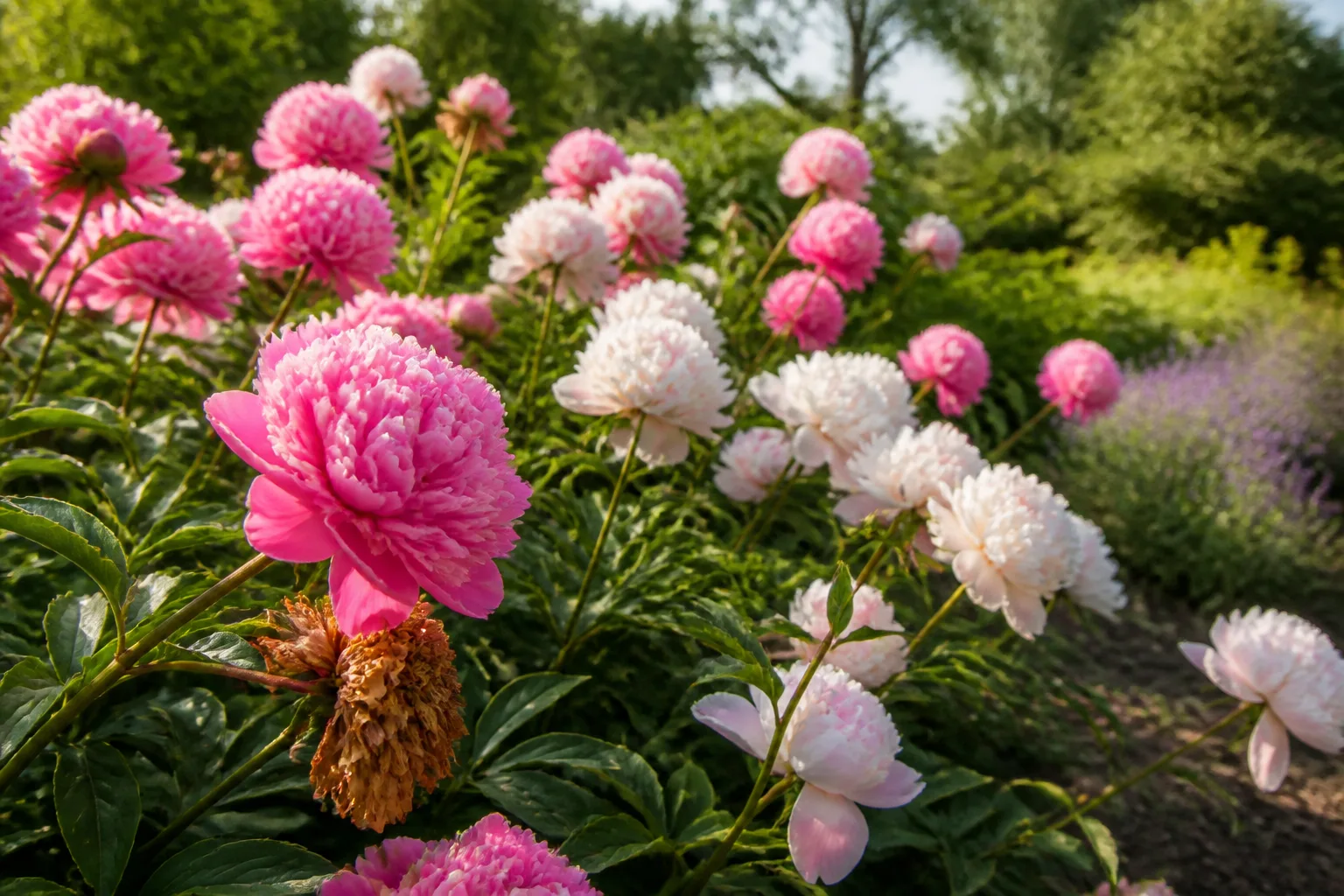
Peonies are the plant people wait for all winter—and then the main show often lasts only a week or two. That is not a failure; it is biology. Herbaceous peonies pour energy into enormous spring flowers, then settle into glossy foliage for the rest of the season. The gardeners who get a beautiful spring garden around them are not hoping for a longer peony bloom. They are sequencing neighbors so something worthwhile is happening before peonies open, while they peak, and long after the petals drop.
These eight peony companion plants—hydrangeas, daffodils, lilacs, salvia, catmint, foxglove, bearded iris, and delphinium—are not random cottage-garden favorites. Each one solves a specific job: early color, height, fragrance, summer continuation, or a low front edge. Match them to your peony’s sun and soil first, then to bloom week and bed position. Get that order right and the border looks intentional instead of like a single plant with empty space around it.
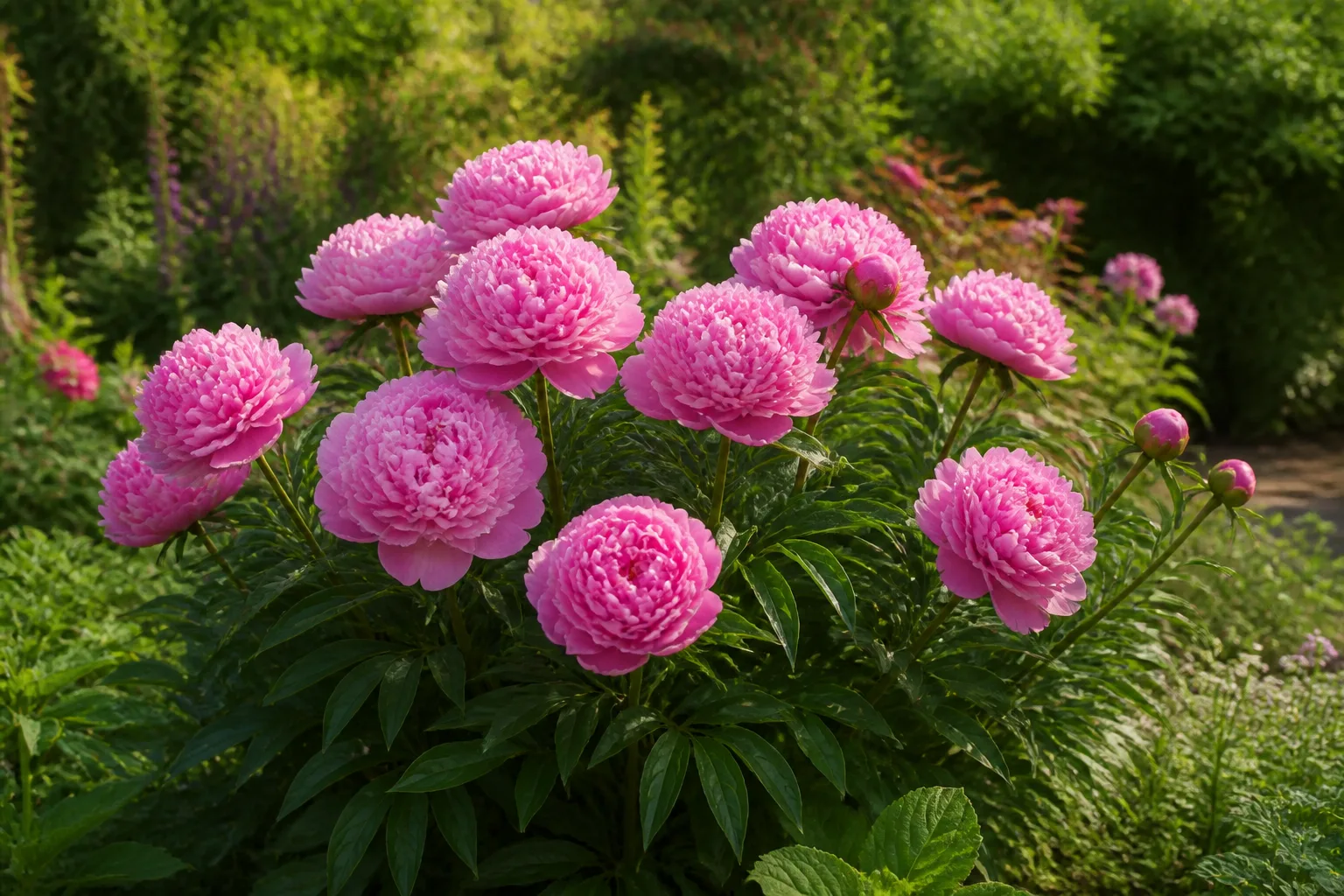
Why Companion Planting Changes a Peony Border
Companion planting in an ornamental bed is less about secret plant chemistry and more about shared care, efficient space use, and bloom timing. The RHS companion planting overview frames polyculture as a way to deter some insects, support pollinators, and use vertical space well—but benefits vary by site, not every pairing works everywhere.
Around peonies, the wins are concrete. Diverse flowering times keep pollinators visiting month after month instead of for one flashy week. NC State notes that peony flowers attract bees and butterflies; adding salvia, catmint, and iris extends nectar availability across weeks when a peony-only bed would go quiet. Low companions can shade soil and suppress weeds without digging into the peony crown. Tall rear neighbors hide leggy lower branches on shrubs or screen floppy spent peony stems in June.
None of that requires believing plants send invisible signals to each other. It requires reading the bed like a calendar and a floor plan at the same time. The mistake most beginners make is buying all eight companions in one spring weekend and planting them shoulder-to-shoulder around a peony that has not yet settled in. Strong borders are built in layers over two or three seasons, with the peony crown protected every step.
What Peonies Need From Their Neighbors
Before you add companions, audit the peony site. NC State Extension notes that herbaceous peonies grow best in zones 5–7 and can grow in zones 3–8, but they languish in warm areas where chilling hours are hard to meet. They prefer full sun to light shade, deep fertile well-drained soil, good air circulation, and some afternoon shade in hot regions. Crowns planted too deep may grow leaves without flowers; in warm zones, crowns should sit no more than about one inch deep and winter mulch should not insulate them like a blanket (NC State Extension herbaceous peony profile).
University of Connecticut guidance describes peonies as light feeders in fertile soil and warns that excess nitrogen can reduce flowering (UConn peony factsheet). Companions should not demand soggy soil or constant high-nitrogen feeding that pushes soft foliage on your peony clump.
Most of the pairings in this guide assume herbaceous peonies—the classic clumps that die back to the ground each winter. Intersectional (Itoh) peonies behave similarly in the border but often bloom slightly later with longer-lasting flowers; you can shift the “with peonies” band on your calendar by a week or two. Tree peonies add woody structure and bloom earlier on bare stems; they still want the same drainage and crown-care logic, but spacing must account for permanent wood that will not disappear in winter.
Sun, soil, spacing, and root-zone rules
Peonies are large perennials with deep, fleshy roots that resent disturbance. Spring bulbs work well partly because they occupy a different seasonal layer: they bloom early, then their foliage dies back while peony shoots expand. Avoid planting aggressive groundcovers or thirsty tree roots on top of the clump. NC State specifically warns that peonies are outcompeted by tree roots when planted too close to large trees.
Spacing starting points for established beds:
- Leave 18–36 inches between a mature peony crown and the main stem of a shrub or tall perennial neighbor so both can expand without crown damage.
- Spring bulbs can be tucked 6–12 inches from peony stems because their active root phase finishes before peonies need maximum soil volume.
- Low edging plants (catmint, short nepeta) sit at the front of the border, not on the crown.
If your peony is newly planted, give it two seasons before tucking aggressive spreaders tight against it.
Bloom time as a design tool—not an afterthought
Herbaceous peonies bloom in late spring to early summer depending on cultivar and climate—often May into June in cooler regions. The peak is brief; foliage remains valuable for months. Design in three bands on a calendar:
- Before peonies: lilacs, daffodils, early iris.
- With peonies: bearded iris overlap, foxglove and delphinium in many gardens, catmint starting.
- After peonies: salvia, hydrangea flower development then bloom, delphinium second flush where supported.
Epic Gardening’s companion guide stresses coordinating bloom time, bloom color, foliage texture, and height when pairing perennials (Epic Gardening peony companions). That is the difference between a photo-worthy border and a list of plants that happen to share a zip code.
How to Layer a Peony Bed: Back, Middle, and Front
Picture the bed from the viewer’s side—the path or window you actually look from.
Back row (tall): lilacs, delphinium, foxglove, hydrangea shrubs on the north or rear edge where they will not steal southern light from peonies.
Middle (anchor): peony clumps—usually two to four feet tall in bloom with a wider foliage footprint.
Front (low): catmint, daffodil drifts at the edge, bearded iris clumps slightly forward of peonies so intricate iris flowers sit in front of fluffy peony blooms.
Vertical accent: salvia spikes rising through or beside mid-layer peonies in early summer, screening browned peony flowers without hiding the glossy leaves you still want for structure.
This is the layout professional designers use when they say put peonies in the mid-layer with taller rear plants and shorter front edging. It is not aesthetic opinion; it keeps sight lines clean and reduces the “empty legs” problem on tall shrubs like lilacs.
Hydrangeas — Extend the Show After Peonies Fade
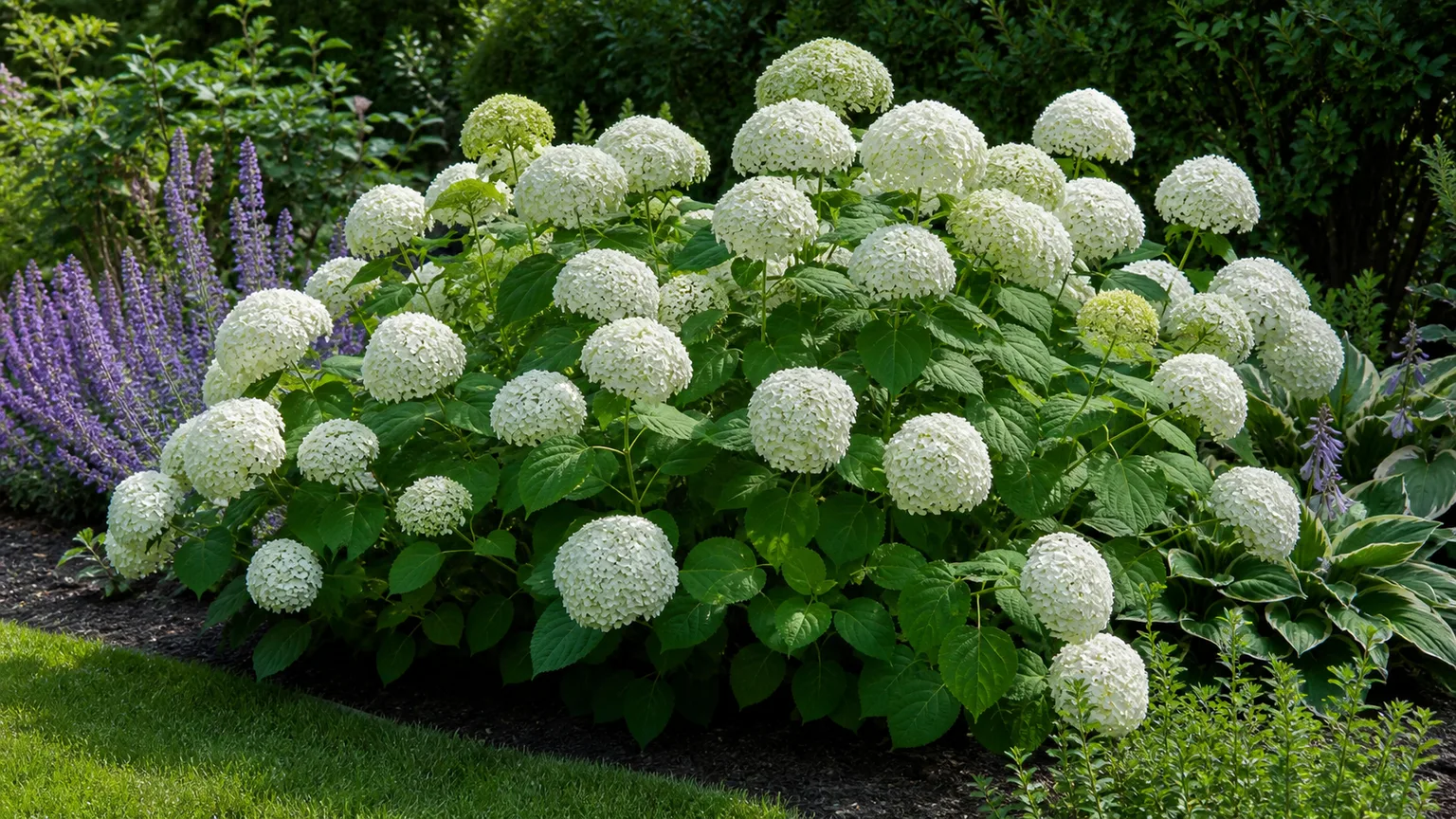
Hydrangeas bridge the gap between peony week and high summer. Many smooth and panicle types develop large, rounded leaves and showy flower heads that peak after peonies finish—so the shrub continues the garden’s momentum in a similar soft, romantic shape. Hydrangea arborescens cultivars such as ‘Annabelle’ are classic rear-of-bed partners: leafy bulk during peony bloom, flowers later.
Shared needs: Both prefer rich soil and regular moisture early in the growing season. Both tolerate full sun to partial shade, though hydrangeas in hot afternoon sun need more water to avoid wilt. Site them on the rear edge so the shrub does not cast morning shade on peonies if you are in a cool, short-season climate.
Caveats: Not all hydrangeas behave the same. Bigleaf hydrangeas (H. macrophylla) want more shade and consistent moisture; panicle types such as H. paniculata ‘Limelight’ are more sun-forgiving and often better partners in peony beds that already receive six hours of direct light. Smooth hydrangeas (H. arborescens) sit in the middle—tough leaves, reliable flowers, and a habit that reads like a soft green wall behind mid-layer peonies.
In hot-summer regions, panicle hydrangeas often outperform bigleaf types near peonies because both plants are pushing growth during warm weeks and competition for water is real. Water deeply at the root zone rather than sprinkling leaves, and leave air space between shrub branches and peony foliage to reduce botrytis on dense peony buds during humid springs.
Daffodils and Other Spring Bulbs — Color Before the Peony Chorus
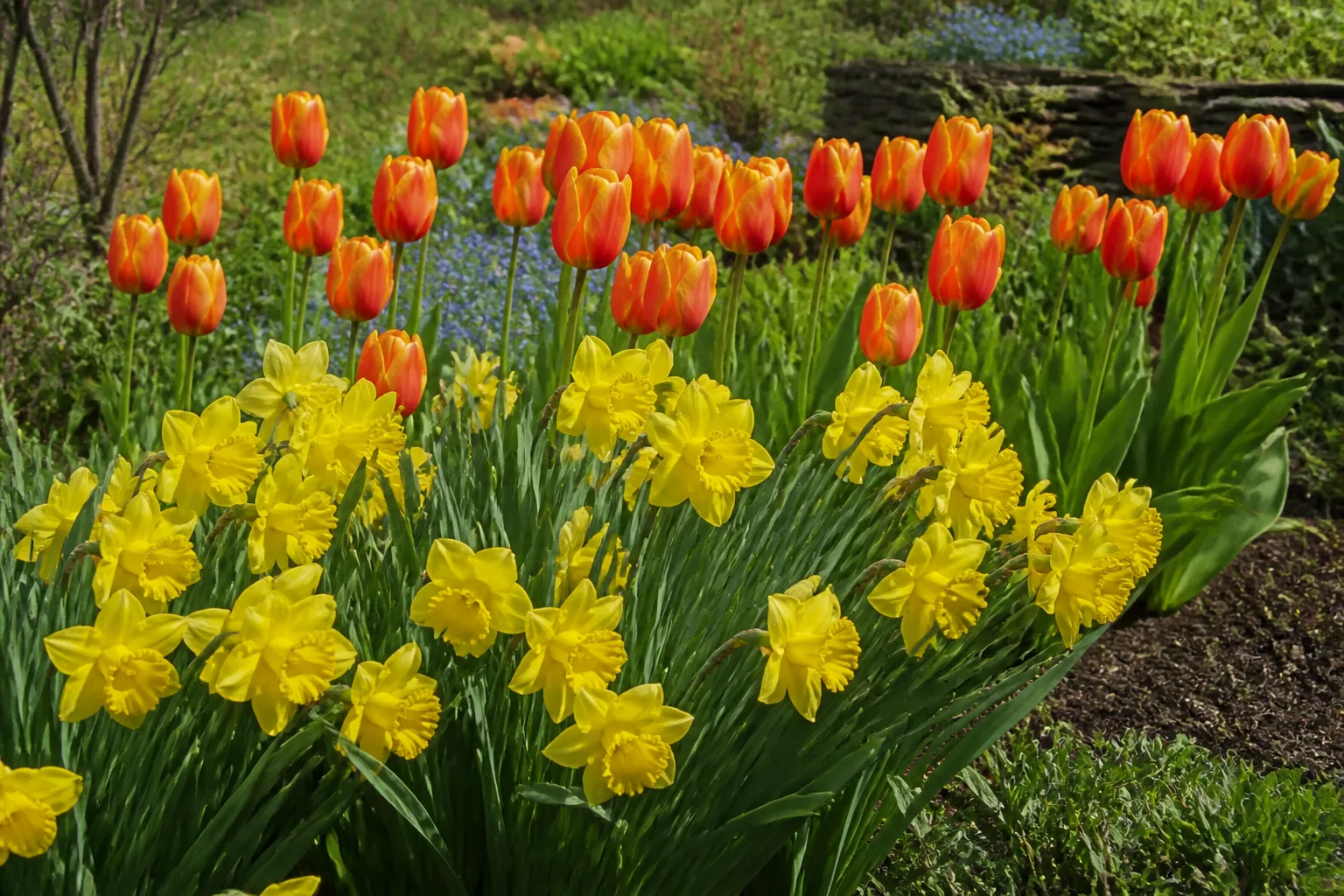
Daffodils (Narcissus) are among the most practical peony companions because they respect the peony root zone. Bulbs finish their spring show and fade as peony shoots lengthen—color in March and April, then green peony architecture takes over. They are also deer-resistant, which matters if peonies are part of a front-yard display.
Plant bulbs in fall in drifts at the front or among peonies, 6–8 inches deep, pointed end up. Let foliage yellow naturally after bloom; cutting daffodil leaves early steals energy for next year’s flowers. Tulips, crocus, and hyacinth follow the same logic with different heights and fragrance.
The pairing works because bulbs occupy shallow seasonal space. By the time peonies need maximum root volume and water for bud development, bulb tops are dying back. That is the operational reason designers tuck narcissus through perennial beds—not because daffodils “like” peonies.
For visual impact, plant daffodils in drifts of seven to fifteen bulbs rather than single-file soldiers. Mix early and mid-season narcissus cultivars if your peony blooms late in your region—‘Tête-à-Tête’ and ‘February Gold’ finish before many lactiflora peonies, while ‘Ice Follies’ can overlap the first peony color. Mark bulb locations in summer when foliage is visible so you do not slice through them during fall soil work around expanding peony shoots.
Lilacs — Early Fragrance and Height Behind the Clump

Lilacs (Syringa) bloom before most herbaceous peonies, filling the garden with fragrance when peony buds are still tight. Common lilac becomes a tall backdrop—often 12 feet or more with age—so site peonies in front to hide bare lower lilac branches and leggy wood.
Shared needs: Full sun, well-drained soil, good air circulation. Both are long-lived landscape plants that dislike wet feet.
Spacing: Lilac roots spread wide. Keep peony crowns several feet from the lilac trunk so neither competes for water during dry late spring weeks. If space is tight, choose a smaller lilac cultivar or repeat the sequencing idea with a different early shrub rather than cramming a tree-sized lilac into a small foundation bed.
Salvia — Summer Spikes That Screen Spent Peonies
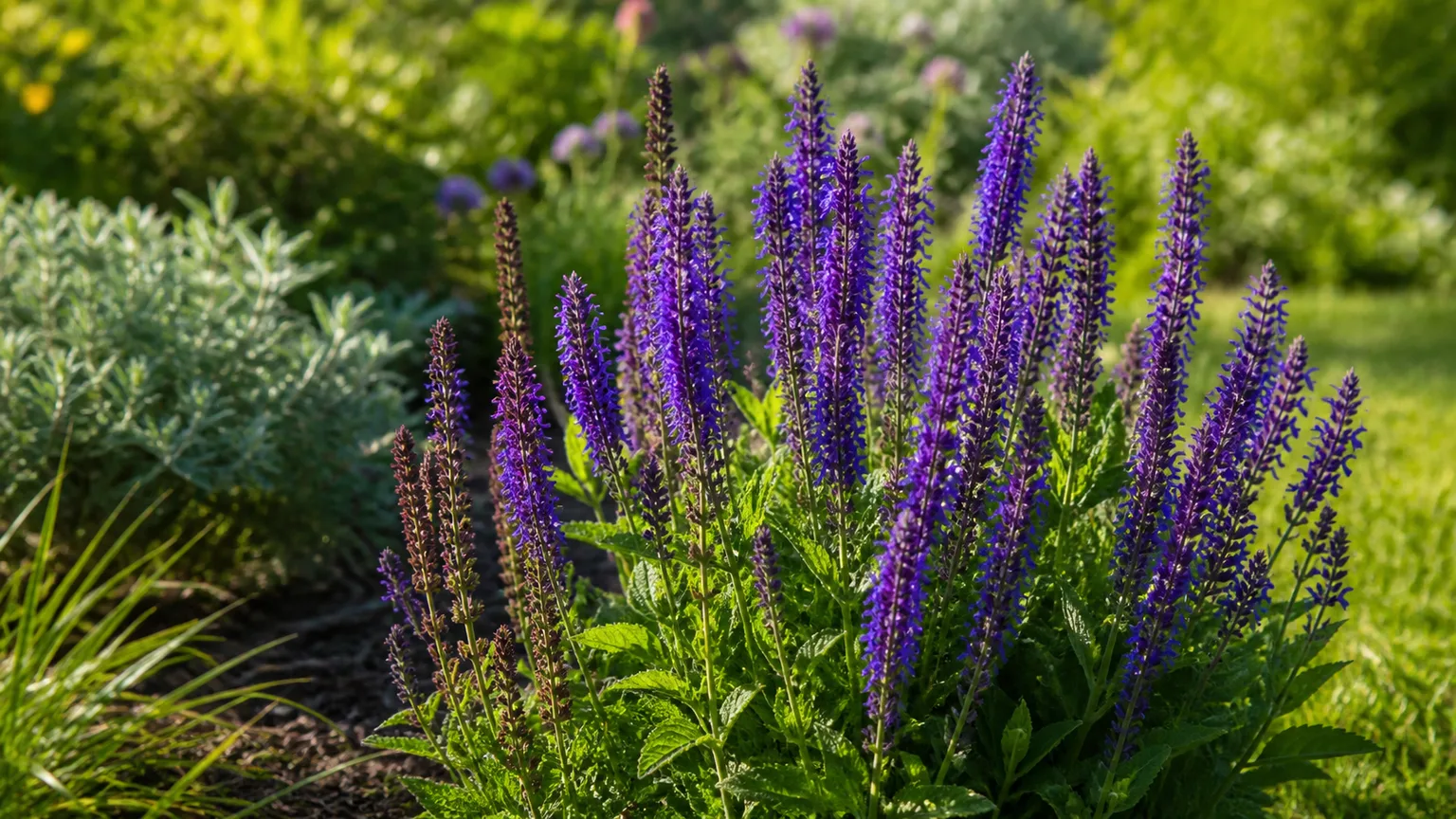
Salvia, especially meadow sage types like Salvia nemorosa ‘May Night’, hits stride in early summer—often just as peony flowers brown. Upright purple-blue spikes rise 18–24 inches and visually screen spent peony blooms while the peony foliage still looks fresh.
Shared needs: Full sun, well-drained soil, moderate fertility. Salvia and peonies both suffer in heavy clay that stays wet in winter.
Maintenance: Shear salvia after its first flush to encourage rebloom and keep the border tidy. Deadheading peonies separately helps redirect energy to roots rather than seed production; see our guide on whether to cut dead peony flowers for the distinction between removing faded blooms and cutting back foliage.
Salvia also brings pollinator traffic when peony flowers are winding down—bees transition easily from peony centers to salvia tubes if both are in the same sunny patch. If your peony stems flop after bloom, a ring of salvia at the outer drip line can hide the browned flowers from the path view while you wait for foliage to recover its polish.
Catmint — Low Purple Edging at the Front
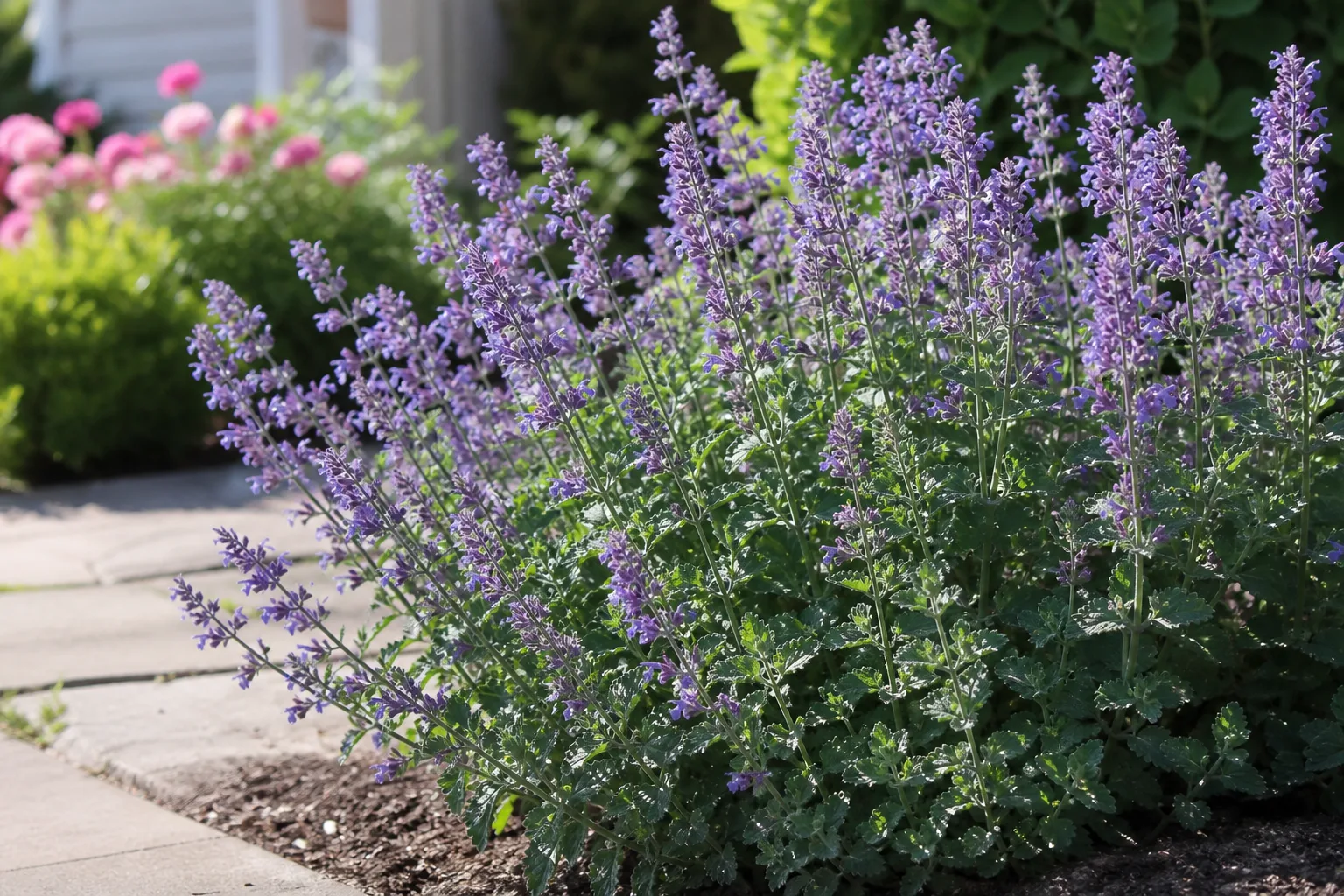
Catmint (Nepeta) is the front-of-border workhorse: low mounds, soft gray-green leaves, and weeks of small lavender flowers. Shorter cultivars sit in front of peonies so continuous summer color contrasts with the peony’s bolder foliage without competing for height.
Why it works: Catmint shares sun and drainage preferences. The airy flower mass reads light against peony leaves that are glossy and substantial.
Caution: Some nepeta species spread aggressively and are listed as invasive in parts of the West. Plant around established peonies, not one-year divisions, and avoid letting catmint mat over the peony crown. Refresh with a hard shear after bloom to keep a tidy edge.
Try Nepeta racemosa ‘Walker’s Low’ or shorter Nepeta x faassenii cultivars at the front rather than tall types that flop onto peony buds. Gray-green catmint foliage also pairs well with pink and white peonies when you want the eye to rest on the bloom, not the edging plant.
Foxglove — Cottage Verticals and Toxicity Trade-offs
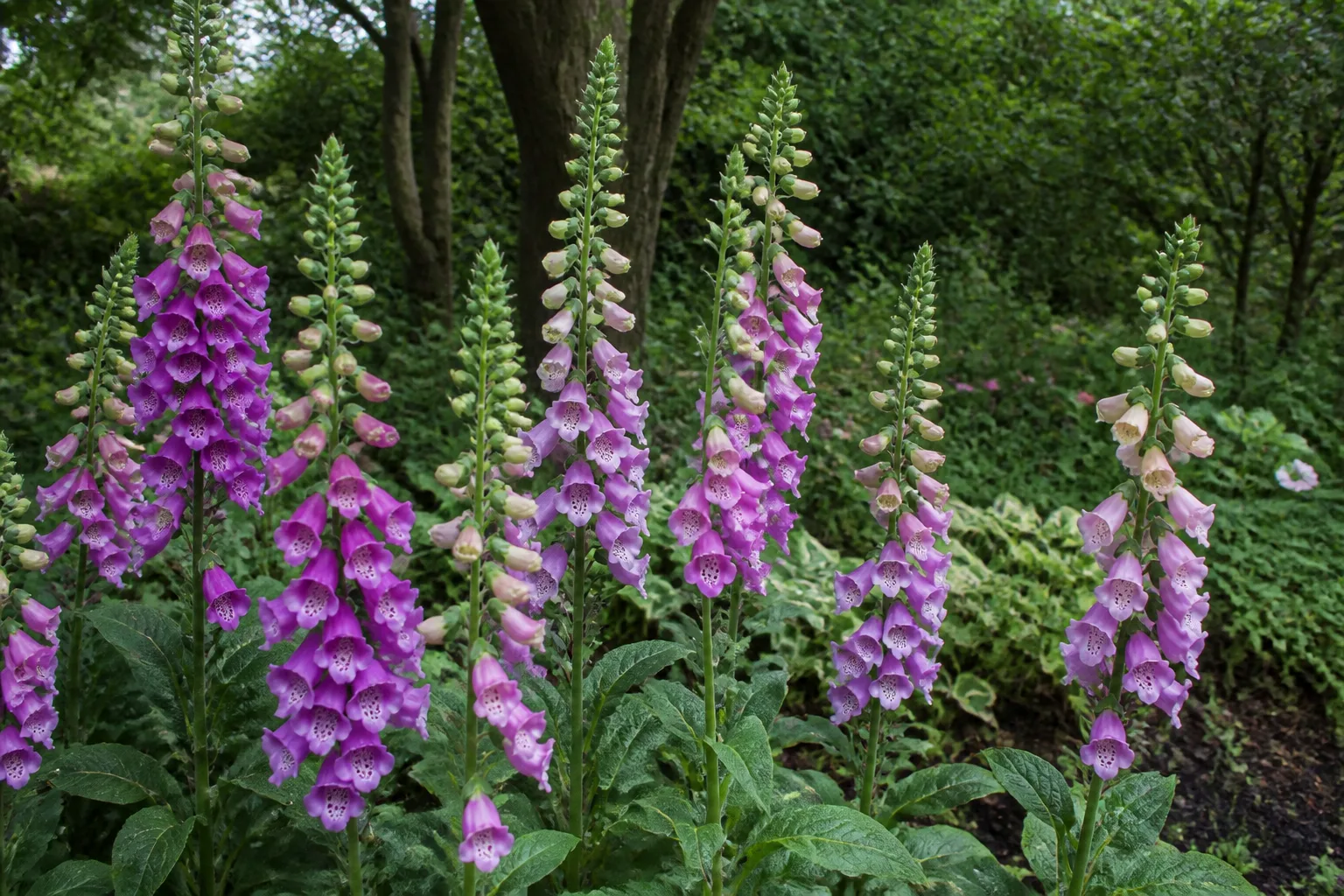
Foxglove (Digitalis purpurea) adds cottage-garden height—often three to five feet—with tubular flowers along the spike. It pairs visually with peonies because rounded peony blooms contrast with vertical foxglove spires. Many gardeners treat foxglove as a biennial: bloom, seed, then gaps unless you allow self-seeding or replant.
Pet safety: Foxglove is toxic to dogs, cats, and horses; ASPCA lists cardiac glycosides as the toxic principle, with serious clinical signs including cardiac arrhythmias (ASPCA foxglove profile). If pets chew garden plants, place foxglove toward the rear of a bed away from paths, or choose a non-toxic vertical substitute such as non-poisonous tall perennials in the same color slot.
Foxglove is charm with responsibility—not a plant to tuck along a dog run because it photographs well.
Bearded Iris — Synchronized Spring Color in Front
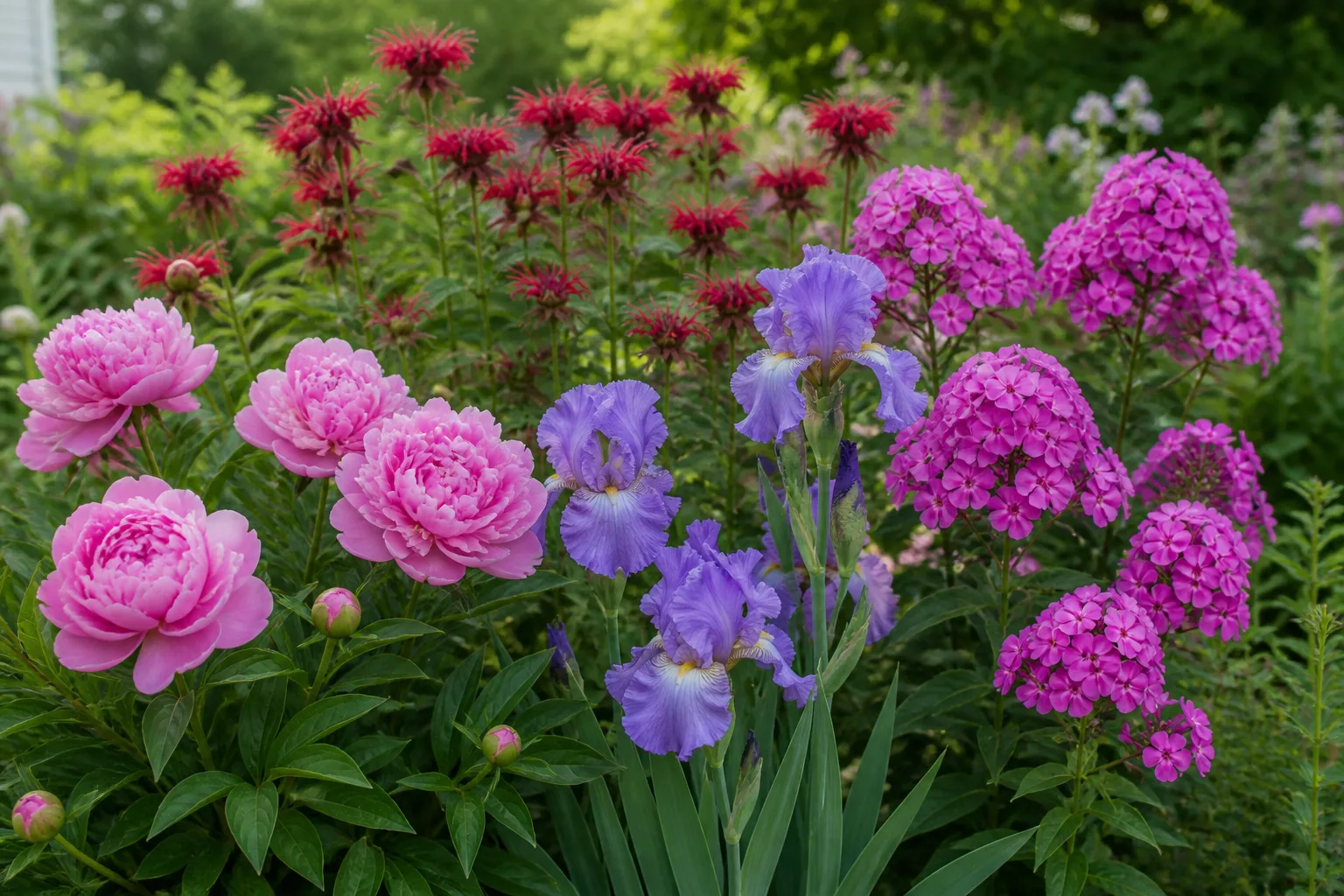
Bearded iris (Iris germanica) is the classic spring duet with peonies. Bloom windows overlap in many climates: iris often starts slightly earlier, then meets peony peak for a week of extraordinary color density. Iris flowers are architectural—standards, falls, and the “beard”—against peony ruffles.
Placement: Plant iris clumps slightly forward of peonies so both flowers face the viewer. Match color intentionally: soft pink peonies with lavender or white iris read elegant; hot red peonies with electric blue iris can feel chaotic unless you want high contrast.
Culture: Iris rhizomes want shallow planting with tops exposed or lightly covered; peony eyes want specific depth—do not bury iris to match peony planting depth. Both need full sun for reliable bloom. After flowers finish, spiky iris foliage continues to contrast peony’s rounded leaves through summer.
Color pairing that actually works: Monochrome beds—white ‘Festiva Maxima’ peonies with white ‘Immortality’ iris—read calm and expensive in small front yards. Soft pink peonies with blue or violet iris add classic cottage contrast without shouting. If your peony is a saturated red such as ‘Red Charm’, use iris as a cooler counterweight (lavender, blue, or crisp white) rather than another hot red that flattens the composition. Our peony colors guide walks through cultivar families if you are still choosing anchor plants.
Delphinium — Tall Larkspur Spires Behind the Clump
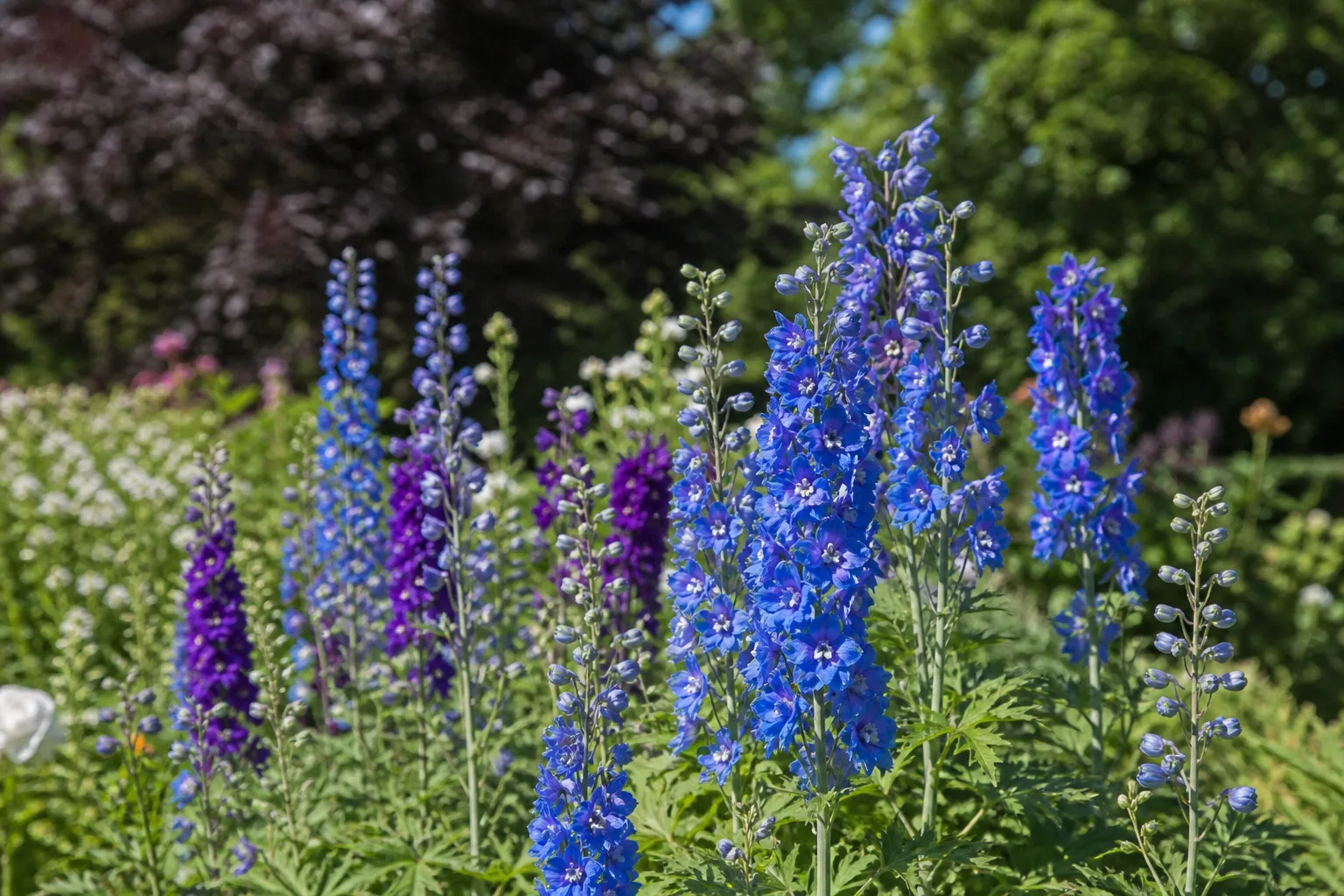
Delphinium (often called larkspur in garden language) supplies tall blue, purple, or white spires behind peony clumps—one of the great English-border combinations. Ferny delphinium foliage makes a soft backdrop while peonies bloom; when peonies fade, delphinium stems often carry the bed.
Overlap: Timing varies by cultivar and climate. Some gardens see simultaneous bloom; others see sequential peaks. Either works if delphinium sits behind peonies so structure reads from the front.
Staking and moisture: Tall delphiniums need wind protection and consistent moisture—not waterlogged soil. They are also toxic to people, dogs, cats, and horses (ASPCA larkspur listing). Treat them like foxglove: rear of bed, not the pet-chewing zone.
Where delphinium struggles in your heat or humidity, monkshood or tall salvia cultivars can fill the vertical summer slot with different toxicity and staking demands—trade-offs worth weighing honestly.
Plants and Habits to Keep Away From Peonies
Companion planting also means declining bad neighbors:
- Aggressive groundcovers (vinca, some creeping jenny situations, unchecked mint) that mat over peony crowns.
- Large tree roots within the peony drip line.
- Deep shade lovers that signal your peony is already in the wrong light.
- Frequent heavy nitrogen feeders on the same patch if your peony already runs dark green with few buds.
- Repeated brassica rows if you are mixing edible and ornamental beds—different problem, but shared pest pressure is real on small lots.
Peonies are long-lived anchors. Protect the crown and root zone first; romance second.
Also watch irrigation habits: sprinklers that keep peony buds wet overnight favor gray mold on flowers, while drought-stressed lilacs drop leaves and expose the bare wood you were trying to hide. Companions should not force you into a watering pattern that harms the peony—group plants with similar moisture needs, and use soaker hoses along the root zone instead of overhead spray when possible.
Plan Your Spring Peony Companion Border Step by Step
Step 1 — Audit light and drainage. Confirm six or more hours of direct sun on the planting area, or accept part shade and choose peony cultivars suited to it. Fix standing water before buying plants.
Step 2 — Mark layers on paper. Rear tall, mid peony, front low. Note where the path viewer stands.
Step 3 — Assign bloom weeks. Write lilac and daffodil in early spring, iris and peony in late spring, salvia and hydrangea into summer.
Step 4 — Plant anchors first. Peonies and shrubs go in before you scatter bulbs. Set peony eyes at the correct depth for your zone.
Step 5 — Add bulbs in fall. Daffodils and allies between and in front of peonies.
Step 6 — Fill edges. Catmint and iris at the front after soil settles.
Step 7 — First-year expectations. Peonies may skip bloom after transplant; companions should not crowd young shoots. Mulch lightly, water deeply during spring bud formation, and scout for botrytis on dense peony buds in wet weather.
Step 8 — Maintain through summer. Deadhead peonies if you want a cleaner look; shear catmint and salvia for rebloom; let peony foliage stand until fall cutback unless diseased.
For feeding logic without over-fertilizing anchors, see how to fertilize peonies.
Year-one maintenance calendar (quick reference):
- Late winter: Pull mulch back from peony eyes in warm zones; leave protection in zone 3–4 until hard frost risk passes.
- Early spring: Scout emerging shoots; thin crowded stems if botrytis was a problem last year.
- Peony bloom: Enjoy the peak; deadhead if you want a cleaner plant, not because it guarantees more flowers this year.
- Early summer: Shear catmint and first salvia flush; stake delphinium before storms.
- Midsummer: Hydrangea flower heads develop—avoid heavy pruning that removes peony foliage prematurely.
- Fall: Cut herbaceous peony stems after frost according to our deadheading and cutback guide; plant new bulbs while soil is cool.
Conclusion
A peony border becomes a spring garden worth waiting for when you treat companions as a schedule and a floor plan, not a shopping list. Hydrangeas and salvia extend the season after the peony petals fall. Daffodils and lilacs start the show early. Catmint frames the edge. Iris, foxglove, and delphinium add cottage height and color density at the moment peonies matter most—if you respect sun, drainage, spacing, and toxicity where pets roam.
Plant the peony correctly first. Sequence bloom times second. Only then fine-tune color. That order is how you get a border that still teaches you something the week after peony season ends—and does not send you back to the nursery wondering what went wrong.