8 Best Indoor Plants for Air-Conditioned Rooms in India
Find 8 indoor plants for AC rooms in India that handle dry air, cold drafts, and temperature swings — with placement, soil-check watering, and pet notes.
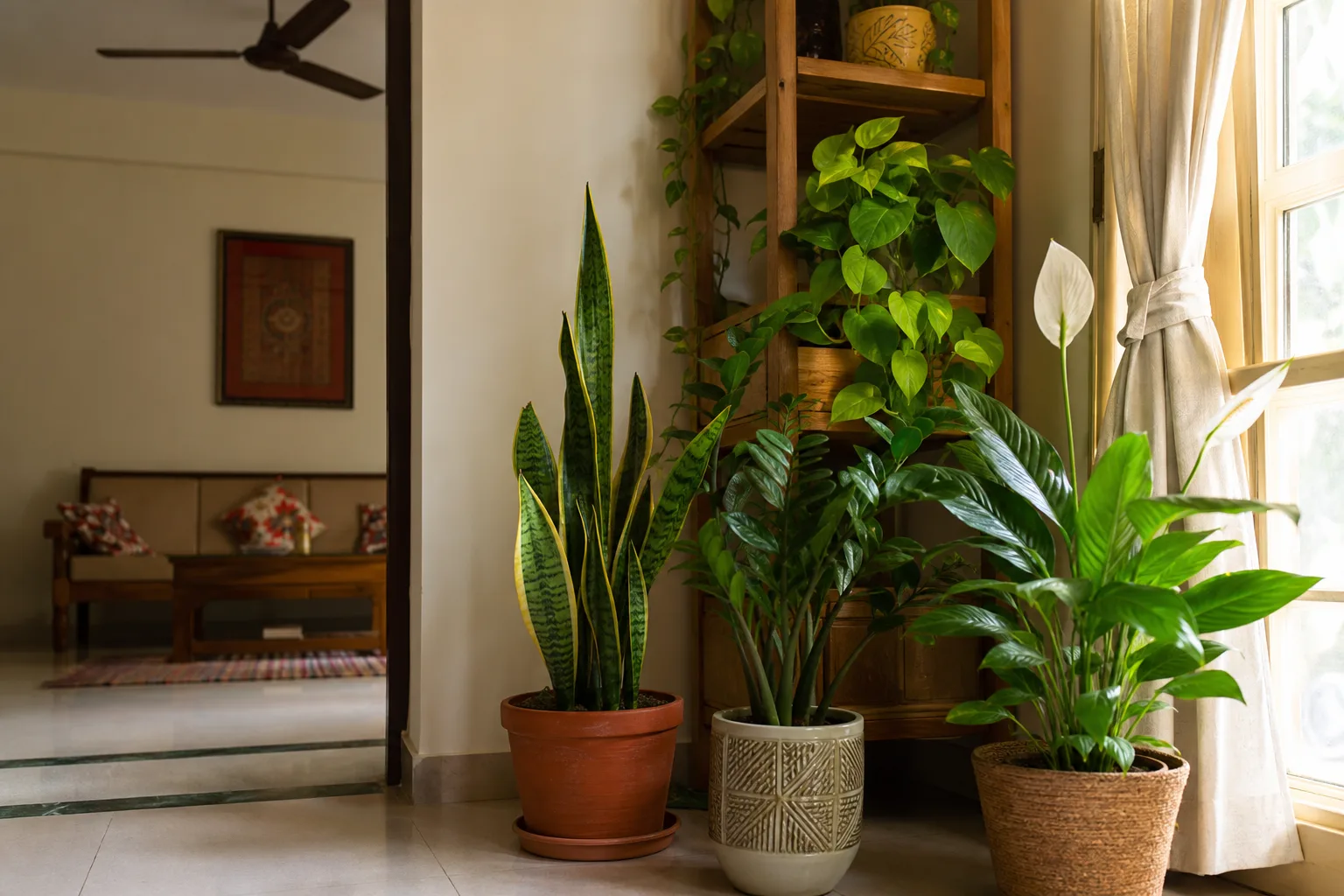
An Indian apartment with the AC on all afternoon is a different climate from the balcony outside the same door. The room cools, humidity drops, curtains stay drawn against glare, and a cold jet of air hits one corner of the sofa. Soft rainforest plants crisp at the tips. Tough, thick-leaved plants barely notice.
If you want indoor plants that handle sealed, air-conditioned Indian flats, skip glossy “tropical vibes” lists. Start with species that tolerate dry AC air, vent drafts, and the temperature swing between AC-on evenings and AC-off mornings. Two picks on this list — rubber plant and aglaonema — are conditional: they work only when you keep them out of the cold blast. The other six are tougher sealed-room defaults from the LeafyPixels inventory: snake plant, ZZ plant, jade plant, cast iron plant, golden pothos (money plant), and peperomia.
For a wider India shortlist beyond AC rooms, see best indoor plants for Indian homes. For sealed, fluorescent-style workspaces, best office plants overlaps on dry-air survivors.
Written by Sai Ananth (B.Pharmacy; indoor plant writer). Reviewed by Dr. Priya Menon (Ph.D. Botany; indoor plant physiology and stress).
When to Use This Guide
- Use this page when your constraint is sealed-room AC: dry air, vent drafts, and on/off temperature swings in an Indian flat.
- Use low-light plants for Indian flats when the main problem is north light or tower shade, not the AC itself.
- Use draft stress on houseplants when one side of a plant crisps or drops leaves near a vent or door.
- Use how to water indoor plants the right way when you need a soil-check watering method for any room.
- Use balcony plants for Indian summer for outdoor heat and sun — not for AC bedrooms.
What AC Actually Does to Houseplants
Dry air and brown tips
Air conditioning removes moisture from room air as it cools. Penn State Extension notes that ASHRAE recommends indoor relative humidity between 30% and 60%, and that many homes fall below that band when heating or cooling runs hard. Most tropical houseplants prefer humidity higher than a sealed, AC-chilled bedroom. Colorado State PlantTalk also flags that plants near cooling vents face extra air movement that speeds water loss from leaves, which often shows up as brown tips.
Brown tips are the cosmetic clue. They are not always “thirst” — they often mean leaf edges are losing water faster than roots can replace it in dry air. Plants with thick, waxy, or succulent leaves lose moisture more slowly than thin fern or calathea foliage.
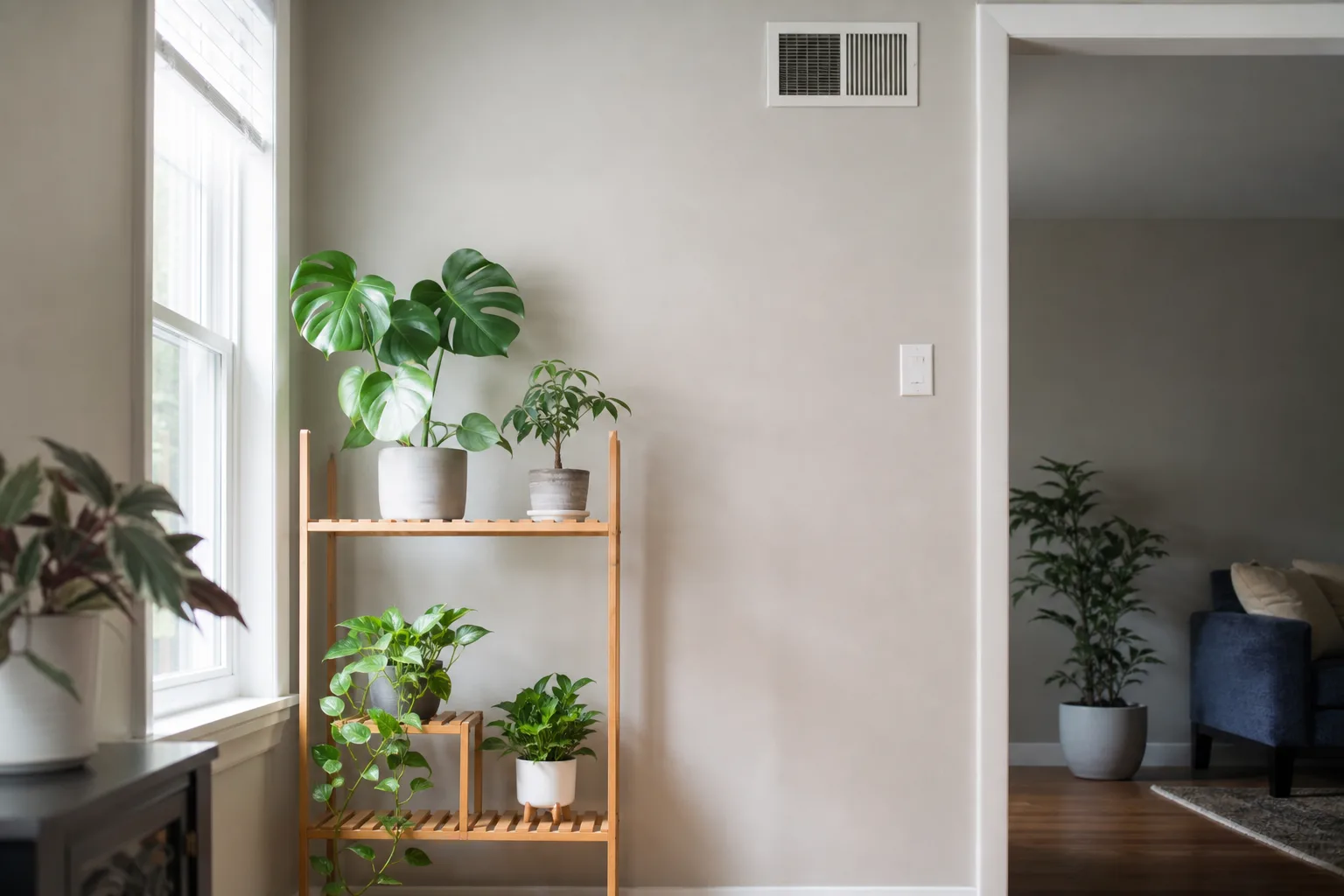
Keep pots off the direct cold airflow. If leaves flutter when the compressor kicks on, move the plant before you change fertilizer or misting habits.
Cold drafts and leaf drop
A split AC or cassette vent can drop a cold draft on one plant while the rest of the room feels fine. NC State notes that rubber plants drop leaves with temperature drops or cold drafts, and that aglaonema leaves may brown in very dry air or drafty spots. Keep pots out of the direct blast. Treat “1–2 metres from the vent” as a practical rule of thumb for many Indian living rooms — the test that matters is simpler: leaves must not flutter when the unit kicks on, and never sit under a cold cascade from a wall unit.
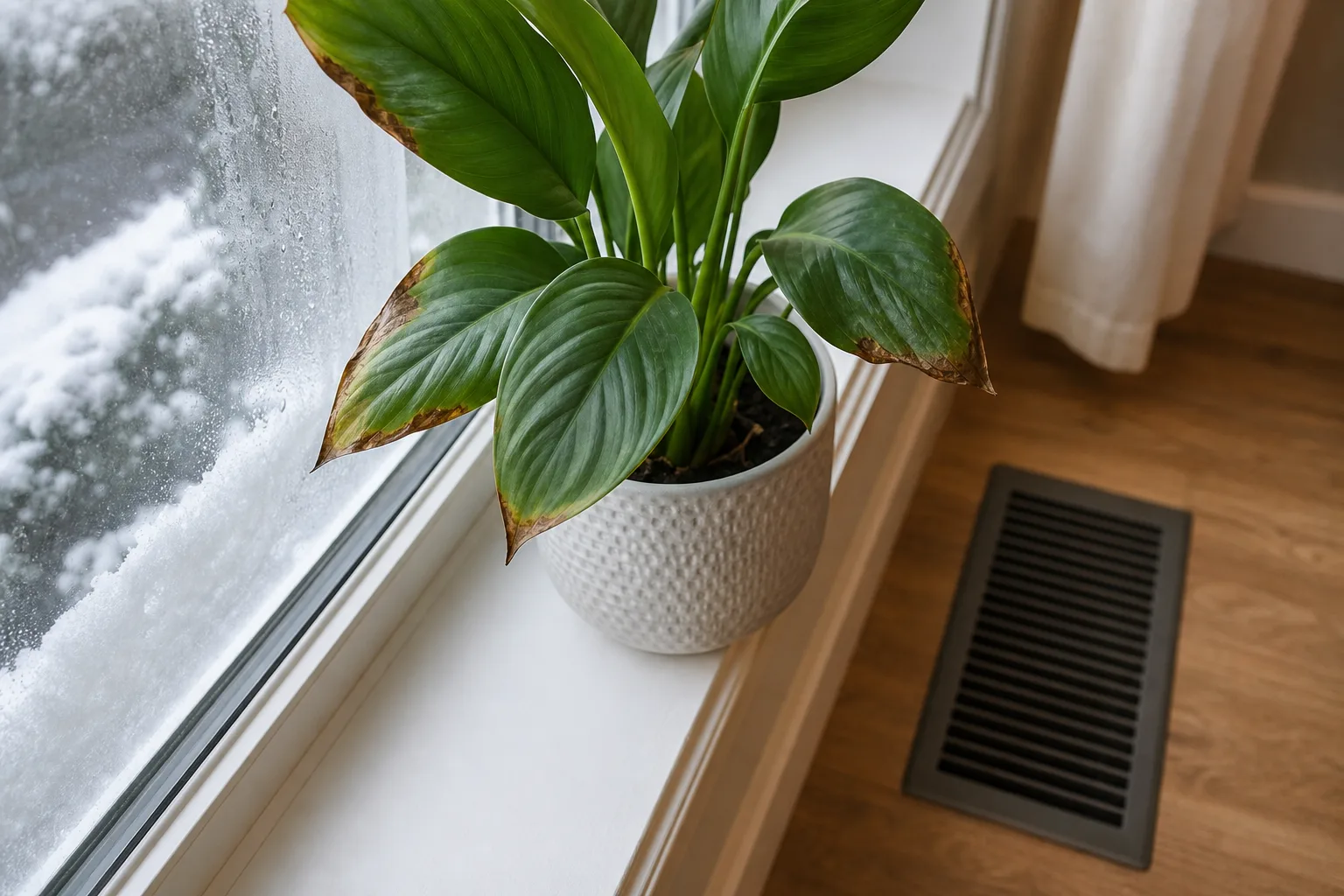
Draft-side tip burn and cold-air stress look like “thirst,” but moving the pot usually helps more than adding water.
Temperature swings when the AC cycles
Many Indian flats run AC for a few hours, then shut it off. The room may swing from roughly 22–24°C with the compressor on to the mid-30s when it stops and west glass reheats the room. Plants that demand cool, stable, humid forest conditions struggle. Drought-tolerant, low-humidity survivors handle the swing better — as long as you do not “compensate” by watering on a rigid daily schedule when light is low and soil stays wet.
Clemson Extension’s core watering rule still wins in AC rooms: water based on soil moisture, not the calendar.
Observed in One Indian AC Flat (Single-Home Notes)
These are single-home editorial notes from one LeafyPixels test flat (Bengaluru, sealed bedroom + living room, split AC, curtains drawn against afternoon glare). They are not climate averages and not US extension thresholds — your RH, pot size, and mix will differ.
| Observation (May–July 2026) | What we saw | Takeaway |
|---|---|---|
| Bedroom RH with AC overnight | Hygrometer read about 36–42% RH with the split unit on 10 p.m.–6 a.m.; rose into the high 40s–low 50s within an hour of AC-off on cooler mornings | Dry air is real under overnight AC; plant choice still beats daily misting |
| Snake plant dry-down | 20 cm pot, chunky mix, curtained north-east bedroom: soil stayed wet enough that we watered about every 18–24 days while AC ran nightly | Cool + low light slowed uptake — scheduled weekly watering would have been too much |
| Rubber plant vent failure | Floor rubber plant under the living-room split cascade dropped three lower leaves in one week (June 2026) | Moved ~2 m sideways off the jet; leaf drop stopped within two weeks with no watering change |
If your room feels “bone dry” but pots stay heavy, trust the soil — not the air.
How These 8 Plants Were Selected
Only plants with LeafyPixels /plants/ hubs were eligible. Each pick had to clear most of these bars:
- Documented low-humidity, drought, or dry-soil tolerance from extension sources — or clear, manageable caveats
- Realistic fit for curtained AC bedrooms and sealed living rooms (low to bright indirect light)
- Forgives slower growth and less frequent watering when AC + low light slow soil dry-down
- Common at Indian nurseries and online plant shops
- Distinct role on the list (ultra-dry survivor, trailing greenery, statement foliage, pet-safer option)
High-humidity specialists — calathea, Boston fern, peace lily, and similar thin-leaved tropicals — were left off even when popular. They fail for predictable AC reasons, not because you are a bad plant parent.
Quick Comparison Table
| Plant | Best For | Light | Watering | AC dry-air fit | Draft risk | Pet safety | Difficulty |
|---|---|---|---|---|---|---|---|
| Snake plant | Ignore-proof bedroom corner | Low–bright indirect | Dry fully between waterings | Excellent | Low | Toxic (ASPCA) | Easy |
| ZZ plant | Dark AC rooms | Low–bright indirect | Dry fully; rhizomes store water | Excellent | Low | Toxic | Easy |
| Jade plant | Bright desk near AC room window | Bright / some sun | Dry between waterings | Excellent | Medium (cold glass/drafts) | Toxic (ASPCA) | Easy |
| Cast iron plant | Dim halls, drafty corners | Low–medium | Let top dry; drought-tolerant | Excellent | Low | Non-toxic tags (NC State) | Easy |
| Golden pothos | Shelves, hanging, beginners | Low–bright indirect | Dry top inch | Very good | Low–medium | Toxic (ASPCA) | Easy |
| Rubber plant | Statement living-room corner | Bright indirect | Dry top inches | Good (thick leaves) | High if vent-hit | Toxic; sap irritant | Easy–medium |
| Peperomia | Compact desks and side tables | Medium bright indirect | Light; dislike soggy mix | Very good | Low–medium | Non-toxic listings (ASPCA cultivars) | Easy |
| Aglaonema | Colour in low light | Low–medium | Keep lightly moist, not wet | Good with caveats | High (tip browning) | Toxic (calcium oxalate) | Easy |
AC Room Type → First Pick
| Your room | Start with | Why |
|---|---|---|
| All-day / overnight bedroom AC, low light | Snake plant or ZZ plant | Dry-soil forgiveness + low-humidity tolerance |
| Bright living room with one good window | Jade (sill) or rubber plant (off-vent corner) | Succulent or thick leaves buffer dry air if light is real |
| Pet household that still wants foliage | Cast iron plant first; elevate anything else | NC State non-toxic tags for Aspidistra; still discourage chewing |
| Desk / nightstand footprint | Peperomia | Compact size + moisture-storing leaves |
| Want trailing greenery | Golden pothos on a high shelf | Familiar money plant habit; keep vines out of pet reach |
| Want colour in dim light | Aglaonema — only off the draft | Low-light colour with dry-air caveats |
1. Snake Plant
Best for: AC bedrooms, TV units, and anyone who forgets watering for weeks
Difficulty: Easy
Light: Low to bright indirect; tolerates dim interior rooms
Water: Let soil dry completely; far less often than care tags imply under AC + low light
Best placement: Floor or shelf away from the vent blast
Pet safety: Toxic to cats and dogs if chewed (ASPCA)
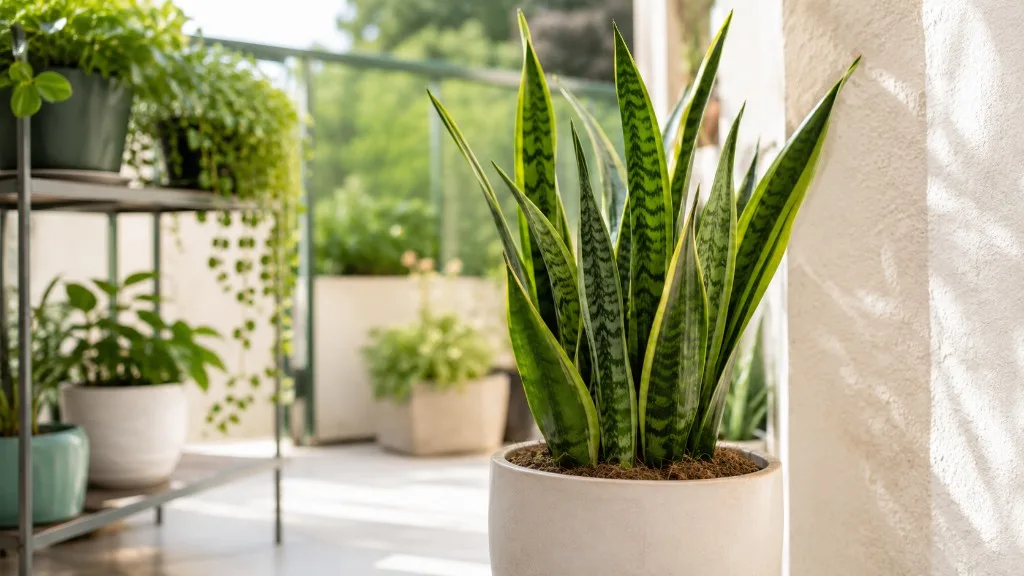
Snake plant (Dracaena trifasciata) earns the top AC-bedroom slot because NC State documents that it tolerates low humidity, low light, and dry soil between waterings — while overwatering causes root rot. Thick upright leaves store water, so dry AC air is less of a crisis than for thin tropical foliage.
In a Mumbai or Delhi bedroom that runs AC from 10 p.m. to 6 a.m., snake plant usually needs less water than summer balcony plants — not more. Low light plus cool nights slows uptake. Feel the soil deep in the pot before you water. In our Bengaluru test bedroom, that meant roughly 18–24 days between waterings under nightly AC — a single-home observation, not a schedule.
Why it works for Indian AC flats: Low-humidity tolerance, water storage, and a vertical footprint for small bedrooms.
Indian home care tip: Wipe dust off the leaves monthly so the little light you have still reaches the leaf surface.
Common mistake: Weekly watering “because AC dries plants.” Dry air does not mean wet soil is safe.
Avoid this plant if: You want fast, lush tropical growth or you need a verified pet-safe floor plant.
Deeper care: Snake plant hub · watering · low humidity
2. ZZ Plant
Best for: Windowless or curtained AC rooms; offices that double as guest rooms
Difficulty: Easy
Light: Low to bright indirect; avoid harsh afternoon sun through glass
Water: Allow full dry-down; rhizomes store water like a succulent
Best placement: Floor corner or sideboard away from direct AC airflow
Pet safety: Toxic if ingested — NC State rates medium-severity poison characteristics (calcium oxalate); keep out of reach of chewing pets (NC State Extension)
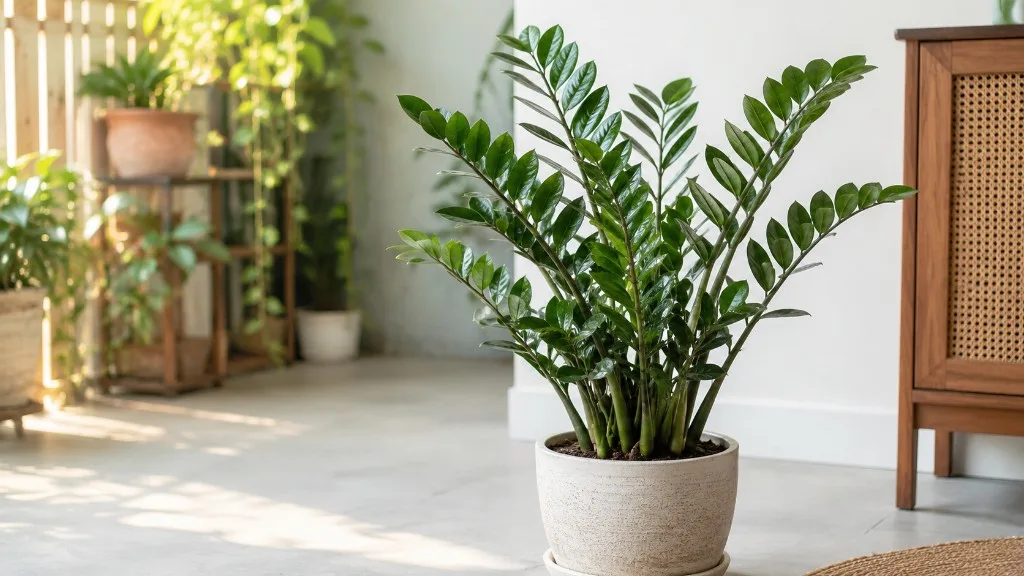
ZZ plant (Zamioculcas zamiifolia) is built for sealed interiors. NC State describes fleshy rhizomes that make it highly drought tolerant, with a preference for soil that dries between waterings and a warning that wet feet are not tolerated. It also grows in very low light, including fluorescent-only spaces.
That profile matches Indian AC living rooms where curtains stay closed against heat gain. Growth will be slow. Glossy leaflets usually stay presentable if you resist “helpful” extra watering when the compressor runs all day.
Why it works: Drought storage + low-light survival in dry, sealed rooms.
Indian home care tip: In peak AC season, check moisture with a finger or chopstick halfway down the pot before adding water.
Common mistake: Using a decorative cachepot with no drainage and watering on a schedule.
Avoid this plant if: You want a fast trailing vine or a pet-safe chewable plant.
Deeper care: ZZ plant hub · watering · overwatering
3. Jade Plant
Best for: Bright AC-adjacent desks and east window sills that still get morning sun
Difficulty: Easy
Light: Bright light; Clemson recommends several hours of direct sun or bright filtered light
Water: Moist in active growth; dry between waterings in cooler/AC-heavy periods
Best placement: Bright sill away from the cold vent and cold night glass drafts
Pet safety: Toxic to dogs and cats (ASPCA)
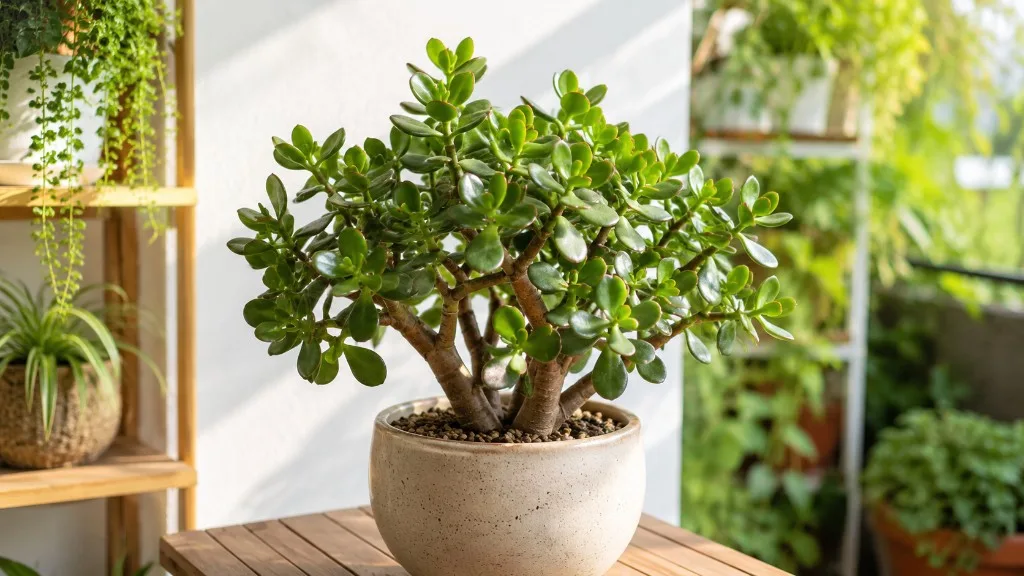
Jade (Crassula ovata) is a succulent, so dry AC air is usually friendlier than monsoon humidity. Clemson notes jade prefers bright light, dislikes winter drafts, and can suffer root rot in poorly drained mix or from overly frequent watering — while extreme drought can still cause leaf drop.
In Indian flats, jade fails most often in dark AC bedrooms, not in dry air. Give it the brightest safe spot in the room, then water less than your tropicals.
Why it works: Succulent tissues buffer low humidity; bright-light placement matches many AC living rooms with one good window.
Indian home care tip: Use a gritty mix and a pot with a real drain hole — AC rooms punish soggy succulent soil.
Common mistake: Parking jade in a dim corner “with the other houseplants.”
Avoid this plant if: Your only free space is a dark interior room with no bright window.
Deeper care: Jade plant hub · light · soil
4. Cast Iron Plant
Best for: Dim AC corridors, rental flats, and pet households that still want a tough foliage plant
Difficulty: Easy
Light: Low to medium; intolerant of harsh direct sun
Water: Water regularly in warm active growth; sparingly when cool; drought-tolerant once established
Best placement: Floor pot in a shaded living-room corner, off the vent line
Pet safety: NC State tags Aspidistra as non-toxic for cats and dogs — still discourage chewing
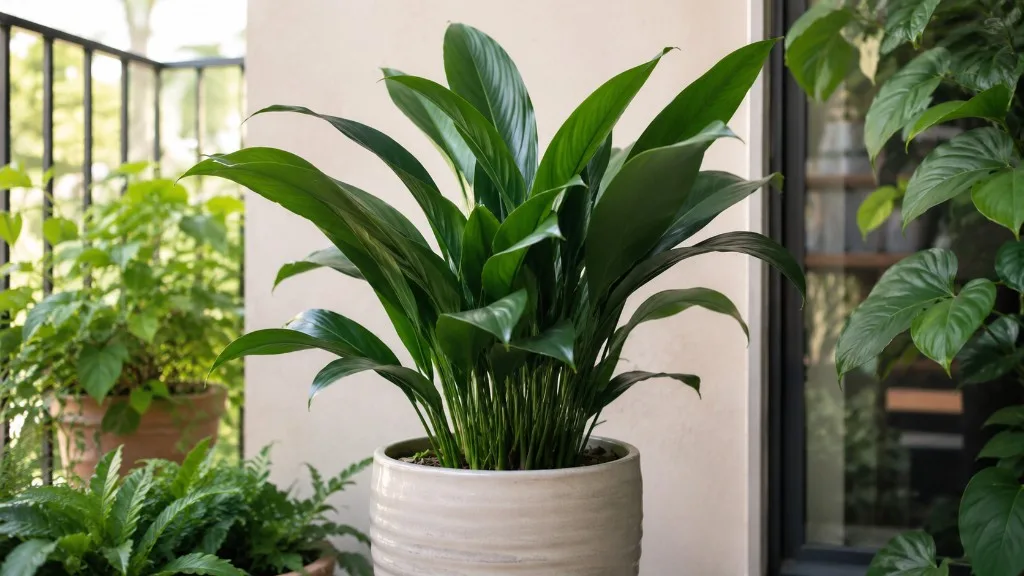
Cast iron plant (Aspidistra elatior) earned its name for surviving neglect, low light, and rough indoor conditions. NC State describes it as drought-tolerant and a classic interiorscape plant for dense shade.
For AC rooms, that toughness matters more than speed. Cast iron will not fill a blank wall in a month, but it rarely collapses when the AC runs for weeks and watering gets irregular.
Why it works: Low-light + drought tolerance for sealed, dim AC spaces — and a stronger pet-safety starting point than most plants on this list.
Indian home care tip: Dust the broad leaves; they collect AC-blown film that blocks light.
Common mistake: Giving it a west balcony blast of afternoon sun “to help it grow.”
Avoid this plant if: You want colourful variegation that stays vivid in low light — growth is naturally slow.
Deeper care: Cast iron plant hub · light · low humidity
5. Golden Pothos (Money Plant)
Best for: Trailing shelves, cupboard tops, and beginner Indian households
Difficulty: Easy
Light: Low to bright indirect; avoid harsh afternoon sun
Water: Water when the top inch dries; less often in cool, low-light AC rooms
Best placement: High shelf or hanging planters away from direct vent airflow
Pet safety: Toxic to cats and dogs (ASPCA)
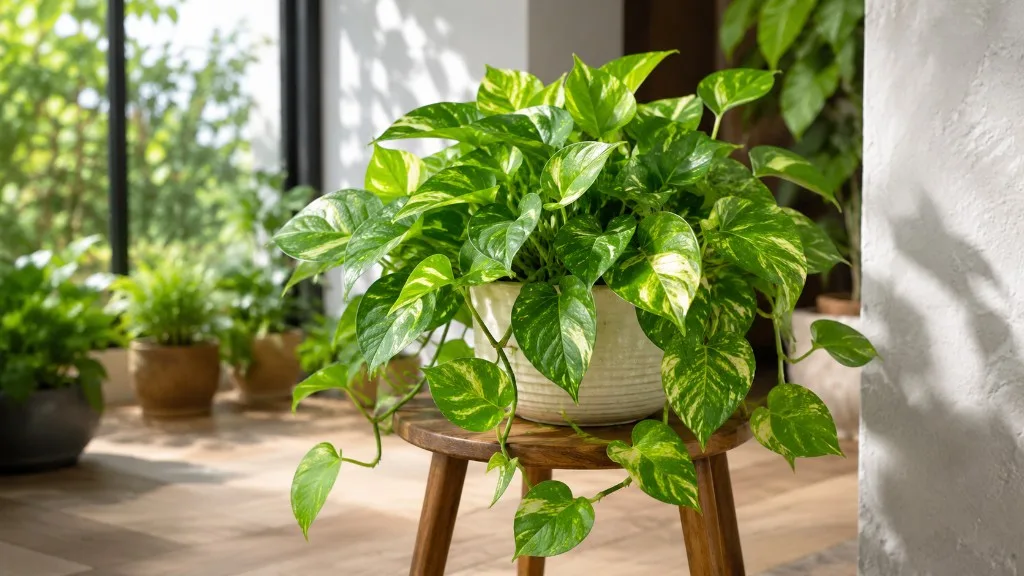
Money plant is the cultural default in many Indian homes — and it is a strong AC pick when you want growth you can see. NC State lists Epipremnum aureum as an easy indoor vine for a range of indoor light levels when watering is moderate and drainage is decent.
In dry AC air, pothos may show occasional tip crisping, but vines usually keep pushing if light is adequate. Elevate trailing stems so pets and toddlers cannot chew them.
Why it works: Flexible light needs, fast recovery from missed waterings, and a familiar Indian nursery plant.
Indian home care tip: If vines stretch pale and sparse, the room is too dark — move closer to a bright window, not closer to the AC.
Common mistake: Keeping the pot in the cold airflow “so it gets fresh air.”
Avoid this plant if: You need a verified pet-safe trailer at floor level.
Deeper care: Golden pothos hub · watering · propagation
6. Rubber Plant (Placement Rules)
Best for: Statement corners in AC living rooms with decent bright indirect light — only if you can park it off the vent
Difficulty: Easy to medium
Light: Bright indirect or partial shade; protect from harsh afternoon sun
Water: Water regularly in growth; reduce when cooler/dormant; never leave soggy
Best placement: Bright corner outside the AC jet; stable spot (dislikes moving)
Pet safety: Toxic if ingested — sap can irritate
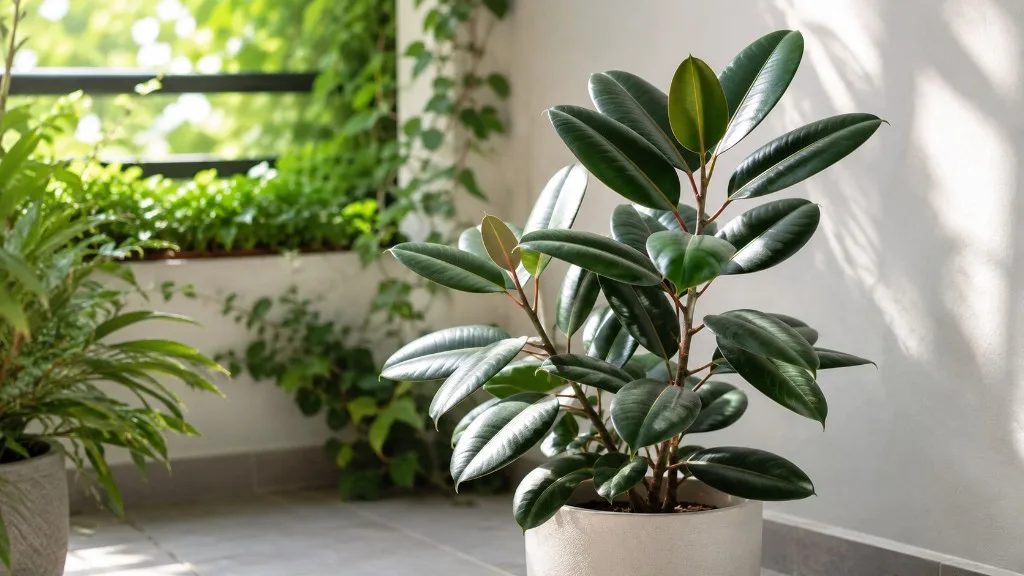
Rubber plant (Ficus elastica) has thick, leathery leaves that handle ordinary indoor dryness better than thin tropicals. NC State still flags a hard AC-room truth: it does not like drafts or cold temperatures, and overwatering, temperature drops, or cold drafts can cause leaf loss.
So rubber plant belongs on this list with a placement rule attached. Give it bright indirect light and a stable corner. Do not put it under a wall AC or in front of a tower fan on cold mode. In our June 2026 living-room test, three lower leaves dropped while the pot sat in the cascade; after moving it off the jet, drop stopped without any watering change.
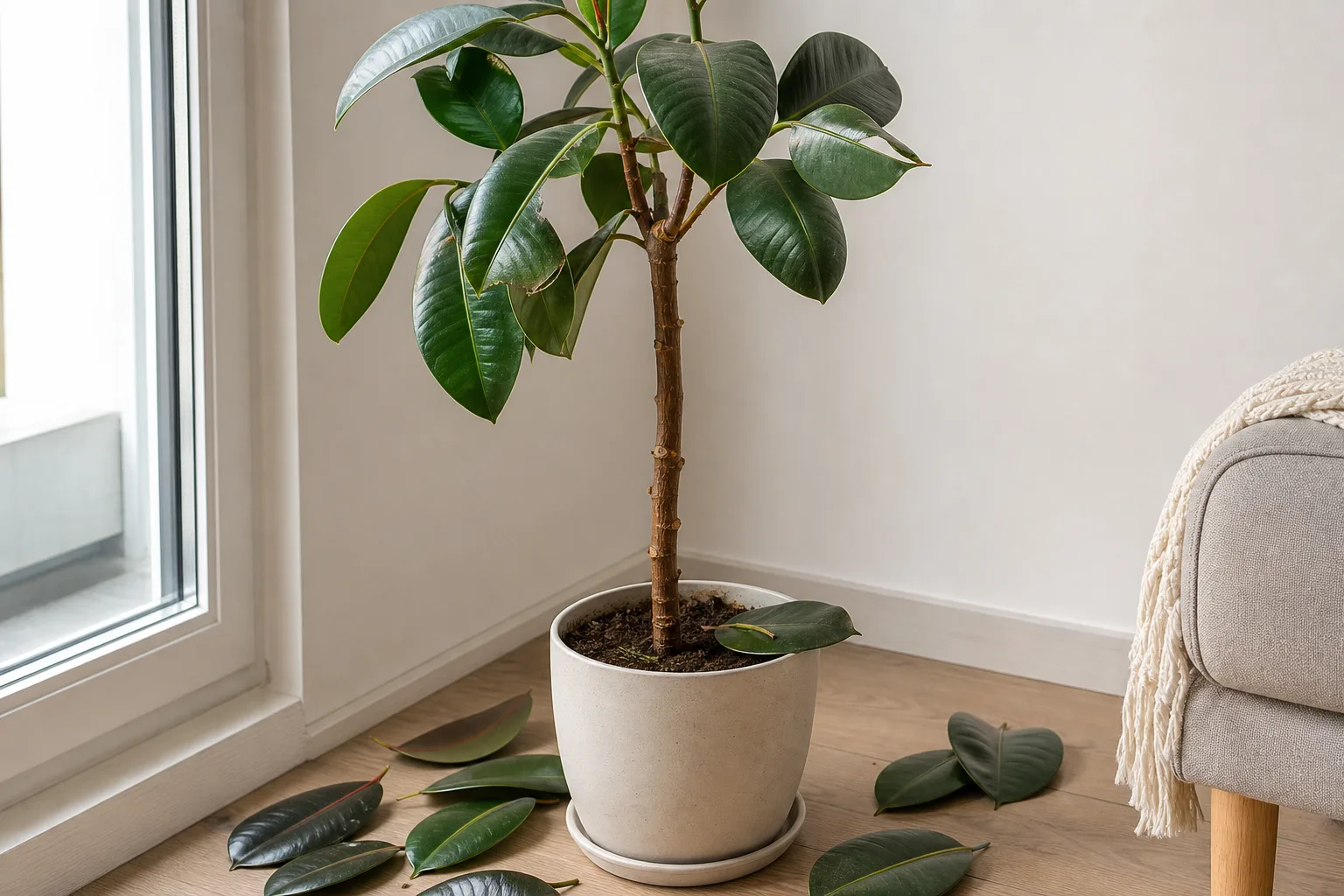
Leaf drop after cold drafts is a placement problem first — confirm the vent path before blaming fertilizer.
Why it works: Thick foliage buffers dry air when drafts are controlled.
Indian home care tip: Clean leaves with a damp cloth; dusty rubber leaves look dull fast in closed AC rooms.
Common mistake: Moving the plant weekly to “find better light,” then blaming AC when leaves drop.
Avoid this plant if: Your only open floor space sits in the vent path.
Deeper care: Rubber plant hub · leaf drop · light
7. Peperomia
Best for: Compact desks, nightstands, and small AC bedrooms
Difficulty: Easy
Light: Medium bright indirect
Water: Light watering; thick leaves store moisture — soggy mix is the usual killer
Best placement: Tabletop out of direct AC airflow
Pet safety: ASPCA lists common peperomias such as Peperomia hederifolia as non-toxic to cats and dogs — still discourage chewing and confirm your cultivar
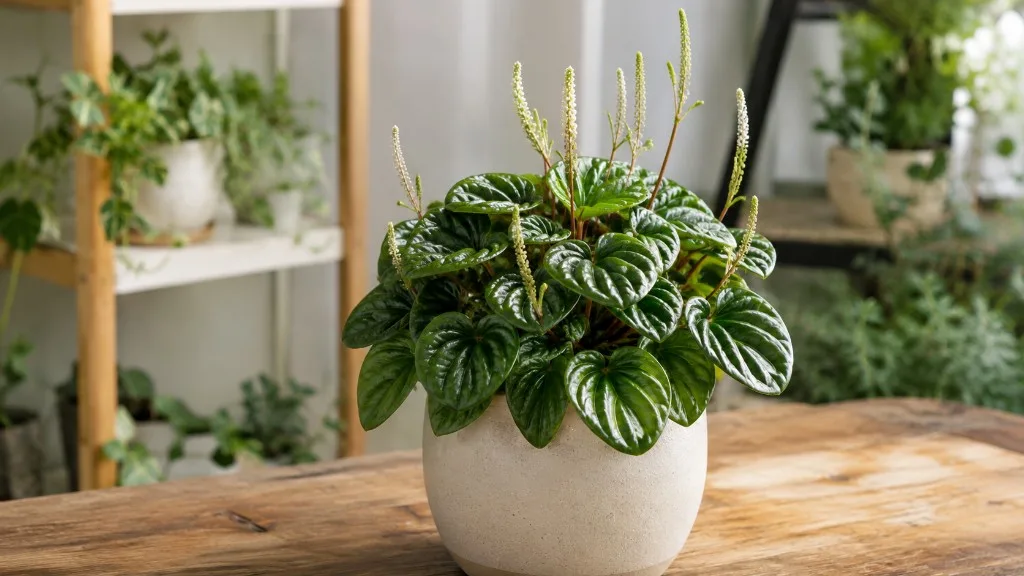
Peperomias are small enough for Indian bedroom furniture and often have semi-succulent leaves that cope with average home dryness better than ferns. Clemson emphasises well-drained mix and careful watering — overwatering is the classic failure mode indoors (leaves drop when the mix stays wet).
Under all-day AC, soil dries unevenly: the top crust looks dry while the core stays wet. Water thoroughly, then wait. Tiny pots on AC-blasted shelves dry fastest — that is a placement issue, not a reason to switch to daily misting. Penn State notes misting only raises humidity until droplets evaporate — often minutes.
Why it works: Compact size + moisture-storing leaves for dry, space-tight AC rooms.
Indian home care tip: Choose chunky, well-aerated mix; peperomia roots hate dense, wet garden soil.
Common mistake: Misting daily instead of fixing vent placement and watering rhythm.
Avoid this plant if: You only remember plants once a month and refuse to check soil — small pots still need occasional attention.
Deeper care: Peperomia hub · watering · soil
8. Aglaonema (Conditional Colour Pick)
Best for: Colourful foliage in low-light AC living rooms — if you can keep it off the draft
Difficulty: Easy
Light: Low to medium indirect
Water: Keep lightly moist in warm months; reduce in cooler/low-light AC stretches
Best placement: Bright-enough interior spot away from vents; not on the AC sill
Pet safety: Toxic — contains calcium oxalate crystals
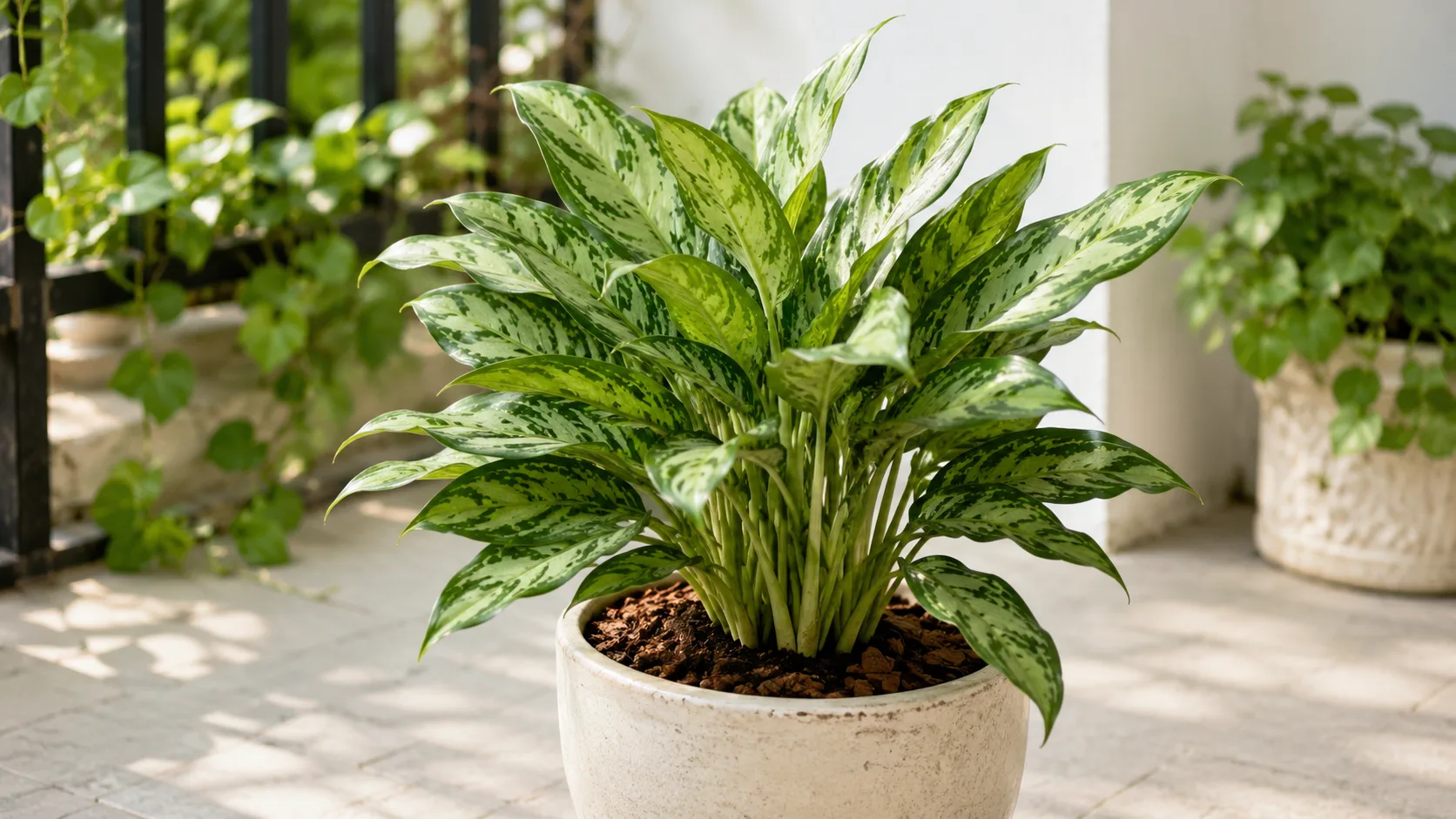
Aglaonema (Chinese evergreen) is popular in Indian interiors for silver, pink, and red patterning in low light. NC State says it prefers higher humidity but will tolerate dryer air, while leaves may turn brown in very dry air or a drafty location.
That makes it the conditional pick on this list: excellent for sealed rooms if you control drafts; frustrating if it sits in the cold jet. Expect some cosmetic tip browning in hard-run AC bedrooms even when roots are fine.
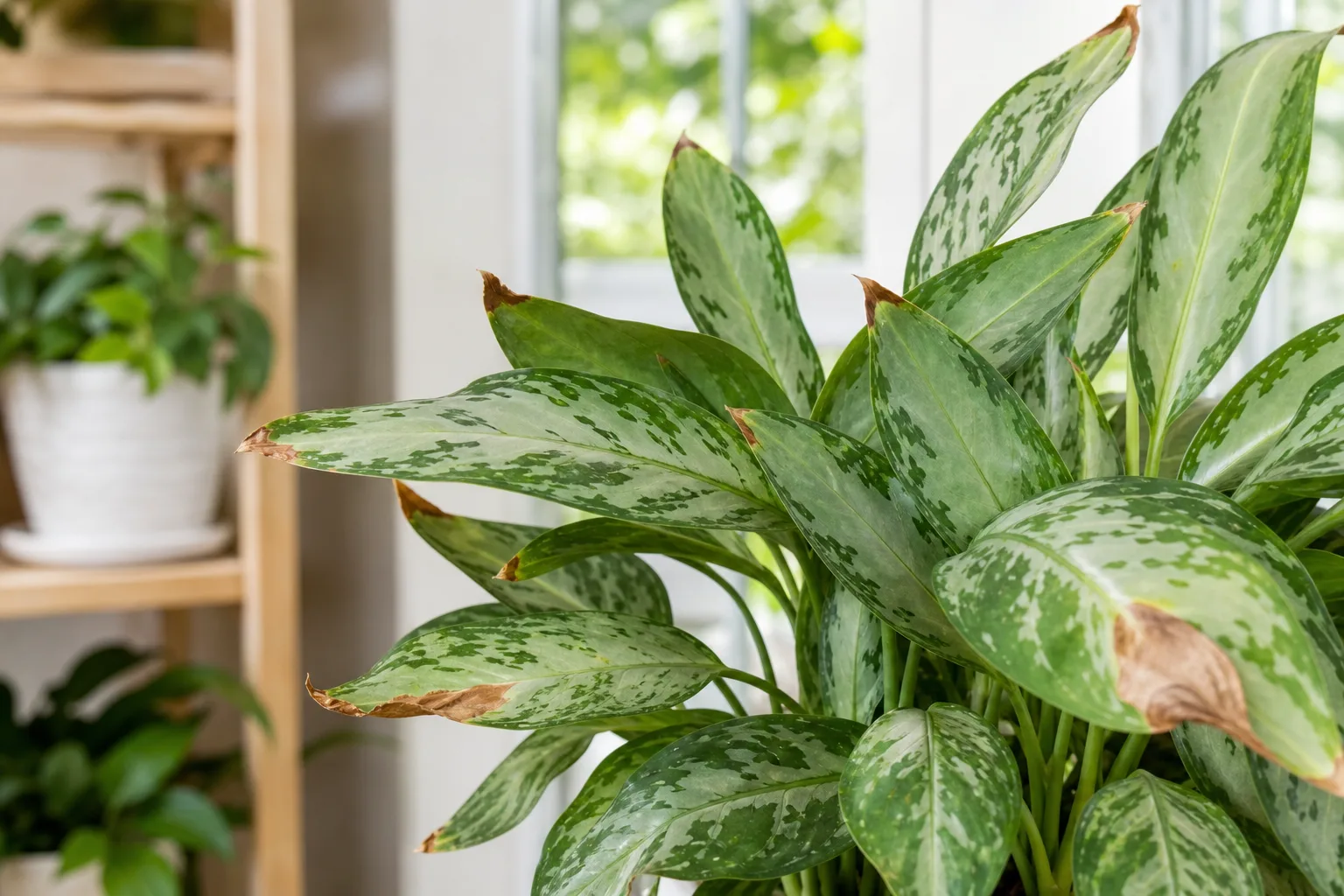
Brown tips on aglaonema near a vent are often draft or dry-air stress — move the pot before flooding the soil.
Why it works: Low-light colour with better dry-air tolerance than ferns and prayer plants — with placement discipline.
Indian home care tip: If tips brown but soil is correctly moist, move the pot farther from the vent before changing fertilizer.
Common mistake: Treating brown tips as a demand for daily water.
Avoid this plant if: Your only shelf is directly under a split AC or you need a pet-safe floor plant.
Deeper care: Aglaonema hub · brown tips · watering
How to Choose the Right Plant for Your AC Room
- All-day bedroom AC, low light: snake plant or ZZ plant
- Want trailing greenery: golden pothos on a high shelf
- Bright window in an AC living room: jade plant or rubber plant (rubber only if off-vent)
- Pets that chew: start with cast iron plant and still elevate anything questionable
- Small desk footprint: peperomia
- Want colour in dim light: aglaonema, placed away from drafts
- You overwater when anxious: snake plant, ZZ, or jade — not aglaonema in a cachepot
If humidity lovers keep failing, read signs your houseplants need more humidity and be honest: a portable humidifier helps more than misting, while plant selection still matters most in sealed AC flats. For placement of a humidifier if you add one, see humidifier placement for houseplants.
Common Mistakes in Air-Conditioned Indian Apartments
- Watering more because the air feels dry. Cool, dim AC rooms often dry soil slowly. Overwatering still causes root rot. (Clemson HGIC)
- Parking plants in the vent path. Drafts cause tip burn and leaf drop on rubber plant and aglaonema.
- Trusting misting as humidity care. Humidity spikes from mist are fleeting. (Penn State Extension)
- Choosing calathea, ferns, peace lily, or areca for trophy AC bedrooms. They advertise humidity needs you cannot meet with a closed split AC.
- Ignoring the AC-off heat spike. West-facing glass can cook leaves after the compressor stops — sheer curtains help more than extra water.
- Skipping drainage. Decorative pots without holes plus AC-season overwatering is a classic root-rot combo.
When monsoon humidity returns and you run AC less, watering intervals change again — see monsoon houseplant care in India.
Related Guides
- Best indoor plants for Indian homes — broader India shortlist beyond AC rooms
- Best office plants — dry HVAC and low-light desk overlap
- Low-light plants for Indian flats — when shade, not AC, is the main constraint
- Houseplant care for dry Indian climates — arid-room habits that overlap with sealed AC air
- Draft stress on houseplants — vent-side tip burn and leaf-drop triage
- Signs your houseplants need more humidity — diagnose dry-air damage
- DIY pebble tray — limited local humidity help; not a substitute for plant choice
- Monsoon houseplant care in India — seasonal handoff when humidity rises
Conclusion
For most Indian AC apartments, start with snake plant or ZZ plant — they handle dry air, low light, and missed waterings with the least drama. Add golden pothos when you want visible trailing growth, jade when you have a bright sill, and cast iron plant when pets or deep shade rule the room. Use rubber plant and aglaonema only when you can keep them out of the cold vent path; keep peperomia for compact tabletops.
The winning AC-room strategy is not misting three times a day. It is choosing dry-air-tolerant plants, parking them outside the airflow, and watering from soil checks — not from how cold the room feels.