Determinate vs Indeterminate Tomatoes Explained
Determinate vs indeterminate tomatoes change pruning, support, and harvest timing. Learn which growth habit fits sauce, slicing, containers, and short seasons.
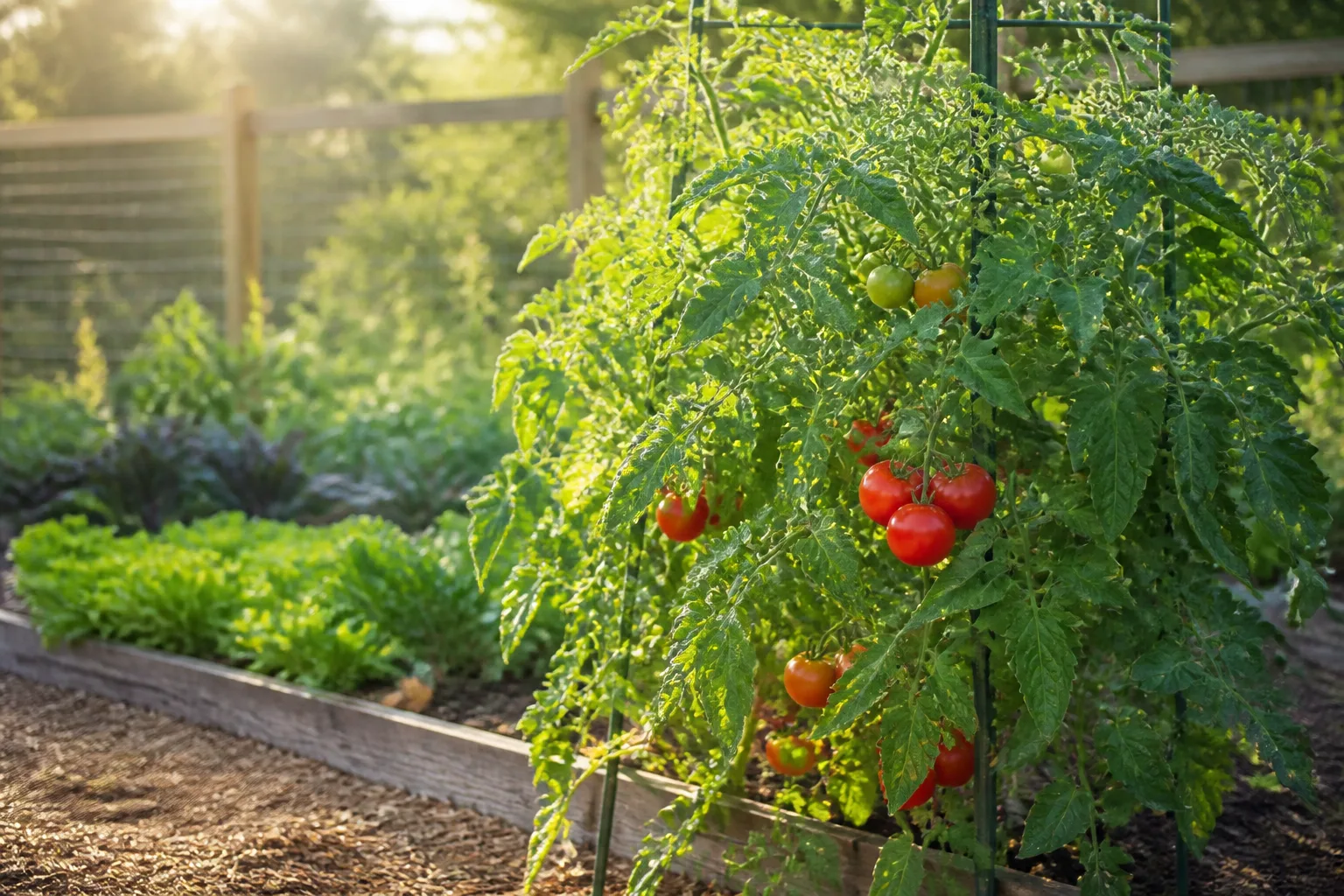
Determinate and indeterminate are not flavor labels—they are growth blueprints. One type stops growing at a set height and ripens most of its fruit in a few weeks. The other keeps climbing, branching, and setting fruit until frost or disease ends the run. Mix them up and you either strip future tomatoes off a bush or let a vine turn into an unmanageable wall of leaves. Read the tag before you prune, stake, or plan your canning weekend.
If this is your first tomato year, start with our things to know before growing tomatoes guide—it covers water rhythm, disease signals, and harvest timing that apply no matter which habit you pick. This page goes deep on the habit decision itself: what the words mean, how care diverges, and which varieties match common kitchen jobs.
What the Growth-Habit Labels Actually Mean
Tomato breeders classify plants by when the main stem stops elongating and how fruit clusters are distributed along the plant. Indeterminate tomatoes behave like vines: they add stem length, flower, and ripen fruit continuously. Determinate tomatoes behave like self-limiting bushes: they reach a genetically set size, set a defined crop load, and decline after the main flush.
Neither label guarantees taste. A well-grown determinate paste tomato can beat a neglected indeterminate heirloom in the kitchen. What changes is labor, calendar, and architecture—how tall the plant gets, how long it fruits, and whether you should touch the suckers at all.
NC State Extension notes that most home-garden varieties in humid Southern climates are indeterminate, while early-maturing and processing types skew determinate. Seed packets, transplant tags, and catalog listings should print the habit clearly. When they do not, watch the plant in June: a vine still shooting past its cage while flowering everywhere is almost certainly indeterminate.
The Terminal Flower Cluster Explained
The botanical hinge is the terminal flower cluster. On determinate plants, the main stem ends in a flower cluster instead of another vegetative tip. Side branches also terminate in fruit clusters rather than climbing indefinitely. That is why bush types have a predictable height ceiling—often 18 inches to about four feet, depending on cultivar—and why the harvest concentrates into a short window.
On indeterminate plants, the growing tip stays vegetative. Flower clusters appear on stems between leaves—commonly every third leaf on many cultivars—and new suckers keep forming in leaf axils. Remove nothing and you get a multi-stem shrub; prune to one or two leaders and you get a tall, manageable vine. The Old Farmer’s Almanac summarizes the split cleanly: determinates ripen most fruit at once; indeterminates ripen steadily until cold weather shuts them down.
Semi-determinate varieties blur the line—more on those below—but the terminal cluster rule still helps at the garden center. If the tag says determinate, treat suckers as potential fruiting wood, not clutter.
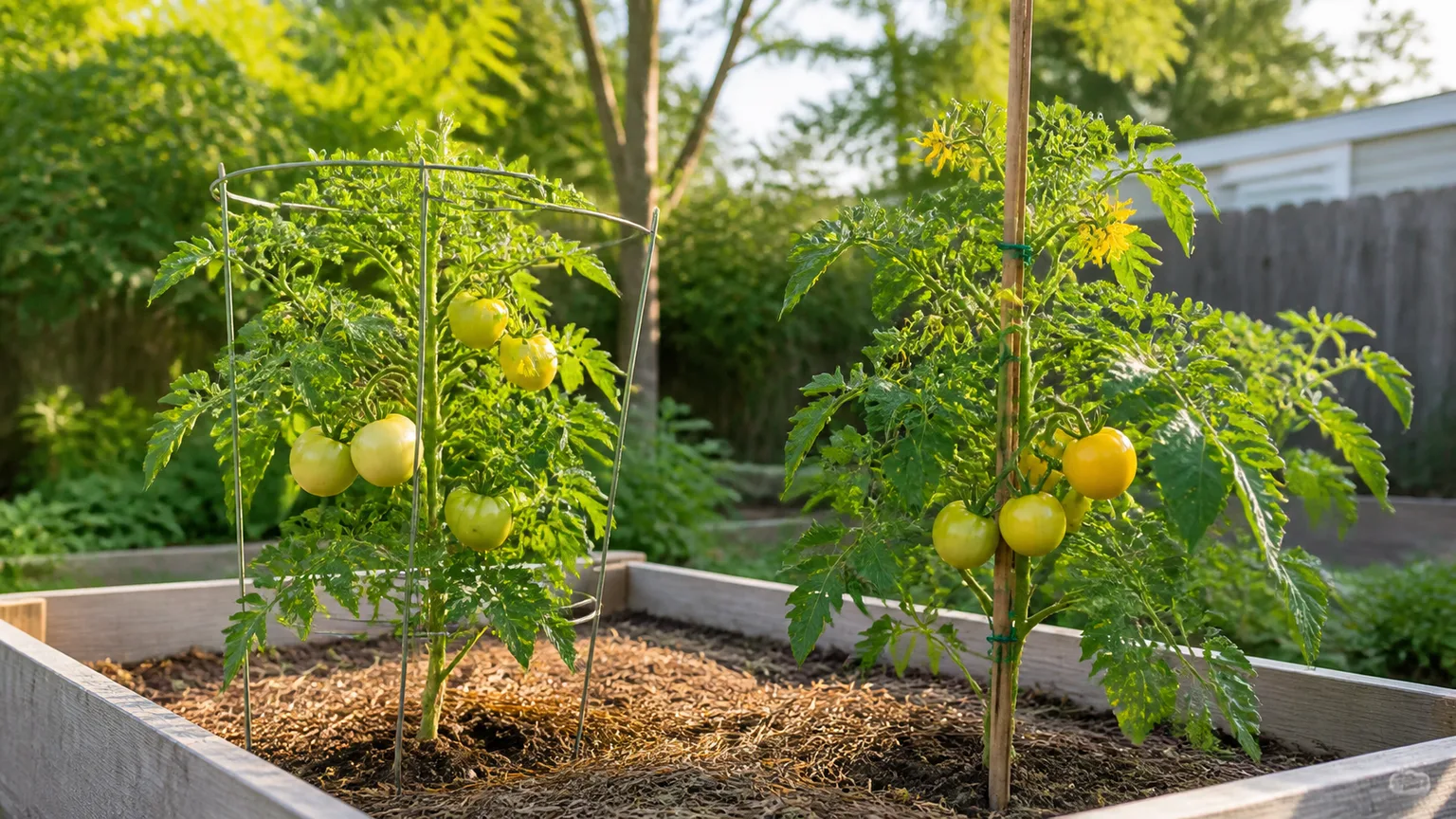
Indeterminate Tomatoes: Vines That Keep Going
Indeterminate tomatoes are the default image of a backyard tomato: tall, leafy, and still setting green fruit when the first frost warning hits. They spend early season energy on stem and leaf growth, which is why the first ripe tomato often arrives slightly later than on a compact bush—but once production starts, it continues in waves until the plant is stopped.
Most heirlooms, large beefsteaks, and popular cherry types are indeterminate. That includes classics like Brandywine, Better Boy, and Sungold. If you want a bowl of slicers on the counter every week from midsummer onward, you are shopping in this aisle.
Height, Support, and Trellising
Left alone, indeterminate stems can reach six to twelve feet on a strong trellis; six feet is typical in home gardens with regular pruning. They need large, sturdy support installed at transplant time—before roots spread. Options include:
- Tall stakes with soft ties every 8–12 inches
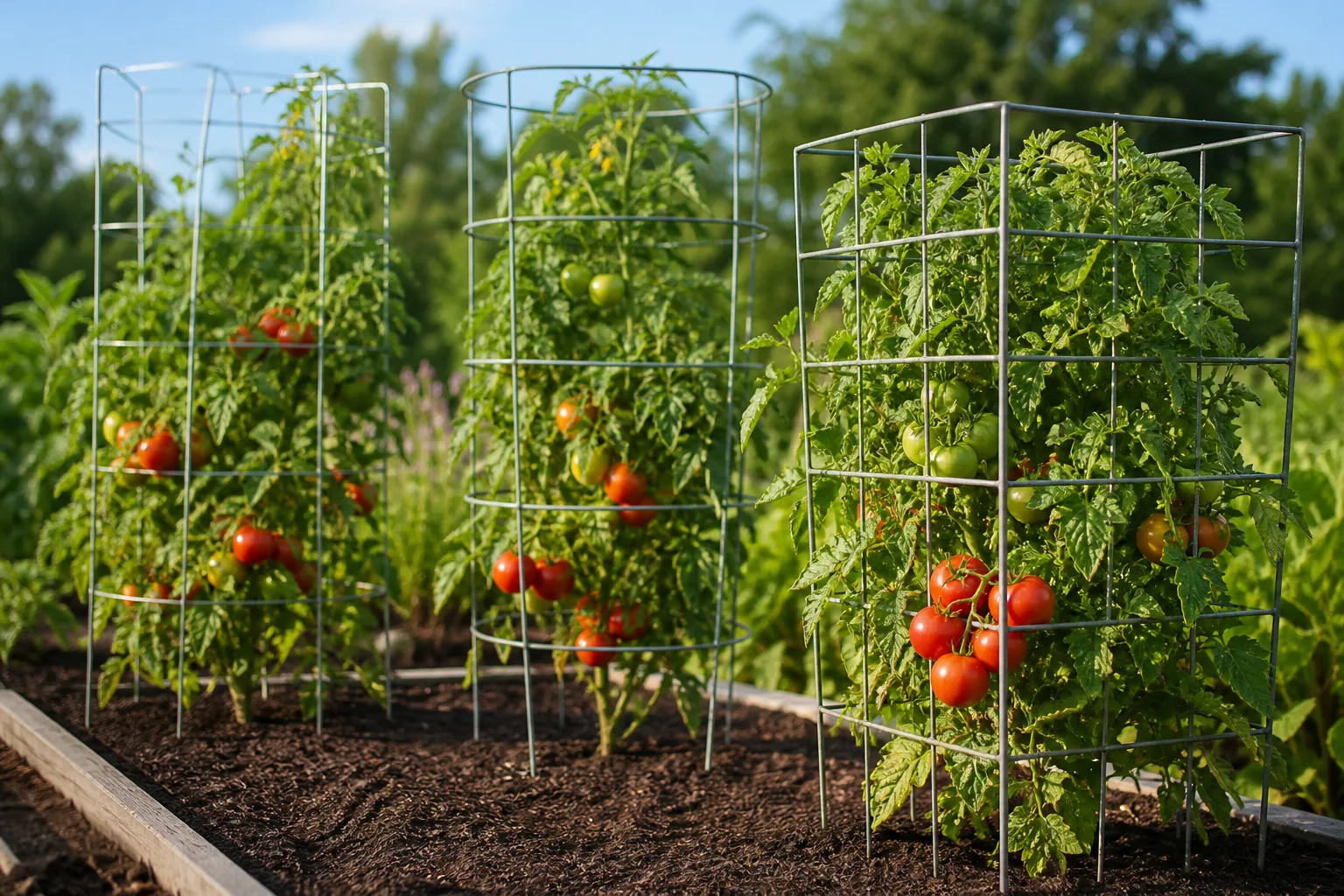
- Heavy wire cages at least four feet tall with wide openings
- Horizontal trellis or fence with twine drops
- Florida weave string systems for row plantings
NC State Extension recommends driving stakes about a foot deep, 3–5 inches from the plant, and tying with cloth strips or nylon—not bare wire that cuts stems. Homemade cages from concrete reinforcing wire should be roughly 18–20 inches in diameter and anchored with external stakes because fruit load plus wind will push over lightweight cones.
Our stakes vs cages for tomatoes guide compares load ratings and maintenance. The short version: flimsy cone cages fail on indeterminates even though a properly anchored heavy cage works well if you are willing to tuck suckers upward instead of pruning to a single stem.
Pruning Suckers Without Sacrificing Fruit
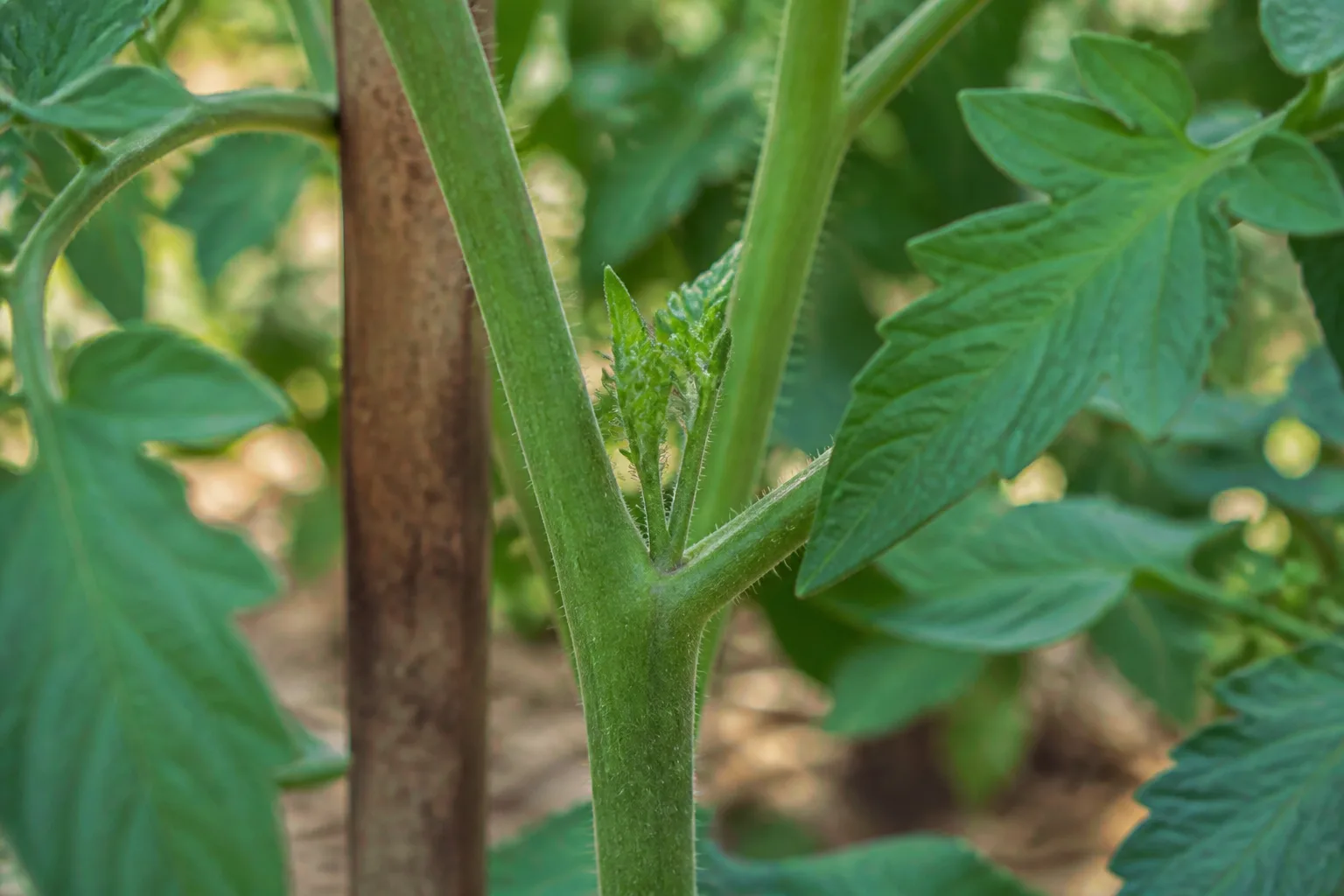
Indeterminate plants produce a sucker—a shoot—in each leaf axil. Each sucker can become its own fruiting stem. That is free yield if you have space and support; it is chaos if you wanted one tidy vine.
Common approaches:
- Single-leader stake: Remove every sucker before it reaches 2–3 inches. Highest fruit quality per stem on tight spacing; more tying work.
- Two-leader stake or trellis: Keep the main stem plus one sucker below the first flower cluster. Good balance for many home rows.
- Caged, minimal prune: Push suckers inside a large cage and let the plant fill the cylinder. Less labor; needs airflow monitoring.
NC State Extension advises breaking out competing suckers on trellised indeterminates before they pass 3 inches, leaving one stem per 8–12 inches of row space. Never remove the sucker directly below an open blossom unless you are deliberately reducing load—the plant may respond with uneven growth and delayed ripening on that truss.
Also trim excessive foliage only when leaves shade fruit clusters in humid weather. The goal is sunlight on developing tomatoes, not a stripped bare pole. Step-by-step sucker decisions live in our how to prune a tomato plant guide.
How Indeterminate Harvests Spread Across the Season
Indeterminate harvests trickle and surge. Early trusses ripen while upper clusters are still flowering, so picking happens weekly—not in one canning marathon. Flavor often peaks when fruit reaches full color on the vine, but breaker-stage picking (first blush of pink at the blossom end) is valid when birds, cracks, or forecast frost threaten quality.
Watch nighttime lows in fall. When frost is imminent, pick mature green and breaker fruit and ripen indoors at 68–77°F. Indeterminates often keep flowering until the cold kills the vine, so the last weeks can yield heavily if you protect plants with row cover on light frosts. For yield expectations by habit, see how many tomatoes will one plant produce.
Determinate Tomatoes: Bushes With a Deadline
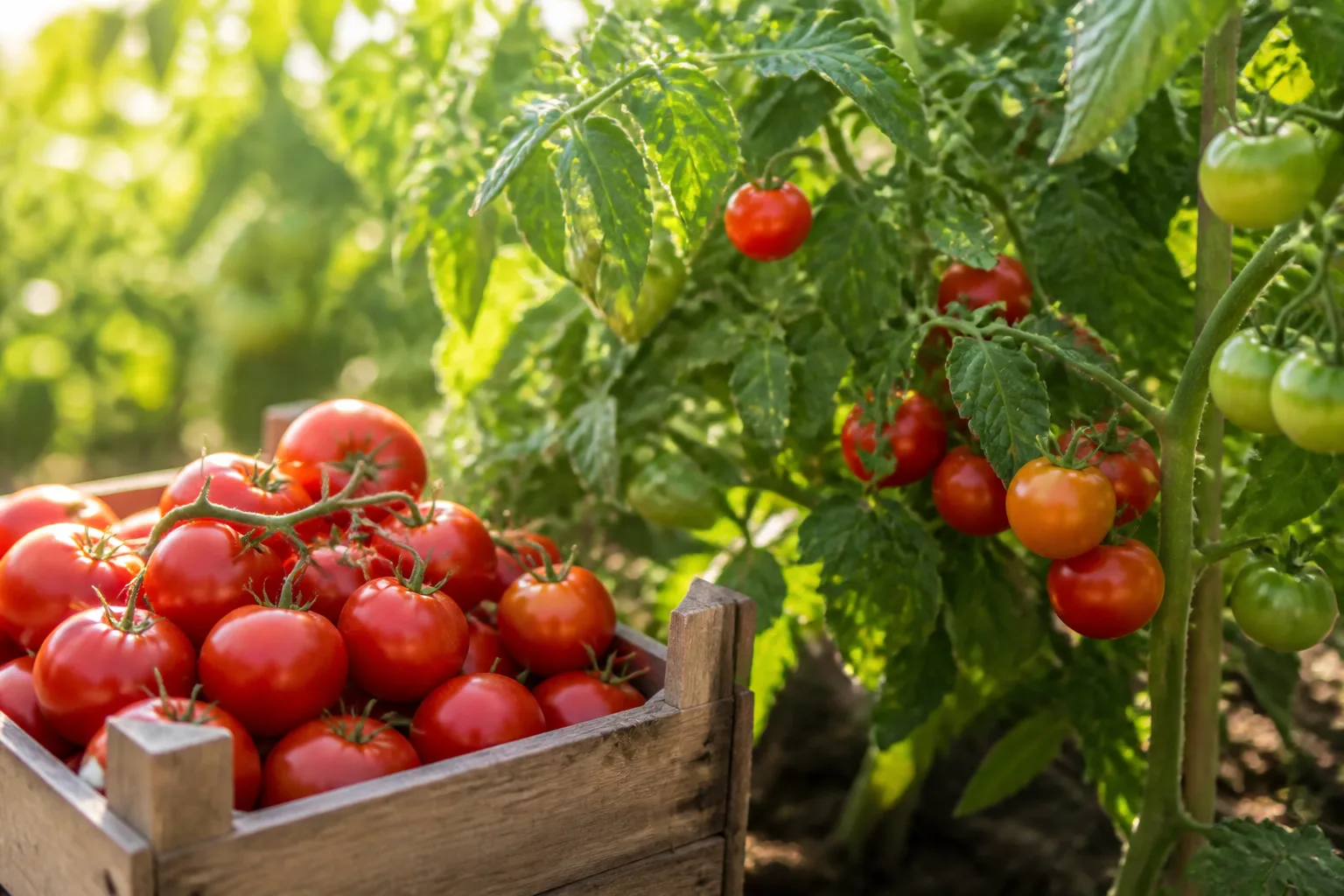
Determinate tomatoes—often called bush tomatoes—grow to their genetic ceiling, set fruit, and wind down. Most of the crop ripens within about two to four weeks, though a few cultivars push a smaller second flush before senescence. They excel when you want one coordinated harvest for sauce, salsa, or a vacation-proof garden that does not need daily sucker patrol.
Paste and Roma types are frequently determinate because processors and home canners want pounds arriving together. Determinates also dominate short-season and container lists because their compact root and shoot systems match limited space. Browse named bush cultivars in our determinate tomato varieties guide when you are ready to shop.
Support for Loaded Bush Plants
Determinate plants still need support—not because they climb forever, but because ripe fruit is heavy. A summer thunderstorm can flatten an unsupported bush or snap branches loaded with plum tomatoes. Install a short cage or stake at transplant and you are mostly done; you will not be extending trellis height every week the way you would on a vine.
University of Minnesota Extension notes that both determinate and semi-determinate types perform well in containers at least 12 inches deep with drainage holes. In-ground bush rows often use the Florida weave—horizontal strings between stakes—or modest cages spaced 1.5–2 feet apart with 3–4 feet between rows for airflow, matching NC State spacing guidance.
Because height is capped, your initial cage height usually suffices. Reinforce only if the cultivar runs taller than the tag suggests—some semi-determinate bushes approach five feet.
Why Heavy Pruning Cuts Into Determinate Yields
Here is the costliest beginner mistake: pruning a determinate like an indeterminate. Suckers on bush types are not optional clutter—they are future fruiting stems. Remove them aggressively and you remove trusses.
NC State Extension recommends pruning determinates once, when suckers below the first flower cluster are 2–4 inches long. Later removal reduces plant size and yield. Many gardeners skip even that light pass on strict dwarfs under two feet. Never strip upper growth the way you would on a single-leader vine.
Do remove diseased lower leaves touching soil and any broken branches after storms. That is sanitation, not habit conversion.
The Determinate Ripening Window
Determinate harvests arrive in a concentrated pulse. Plan your kitchen accordingly: canners should have jars, lids, and freezer space ready before the first blush. If every bush in your row is the same cultivar, the entire crop may land within two weeks—beautiful for sauce weekend, stressful if you travel.
Stagger transplant dates by 10–14 days when planting multiple determinate bushes for processing so batches do not all demand attention the same Saturday. Once the main flush passes, plants lose vigor and set little new fruit. Pull them after harvest if disease pressure is building; do not expect a vine-like autumn from a strict determinate.
Some tags lie a little: Rutgers and similar cultivars are labeled determinate yet produce an early heavy set followed by smaller later flushes—behavior closer to semi-determinate. Treat them as extended bushes, not infinite vines.
Semi-Determinate Types Sit in the Middle
Semi-determinate tomatoes combine bush architecture with a longer ripening spread than strict determinates. NC State Extension highlights Celebrity—an All-America Selections winner—as the textbook example: compact enough for cages, but fruit keeps coming over a broader window than a one-and-done paste bush.
Semi-determinates suit gardeners who want manageable size without giving up weeks of fresh sandwiches. Prune lightly like determinates; support with a medium cage; expect 3–5 feet of height on many tags. When a variety is ambiguous, default to bush rules: minimal sucker removal, cage support, and no single-leader stripping.
If you cannot find the habit on the label, search the cultivar name before you prune. Catalog copy for semi-determinate types often says “compact indeterminate” or ” vigorous bush”—read carefully.
Which Type Should You Plant?
Neither habit wins universally. Determinate wins when you need a synchronized harvest, tight footprint, or low maintenance. Indeterminate wins when you want continuous fresh eating and have vertical space plus time to support and optionally prune. Many experienced gardeners grow both: determinates for sauce weekends, indeterminates for daily slicing.
Match Habit to Kitchen Goals and Calendar
Use this decision filter before checkout:
| Your priority | Lean toward | Why |
|---|---|---|
| Big-batch sauce or canning | Determinate paste types (Roma, Amish Paste, San Marzano Nano) | Fruit ripens together; dense flesh cooks down fast |
| Daily BLTs and salads all summer | Indeterminate slicers and cherries | Steady harvest until frost |
| Short season or cool spring | Early determinates or short-season indeterminates like Early Girl | Days-to-maturity matters more than habit alone |
| Hands-off gardening | Determinate in cages; minimal pruning | No weekly sucker walk |
| Maximum flavor experimentation | Mostly indeterminate heirlooms | Widest heirloom catalog |
| Mixed plan | One bush row + one trellised vine row | Covers pantry and plate |
Sauce tomatoes are usually determinate, but not always—verify each cultivar. Indeterminate paste types exist for fresh eating with occasional batch cooking; they will not synchronize like a bush Roma row.
Containers, Short Seasons, and Tight Spaces
Determinate and semi-determinate types are the default for pots, raised beds with height limits, and balcony gardens. Choose a container at least 12 inches deep with drainage; larger is better for full-size bush slicers. Cherry determinates like Tumbler fit hanging baskets; beefsteak bushes need 15–20 gallon equivalents.
Indeterminate tomatoes in containers are possible but demand large pots (20+ gallons), daily watering, and a trellis or tall cage anchored to the pot or railing. Dwarf indeterminate projects exist, yet most container success stories are bush types. Our tips for growing tomatoes in containers guide covers pot size and drainage in more detail.
Short growing seasons do not automatically mean determinate. Early-maturing indeterminates can outproduce a late bush if you start transplants on time and protect from late frost. Count days from transplant, not seed, when comparing tags—and align with your average first frost date.
Varieties Worth Starting With
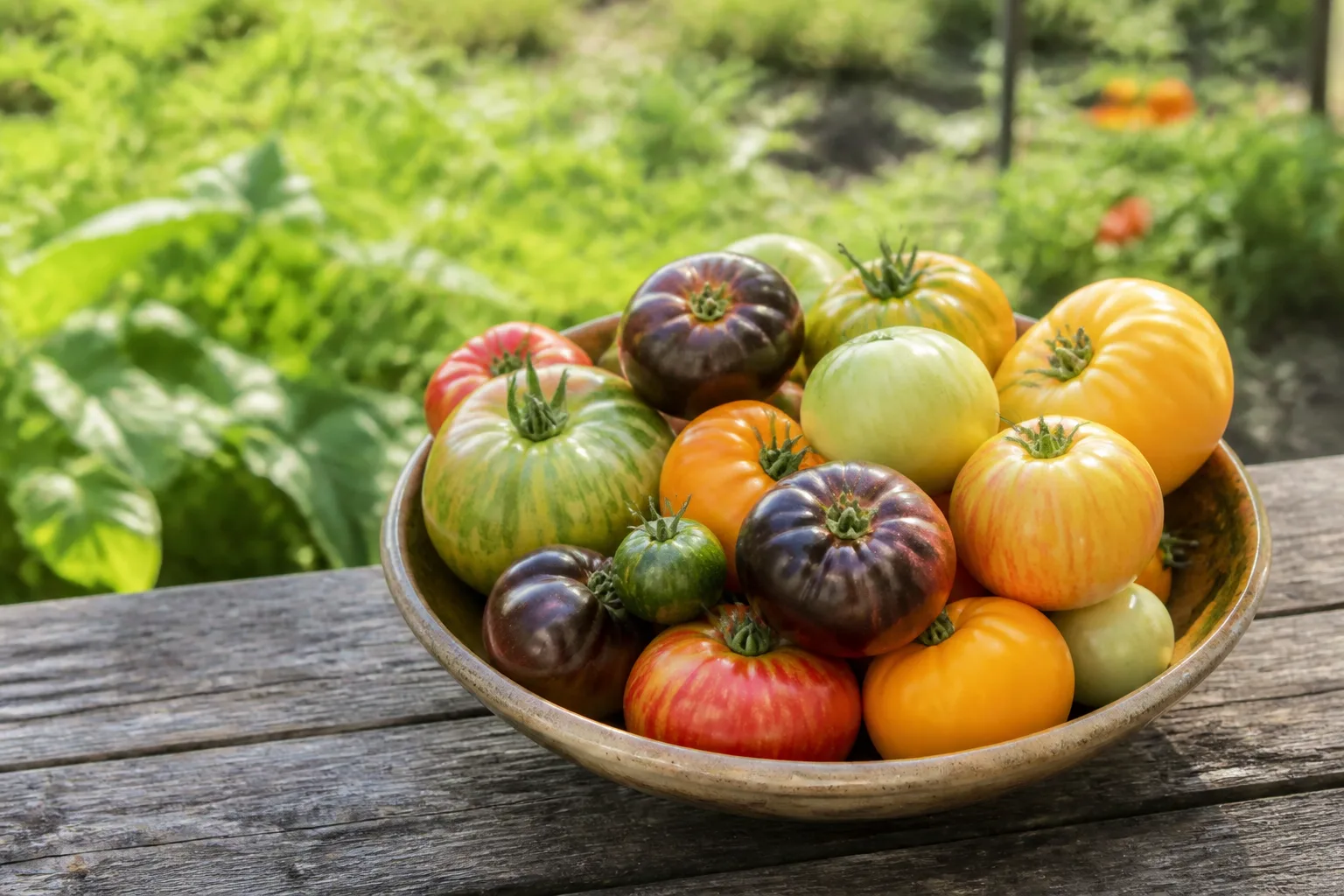
Labels matter more than marketing photos. Below are reliable starting points; expand from our tomato varieties to try list once you know your habit preference.
Determinate and Paste Picks
- Celebrity (semi-determinate): 7–8 oz globes; disease resistance; extended bush harvest; great first tomato.
- Roma / San Marzano Nano: Classic paste shape; concentrated ripening for sauce.
- Amish Paste: Heirloom pear type; sweet, dense flesh for canning and fresh salsa.
- Marglobe: Firm slicer-process hybrid; bruise-resistant; ~75 days.
- Rutgers: Determinate tag with multi-flush behavior; early sandwich fruit plus later sets.
When planning sauce rows, match support and spacing to the tallest bush in the mix—not the shortest.
Indeterminate Slicers and Cherries
Most garden-center heirlooms and hybrids are indeterminate, including:
- Beefsteak / Better Boy / Big Boy: Large sandwich tomatoes; need trellis and sucker plan.
- Brandywine: Pink heirloom benchmark; late but worth trellis space.
- Early Girl: Short-season indeterminate; good when you want vine behavior with earlier first ripe fruit.
- Sungold / Sweet Million / Juliet: Cherry and grape types; indeterminate; harvest daily once they start.
- Sun Sugar: Yellow cherry; indeterminate; crack-sensitive—pick promptly.
Train these on sturdy cages or trellises from day one. See best tomato cages for wire gauge and diameter guidance before you buy flimsy cones.
Planting Basics That Work for Both Habits
Growth habit changes maintenance—not site requirements. Both types need full sun (minimum 6–8 hours direct light daily), fertile well-drained soil, and consistent moisture. NC State Extension recommends spacing staked or caged in-ground plants 1.5–2 feet apart with 3–4 feet between rows; widen spacing when using large cages or unpruned multi-leader vines.
Plant transplants deep: bury the stem to the first set of true leaves so adventitious roots stabilize the plant—especially important for tall indeterminates later. Install support at planting to avoid root damage. Mulch to reduce soil splash on lower leaves; rotate nightshades on a three-year minimum cycle.
Water deeply on a steady schedule rather than shallow daily sprinkles. Habit does not exempt you from blossom end rot when moisture swings—see our guide to fertilizing tomatoes for feeding without triggering splits. Match spacing to your training system using our tomato plant spacing reference when laying out rows of mixed habits.
Conclusion
Determinate tomatoes cap their height, ripen most fruit in a short window, and punish aggressive sucker pruning. Indeterminate tomatoes climb all season, need real trellis infrastructure, and reward regular—but thoughtful—sucker management. Semi-determinates split the difference for gardeners who want bush manageability with a longer plate presence.
Read the transplant tag before you touch pruners. Match habit to how you eat tomatoes and how long your season runs. Put support in the ground at planting. When you want named cultivars for each job, our determinate tomato varieties and tomato varieties to try guides pick up where this decision leaves off—so you spend less time guessing and more time harvesting.