Tomato Plant Spacing Guide for Determinate and Indeterminate Varieties
Learn how far apart to plant tomatoes by variety, support method, and bed type—with spacing charts, raised-bed layouts, and fixes if you already planted too close.
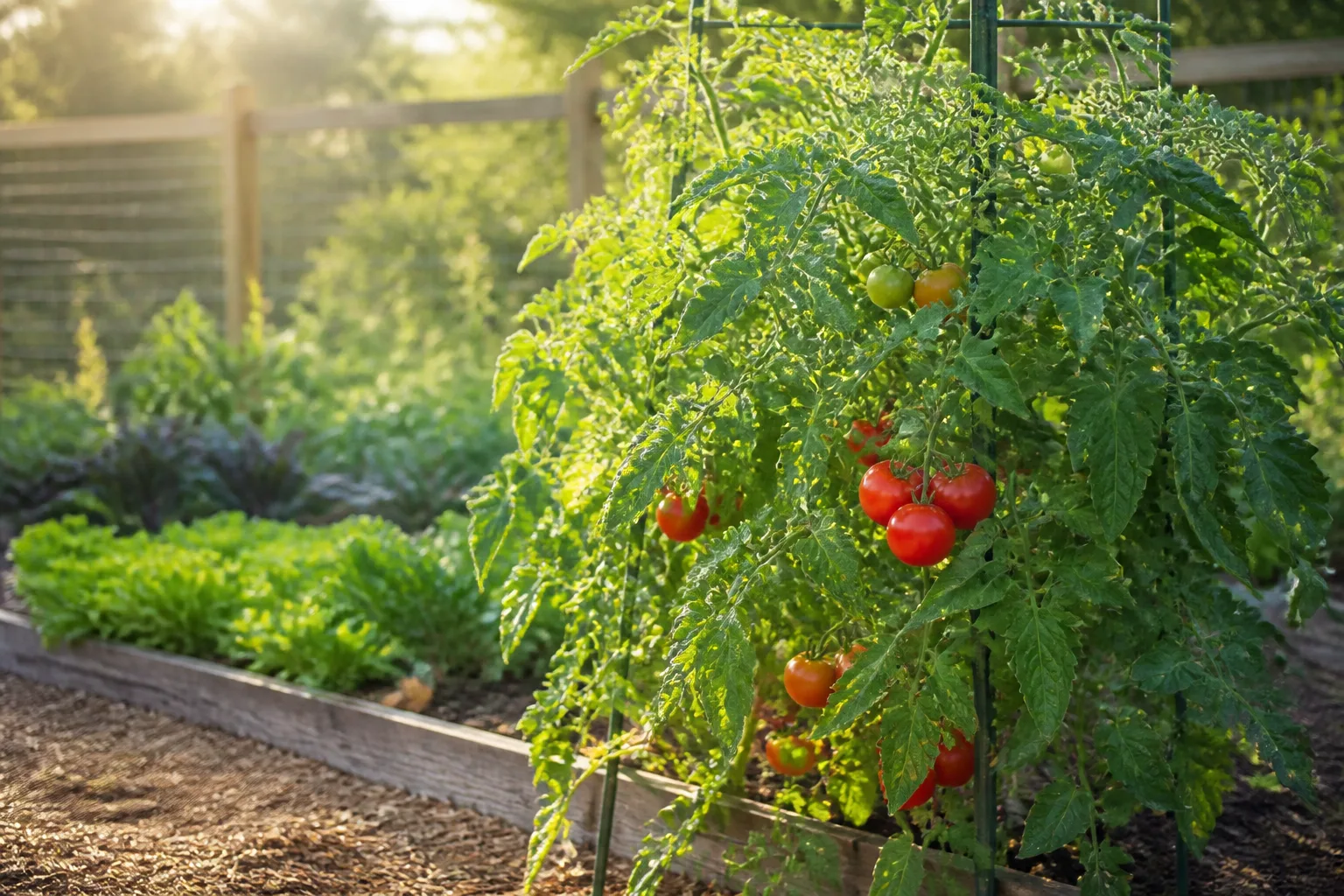
Tomato plant spacing is not one number—it is a three-part equation: the variety’s growth habit (determinate or indeterminate), the support you will actually maintain all season (cage, stake, trellis, or none), and the shape of the bed you are planting into (wide row, narrow raised bed, or single container). Get those three answers from the seed packet or transplant tag before you punch holes in the soil, and spacing stops being a vague “two to three feet” guess and becomes a layout you can mark with a tape measure in ten minutes.
Most spacing disasters do not show up on transplant day. They show up six weeks later when vines merge into one green wall, lower leaves stay wet until noon, and you cannot reach fruit without snapping a neighbor’s branch. The goal of this guide is to prevent that merge—and to give you a rescue plan if you already planted too enthusiastically.
Why Tomato Spacing Is a Support Decision, Not a Guess
Tomatoes are heavy feeders with brittle stems, wide root systems, and a long list of shared fungal diseases. Spacing is how you buy airflow, light, and harvest access without relying on luck or a dry summer. Extension guides from NC State and Penn State both tie in-row distance to how the plant will be trained—not just to the word “determinate” on the label.
What Goes Wrong When Tomatoes Touch Shoulders
Crowded tomatoes compete underground for water and nutrients, which shows up as pale leaves, slow fruit set, and smaller harvests per plant. Above ground, the problems are worse. Merged canopies trap humidity, so foliage that should dry within an hour after rain or irrigation stays damp until afternoon. That is the environment early blight, septoria, and bacterial speck love. You also lose the ability to scout: hornworms, leaf miners, and early yellowing hide in the interior of a thicket you cannot see into.
Harvest friction matters too. When you cannot walk around a plant or reach through the cage from two sides, fruit stays on the vine past peak flavor—or gets knocked off when you force your arm through tangled stems. Spacing is not wasted soil; it is workspace.
The Three Variables That Set Your Spacing Chart
Before you look up a chart, answer these three questions in order:
- Growth habit: Determinate (bush, finite height), semi-determinate (between bush and vine), or indeterminate (vine until frost)?
- Support plan: Will you cage with minimal pruning, stake to one or two leaders, run a Florida weave down a row, or let plants sprawl?
- Bed geometry: Wide in-ground rows with walking paths, a 4-foot-wide raised bed with exterior paths only, or one plant per container?
Support method moves the number more than habit alone. Penn State Extension notes that staked tomatoes can be planted closer (about 18–24 inches) than caged plants because the canopy stays narrow—but only if you prune suckers on schedule. Caged indeterminate plants often need 3 feet or more because each cage occupies a 2-foot-diameter footprint. If you are still choosing support, read our stakes vs cages guide before you finalize hole spacing.
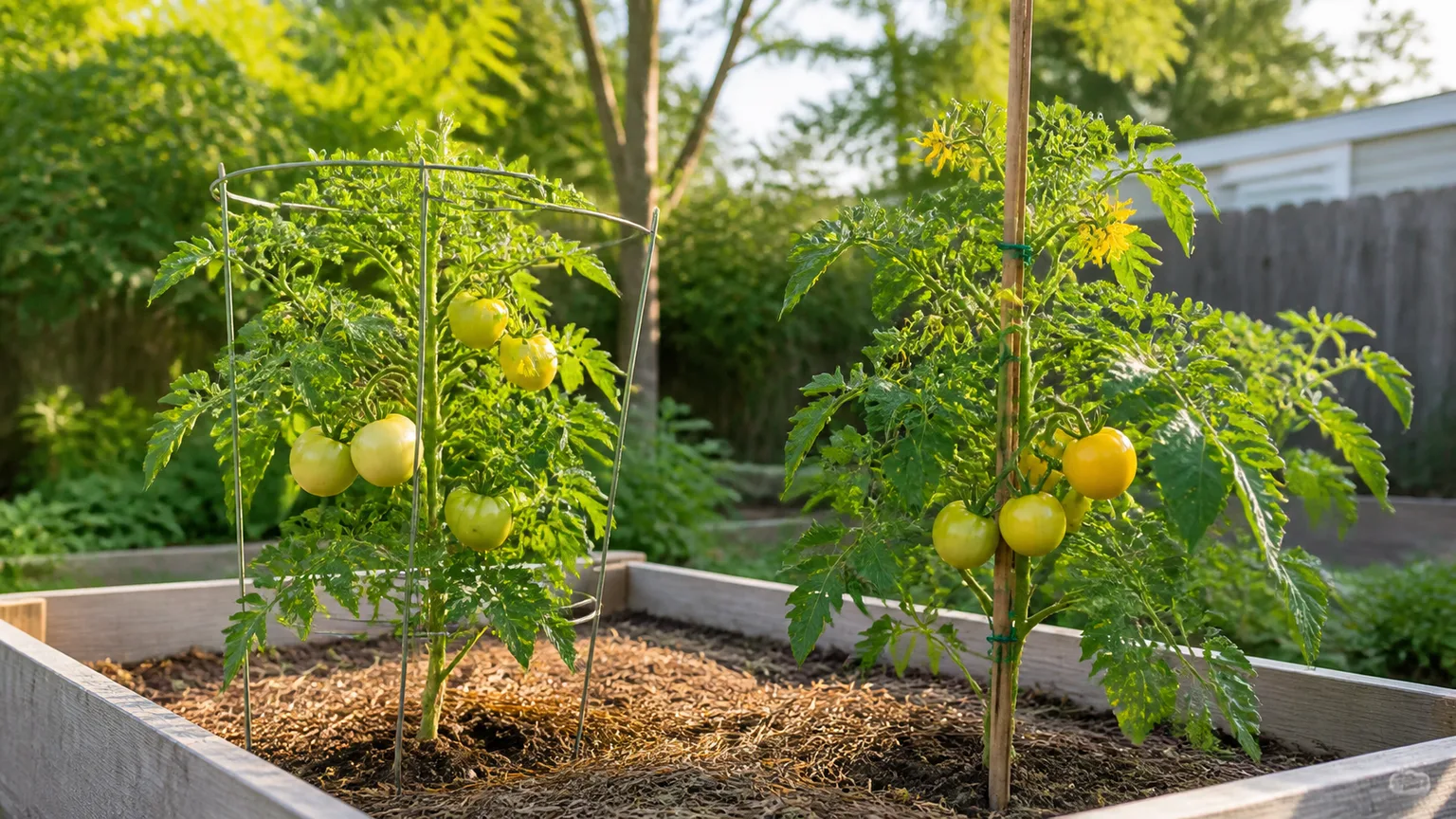
Determinate vs Indeterminate: Read the Label Before You Dig
The determinate/indeterminate label tells you when and how the plant fruits, which directly affects how wide and tall the canopy will get. Neither type is “better”—but they need different spacing defaults.
Determinate (Bush) Tomatoes and Compact Spacing
Determinate tomatoes grow to a genetically set size, flower, set fruit in a concentrated window, then decline. They are the choice for canning batches, paste sauces, and gardeners who want a big flush rather than steady picking through fall. NC State Extension places determinates about 1 to 2 feet apart in the row when supported with stakes or a weave system.
Full-size bush varieties such as Roma, Celebrity, and many canning types fit the 24-inch (2-foot) in-row target Penn State recommends. Dwarf or patio determinates labeled 12–18 inches tall can go 12 to 18 inches apart if each has a small cage and you accept a denser canopy. Micro-dwarf types for windowsill pots are a separate category—still one plant per pot, not two seedlings sharing soil.
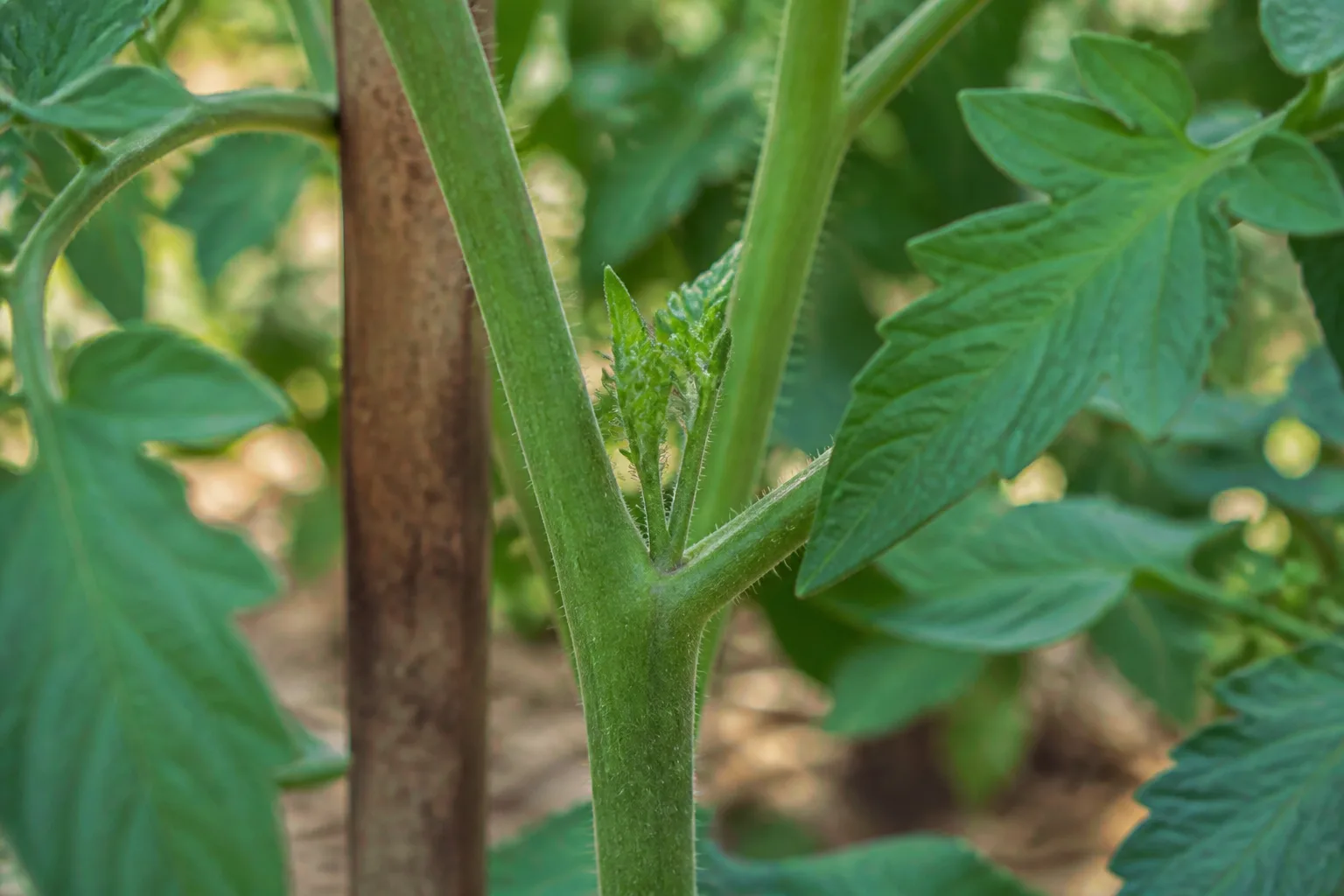
Determinate plants should not be sucker-stripped like vines. Over-pruning a bush removes fruiting stems. Light support keeps fruit off soil; aggressive single-leader staking fights the plant’s natural shape.
Indeterminate (Vining) Tomatoes and Wider Air Gaps
Indeterminate tomatoes keep growing, flowering, and ripening until frost or disease stops them. Heirloom slicers, most cherry vines, and long-season beefsteaks fall here. NC State notes these vines can reach 10 to 12 feet on a strong trellis. Penn State recommends about 3 feet between indeterminate plants as a general in-row distance when caged or grown with standard support.
If you prune to one or two leaders on a stake or string trellis, you can tighten in-row spacing toward 18 to 24 inches—the trade-off is weekly sucker removal and tying. If you install a large wire cage and plan to let multiple stems fill it with minimal pruning, budget 3 to 4 feet between plant centers so cages do not overlap.
Semi-determinate varieties such as some “compact vine” labels split the difference: start with 24 to 30 inches and widen if the tag promises a tall cage.
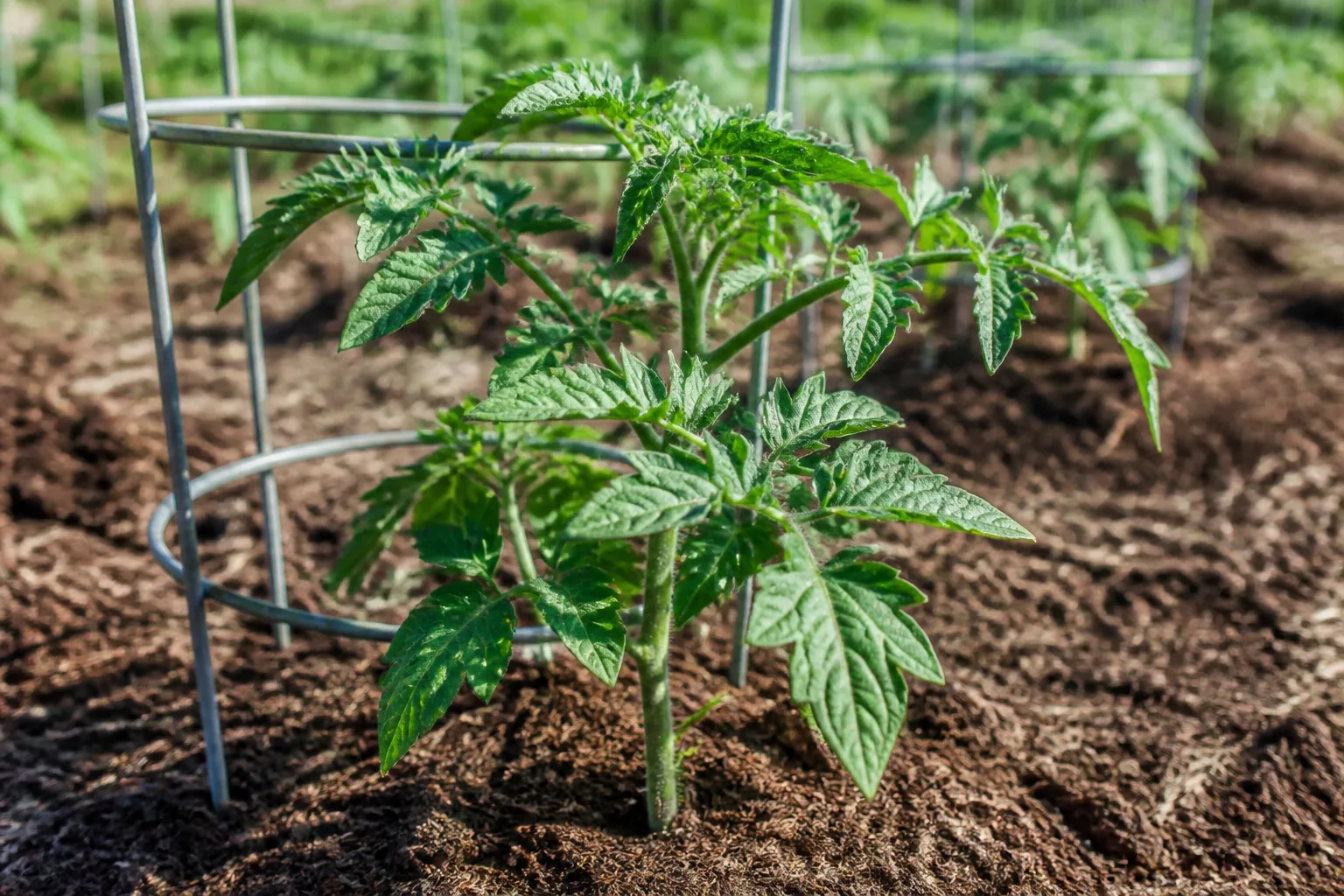
Tomato Plant Spacing Chart by Support Method
Use this table as your planting-day reference. In-row means center-to-center between plants along the bed. Between rows means the path or gap to the next planting line—critical for airflow and your knees.
| Support method | Determinate in-row | Indeterminate in-row | Between rows / paths |
|---|---|---|---|
| Stake or string (1–2 leaders, pruned) | 18–24 in | 18–24 in | 36–48 in |
| Sturdy wire cage (minimal pruning) | 24–30 in | 36–48 in | 48–60 in |
| Florida weave (determinate rows) | 18–24 in | 24–30 in (if used) | 48 in+ aisle |
| Sprawl on ground (not recommended) | 36 in | 48 in | 60 in+ |
| Large homemade cage (~2 ft diameter) | 30–36 in | 36–48 in | 48 in |
Utah State University Extension lists 18–24 inches in-row with 36–48 inches between rows, noting indeterminate varieties need more room than determinates. NC State Extension recommends 1½–2 feet between plants and 3–4 feet between rows for home gardens, with wire cages spaced 3–4 feet apart when cylinders are about 2 feet in diameter.
When in doubt, plant farther apart. Extra space rarely ruins a season; overlapping cages in August always does.
Staked and Single-Leader Spacing
Staking shines when you want early, larger fruit on a narrow footprint and you will walk the row every week. Drive the stake at transplant—before roots spread—and set plants 18 to 24 inches apart along the row. Penn State advises stakes 3–4 inches from the stem, 6 feet tall, buried 12 inches deep.
This only works with discipline: remove suckers when they are 2–3 inches long, tie every 8–12 inches of growth, and never let two unstaked leaders compete in the same 18-inch slot. Our tomato pruning guide covers sucker timing without stripping determinates by mistake.
Caged Tomato Spacing
Caging is the forgiving default for home gardeners who do not want to prune every weekend. A proper cage is at least 4 feet tall for indeterminate vines, with openings large enough to reach through (about 6-inch squares per Penn State). NC State’s homemade cage spec—a 18- to 20-inch diameter cylinder—needs 3–4 feet between plant centers so cages do not become one continuous wire hedge.
Determinate cages can be shorter (2–3 feet) with 24-inch spacing for full-size bushes. Anchor large cages with external stakes; a top-heavy cage in a thunderstorm becomes a domino that flattens the next plant.
Florida Weave and Trellis Row Spacing
The Florida weave strings tomatoes between stakes down a row—excellent for determinates and efficient for multiple plants. NC State describes stakes between every other plant, with the first string when plants are about 12 inches tall. Space determinates 18–24 inches in-row and leave a wide working aisle (4 feet or more) between double rows or adjacent crops.
Vertical trellis systems with one string per plant (similar to staking but shared top bar) follow the same 18–24 inch in-row logic with one stem per string. Do not plant two vines on one cord and hope pruning will sort it out later.
Row Spacing for In-Ground Gardens
“In-row” and “between-row” are two different measurements beginners mix up. In-row is plant-to-plant along the bed line. Between-row is the gap you walk through—or the space before the next crop block.
For standard home-garden rows, plan 3 to 4 feet between tomato rows per NC State and 4 feet between rows as a practical minimum when you need to push a wheelbarrow, drag a hose, or kneel for harvest. In humid regions (Southeast, Midwest summers), bias toward 4 to 5 feet between rows so morning sun hits both sides of the canopy and breezes move through.
Orient tall trellised tomatoes on the north side of the garden so they do not shade lower crops by midsummer. If you are laying out a new plot, our vegetable garden layout guide covers sun mapping and path widths before you commit tomato holes.
Tomato Spacing in Raised Beds and Square-Foot Blocks
Raised beds do not change the biology—they change how you reach the plants. If you can only access a bed from the sides (typical 4-foot-wide beds), every tomato must fit inside the footprint without overlapping the path edge or shading its neighbor across the bed.
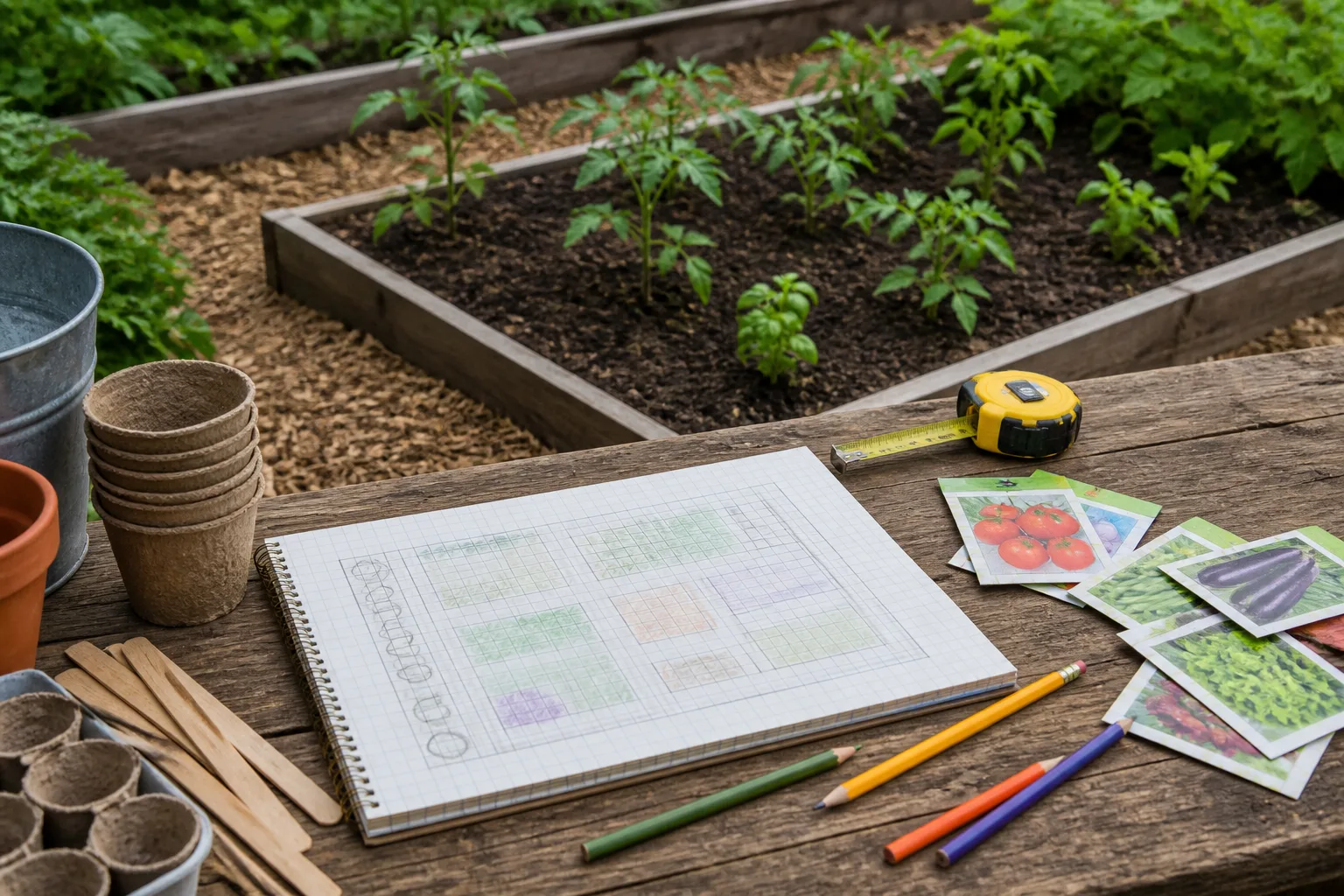
How to Mark Planting Holes on a 4×8 Bed
On a 4×8-foot raised bed, treat each tomato as a 2-foot-radius zone (4-foot diameter) if caged indeterminately. That usually means two indeterminate caged plants per 4×8 bed—one near each short end—not four plants down the center line. For staked, pruned indeterminates, you might fit three plants at 24-inch spacing along the 8-foot length, with the row centered and stems leaning slightly inward.
Determinate bushes in cages often allow three to four plants in the same 4×8 bed at 24-inch spacing if cages are modest and you prune lightly for airflow. Cherry determinates labeled compact can go tighter; still verify mature width on the seed packet.
Square-foot grids work for many vegetables but not as a default for full-size tomatoes. One mature caged tomato consumes multiple square-foot cells once July arrives. If you use square-foot planning, allocate a minimum 2×2-foot block (4 squares) per determinate and 2×3 feet or larger per indeterminate—then install support on transplant day.
Spacing in raised beds matches in-ground spacing for the same variety and support; you are simply trading row aisles for permanent exterior paths. Deep planting and trenching rules still apply; see our how deep to plant tomato seedlings guide before you bury stems.
Container and Patio Tomato Spacing
Containers are the one place spacing is absolute: one tomato per pot. Two seedlings in one container fight for the same root volume, merge above the rim, and dry out unevenly. Even “patio” determinates need dedicated soil volume—typically at least 5 gallons for compact types, 10–15 gallons or more for indeterminate cherries on a deck trellis.
On a patio with multiple pots, space containers so leaves do not touch—usually 24 inches between pot edges for bush types and 36 inches for tall caged vines. Group pots for visual appeal, but leave gaps for air and for you to rotate pots if one side leans toward a railing.
If balcony weight limits matter, choose determinates or micro-dwarfs and prioritize drainage over cramming extra plants. Watering frequency rises as spacing tightens on a hard surface; our tomato watering guide explains why crowded roots magnify moisture stress.
Signs Your Tomatoes Are Planted Too Close
You usually will not notice bad spacing at transplant. Watch for these mid-season signals:
- Canopy merge: You cannot tell where one plant ends and the next begins without lifting foliage.
- Persistent wet leaves: Lower leaves stay damp hours after irrigation, even on warm mornings.
- Interior yellowing and spotting: Early blight and septoria start on lowest leaves and climb when airflow is poor.
- Small fruit clusters hidden inside: Tomatoes ripen late or stay green in the center of the thicket.
- Harvest bruising: You regularly snap branches reaching for fruit on the far side of a cage.
- Uneven ripening: Outer fruit colors up while inner fruit stays pale from shade.
One stressed plant in an otherwise spaced bed points to water or nutrition. The whole row looking sick together points to crowding, shared splash, or both.

What to Do If You Already Crowded the Bed
If plants are already in the ground and touching, you have three realistic options—ranked by how much disruption they cause.
Option 1: Prune and train harder (staked/indeterminate only). Remove suckers weekly, tie leaders vertically, and strip the lowest 12–18 inches of foliage once fruit sets to open the skirt. This does not fix root competition but can dry the canopy. Do not heavy-prune determinates.
Option 2: Remove the weakest plant. If two transplants overlap one cage footprint, dig out the smaller vine now—early July hurts less than losing the pair to blight in August. Compost only if disease-free; otherwise bag and trash diseased material.
Option 3: Add support and redirect outward. Install taller stakes or cage extensions and gently spread stems to opposite sides of a shared aisle without breaking them. Increase mulch and switch to ground-level drip if you have been overhead watering—wet leaves plus crowding is the worst combo.
There is no fertilizer shortcut for overlap. Extra nitrogen pushes foliage in an already dense wall. Fix structure first, then maintain even moisture.
Spacing Mistakes That Look Efficient but Cost You Fruit
Planting by seedling count, not mature width. Six-pack fever is real. Six indeterminate heirlooms belong in roughly 18–24 linear feet of row—not one 8-foot bed.
Installing supports after the plant is hip-high. Late cages tear branches and compress roots when you wrestle them on. Set cages or stakes at transplant, as Penn State recommends.
Matching spacing to your neighbor’s garden, not your support. If they stake and prune and you cage lazily, their 18-inch spacing will not work for you.
Ignoring humidity. Dry-climate gardeners sometimes succeed with slightly tighter spacing; Gulf Coast and Great Lakes gardeners should widen rows and strip lower leaves earlier.
Pairing tomatoes with tall companions upwind. Corn, sunflowers, or trellised pole beans on the south side steal light even if in-row tomato spacing is perfect. Review plants to never grow with tomatoes before interplanting.
Skipping rotation because the bed “still looks fine.” Soilborne wilt and nematodes do not care about last year’s yield photo. Move tomatoes to a fresh block on a three-year nightshade rotation when possible.
Conclusion
Tomato plant spacing works when you match three choices—growth habit, support method, and bed shape—to real measurements before transplant day. Determinate bushes in cages often land at 24 inches in-row; pruned indeterminate vines on stakes can share an 18- to 24-inch rhythm; large caged heirlooms need 3 to 4 feet of elbow room and wide paths between rows. Raised beds and containers follow the same rules with stricter footprints: fewer plants per bed, one vine per pot, and no overlapping cages.
Mark your holes when the soil is ready, install support the same day you plant, and walk the row in July with honest eyes. If canopies have already merged, prune and train—or remove a plant—before disease does the thinning for you. For everything that comes after spacing—water rhythm, sucker timing, and disease scouting—start with our things to know before growing tomatoes hub and build from there.