How Many Tomatoes Will One Plant Grow? Yield Guide
Get a realistic tomato yield range per plant, a fruit-count calculator, and a simple plan for improving pollination, roots, watering, pruning, and harvests.
The short answer: plan in pounds, not just fruit count
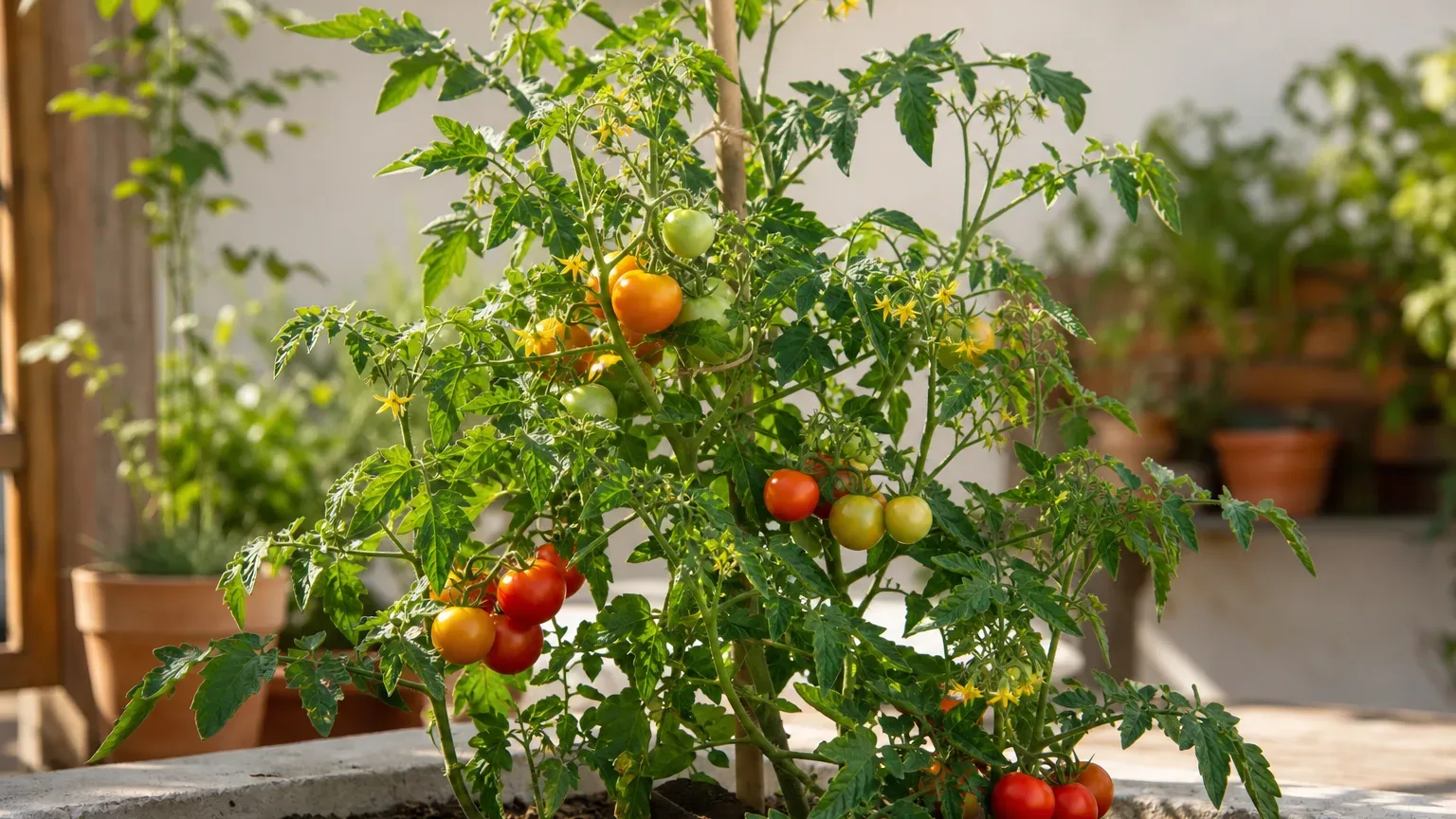
There is no honest universal answer to how many tomatoes one plant will grow. A cherry tomato plant can carry dozens of small fruits while a beefsteak plant may produce fewer tomatoes that weigh much more, so counting fruit without knowing its size is a poor way to compare harvests.
For a more useful starting point, plan by weight. The University of Minnesota Extension’s crop-planning table lists roughly 2 to 6 pounds per field-grown plant for cherry tomatoes and slicers or Romas, with higher planning ranges for protected high-tunnel production: about 8 to 13 pounds for cherries and 8 to 20 pounds for slicers and Romas. Those are production-planning figures, not a promise for every backyard plant.
In a home garden, a healthy plant with a long, mild season can land above those field ranges, while a late transplant, small container, disease outbreak, or heat wave can produce far less. Think of the range as a baseline for planning space and expectations. Your own harvest log, kept over several seasons, will eventually be more useful than any headline number.
How to turn a weight estimate into a tomato count
Once you have a weight target, the count is simple:
Estimated fruit count = total pounds × 16 ÷ average fruit weight in ounces.
For example, a 4-pound harvest would be about 64 one-ounce cherry tomatoes, 32 two-ounce cocktail tomatoes, 16 four-ounce slicers, or roughly 10 eight-ounce large tomatoes. The plant has not become more or less productive in those examples; the variety has simply packaged the same weight into a different number of fruits.
The arithmetic is especially helpful when choosing between a few large slicers and a steady supply of small tomatoes. If your goal is salads for weeks, a productive cherry or small-fruited indeterminate may feel more generous. If your goal is sandwiches or sauce, a Roma or slicer may deliver the weight you want with fewer individual fruits.
Fruit size changes the number dramatically
Tomato names are not yield measurements. “Beefsteak,” “cherry,” “Roma,” and “slicer” describe a type or use, but individual cultivars within those groups still vary in fruit size, days to maturity, disease resistance, and growth habit. Seed packets and plant tags are more useful than a generic fruit-count estimate because they identify the cultivar you are actually growing.
A plant with many flowers is not necessarily on track for a large harvest. Each flower must set fruit, the fruit must stay attached through weather stress, and the plant must keep enough healthy leaves to fill those fruits. That is why a smaller number of undamaged, fully ripe tomatoes can represent a better result than a larger count of cracked, sunscalded, or diseased fruit.
Growth habit changes the timing of the harvest
Determinate tomatoes grow to a more limited size and tend to set and ripen much of their crop in a concentrated window. They are useful when you want a flush for canning, when your season is short, or when you are growing in a container and need a more predictable plant.
Indeterminate tomatoes keep making new stems, flowers, and fruit as long as conditions remain favorable. They need more support and management, but they can spread the harvest over many weeks and may produce more total weight when the plant has enough sun, root room, and time. A long harvest window does not mean every week will be equally productive; the first and last flushes are often smaller than the middle of the season.
| Plant type | Harvest pattern | Best fit | Main yield trade-off |
|---|---|---|---|
| Determinate | Most fruit ripens in a short window | Containers, short seasons, preserving | Less time to recover from early stress; heavy pruning can remove future fruiting sites |
| Indeterminate | New flowers and fruit continue until frost or severe stress | Large beds, long seasons, steady picking | Requires taller support, more space, and regular tying or selective pruning |
What sets a tomato plant’s yield ceiling?
Yield is a chain. Sunlight powers leaves, leaves supply sugars, flowers become fruit, roots deliver water and nutrients, and harvest timing determines how much of that crop makes it into your kitchen. Improve the weak link first instead of automatically adding fertilizer.
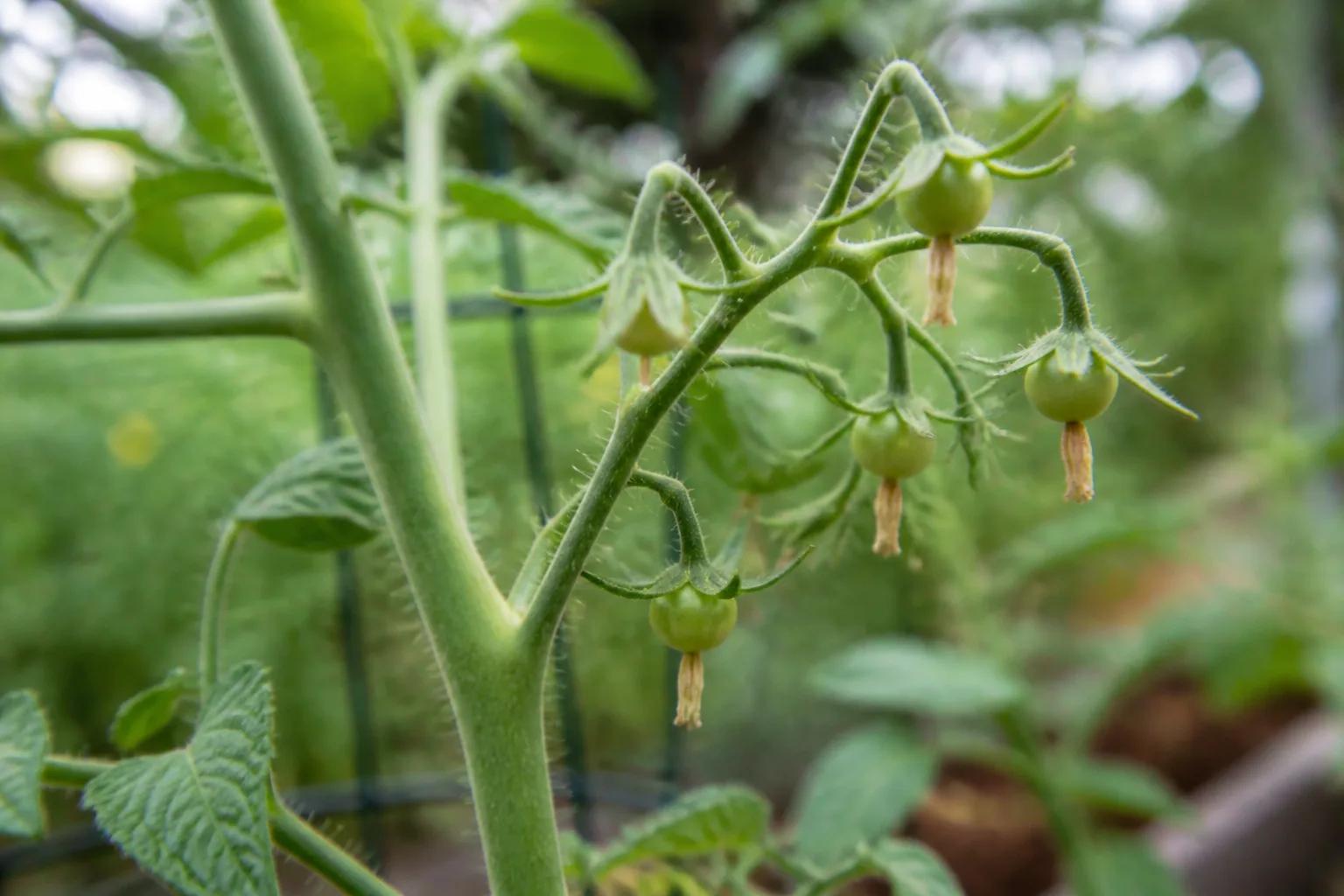
Healthy fruit set begins with flowers that pollinate and remain attached as the tiny tomatoes swell.
Sunlight builds the leaf area that feeds fruit
Tomatoes are full-sun plants. Aim for a site with at least eight hours of direct sun where practical, as recommended by Oregon State University Extension, and choose the brightest position you have rather than trying to compensate for shade with extra feeding.
Light affects yield in two ways. It supports the leaves that manufacture energy for flowers and fruit, and it helps wet foliage dry faster after dew or rain. A plant that receives only a few hours of sun may look green and vigorous while quietly producing fewer flower trusses and ripening fruit more slowly.
Do not strip healthy leaves to expose every tomato. Fruit needs leaf cover, especially during hot weather, and excessive defoliation can expose it to sunscald. Remove diseased or soil-touching leaves and thin only enough crowded growth to improve airflow and access.
Temperature and pollination determine fruit set
Tomato flowers can open normally and still fail to become tomatoes. High heat during flowering and early fruit set is a common reason: Utah State University Extension notes that fruit can abort when temperatures exceed 90°F. Cool nights, cold soil, heavy rain, and poor airflow in a closed greenhouse can also interrupt pollination.
When a plant has flowers but few small green fruits, check temperature before reaching for a bloom booster. In a greenhouse, ventilate on warm days and gently tap or shake open flower trusses to help pollen move; the Royal Horticultural Society’s tomato guide describes both ventilation and light shaking as useful ways to support pollination. Outdoors, consistent care and a better-timed planting usually matter more than hand-pollinating every flower.
If the problem is a short heat wave, keep the root zone evenly moist, provide temporary afternoon shade where feasible, and wait for conditions to moderate. Do not respond by pruning the canopy bare; that removes the very leaves that protect flowers and fruit from intense sun.
Roots, water, and container size protect fruit development
Tomato roots need both moisture and air. A waterlogged bed, a compacted container, or a saucer that stays full can restrict roots even when the surface looks wet. A plant with limited roots may set fruit, then stall when the fruit begins to swell because it cannot keep up with water demand.
Water deeply enough to wet the root zone, then check the soil before watering again. As a general field-garden starting point, Utah State University Extension recommends 1 to 2 inches of water per week, adjusted for rain, soil, heat, wind, mulch, and container size. Containers may need attention much more often in hot weather because they hold less soil and lose water from every exposed surface.
The goal is not a rigid Tuesday-and-Saturday schedule. Push a finger into the soil, lift a container to learn its lighter dry weight, or use a moisture meter as a cross-check. Water slowly at the base until the root zone is thoroughly moistened, and use mulch after the soil has warmed to reduce evaporation and soil splash.
Uneven moisture during fruit development can contribute to cracking and blossom-end rot. Blossom-end rot is not fixed by dumping calcium into the soil if the roots cannot move water consistently; stabilize moisture first, then investigate soil fertility if the problem continues.
Fertility supports fruit without creating a leafy monster
Tomatoes need nutrients, but more fertilizer is not the same as more tomatoes. Excess nitrogen can produce a huge canopy with delayed flowering and fruit set, especially when the soil already contains plenty of compost or the container mix includes a strong starter charge.
Start with a soil test for in-ground beds when possible, and follow the label for container fertilizer rather than copying a rate from another product. The RHS recommends a high-potassium liquid feed for container plants once the first fruits begin to swell, while noting that enriched ground may need little additional feeding. That distinction matters: a container plant can exhaust a small nutrient reserve, while a fertile bed can be harmed by unnecessary feeding.
If leaves are deep green and growth is soft and rampant but flowers are scarce, stop treating the plant as hungry. Check light, temperature, pruning, and nitrogen exposure first. If older leaves are pale, growth is weak, or fruit production declines after a heavy harvest, a soil test or balanced label-directed feed is a better next step than a high-phosphorus product chosen by guesswork.
Choose the right variety for the harvest you want
The best yield is the harvest you can use. A gardener with a balcony may get more value from a compact determinate cherry tomato in a large container than from an indeterminate beefsteak vine that outgrows its support and dries out every afternoon. A gardener with a deep bed and a long season may prefer a disease-resistant indeterminate that keeps setting fruit after the first flush.
Choose in this order: season length, available space, intended use, then flavor and fruit size. In a short season, look for early maturity and a compact habit. In a humid garden, disease resistance can preserve more leaf area and therefore more usable yield. For sauce, choose paste types that ripen in a concentrated window; for snacking, small-fruited types make the most of frequent picking.
Hybrids are not automatically better, and heirlooms are not automatically low-yield. What matters is the specific cultivar’s performance in your conditions. Compare trial data or local grower notes when available, and record the cultivar name on the plant tag so next year’s decision is based on your own results rather than memory.
Give one plant a high-yield setup from day one
Set the plant up before it becomes large. Transplant into warm soil after frost risk has passed, bury a leggy stem deeper so it can form additional roots, and install the cage, stake, or trellis at planting time so you do not damage roots later. A sturdy transplant without flowers or fruit is often a better investment than an oversized plant already trying to reproduce before it has established.
Spacing matters because a crowded canopy is harder to inspect, water, support, and keep dry. A container should be large enough for the cultivar and have free drainage; a huge indeterminate tomato in a small pot may survive with daily watering but still underperform because the root zone swings between drought and saturation.
Support, spacing, and mulch are yield tools
Support is not just cosmetic. Staking, caging, or trellising keeps fruit off wet soil, makes ripe fruit easier to find, and lets you see pests and disease early. University of Maryland Extension describes support as a way to reduce fruit rots, make harvesting easier, and increase yields per area, while also noting that the best system depends on plant type, spacing, cost, and labor.
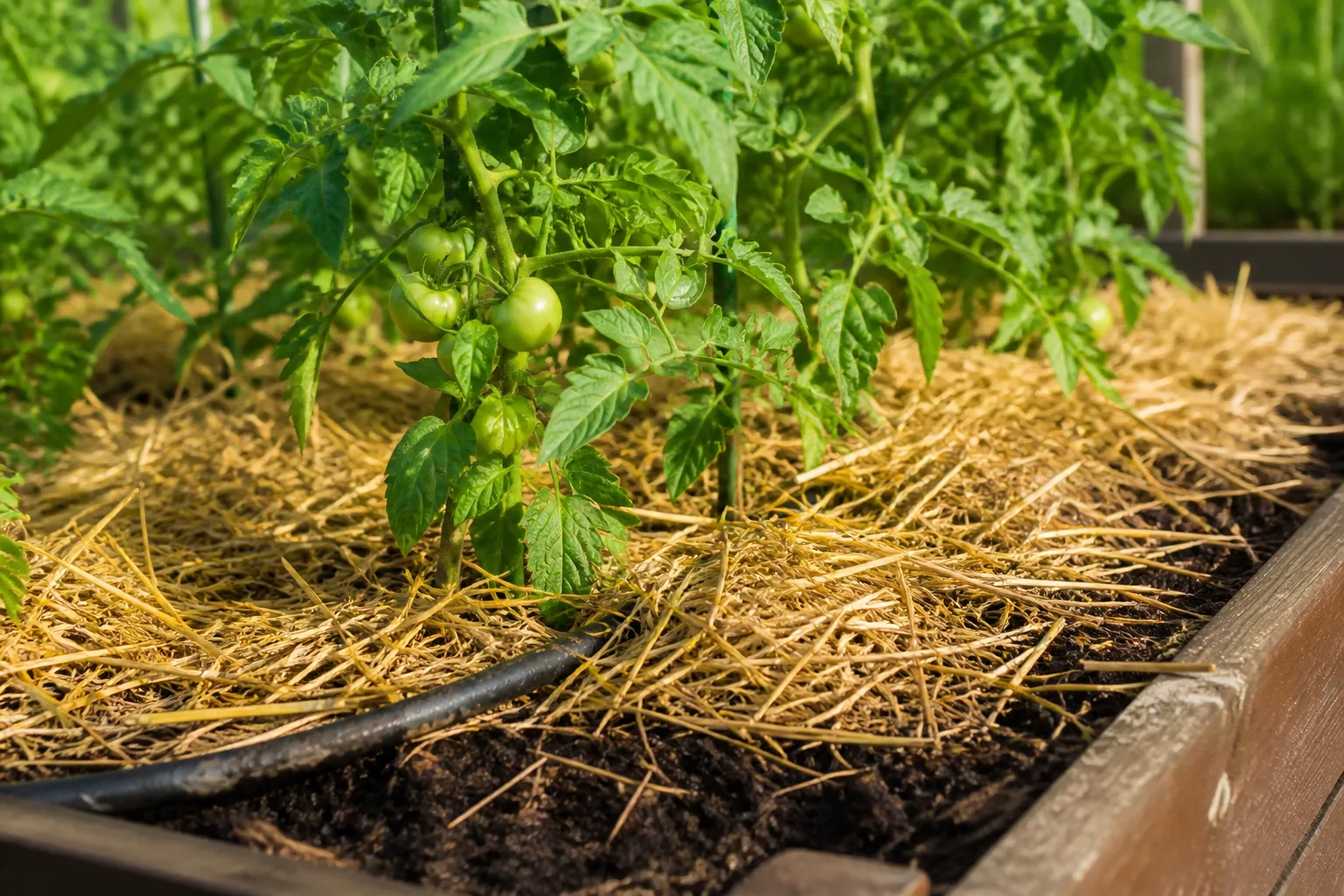
Mulch and low-level irrigation help keep the root zone steadier as fruit develops.
Mulch the soil surface with a suitable organic material after it has warmed, leaving a small gap around the stem. Mulch slows evaporation, buffers moisture swings, reduces weeds competing for water, and limits soil splashing onto lower leaves. It cannot rescue a poorly drained bed, and it should not be piled against the stem where it can keep the crown wet.
Prune only when it solves a real problem
Pruning can make an indeterminate plant manageable, open a dense canopy, and direct growth into a support system. It is not a universal shortcut to more fruit. Removing a flowering branch or too much healthy foliage can lower the plant’s ability to produce and protect fruit.
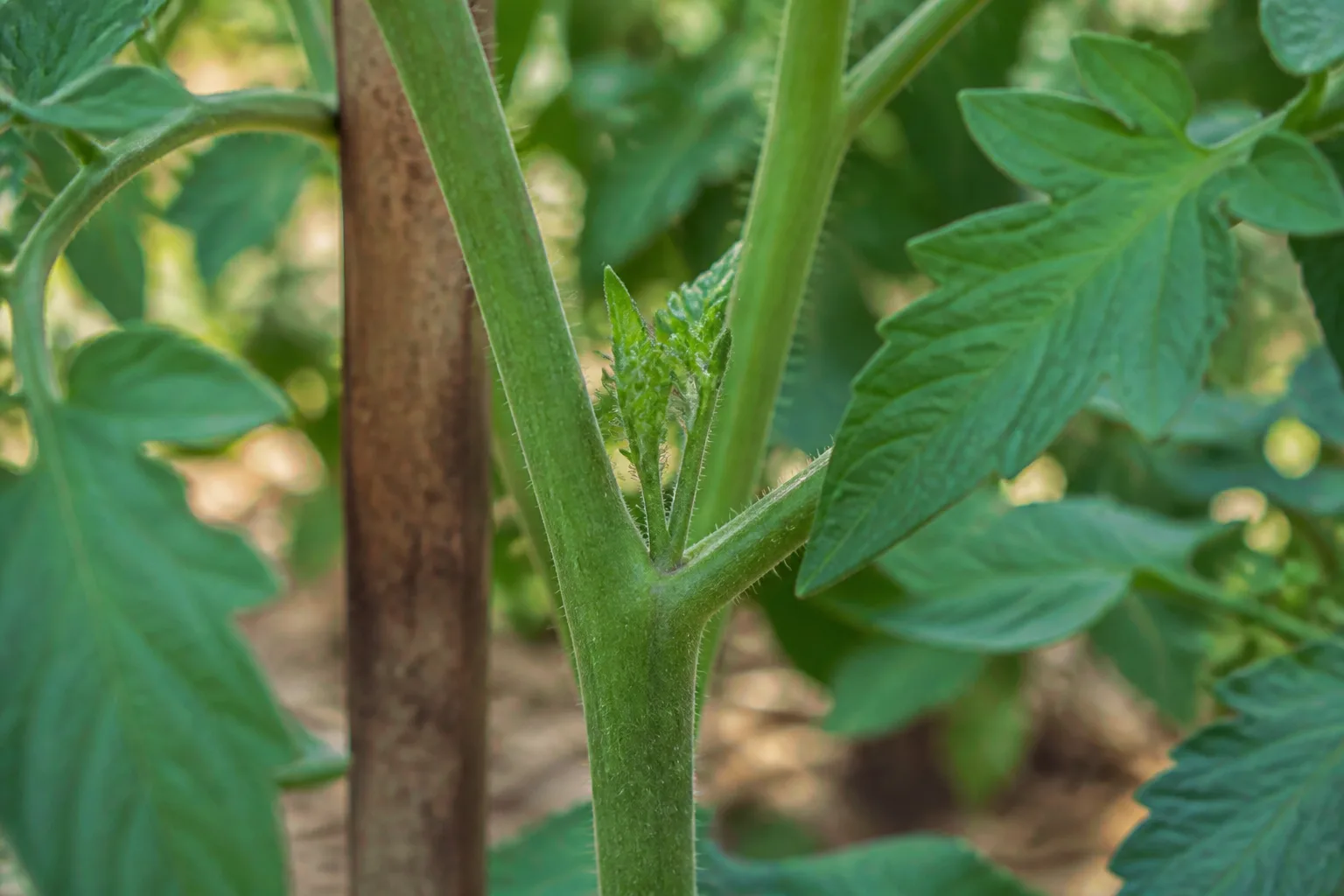
A young sucker appears in the leaf axil; whether to remove it depends on the plant’s growth habit and training plan.
For an indeterminate plant, inspect the angle between a main stem and a leaf branch for a small side shoot, or sucker. Remove young suckers that conflict with your chosen one- or two-stem training system, and tie the leaders before they flop. For a determinate plant, use a lighter hand; Iowa State University Extension advises removing suckers below the first flower cluster but says yields do not increase by removing suckers above it.
Remove leaves that touch the soil, yellow leaves that are dying, and foliage with clear disease symptoms. Do not remove more than about one-third of the canopy at a time, and prune on a dry day with clean tools. If the plant is already drought-stressed, heat-stressed, or diseased, stabilize or diagnose it before making a major cut.
Late in the season, topping can help an indeterminate plant concentrate on ripening existing fruit instead of producing flowers that will never mature before frost. Iowa State places this decision roughly four to six weeks before the average first fall frost; topping a determinate plant is a mistake because it can remove planned fruiting growth.
A simple week-by-week plan for more usable tomatoes
At planting, focus on establishment rather than forcing flowers. Give the plant warm, well-drained soil, enough space, a support system, and steady moisture. Pinch off early flowers only on a small transplant that needs to build roots and canopy; a large, sturdy plant can keep them if it is establishing well.
During vegetative growth, check the plant twice a week. Tie or guide new growth, remove only the suckers that conflict with your training plan, inspect the undersides of leaves, and keep mulch from touching the stem. This is the stage when correcting crowding or a weak support is easy; waiting until fruit-laden branches are hanging makes every repair riskier.
When the first flowers open, look for fruit set rather than simply counting blossoms. Watch the weather, ventilate protected structures, and keep moisture steady. When small fruit begins to swell, shift attention to consistent water, sensible feeding, disease scouting, and support for heavy trusses.
During peak harvest, pick often and record the result. Removing ripe fruit encourages you to find the next ripe fruit, prevents edible tomatoes from splitting or being taken by pests, and makes it possible to compare cultivars fairly. When the plant is still healthy but the season is closing, stop new growth at the right time for the variety and protect mature green fruit from an approaching frost.
Diagnose a disappointing harvest before adding fertilizer
Use the plant’s pattern to find the bottleneck:
| What you see | Likely bottleneck to check first | Best next action |
|---|---|---|
| Lush leaves, few flowers | Too little sun, excess nitrogen, or heat | Confirm direct light and recent feeding; check daytime and nighttime temperatures |
| Flowers but no small fruit | Heat, cool nights, or poor pollination | Improve ventilation, protect from extremes, and gently shake open flowers in a greenhouse |
| Small fruit shrivels or plant wilts daily | Root-zone drought, small container, or damaged roots | Check moisture several inches down, water deeply, and inspect drainage and pot size |
| Black leathery spot on fruit bottom | Irregular moisture and stressed roots | Stabilize watering and mulch; do not assume extra calcium alone will solve it |
| Fruit cracks as it colors | Large swings from dry soil to heavy watering or rain | Keep moisture more even and harvest at the first color change |
| Fruit bleaches on the exposed side | Too much canopy removed or intense heat | Keep protective leaves, add support, and use temporary shade if needed |
| Leaves are spotted or dying early | Disease reducing the leaf area that feeds fruit | Remove affected foliage, keep leaves dry, improve airflow, and use resistant cultivars next season |
The order matters. A plant cannot turn fertilizer into a bigger crop if its flowers are aborting in heat or its roots are alternating between dry and waterlogged. Correct light, temperature, water, and disease pressure before fine-tuning nutrients.
Harvest and measure what you actually grew
Harvest when the fruit is fully colored or just beginning to change color, depending on pest pressure, weather, and how quickly you can use it. University of Maryland Extension recommends harvesting as color begins to change, which can reduce cracking, insect feeding, and disease losses; mature tomatoes can finish ripening indoors.
Weighing each harvest, not just counting fruit, makes comparisons between cultivars meaningful.
For one plant, use a kitchen scale and a notebook or phone note. Record the date, cultivar, number of fruits, total weight, and any fruit discarded for cracking, rot, sunscald, or insect damage. Track marketable weight separately from total weight because a plant that produces 10 pounds but loses 4 pounds to damage has a very different result from one that produces 8 pounds of usable fruit.
At the end of the season, divide total weight by the number of plants and compare like with like. A cherry plant and a beefsteak plant should not compete on fruit count; compare total usable weight, harvest duration, labor, and whether the fruit matched your meals. That record turns a vague question into a better planting decision next year.
When the season ends, protect next year’s yield
Indeterminate plants may keep flowering until frost, but late flowers are not automatically valuable if your remaining season is too short for them to ripen. A few weeks before the expected first frost, remove new growing tips on healthy indeterminate vines so the plant concentrates on fruit already formed. Do not top determinate plants or strip the canopy just to make the garden look tidy.
After frost or a severe disease outbreak, remove tomato debris rather than leaving infected leaves and fruit on the bed. Rotate tomatoes and their close relatives when space allows, clean supports, and write down what happened while the details are fresh: planting date, cultivar, first harvest, heat waves, disease symptoms, and final marketable weight.
Conclusion
One tomato plant may produce a handful of large fruits, several dozen slicers, or a much higher count of cherries, but the useful expectation is usually a weight range shaped by cultivar, season, roots, light, fruit set, and care. Start with the variety and conditions you actually have, then use the pounds-to-fruit formula rather than borrowing a generic count.
To raise the result, prioritize the fundamentals in order: full sun, a long enough season, steady root-zone moisture, appropriate fertility, strong support, and restrained pruning matched to determinate or indeterminate growth. Harvest promptly and keep a simple record. After one season, your own plant-by-plant numbers will be the most trustworthy yield guide you can grow.



