Best Plants for Mumbai Humidity: Coastal Apartment and Balcony Picks
Ten plants that thrive in Mumbai humidity — coastal flats, sticky monsoon air, salt spray, and balcony mold without constant misting.
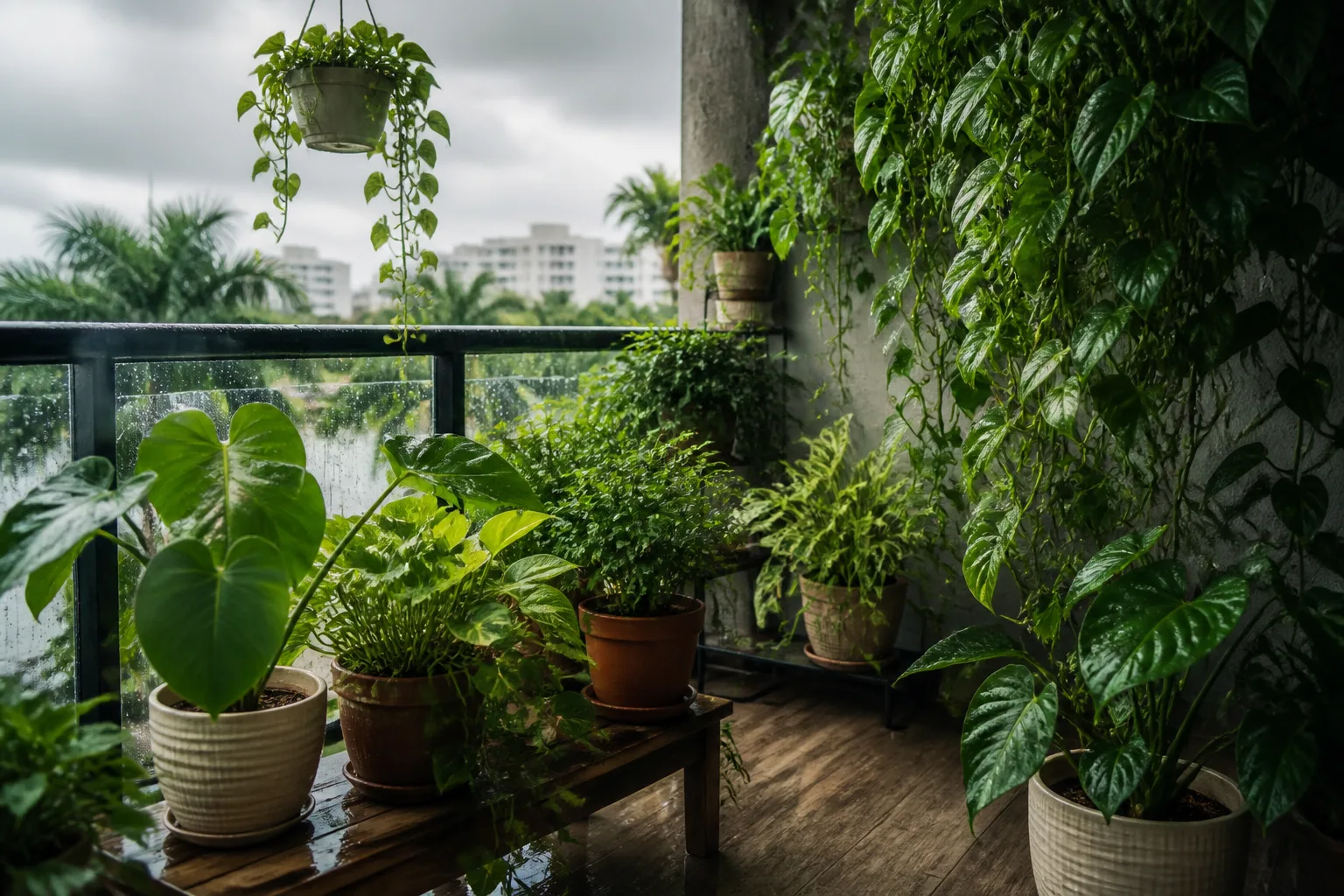
Mumbai humidity is not a bonus feature — it is the main variable. A Bandra flat can sit above 80% relative humidity for days while your watering schedule still assumes dry April soil. Sea-facing balconies add salt crust on pots and leaf edges. Monsoon turns every saucer into a standing pond if drainage is poor. The plants that thrive here are not the ones that need bone-dry air; they are the ones that tolerate wet slow dry-down without rotting — or succulents placed in genuinely sunny, airy spots.
We have watched monsoon kill more Mumbai plants through overwatering than through underwatering — pots that took three days to dry in March still hold moisture for ten days in July while owners keep the same twice-weekly schedule. We have also seen snake plants rot in shaded humid corners where evaporation never catches up with generous watering. Mumbai rewards drainage discipline, not misting bottles.
For the full coastal playbook — salt rinse, mildew, monsoon shifts — read houseplant care in coastal India and monsoon houseplant care in India. This guide focuses on which species fit Mumbai flats and balconies.
Mumbai conditions vs plant needs
| Environment | Humidity | Main risk | Best plant types |
|---|---|---|---|
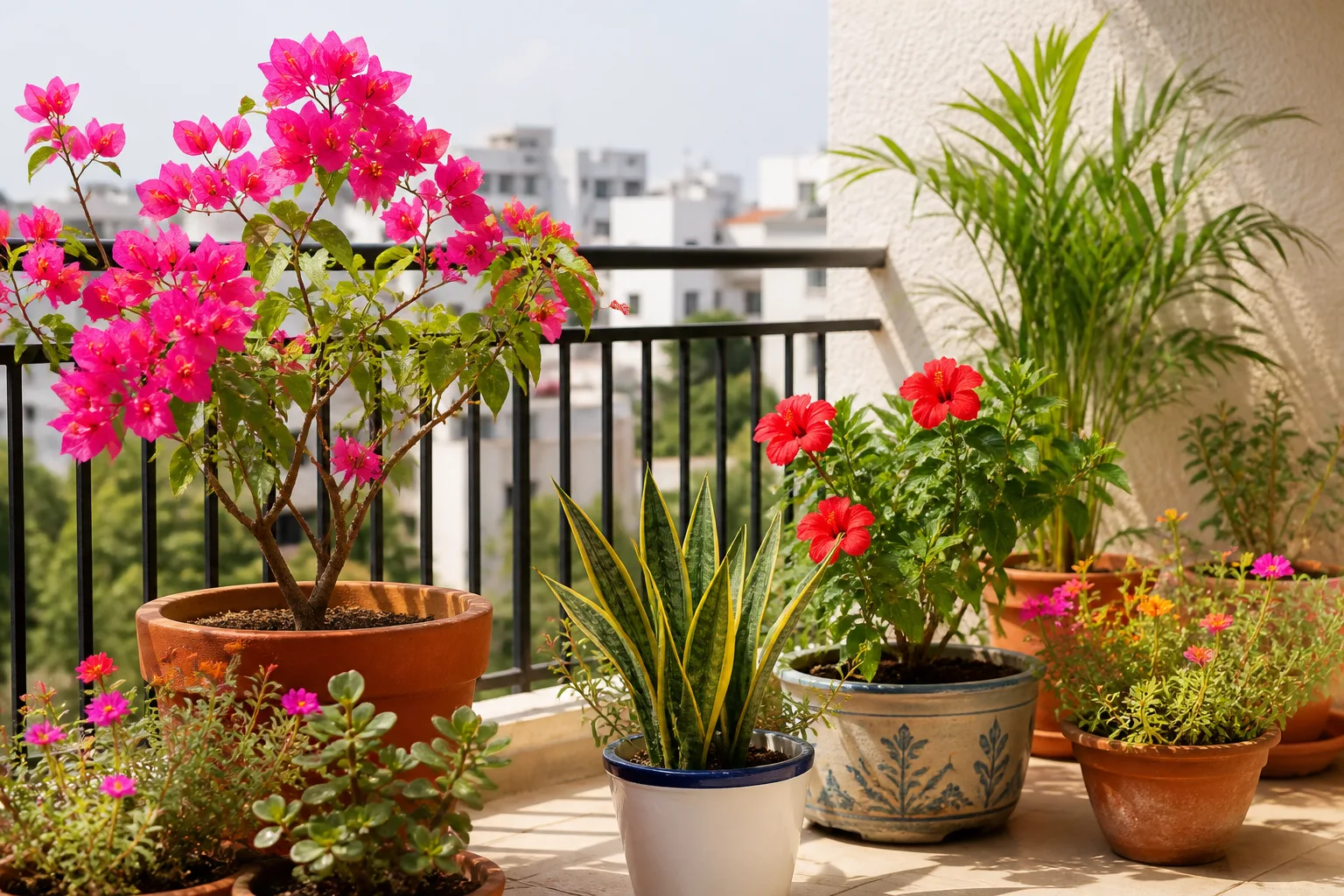
| Open balcony (sea-facing) | Very high | Salt, mold, slugs | Bougainvillea, ixora, tough foliage |
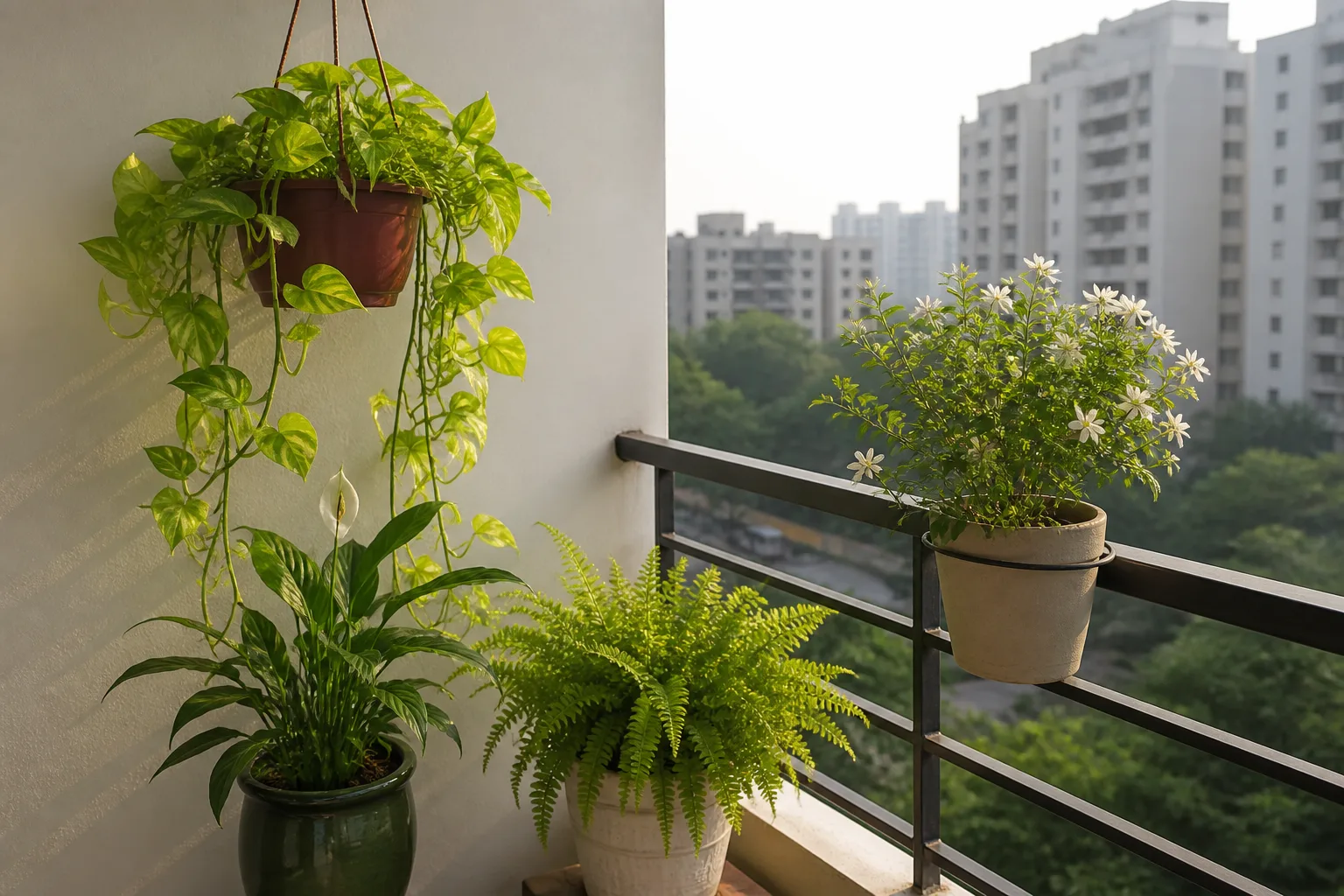
| Covered balcony | High | Overwatering | Pothos, ferns, peace lily |
| AC bedroom | Low–moderate | Dry tips on tropicals | Snake plant, ZZ plant, aglaonema |
| Bathroom with window | High | Few — good for ferns | Ferns, peace lily |
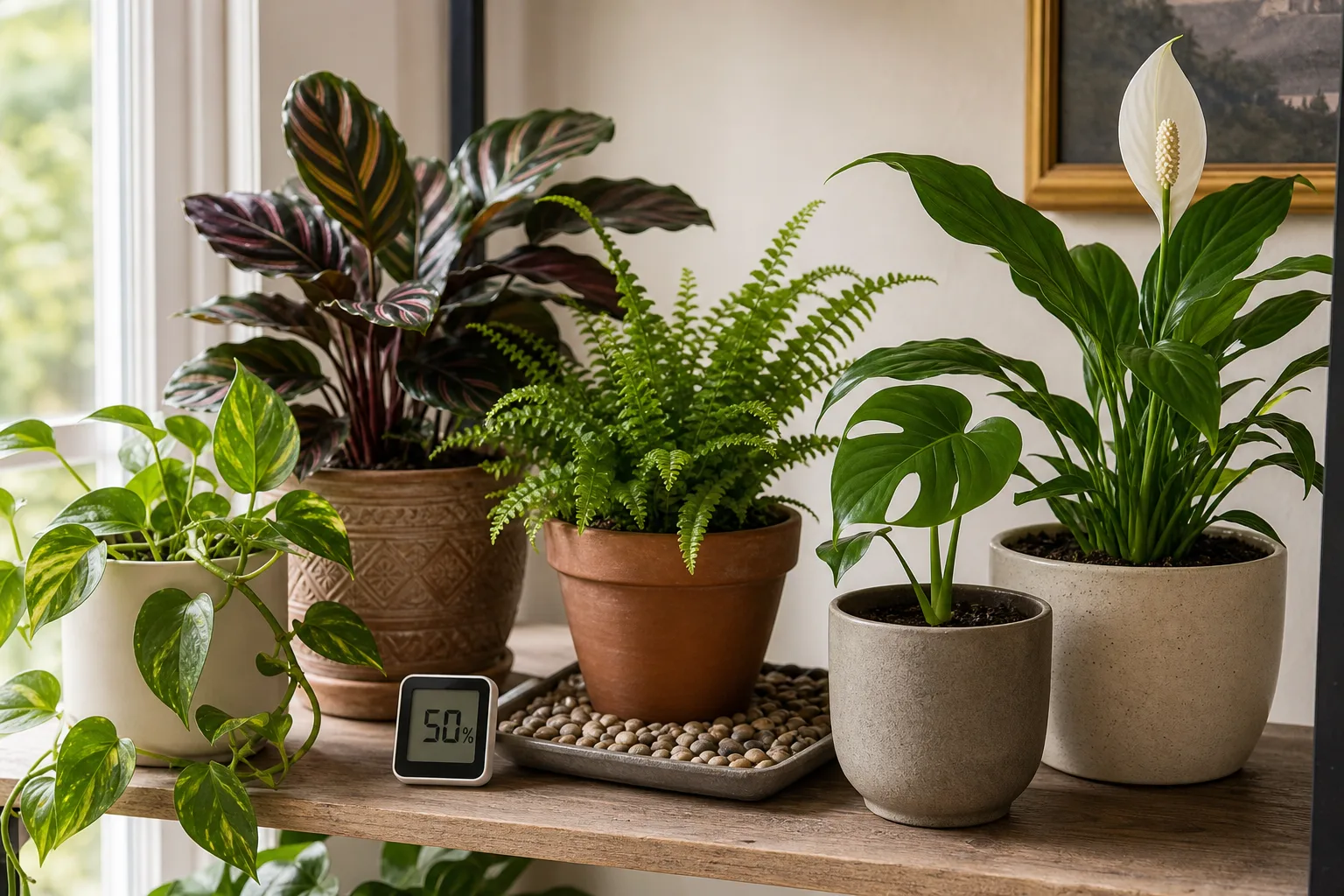
The same city hosts four microclimates in one flat: steamy bathroom, dry AC bedroom, salt-blasted west-facing rail, and a covered balcony that never fully dries in monsoon. Match the plant to the zone, not the pin code.
Ten plants for Mumbai humidity
1. Money plant (golden pothos)
The default Mumbai trailer — handles humidity, recovers from underwatering, grows fast in filtered light. Do not let monsoon keep roots constantly wet. In covered balconies, let the top inch dry before soaking even when outdoor air feels sticky. Pothos wilts before it rots — use that signal.
2. Peace lily (peace lily)
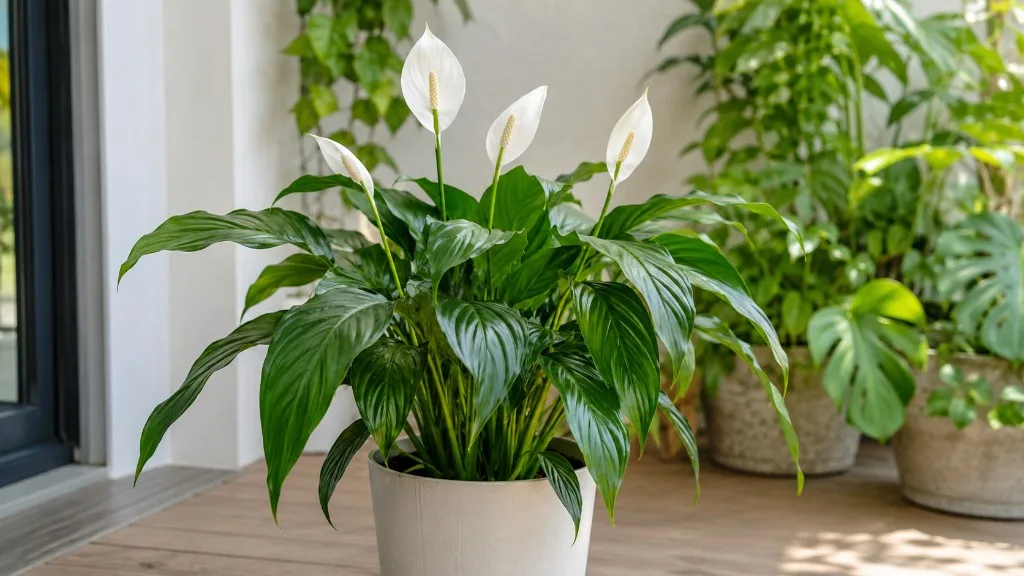
Loves humidity; droops clearly when thirsty. Better Mumbai bathroom or covered balcony plant than Delhi AC bedroom. Toxic to pets if chewed — ASPCA calcium oxalate listing. Keep out of reach if cats sample leaves.
3. Ferns (maidenhair, bird’s nest)
Natural fit for humid Mumbai corners with indirect light. Avoid waterlogged pots — humidity is not a substitute for drainage. Boston fern on a sea-facing rail needs weekly salt rinse; see Boston fern hub. Bird’s nest fern tolerates slightly brighter covered-balcony positions.
4. Areca palm (areca palm)
Feathery living-room palm for bright, humid spots. Brown tips in AC — keep away from vents or use dry-climate tactics indoors. On open balconies, rinse fronds weekly against salt spray per UC IPM salinity guidance.
5. Snake plant (snake plant)
Essential for AC rooms that contradict outdoor humidity. Water far less than pothos — saturated monsoon soil rots rhizomes in shaded humid corners. Bright, airy balcony spot with fast dry-down works; dim wet corner does not. Toxic to pets per ASPCA.
6. Aglaonema (aglaonema)
Colorful leaves in moderate light; handles Mumbai humidity better than calathea in many flats. Tolerates AC better than ferns — useful for bedrooms that run 20°C all night. Evenly moist, not monsoon-soggy.
7. Spider plant (spider plant)
Hanging baskets on covered balconies; pet-safe per ASPCA non-toxic listing. Rinse salt spray weekly on west-coast rails. Produces plantlets in humid bright light — easy gifts for neighbors who share your monsoon watering mistakes.
8. Bougainvillea (bougainvillea)
Salt-tolerant flowering for sunny Mumbai rails. Let soil dry slightly — constant monsoon drizzle plus daily watering rots roots. One of the few bloomers that handles sea-facing exposure if drainage is sharp.
9. Ixora (ixora)
Compact blooms in humid coastal heat. Needs drainage more than extra misting — ixora in waterlogged monsoon pots drops buds fast. Pair with open drainage holes and elevated pot feet.
10. Philodendron (philodendron)
Vining green for filtered balcony light. Wipe leaves monthly — Mumbai grime and salt film block light fast on glossy foliage. Toxic to pets; keep trailing vines above cat height.
Mumbai care rules that matter more than plant choice
Do not mist
Penn State Extension on humidity and houseplants notes misting raises humidity only until droplets evaporate — minutes, not hours — while wet leaves invite fungus. Clemson HGIC on houseplant diseases links humid wet foliage to fungal leaf spot. In Mumbai monsoon, you are already above the comfort band — misting is redundant and risky.
Rinse salt on sea-facing balconies
UC IPM salinity guidance frames salt buildup as chronic stress on container plants. Weekly plain-water foliage rinse on Bandra, Worli, and Marine Drive rails prevents edge burn and white crust on leaves.
Flip to monsoon watering early
When pots stay wet three days after watering, switch to monsoon houseplant care in India intervals — often 50–100% less water than summer. Clemson HGIC on indoor watering warns that overwatering is the top killer when evaporation slows. Wisconsin Horticulture on root rot describes wet-wilt — leaves droop while soil stays saturated — common Mumbai monsoon misread as thirst.
AC vs balcony split
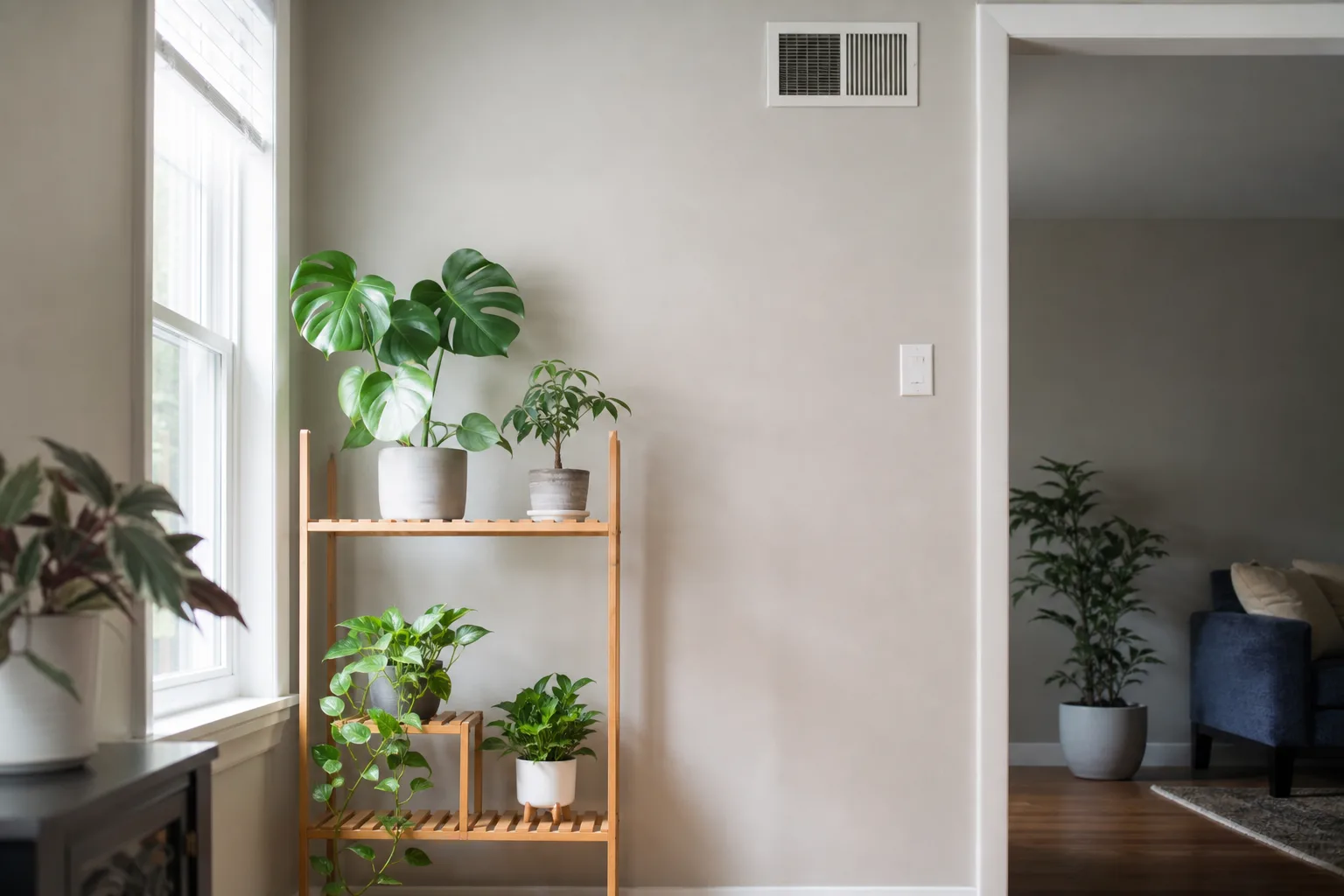
Keep humidity-lovers on the balcony or bathroom; use low-light plants for Indian flats picks indoors if light is poor. A peace lily on a humid balcony and a snake plant in the AC bedroom is a smarter split than one tropical in 24-hour AC.
Conclusion
Mumbai rewards plants that embrace humidity with strict drainage discipline. Pothos, peace lily, and ferns for humid zones; snake plant and ZZ plant for AC rooms; bougainvillea and ixora for sunny salt-air rails. Cut watering when monsoon arrives — not when leaves still look green.
Related guides
- Houseplant care in coastal India — salt, mildew, humidity playbook
- Monsoon houseplant care in India — wet-season watering
- Indoor plants for Indian homes — national shortlist
- West-facing balcony plants in India — afternoon sun on Mumbai rails
- Gardening in India — regional hub