15 Front Porch Plants for Sun and Shade
Discover 15 easy front porch plants for containers and hanging baskets, plus how to read your exposure, pick pots, and avoid the mistakes that kill entryway color.
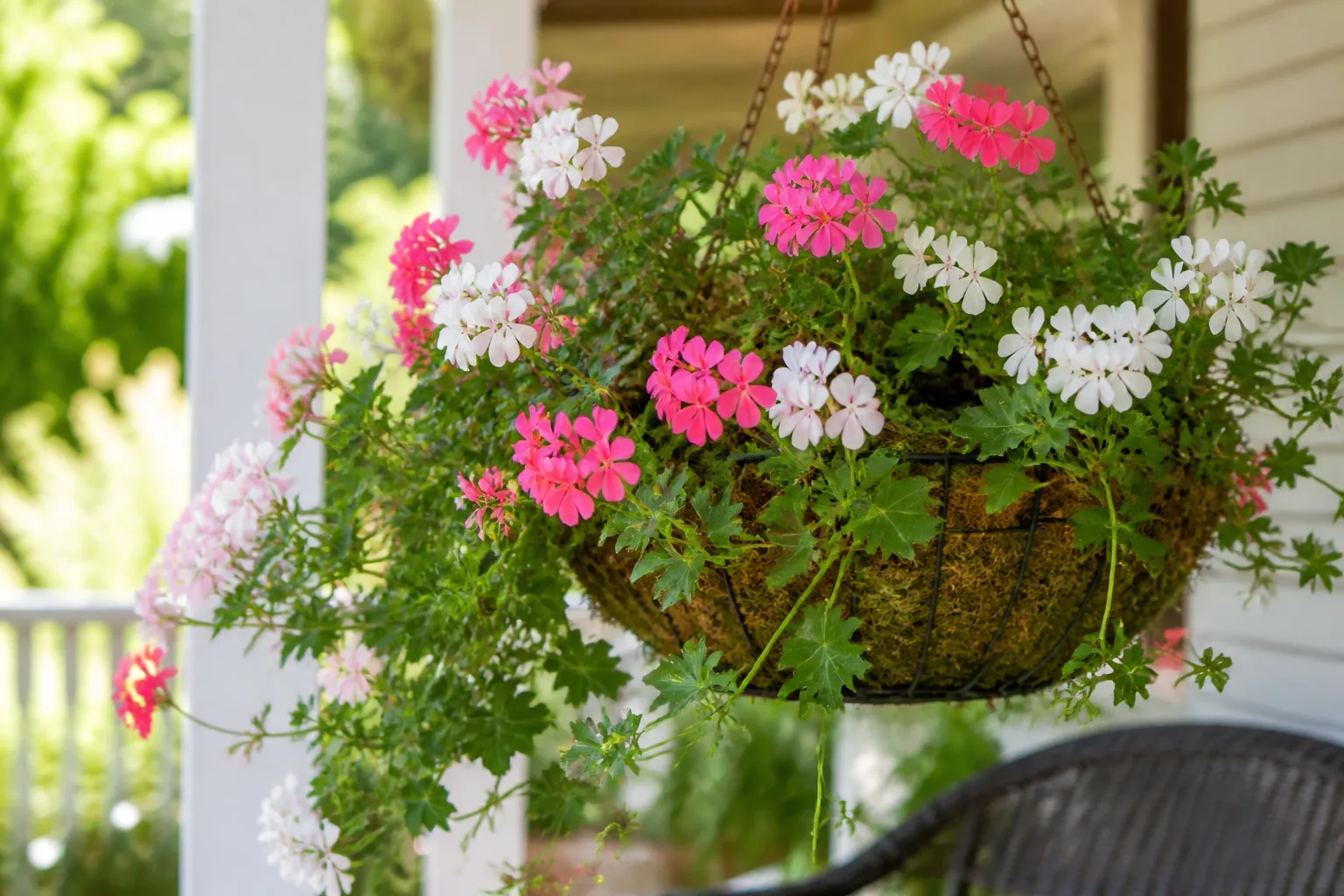
A front porch is not a garden bed with a roof. It is a narrow microclimate where roof overhangs cut light, railings block wind on one side, afternoon sun bounces off siding and glass, and pots dry out faster than anything in the ground. The plants that look effortless on a magazine cover often fail here because they were chosen for color alone—not for the actual light, heat, and foot traffic at your door.
The fifteen plants below are proven porch performers when you match them to exposure and container type. Some are shade workhorses, some want six hours of sun, and a few are seasonal accents you swap in fall. Read your porch first, then shop.
Read Your Porch Before You Buy
Spend three days noting where direct sun hits the floor, steps, and railing at 8 a.m., noon, and 4 p.m. A north-facing porch in the Northern Hemisphere often stays bright but rarely gets direct beams—ideal for ferns, hostas, and wax begonias. East-facing porches deliver gentle morning sun and cooler afternoons. South- and west-facing porches can fry leaves by July unless you choose heat-tolerant plants or add afternoon shade.
Track Morning Sun, Afternoon Heat, and Roof Shade
Roof overhangs shorten the sun window dramatically. A pot tucked against the wall under a deep eave may get two hours of direct light even on a “sunny” porch. Conversely, the outer edge of a west-facing stoop can receive reflected heat from driveway pavement and front windows—hotter than a backyard bed in the same yard. The Royal Horticultural Society’s guidance on houseplants for sunny rooms applies equally outdoors: match the plant to the brightest spot it will actually occupy, not the brightest spot you wish you had.
Wind matters too. Open railings and corner placements dry leaves and soil quickly. Group pots to raise humidity slightly, and plan to water more often on windy weeks even if temperatures are mild.
Note reflected light as well. White siding, glass doors, and light-colored pavement can boost effective brightness on a technically “shaded” porch—enough to scorch shade plants or sustain sun lovers on a north-facing stoop that would fail in a wooded yard. If leaves bleach or crisp despite your exposure label, trust the plant’s response over the compass direction.
Match Pots to Real Porch Conditions
Drainage is non-negotiable on a porch. Every container needs a drainage hole; saucers are fine for protecting wood decking if you empty them after watering so roots never sit in standing water. Choose glazed ceramic or lightweight composite pots for elevated decks where weight is a concern—soaked soil in a large terracotta urn can exceed what an old porch joist should carry.
Size the pot to the plant’s mature root mass, not the nursery pot it arrived in. A dwarf hydrangea needs at least a 16- to 18-inch container; a single Boston fern can fill a 12-inch hanging basket. Use a quality potting mix labeled for containers, not garden soil, which compacts and suffocates roots in a pot. University of Minnesota Extension’s container flower guidance emphasizes that container mixes are formulated to drain while holding enough moisture between waterings—exactly what a porch pot needs.
Water when the top inch of mix feels dry for most plants here, but check daily in July. Porch pots can need water twice a day during heat waves while a shaded fern might go three days between drinks in spring. Lift the pot: light weight means dry; heavy means wait.
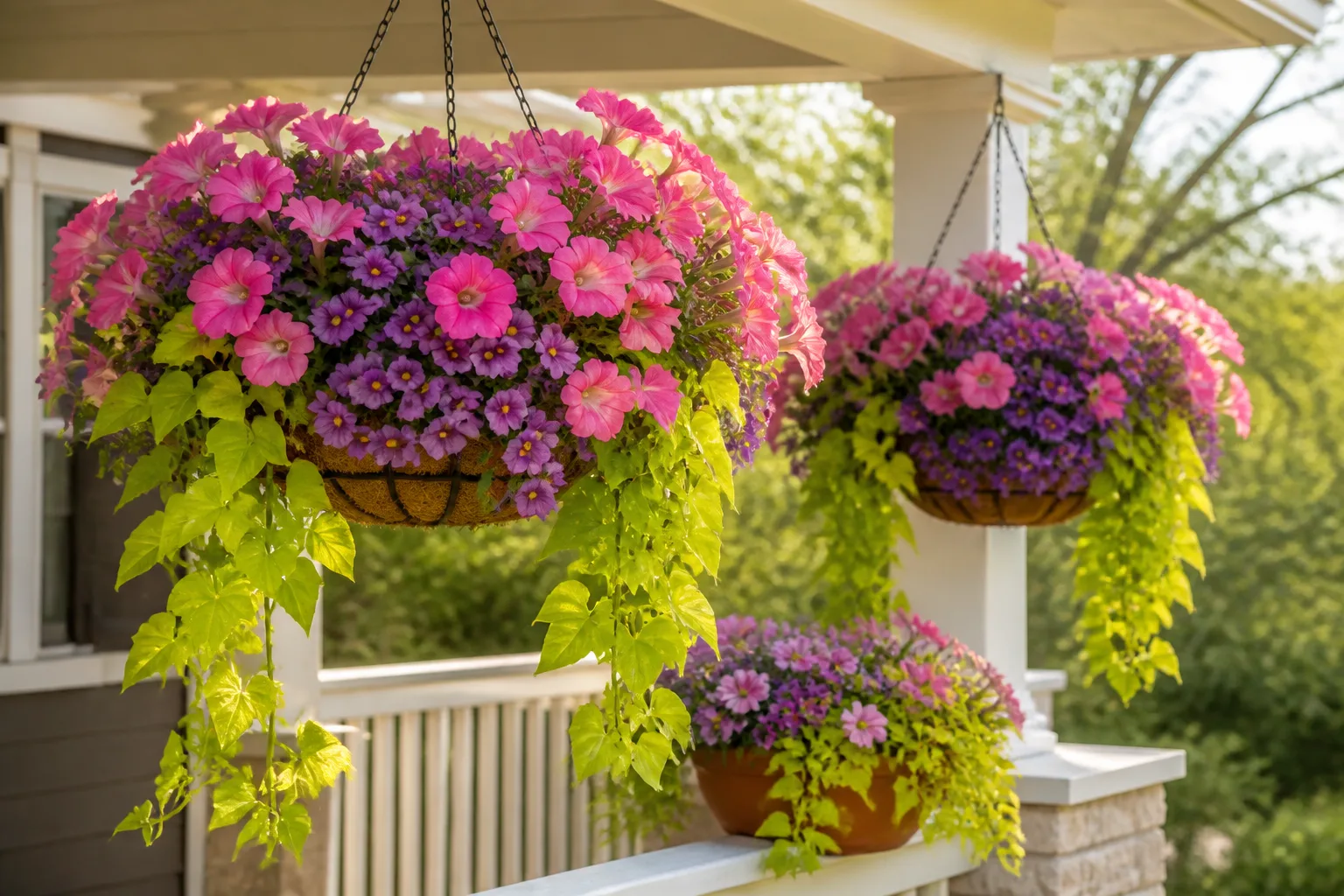
For mixed containers, use the thriller-filler-spiller formula: one upright focal plant (thriller), a mounding middle layer (filler), and something that trails over the rim (spiller). A dwarf hydrangea or coleus thriller, wax begonia filler, and golden creeping Jenny spiller is a porch classic that looks designed rather than accidental. Single-species pots are fine too—especially for statement ferns or mum domes in fall—but mixed pots let you combine sun and shade tolerances if one side of the stoop is brighter than the other.
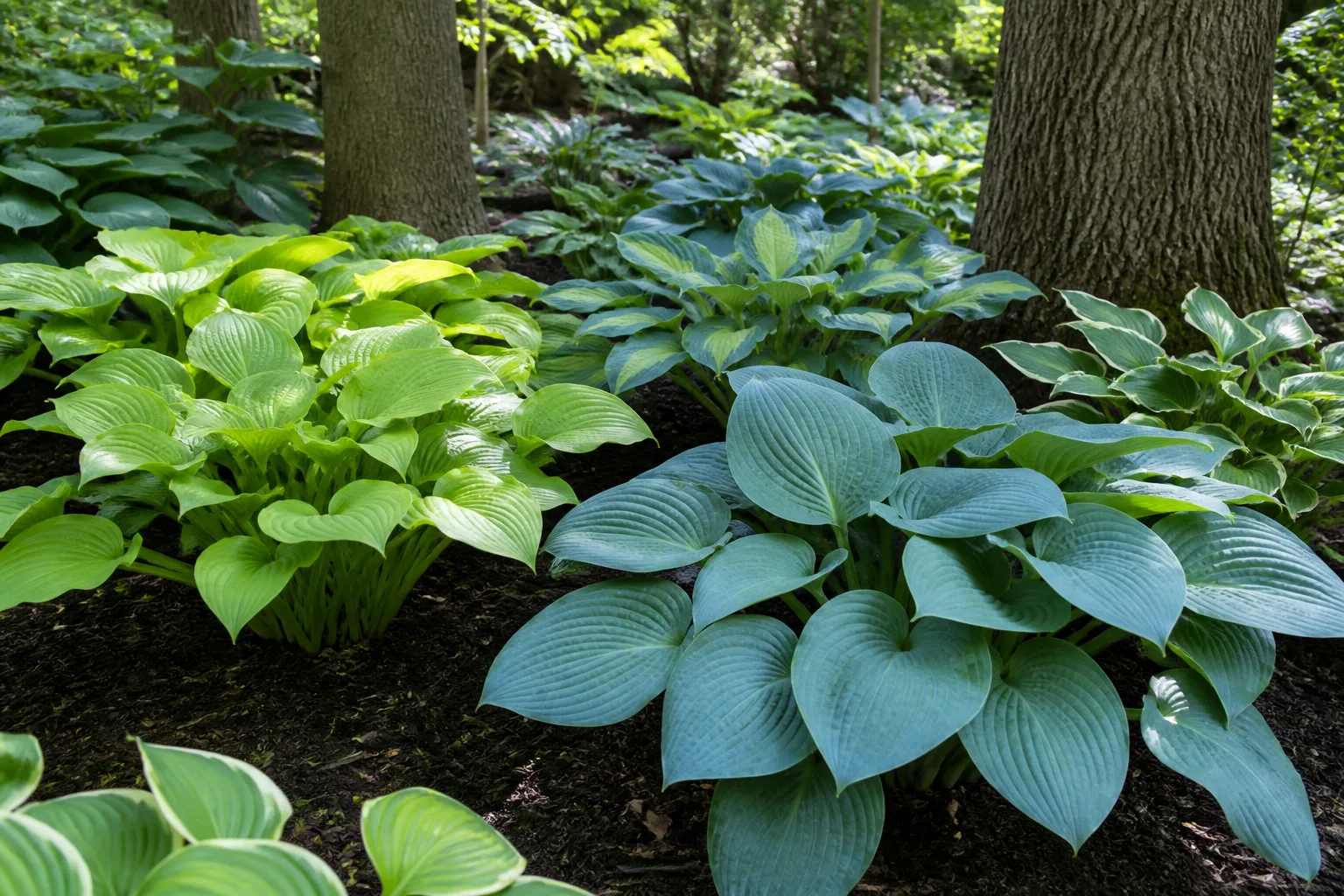
Hostas
Hosta (Hosta spp.) is the shade porch anchor. Broad leaves give structure flanking a front door, and summer flower spikes add quiet color without demanding sun. Hardy in USDA zones 3–9, hostas return yearly in regions with freezing winters if the pot is large enough to insulate roots—or if you sink the pot in the ground for winter.
On the porch, place hostas where they receive dappled light or morning sun only. Afternoon sun on variegated cultivars often bleaches leaves to white patches that will not green up again. Keep soil evenly moist; wilting in heat usually means too much sun, not too little water. Slugs can be an issue at ground level—elevate pots on pot feet and remove dead leaves from the saucer area.
Miniature and small hosta cultivars fit porch bowls better than giant landscape types that outgrow a pot in two seasons. Divide overcrowded clumps in early spring before leaves unfurl, replanting the outer sections into fresh mix. If a hosta in a pot fails to return after winter, the container was likely too small to buffer roots from freeze-thaw cycles—size up or heel the pot into a garden bed for the coldest months.
Geraniums
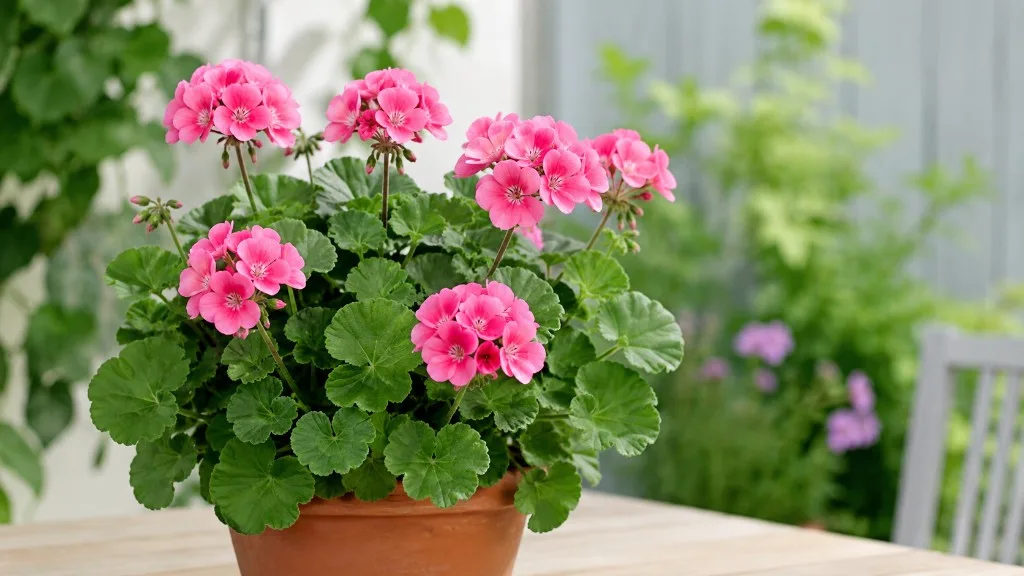
Zonal geraniums (Pelargonium × hortorum) are the classic sun porch annual: round flower clusters in red, pink, white, and bi-colors on sturdy stems. They want at least six hours of direct sun for best bloom, making them a strong choice for south- and west-facing stoops with open exposure.
Heat is the trade-off. When temperatures stay above 85°F (29°C), bloom can pause and lower leaves yellow. Move pots to morning-sun-only positions during heat waves, deadhead spent flower heads to redirect energy, and water when the top half-inch of soil dries. Geraniums are tender perennials in zones 9–11; elsewhere, bring a favorite cultivar indoors to a bright window before frost or treat them as replaceable summer color.
Ivy geraniums (Pelargonium peltatum) are the trailing cousins worth hanging from porch eaves—they tolerate heat a little better than zonal types and cascade naturally over basket rims. Whichever type you choose, feed every two to three weeks with a bloom-focused fertilizer while plants are actively flowering; porch pots leach nutrients faster than garden beds because you water more often.
Rosemary and Porch Herbs
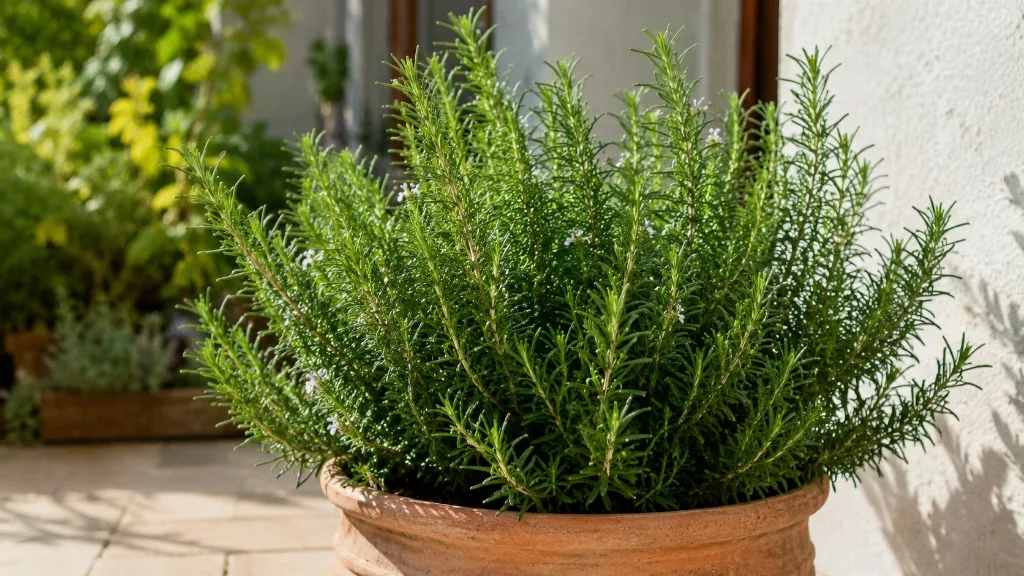
Rosemary (Salvia rosmarinus) turns a sunny porch into a functional kitchen garden. Needle-like leaves are aromatic, evergreen in mild climates (zones 8–11 outdoors), and tolerate the dry air that stresses many ornamentals. Pair it with thyme, sage, or oregano in a single large planter for a cohesive herb cluster by the door.
Give rosemary full sun and excellent drainage—add extra perlite or grit to the mix if your porch pots stay wet after rain. Water deeply, then let the soil dry noticeably before soaking again. In zones 6 and colder, plan to bring the pot indoors to a cool, bright room for winter; a porch rosemary left in a freezing pot usually dies from root cold, not leaf damage alone.
Hen and Chicks
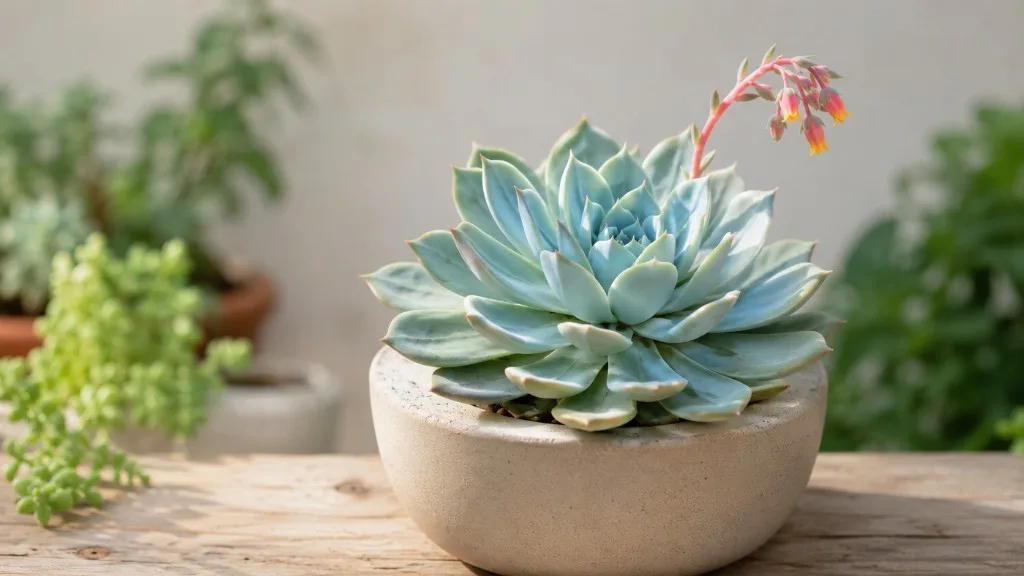
Hen and chicks (Sempervivum spp.) are cold-hardy succulents (zones 3–8) that multiply into tight rosette colonies—perfect for shallow bowls on a porch table or rockery-style troughs. They tolerate more shade than desert cacti, which makes them workable on bright covered porches that never get direct midday sun.
The failure mode is rot, not drought. Use a gritty, fast-draining mix and a pot with drainage holes. Water only when the soil is fully dry; summer rain on a covered porch may be all they need. Rosettes that elongate and lose color are reaching for light—shift the pot closer to the brightest edge of the stoop.
Wax Begonias
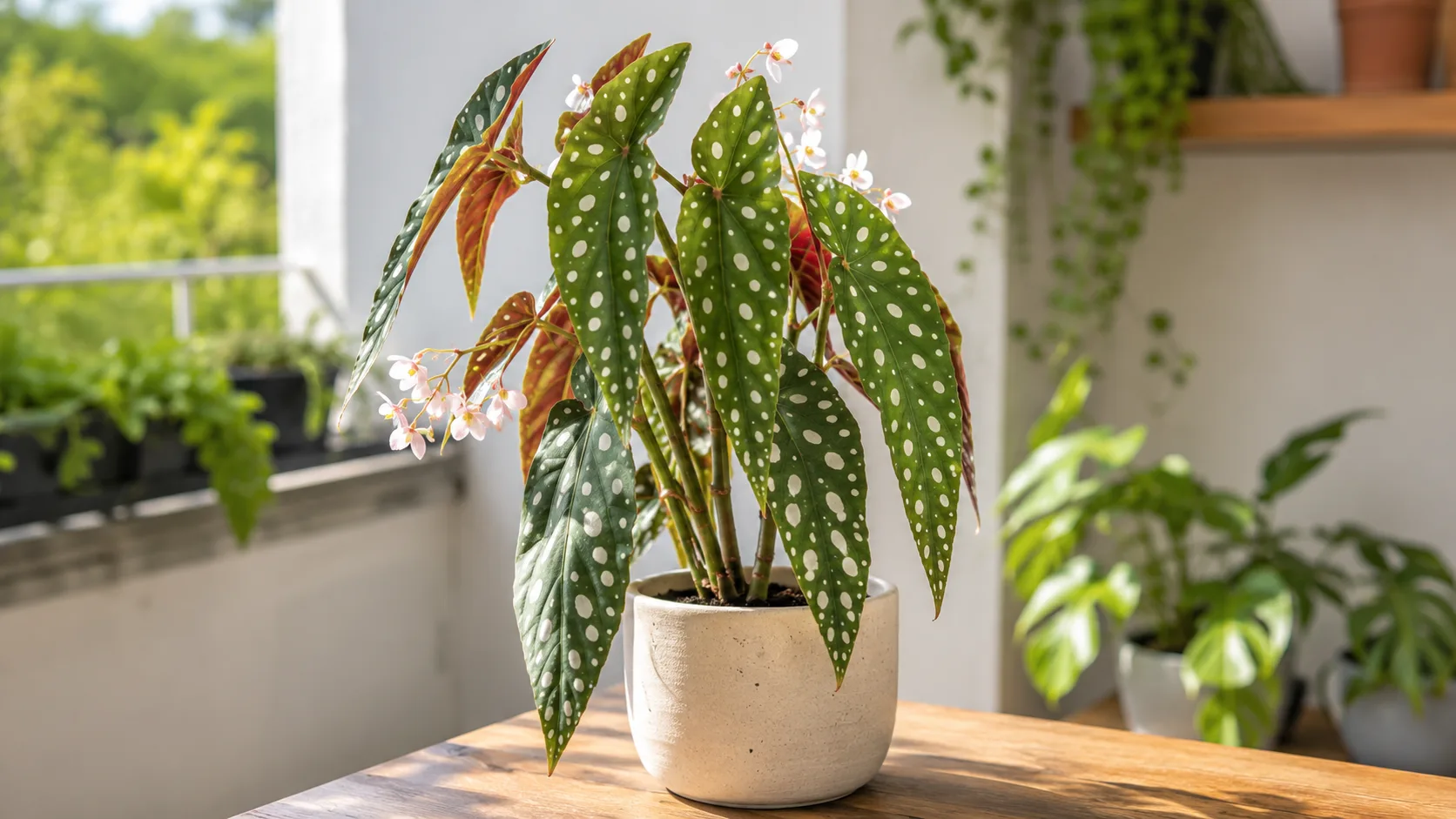
Wax begonias (Begonia semperflorens-cultorum) bloom continuously in shade and part shade with waxy leaves that resist brief dry spells better than impatiens. Use them on north- and east-facing porches where you want low, mounded color without hanging baskets.
They accept a surprising range of light, but hot afternoon sun scorches leaves. Keep soil lightly moist—not soggy—and fertilize with a diluted balanced feed every three to four weeks during active growth. In zones 8–11 they may persist as perennials; elsewhere, treat them as frost-tender annuals and replace in spring.
Chrysanthemums
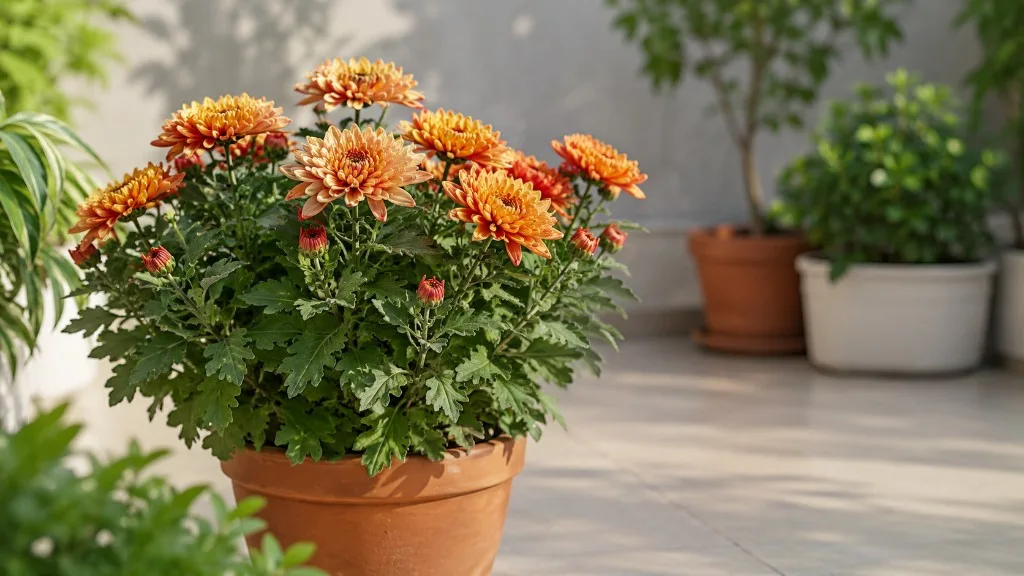
Chrysanthemums are the fall porch classic: domes of yellow, bronze, burgundy, and purple that signal the season change. They are widely sold in September and October for instant curb appeal. Most gift-shop mums are florist types bred for greenhouse forcing, not long-term garden permanence—enjoy them through fall display, then compost or plant in the ground if you accept they may not return reliably.
Place mums where they get at least four hours of sun and good air movement to reduce mildew on crowded petals. Water at soil level to keep foliage dry. Important for pet owners: the ASPCA lists chrysanthemums as toxic to dogs, cats, and horses; keep pots off low steps where curious pets investigate.
Boston Ferns
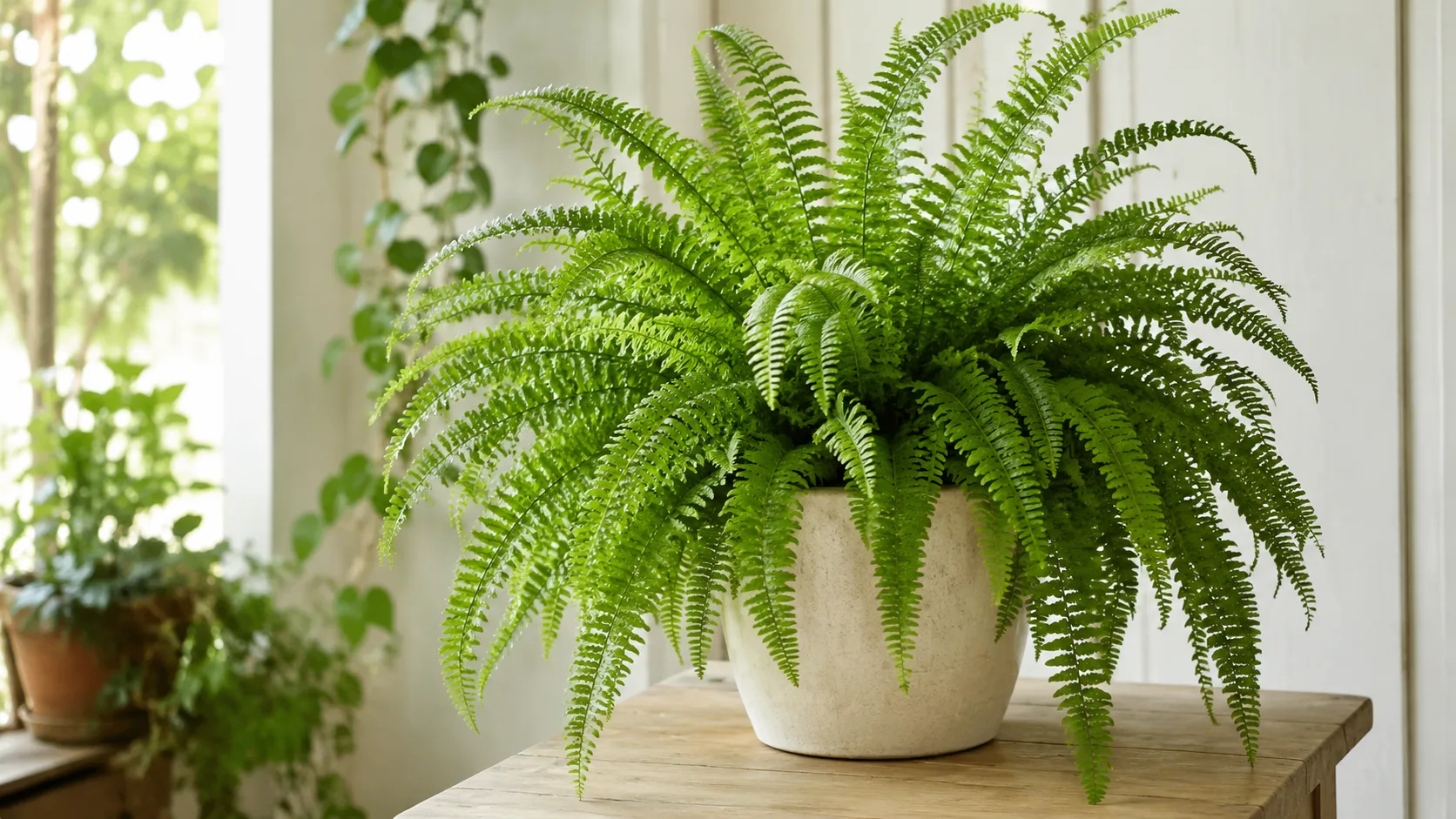
The Boston fern (Nephrolepis exaltata) delivers the lush, arching fronds that define a shaded Southern porch—but it is a tropical tender plant (zones 10–13 outdoors year-round). In most climates it is a summer porch guest that needs bright indirect light and consistent moisture.
Hang ferns where fronds can cascade without brushing daily traffic, and avoid the dry microclimate above heating vents near the door. Mist or group with other plants if fronds brown at the tips from low humidity. Before the first frost, move the fern indoors to a bright bathroom or use a humidifier nearby; a porch fern left through a freezing night rarely recovers.
Coneflowers
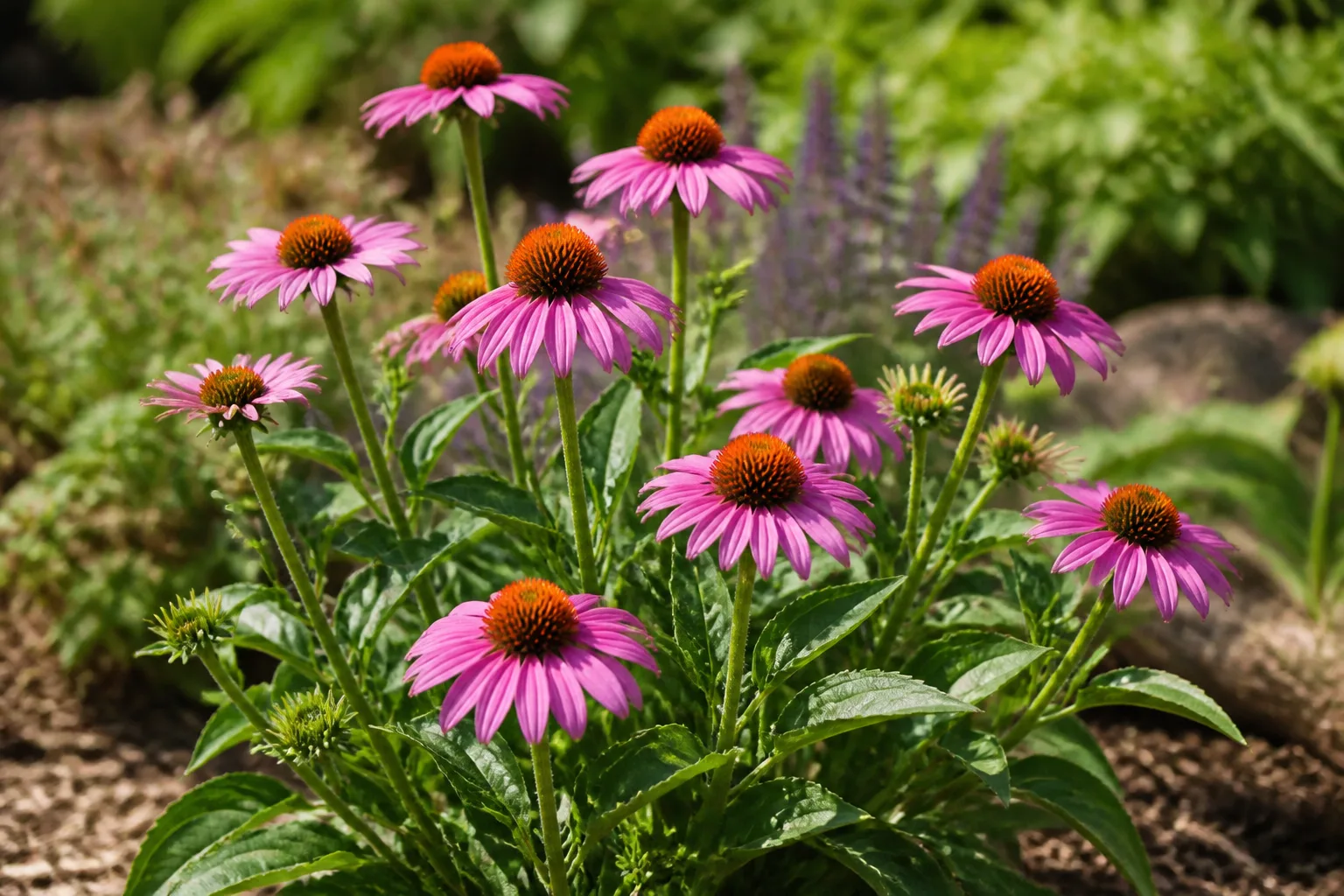
Purple coneflower (Echinacea purpurea) brings native pollinator value to a sunny porch. Daisy-like petals surround a spiky cone that bees and butterflies visit all summer. Hardy perennials in zones 3–9, they need a deep pot—at least 12 inches wide and deep—because taproots resent constant repotting.
Give coneflowers six or more hours of sun for sturdiest stems; leggy plants with few flowers are usually reaching for light. Deadhead spent blooms to extend color, or leave seed heads for goldfinches in fall. In cold zones, an insulated large pot or heeling the container into a garden bed for winter improves survival compared with leaving a small pot on an exposed stoop.
Dwarf cultivars like ‘PowWow Wild Berry’ stay shorter in pots than full-size varieties, which matters on a porch where tall stems blow over in wind. Pair coneflowers with low spillers rather than tall companions so the flowers stay visible from the sidewalk.
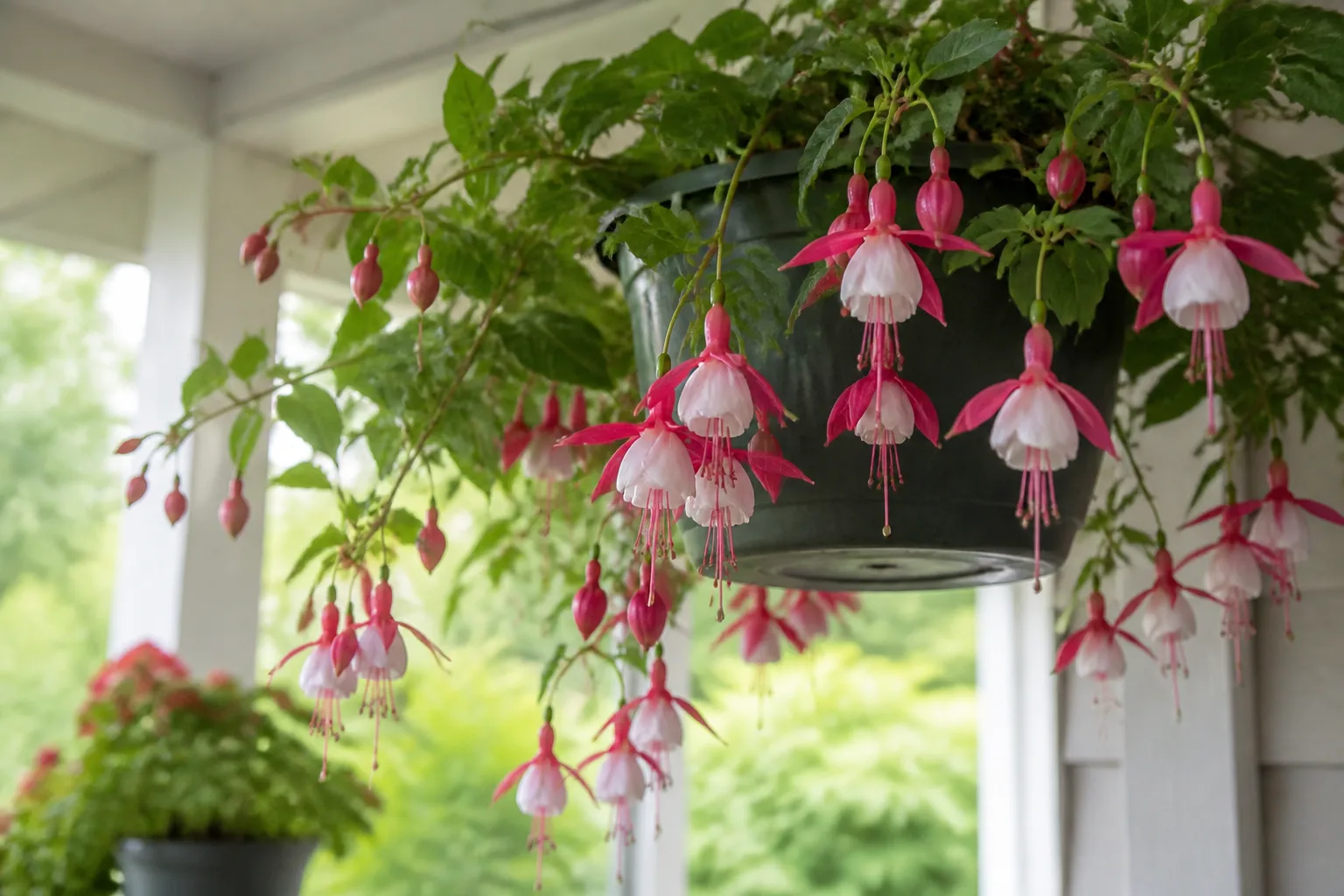
Fuchsia
Fuchsia hybrids are built for cool, bright shade—the hanging basket plant for a north-facing porch that gets no direct sun but plenty of reflected light. Pendulous flowers in pink, purple, and white attract hummingbirds when nights stay below about 75°F (24°C).
Heat shuts fuchsia down. On hot south-facing porches, skip fuchsia unless you can keep baskets in morning sun only. Keep soil consistently moist; wilting in heat often means dry roots, but wilting in cool weather with wet soil signals root rot. In zones colder than 10, bring baskets indoors before frost or replace annually—fuchsia is a summer porch treat, not a year-round fixture in most yards.
Coral Bells
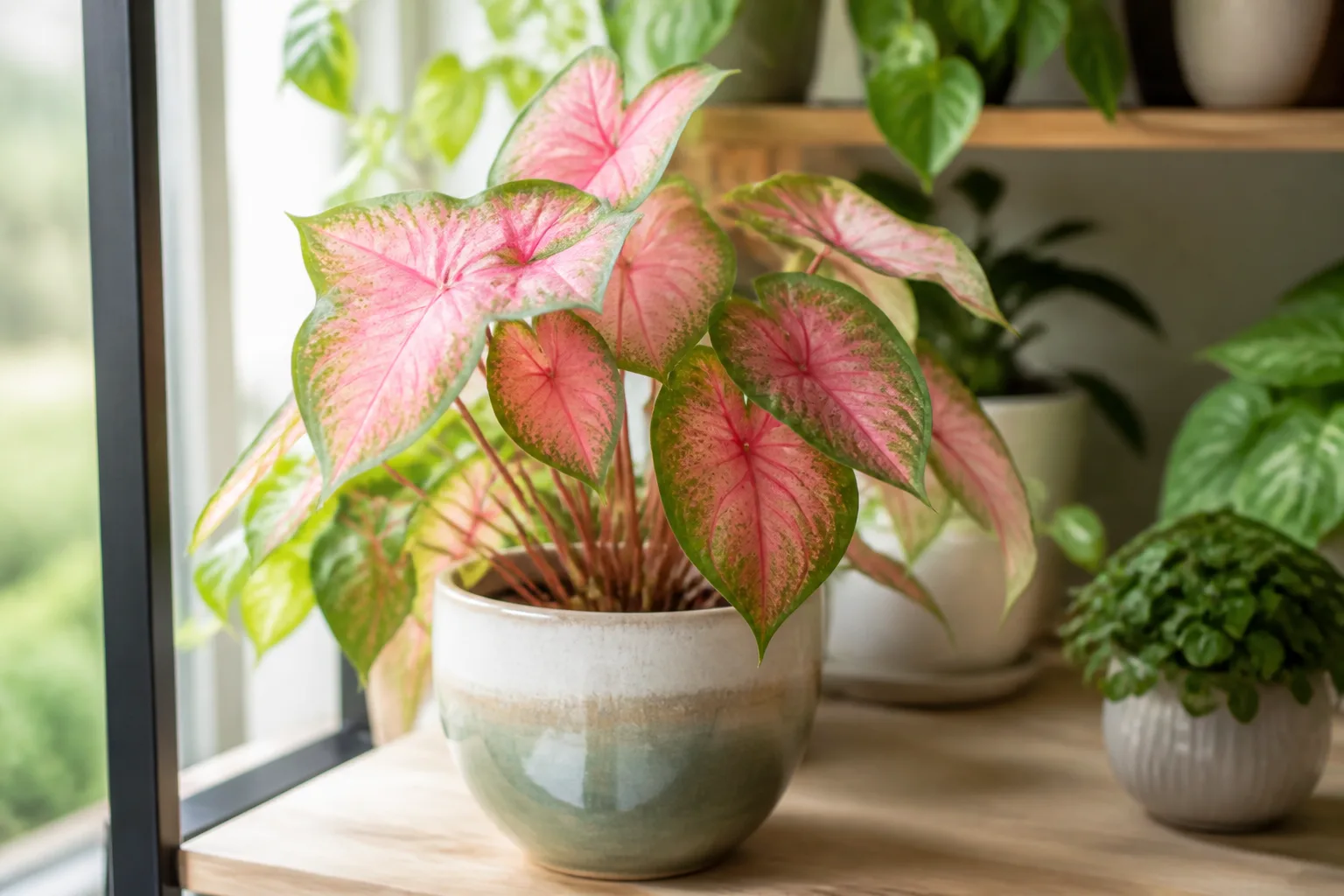
Coral bells (Heuchera spp.) sell the foliage: ruffled leaves in lime, bronze, purple, and silver that look sharp in shade planters long after bloom fades. Tiny flower spikes attract hummingbirds in late spring. Hardy in zones 4–9 depending on cultivar, they are among the most useful “color without flowers” porch plants for covered entries.
Avoid waterlogged soil—Heuchera crowns rot easily in saturated mix. Use a container with drainage and refresh the top inch of soil each spring. Afternoon sun can work in cool climates but fades dark-leaved cultivars in the South; morning light with afternoon shade is the safer porch default.
Coleus
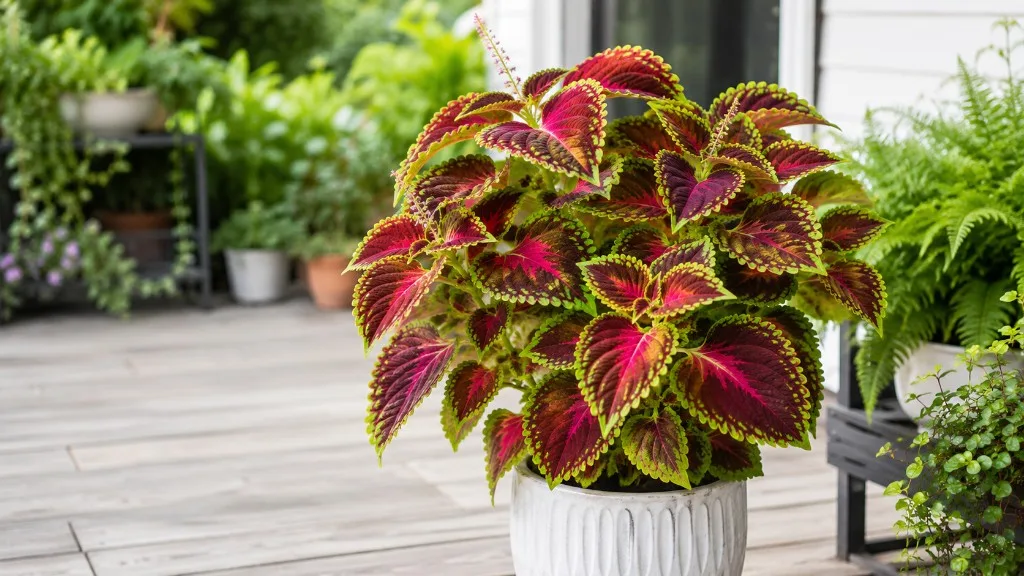
Coleus (Coleus scutellarioides, syn. Plectranthus scutellarioides) delivers instant pattern—splashed, speckled, and edge-variegated leaves in colors flowers cannot match. Modern sun-tolerant series handle brighter porches than old shade-only strains, but all coleus want steady moisture and wilt dramatically when dry.
Pinch growing tips every few weeks to keep plants bushy in pots. Coleus is frost-tender; take cuttings in late summer to root indoors if you want free replacements next year. The ASPCA lists coleus as toxic to dogs, cats, and horses—place pots above tail-wag height if pets use the stoop.
Petunias
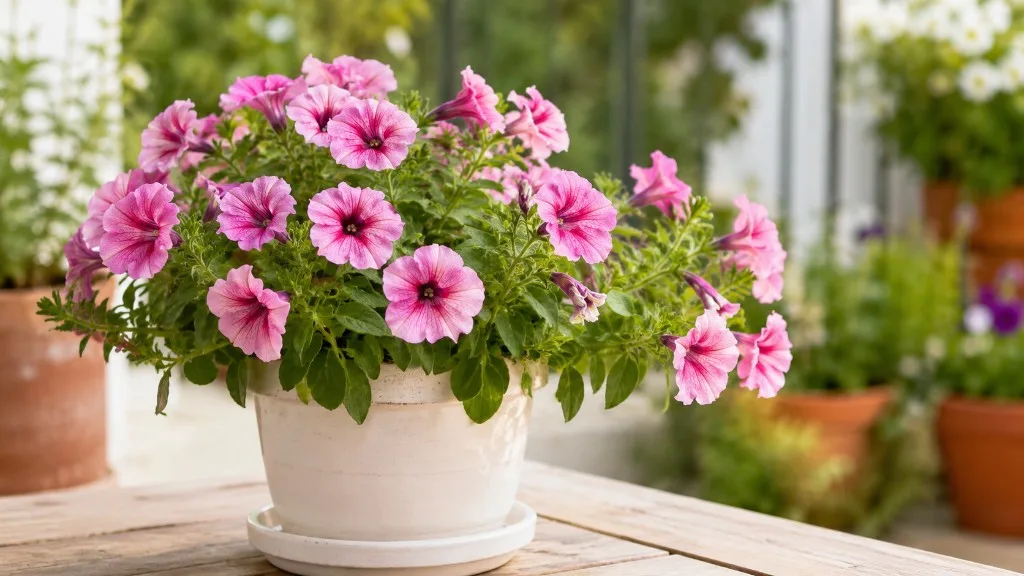
Petunias (Petunia × hybrida) spill over pot edges with trumpet flowers from spring through frost on a well-fed porch. Grandiflora types have huge blooms; milliflora and spreading Wave-type petunias fill baskets faster with smaller flowers. They want at least six hours of sun but appreciate relief from scorching west-facing afternoon rays in July.
Water until it runs from drainage holes, then let the top inch dry before the next soak—petunias in small pots on a hot railing can need daily water. Deadhead grandiflora types; many modern hybrids are self-cleaning. Petunias are annuals in most zones; treat them as replaceable summer color unless you overwinter cuttings indoors.
Supertunia and Wave series spread wider than upright grandifloras—choose based on whether your porch pot sits on a narrow railing (upright types) or a wide planter box (spreading types). A light trim in midsummer encourages fresh branching if bloom slows during a heat wave.
Dwarf Hydrangeas
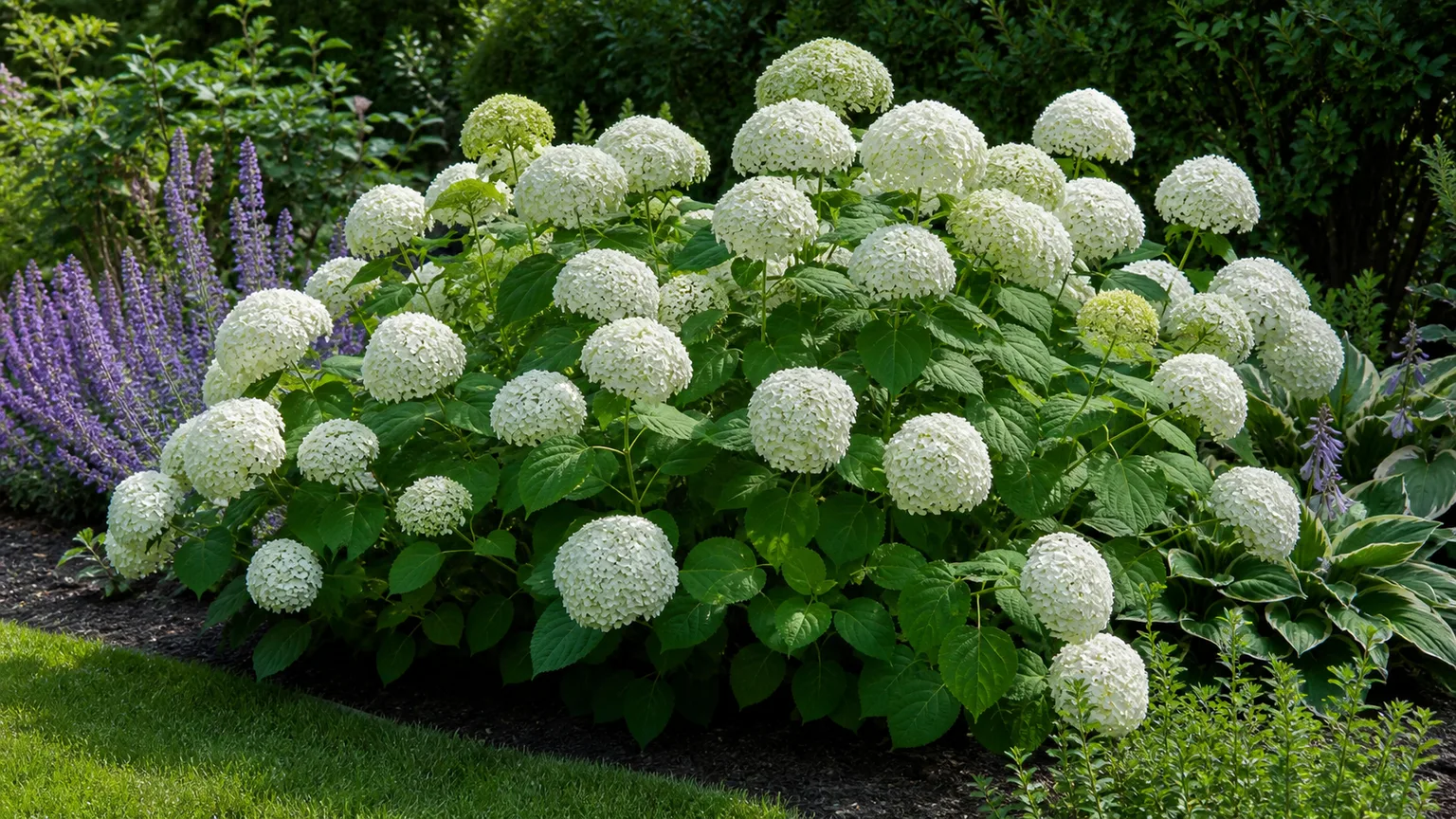
Compact hydrangea cultivars—look for series like Little Lime, Bobo, or Cityline—fit porch pots without the 6-foot spread of landscape shrubs. Big mophead or panicle blooms reward consistent moisture and morning sun with afternoon shade in hot regions. Zones 3–9 depending on species.
Use a pot at least 16 inches in diameter; hydrangeas are thirsty and root-bound plants bloom poorly. Soil pH affects flower color on some bigleaf types (bluer in acid mix, pinker in alkaline)—a detail worth testing if blue is your goal. NC State Extension notes hydrangea toxicity if ingested, and the ASPCA lists hydrangea as toxic to dogs, cats, and horses; keep pots away from chewing puppies.
Clematis
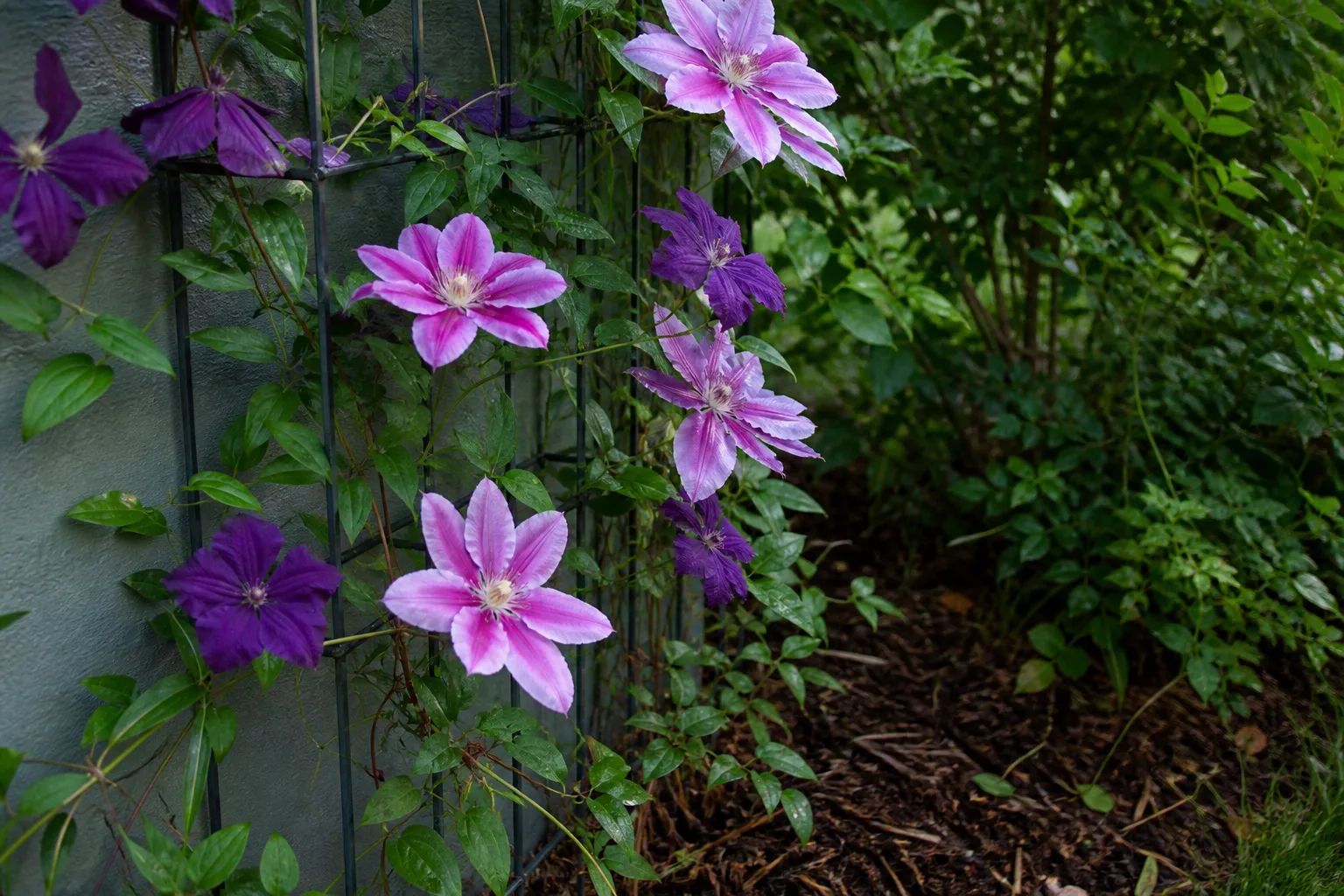
Clematis vines add vertical drama on a porch trellis, mailbox post, or column beside the steps. Large-flowered hybrids want “head in sun, feet in shade”—roots cool under a companion plant or mulch while stems climb into brighter light. Hardy in zones 4–9 for many cultivars; check the label for your specific type.
Use a deep pot (18 inches minimum) because clematis roots resent heat and drying. Keep soil moist but not swampy, and attach stems loosely to supports as they grow. NC State Extension documents clematis toxicity to humans and pets if ingested in quantity; the irritant compounds are another reason to train vines above pet height.
Golden Creeping Jenny
Golden creeping Jenny (Lysimachia nummularia ‘Aurea’) is the spiller that ties mixed porch containers together—chartreuse stems trailing 12 to 18 inches over pot rims. It tolerates part shade to sun, though leaf color is brightest with a few hours of direct light. Hardy in zones 4–9, it can survive winter in an insulated pot in mild regions.
Plant the yellow cultivar ‘Aurea’, not the plain green species. Green creeping Jenny spreads aggressively in garden beds and is considered invasive in parts of the United States. University of Wisconsin Horticulture recommends ‘Aurea’ for containers and notes the green form’s invasive tendency. In mixed pots, pair Jenny as the “spiller” under a “thriller” like dwarf hydrangea or coleus and a “filler” like wax begonia or petunia—the classic container formula that keeps porch pots looking intentional rather than random.
Trim leggy stems in midsummer if the plant overtakes its neighbors, and root the cuttings in water for backup spillers. Jenny recovers quickly from a hard trim and often looks fuller afterward.
Conclusion
The prettiest front porch on the block is not the one with the most expensive pots—it is the one where every plant matches the light that actually reaches that spot. Map your sun for three days, size containers for drainage and weight, then choose from these fifteen proven performers: shade anchors like hostas, ferns, and wax begonias; sun lovers like geraniums, rosemary, coneflowers, and petunias; and seasonal or structural accents like mums, fuchsia baskets, dwarf hydrangeas, clematis vines, and golden creeping Jenny spillers.
Think in seasons, not just snapshots. Spring might mean fresh begonias and ferns; summer adds geraniums and petunias; fall swaps in chrysanthemums; winter may leave evergreen rosemary, dormant hosta pots, or an empty stoop until you replant. That rotation is normal—porch gardening is closer to container flower arranging than to establishing a permanent border.
Swap annuals with the seasons, move heat-stressed pots to morning sun when July arrives, and check toxicity before placing plants on steps pets use daily. Do that, and your entryway stays welcoming long after the first nursery trip—without the revolving door of replacements that frustrates most porch gardeners.



