9 Beautiful Peony Colors for Flower Beds
Compare nine peony colors and cultivars, then choose by flower form, plant type, bloom timing, hardiness, and the growing conditions your bed can provide.
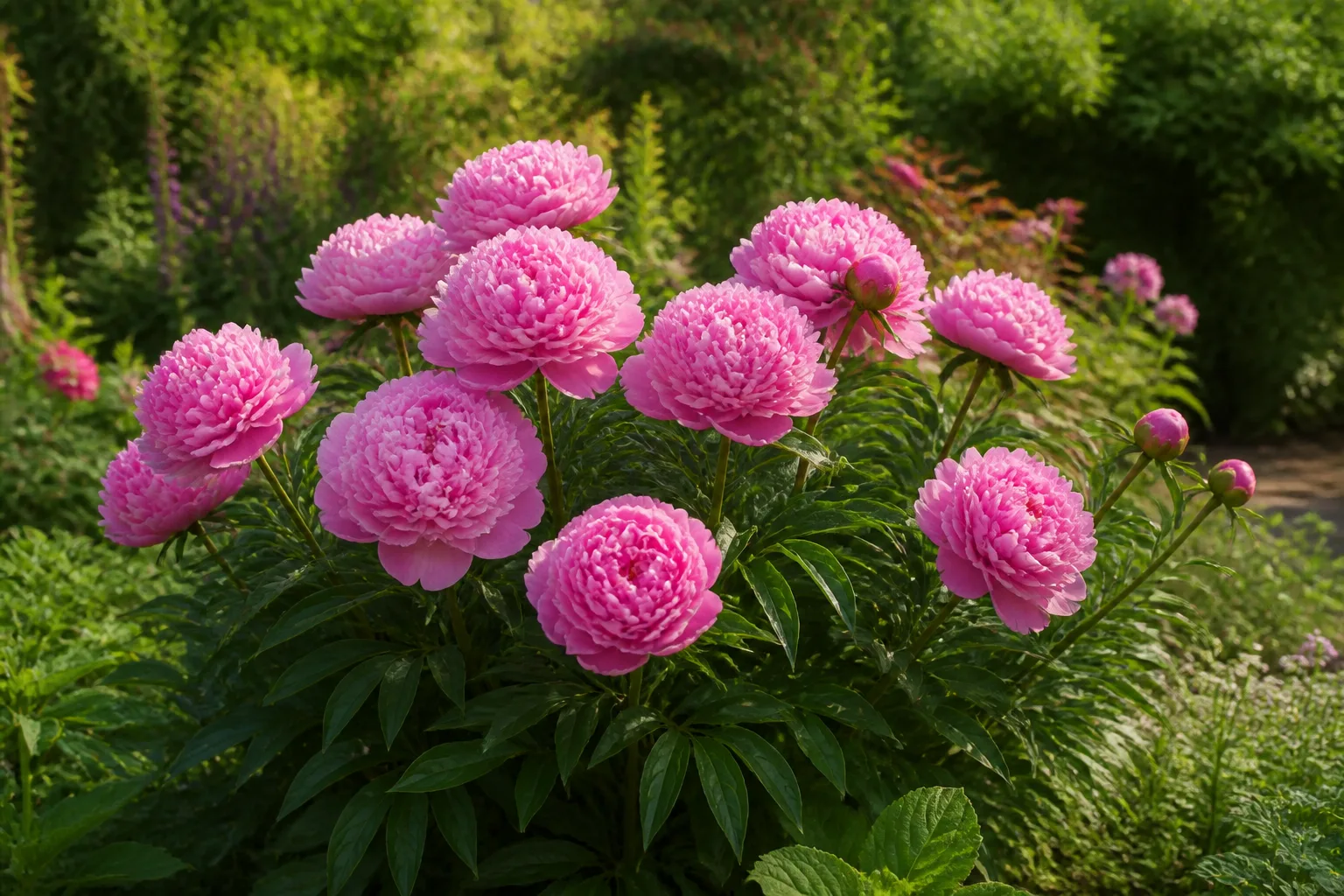
If you are choosing peonies this summer, treat the color list as the beginning of the decision, not the whole decision. A flower labeled yellow, coral, or deep red still has a plant type, bloom form, mature width, flowering window, and winter-chill requirement that can determine whether it becomes a reliable focal point or an expensive disappointment.
The short version is this: choose the color you want, then check the cultivar’s flower form and plant type, confirm that it fits your climate, and plan the planting window. Most bare-root peonies bought during summer are best planted in fall, about six weeks before the ground freezes. They are long-lived perennials, not instant summer annuals, and a new crown may need a season or two to settle before it flowers generously.
| Color family | Cultivars to investigate | Best fit | Main trade-off |
|---|---|---|---|
| White | ‘Duchesse de Nemours’, ‘Krinkled White’, ‘Festiva Maxima’ | Bright, restrained borders | Doubles may need support |
| Blush or shell pink | ‘Sarah Bernhardt’, ‘Shirley Temple’, ‘First Arrival’ | Romantic gardens and bouquets | Some pale doubles are rain-heavy |
| Rose or deep pink | ‘Sea Shell’, ‘Cytherea’, ‘Felix Crousse’ | A strong but flexible centerpiece | Color can lean purple as flowers age |
| Red | ‘America’, ‘Red Charm’, ‘Old Faithful’ | High contrast and formal beds | Large doubles can flop |
| Burgundy or red-purple | ‘Peter Brand’, ‘Black Beauty’ | Depth among pale perennials | “Purple” is usually a red or wine interpretation |
| Coral | ‘Coral Charm’, ‘Coral Sunset’, ‘Pink Hawaiian Coral’ | Warm transitions between pink and yellow | The bloom may pass through several shades |
| Yellow | ‘Bartzella’, ‘Garden Treasure’, ‘High Noon’ | A rare, sunny accent | Many choices are Itoh or tree peonies |
| Peach, apricot, or orange | ‘Julia Rose’, ‘Kopper Kettle’, ‘Lemon Chiffon’ | Warm, modern-looking palettes | Availability and exact color vary |
| Bicolor or striped | ‘Candy Stripe’, ‘Bowl of Beauty’, ‘Raspberry Sundae’ | Collector beds and contrast | The center may change as the flower opens |
How to choose among peony colors
Peonies are available in a broad palette of white, pink, red, coral, yellow, orange, and multicolored flowers, but the boundaries are not as neat as a paint chart. A coral flower may open pink, warm toward orange, and fade to cream; a dark red bloom may read burgundy or purple in evening light. The University of Connecticut’s peony fact sheet notes that flowers are available in almost every color except blue, which is the useful answer when a catalog photograph makes a cool-toned flower look bluer than it really is.
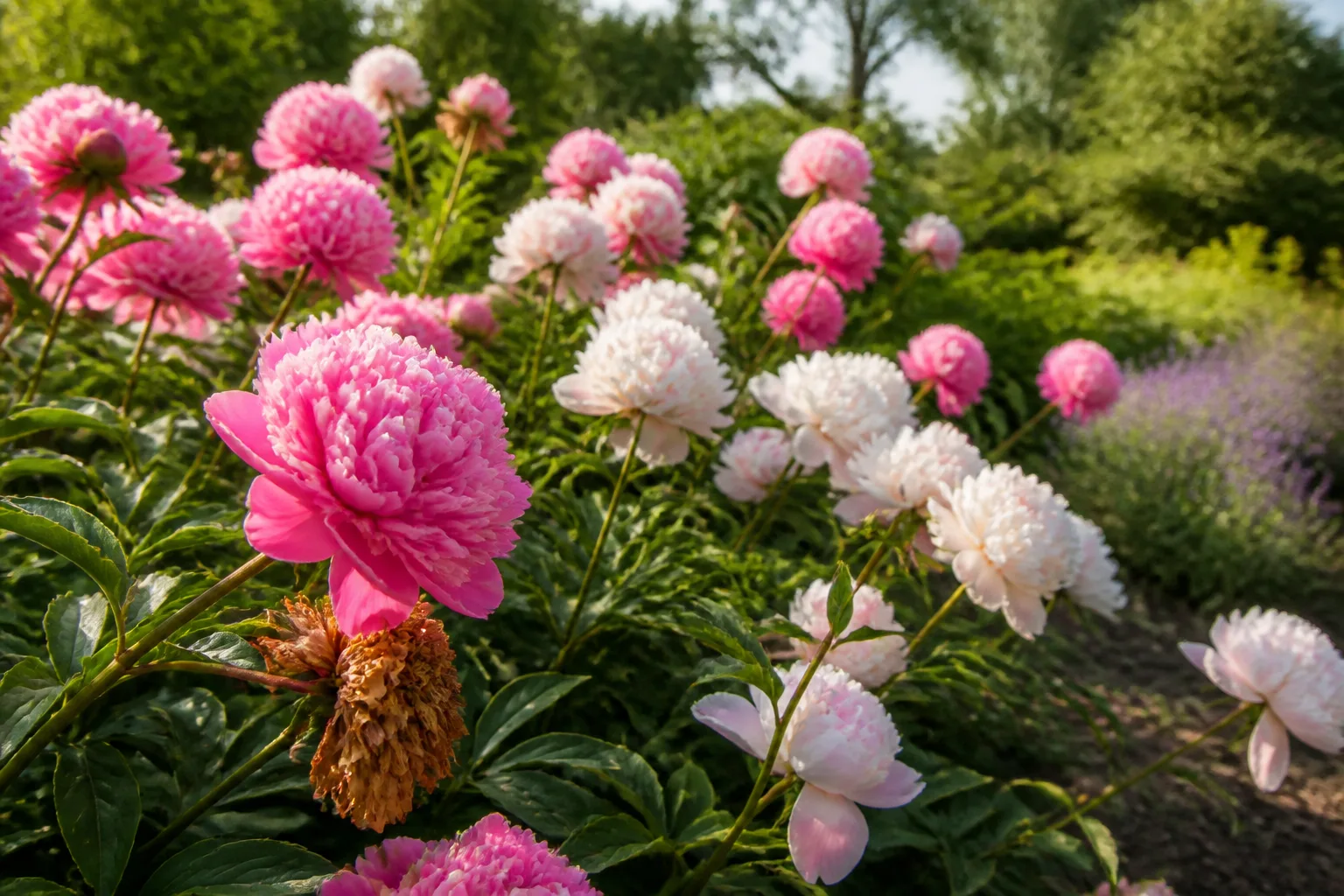
Color is only one part of the decision
Start with the mood you want in the bed, then add three filters: flower form, stem strength, and bloom timing. A full-double peony gives you the classic, ruffled bouquet look, but its rain-soaked flower can pull a stem to the ground. A single or semi-double flower leaves more of the center visible and often has a lighter, more open silhouette that works better in a mixed perennial border.
The American Peony Society’s flower-form standard recognizes six traditional flower forms: single, Japanese, anemone, semi-double, bomb, and full double. These names describe the arrangement of guard petals, stamens, and transformed stamens or petaloids; they are not simply marketing labels. When a nursery lists the form, you can predict the flower’s visual weight and whether you may need a support ring.
Herbaceous, Itoh, and tree peonies
Most familiar garden peonies are herbaceous: their leafy stems die back after frost and return from the crown in spring. Itoh, or intersectional, peonies are crosses between herbaceous and tree peonies. They keep a compact, herbaceous growth habit but often bring yellow, peach, or unusual bicolor flowers and strong foliage.
Tree peonies have woody stems that persist through winter, so they should not be cut to the ground like herbaceous types. They can offer large flowers and unusual colors, but they are a different landscape plant with different pruning and planting details. NC State Extension’s herbaceous peony profile separates herbaceous and woody types for good reason; do not assume a care instruction for one applies unchanged to all three.
1. White peonies for a bright, calm border
White peonies make a flower bed look lighter without adding visual noise. They are especially useful beside deep green foliage, purple iris, blue flowers, or a dark fence, and they remain visible in the soft light of late afternoon. If you want a white that still has personality, look for a red-flecked or cream-centered cultivar instead of assuming every white peony will look identical.
‘Duchesse de Nemours’ is a classic fragrant white full double. ‘Krinkled White’ is a single white cultivar with a simpler profile and a more open center, making it a smart choice when you want the plant to feel integrated with other perennials rather than like a row of florist’s pom-poms. ‘Festiva Maxima’ adds red or crimson marks to white petals for a traditional bicolor effect.
White is not a low-light solution. The flowers may brighten a shaded-looking corner, but the plant still needs a genuinely sunny, well-drained position for dependable flowering. If you choose a heavy white double, install support while shoots are still short; waiting until the flowers are open means trying to rescue a top-heavy plant after the storm.
2. Blush and shell-pink peonies for a soft classic
Blush pink is the safest starting point if you want the familiar peony look: romantic, fragrant, and easy to combine with white, lavender, blue, or silver foliage. The most useful distinction is whether you want a pale flower that stays fairly even or one that fades lighter as it matures.
‘Sarah Bernhardt’ is a widely grown light-pink full double and a major cut-flower cultivar. ‘Shirley Temple’ can move from soft pink toward white, while the Itoh cultivar ‘First Arrival’ opens pink and ages toward a paler tone. A blush double suits a formal or cottage border, but its mass of petals is also the kind most likely to need a peony ring in a wet or exposed garden.
If the bed is viewed from a path or patio, place pale pinks where morning and evening light can reach them. In a mixed border, pair them with vertical flowers or fine foliage rather than several other rounded doubles. That contrast keeps the bed readable after the short peony bloom window ends.
3. Rose and deep-pink peonies for high-impact color
Deep pink and rose peonies give you more presence than blush without the visual severity of a true red. They work well as the middle value between white flowers and dark foliage, and they can bridge a cool purple planting to warmer coral or salmon flowers.
For a single or semi-double look, investigate ‘Sea Shell’ and ‘Cytherea’. Fine Gardening’s peony cultivar guide describes ‘Sea Shell’ as a floriferous, stout-stemmed pink single and ‘Cytherea’ as a rich-pink semi-double with strong stems. Those traits matter when the plant will sit in the middle of a border where you want the flowers to hold their shape without a large cage.
‘Felix Crousse’ adds a brighter pink that may lean toward purple, while ‘Bowl of Beauty’ is better saved for the bicolor category because its pink guard petals surround a contrasting center. Read the form and mature height on the listing, not just the color name. “Pink” includes low, open singles and tall, heavy doubles with very different jobs in a flower bed.
4. Red peonies for a strong focal point
Red peonies give a garden a clear visual anchor, especially when the rest of the bed is pale or green. A red single can look light and almost rose-like, while a red bomb or full double reads as a dense, formal statement. Use one or two red plants as punctuation rather than filling an entire small border with the darkest available bloom.
‘America’ is a vivid red single with an upright habit noted by Fine Gardening. ‘Red Charm’ is a red bomb form: broad guard petals hold a rounded center, so the flower looks architectural as well as colorful. ‘Old Faithful’ is a deep red full double selected for stronger carriage than many older, heavy-flowered types, and ‘Karl Rosenfeld’ remains a popular crimson-red full double for gardeners who want the classic bowl of petals.
The redder and fuller the flower, the more important the site and support become. Give these plants enough sun and air movement, avoid a position where rainwater pools, and put a support ring in place before the foliage hides it. If you want a red peony for a low-maintenance border, start with a single or a strong-stemmed semi-double rather than assuming the most densely petaled flower is the best performer.
5. Burgundy and red-purple peonies for depth
Burgundy, wine, and red-purple peonies are useful when pink feels too sweet but black flowers would be too stark. Their color changes noticeably with light and flower age, so expect a range rather than a perfectly fixed swatch. There are no true blue peonies, and many flowers sold as purple are better understood as deep red, wine, or red-purple.
‘Peter Brand’ is a classic example: its double flowers can begin deep red and develop a purple cast. ‘Black Beauty’ is another dark choice, while ‘Felix Crousse’ brings a brighter red-purple interpretation. These cultivars look particularly good against chartreuse foliage, white flowers, or pale pink peonies.
Dark flowers benefit from close viewing. Put them where a path, porch, or seating area lets you see the petal detail, and avoid hiding them behind a large shrub. If you are buying online, compare several photographs of the same cultivar at different opening stages; the darkest image is not always the color you will see for the entire bloom.
6. Coral peonies that change as they open
Coral is one of the most rewarding peony color groups because the flower can act like a built-in transition between pink, orange, salmon, and cream. It is a strong choice for a bed that already contains yellow, apricot, copper, or warm foliage but still needs the softness associated with pink flowers.
‘Coral Charm’ is a well-known semi-double with intense coral flowers. ‘Coral Sunset’ and ‘Pink Hawaiian Coral’ are also useful names to investigate, and both appear in extension and specialist cultivar lists. Fine Gardening highlights their coral coloring and award-winning garden performance, while NC State Extension includes ‘Coral Charm’, ‘Coral Sunset’, and ‘Pink Hawaiian Coral’ among herbaceous hybrids for cooler zones.
Do not judge a coral peony from one photograph. The flower may be darker in bud, lighter at full opening, and more salmon or cream as it fades. If you want the warm color to carry through the whole bed, repeat it in a companion plant or foliage accent rather than relying on one brief peony moment.
7. Yellow peonies when you want a rarer color
Yellow is the color that makes many gardeners stop scrolling, and it is also the category that most needs a plant-type check. Yellow peonies are strongly represented by Itoh hybrids and tree peonies, rather than by the old, common herbaceous cultivars many people first encounter.
‘Bartzella’ is a prominent Itoh choice with large yellow flowers and a darker flare near the center. ‘Garden Treasure’ offers semi-double yellow flowers, and ‘High Noon’ is a yellow tree peony. These examples also appear in Home for the Harvest’s peony cultivar overview. They are not interchangeable plants: Itoh peonies die back mostly like herbaceous plants, while tree peonies keep woody stems and should not receive an herbaceous fall cutback.
Yellow works as a light-catching accent beside deep red, plum, blue, or dark green. It can also look washed out in a bed with strong midday glare, so check the planting area at the time you normally use the garden. Before ordering, confirm the cultivar’s hardiness and mature width; the unusual color is not a reason to ignore the plant’s climate requirements.
8. Peach, apricot, and orange peonies for warmth
Peach, apricot, and near-orange peonies give a flower bed a contemporary warmth that classic pinks and whites do not. They are excellent for linking peonies to roses, bearded iris, foxglove companions, or foliage with bronze and copper tones. Many of these flowers are also color changers, so the plant can supply several related shades during one bloom.
‘Julia Rose’ is an Itoh peony known for pink-orange-yellow coloring. ‘Kopper Kettle’ is a near-orange intersectional hybrid, while ‘Lemon Chiffon’ brings yellow-orange warmth. ‘Etched Salmon’ sits closer to salmon pink, with a polished, cupped form that works when you want a warm flower without going all the way to orange.
This is a category where availability can be uneven and catalog naming can be loose. Buy from a specialist nursery that states the cultivar name and plant type, and save a screenshot of the mature flower description. A generic “orange peony” listing is not enough information to know whether you are getting an Itoh, a tree peony, or a pink cultivar photographed in unusually warm light.
9. Bicolor and striped peonies for contrast
Bicolor peonies create their own focal point, so they are a good choice when you want one plant to supply both the dominant and accent colors in a bed. Stripes, contrasting centers, and petal edges also make the flowers interesting up close, even when the plant is not in a large mass.
‘Candy Stripe’ is a white-and-red-striped peony. ‘Bowl of Beauty’ has pink guard petals around a pale, contrasting center, and ‘Raspberry Sundae’ combines light pink with creamy yellow. ‘Lollipop’ is an Itoh cultivar with yellow, red, and purple tones. These names give you a useful shortlist, but the exact balance of colors depends on the cultivar and the stage of opening.
Use a bicolor peony as the bridge between two nearby plants, not as a reason to introduce every color in the bed. Pull one secondary color from the flower for an iris, allium, rose, or foliage companion, then leave enough green space around the peony for the pattern to read. Crowding turns a distinctive bloom into visual noise.
How to match color to your site
The right color is the one that can flower reliably where you live and hold its place in the border. University and extension references consistently emphasize full sun or very bright light, fertile but well-drained soil, air movement, and a winter cold period for herbaceous peonies. A color that is perfect on a plant tag is not a good choice if the bed stays wet or warm enough to interrupt dormancy.
Sun, soil, and winter chill
Aim for at least six hours of direct sun, with more light generally producing better flowering. In a hot climate, some afternoon shade can protect flowers from scorching, but too much shade usually means fewer or smaller blooms. Keep peonies away from the root competition of mature trees and shrubs; a peony that receives light but loses water to tree roots may still flower poorly.
Drainage is more important than creating a rich-looking planting hole. Improve compacted soil across the bed or use a raised position rather than making a small pocket of loose soil surrounded by a bathtub of clay. Waterlogged roots are vulnerable to rot, while very sandy soil may require more consistent moisture during spring bud development.
Most herbaceous peonies are most dependable in USDA Zones 3–8, with flowering becoming less reliable in warmer locations because the plants need winter chilling. Virginia Cooperative Extension notes that herbaceous peonies can survive into Zone 9 but are unlikely to flower reliably, while NC State Extension identifies Zones 3–8 as the general range and points gardeners in warm areas toward low-chill types. Treat zone numbers as a starting point, then check the nursery’s cultivar-specific guidance.
Bloom timing and plant strength
Peony season is longer when you combine early, midseason, and late cultivars instead of planting three flowers that open in the same week. The University of Connecticut describes the overlapping types as capable of extending the display to roughly six to eight weeks when bloom windows are combined. That approach also lets you use one red, one coral, and one white cultivar as a sequence rather than demanding that all three perform on the same day.
Plant habit matters just as much as bloom date. Fine Gardening’s cultivar selections distinguish older, very full flowers with weak stems from newer or simpler forms that stand up better in the landscape. If you garden in a rainy area, prioritize singles, semi-doubles, or cultivars specifically noted for strong stems, then support any remaining top-heavy plants before buds open.
Plant and support peonies for the display you want
Summer is a good time to make the shortlist, compare sources, and reserve a named cultivar. It is usually not the ideal time to plant a bare-root crown into hot, dry soil. Fall planting gives the roots time to establish before winter, and a healthy bare-root division should have firm roots and visible eyes.
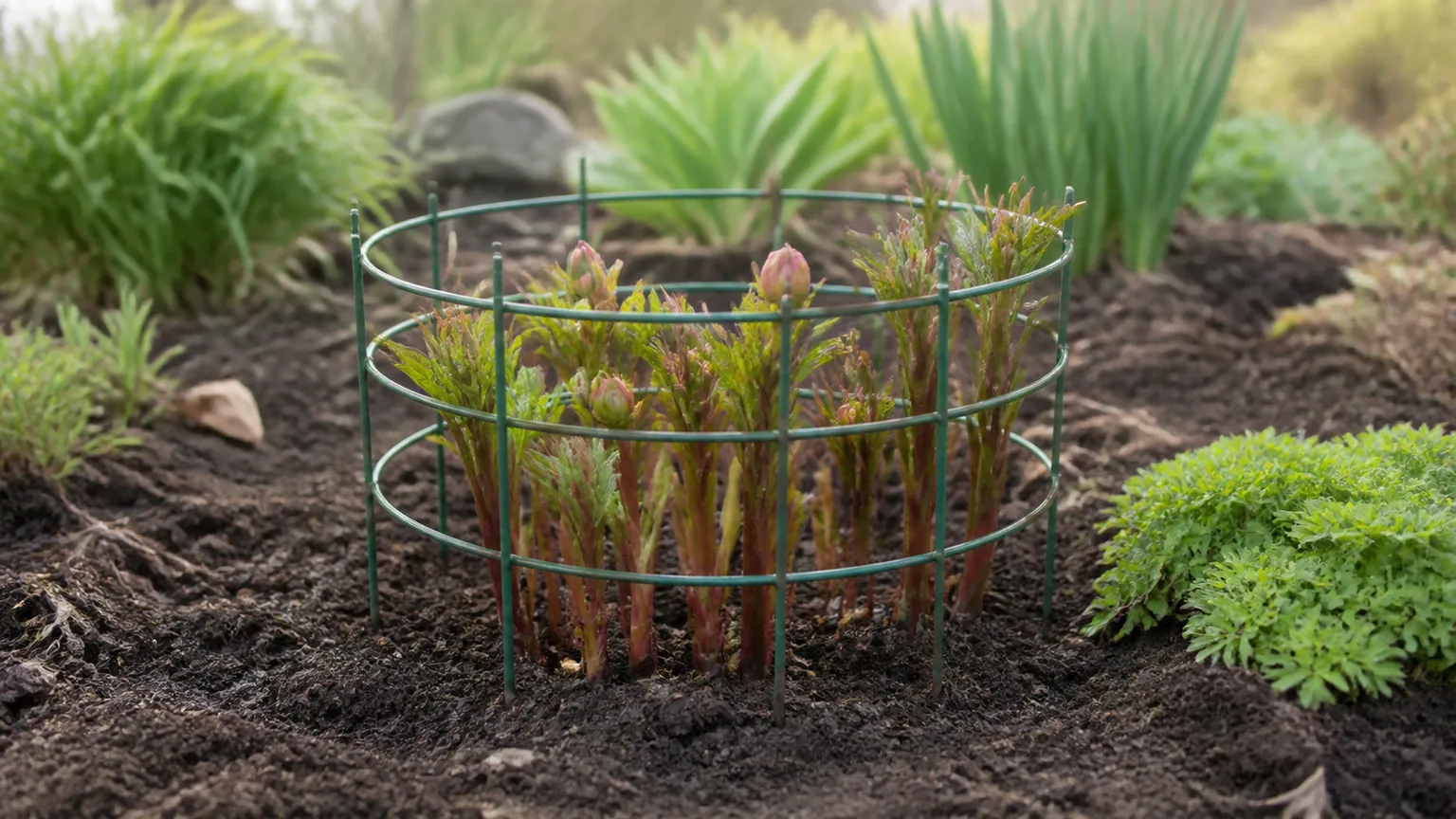
For an herbaceous peony, place the eyes roughly 1 to 2 inches below the soil surface; deeper planting is a common reason for healthy leaves with few flowers. In warmer areas, the crown may need to be closer to the one-inch end of that range, and winter mulch can insulate the soil enough to reduce chilling. Tree peonies are different: their grafted crowns are planted deeper so the graft can develop its own roots, following the nursery’s instructions.
Give the plant room to reach mature width and keep mulch away from the crown. Water consistently while new roots and spring foliage establish, but do not keep the bed saturated. Peonies are long-lived enough that careful placement pays off; moving one later because the color is wrong or the roots are crowded is harder than comparing the cultivar information before planting.
Install a grow-through ring or other broad support in early spring, when the stems are short. A single stake rarely supports a wide clump of rain-heavy flowers, and tying stems after they flop often leaves the plant bent around the support. Itoh and tree peonies generally need less staking than tall, full-double herbaceous types, but site exposure and flower weight still matter.
After flowering, remove spent blooms if you want a cleaner plant, but keep healthy foliage in place until it naturally declines. The leaves are still making energy for the crown and next year’s flower buds. For a complete seasonal routine, pair color selection with our guides to fertilizing peonies, keeping peonies from falling over, and choosing companion plants for peonies.
Color-selection mistakes to avoid
The most common mistake is buying a color without checking the cultivar name. A listing that says “yellow peony” or “purple peony” may hide whether the plant is herbaceous, Itoh, or tree type, and those categories differ in habit, planting depth, pruning, and hardiness.
Also avoid treating a catalog photograph as a promise of one fixed shade. Flowers change as they open, weather affects how color reads, and some cultivar names are used loosely by general retailers. Compare descriptions from a specialist nursery, confirm the flower form, look up the mature size, and decide whether you can support a double before placing the order.
Finally, do not use fertilizer to compensate for a bad site or rush a new plant into bloom. Excess nitrogen can produce lush leaves without solving deep planting, shade, drought, poor drainage, or immaturity. The best display comes from matching the cultivar to the bed, planting at the right time and depth, and letting the plant build strength after flowering.
Conclusion
The best peony color is the one that fits both your eye and your garden. Choose white, blush, rose, red, burgundy, coral, yellow, warm peach, or a bicolor flower for the mood you want, then narrow the list by flower form, plant type, hardiness, bloom timing, mature size, and stem strength.
If you are shopping in summer, reserve the cultivar and prepare the bed for fall planting. Give the crown sun, drainage, space, and the correct depth; add early support when the plant needs it; and keep the foliage healthy after bloom. That is how a beautiful color becomes a dependable flower-bed feature instead of a one-season impulse purchase.