How to Grow and Care for Papyrus Plants
Learn how to grow papyrus in ponds, boggy beds, or containers, with practical advice on water depth, light, pruning, propagation, and winter protection.
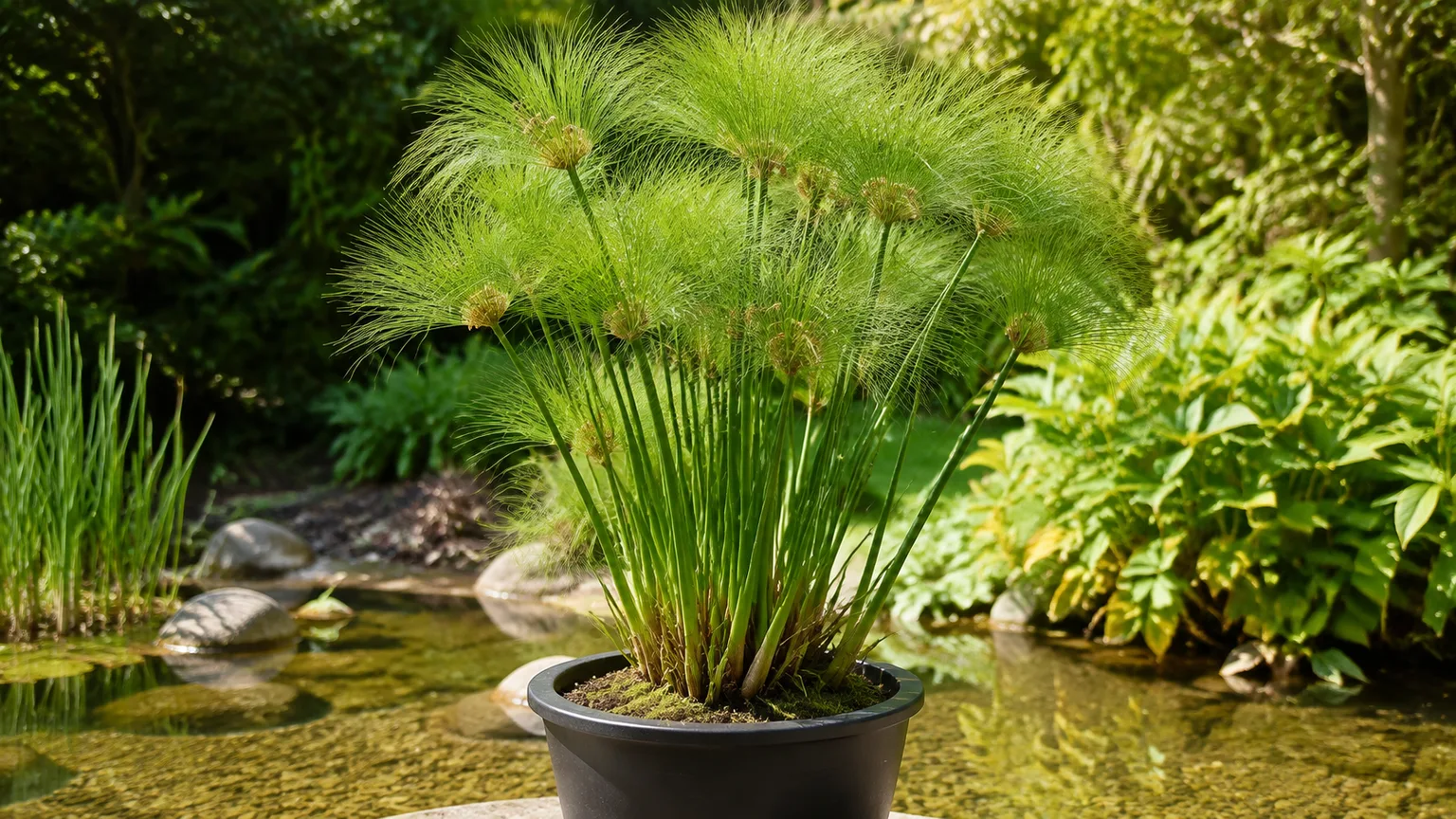
Papyrus is easy to grow when you give it the condition most plants resent: a root zone that stays wet. The real challenge is controlling the waterline, supporting a tall top-heavy clump, and deciding whether your climate allows outdoor perennial culture. Get those three decisions right and Cyperus papyrus becomes a striking architectural plant for a pond edge, boggy bed, rain garden, or large patio container.
The plant is a sedge, not a true grass or palm. Its deep-green, three-sided stems rise from creeping rhizomes and finish in airy, umbrella-like heads made of fine rays. In the garden, those heads provide movement and height; the small greenish-brown flowers are subtle, so papyrus is grown mainly for structure and texture.
This guide covers the whole growing cycle: choosing a manageable form, setting the water depth, planting without drowning the crown, feeding, pruning, dividing, starting seed, diagnosing brown stems, and protecting the plant from frost and unwanted spread.
Is Papyrus Right for Your Garden?
Papyrus is a good choice if you have a sunny or lightly shaded site where soil can remain consistently wet. It is especially useful at the margin of a pond or water feature, where a regular garden plant might rot but a marginal aquatic plant can keep growing. It also works in a container if you are willing to maintain a water reservoir rather than relying on occasional watering.
It is a poor choice for a dry border, an exposed windy corner, or a small indoor shelf when you mean the tall species. A mature clump can reach 5 to 8 feet in ornamental culture, and the stems can lean or snap when wind catches the umbrella heads. A dwarf selection or a different Cyperus species is usually a better fit for a small room or narrow balcony.
Papyrus is a tender perennial in much of North America. North Carolina State Extension lists it as winter-hardy in zones 9 to 10, while other horticultural references give broader zone ranges for selected cultivars and protected sites. Treat the plant as a perennial outdoors only when your local winter temperatures and the specific cultivar support that choice; otherwise, grow it as a summer annual or move a container indoors.
Identify the Plant Before You Plant It
The name “papyrus” is used loosely in nurseries for several Cyperus species. True Cyperus papyrus has tall, smooth, triangular culms and large, fine-textured heads that resemble a green firework or feather duster. The plant’s low leaves are not the main feature; the upright stems and terminal umbels create its silhouette.
North Carolina State Extension describes the species as a clump-forming aquatic herbaceous perennial from African swamps, streams, and shallow lakes. Its profile also records rapid growth, wet-soil tolerance, and a mature ornamental size of about 5 to 8 feet tall by 2 to 4 feet wide, which is a useful reality check before you plant one near a path or small pond.
Choose a Cultivar That Fits the Space
Use the label’s mature height and width, not the size of the nursery pot, to plan. A plant sold at 12 inches tall can fill a large container surprisingly quickly once warm weather and wet roots remove its main limits.
| Form | Approximate mature size | Best use |
|---|---|---|
| Species papyrus | 5–8 feet tall, 2–4 feet wide | Pond margins, large beds, dramatic back-of-border planting |
| ‘King Tut’ | About 4–6 feet tall | Large containers and medium-to-large water features |
| ‘Prince Tut’ | About 18–30 inches tall, 24–36 inches wide | A compact container or smaller pond edge |
| ‘Nanus’ | About 18–24 inches tall | Small containers and low accents |
| ‘Baby Tut’ | About 18–24 inches tall and wide | Compact displays; it is more tolerant of ordinary moist soil than true papyrus |
The Missouri Botanical Garden’s Plant Finder lists ‘King Tut’ at about 4 to 5 feet and recommends it for wet soil, water gardens, rain gardens, and containers. That is a useful distinction: a dwarf label does not mean drought tolerant, and a “papyrus” label does not guarantee that two plants will reach the same height.
Start With the Right Site
Choose a position where you can maintain moisture without flooding the crown. A pond margin, shallow tub, lined bog, or naturally wet depression is easier than a typical raised bed because the site does some of the watering work for you. If the ground dries between rains, plan an irrigation routine before planting rather than hoping the roots will find enough water.
Papyrus looks best when the tall stems rise behind shorter foliage. Place it toward the back of a bed, at the rear of a container composition, or where its open heads can be seen against a simple background. Leave enough space to walk around the plant and reach the pot for cleaning, division, or winter removal.
Light, Wind, and Heat
Aim for full sun to partial shade, adjusting for climate. In a temperate summer, six or more hours of direct light helps produce sturdy growth; in a very hot climate, light afternoon shade can reduce scorch and water stress without making the plant weak. The Missouri Botanical Garden lists full sun to part shade, with part shade a sensible option in intense heat.
Wind deserves as much attention as light. Papyrus has a high canopy on relatively narrow stems, so a gust can bend the clump, tip a lightweight pot, or drive dry air through the fine heads. A sheltered pond edge, heavy container, or low windbreak is more valuable than a few extra hours of sun in an exposed site.
Give Papyrus the Water It Actually Needs
Keep the root zone constantly moist during active growth. In a conventional bed, water whenever the upper soil begins to lose its wet, boggy character; in a container, do not wait for the mix to dry like you would for a succulent or many houseplants. In hot, windy weather, a potted plant may need a daily check and top-up.
Papyrus can tolerate shallow standing water, but “water-loving” does not mean “bury the crown.” North Carolina State Extension reports tolerance of standing water up to about 6 inches, while pond-growing guidance commonly places the pot in shallow water with the crown above the surface. The safest starting point is to submerge only the lower pot or root zone, then raise or lower the container after you see how the stems respond.
The crown is the junction where stems emerge from rhizomes. If the waterline stays over that growing point, new shoots can rot even while the surrounding roots are wet enough. Keep the stems and crown above water, and make the waterline visible enough that evaporation does not quietly change the planting depth.
Planting at a Pond Edge
Set papyrus in a heavy aquatic pot filled with moisture-retentive soil, then place the pot on a stable shelf, block, or ledge at the pond margin. The goal is a gradual waterline: the lower pot can sit in water, but the crown remains above it. Start shallow and increase the depth only if the plant is stable and growing strongly.
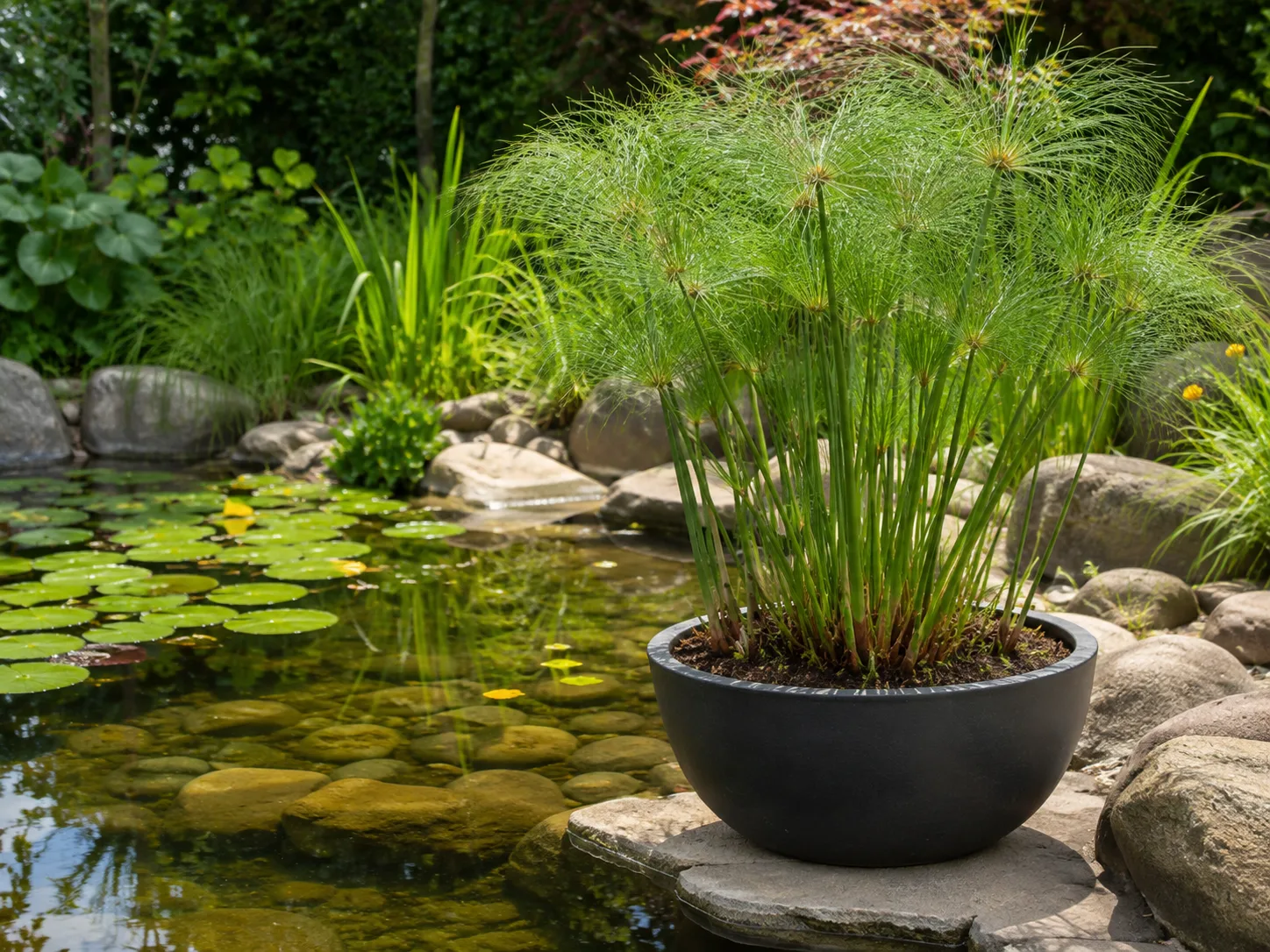
Do not drop a lightweight nursery pot onto a sloping pond bottom and assume it will stay upright. A tall clump becomes top-heavy, and a tipped pot can bury the crown or wash soil into the water. Use a broad, heavy container and brace it with flat stones outside the root zone; avoid packing stones tightly around the stems where they make maintenance difficult.
If fish or wildlife share the pond, use a clean, plant-appropriate medium and avoid letting loose potting mix spill into the water. Remove dead flower heads before they shed freely when you are trying to reduce volunteer seedlings around a naturalized water feature.
Building a Container Water Reservoir
Container culture gives you more control over winter protection and spread. Choose a wide, heavy pot with enough volume for a vigorous rhizome clump; depending on the vessel, a container without drainage holes can hold moisture more consistently, while a pot with holes can sit inside a separate watertight tub or saucer.
Fill the pot with rich loam-based or general-purpose potting mix that holds water without becoming a loose slurry. Water it thoroughly at planting, then keep the pot in a shallow reservoir during warm growth. The University of Wisconsin–Madison Extension describes growing papyrus in large containers and using a deep saucer with about 1 to 2 inches of water for winter maintenance; the exact depth is less important than keeping the mix from drying while the crown stays above the water.
Check the setup after heavy rain, watering, and windy days. A container that is sitting in water may still be dry at the surface if the root ball has shrunk away from the pot wall, and a container that is technically wet may be too unstable for the plant’s height. Lift the pot occasionally, clear algae or debris from the reservoir, and reset it on a level base.
Choose Soil and a Stable Container
Papyrus is adaptable about texture but demanding about moisture. In the ground, fertile loam or clay that stays wet is suitable; in a container, use a mix that retains water and contains organic matter rather than a fast-draining cactus or succulent blend. The species tolerates a broad pH range, so drainage and consistent moisture matter more than chasing a precise number.
Avoid adding coarse drainage layers to the bottom of a watertight pot. They do not create a magic wet-dry boundary; they reduce the volume available for roots and can make the waterline harder to judge. Instead, choose a container with the right depth, use a cohesive mix, and manage excess water with the reservoir or pond shelf.
Container size also affects stability. A narrow pot can support a young plant but become unsafe when the stems double in height. Use a wide base, keep the plant away from a ledge where it could fall, and place the pot on a surface that can safely carry wet soil, standing water, and the weight of stones used for bracing.
Plant Papyrus Without Burying the Crown
Plant in late spring after frost risk has passed and the soil or water has warmed. This timing gives the rhizomes a long season to establish before the plant faces cold or indoor transition. In a warm, frost-free climate, planting can be more flexible, but a cool, wet start still slows growth.
To plant a nursery specimen, moisten the root ball first, loosen only circling roots that form a tight outer mat, and set the plant at the same depth it was growing. Backfill firmly enough to remove large air pockets, water thoroughly, and place the pot at the intended waterline. Do not bury the crown to make a tall plant “more secure”; use a heavier container or a stable shelf instead.
Give a newly planted clump a week or two to settle before pushing it into deeper water or a windy location. New culms should emerge from the base; if the existing stems lean, correct the support and light rather than repeatedly adding soil over the rhizomes.
Feed for Growth Without Weak Stems
Papyrus grows rapidly when it has warmth, light, and water, and fertile soil may provide all the nutrition it needs for a season. If growth is pale, slow, or unusually sparse despite good light and moisture, use a balanced liquid fertilizer at the label’s container rate during active growth. Apply it to wet soil, never to a bone-dry root ball, and avoid feeding a plant that is cold, recently divided, or declining from root damage.
The University of Wisconsin–Madison Extension notes that papyrus can be fertilized heavily, while practical guidance from GardenBeast recommends regular diluted feeding in spring and summer. The useful middle ground is to feed consistently but observe the stems: lush, weak, leaning growth can signal too much nitrogen, insufficient light, or a container that is too small to support the canopy.
Stop routine feeding when growth slows in fall. Continuing a strong fertilizer program while the plant is moving indoors can encourage tender growth at the exact time when light and temperature are becoming less favorable.
Use a Seasonal Care Routine
In spring, check the rhizome clump for dead centers, remove old debris, divide if the plant is crowded, and return overwintered containers outdoors gradually. Increase water as light and temperature rise. Do not put a plant that spent months in a dim room directly into intense midday sun; harden it off over several days to reduce scorch.
Summer is the main growth season. Check water levels daily during heat waves, inspect the pot after storms, and remove browned culms at the base. If the plant is producing thin, floppy stems, first check whether it is getting enough light and whether the pot is tipping or root-bound before adding more fertilizer.
In fall, make the climate decision early. A cold night can damage the upper growth before you have time to move a large wet container. Clean soil and debris from the outside of the pot, inspect for insects before bringing it indoors, and cut back the plant if the remaining stems make transport difficult.
Overwinter Papyrus Indoors in Cold Climates
Move container-grown papyrus indoors before temperatures approach 40°F, especially when frost is forecast or the pot will be exposed to wind. The plant may survive a cooler bright location, but it is not a frost-hardy perennial in most climates. The conservative goal is a bright, frost-free room, sunroom, or greenhouse where the rhizomes cannot freeze.
Expect the winter plant to look less impressive. Shorter days and lower light reduce growth, old culms may brown, and the plant may become nearly dormant. That does not automatically mean the rhizomes are dead. Keep the mix moist and reduce feeding; do not continue a summer watering-and-fertilizer routine in a cold, dark room.
Place the container near the brightest available window, but keep it away from a freezing pane, heater blast, or drafty door. The Missouri Botanical Garden recommends a bright, sunny window and a preferably cool 60–65°F area for overwintering, while Wisconsin Extension describes a deep saucer with standing water to keep the plant from drying. For growers in cool maritime climates, Leslie Tuttle Gardening likewise treats papyrus as a frost-sensitive, container-grown plant that needs bright, frost-free shelter.
Use the saucer as a moisture buffer, not a reason to submerge the crown. Keep a small amount of water below the pot’s growing point, refresh stagnant water, and check the root ball if the surface stays wet while the plant declines. In a very dry heated room, inspect for spider mites or other indoor pests, but do not solve dry air by keeping the entire plant colder and wetter.
If you have no bright, frost-free space, treat papyrus as an annual and replace it next season. That is often more successful than forcing a tall plant into a dim room where it slowly loses foliage and becomes a pest or rot problem.
Prune and Rejuvenate Papyrus
Remove a dead or brown culm at its base with clean, sharp pruners or a knife. Cutting individual stems close to the rhizome keeps the clump tidy without creating a forest of short stubs. Brown tips on otherwise healthy stems can be trimmed for appearance, but a fully brown culm will not turn green again.
For an outdoor perennial, cut the entire clump back near the rhizome in late fall or early spring, depending on whether winter interest or easier cleanup matters in your climate. For an indoor plant, cut back before moving it if the foliage is too large, but leave enough healthy growth to help you judge whether the rhizomes are still active.
Papyrus can develop a hollow or unattractive center as older rhizomes crowd together. Rejuvenate it by dividing the clump in spring rather than repeatedly shearing the outside. After pruning or division, keep the root zone warm and wet; new culms need time to replace the growth you removed.
Propagate by Division
Division is the most dependable way to make more papyrus and the best way to reduce a congested clump. Do it in spring as new growth begins, when warm conditions will help each section rebuild roots and stems.
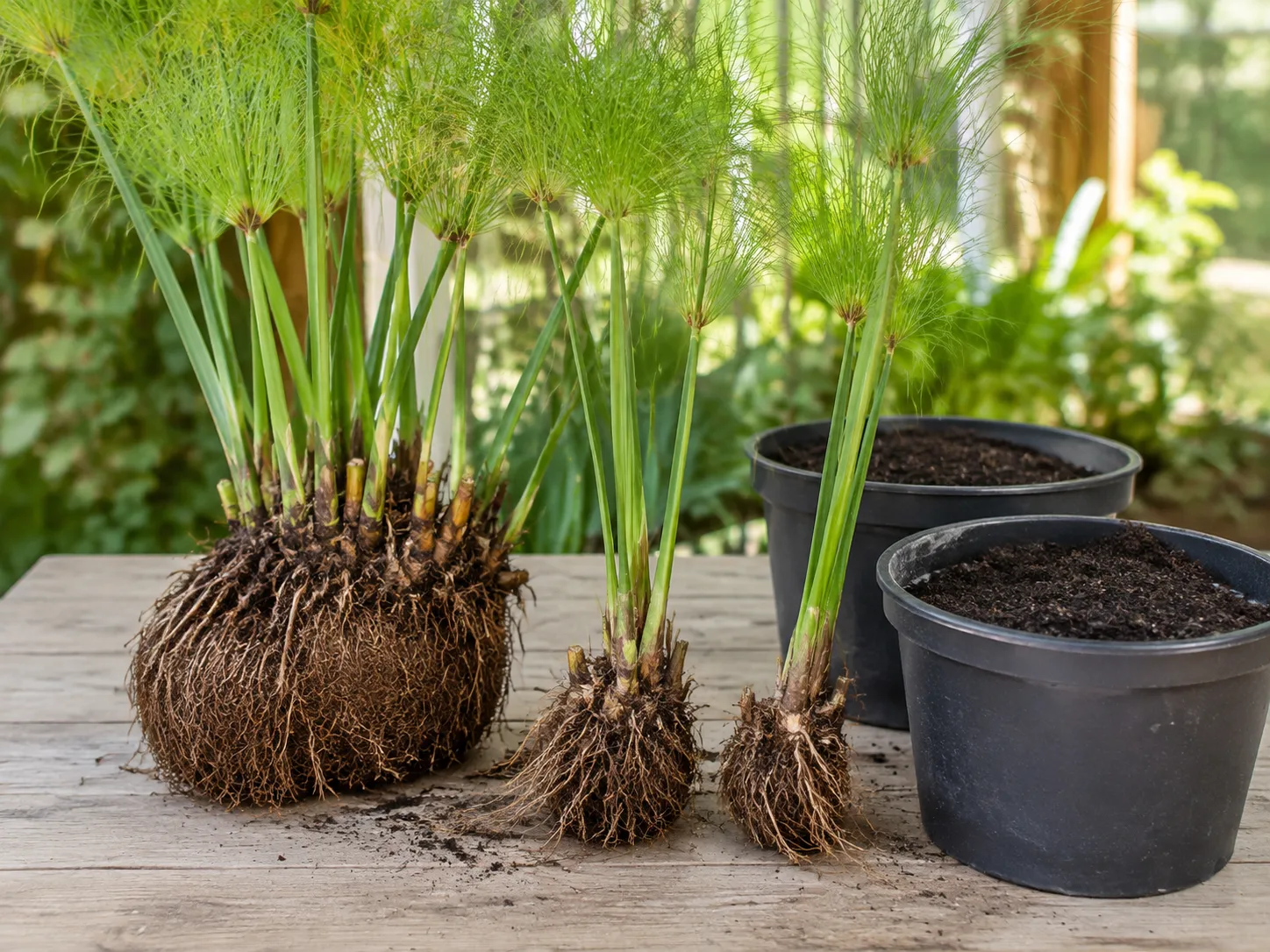
- Lift the plant from its container or dig around the entire clump. Work carefully because the rhizomes are thick and the roots can be tightly woven through wet soil.
- Shake or wash away enough soil to see the rhizomes and the points where stems emerge. Remove mushy, hollow, or badly damaged sections, keeping firm rhizomes with active buds or healthy culms.
- Pull the clump apart by hand if it separates naturally, or use a clean sharp blade when the rhizomes are woody. Make each division large enough to carry several stems and a substantial piece of healthy rhizome; a tiny sliver may dry out or establish slowly.
- Pot each division at the original depth in moist, fertile mix. Press the soil around the roots, water thoroughly, and set the pots in bright light with a shallow reservoir.
- Keep the new plants protected from harsh wind while they settle. Resume regular feeding only after you see fresh growth, not immediately after the roots have been disturbed.
The right division is not the one with the most leaves; it is the one with a healthy rhizome and a viable growing point. If the center of the parent plant is dead but the outer sections are firm, discard the dead core and replant the vigorous perimeter pieces.
Grow Papyrus From Seed or Culm Tops
Seed is possible but slower and less predictable than division. The tiny seeds need light, warmth, and constant surface moisture, so press them onto damp mix instead of burying them. Start them indoors roughly 10 to 12 weeks before the average last frost, or sow outdoors only when temperatures are reliably warm.
Use a clean tray or small pot with a fine, moisture-retentive medium. Keep the surface damp without washing the seed into a corner, provide strong light, and aim for about 70–75°F; germination can take 15 to 30 days or longer. Once seedlings have several strong leaves, pot them individually, grow them on in warmth, and harden them off before planting outside.
Seed-grown plants may not match a named cultivar exactly, and they are a poor choice when you need a uniform ‘King Tut’ or ‘Prince Tut’. A GardenBeast growing guide also notes that seed can take 30 days or more to germinate, which is another reason division is the better route when you want a dependable new clump. Remove spent heads before mature seed drops if spread is a concern.
Some growers root the leafy top of a culm in water, but this method is more variable than division and is easily confused with other umbrella-shaped Cyperus species. If you try it, use a healthy non-flowering top, keep the cut end or base in clean water, provide warmth and light, and pot it only after roots are visible. Label the plant and do not release rooted pieces into a natural waterway.
Troubleshoot Brown, Yellow, or Leaning Stems
Brown foliage is a symptom, not a diagnosis. Start by touching the soil and checking the waterline, then inspect stems at the base and look for recent cold, wind, transplanting, or indoor relocation. The fastest rescue is different for a dry root ball than for a crown that has been submerged or a clump that froze.
| What you see | Most likely first check | First response |
|---|---|---|
| Crispy brown tips with dry soil | Underwatering, wind, or intense heat | Rewet the root zone thoroughly, refill the reservoir, and shelter the pot |
| Widespread yellowing with wet, sour soil | Poor oxygen around damaged roots | Remove from stagnant water, inspect drainage and roots, and repot if rot is present |
| Brown stems after a cold night | Frost or chilling injury | Move the container to warmth; wait for new growth before discarding rhizomes |
| Thin, floppy stems | Weak light, wind, crowding, or excessive nitrogen | Improve light and support, then divide or reduce feeding if needed |
| Brown old culms among green new shoots | Normal aging or seasonal dieback | Cut old stems at the base and keep the active crown moist |
If the soil is dry all the way through, water slowly in two passes so the root ball absorbs it instead of sending water down a gap at the pot wall. If the soil is wet but the plant looks thirsty, do not add more water; inspect the roots, confirm that the crown is above the waterline, and look for a sour smell or soft tissue.
Rust can cause spots or discoloration, particularly where foliage stays crowded and airflow is poor. Remove affected material, clean up fallen debris, space containers so air can move, and identify the product and label requirements before using any fungicide. Do not spray a random household remedy into a pond where it could affect aquatic life.
Mealybugs or spider mites may appear on stressed indoor plants, especially in dry air. Isolate the pot, rinse or wipe accessible pests, improve growing conditions, and use only a product labeled for the plant and pest if further treatment is needed.
Manage Spread and Protect Natural Waterways
Papyrus spreads through creeping rhizomes and can also set seed. North Carolina State Extension notes that it has escaped cultivation in several warm U.S. states and can clog waterways. That risk is not a reason to avoid every container or pond planting, but it is a reason to choose containment deliberately.
Use a pot in a natural pond when local guidance allows it, remove volunteer seedlings, divide before rhizomes escape the container, and dispose of unwanted plant material in the trash or a secure compost system. Never dump rhizomes, soil, or water from a papyrus container into a creek, wetland, drainage ditch, or other natural water body.
If your region lists Cyperus papyrus as invasive or restricts aquatic plant sales, follow local extension or environmental guidance and choose a native wetland plant instead. A contained ornamental is manageable; an escaped wetland plant is a community problem that is far harder to reverse.
Conclusion
Papyrus succeeds when you treat it as a marginal aquatic sedge, not as a thirsty houseplant that can be rescued with occasional watering. Give it bright light, fertile soil, constant moisture, a crown above the waterline, and a heavy container or sheltered pond edge. Then match the cultivar to the space, cut old culms at the base, divide crowded rhizomes in spring, and move containers indoors before frost.
The plant’s biggest strengths—rapid growth and tolerance of wet feet—also create its biggest management tasks. Keep the water controlled, the pot stable, and the spread contained, and papyrus can provide a dramatic tropical silhouette for years in the climate and setting where it is genuinely suited.