7 Perennials to Divide in October: Step-by-Step
Divide the right perennials in October for stronger roots and more plants next year. Get frost-based timing, species-specific steps, and aftercare.
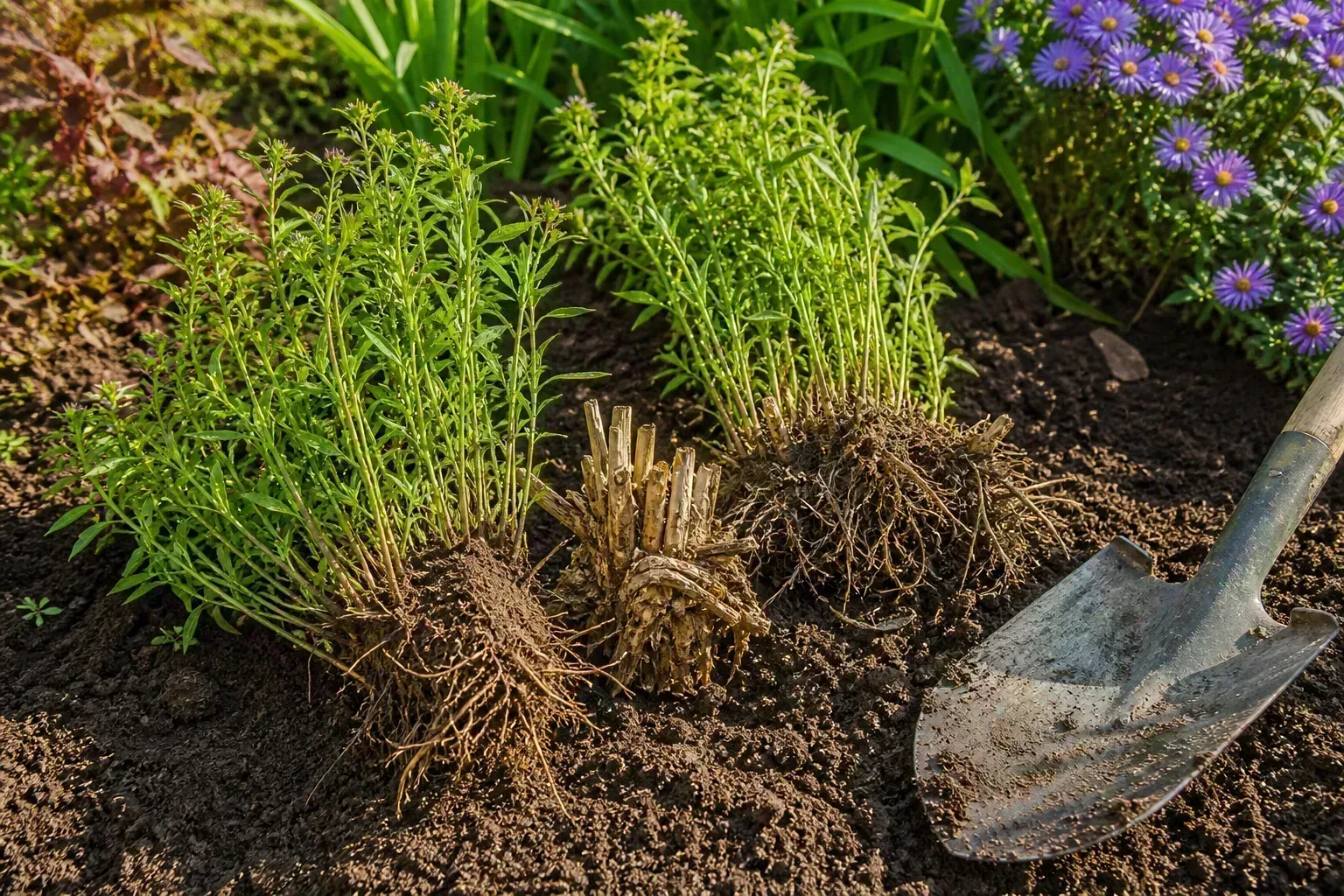
October can be an excellent month for perennial division, but the safe window is not the same as the calendar date. The useful rule is to work backward from your first hard frost or reliable ground freeze: most new divisions need about four to six weeks to make roots before the soil locks up.
That makes early October a sensible target in many temperate gardens, while late October may be perfect in a mild coastal climate and too late in a cold inland one. Clemson Cooperative Extension’s dividing-perennials guide uses the same four-to-six-week establishment window, and the Old Farmer’s Almanac’s fall garden guidance likewise ties fall division to the time before the ground freezes.
The seven plants below are good candidates for an October review, not seven plants you must uproot every year. Peonies and bleeding hearts often prefer to remain undisturbed, bearded iris is usually better divided soon after flowering, and dahlias are a special case because you are dividing storage tubers rather than a winter-hardy crown.
October Is a Window, Not a Rule
Fall division works because cool air reduces the water loss from cut or disturbed roots while the soil may still hold enough warmth for new root growth. Once the plant is out of bloom, it can redirect energy into roots and dormant buds instead of trying to support flowers and seed.
The broad seasonal pattern is simple: spring- and summer-flowering perennials are often divided in fall, while plants that bloom in late summer or fall are generally safer to divide in spring. The RHS guide to dividing perennials adds an important qualification: summer-flowering plants can be divided in autumn when the soil is workable, but a wet autumn or a tender plant may make spring the better choice. Many spring-flowering plants, including irises, produce new roots most reliably in summer after bloom.
Soil condition matters as much as the month. Do not cut into a saturated bed that smears like modeling clay, or into ground so dry that the root ball breaks into dust. Choose a cool, cloudy day after the soil has been moist but not waterlogged, and postpone the job if a hard freeze is close enough to leave less than a month for establishment.
The 10-Minute Pre-Division Test
Start with the plant, not the shovel. A perennial is a candidate when it is healthy but too crowded, has a thinning or dead center, produces noticeably smaller or fewer flowers, leans because of weak outer growth, or has expanded beyond its allotted space. These are useful signals, but a plant that is flowering strongly and holding its shape does not need division simply because it has been in the ground for three years.
Reject plants that are already diseased, severely drought-stressed, or collapsing from poor drainage. Division makes several smaller plants from one parent; it does not turn a failing root system into healthy stock. Gardening Know How’s practical fall-division guidance similarly recommends starting with vigorous roots and warns that some plants, particularly peonies, are difficult to move.
Next, count backward from the weather. If your first hard freeze normally arrives around November 10, an October 1 division gives the plants a more comfortable runway than an October 25 division. If you garden where the soil stays workable well into winter, you may have more flexibility; if the ground freezes early, “October” should mean the first half of the month or even late September.
Tools and Bed Prep Before You Lift
Prepare the new planting space before disturbing the parent. Break up compacted soil, remove perennial weeds, and work a modest amount of finished compost into the root zone if the bed is low in organic matter. Do not make a rich, loose hole surrounded by hard soil; the new roots should be able to move into the surrounding bed rather than circling in a pocket.
Gather a sharp spade or digging fork, a clean knife or pruner for crowns and rhizomes, a bucket or tarp, water, labels, and loose mulch. A sharp edge makes clean cuts through a crown; a dull shovel crushes tissue and turns a manageable division into a ragged tear. If a plant shows signs of disease, clean the blade between clumps and discard visibly rotten pieces rather than distributing them to new beds.
Water the parent deeply a day or two before the job if the soil is dry. Have the planting holes ready, and keep lifted roots shaded and moist. The goal is a short, organized sequence: lift, inspect, divide, replant, water. Garden Design’s step-by-step perennial-division guide uses the same practical priorities: cool conditions, hydrated roots, immediate replanting, and restraint with watering in poorly drained soil.
The Seven Perennials Worth Considering
These plants do not all respond to division in the same way. Use the specific instructions below rather than applying a “cut the clump in half” method to every root system.
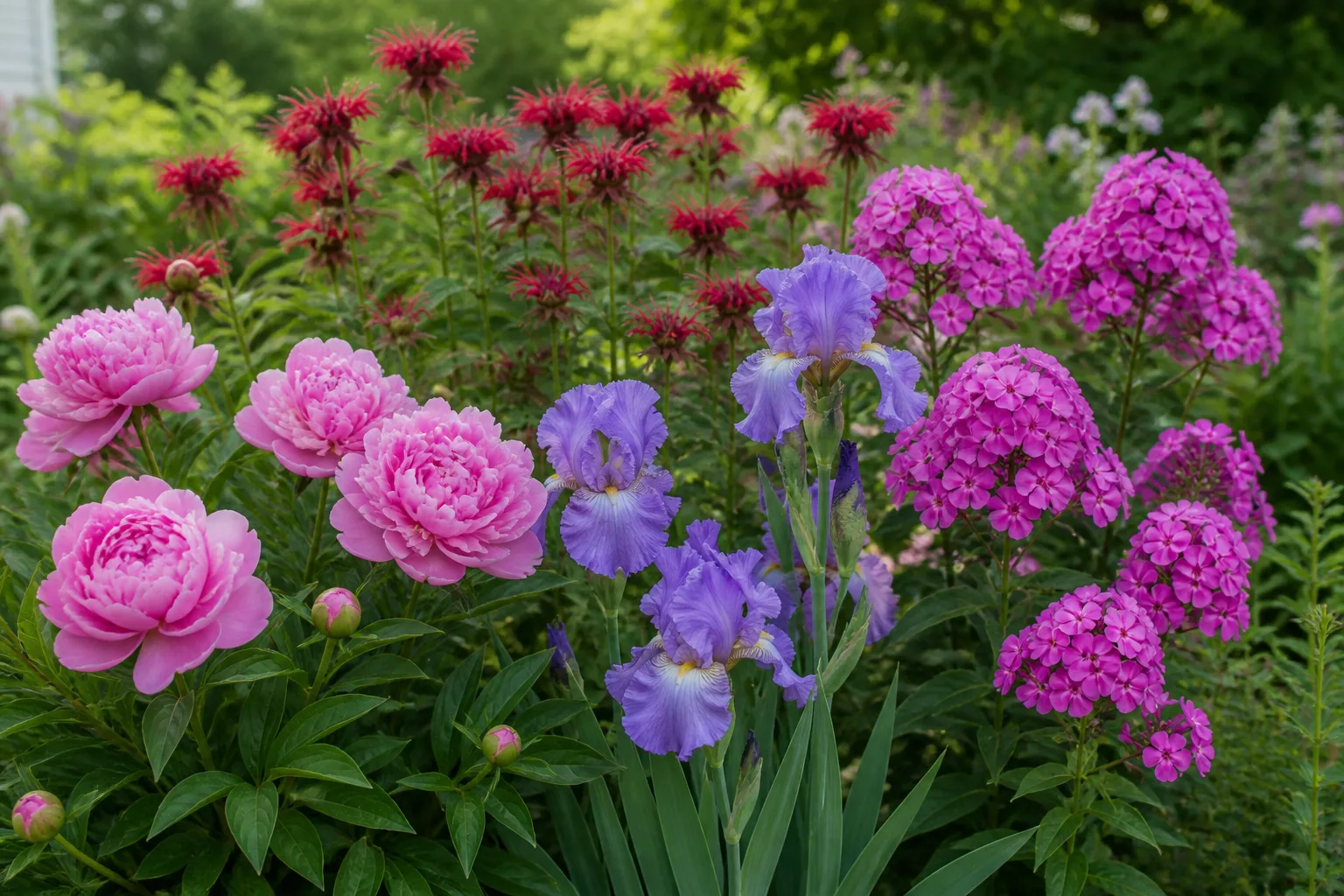
1. Peonies: Divide Only When You Have a Reason
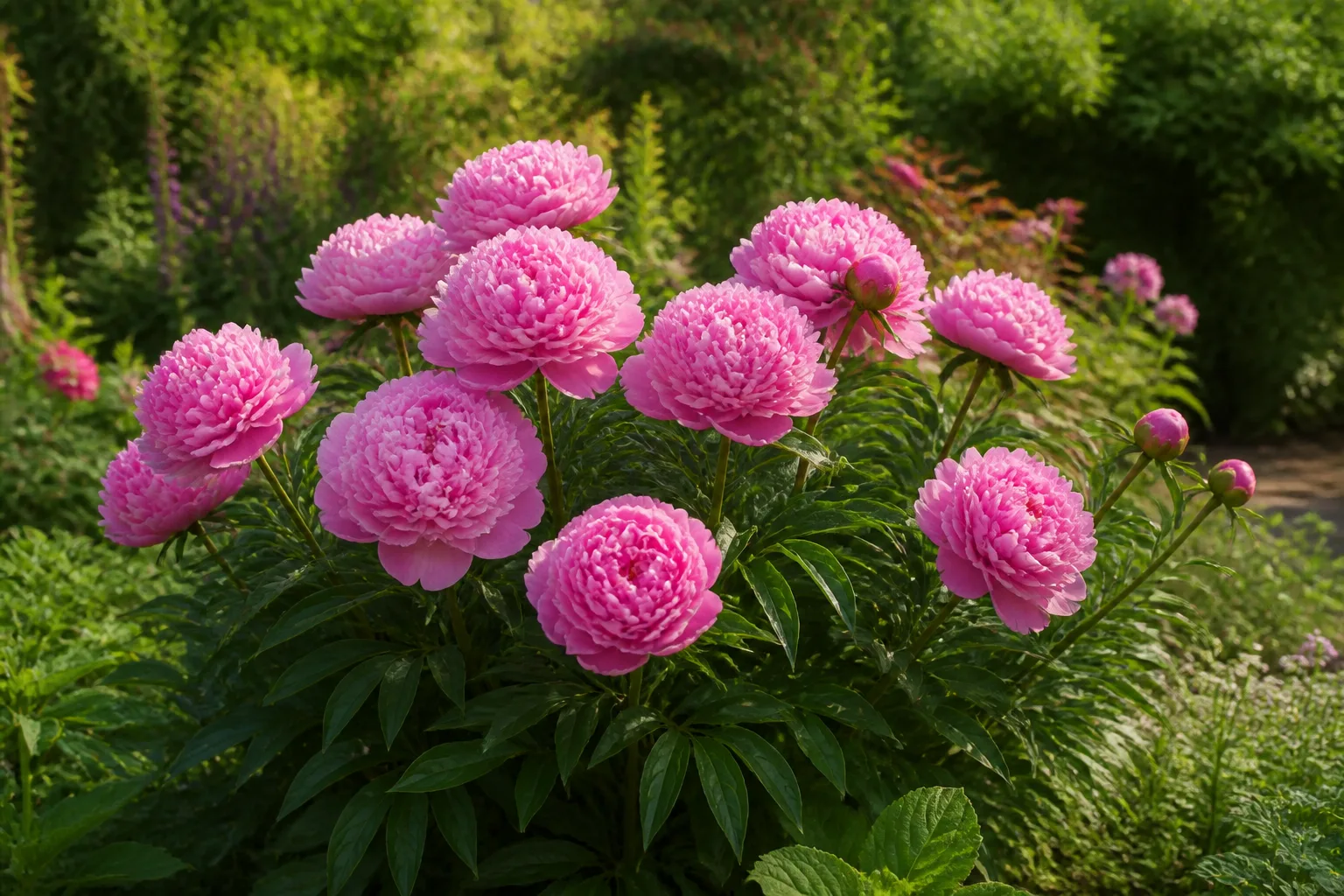
Herbaceous peonies are among the worst candidates for routine division because they can remain productive for decades without being moved. Divide one in early fall only when you need more plants, the clump is genuinely overcrowded, or a mature plant must be relocated. If it is healthy and blooming well, leave it in place; division can delay flowering for several seasons.
Wait until the foliage has yellowed or been cut back after dormancy begins. Dig much farther from the crown than seems necessary, lift the whole root system, and wash away enough soil to see the pink or white eyes on the crown. Cut the root into sections with a clean, sharp knife, keeping three to five well-developed eyes and several thick storage roots on each division.
Replant immediately. The eyes of a herbaceous peony should sit no more than about 1 inch below the soil surface; deeper planting is a common reason a healthy division makes leaves but no flowers. Clemson’s extension table also places peony division in September or October and notes that divisions may take up to three years to bloom, so do not judge the plant as a failure after one quiet spring.
2. Bleeding Heart: Wait for the Foliage to Retreat
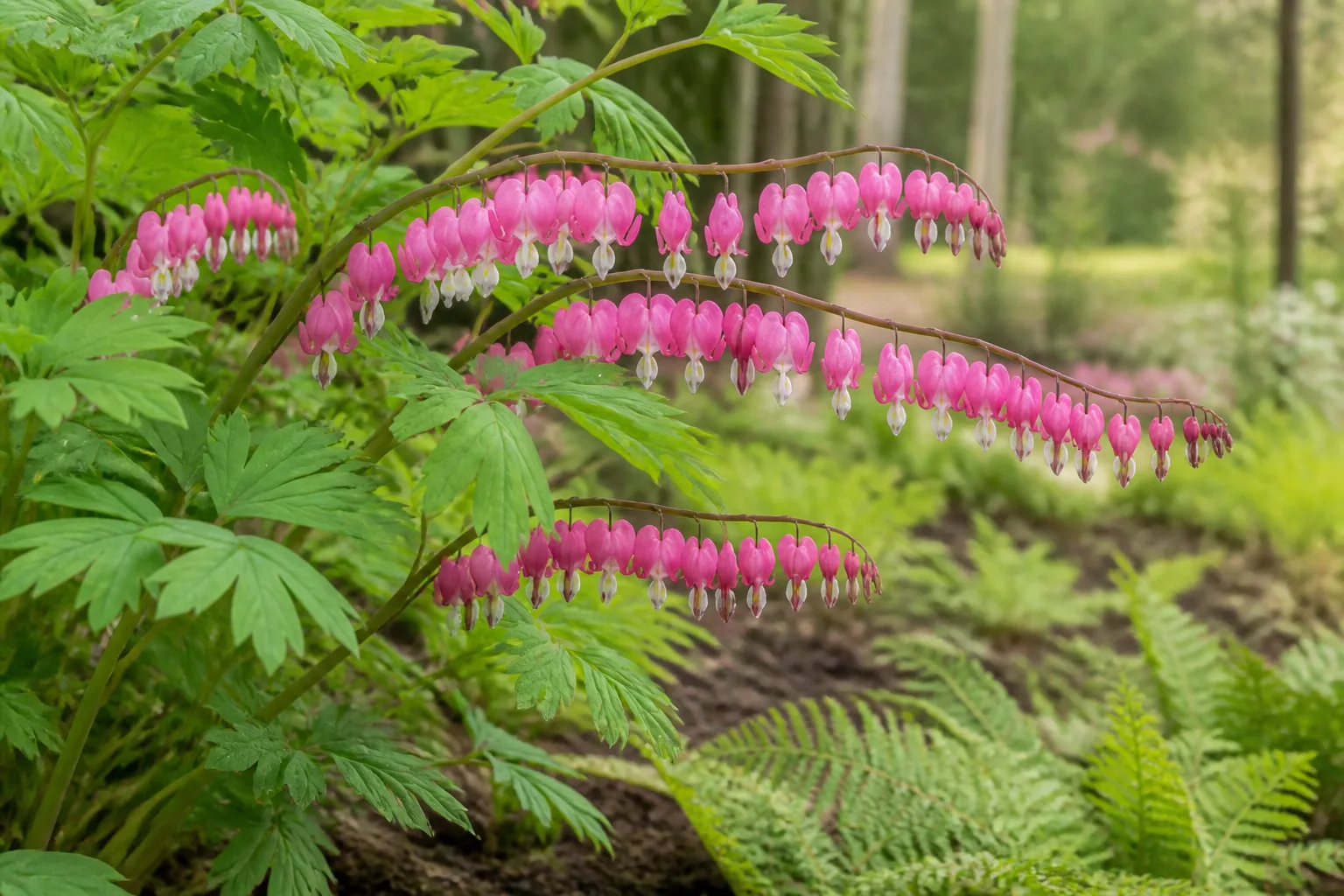
Old-fashioned bleeding heart, now commonly called Lamprocapnos spectabilis, has brittle, fleshy roots and often goes dormant soon after its spring display. That makes autumn division possible after the foliage has naturally yellowed and retreated, but it does not make division necessary. Many established plants are better left alone, and small self-sown seedlings near the parent can be easier to move than an old crown.
If you do divide, lift the clump carefully and use a sharp spade or knife rather than wrenching the roots apart. Make modest sections with at least one healthy growth bud and a connected portion of root; oversized pieces are not automatically better. Keep the sections from drying, set them at the original depth, and water them immediately.
Bleeding heart may look absent above ground after the work, so mark the location. The most likely mistake is digging again because the bed appears empty, or keeping the new division too wet in a heavy soil after its foliage has gone dormant.
3. Bearded Irises: Use the Earlier Fall Window
Bearded iris is a rhizome, not an ordinary underground root clump. Its best division window is usually about a month after flowering through late summer, when the rhizome can make new roots before winter. October is still workable in a mild climate or early in the month if the soil is warm, well drained, and you have at least four weeks before hard frost; it is a poor choice when winter is already closing in.
Lift the clump, shake or rinse off loose soil, and inspect every rhizome. Keep a firm section with a healthy bud and a fan of leaves, trim the fan back by about half, and discard soft, badly scarred, or very old sections. A few inches of rhizome is enough for a new plant. Let freshly cut surfaces dry briefly if they are wet, then replant with the rhizome at or just above the soil surface and the roots tucked underneath.
Do not bury the rhizome like a peony. Deep planting traps moisture around the crown and can prevent flowering. Also check the label before you dig: Siberian and Japanese irises have different structures and do not follow every bearded-iris instruction.
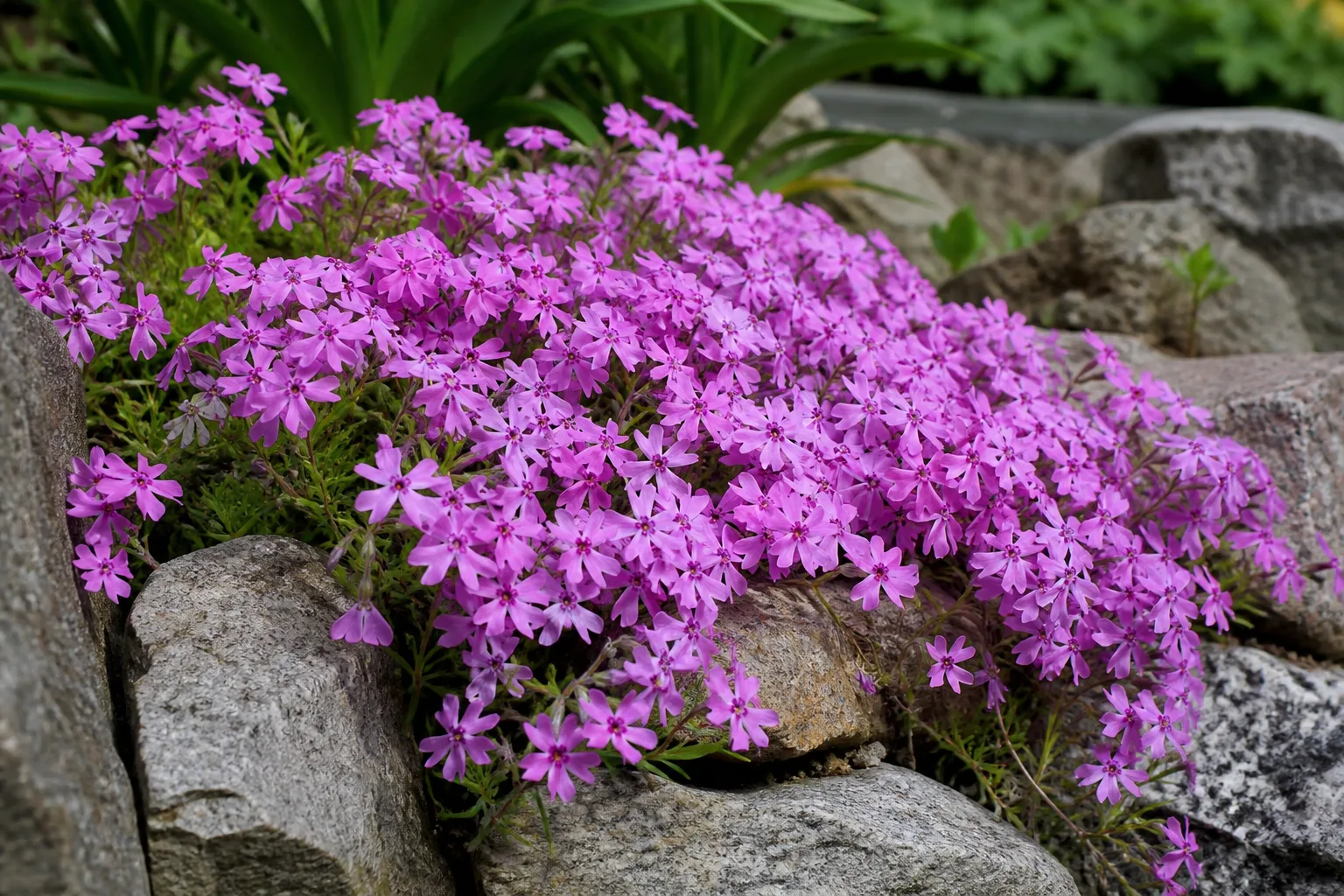
4. Garden Phlox: Rejuvenate a Crowded Clump
Garden phlox (Phlox paniculata) is a strong fall-division candidate after flowering has finished, especially when a clump has become congested, developed weak interior growth, or shows a gradual decline in bloom. Early fall is safer than late fall because the new crowns need time to root before cold weather.
Cut back the spent stems, dig around the whole clump, and lift it with a fork or sharp spade. Separate the root mass into sections with two or three healthy shoots and a vigorous root portion. If the center is woody, dead, or foul-smelling, do not keep it simply because it is large; the younger outer growth is usually the better planting material.
Set divisions at the same depth as the parent, space them so mature foliage will have airflow, and water them in. A light layer of loose mulch can reduce winter heaving, but avoid packing wet material against the crown. The goal is moisture at the roots, not a constantly soggy collar.
5. Astilbe: Give Moisture-Loving Crowns Room
Astilbe forms a clump of crowns and fine roots and benefits from division when older plants become crowded or flowering weakens. Divide after the season’s display has finished and the foliage is beginning to decline, provided the soil is still workable and the frost runway is long enough.
Cut back the top growth enough to see the crown, then lift the plant with a fork. Use a sharp spade or knife to separate the dense crown into sections, keeping at least one strong bud or developing eye with each piece and enough roots to support it. Larger sections establish faster, while tiny slivers may survive but take longer to make a full plant.
Astilbe needs steady moisture during establishment, especially in a naturally dry bed, but its roots still need oxygen. Water deeply after planting, keep the root zone evenly moist while the weather remains open, and correct drainage rather than compensating for standing water with more frequent irrigation.
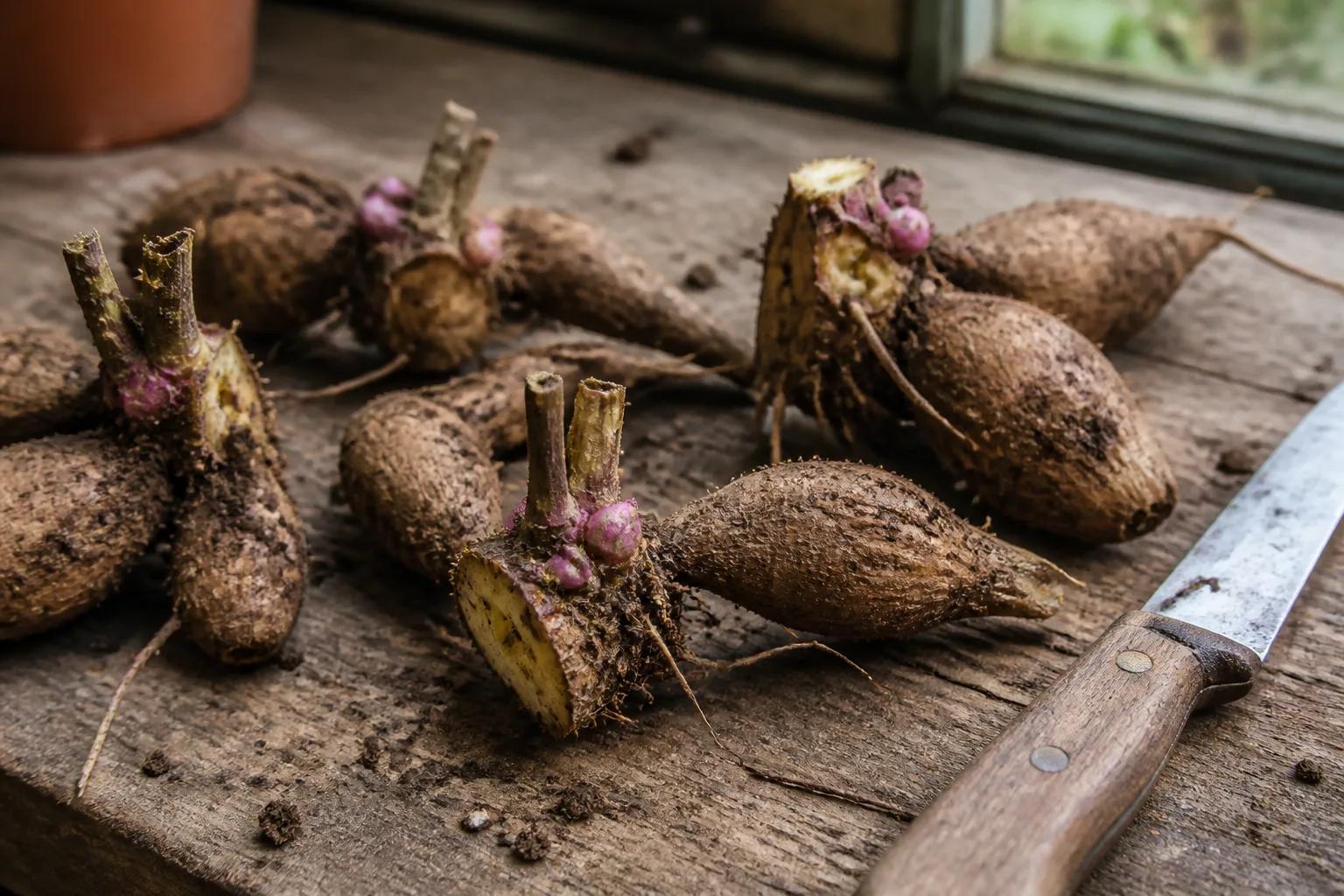
6. Dahlias: Divide the Tubers When You Lift Them
Dahlias are a special October job in gardens where the ground freezes. They are not reliably winter-hardy in cold regions, so fall digging is usually about lifting the tuber clump for storage. Division can happen at that point or in spring before planting, when the eyes may be easier to see.
Wait until the foliage has been blackened by frost or the plant has finished for the season, then cut back the stems and lift the clump carefully. Wash away soil and let the tubers dry enough to handle cleanly. Each division must include a piece of the crown, an intact neck, and a viable eye; a plump tuber separated from the crown is not a complete plant.
Use a sharp, clean knife and make deliberate cuts rather than snapping the clump. Cure the divisions for a day or two in a protected, airy place, then store them in a cool, dark, frost-free location in a barely moist medium such as vermiculite or coconut coir. The medium should prevent shriveling without staying wet. Inspect stored tubers occasionally and discard anything soft or rotting before it spreads.
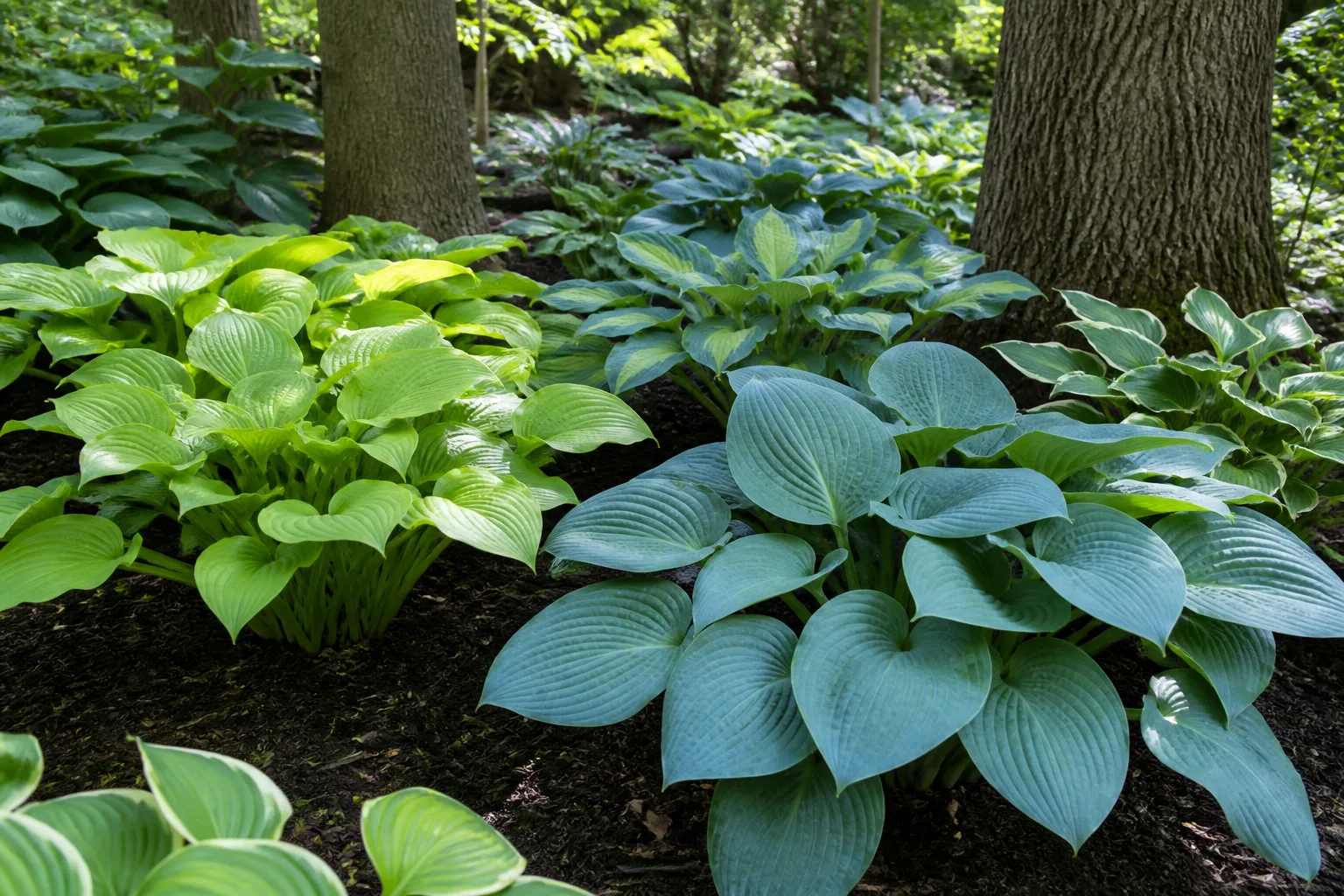
7. Hostas: Split Congested Crowns, Not Every Hosta
Hostas can be divided in spring or fall, and October is convenient when the leaves are still visible enough to show the size and pattern of the clump. Divide when the plant is swallowing a path, the center is thinning, or you want to increase stock. A hosta that is healthy, well proportioned, and in the right space does not need to be split on a schedule.
Lift the clump with a fork or spade, working outward from the crown to preserve roots. Small clumps with looser roots may pull apart by hand; large, tight crowns can be cut with a sharp spade. Keep one to three eyes for a small division, or five or six shoots when you want a substantial plant sooner. Replant with the shoots above the soil surface and the crown at its original level.
The RHS advice on perennial division specifically includes late-autumn hosta division and recommends either teasing apart loose roots or cutting tough fibrous clumps. Water thoroughly after replanting, then use loose mulch if your soil is prone to frost heaving.
A Universal Division Method That Protects Roots
Once you match the plant to the right season, the basic sequence is consistent. Work on a cool day, water ahead if needed, and prepare the destination before lifting. Cut back only enough foliage to handle the plant; do not remove healthy leaves that are still feeding roots unless the species-specific instructions call for it.
Lift from several sides rather than stabbing straight through the crown. Start a few inches beyond the outer stems and work underneath until the clump can be levered out. A digging fork is useful for loosening soil with less slicing, while a sharp spade is better for deliberately cutting a dense crown. Keep the root ball shaded on a tarp and never leave exposed roots in sun or wind.
Remove loose soil until the structure is visible, but do not scrub every root bare if the plant is fragile. Pull apart natural seams first. Then use the clean knife or spade to make the fewest cuts that produce strong, useful divisions. Trim broken roots cleanly, remove dead centers and rotten tissue, and keep the live outer sections that have buds or shoots.
Separate the Plant by Root Type
The root structure tells you where to cut and what to save:
- Spreading roots: Plants such as phlox often have many roots arising from multiple points. Pull apart or cut the clump into sections with several shoots and discard weak, woody centers.
- Clumping crowns: Hostas and astilbes grow from a central crown with multiple buds. Cut between buds and keep a connected root mass with each piece.
- Rhizomes: Bearded iris grows from horizontal stems at the soil surface. Keep a firm rhizome section with a bud and a leaf fan, and replant it shallowly.
- Fleshy eyes and storage roots: Peonies need visible eyes plus thick storage roots. They are slow to recover, so make fewer, larger divisions rather than many small pieces.
- Tuberous roots: Dahlias need a crown, neck, and eye on every piece. A tuber without an eye is storage tissue, not a guaranteed new plant.
How Many Buds or Shoots Should Each Division Have?
Use minimums as a safety floor, not a target for making the maximum number of plants. A strong, well-rooted division usually establishes faster than a tiny piece made only to increase the count.
| Plant or structure | Keep on each division | Planting reminder |
|---|---|---|
| Peony | Three to five mature eyes plus storage roots | Eyes no deeper than about 1 inch |
| Bleeding heart | At least one healthy bud and connected roots | Handle brittle roots gently |
| Bearded iris | One firm rhizome section and a fan of leaves | Rhizome at or slightly above soil |
| Garden phlox | Two or three healthy shoots and roots | Same depth; give airflow |
| Astilbe | At least one developing eye and a useful root section | Keep evenly moist, never stagnant |
| Dahlia | Crown, intact neck, and viable eye | Store frost-free after curing |
| Hosta | One to three eyes for a small piece; more for a fuller plant | Keep crown at original level |
Replanting and First-Winter Care
Plant divisions as soon as possible, ideally in the same session. Set each one at its original depth unless the plant has a special rule such as a shallow iris rhizome or near-surface peony eyes. Firm the soil around the roots so there are no large air pockets, but do not stomp a wet bed into a sealed layer.
Water slowly and thoroughly so the entire root zone settles. For the next several weeks, check the soil below the surface whenever rain is sparse; newly cut roots cannot draw from a dry outer crust. Keep watering while the soil remains workable, then stop when the ground is frozen rather than creating a cold, saturated pocket around dormant crowns.
Do not push tender new growth with fertilizer immediately after division. Fall divisions need roots, not a flush of soft leaves that winter can damage. Wait until spring growth is clearly underway, then use the plant’s normal feeding routine only if the soil and crop call for it.
After the soil cools, apply a loose layer of mulch in regions where repeated freeze-thaw cycles can heave shallow roots. Pine straw, clean leaves, or other open material can buffer the surface; keep it off the crown and do not bury an iris rhizome. Label cultivars before winter removes your visual clues, especially when several hostas or irises are being replanted.
When to Stop and Wait for Spring
The best fall-division skill is knowing when not to dig. Stop and wait if a hard freeze is expected within roughly four weeks, the bed is waterlogged, the plant is in active bloom, or the parent is already weak. A late division that spends winter with unrooted crowns is not a success simply because it followed an October headline.
Fall-flowering asters, chrysanthemums, goldenrod, and many sedums are usually better divided in spring, when they can rebuild roots before summer heat. Perennials with deep taproots or woody bases, including butterfly weed, baptisia, lavender, rosemary, and oriental poppy, may resent division altogether. Clemson’s extension list of perennials needing different treatment includes several of these exceptions and also cautions against dropping or forcefully breaking brittle-rooted plants such as peonies.
If you have already lifted a plant and the weather turns, do not leave the pieces beside the bed. Pot them into a suitable container with moist, well-drained mix, label them, and keep them in a sheltered place where the roots cannot freeze solid or dry out. Plant into the garden when the soil becomes workable, adjusting protection to the species and your local winter.
Conclusion
Use October as a decision window, not a command. Count back four to six weeks from the ground-freeze date, choose a healthy clump that actually needs space or rejuvenation, and match your cuts to the plant’s structure.
Hostas, astilbes, garden phlox, and some bleeding hearts can make useful fall divisions when conditions are right. Peonies deserve restraint, bearded irises often deserve an earlier post-bloom split, and dahlias need crown-and-eye divisions followed by proper winter storage. Prepare the bed first, keep every root moist, replant at the correct depth, and give the new plants time to settle before winter.