How to Fertilize Peonies for Bigger Blooms
Fertilize peonies with a soil-test-first plan: choose the right nutrients, apply them safely, and avoid lush leaves, weak stems, and fertilizer burn.
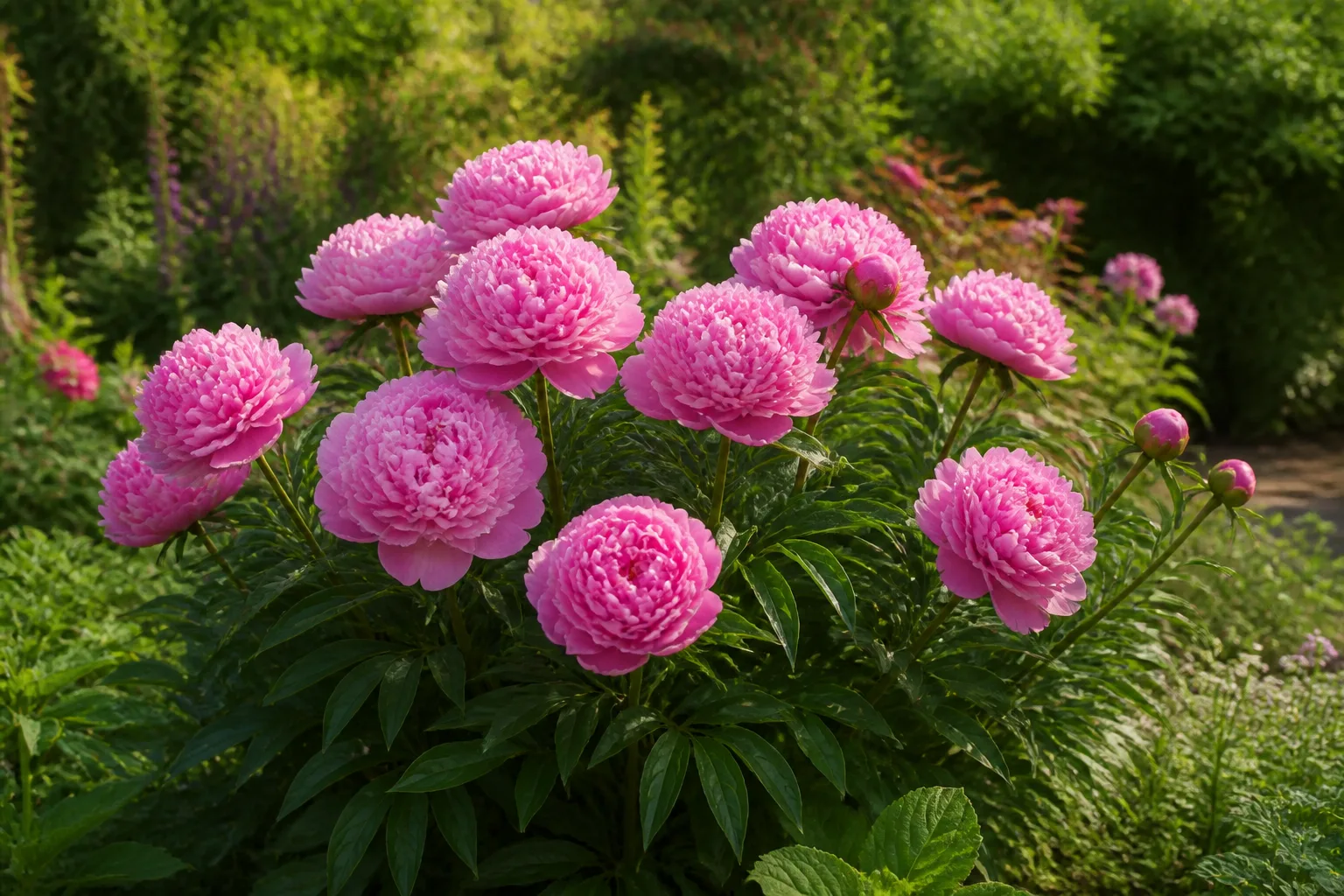
The best way to fertilize peonies is surprisingly restrained: test the soil first, correct only the nutrients that are actually low, and keep fertilizer away from the crown. A mature peony growing in fertile, well-drained soil may need no granular fertilizer this year. A tired clump in depleted soil may benefit from a light feeding, but more product is not a shortcut to more flowers.
That distinction matters because peonies store energy in their roots for next year’s buds. High-nitrogen fertilizer can make the plant look impressive while producing soft foliage, weak stems, and fewer blooms. The goal is not to force growth; it is to remove a nutrient limitation while preserving the conditions that let a peony flower.
The short answer: test first and feed lightly
If you need one practical rule, use this sequence: soil test, choose the missing nutrient, apply a conservative amount in a wide ring, and water it in. Do not scatter fertilizer over the crown, pour liquid feed against new shoots, or repeat an application because the plant did not bloom within a few days.
University of Connecticut guidance describes peonies as light feeders and warns that excess nitrogen can reduce flowering. It also recommends a soil test before adding amendments and gives a slightly acidic to neutral target around pH 6.5 to 7.5. (University of Connecticut Home & Garden Education Center) Those points are more useful than a universal product recommendation because garden soil, compost history, rainfall, and fertilizer residues vary widely.
For an established herbaceous peony, one modest feeding in a nutrient-poor bed is often enough. New divisions or plants growing in thin, sandy soil may need closer observation during their first seasons, while a dark-green, steadily growing clump in compost-rich soil is a good candidate for skipping fertilizer altogether.
Decide whether your peony needs fertilizer
Fertilizer is appropriate when a soil test identifies a deficiency or when the plant’s overall growth and site history point to depleted soil. It is not the first response to every small flower, floppy stem, or missing bud. Those symptoms often come from too little sun, drought, competition, poor drainage, a crown planted too deeply, or a plant that is simply not mature enough to flower heavily.
Read the plant before reaching for a bag
Start with the whole plant, not one disappointing bloom. A peony that produces healthy green leaves and a normal number of stems is not automatically hungry. If the foliage is pale, growth is weak across the clump, and the bed has not received organic matter or fertilizer for years, nutrients become a reasonable suspect—but even then, a test gives you a better answer than guessing.
Look at the history of the site. Was the peony planted in a new bed made from poor fill? Is it competing with a mature tree or shrub? Have you added manure, compost, or a high-phosphorus bloom product repeatedly? A soil that has received regular amendments may already contain plenty of phosphorus and potassium even if the plant is not blooming well.
Age also changes the decision. A newly planted bare-root peony may spend its first years building roots and may flower sparsely without needing extra fertilizer. Feeding a young plant aggressively can create top growth before the root system is ready to support it. Give it light, drainage, correct planting depth, and time before escalating the feeding routine.
Let a soil test choose the nutrient
Use a laboratory soil test when possible, especially before applying bone meal, superphosphate, or a repeated bloom fertilizer. The test should report pH and the nutrients relevant to your region; follow the lab’s amendment rate rather than translating a generic label into a large dose around one plant.
The most useful result is not a brand recommendation. It tells you whether the soil needs nitrogen, phosphorus, potassium, lime, or no correction at all. Gardening Know How makes the same soil-test-first point and notes that phosphorus can accumulate when gardeners keep adding it even though the soil already has enough. (Gardening Know How)
If the pH is outside the peony’s preferred range, address that with the amendment and rate recommended by the soil lab. Do not assume a bag labeled “flower food” will fix pH. Fertilizer supplies nutrients; it is not a substitute for correcting a chronically unsuitable root environment.
Choose a fertilizer that supports flowers, not just leaves
Once you know feeding is justified, choose a product you can measure and apply consistently. For most home gardens, a granular fertilizer for perennials with a modest analysis is easier to control than frequent liquid feeding. A product does not need “peony” printed on the bag; the nutrient analysis, label directions, and fit with your soil test matter more than the name.
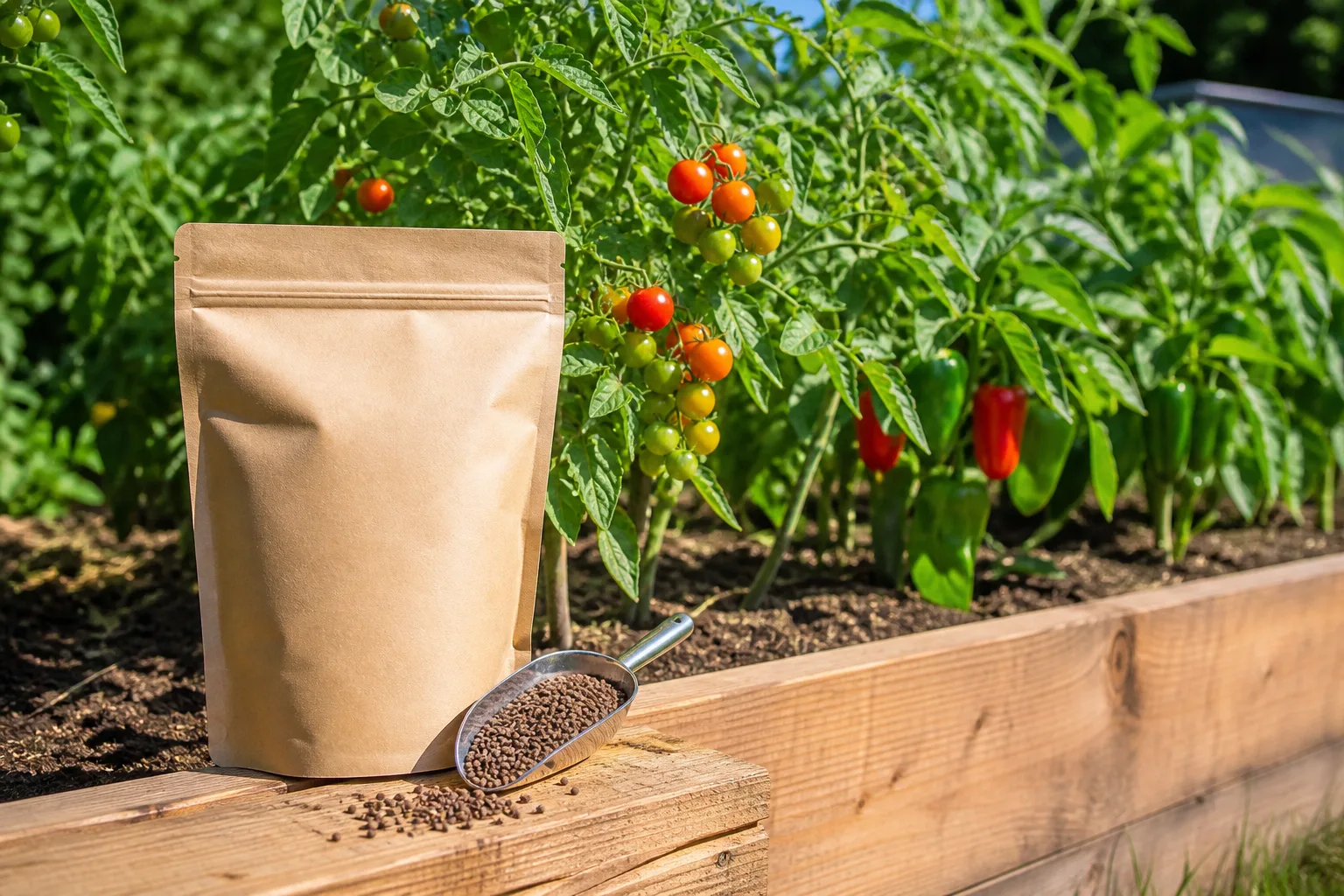
How to read the NPK numbers
The three numbers on a fertilizer label are the percentages of nitrogen (N), phosphate expressed as P₂O₅ (P), and potash expressed as K₂O (K) by weight. Nitrogen supports leafy and stem growth, phosphorus participates in root and reproductive development, and potassium supports many plant processes including water regulation and general vigor. These roles overlap in a living plant, so a high middle number is not a magic “more flowers” switch.
For peonies, avoid making nitrogen the dominant part of a routine unless a soil test specifically calls for it. A balanced analysis such as 10-10-10 can be appropriate in some depleted soils, but it still has to be applied at the label rate and kept off the crown. Lower-analysis, slow-release products can be easier for a home gardener to use conservatively, but “organic” does not mean impossible to overapply.
Do not choose a high-nitrogen lawn fertilizer simply because it is already in the shed. Never use a weed-and-feed product around peonies; herbicides intended for turf can injure broadleaf ornamentals. If the soil already supplies adequate phosphorus and potassium, a test-based nitrogen correction may be more sensible than adding another complete fertilizer.
Compost, granular fertilizer, and bone meal compared
Finished compost improves organic matter and soil structure while releasing a broad, variable mix of nutrients. A thin surface layer around the plant can be useful in a bed that is low in organic matter, but keep it off the crown and stems. Compost is a soil-building amendment, not a precise replacement for a soil test.
Slow-release granular fertilizer gives you a measured dose that becomes available over time. It is a practical choice when the soil test calls for a complete fertilizer and you want one controlled application rather than repeated liquid feeds. Always follow the specific product label because “one scoop” has no universal meaning.
Bone meal or superphosphate supplies phosphorus, but extra phosphorus is useful only when phosphorus is low or a specific soil recommendation calls for it. It is not a bloom insurance policy. Savvy Gardening also cautions that many soils already contain adequate phosphorus and recommends testing before adding bone meal. (Savvy Gardening)
Manure deserves the same caution. Well-aged composted manure can improve soil, but fresh or heavily applied manure may supply too much nitrogen and soluble salt. If you use it, treat it as an amendment with a known source and a light application—not as a reason to stack manure, bone meal, and a complete fertilizer together.
When to fertilize peonies
Timing should follow the plant’s growth and your soil result. The two most defensible windows for a needed granular feeding are early spring as growth gets underway and shortly after flowering, when the remaining leaves can continue making carbohydrates for the roots. A routine calendar with three or four heavy feedings is rarely justified for a long-lived perennial.
Early spring and new growth
Apply in early spring after shoots emerge and the soil is workable, but do not pour fertilizer into the center of a clump. Some gardeners prefer to wait until stems are several inches tall; Savvy Gardening describes a window around 12 to 16 inches of new growth, when the plant is visibly active and the bare soil makes ring application easier. (Savvy Gardening)
The trade-off is that emerging shoots and exposed crowns are vulnerable to concentrated fertilizer. If you feed early, use the lower end of the label range, keep granules well away from stems, and water thoroughly. Do not feed a wilted, drought-stressed, newly transplanted, or waterlogged plant until the underlying stress is addressed.
After flowering
Post-bloom feeding can make sense when a soil test shows a deficiency and the plant still has healthy leaves. Remove spent flowers, leave the foliage intact, and apply the recommended nutrient to the soil around the plant rather than onto the leaves. The plant will continue photosynthesizing after the petals fall, so the post-bloom period is about rebuilding the root system—not trying to trigger a second crop of flowers.
This is also a useful point to reassess the season. If the plant flowered well and its foliage is vigorous, skip the extra product. If it barely grew, inspect light, moisture, planting depth, and disease before blaming fertilizer. The best post-bloom treatment may be a deep watering during drought, better air circulation, or simply allowing the plant to keep its leaves until frost.
What to do about fall fertilizer
Extension recommendations are not identical on fall feeding. Kansas State University describes a spring-and-fall program for herbaceous peonies and gives a specific placement and rate framework, while the University of Connecticut advises not fertilizing peonies in late summer or fall. (Kansas State University)
The practical resolution is to let the soil test and local extension recommendation win. If phosphorus and potassium are already adequate, or if your soil is fertile and the plant grew well, do not add a fall “bloom booster” just because the calendar says to. If a regional soil test calls for fall nutrients, apply the recommended product before the ground freezes and keep it away from the crown. Do not fertilize dormant plants with a guessed dose.
Tree peonies are a separate case because they keep woody stems above ground. Their feeding, pruning, and winter care differ from herbaceous peonies, so follow guidance for the type you grow rather than applying a fall routine automatically to every Paeonia.
How to apply fertilizer without burning the crown
The safest application looks almost too boring to be effective: measure the product, spread it in a broad ring, keep it away from the crown, and water it into the soil. Peony eyes and young shoots are close to the surface, so a concentrated pile in the middle of the plant can cause more damage than a slightly underfed plant.
Amount and placement
Use the package’s rate for the approximate spread of the plant, and reduce rather than increase it when the label gives a range. Never combine two products and assume their rates are independent. A small plant or young division needs less than a large established clump, and a soil-test recommendation may override the general label rate.
Spread the granules in a ring around the drip line or across the surrounding root zone, not on top of the crown. Kansas State guidance places fertilizer in a band roughly 8 to 18 inches from the plant center, and Gardening Know How similarly emphasizes keeping fertilizer a hand’s length away from the crown. (Kansas State University; Gardening Know How)
If the label says to work a granular product into the surface, scratch it in gently without digging through shallow roots or eyes. Do not place fertilizer in the planting hole against bare roots. For a new peony, the better investment is a well-prepared, well-drained bed and correct planting depth; amend the soil according to the soil test rather than filling the root zone with concentrated fertilizer.
Watering and mulch after feeding
Water slowly and deeply after applying dry fertilizer so the nutrients move into the soil and do not remain as a concentrated layer at the surface. Do not use a blast of overhead water that splashes soil onto foliage or keeps the leaves wet for hours, especially in a crowded bed.
Keep mulch or compost in a low donut around the plant, never piled against stems or over the crown. A thick, wet layer can trap moisture and obscure the eyes, while a light layer can reduce weeds and slow evaporation. The mulch is there to moderate the root zone, not to become another high-nitrogen feed piled onto the plant.
Fertilizer mistakes that reduce peony blooms
The most common mistake is treating fertilizer as a bloom trigger. Peonies flower after a long sequence of events—winter chilling, adequate light, correctly shallow planting, healthy roots, sufficient moisture during bud development, and months of foliage that can recharge the crown. Fertilizer only helps when nutrition is the limiting step.
Avoid these shortcuts:
- Feeding by calendar alone: A healthy peony in fertile soil may not need annual fertilizer. Test first or skip the application.
- Choosing the highest phosphorus number: Extra phosphorus does not guarantee more flowers and can accumulate in soil. Correct a documented deficiency instead.
- Using high-nitrogen lawn or vegetable feed: It can push leaves and soft stems while flowering lags. Never use weed-and-feed near peonies.
- Piling granules over the crown: Keep the center and emerging shoots clear to reduce burn risk.
- Applying liquid fertilizer to dry soil: Water the plant normally first; do not concentrate salts around a drought-stressed root system.
- Stacking compost, manure, bone meal, and complete fertilizer: Several mild products can become one excessive nutrient load.
- Cutting foliage after flowering: The leaves are the plant’s solar panels for next year’s buds. Deadhead flowers if you want, but leave healthy leaves until natural dieback.
- Fertilizing a sick plant: Wilt, rot, gray mold, and poor drainage require diagnosis and sanitation, not more nutrients.
If you accidentally overapply, remove visible granules from the surface if you can do so without disturbing roots, then water deeply to move soluble salts below the active root zone—provided the soil drains freely. Do not keep flushing a waterlogged bed. If foliage scorches, growth collapses, or the crown is damaged, contact your local extension service for a site-specific recovery plan.
When fertilizer is not the real problem
Low flower count is often a cultural problem wearing a fertilizer costume. Before changing the NPK ratio, compare the plant’s conditions with the basics that University of Connecticut lists for productive peonies: plenty of sun, fertile but well-drained soil, and a suitable planting depth. (University of Connecticut Home & Garden Education Center)
Light, planting depth, water, and drainage
Give herbaceous peonies roughly six to eight hours of sun where possible. Morning sun and good air movement are especially useful in warm or humid gardens. A clump shaded by a tree that has grown over the years may need pruning of the surrounding canopy or relocation during dormancy, not a stronger fertilizer.
Check planting depth. The red eyes on a bare-root herbaceous peony should sit only about 1 to 2 inches below the soil surface; deeper planting is a classic cause of healthy foliage with few or no flowers. Do not try to correct a deeply planted crown by feeding it. Correct the depth during the appropriate transplanting window instead.
Water newly planted peonies consistently while they establish, then water established plants deeply during spring drought and prolonged dry weather. Let excess water drain away. Wet feet, compacted clay, and poor air circulation can create root and fungal problems that fertilizer cannot solve. If stems wilt while the soil stays wet, feeding is particularly risky.
Support, deadheading, and bloom timing
Large double peonies can flop under rain even when they are perfectly healthy. Put a grow-through ring or other support in place while shoots are still short, before the canopy hides the frame. A support protects stems and flower heads; fertilizer cannot make a top-heavy cultivar stand upright by itself.
Deadhead spent flowers if you want a cleaner plant and less seed production, but do not cut healthy foliage to the ground in summer. Our peony deadheading guide covers the distinction between removing a faded flower and cutting back dormant stems after frost.
Do not judge fertilizer by the number of flowers on a newly planted or recently divided peony. Some roots need several seasons to settle, and early-, mid-, and late-season cultivars naturally spread the display across different weeks. A short bloom window is part of peony biology; feeding can support the plant but cannot turn it into a reblooming perennial.
Conclusion
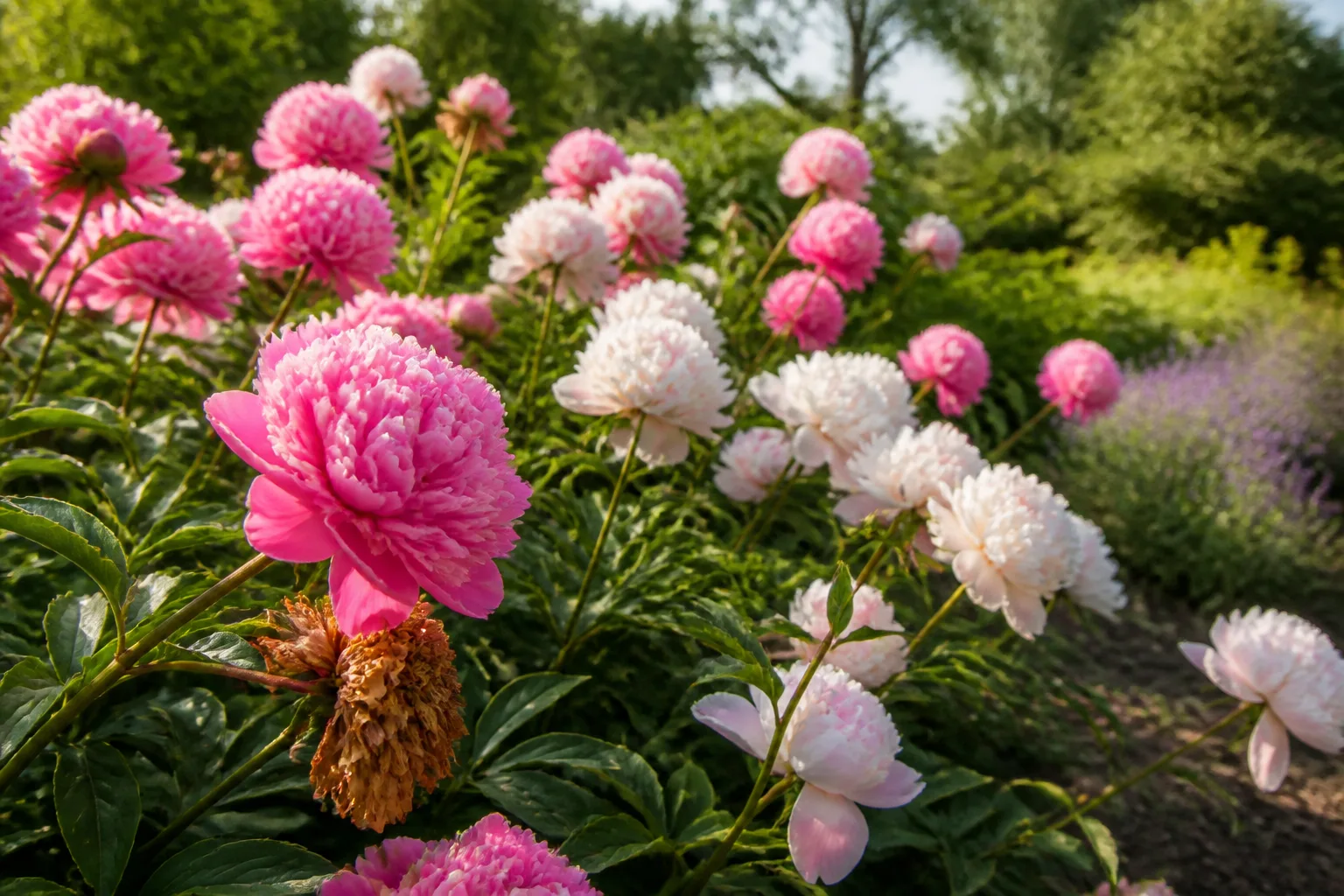
Fertilize peonies only when the plant or a soil test gives you a reason. Choose a conservative, low-to-moderate nitrogen product that matches the deficiency, apply it in a ring well away from the crown, and water it into well-drained soil. Early spring or shortly after flowering are sensible windows for a needed feeding; fall applications should follow local extension guidance and soil-test results rather than habit.
If your peony has leaves but no flowers, check sunlight, planting depth, drought, drainage, age, crowding, and support before buying a stronger fertilizer. Good peony care is a sequence: give the crown the right site, feed only what the soil cannot supply, keep leaves healthy after bloom, and let the roots do the long work of producing next year’s flowers.



