9 Companion Plants for Peonies for Season-Long Color
Find the best companion plants for peonies by bloom time, height, light, and moisture. Use this practical layout guide for color from spring through fall.
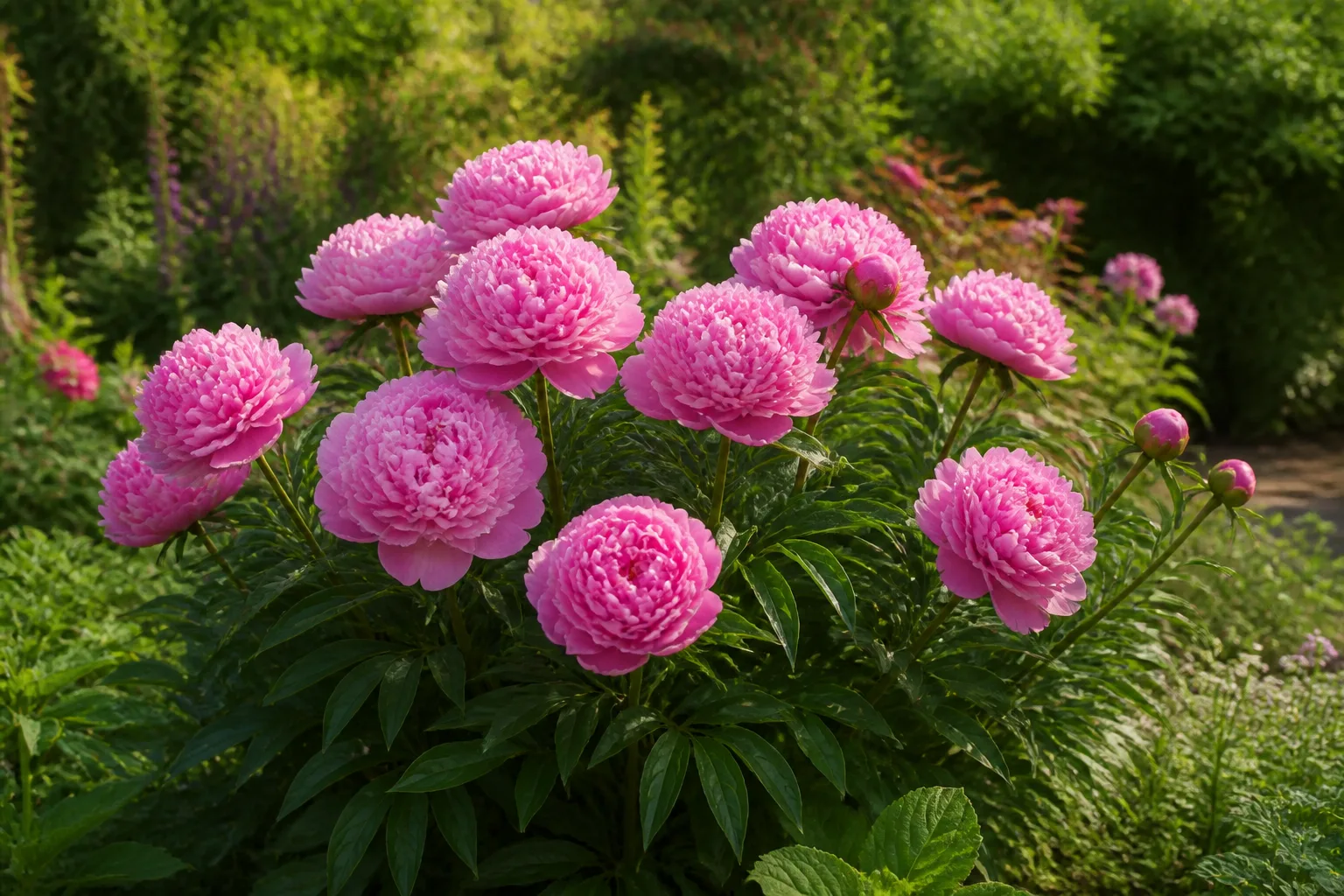
Peonies are the main event for a short, glorious stretch in late spring and early summer. The best companion plants for peonies do not compete for that spotlight; they solve the quiet gaps around it by flowering a little earlier, adding a different shape at the same time, or carrying color after the peony flowers fade.
There is one important correction to the usual companion-planting advice: a plant is not a good neighbor simply because it is pretty beside a peony. Peonies want full sun, moist but well-drained soil, and a crown planted shallowly enough to flower. Their roots also resent repeated digging and aggressive groundcovers. Choose companions by light, moisture, mature size, bloom sequence, and maintenance, then place them far enough away to preserve air movement.
What makes a good companion for peonies?
A useful peony companion earns its space in one of four ways: it blooms before the peony, overlaps with it in a contrasting form, fills the border after the peony finishes, or supplies foliage that keeps the bed looking intentional. It should also tolerate the same general garden conditions without forcing you to water one plant too much or shade another.
Think of the pairing as a small planting system rather than a list of supposedly helpful plants. Companion planting can increase floral diversity and give pollinators more reasons to visit, but it is not a proven substitute for good sanitation, adequate spacing, or pest scouting. The practical goal is a healthier-looking, better-timed border—not a promise that one flower will repel every pest.
Start with the peony’s non-negotiables
Give the peony the best position first. University of Illinois Extension lists full sun, moist well-drained soil, and a planting depth of no more than 2 inches for the crown or “eyes”; the same guidance notes that a new plant may take two or three years to establish and bloom. A companion that requires deep shade, standing moisture, or frequent root disturbance is a poor fit even if its flowers match.
Air movement matters after the flowers open. Powdery mildew, leaf blotch, and Botrytis can become more troublesome in shaded, crowded, or persistently wet foliage. Illinois Extension’s peony disease guidance recommends full sun, good air circulation, soil-level watering, and removing diseased plant material rather than leaving a dense tangle around the crown.
As a working design rule, leave roughly a 3-foot-wide or 1-meter-square area around an established peony for its own foliage, access, and root-zone breathing room. A specialist peony-growing source, Horticulture.co.uk’s companion-planting guide, makes the same practical point: avoid disturbing the area close to the plant and do not let creeping companions invade it. Use mulch to cover bare soil if needed, but keep it away from the crown rather than filling the space with a spreading groundcover.
Design for bloom succession, not just color
Peony season is longer than a single cultivar’s flower show, but the border still benefits from a relay. Early columbine and Virginia bluebells can wake up the bed before peonies open. Bearded iris and alliums provide shape and color during the main display. Delphinium, hardy geranium, Russian sage, and Virginia anemone carry the composition into summer, each with a different tolerance for heat, shade, or dry soil.
That sequence is more useful than matching pink with pink. A rounded peony flower beside a sword-leaved iris, a spherical allium, or an airy flower spike creates contrast that still looks good when one plant is between blooms.
The nine plants at a glance
| Companion | Best design job | Place it | Main caution |
|---|---|---|---|
| Bearded iris | Same-season vertical contrast | Beside or behind the peony, in sun | Keep the clump from crowding the crown; iris rhizomes need shallow planting |
| Columbine | Early, airy flowers and hummingbird value | At the edge or in light shade | Self-seeds; needs more moisture than a dry border |
| Virginia bluebells | Spring color at a woodland edge | In partial or deep shade near, not inside, a sunny peony bed | Goes dormant in midsummer and can colonize |
| Ornamental allium | Round flower heads and late-spring structure | Sunny gaps and the back half of the border | Bulbs rot in wet soil; foliage can fade after flowering |
| Delphinium | Tall blue or purple spikes | North side or back of a sunny bed | Needs staking and good drainage; toxic if eaten |
| Hardy geranium | Low, soft foliage and repeat color | Outer edge, beyond the crown | Choose perennial Geranium, not tender Pelargonium; avoid wet soil |
| Russian sage | Airy late-season texture | Sunny, dry outer edge or back | It wants drier soil than a regularly irrigated peony |
| Virginia anemone | Light late-spring to early-summer texture | Moist woodland edge or partial sun | Spreads by rhizomes; sap can irritate skin |
| Lily-of-the-valley | Fragrance and shade groundcover | Only in a contained, appropriate shade area | European types spread aggressively and all parts are poisonous |
Spring companions that frame peony bloom
The early part of the bed is easy to overlook because gardeners are waiting for the peony buds. Layering in a few plants with a different shape keeps the garden active without stealing the central role from the peony.
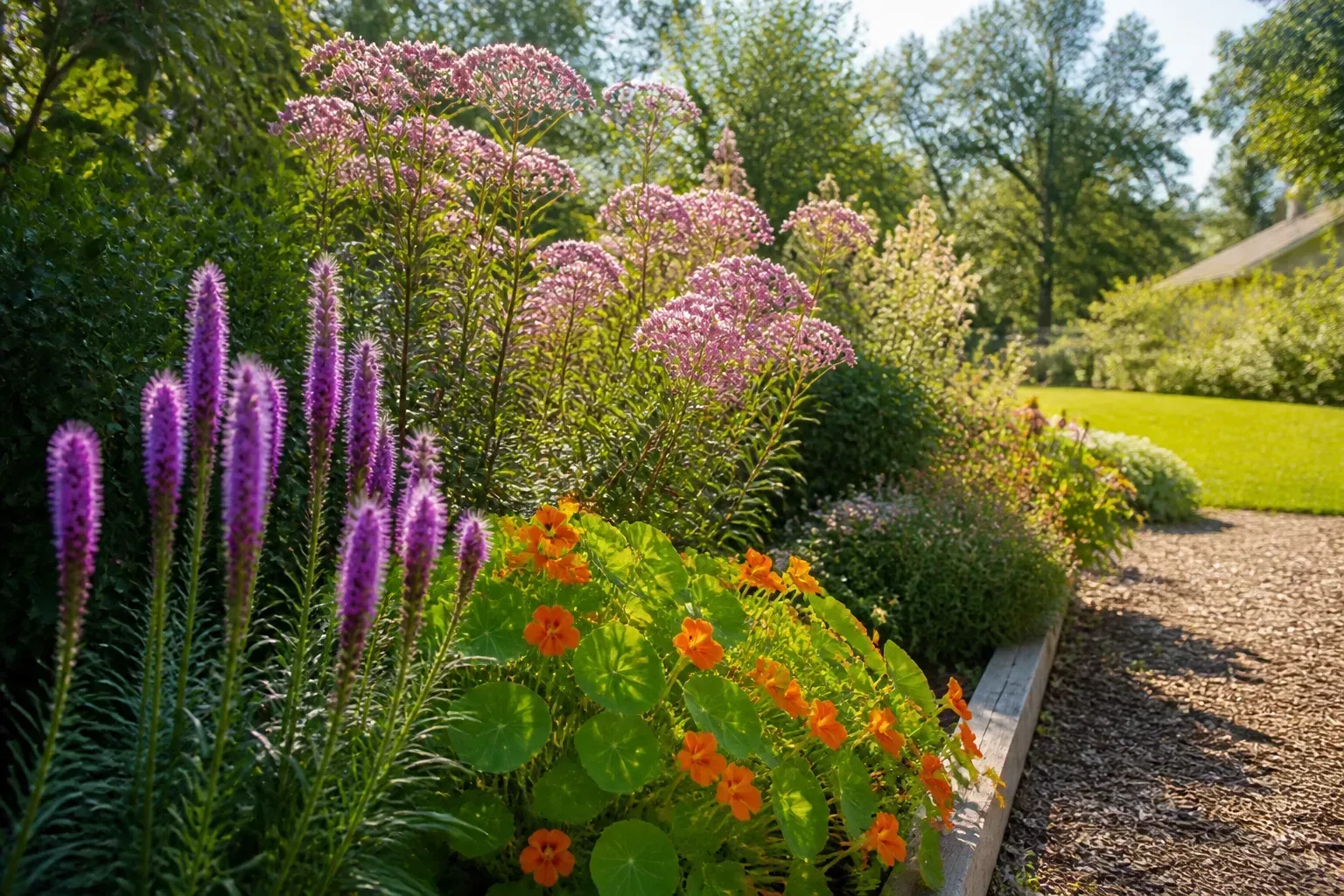
Layered planting gives the border a reason to look good before and after the peony flowers open.
Bearded iris: structure at the same time
Bearded iris is one of the clearest visual matches for peonies. Its upright, sword-shaped leaves and angular flowers cut through the peony’s rounded, heavy blooms, while purple, blue, white, and yellow iris cultivars can either echo or sharpen the peony’s color.
The pairing works best when the two plants have separate clumps rather than being packed into one hole. Put the iris beside or behind the peony in full sun, keep the rhizomes shallow and exposed as the variety requires, and leave a path for dividing or cleaning the clump. An iris that is permanently shaded by a mature peony will flower poorly, and a peony surrounded by dense iris foliage will dry more slowly after rain.
Columbine and Virginia bluebells: light, airy early color
Columbine is the flexible choice for a border that receives morning sun or light shade. Eastern columbine, Aquilegia canadensis, flowers in early spring, attracts hummingbirds, butterflies, and bumblebees, and can form a useful low-to-middle layer after the main flowers pass. North Carolina Extension’s plant profile notes that it tolerates more sun when moisture is adequate and freely self-seeds, so let it naturalize only where volunteer seedlings are welcome.
Virginia bluebells are a better answer for a woodland edge than for the center of a sunny peony bed. Mertensia virginica prefers deep to partial shade and moist, rich, well-drained soil; North Carolina Extension also notes that it self-seeds, colonizes, and goes dormant in midsummer. Plant it where the peony bed transitions to a tree or shrub border, then use later-emerging shade perennials to cover the bluebells’ retreating foliage.
The useful distinction is not “bluebells are good” or “bluebells are bad.” It is sunny peony bed versus shaded peony-edge habitat. The same logic keeps a moisture-loving columbine from being stranded in a gravelly, drought-prone border.
Ornamental alliums: round blooms and an easy bulb layer
Alliums add a second circle to the peony’s large flower form, but at a different height and scale. Their narrow leaves appear before the flowers, and the spherical heads can hover above the peony foliage or punctuate gaps between plants.
For a reliable garden type, Allium hollandicum grows in full sun to partial shade and moist to dry, well-drained soil. The North Carolina Extension profile gives a practical starting point: plant bulbs in fall at about twice their size and 6 to 8 inches apart, then deadhead if unwanted seedlings are a concern. Group several bulbs for impact, but do not plant them in a pocket that stays wet through winter.
Allium foliage often looks tired before the flower heads do. Hide that decline with an outer layer of hardy geranium or a fine-textured perennial, not by planting another thirsty plant directly over the bulbs.
Summer companions that carry the border
Once peony flowers fade, the foliage still deserves to stay in place so the plant can replenish its roots. This is where a companion should do the visual work: provide an upright flower, a soft front layer, or a haze of later color while leaving the peony leaves open to light and air.
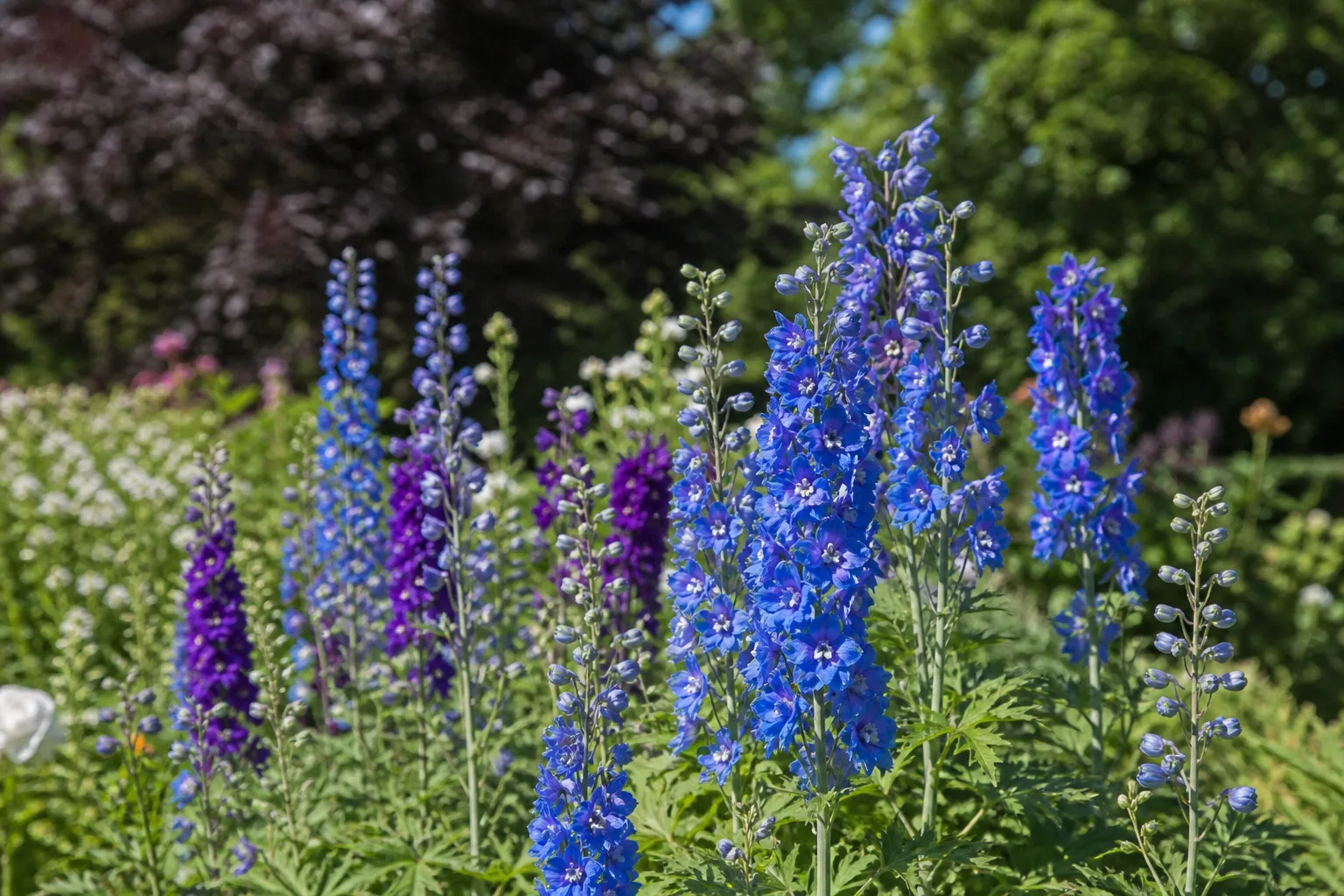
Delphinium supplies the vertical line that a mound of peony flowers cannot.
Delphinium: vertical color with a maintenance trade-off
Delphinium is a strong choice when the border needs height, especially behind pink or white peonies. The flower spikes echo the romantic cottage-garden look, and the blue-to-purple range contrasts with most peony colors.
It is not a low-maintenance filler. North Carolina Extension’s delphinium profile describes a plant that prefers fertile, medium-moisture, well-drained soil and cool summers, often needing staking, deadheading, and protection from wind and rain. Poor drainage increases crown-rot risk, while humid summer climates can make the plant short-lived. Set it on the north or back side of the bed so its height does not shade the peony, and expect to support tall cultivars before the flower spikes lean.
There is also a safety trade-off: the profile identifies delphinium as toxic to humans and pets if eaten. In a garden used by young children or animals that chew plants, choose a non-toxic visual substitute or place delphinium behind a barrier rather than treating it as an automatic recommendation.
Hardy geranium: a soft, low front layer
Hardy geranium, also called cranesbill, is the plant to use when the bottom of the peony looks bare after the flower show. Its mounded or spreading foliage softens the stems, and many cultivars flower in late spring and continue intermittently into summer or fall.
Buy it under the botanical name Geranium. The tender bedding plants commonly called geraniums are Pelargonium, a different group with different winter behavior. Illinois Extension’s cranesbill guide lists hardy geraniums for full sun to partial shade, moist well-drained soil, and a mature height around 18 to 24 inches; it also recommends good drainage and deadheading for repeat bloom.
Plant cranesbill beyond the peony’s crown, not as a tight collar around it. In a humid garden, shear a congested mound after flowering so air can move through the foliage. In a hot climate, select a cultivar suited to your local conditions and give it enough moisture without turning the peony bed soggy.
Russian sage and Virginia anemone: texture for later weeks
Russian sage, now commonly listed as Salvia yangii and formerly known as Perovskia atriplicifolia, is a good late-season contrast for a sunny, sharply drained border. Its gray-green foliage and airy lavender flowers bring movement after the peony’s broad leaves become the main mass. North Carolina Extension recommends full sun and well-drained, occasionally dry soil, and warns that wet soil should be avoided.
That moisture difference decides where to put it. If your peonies are in a bed that receives regular irrigation, place Russian sage at the sunny outer edge or on a raised, faster-draining section rather than forcing both plants onto one watering schedule. Give it room to reach its mature width and cut it back at the appropriate seasonal window instead of trying to keep it pressed against the peony.
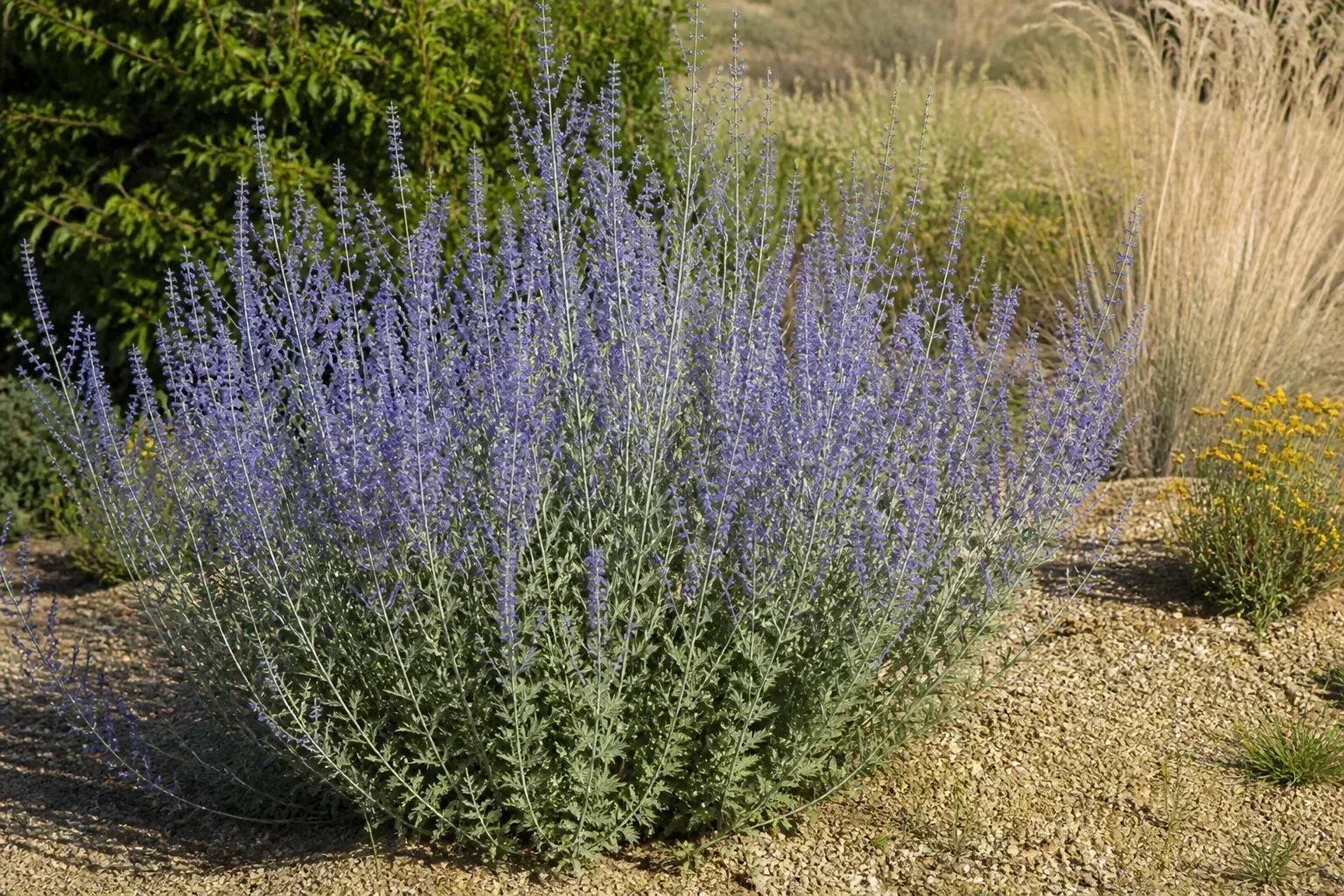
Russian sage belongs at the dry, sunny edge of a peony bed, not in a wet pocket beside the crown.
Virginia anemone, Anemone virginiana, works in a different part of the spectrum. It brings small, airy white flowers and persistent thimble-like seed heads to a moist woodland edge or partial-sun border. North Carolina Extension’s profile describes late-spring to early-summer flowers, a moderate rhizomatous spread, and sap that may irritate skin; wear gloves when pruning and keep it out of waterlogged soil.
Use Virginia anemone to bridge a peony bed into a less formal native or woodland planting. It is not the answer for a dry, exposed site, and its mature height means it should sit to the side or back rather than directly in front of a low-viewed peony.
A conditional ninth choice: lily-of-the-valley
Lily-of-the-valley is included because its fragrance, white bells, and shade tolerance can solve a real problem at the edge of a garden: what to grow where the peony does not receive enough sun. It should not be treated as a carefree filler inside the peony’s root zone.
The plant sold as European lily-of-the-valley, Convallaria majalis, is an aggressive spreader in some regions and is poisonous if eaten. North Carolina Extension distinguishes it from the less colony-forming native American lily-of-the-valley, Convallaria pseudomajalis, but still lists the native plant as highly poisonous and says all parts can be dangerous if ingested. Read the extension profile before choosing either form, especially if children or pets use the garden.
If you grow it, use a contained woodland area away from the peony crown, paths, and chew zones. If you mainly want weed suppression, a shallow mulch layer or a non-aggressive shade perennial is usually easier to manage than a fragrant plant that can spread underground and create a safety concern.
How to place companions without hurting peonies
The right plants can still fail when they are planted in the wrong order. Treat the peony as an established anchor, then build the rest of the bed outward from its mature spread.
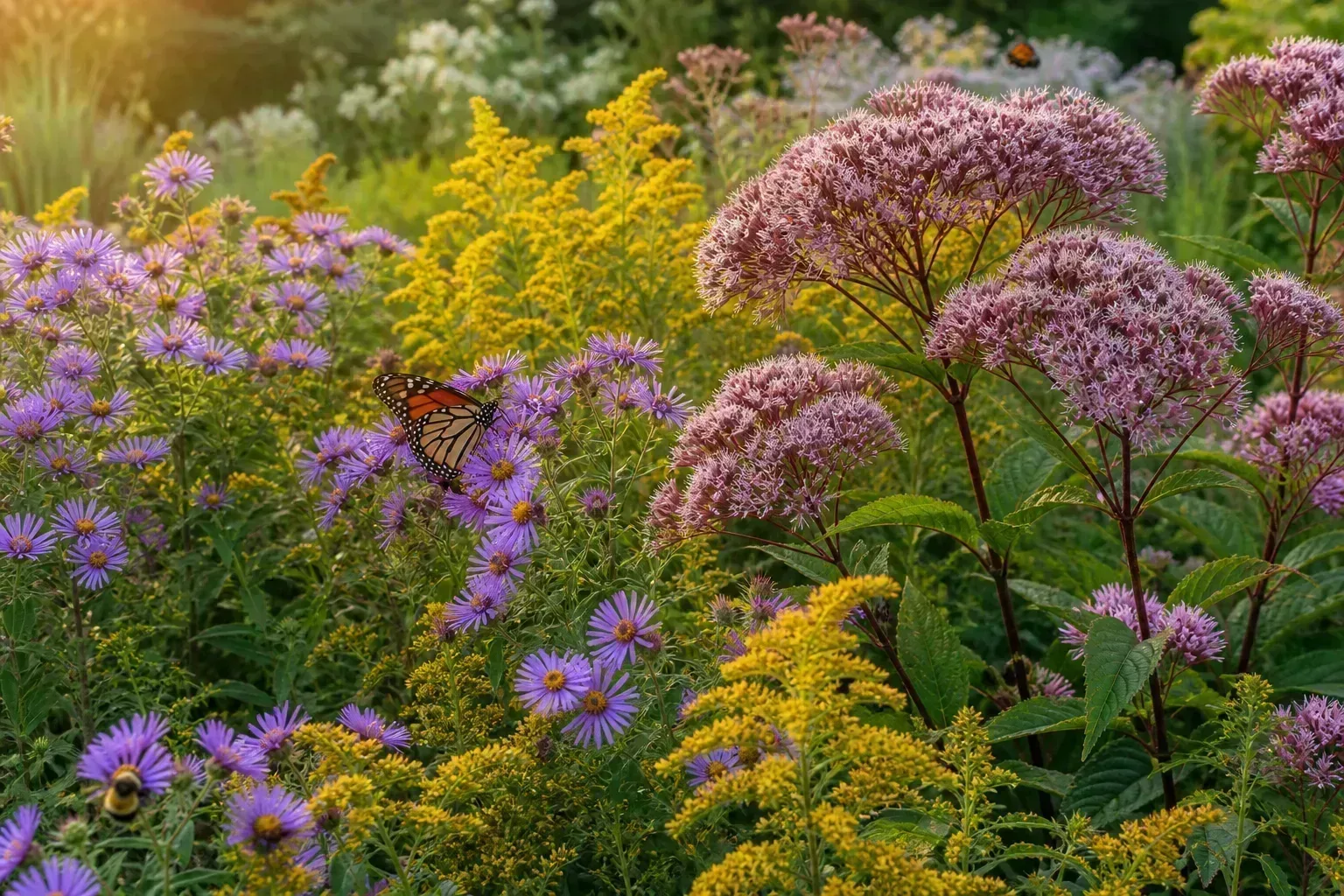
A layered border keeps tall plants at the back and lower foliage near the viewing edge.
Build from back to front and protect the crown
In a bed viewed from the south, put the tallest plants—usually delphinium or a well-spaced Russian sage—on the north or back side. Place iris and alliums in the middle layer, then use hardy geranium or selected columbine toward the outer edge. Reserve Virginia bluebells and lily-of-the-valley for a genuinely shaded transition rather than pretending the peony’s full-sun crown is a woodland floor.
When adding a perennial to an existing bed, dig outside the peony’s working space and use a hand trowel near established roots. Fall is a convenient season for many bulbs and divisions, but timing does not make it safe to cut through the crown. If a plant needs to be divided, move the companion instead of excavating the peony to make room.
Do not bury the peony to make it level with a new mulch layer. A deep crown is a common reason for poor flowering, and extra soil piled against the base also holds moisture where stems meet roots.
Keep spacing, moisture, and airflow compatible
Use mature width, not the size of a nursery pot, when you plan the gaps. A companion should be able to reach its adult form without touching the peony’s stems or closing a damp pocket around its leaves. Leave a narrow service path or stepping access if you need to deadhead, stake, or remove diseased foliage.
Group plants with similar watering needs. Columbine and Virginia bluebells appreciate more consistent moisture than Russian sage. Delphinium wants fertile, evenly moist but well-drained soil, while alliums and Russian sage are less forgiving of winter wet. The bed can contain both groups, but they may need different positions, mulch depths, or irrigation zones.
Water the soil rather than spraying the leaves, especially when the peony foliage is dense. If leaf spots or mildew appear, remove infected material at the end of the season and do not compost it unless your composting system reliably reaches the temperatures needed to destroy disease inoculum. Good companion design supports plant health; it does not replace these basic practices.
Three sample pairings to copy
For a sunny formal border: combine bearded iris, peony, and ornamental allium. Put iris in a repeated middle-height rhythm, let peonies carry the largest flowers, and place alliums where their round heads rise above the foliage. This is the cleanest choice when the bed has good drainage and you want the flowers to overlap.
For a cottage-style border: use columbine at the edge, peonies in the middle, and delphinium behind them, then add a few alliums for punctuation. This plan has more movement and self-seeding, so leave walking space and accept that columbine seedlings may appear in nearby gaps. Stake delphinium early, before a storm turns the back row into a tangle.
For a woodland transition: place peonies at the brightest edge, Virginia bluebells and Virginia anemone toward the partial-shade side, and keep lily-of-the-valley only in a separate contained patch if its toxicity and spread are acceptable locally. Do not add Russian sage to this plan; its dry-sun requirement is the wrong match for the moist shade conditions that make the other plants comfortable.
Mistakes, toxicity, and regional caveats
The fastest way to lose the benefit of companion planting is to fill every inch of soil. Overcrowding can reduce flowering, trap humidity, make staking difficult, and turn routine cleanup into a root-damaging excavation. A plant that is “low-growing” at purchase can still become a dense mat two seasons later.
Do not confuse visual compatibility with identical culture. Virginia bluebells and lily-of-the-valley are shade plants; Russian sage wants dry sun; delphinium prefers cool summers; Virginia anemone tolerates more shade than a peony. Check the mature plant, not only the photograph on the tag, and verify hardiness and invasive status with your local extension service because a plant’s behavior changes with climate and soil.
Take the safety notes seriously. Delphinium and lily-of-the-valley are not good choices for a garden where pets or children routinely chew leaves or pick flowers. Virginia anemone sap can irritate skin, so gloves are sensible when cutting it back. If you cannot isolate toxic plants, choose iris, allium, hardy geranium, or a regionally appropriate non-toxic alternative and confirm the specific cultivar before planting.
Finally, do not plant a companion on the promise that it will “repel” peony pests. Use diverse flowers for habitat and visual rhythm, then manage peony problems with clean tools, air movement, soil-level watering, and timely removal of diseased foliage. That combination is less dramatic than a magic plant list, but it is far more dependable.
Conclusion
For most sunny, well-drained peony beds, start with bearded iris, ornamental alliums, and hardy geranium. They give you same-season contrast, a second flower shape, and a softer front layer without forcing the bed into a single bloom window. Add delphinium when you want height and can stake it, or Russian sage when the outer edge is sunny and dry.
Use columbine, Virginia bluebells, and Virginia anemone to handle early color or a woodland transition, not as interchangeable sun-loving fillers. Treat lily-of-the-valley as a contained, conditional plant because spread and toxicity matter. The winning combination is the one that leaves the peony’s crown undisturbed, preserves airflow, and keeps the border interesting after the big flowers are gone.