Keep Squash Bugs From Returning Next Year
Had squash bugs this year? Learn where they hide for winter, what to destroy in fall, and how row covers and resistant varieties block a spring comeback.
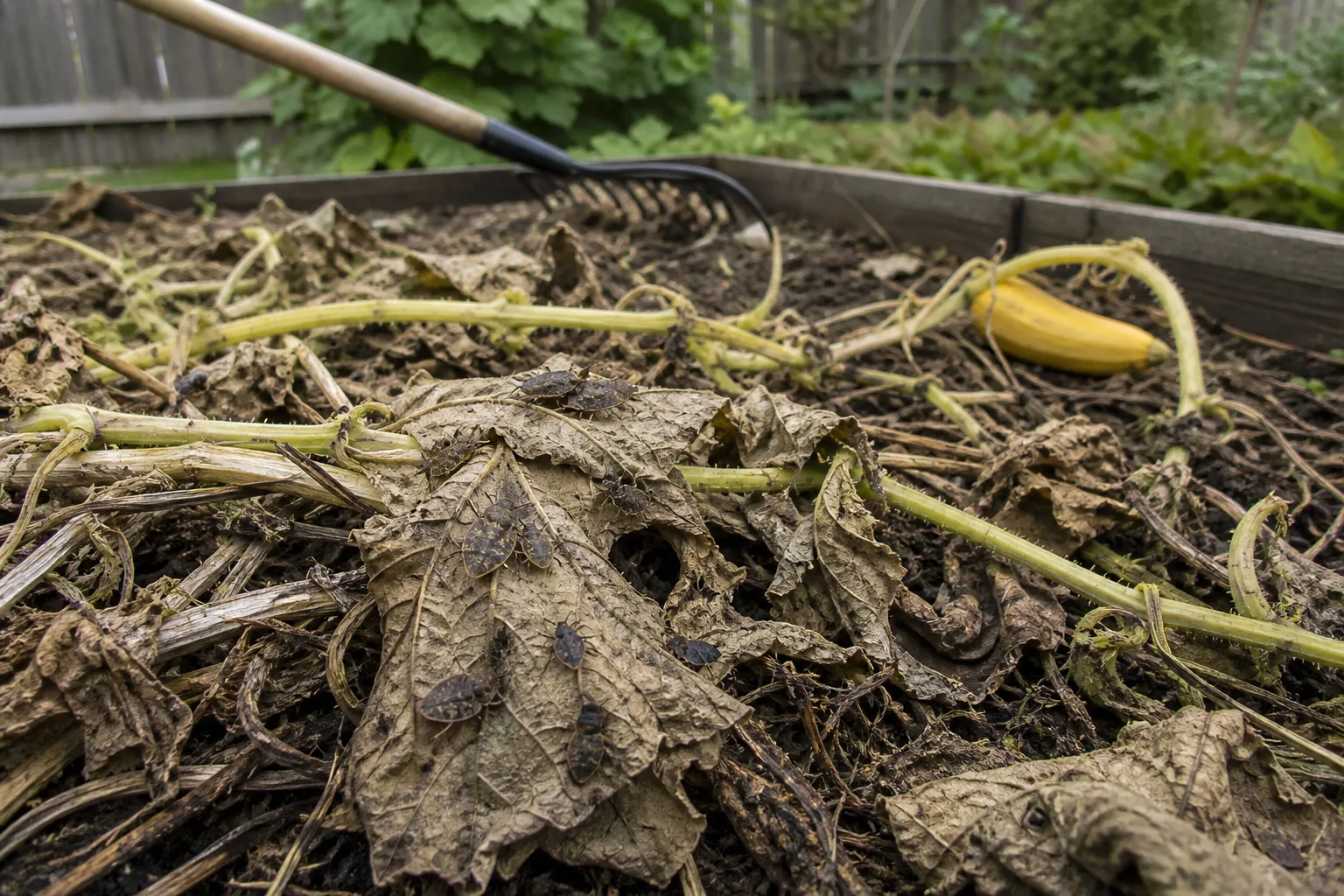
You pulled wilted zucchini leaves all August, scraped bronze egg clusters off pumpkin vines, and still found flat gray adults hiding under every board in the bed. If that sounds familiar, the real work starts after the harvest—not when you spot the first bug next June.
Squash bugs (Anasa tristis) are not a one-season nuisance. Adults that survive in leaf litter, mulch, and old vines will fly back to fresh cucurbits in spring, mate, and restart the cycle before your plants have four true leaves. The goal of this guide is a year-round plan: fall sanitation that breaks overwintering, spring barriers that delay colonization, and summer scouting that keeps numbers below damage thresholds—all without treating your garden like a lost cause every July.
Do Squash Bugs Come Back Every Year?
Yes—if adults successfully overwinter near last year’s patch, they usually return. Cool fall weather kills nymphs, but mature adults seek shelter under dead leaves, rocks, wood piles, and thick mulch, then become active again during warm spring spells (UC IPM). Mild winters increase survival, which is why squash bug problems feel worse some years than others (Colorado State University Extension).
That does not mean you are stuck with them forever. Populations drop sharply when you remove overwintering sites, block early access to seedlings, and keep summer numbers low enough that few adults make it to fall. Think of prevention as reducing the bank account of bugs that could overwinter—not as a single spray or one weekend of cleanup.
Why Fall Cleanup Matters More Than Spring Spraying
Most gardeners focus on killing bugs they can see on leaves. That helps during the growing season, but sanitation at season’s end determines how many adults enter winter near your beds. Squash bugs feed on cucurbits from late spring through frost; the longer infested vines sit in place, the more adults accumulate in the same microhabitats they will use for months.
Extension programs consistently rank prevention through sanitation as the strongest cultural control for this pest (UC IPM). Spring insecticides on nymphs can help in bad years, but they cannot undo a mulch pile full of overwintered adults ten feet from your new zucchini row. Fall work is cheaper, safer for pollinators, and directly targets the life stage that starts next year’s problem.
How Squash Bugs Overwinter in Your Garden
Adult squash bugs are strong fliers and mediocre hiders—but they are excellent at finding stable cover once temperatures drop. Typical overwintering sites include:
- Dead cucurbit vines and fruit left on soil
- Leaf litter and weed debris around bed edges
- Mulch, especially thick organic layers against crowns
- Stacked wood, stones, pots, and bed borders that hold heat and moisture
- Perennial weeds near the garden that stay green late into fall
Adults do not truly hibernate; they enter a resting phase and resume walking and feeding during warm periods. Overwintered adults can carry Serratia marcescens, the bacterium linked to cucurbit yellow vine disease (CYVD), and transmit it when they feed in spring (Colorado State University Extension). Even if your plants survived feeding damage, leaving infested debris increases both pest and disease pressure next year.
Each generation completes in roughly 6 to 8 weeks, with two to three generations possible in long growing seasons (UC IPM). The last generation’s adults are the ones you must stop from settling into winter shelter.
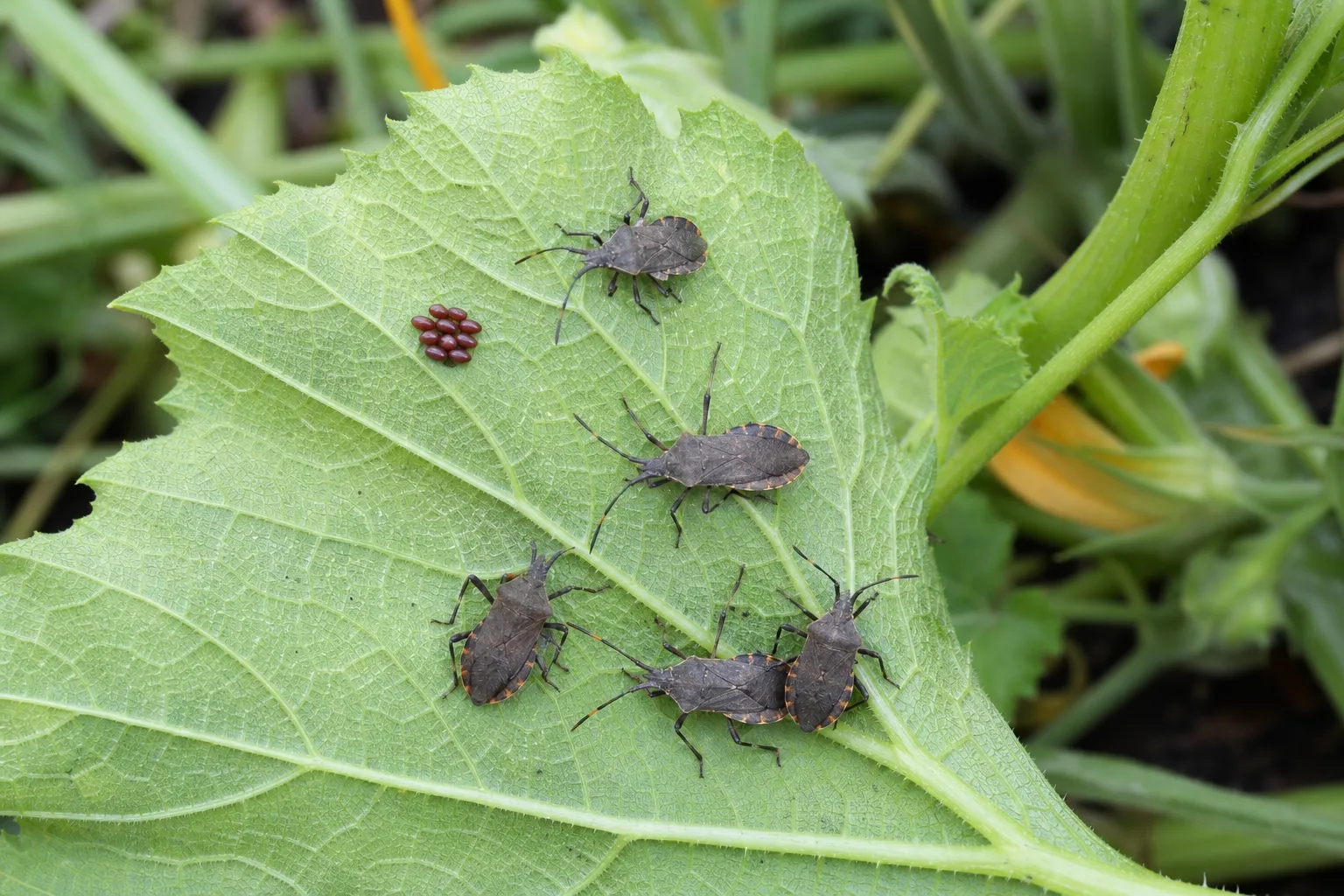
What Happens When You Leave Infested Debris Behind
A frost-killed squash patch looks harmless. Under that collapsed canopy, though, adults congregate at the crown and under fruit touching soil. Leave it until spring and you have built a custom squash bug hotel exactly where you will plant again.
Partial cleanup is almost as risky. Raking leaves off paths but leaving thick mulch between rows, or composting “mostly healthy” vines from a lightly infested plant, can preserve enough adults to repopulate the bed. Wisconsin Extension notes that squash bugs have become more prevalent in home gardens as cucurbit acreage and overwintering habitat overlap increase (University of Wisconsin Extension). Your garden does not need to be dirty—just consistently hospitable after harvest.
Your Fall Squash Bug Prevention Checklist
Treat fall sanitation like closing a kitchen after a ant season: remove food, seal entry points, and do not store scraps where pests can hide. Work in this order so you are not scattering adults while cleaning.
Pull and Remove Infested Cucurbit Plants
As soon as vines die back or you finish harvest, pull every cucurbit—summer squash, zucchini, pumpkin, gourds, and melons if they were in the same rotation block. Do not wait for the first hard freeze if bugs are already present; adults move into cover earlier than many gardeners expect.
Handpick visible adults into a bucket of soapy water as you pull. Check the crown, undersides of remaining leaves, and fruit still on the vine. Shake pulled plants over the bucket; adults drop when disturbed. UConn Extension recommends inspecting under leaves, at crowns, and beneath dirt clods where bugs hide during the season—the same spots matter at removal (UConn Home & Garden Education Center).
Rake the entire footprint of the bed: fallen leaves, petioles, and volunteer cucurbit seedlings. Search bed edges, rock borders, stacked pots, and wood piles within a few yards; adults disperse only short distances on foot but will walk to nearby cover.
Destroy Plant Debris—Do Not Compost It
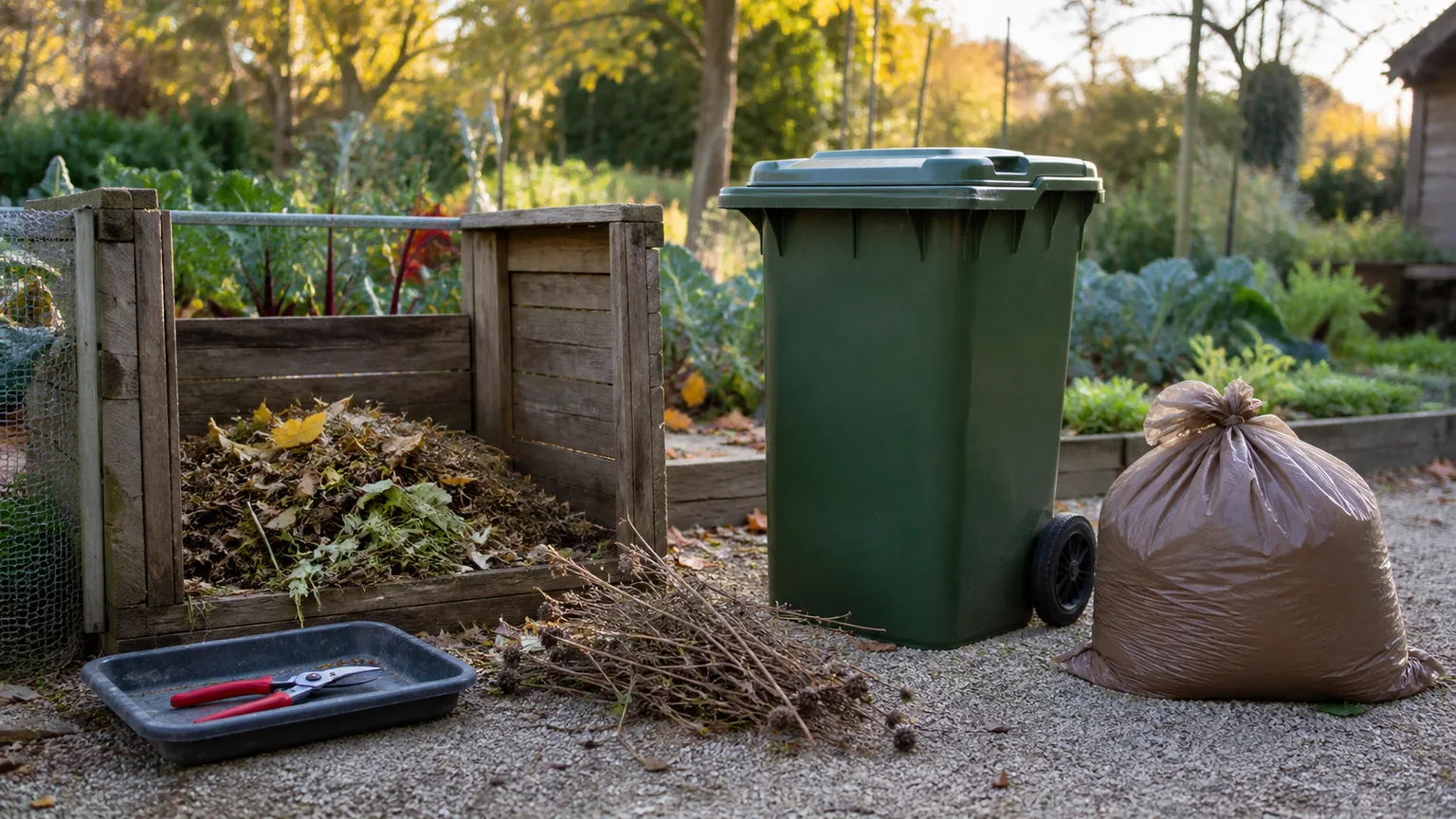
Do not compost vines or leaves that hosted squash bugs. Home compost piles rarely sustain heat long enough to kill adults hiding in thick stems, and eggs glued to leaf undersides can survive cool compost zones. Bag infested material for municipal yard waste where available, or burn where legal and safe.
This rule applies even to plants that “looked fine” at harvest. Bronze egg masses and late-season nymphs are easy to miss. Destroying debris also reduces powdery mildew and other cucurbit disease carryover that weakens next year’s plants—stressed vines attract pests faster than vigorous ones.
If you must compost garden waste generally, keep cucurbit debris separate until you are confident the pile exceeded 131°F (55°C) for several days—a threshold many home piles never reach for bulky vines.
Hunt Hidden Adults Along Garden Edges
After major debris is gone, do a slow perimeter walk. Lift edge stones, check cold frames, peek under tarps and garden furniture, and pull late weeds that touch the bed. Squash bugs are flat, about 5/8 inch long, gray-brown with orange edging on the abdomen when flipped over (UC IPM).
This is also the time to remove alternative hosts near the garden. While cucumbers and melons are less preferred, adults feed on many cucurbits; volunteers and ornamental gourds can bridge pests into spring.
Should You Till in Fall to Disrupt Overwintering Bugs?
Tilling can expose adults buried shallowly in soil, but it is a supplement—not a replacement—for removing debris. Squash bugs shelter primarily above ground in plant matter and mulch; deep burial alone rarely eliminates a population.
If you till, do it after pulling and destroying vines, not instead of it. Turn soil several inches deep in the former cucurbit block to disrupt adults that moved into the top layer of soil and to incorporate remaining small plant fragments that could hold eggs. Avoid excessive fall tilling on sloped or erosion-prone sites or where soil structure is already poor; the trade-off may not be worth it on sandy hillsides.
No-till gardeners can achieve similar results by removing all surface residue, raking smooth, and covering the bed with a clean winter mulch only after confirming the area is bug-free—or leaving the bed bare briefly so predators and weather expose hidden adults. The principle is the same: deny stable cover, not necessarily invert the entire profile.
Spring Strategies That Block Returning Squash Bugs
Spring is when overwintered adults fly to the first tender cucurbit leaves they smell. Your job is to make that landing difficult and to delay egg laying until plants are large enough to tolerate early feeding.
Rotate Cucurbits to a Fresh Bed
Move squash, pumpkins, and zucchini to a different bed than last year, ideally as far apart as the yard allows. Rotation breaks the habit path for walking adults and reduces disease carryover in soil.
Be realistic: squash bugs fly well, so rotation alone rarely solves a bad infestation (Colorado State University Extension). Combined with fall cleanup and row covers, though, it meaningfully lowers early colonization. Avoid planting cucurbits adjacent to last year’s block “for convenience”—that is where overwintered adults concentrate first.
Using transplants instead of direct seeding gives young plants a head start past the most vulnerable 2–4 leaf stage, when nymph feeding can kill seedlings outright (Colorado State University Extension).
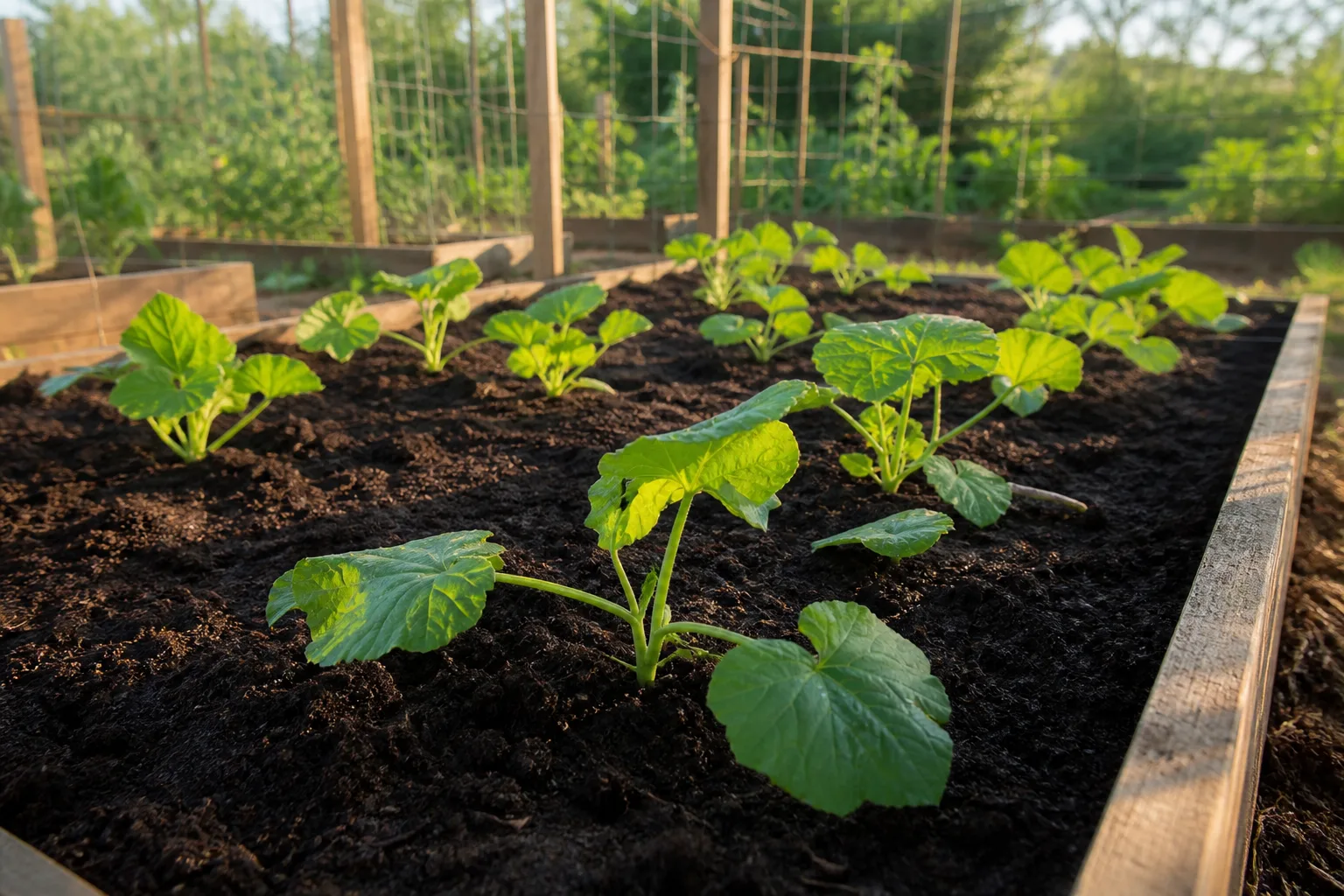
Install Row Covers Until Flowers Need Pollinators
Floating row covers over newly planted cucurbits block flying adults from landing and laying eggs. Install covers immediately at planting, burying edges or securing with soil staples so bugs cannot crawl underneath.
Remove covers when plants begin to flower so bees and other pollinators can reach blossoms—or hand-pollinate if you need to keep covers on longer in a bad bug year. UC IPM recommends covers especially in gardens with a history of squash bug problems (UC IPM). Covers work best paired with clean beds; placing them over ground still littered with last year’s debris traps pests inside with your crop.
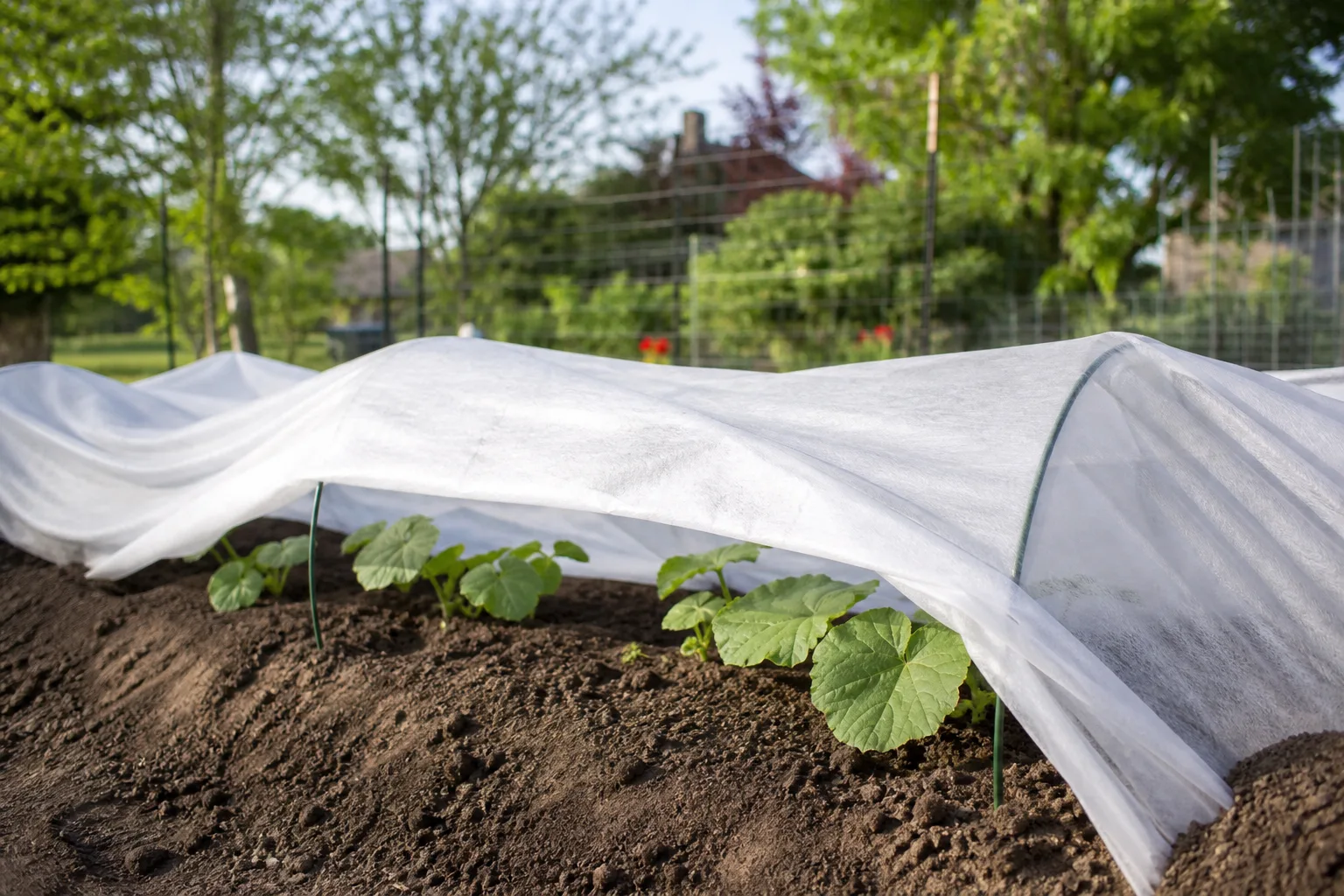
Check daily for tears and lift edges weekly to scout undersides of leaves near the crown once plants grow large.
Plant More Resistant Squash and Pumpkin Varieties
Not all cucurbits are equally attractive. Colorado State lists varieties from least to most susceptible to feeding injury and yield loss: Butternut, Royal Acorn, Sweet Cheese, Green Striped Cushaw, Pink Banana, and Black Zucchini (Colorado State University Extension). Waltham butternut and green striped cushaw are specifically noted as less attractive than summer squash.
Pumpkin, crookneck squash, and watermelon support higher squash bug survival than cucumbers (Colorado State University Extension). If you love zucchini, grow it—but consider pairing a preferred crop with a trap or sacrificial planting of more attractive summer squash at the garden edge, then destroy that edge planting aggressively when bugs congregate there. Resistant varieties are not immune; they buy time for scouting and cleanup to work.
Season-Long Habits That Keep Populations Low
Prevention sets the ceiling; summer habits determine whether a few overwintered adults become a patch-wide infestation by August.
Scout Weekly for Egg Masses and Nymphs
From June onward, inspect leaf undersides and crowns at least weekly. Eggs are bronze to brick red, laid in clusters of 15 to 40 (UC IPM). Crush egg masses with a gloved thumb or scrape them into soapy water. Nymphs hatch in 5 to 10 days and pass through several instars in about 4 to 6 weeks before becoming winged adults.
Extension economic thresholds for summer squash suggest treating or intensifying control when you find one adult per plant or one egg mass per plant (Colorado State University Extension). Catching the first mass on a young plant prevents hundreds of nymphs two weeks later. Early morning is ideal; bugs move slowly in cool air.
Learn to distinguish squash bugs from beneficial assassin bugs (solitary, curved beak, predatory) and from stink bugs (wider, more shield-shaped, usually on non-cucurbit crops) (UC IPM). Misidentification wastes effort and can harm allies.
Trellis Vining Types and Use Board Traps
Trellised squash and melons expose fewer shady ground-level hiding spots than bush types sprawled on mulch (UC IPM). Vertical growth makes egg masses on undersides of leaves easier to see at chest height.
Place flat boards or shingles between rows overnight. Squash bugs gather under them for shelter; in early morning, flip boards and step on adults or drop them into soapy water. Repeat through peak season. This low-tech method pairs well with hand picking and reduces reliance on sprays.
Minimize thick organic mulches right against crowns if squash bugs are chronic; mulch preserves moisture but also refuge. If you use plastic mulch for weed control, weigh the pest harbor benefit against weed and fruit cleanliness benefits for your site (Colorado State University Extension).
Encourage Natural Predators and Parasitoids
Squash bugs face pressure from spiders, ground beetles, big-eyed bugs, and lady beetles (UC IPM). The tachinid fly Trichopoda pennipes lays eggs on late-instar nymphs and adults; look for white or yellow eggs on bug shoulders (Colorado State University Extension). Parasitism rates can be high in some regions, though not dependable everywhere.
Avoid broad-spectrum pyrethroids unless thresholds are exceeded; they knock back predators and can flare aphids and other secondary pests (Colorado State University Extension). Leave small flowering strips or let herbs bolt at bed edges to feed parasitoids. Birds pick exposed adults after tilling or cleanup—another reason to keep debris minimal in fall.
When an Active Infestation Needs Immediate Control
If plants wilt suddenly with black, brittle stems at the crown, you may be seeing Anasa wilt from heavy feeding—not bacterial wilt from cucumber beetles (UC IPM). Confirm by finding bugs or eggs on the affected plant.
First response: handpick adults and nymphs, destroy all egg masses, and remove badly infested young plants before bugs spread. Insecticidal soap or neem oil can suppress small nymphs if coverage reaches undersides of leaves; adults are difficult to kill with soft products (UC IPM). Apply in evening hours to reduce contact with bees.
Repeat treatments weekly for two to three weeks to catch newly hatched nymphs. Combine physical removal with sanitation—do not let infested vines lie in pathways. If you still have time before frost, a thorough fall cleanup after control prevents those adults from overwintering.
Common Mistakes That Invite Squash Bugs Back
Composting infested vines is the most common repeat mistake. Heat-killed compost is fine; cool backyard piles are not.
Leaving thick mulch undisturbed over winter preserves adults that moved in during fall.
Planting the same bed first every spring puts seedlings exactly where overwintered adults expect food.
Removing row covers too late or never starves pollinators; removing them too early invites egg laying before plants size up. Aim for first open female flower as your default reminder.
Ignoring weeds and garden clutter at the margins creates overwintering habitat you never associate with squash bugs.
Spraying only adults in July misses egg masses that hatch within days. Scouting beats reactive spraying.
Confusing squash bugs with assassin bugs removes predators that eat caterpillars and beetles.
Conclusion
Squash bugs return because adults survive the winter near food and shelter you leave behind, not because your garden is cursed. A strong year starts in fall: pull infested cucurbits, destroy debris instead of composting it, hunt adults along edges, and optionally till once residue is gone. In spring, rotate beds, cover young plants until bloom, and favor less susceptible varieties like butternut and Royal Acorn where it fits your menu.
During summer, weekly egg scouting, board traps, trellising, and predator-friendly practices keep numbers below the thresholds that wreck harvests. If bugs show up anyway, combine hand removal with targeted nymph sprays and finish the season with the same cleanup discipline that prevents next year’s wave. Done consistently, this cycle shrinks each generation until August feels like gardening again—not rescue work.