Joanna Gaines’ Fall Container Garden Method, Explained
Learn Joanna Gaines’ fall container garden method: build a mood board, match plants to light, use thriller-filler-spiller layers, and plan for frost.
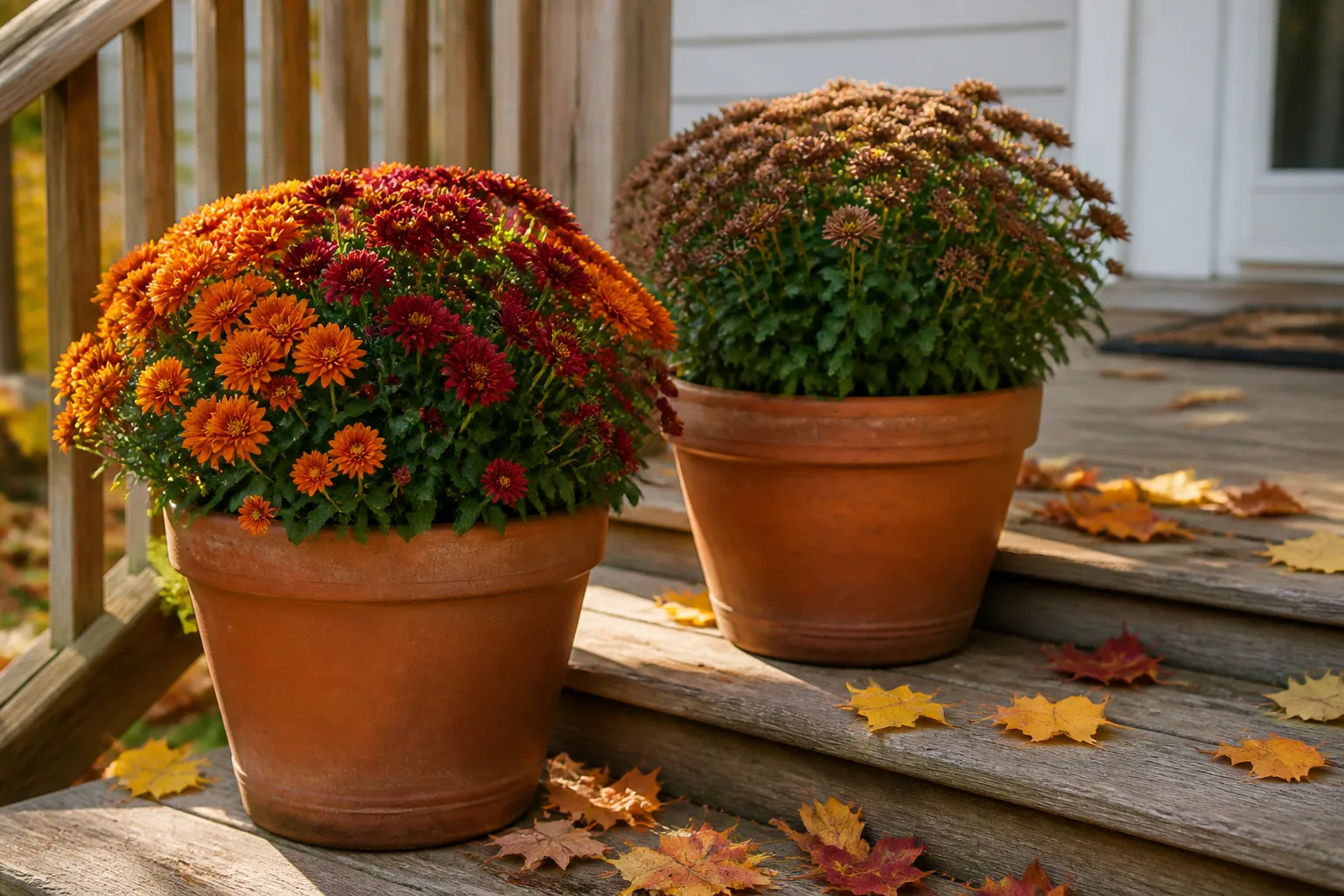
Joanna Gaines’ fall container gardens are appealing because they look collected, not accidental. The useful part of her method is not a secret list of rare plants; it is the decision to settle the visual direction before visiting the nursery, then give each plant a job in the finished composition.
That approach can make a porch or patio feel finished quickly, but design alone cannot rescue a container placed in the wrong light or planted in a pot with poor drainage. Use the method as a sequence: make a small mood board, read the site, choose plants that can share conditions, build height and fullness, then plan for the first frost.
Why the Mood-Board Step Works
A mood board slows down the most expensive moment in container gardening: the shopping trip. If you arrive without a palette, every vivid flower and unusual leaf can look like a good idea, and the final pot becomes a collection of unrelated colors, heights, and care requirements.
Your board does not need to be elaborate. Save three to five images that have a similar feeling, add a photo of the porch or patio, and pull out two or three colors you can actually find as plants or foliage. A useful fall palette might be rust, cream, and deep burgundy, or plum, silver, and soft green. The goal is a boundary, not a rigid rule.
Use the board to decide what should repeat across several pots. Repeating one flower color, one foliage tone, or the same pot finish creates rhythm at the front door. You can still vary the plants, but the eye will connect the displays instead of reading them as separate purchases.
Start With the Container’s Actual Site
Do the horticultural homework before you choose the plants. The Royal Horticultural Society’s container-growing guide notes that containers need drainage holes, generally need more watering and feeding than plants in the ground, and expose roots to more cold in winter. Those constraints matter more than whether a plant looks perfect beside another one in the nursery.
Measure Light, Heat, Wind, and View
Watch the intended location on a clear day and write down direct-sun hours, especially from midday into the afternoon. A covered porch may feel bright to you while still providing too little light for a flowering mum or coneflower. Conversely, a dark pot against a west-facing wall can become much hotter than an open patio, drying the root ball faster.
Record four site facts: direct light, shelter, wind, and viewing distance. A container beside a door needs a compact shape and enough clearance for people to pass. A pair of large pots at the end of a walkway can carry taller plants. A windy balcony needs a broad, heavy base and shorter choices even if a tall grass would look beautiful in a sheltered garden.
Match plants by conditions before matching them by color. Full-sun partners should tolerate similar drying, while shade partners should accept lower light and steadier moisture. If one plant wants baking sun and another wilts in it, the color palette is not a successful combination; it is a maintenance problem waiting to happen.
Turn a Color Palette Into Plant Roles
Think of color in layers. The anchor is the strongest visual note—perhaps bronze mums, purple pansies, burgundy coleus, or a red-leaved grass. The neutral is what gives that color room to breathe: silver foliage, green grass, cream blooms, or an earthy pot. A small accent can repeat the anchor without making every plant compete for attention.
Choose One Anchor Color and One Quiet Neutral
For a single pot, aim for one dominant color family, one supporting foliage color, and one texture that is easy to recognize from a distance. Warm colors such as orange, red, and copper read strongly against brick and wood. Cool purples, blue-greens, and silver-gray foliage suit stone, gray siding, and blue doors.
The palette should also survive the life cycle of the plants. Flowers may fade, but foliage remains, so do not make the entire design depend on bloom color. Ornamental kale, coleus, heuchera, grasses, and silver-leaf plants can carry the composition between flower flushes. Savvy Gardening’s container advice similarly emphasizes reading plant tags for mature height and width, choosing for the actual sun or shade, and using foliage as more than a background filler.
Make a quick color test before buying. Place a paint chip, fabric scrap, or a photo of the exterior beside your saved inspiration images. If the combination looks muddy, remove one color. Restriction is what makes a group of ordinary nursery plants look intentional.
Build the Thriller-Filler-Spiller Structure
The thriller-filler-spiller formula is a useful design shorthand: the thriller supplies vertical or dramatic focus, the filler occupies the middle and softens gaps, and the spiller trails over the rim. It is a framework for balance, not a requirement to buy exactly three plants.
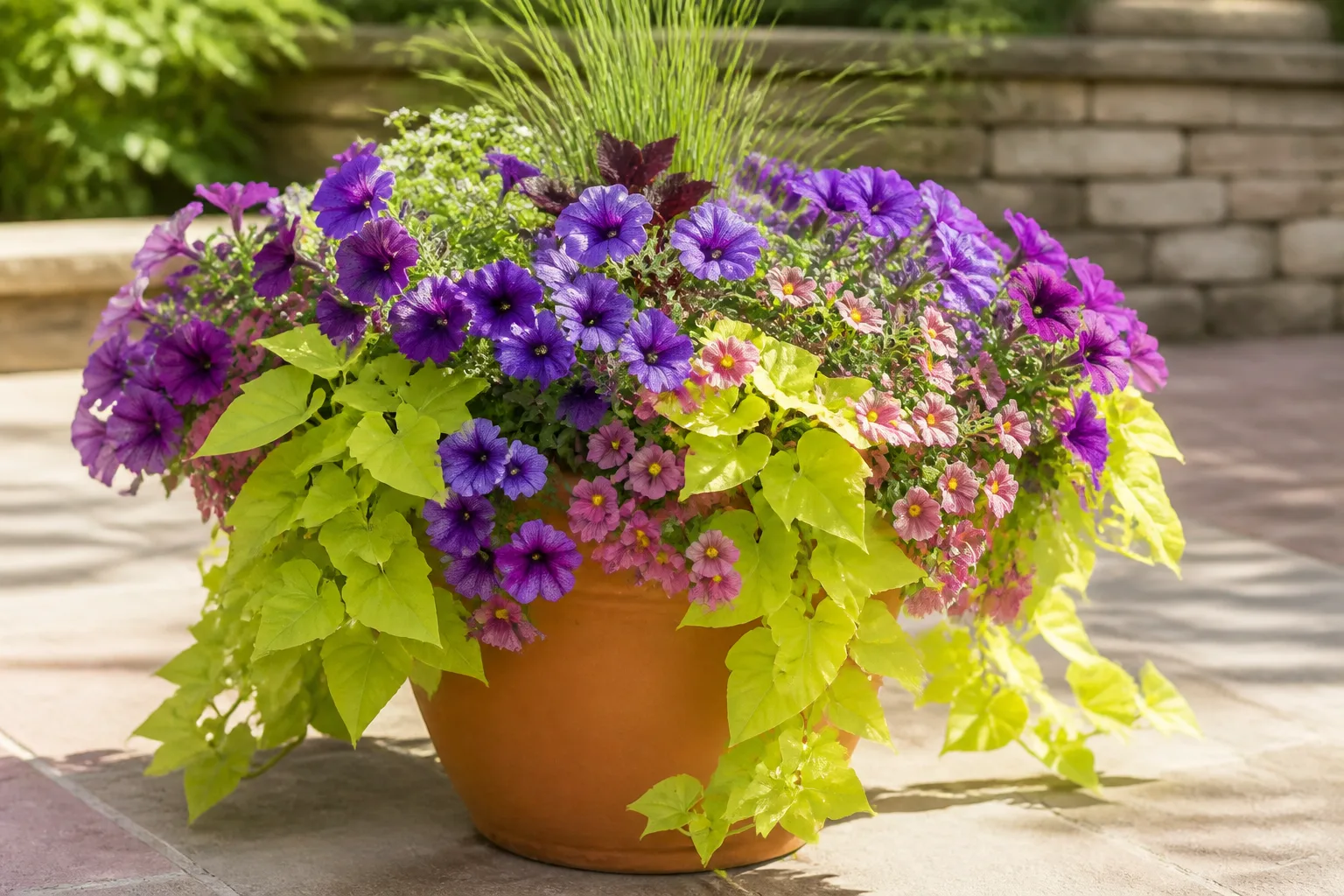
For fall, a thriller could be an ornamental grass, a compact Japanese maple, a dahlia, a tall coleus, or an upright plant with strong leaves. Fillers include mums, pansies, violas, heucheras, ornamental kale, and mounded herbs. Spillers might be trailing ivy, creeping Jenny, trailing verbena, bacopa, or a plant whose foliage drapes rather than standing upright. For more trailing options, browse our guide to the best spiller plants for containers.
Do not force every role into every pot. A broad bowl may look better with three mounded mums and no spiller. A narrow urn may need one strong thriller and a low ring of foliage instead of several crowded flowers. The visual job is to create a deliberate silhouette from the angle where the container will be seen.
Decide How Full the Pot Should Be
Gaines’ advice to plant generously makes sense for an instant fall display, because nursery plants are often already near their finished seasonal size. Still, “full” should not mean roots pressed together with no room for water to move through the mix. Savvy Gardening recommends packing containers while leaving room for growth, and plant tags provide the best starting point for mature spread.
Use the pot’s diameter and the plants’ mature widths as your guardrail. In a large container, three small plants may look sparse on planting day but knit together in a few weeks. In a medium pot, two or three plants with naturally compact habits can look lush immediately. If the plants are already flowering heavily, allow extra air space so rain and irrigation can reach the soil instead of lingering on dense leaves. Fine Gardening’s focal-point container guide makes the same useful distinction: a dramatic plant can carry a pot by itself, while neighboring plants can enhance rather than bury it.
Pick a Pot That Can Support the Design
Choose the container before you finalize the plant list. A large pot with more soil volume dries more slowly and is usually easier to maintain than several tiny pots, according to RHS guidance. That extra mass also makes a tall thriller less likely to tip in wind.
Every outdoor container needs an open drainage hole. Do not add a layer of gravel to “improve” drainage; use a quality container mix, keep the hole clear, and raise the pot slightly on feet or small blocks where water tends to collect. Our explanation of rocks at the bottom of a planter covers why the drainage hole and the mix matter more than a false gravel layer. Garden soil is usually too dense for a seasonal container and can leave the root zone short of air.
Terracotta fits a warm, rustic fall palette but dries faster and can crack in freezing weather. Plastic is lighter and holds moisture longer, while metal can heat up in sun and chill quickly in winter. The RHS recommends choosing container material and size with these trade-offs in mind, so treat the pot as part of the care plan, not just as a decorative shell.
Fall Combinations for Full Sun
Full sun gives you the widest fall palette, including garden mums, ornamental kale, pansies, violas, sedum, many grasses, and late-season perennials. It also makes mistakes visible: a small pot can dry quickly, flowers can scorch beside a hot wall, and a thirsty arrangement may need daily inspection in warm weather.
A Warm Porch Formula With Mums and Foliage
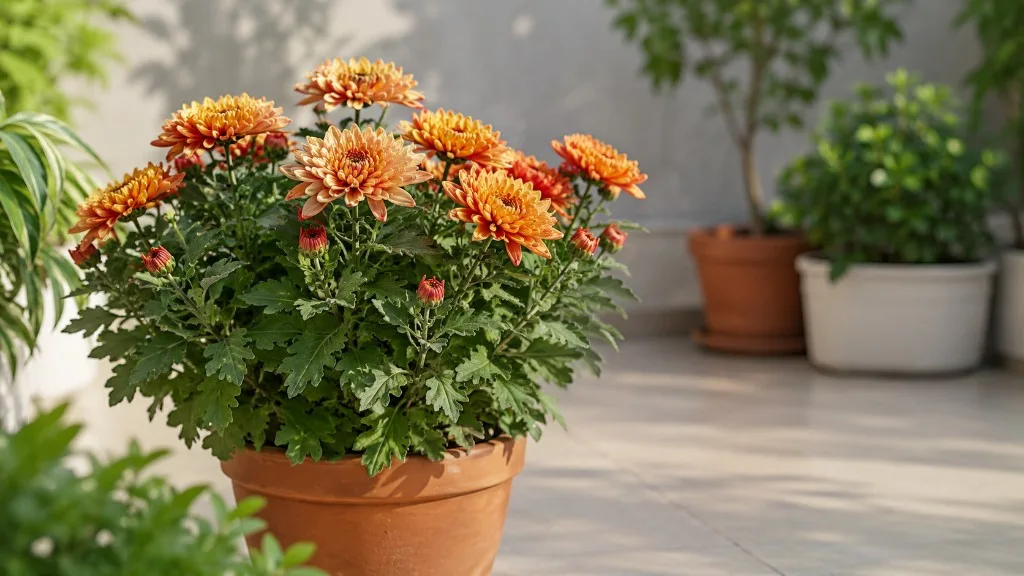
For a warm, welcoming arrangement, use one large bronze or orange mum as the main color block, a burgundy or chartreuse foliage plant as the filler, and a low spiller that repeats the pot’s warm tone. If you want height, replace the single mum with a compact ornamental grass and use mums around its base.
A second full-sun combination can pair a dahlia or compact Japanese maple with ornamental kale and a trailing plant. This has stronger structure than a pot made entirely of flowers: the focal plant gives height, kale supplies a cool rosette, and the spiller breaks the hard edge of the container.
Remember that not all sunny plants share the same end-of-season behavior. Dahlias and many tropical foliage plants may collapse at the first frost, while kale, pansies, and violas can continue through repeated cool nights. The RHS autumn bedding guide is a useful reminder that autumn displays can include plants chosen for cool-weather color and foliage, not only flowers. Buy the combination you want for the next several weeks, but know which component you will replace first.
Fall Combinations for a Shaded Porch
Shade is where the original design lesson needs the most correction. A favorite sun plant does not become a good porch plant because it looks beautiful beside the door. If a site receives only bright ambient light, prioritize foliage and cool-season flowers that can tolerate the exposure rather than promising a bloom show the location cannot provide.
A Cool, Textural Formula for Bright Shade
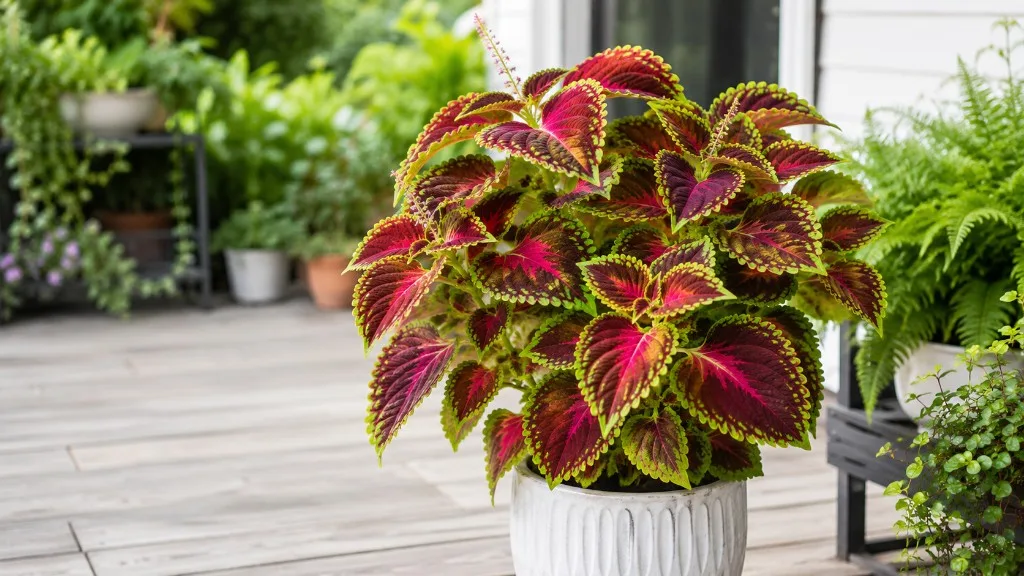
Start with a compact coleus or heuchera for color, add a small fern or another textured green filler, and finish with ivy or a shade-tolerant trailing plant. Pansies and violas can work in bright, cool shade, especially when the container is not completely roofed over. Keep the palette to plum, silver, green, and cream for a quieter fall effect.
If you want a Japanese maple in a pot, choose a compact cultivar, provide a stable container, and treat it as a longer-term specimen rather than a disposable seasonal filler. It needs a pot large enough for the root system, consistent moisture without saturation, and protection from drying winds. A full-size maple placed on a porch for height may outgrow the design or become too heavy to move.
The same principle applies to coneflowers. They can be excellent sun-loving focal plants, but a shaded porch is not the place to use them just because their flowers fit the mood board. Move that color into a sunny container or choose a shade-tolerant foliage plant that performs honestly at the door.
Make the Display Last Through Cool Nights
Plan backward from your average first frost date, but use the forecast as the final decision. Plants already in bloom create an immediate display; tiny transplants or late-sown seeds may not have enough time to fill the pot before temperatures fall. RHS guidance identifies autumn as the planting window for winter displays and spring bulbs, but local climate, cultivar hardiness, and shelter change the result.
When a light frost is forecast, group containers near the house, move tender plants under a roof or into a garage overnight, and cover plants only with breathable material that does not rest heavily on the foliage. Bring in anything you cannot afford to lose, such as a tropical plant or dahlia tuber you intend to save. Do not assume the porch is warm enough if wind still reaches the pot.
After a frost, wait until the foliage thaws before touching it. Remove collapsed annuals, cut away mushy material, and decide whether the remaining plants still make a balanced design. A pot that loses its thriller may be better replanted than propped up with a struggling stem.
Plant the Container Without Creating Future Problems
Use a fresh, good-quality potting mix suited to container plants. Fill the pot so the root balls sit at the same depth they were growing, leaving an inch or two below the rim for watering. Do not bury crowns or pile wet mix against stems, and avoid an oversized pot for a small root ball because excess mix can stay wet.
Set the Plants Before Adding Soil
Arrange the nursery pots on the surface before planting. Put the thriller toward the back or center as seen from the primary viewing angle, place fillers where they will hide gaps, and reserve the rim for spillers. Turn the pot as you work so the best side faces the door or walkway.
Slide each plant out without pulling its stem, loosen circling roots only when they are genuinely tight, and firm the mix around the root ball. Water slowly until excess leaves the drainage hole, then top up any settling soil. The first watering is a settling step, not a reason to keep the pot permanently wet.
Place the finished container where you measured the light. If you make the pot first and choose the location later, you may discover that the thriller blocks a door, the foliage burns against a wall, or the flowers face away from the main view. The site should decide the design’s final proportions.
Maintain the Planter on a Weekly Rhythm
Check moisture with a finger several inches below the surface rather than watering by calendar. Containers dry faster than garden beds, and RHS maintenance guidance recommends more frequent checks during warm or windy weather; hot conditions can require checking twice a day. Water thoroughly when the mix is drying, then let excess drain away. If your patio pots dry out unusually fast, see why container plants dry out faster in summer heat before simply watering more often.
Rain does not always mean the root ball is wet. Dense foliage can deflect water, and a covered porch may receive almost none. On the other hand, a pot in a rainy, cool position may stay saturated for days. If the mix smells sour or the plant wilts while the soil is wet, inspect the drainage hole and stop adding water until the cause is clear.
Deadhead flowering plants when they need it, remove yellow or collapsed leaves, and trim a spiller before it smothers the filler. Turn containers occasionally if growth leans toward the light. Keep fallen leaves from packing against the stems, and feed only when the plant and season call for it; late-season overfeeding can produce tender growth just as cold weather arrives.
Know When to Swap, Move, or Retire a Plant
A beautiful pot is not a contract to keep every plant until winter. Swap a plant when it has finished flowering, blocks the door, needs substantially more water than its neighbors, or is declining because the site is wrong. Replacing one weak component can preserve the palette and shape without dismantling the whole arrangement.
Move a container when the plant is healthy but the exposure is not. A mum that refuses to flower in deep shade needs more light, not more fertilizer. A coleus with scorched leaves may need afternoon protection, while a soggy kale pot may need a clearer drainage route or a mix with more air space.
Retire tender plants before the first hard freeze if you want to take cuttings, save tubers, or move a specimen indoors. Clean the pot, remove diseased debris, and decide whether the container should become a winter display with pansies, violas, evergreen foliage, or a bulb planting. Seasonal change is part of the design, not evidence that the first planting failed.
Common Design Mistakes to Avoid
The first mistake is choosing the plant before choosing the site. A mood board can tell you that you love copper and plum, but only the porch can tell you whether those colors belong on a sunny wall, bright shade, or a wind-exposed balcony.
The second is treating thriller-filler-spiller as a shopping quota. Three plants with incompatible water needs do not form a better composition than one strong specimen in the right pot. Use the formula to balance shape, then edit by light, mature size, and frost response.
The third is cramming a small pot because a dense nursery display looks lush. Overcrowding can create a thirsty root ball, trap wet foliage, and make it harder to diagnose pests or rot. A larger container or fewer plants often produces a fuller result with less daily rescue.
The fourth is putting a decorative cachepot outdoors without checking for drainage. If the outer vessel has no hole, use it as a cover pot only when the planted container can be lifted out to drain completely. Standing water around the root ball is a design failure, not a sign of thorough care.
Conclusion
Joanna Gaines’ fall container garden method works because it begins with intention: choose the feeling, limit the palette, and build a composition with height, fullness, and movement. The method becomes genuinely useful when you add the horticultural checks a mood board cannot provide—direct light, pot volume, drainage, mature width, moisture compatibility, and the first-frost deadline.
Start with one container and three colors. Choose a thriller that fits the light, a filler that carries the middle, and a spiller that can share the same watering rhythm. Plant generously without sealing the root zone, inspect moisture before watering, and move or replace a plant when the site proves it is a poor match. That is how a polished fall porch display stays beautiful after the inspiration image is put away.