Does Vinegar Kill Weeds? What Actually Works
Does vinegar kill weeds? Learn why 5% vinegar browns young weeds, why roots regrow, and where vinegar is safe—or a poor choice—in the yard.
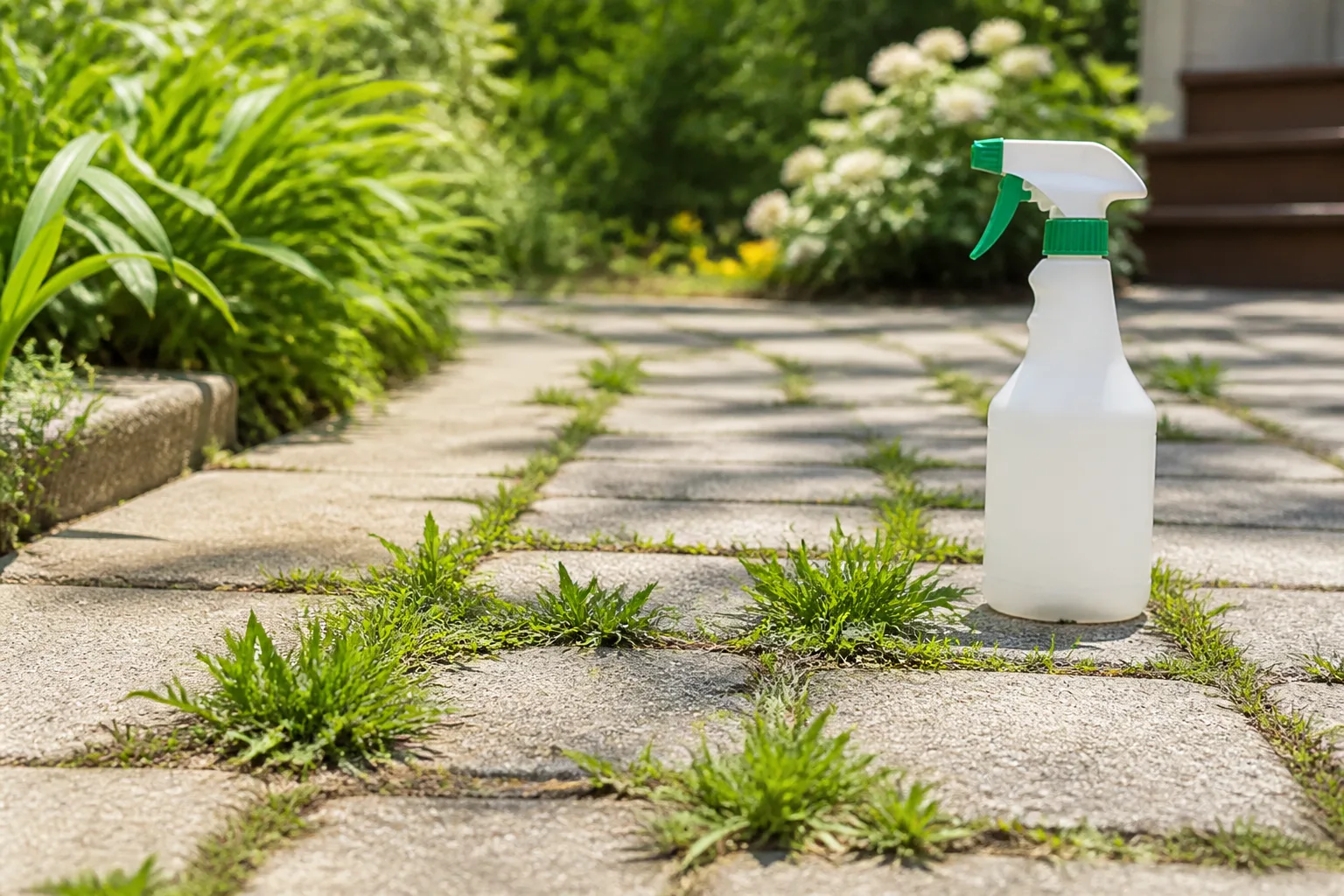
Vinegar can make a weed look dead in a few hours. That part of the hack is real. The catch is that a brown top is not proof that the plant’s root, crown, or rhizomes are gone.
The most useful verdict is narrower: household vinegar can burn down exposed foliage, especially on small annual weeds, but it is an unreliable permanent killer for established weeds. It makes sense as a carefully aimed spot treatment in a paver joint or gravel path. It is a poor choice for a lawn, vegetable bed, or border where a little drift can injure plants you want to keep.
The short answer: vinegar kills foliage, not every root
Vinegar contains acetic acid, which acts as a contact herbicide. It damages the plant tissue it touches, disrupts cell membranes, and rapidly dries the treated leaves. It does not behave like a systemic herbicide that moves through the plant to the roots, so an established weed can look finished above ground while its underground storage system remains alive.
That is why two gardeners can report opposite results without either one imagining things. A tiny annual seedling may die after its only leaves are coated. A mature dandelion may collapse just as dramatically, then send up fresh leaves from its taproot later. USDA Agricultural Research Service trials found that 5% and 10% vinegar killed several weeds during their first two weeks of life, while older plants generally needed stronger solutions; the result varied by weed and growth stage (USDA Agricultural Research Service).
Before reaching for any spray, identify the setting and the plant’s growth habit. A weed in a lawn is surrounded by another plant you want to preserve; a weed in a paver joint is surrounded by a surface you want to keep bare. That single distinction often matters more than whether the vinegar came from a kitchen cupboard or a garden shelf.
What a fair yard test actually shows
A quick before-and-after test is useful when it measures more than color. Treat a few similar weeds and leave a nearby, similar clump untreated. Take a photo before spraying, another after about 24 to 48 hours, and a final check roughly two weeks later. That simple comparison separates immediate leaf injury from lasting control.
The result you are likely to see is a fast change in the treated leaves: dull green, pale, curled, or brown tissue. If the weed is young and shallow-rooted, that may be the end of it. If new green growth appears from the center or the soil line, the spray did its contact job but did not finish the plant.
How to read the result instead of celebrating brown leaves
Use three questions when you inspect the patch. Did every leaf receive spray? Did the plant have a substantial root, crown, bulb, stolon, or rhizome? Is the new growth coming from the treated stem or from underground tissue? The answers tell you more than how dramatic the first afternoon looked.
The test also exposes why internet recipes are hard to compare. One person may spray two-leaf pigweed in full sun; another may spray a mature grass tucked into a damp crack. They are not testing the same biological problem, even if both use a bottle labeled vinegar.
Why acetic acid browns leaves so fast
Acetic acid is an acid, but its weed-control effect is not a mysterious soil reaction. When a sufficiently strong solution wets green tissue, it damages cell membranes. Water escapes from injured cells, the leaf dehydrates, and the exposed portion can turn brown quickly. USDA ARS describes this as rapid desiccation from a contact treatment (USDA ARS publication).
That chemistry explains both the satisfying speed and the frustrating limitation. The spray cannot injure tissue it never reaches, and the visible burn does not automatically travel down into a taproot or sideways through a rhizome. A waxy leaf, narrow grass blade, curled leaf, or dense canopy can therefore reduce coverage even when the bottle itself is strong enough to cause damage.
Young annual weeds versus established perennials
The best candidates are small annual weeds with only a few leaves and little stored energy below ground. Young broadleaf seedlings are often easier to coat completely than mature plants, and a full leaf kill can be a permanent kill when there is no established root reserve ready to replace the top growth.
The poor candidates are mature perennial weeds such as dandelion, bindweed, nutsedge, bermudagrass, and Canada thistle. Their roots, crowns, bulbs, stolons, or rhizomes can survive the burn and use stored energy to produce another flush of leaves. Repeated contact sprays may weaken new growth over time, but they also create repeated opportunities to damage nearby plants and soil.
There is a second reason seedlings give a better result: their leaves are usually the whole plant’s working surface. On a large weed, you may coat only the outer leaves while newer leaves stay tucked inside the canopy. A spray that appears thorough from above can therefore leave protected growing tissue untouched, especially when the plant is already making flowers or seed.
Think of vinegar as a burn-down window, not a root treatment. If the weed is small enough that its exposed foliage represents nearly all of its living tissue, the window may be enough. If the weed has had weeks to build a root reserve, the same brown color tells you only that the leaves were injured.
USDA field research illustrates the trade-off. Higher-acetic-acid treatments gave stronger short-term control in the study, and broadleaf weeds generally responded better than grasses. That is evidence that concentration and species matter—not a promise that a stronger bottle will permanently remove every weed in a yard (USDA ARS field study).
Why grasses can be harder to control
Grass weeds often present less leaf surface to a spray than broadleaf weeds. Their narrow blades can shed droplets, and many lawn grasses and grassy weeds have growing points protected close to the crown. A light mist that browns the tips may leave the plant’s recovery point untouched.
This is also why vinegar is a bad lawn solution. It is non-selective, so it cannot tell a crabgrass plant from the turf surrounding it. Even if it worked perfectly on the weed, the same contact spray can leave a dead patch in the grass.
Household vinegar versus horticultural vinegar
Most kitchen white vinegar is about 5% acetic acid. That is enough to injure tender foliage in favorable conditions, and it is the concentration used in some USDA research on young weeds. It is not equivalent to a product sold as horticultural vinegar or an acetic-acid herbicide.
Concentrated products can contain 10%, 20%, or more acetic acid. They can burn foliage faster and may improve short-term control of some weeds, but they also raise the risk to the person applying them. USDA ARS warns that concentrations of 11% or greater can burn skin and cause serious to severe eye injury, including blindness (USDA ARS safety summary).
Treat a concentrated product as an agricultural chemical, not as “stronger cooking vinegar.” Read the full label, use the required protective equipment, keep people and pets away as directed, and do not improvise a dilution or transfer it to an unmarked bottle. For a homeowner deciding what to do with a few patio weeds, the safer question is usually whether vinegar is the right location-specific tool—not how strong a product can be found.
Strength is only one part of performance. The USDA field work also varied application volume and additives, and the spray did better as coverage increased; additives did not consistently provide a major advantage. In a home yard, that means a complete, even coating on a small target can matter more than adding another pantry ingredient. It also means a thin mist over a dense weed can fail even when the bottle has a higher percentage on its label.
The safest place to use a vinegar spray
Vinegar is easiest to justify where no desirable green tissue is growing and where a little top-growth control is useful even if new weeds return. That usually means isolated hardscape cracks, gravel paths, and joints between pavers—not planting soil.
Even there, keep the spray targeted. Runoff can reach the edge of a bed, drift can land on low flowers, and repeated treatment can make a narrow strip hostile to anything you later want to grow. A hard surface is not a license to spray on a windy day.
Hardscape cracks, pavers, and gravel paths
On a sunny, dry day, a contact spray can shrivel the visible leaves growing from a joint. It is useful when the roots are wedged so tightly into mortar or gravel that pulling only breaks the stem. Once the foliage has browned, remove the dead top growth and clear loose soil or seed-filled debris from the crack so the next flush has fewer places to start.
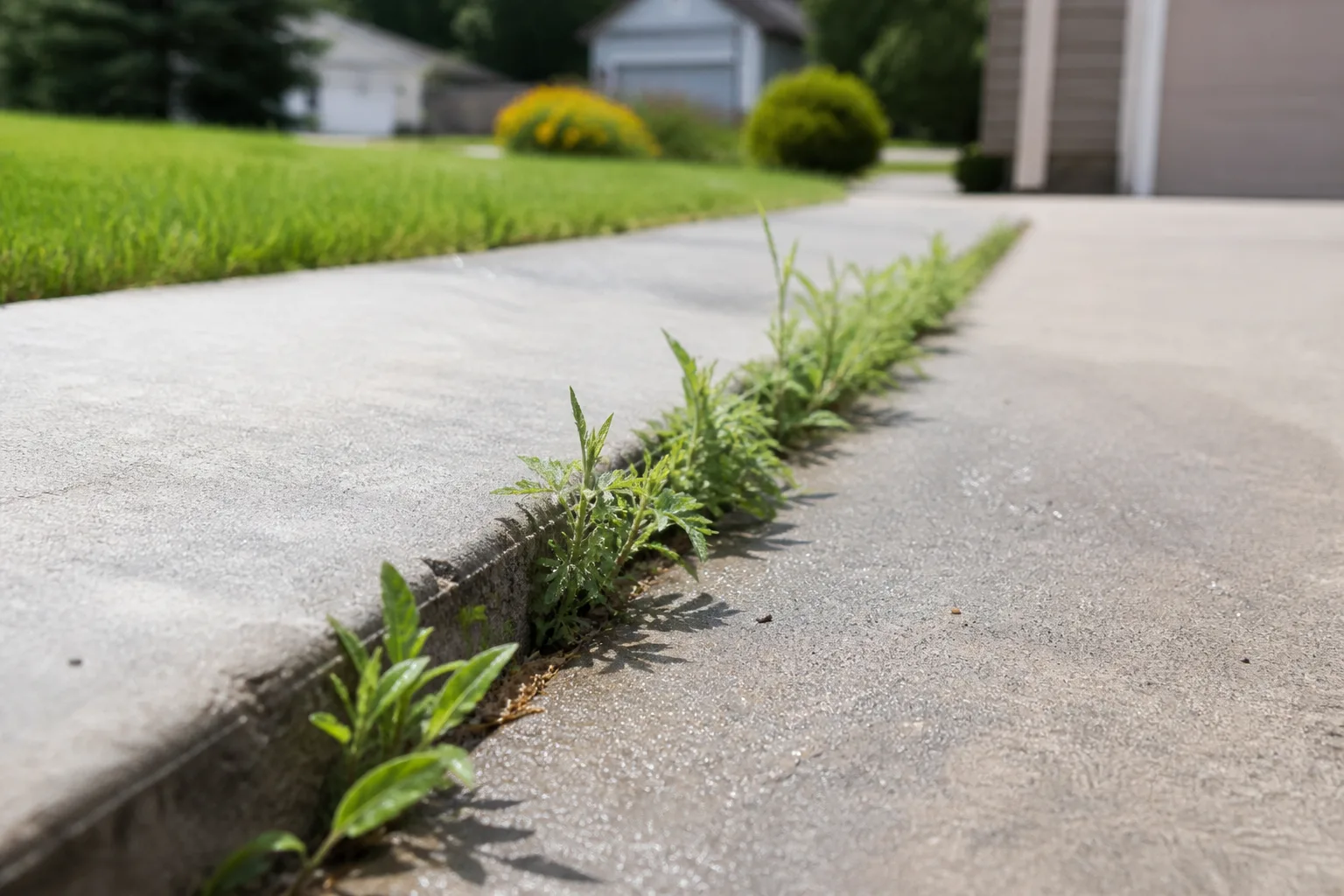
The limitation is durability. A crack can hold roots, moisture, and newly blown seed, so even a completely brown patch may green up again. If you need a longer-lasting result, combine occasional spot treatment with sweeping out sediment, repairing the joint, or using a physical barrier appropriate for that hardscape.
Be mindful of the surface itself. Household vinegar is not a guarantee of zero staining or wear, and concentrated acidic products can be a poor match for some natural stone, decorative finishes, or metal edging. If the path matters to you, test a hidden spot, keep the liquid off adjacent surfaces, and treat the smallest area that solves the problem.
Lawns, garden beds, and borders are different
Do not spray vinegar across a lawn to remove broadleaf weeds. The same non-selective action that browns the weed will also injure turf, and a spray bottle is a poor substitute for a selective lawn product used according to its label.
Keep vinegar away from vegetable beds, herbs, perennial borders, and the root zones of shrubs. Aiming at one weed is not enough if droplets land on a wanted plant, and adding salt makes the location even less suitable for future planting because salt can persist and harm other plants. In a bed, hand-pulling after rain, shallow hoeing, mulch, or a targeted method that protects the crop is usually the better decision.
How to run a small vinegar test without collateral damage
If you want an honest answer for your own yard, test the method as a spot treatment rather than spraying a whole area. Your soil, weed species, weather, and vinegar concentration determine the outcome, so a small trial gives you useful information without committing the entire bed or lawn.
Choose a comparable test patch
Select three or four weeds that are similar in species, size, and exposure. Avoid a patch where desirable plants share the same leaves or where runoff will flow into a vegetable bed. Mark or photograph one untreated comparison plant so you can tell whether weather alone caused the change.
Start with household vinegar only in a place where accidental contact is acceptable, such as a hardscape crack. Do not use a concentrated product merely to make the trial look more impressive; the safety difference is substantial, and a stronger burn still does not turn contact action into root action.
Spray for leaf coverage, not runoff
Choose a dry, calm day with several hours of sun. The leaves should be dry, and there should be no immediate rain forecast to dilute or wash away the spray. Apply enough to wet the target foliage evenly, but stop before liquid streams across the surface or toward a plant you want to keep.
A spray bottle with a narrow stream is easier to aim than a broad mist around ornamentals. Hold cardboard between the weed and nearby foliage if needed, and keep the nozzle close to the target. Avoid spraying when wind can carry droplets across a bed, lawn, pond, or neighboring planting.
Check the patch at two days and two weeks
At 24 to 48 hours, record the visible injury: no change, wilted, bronzed, or fully brown. At roughly two weeks, look for new leaves at the center, fresh shoots at the soil line, or green regrowth from a crack. That second check is the part most quick demonstrations omit.
If the top is brown but the root has resprouted, do not keep increasing the amount of vinegar or salt at random. Decide whether to repeat a carefully aimed contact treatment on the new tender growth, remove the root mechanically, or switch to a method suited to that location.
Weather and timing that change the result
Dry, sunny, calm weather generally favors a contact spray. Rain can dilute it before the leaves are injured, while wind increases drift and may turn a small test into collateral damage. A cool, cloudy period can also slow the visible drying that makes vinegar seem so powerful in online demonstrations.
Weed age matters as much as the forecast. Spray small weeds before they develop a deep root or large canopy, and expect mature perennials to need a different plan. Avoid treating drought-stressed plants simply because they look vulnerable; the goal is controlled targeting, not maximum damage to every green surface nearby.
BBC Gardeners’ World Magazine reaches a similar practical conclusion for homemade weed killers: use them on a dry day, expect more than one application when the first dose does not finish the weed, and reserve the approach for young weeds and suitable paved areas (BBC Gardeners’ World Magazine).
Why dish soap is optional—and salt is risky
Dish soap is often added because it can reduce surface tension and help a liquid spread over a waxy leaf. That may improve coverage, but soap does not make vinegar systemic and does not send acetic acid to the roots. More soap is not automatically better; a sudsy mix can be harder to aim and still damages any foliage it coats.
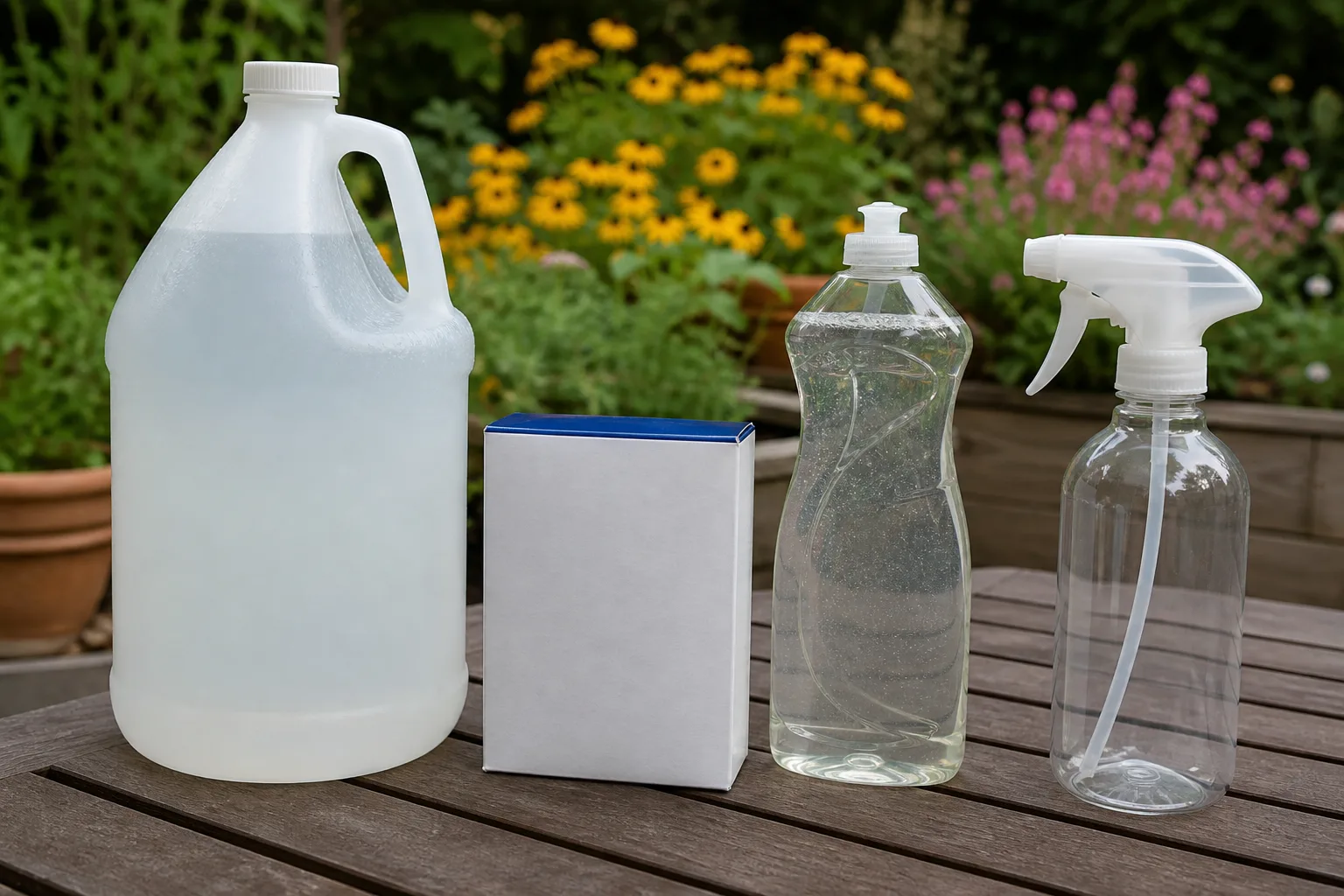
Salt is a different decision. It can add desiccating power, but it also adds a soil problem that vinegar alone does not solve. Salt can injure nearby plants and make a strip harder to replant, so it has no place in a lawn, vegetable bed, or perennial border. BBC Gardeners’ World likewise limits salt-based weed-killer advice to paths and paving, with care to prevent leaching into soil (BBC Gardeners’ World Magazine on homemade weed killers).
Birds & Blooms gives a common 5% vinegar-and-soap recipe but also warns that the mixture is non-selective, works best in sun and calm air, and may require another treatment when roots survive (Birds & Blooms). The useful takeaway is the limitation, not a universal recipe: soap may help a leaf coating, but no pantry additive fixes the root problem.
What to do when the weeds grow back
Regrowth is not evidence that the original spray did nothing. It usually means the spray injured the leaves but left enough root, crown, or underground stem alive to rebuild. Pulling the plant after the soil is moist is often more effective than spraying the same mature top repeatedly, especially when you can remove the crown or taproot.
For a hardscape crack, you can remove the dead material, scrape out the root crown, and watch for small new seedlings. Treating young regrowth is more logical than soaking a large, established plant with an increasingly strong solution. Repairing a broken joint or removing the soil that collects there addresses the reason the weed keeps returning.
For a lawn, correct the plan rather than escalating vinegar. Mow at the appropriate height for the turf, improve thin areas, and use hand removal or a selective, labeled lawn treatment if the weed pressure justifies it. For a bed, mulch and regular shallow weeding reduce new seedlings while preserving the plants you planted on purpose.
If the same weed returns from the exact center of a crack, you are dealing with survival. If new weeds appear at random points across the surface, you are dealing with fresh seeds or windblown debris. The first problem calls for root or joint removal; the second calls for surface cleanup and prevention. Vinegar can address the visible leaves in either case, but it is not the part of the plan that stops the source.
Choose the control method by weed location
The best answer is not “vinegar” or “never vinegar.” It is a match between the treatment and the place where the weed is growing:
- Lawn: Skip vinegar because it is non-selective. Hand-pull isolated weeds or use a product labeled for the specific turf and weed, following its instructions.
- Vegetable bed or perennial border: Pull, hoe while weeds are small, mulch, or shield the crop with a location-appropriate method. Avoid salt and spray drift.
- Paver joint, driveway crack, or gravel path: A carefully aimed household-vinegar spot treatment can be reasonable for quick top-growth control, especially on young weeds. Expect possible regrowth and pair it with joint maintenance.
- Deep-rooted perennial: Dig out the crown or roots where practical, repeatedly remove new growth, or choose a properly labeled control method. A single contact spray is unlikely to solve the problem.
- Near a pond, drain, or desirable tree: Do not improvise. Prevent runoff and drift, and choose a method whose label and site directions fit the location.
Conclusion
So, does vinegar really kill weeds? It can kill exposed foliage, and it can permanently kill some very young annual weeds, but it usually does not kill an established weed’s underground system. That is why the first-day result can look spectacular while the two-week result is disappointing.
Use vinegar, if at all, as a targeted hardscape tool on a dry, calm, sunny day—not as a lawn spray or a cure for perennial weeds. Test a small patch, look for regrowth, keep concentrated products at arm’s length, and switch to pulling, mulch, joint repair, or a labeled location-specific treatment when the biology says a leaf burn will not be enough.



