Caldrea Juniper Laurel Mint Dish Soap: A Winter Kitchen Review
Caldrea Juniper Laurel Mint dish soap turns dish duty into a subtle winter scent ritual. See if the $17 splurge is worth it, who should skip it, and plant-based alternatives.
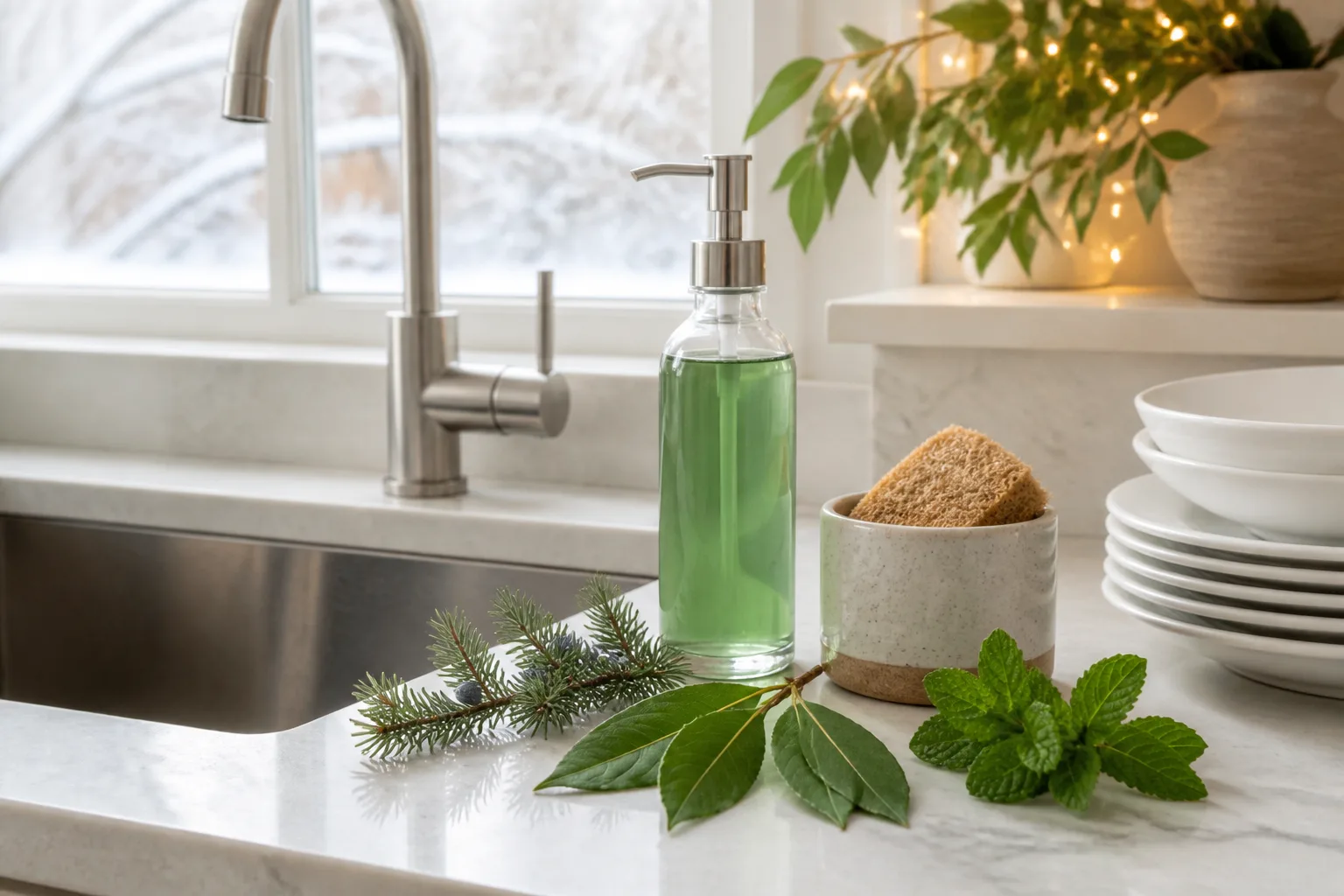
A seasonal dish soap is one of the lowest-effort ways to make a winter kitchen feel intentional—if you actually wash dishes by hand often enough to notice it. Caldrea Juniper Laurel Mint dish soap has become my December splurge for that reason: the scent reads cool and evergreen rather than sugary, the formula cuts through weeknight grease without leaving a film, and the slim 16-ounce bottle is easy to tuck into a hostess gift.
That does not mean everyone should buy it. At roughly $17 for 16 ounces, it sits firmly in treat-yourself territory, and a strongly scented soap can be the wrong call in homes with fragrance sensitivities, young kids, or a strict “no scent near food” rule. This review covers what the blend smells like, where the botanical notes come from, how it cleans, when to skip it, and the plant-based alternatives I use on nights I am not opening a new bottle.
Why I swap in a seasonal dish soap every December
I do not need another holiday candle. I need a kitchen that smells alive on a Tuesday after pasta night, especially in a hand-wash-only setup where the sink is already part of the room’s rhythm. A seasonal dish soap releases fragrance during the one chore I cannot avoid, which means I get a winter atmosphere without lighting anything near the table or leaving wax on the counter.
The effect is subtle. You are not perfuming the whole apartment like a diffuser on high. What lingers is a clean, resinous freshness on damp dish towels, cabinet faces, and your hands—enough that walking in from the cold feels slightly more festive. If your kitchen opens directly into an entryway, that low-level scent greeting is exactly why this product category works better for me than a pillar candle I would forget to blow out.
Fragrance near food is a design choice, not a small detail
Heavy gourmand candles—vanilla bourbon, baked cookie, spiced cider—can clash with real cooking smells and, for some people, trigger headaches at the dinner table. Cool herbal and evergreen scents tend to sit more comfortably in food spaces because they read “clean” rather than “dessert.” That is the same reason fresh bay and rosemary feel natural in a kitchen while cotton-candy wax often does not.
Scented dish soap is not invisible, though. A little fragrance transfers to silicone spatulas, wooden spoons, and porous cutting boards if you do not rinse well. I keep a separate unscented bottle for very absorbent items and for nights when I am cooking something delicate where I want zero competition—plain fish, fresh bread dough, or a wine tasting with friends who notice everything.
What juniper, laurel, and mint actually bring to the sink

Marketing copy lists three plant names; understanding what each contributes helps you predict whether you will like the bottle before you pay premium pricing.
Juniper: cool evergreen without a Christmas-tree wall of scent
Common juniper (Juniperus communis) is an aromatic evergreen shrub or small tree with needle-like grey-green foliage and small berry-like cones. The RHS plant profile notes its fragrant foliage and its use in coastal and wildlife-friendly gardens. In fragrance, juniper reads resinous and forest-clear—think gin botanical, not sweet pine candle.
That cool edge is why this soap works in December without smelling like you dragged a whole tree indoors. It nods to garlands and wreaths without the sticky needle problem.
Bay laurel: herbal and soapy-clean, not dessert-sweet
Sweet bay (Laurus nobilis), also called bay laurel or true laurel, is the culinary bay leaf tree native to the Mediterranean. NC State Extension describes it as an evergreen with aromatic leaves widely used in soups, stews, and pasta sauces—exactly the savory context where “clean” should mean herbal, not bakery.
In Caldrea’s blend, laurel is the anchor that keeps juniper from floating into air-freshener territory. If you have ever crushed a dried bay leaf between your fingers, you recognize that green, slightly camphorous warmth. It makes the soap smell like a kitchen that cooks, not a kitchen that only decorates.
Mint: brightness that keeps the blend from going flat
Mint—typically peppermint (Mentha × piperita) in cleaning products—adds a sharp, airy top note. On its own, mint dish soap can feel like toothpaste. Here, it lifts the evergreen base so the scent feels awake rather than heavy. After rinsing, what remains on your hands is more cool herbal than candy cane, which matters when you are washing glasses you will drink from ten minutes later.
How Caldrea Juniper Laurel Mint performs when dishes are the job
Pretty scent only earns a permanent spot if the bottle still belongs at the sink on greasy-pan night. Caldrea positions this as a concentrated, plant-derived liquid with soap bark extract for degreasing and aloe for hand comfort. Retail listings describe a biodegradable formula free of phthalates, parabens, chlorine, and artificial colors—reasonable expectations for a premium home brand sold under the SC Johnson umbrella.
Grease, rinse clarity, and the role of soap bark extract
Soap bark extract comes from the South American soapbark tree (Quillaja saponaria). It is a traditional natural surfactant—essentially a plant-based degreaser—which is why it shows up in “gentle but effective” dish liquids. In daily use, Caldrea Juniper Laurel Mint handles typical dinner cleanup well: sauté pan residue, olive oil on plates, tomato sauce, and buttered bakeware all lift with a normal sponge and warm water.
It is still dish soap, not oven cleaner. Baked-on cheese, carbonized roasting pan drippings, and thick egg film need soaking, a non-scratch scrubber, or a dedicated paste—not another squirt hoping fragrance will do the work. Rinse thoroughly on glass and stainless; any glycerin-rich formula can streak if you let it air-dry on shiny surfaces.
For comparison, this performs in the same league as other boutique plant-based dish soaps I have used (Mrs. Meyer’s, Puracy, Method seasonal bottles). The difference is mostly scent character and price, not a miracle grease dissolver.
Winter hands: aloe, concentration, and realistic expectations
Dry winter skin and frequent hand-washing are a brutal combo. Aloe-enriched dish soap helps, but no dish liquid replaces lotion if you are at the sink four times a day. I pair this with a dish soap pump I do not have to squeeze, lukewarm—not scalding—water, and hand cream immediately after drying.
Because the formula is concentrated, you need less per sinkful than cheap drugstore soap, which slightly offsets the sticker price. If your knuckles crack every January, keep an unscented backup for heavy sessions and reserve the juniper bottle for lighter loads or when you want the ritual.
Who this splurge makes sense for—and who should pass
Buy it if you hand-wash dishes often, enjoy herbal evergreen scents, want a low-flame way to scent a kitchen, or need a polished small gift for a host who already owns every candle. It also suits renters and apartment dwellers whose “holiday decor” is mostly functional items on the counter.
Skip it if anyone in your home has migraine triggers from fragrance, you primarily use a dishwasher and only rinse the occasional wine glass, you need maximum degreasing power on a commercial-kitchen level, or you prefer unscented products on principle. Also skip it as your only soap if you season cast iron in the same sink—fragrant residue is not worth risking on a well-built patina.
Price, bottle size, and whether it is gift-worthy
At about $17 for 16 ounces, Caldrea costs several times more per ounce than bulk store-brand soap. I treat it like a once-a-year bottle, not a household staple. The math is easier to swallow when you realize a little goes a long way and you are paying for fragrance complexity and packaging that looks good in a gift bag without wrapping paper gymnastics.
The tall, slim bottle travels well in a gift box with a tea towel, wooden dish brush, or jar of homemade simmer-pot dry mix. For a practical person who hates clutter, dish soap is oddly perfect: they will use it, it will not collect dust, and it does not require storage space like another mug.
Watch sales around the holidays; prices drift on third-party marketplaces. Buy from a reputable seller so you are not getting old stock that has separated.
Building a matched juniper-laurel-mint cleaning set
Caldrea sells the same scent family in hand soap, countertop spray, and laundry products. Matching the line is optional aesthetics, not necessity. I like hand soap at the kitchen sink during December because it extends the scent story without doubling candle smoke. Countertop spray is useful for quick wipe-downs after baking flour explosions; dish soap alone will not scent your counters for long.
If you are gifting, a two-piece dish plus hand soap set reads thoughtful without feeling like you dumped a whole catalog on someone. Skip the full suite unless you know they already love the fragrance—one great bottle beats three mediocre ones gathering under the sink.
Plant-based ways to scent a winter kitchen without buying soap
You do not have to spend $17 to get a botanical winter kitchen. These are the methods I rotate in when the Caldrea bottle is empty—or when I want scent on a no-dishes night.
Simmer pots with eucalyptus, citrus, and pantry scraps
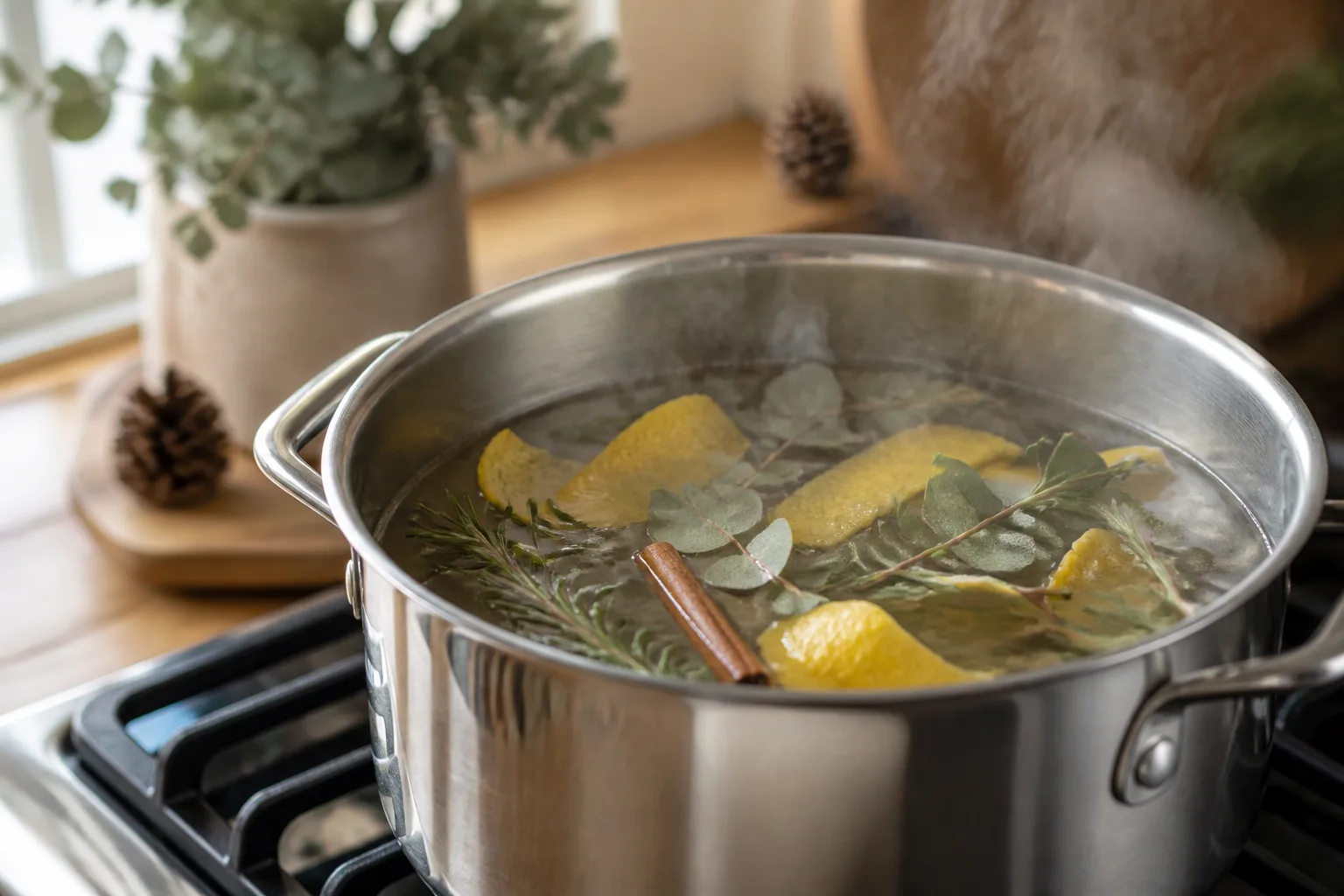
A simmer pot is simply aromatics in water, warmed on the stove at a low bubble. DIY Natural’s eucalyptus simmer pot recipe combines dried eucalyptus, ginger peels, and lemon rinds for a fresh, cleansing aroma that also adds humidity on dry heating-season days. The Grow’s winter simmer pot roundup offers variations with rosemary, cranberries, and cinnamon sticks for longer cold-weather entertaining.
Simmer pots are powerful—sometimes too powerful for a small apartment—and they require supervision. Do not walk away for hours without topping off water. As Katie Vance notes on DIY Natural, reusing simmer ingredients a second day often smells off; start fresh for best results. The upside is you can tailor intensity and avoid synthetic fragrance entirely.
Fresh bay, hanging evergreens, and low-effort botanical touches
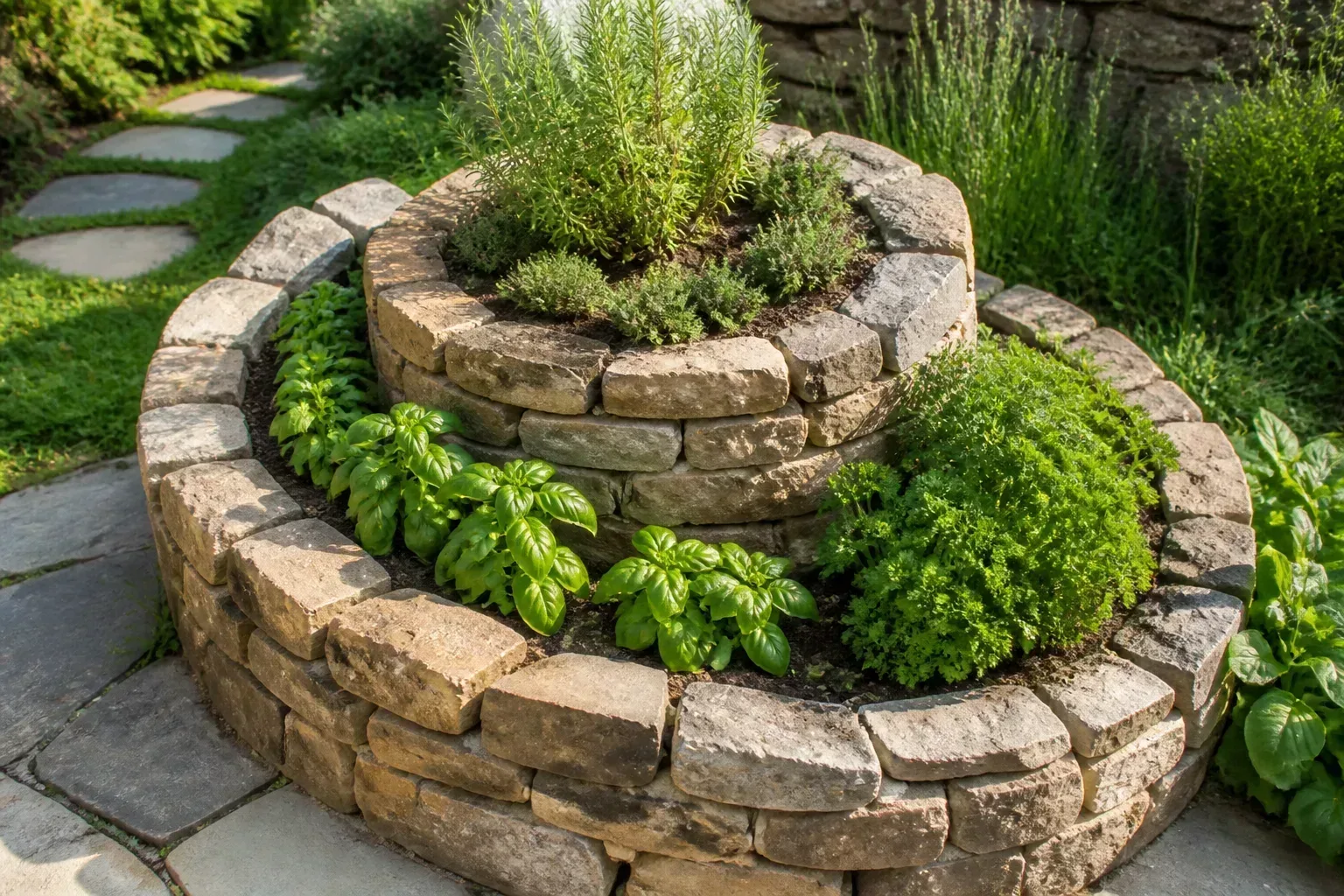
If you grow sweet bay in a pot indoors or have access to a leaf or two from a friend’s shrub, tuck a fresh stem near the stove (not in direct flame) for a day. The aroma is gentle and unmistakably kitchen-appropriate. A small bundle of eucalyptus hung in a dry corner near the sink gives a spa-cool note every time you reach for a towel.
These touches pair beautifully with the dish soap ritual: real plant material sets the mood; the soap reinforces it during cleanup. Neither replaces the other.
When scented dish soap is the wrong tool
Keep unscented soap on hand for baby bottles, pet bowls, and any dish where lingering fragrance is undesirable. Rinse aggressively if a guest mentions sensitivities. Do not use this—or any dish soap—as a produce wash; rinse fruits and vegetables with plain water.
Remember that fragrance oils in cleaning products are for smell, not disinfection. Cutting boards that touched raw poultry still need proper scrubbing and, when appropriate, a separate sanitizing step. Soap scent does not kill pathogens.
If you notice headaches, skin irritation, or a soapy taste on drinking glasses, demote the bottle to bathroom hand-wash duty or pass it along to someone who enjoys it. A winter treat should not become a daily annoyance.
A simple December sink upgrade checklist
Use this if you want the vibe without overthinking it:
- Replace your everyday bottle with one seasonal scent you genuinely like—not whatever was marketed hardest.
- Add a decent dish brush or microfiber cloth; tools change the experience as much as fragrance.
- Rinse porous wood and silicone items with unscented soap when needed.
- Keep hand cream next to the sink for winter skin.
- Layer one non-flame scent source (simmer pot afternoon, dish soap evening, fresh bay on the counter) instead of stacking five competing smells.
- Store the gift bottles upright in a cool cabinet; heat and sun fade fragrance.
Conclusion
Caldrea Juniper Laurel Mint dish soap earns its fan status by doing two jobs at once: it cleans weeknight dishes competently and layers a cool, herbal evergreen scent into a room where you already spend time. The juniper-laurel-mint trio works because each plant note solves a problem—evergreen atmosphere, savory cleanliness, and bright finish—without the gourmand heaviness of many holiday candles.
It is not a budget workhorse, not a disinfectant, and not for every household. For hand-wash-heavy winters, fragrance-tolerant homes, and gift-givers who want something useful and beautiful, it remains one of my favorite December kitchen upgrades. When the bottle runs dry, bay leaves, eucalyptus, and a quiet simmer pot carry the same botanical story until next year.