White Mushrooms in Your Yard: Causes and Safety
White mushrooms in your yard usually signal moisture and organic matter in the soil. Learn what they mean, which types matter for pets, and how to remove them safely.
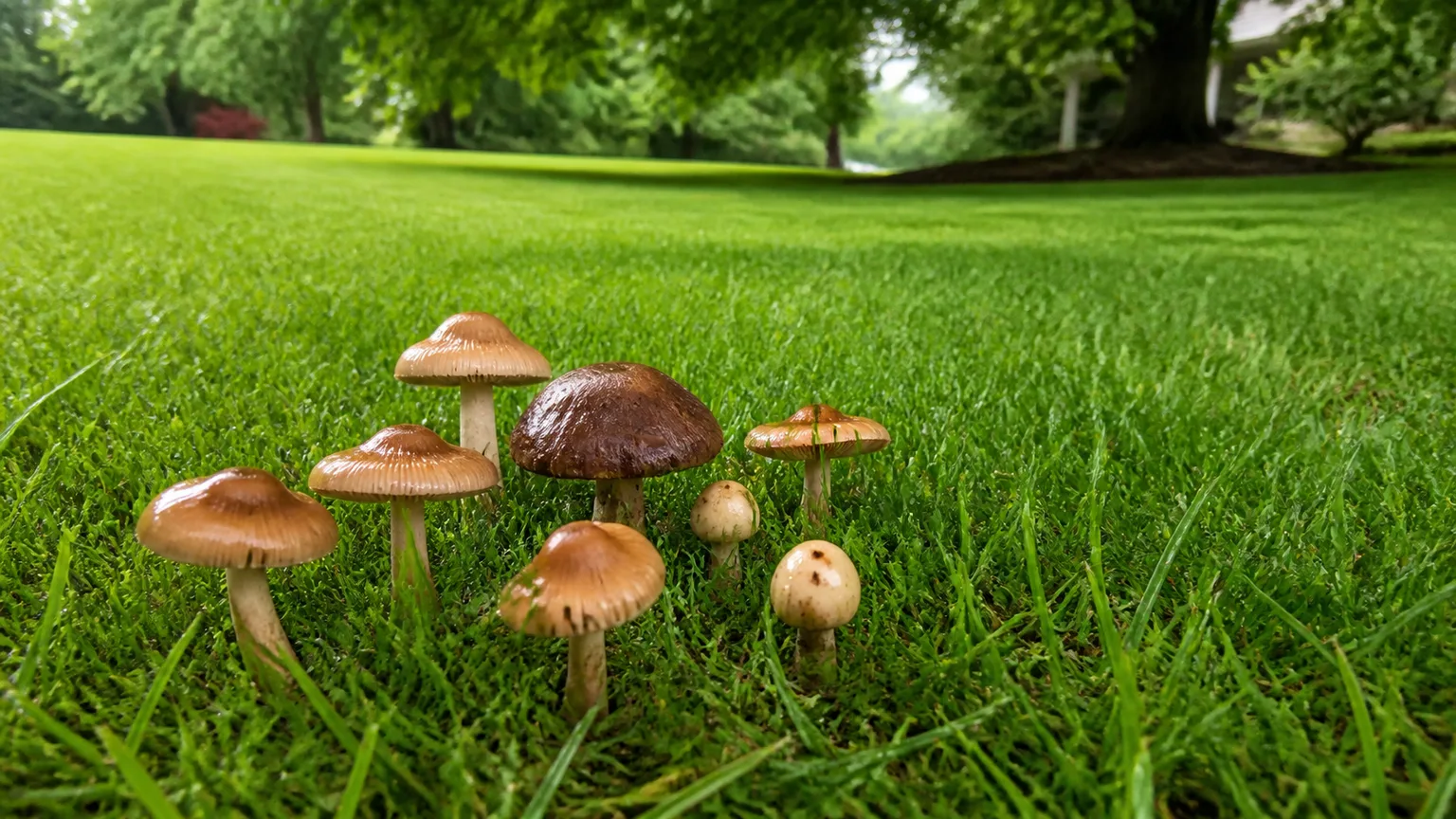
A ring of white mushrooms after a rainy night can look alarming, especially when they were not there yesterday. In most yards they are not a lawn disease attacking your grass. They are the temporary fruiting bodies of fungi that have been living in the soil—often for months or years—and finally got the moisture and temperature they needed to reproduce.
The message is usually about conditions, not catastrophe: organic matter to break down, enough water to fruit, and sometimes shade or compaction holding moisture near the surface. The hard part is that white color does not mean harmless. A few of the most dangerous wild mushrooms in North America fruit white, and dogs explore yards with their mouths. The useful response is to read the pattern first, then decide whether to leave the caps, remove them from play areas, or fix a deeper lawn issue.
The Quick Read Before You Pull Anything
Treat a sudden white flush as information, not an emergency—unless someone in the household might eat them or you see mushrooms returning in the same ring with stressed grass. Scattered caps after rain in an otherwise healthy lawn are common and often short-lived. Caps clustered in a circle, sitting in a spot that stays soggy for days, or appearing where buried wood or old roots remain are worth a closer look.
Leave, Remove, or Investigate
Leave them when the lawn looks fine, nobody will ingest the mushrooms, and the caps fade within a few days. Remove them when children or pets use the area, when you cannot identify the species, or when mature caps are opening and releasing spores where people walk. Investigate the lawn when white mushrooms return in the same wet zone after you adjust watering, when they form an arc or full ring year after year, or when grass inside or outside the ring turns dark green, brown, or bare. For broader lawn-mushroom context, see our guides on mushrooms in lawn and why mushrooms grow in yards.
What White Mushrooms Actually Are
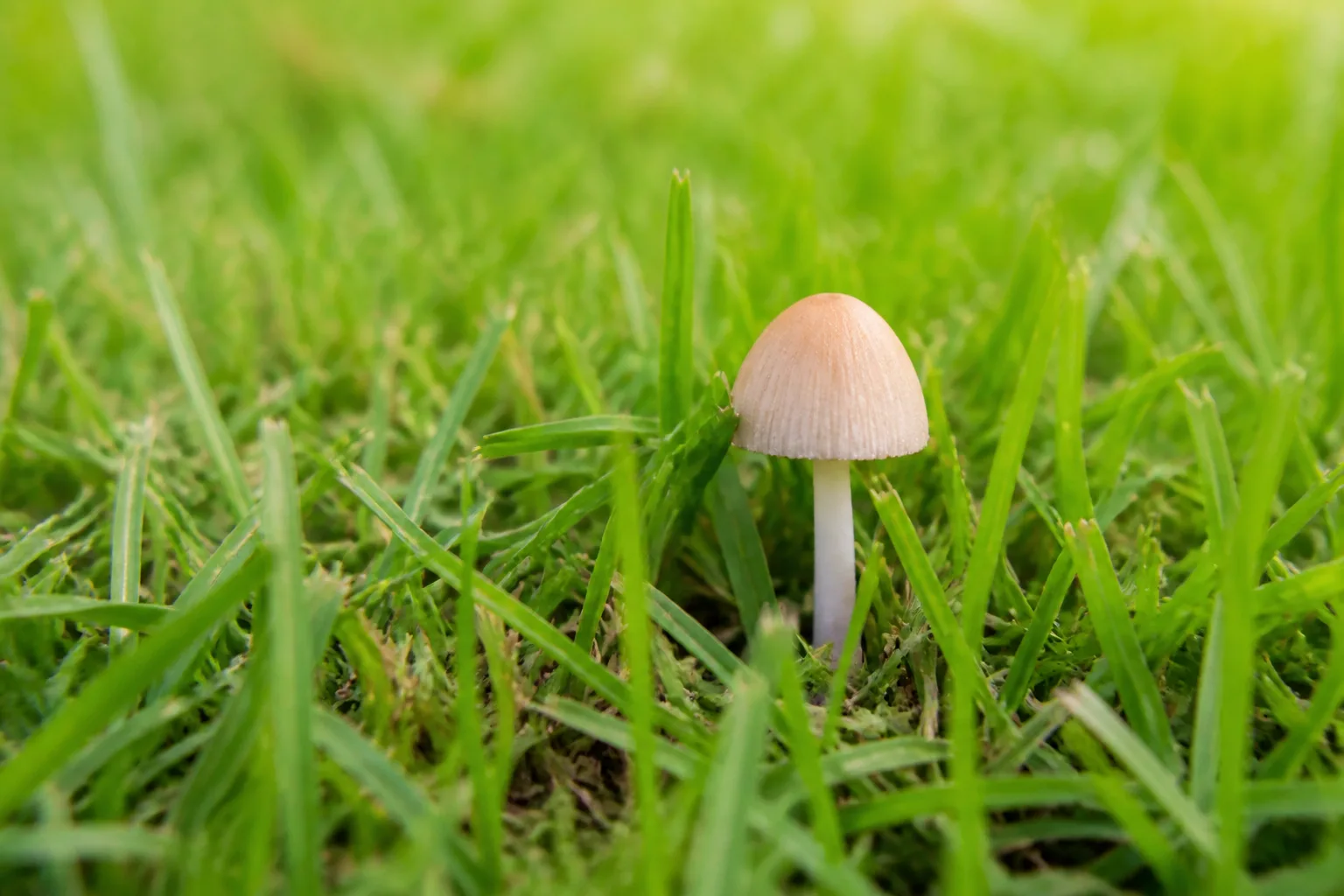
Mushrooms are not separate organisms that invade from elsewhere. They are the reproductive structures of fungi already present as threadlike networks in soil, thatch, mulch, or decaying roots. Warm, humid weather plus a burst of moisture tells those networks to produce caps and release spores—the fungal equivalent of flowering.
That is why mushrooms can seem to appear overnight. The mycelium was there before the rain. The rain changed the environment enough for the fungus to fruit. Removing visible caps does not remove the network below, which is why “permanent” mushroom elimination is not realistic in an outdoor yard exposed to wind-borne spores.
Mycelium Below, Caps Above
Mycelium is the vegetative body of the fungus: microscopic threads that explore soil, absorb nutrients, and break down dead material. NC State Extension compares mushrooms to the “fruits or flowers” of fungi that bloom when temperature, light, and water align. Some fungi also form beneficial relationships with plant roots; others feed purely on dead organic matter in lawns.
When you see white caps, you are seeing one moment in a much longer underground story. Knocking down the caps changes appearance and access; changing drainage, shade, or buried food sources changes whether the fungus fruits again.
What Your Yard Is Trying to Tell You
White mushrooms rarely appear at random. They fruit where fungal networks already exist and where recent conditions favor reproduction. Reading those conditions tells you more than staring at cap color alone.
Organic Matter and Active Decomposition
Decomposer fungi break down thatch, leaf litter, grass clippings, buried construction lumber, old tree roots, and other carbon-rich material. Washington State’s managing mushrooms in lawns guidance notes that lawn mushrooms often develop from buried scraps of wood, dead roots, or similar organic debris. As fungi digest that material, they release nutrients other plants can use—part of why Penn State Extension describes many lawn mushrooms as decomposers rather than pathogens.
So a white flush can mean your soil has something to decompose, which is not the same as saying the soil is perfectly balanced. A healthy composting process and an excess of undecomposed material can both produce mushrooms.
Moisture, Shade, and Hidden Food Sources
Moisture is the usual trigger people notice first. Extended rain, heavy irrigation, or a low spot that holds water gives fungi the water they need to fruit. Shade slows drying at the soil surface, which keeps fruiting going a little longer under trees, along north-facing edges, or beside fences and shrubs.
Temperature matters too. Many common lawn mushrooms fruit in the roughly 60–75°F range when humidity is high—exact windows vary by region and species. Hidden food is the piece many articles skip: a stump ground below grade, mulch piled against foundation plantings, pet waste left in turf, or a thick thatch layer can all feed white fruiting bodies above. New topsoil or compost can also introduce spores, which is why mushrooms sometimes appear right after a landscape project.
When White Mushrooms Mean Healthy Soil
White mushrooms can indicate active decomposition and organic matter cycling, which supports long-term soil fertility. Fungi help convert dead material into forms grass roots can use, and some soil fungi improve structure and moisture movement at the root zone. If caps appear after a normal rainy period, fade within days, and the turf otherwise looks uniform and green, the mushrooms are often a neutral-to-positive sign that soil life is working.
That interpretation has limits. Mushrooms prove fungi are present and conditions allowed fruiting; they are not a complete soil test. Compacted, overwatered, or poorly drained lawns can fruit heavily too. Use mushrooms as one clue alongside grass color, drainage after rain, and whether the same spot stays wet when the rest of the yard dries.
When White Mushrooms Signal a Problem
Not every white mushroom story is “healthy soil.” Sometimes the caps highlight a management issue you would fix even if mushrooms never appeared.
Poor Drainage and Chronic Sogginess
If mushrooms return in the same low area while the rest of the lawn dries out, suspect poor drainage or overwatering, not just a benign flush. Chronic sogginess stresses grass roots, encourages shallow rooting, and keeps fungal fruiting easy. Fixing grading, reducing run time on sprinklers, aerating compacted zones, and routing downspouts away from turf usually matters more than removing caps.
This is the distinction many quick articles miss: mushrooms after rain are normal; mushrooms in a always-wet patch suggest the lawn environment needs correction. Our lawn fungus guide covers turf diseases separately—most white decomposer caps are not the same problem as brown patch or dollar spot, but recurring rings can overlap with nuisance fungi issues.
White Fairy Rings and Recurring Patterns
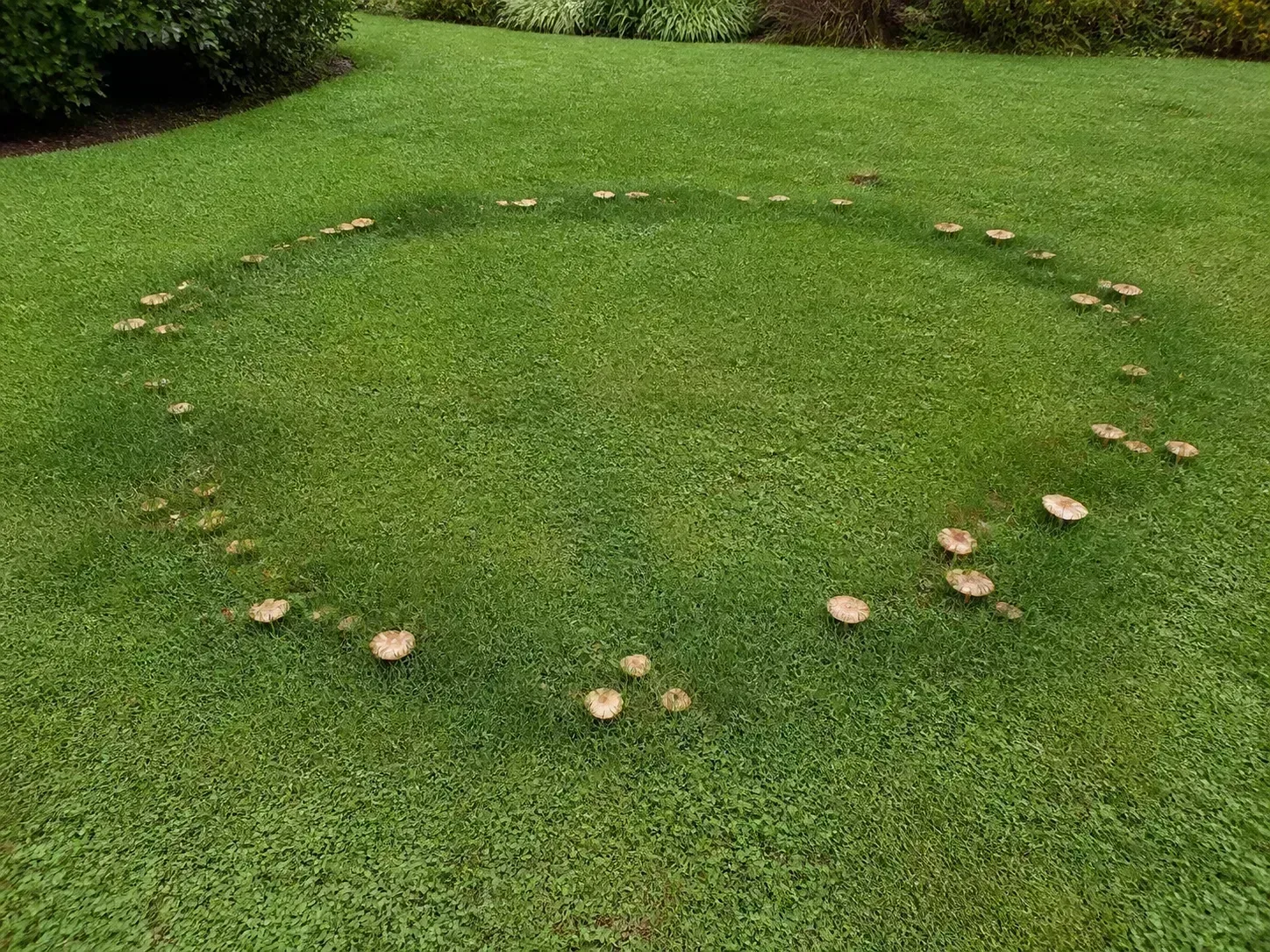
A fairy ring is an expanding underground fungal colony. Above ground it may show as an arc or circle of mushrooms, a band of darker green grass, brown or thinning turf, or bare soil. UC IPM groups fairy rings among nuisance fungi in lawns and notes that dense fungal growth can interfere with water movement in some rings.
White species—including some Marasmius and related lawn mushrooms—can appear in ring patterns. A one-time scatter after rain is different from a returning circle that grows outward each year. Rings that damage turf need cultural fixes—moisture management, aeration, dethatching, and sometimes renovation—not a quick spray aimed at the caps alone.
Common White Mushrooms in North American Lawns
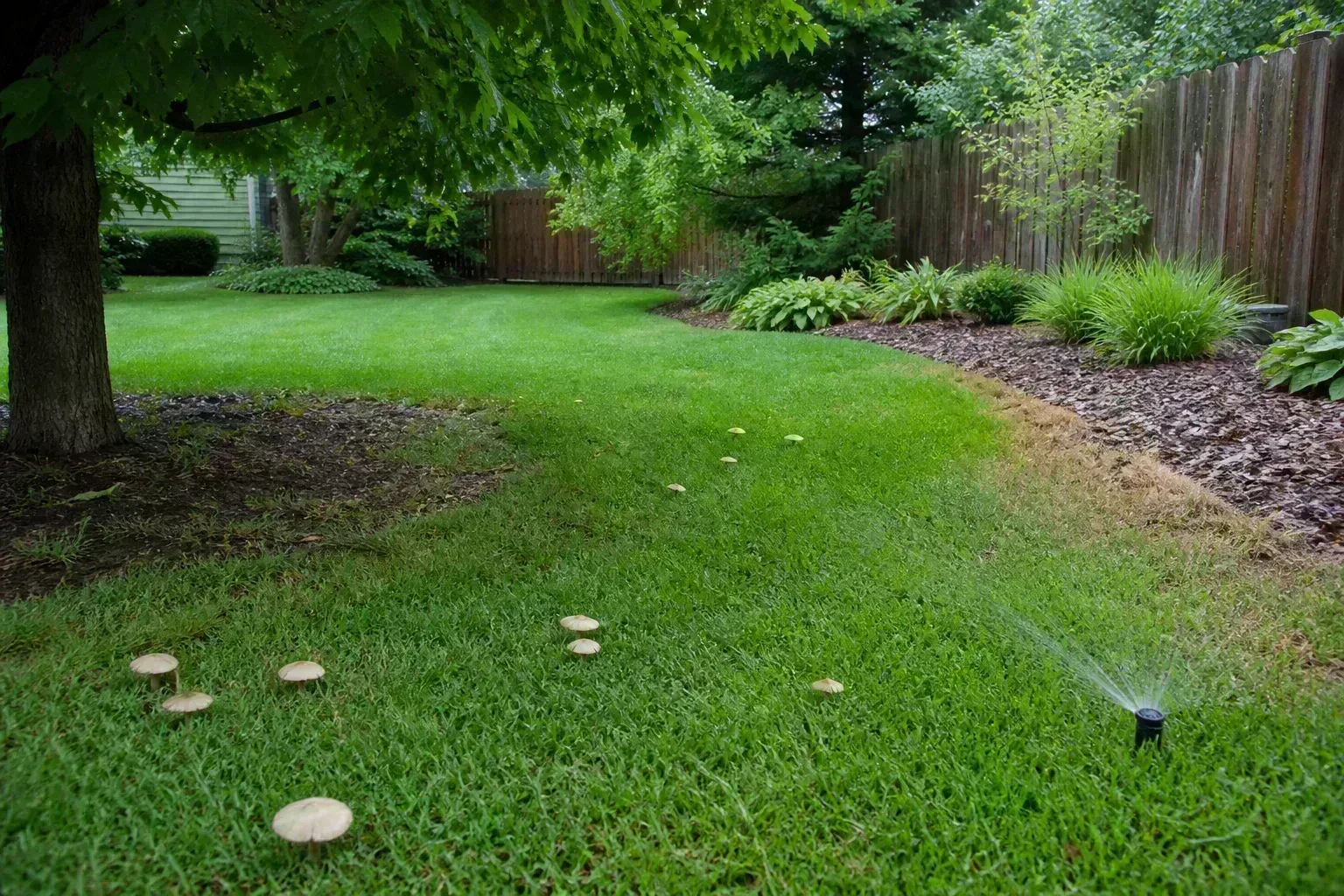
Dozens of species can fruit white or pale in turf. You do not need to become a mycologist to manage a yard safely, but recognizing a few common harmless groups reduces panic and helps you spot outliers.
Milky Conecap and Other Short-Lived White Caps
Milky conecap (Conocybe apala) is the fragile, pale cone-shaped mushroom many people see sprinkled through grass after rain. Caps are thin, stems are delicate, and the whole flush may collapse in a day or two. These are typical decomposers in rich turf and are not on the short list of deadly yard species—still not food, and still worth removing from pet areas because misidentification is easy.
Other small white or cream lawn mushrooms include various ink caps and short-lived gilled species that appear in clusters and fade quickly. If the cap is bell-shaped, paper-thin, and gone by tomorrow, you are usually looking at a routine decomposer flush—not a permanent lawn crisis.
Puffballs and Other Round White Fruiting Bodies
Puffballs (Calvatia, Lycoperdon, and allies) look like white or tan spheres sitting on the lawn—sometimes golf-ball sized, occasionally larger. Young puffballs are solid inside; mature ones release spores through a pore or rupture. Most turf puffballs are decomposers. They are conspicuous but usually harmless unless someone tries to eat them—and mature puffballs can spread spores when stepped on or mowed.
Do not confuse a young puffball with a button stage of a dangerous gilled mushroom. When in doubt, treat unknown white spheres in pet or child areas as remove-on-sight.
White Mushrooms That Are Not Safe to Ignore
Here is the central safety rule: in wild mushrooms, white is not a trust signal. Some of the most toxic species fruit white or pale, and several dangerous mushrooms pass through white button stages before caps darken.
Destroying Angel and Other Deadly White Amanitas
Destroying angel (Amanita bisporigera in eastern North America and related Amanita species elsewhere) is a deadly white mushroom associated with yards, woods edges, and mulched beds. NC State Extension’s Homegrown guidance lists white Amanita among poisonous mushrooms Eastern gardeners should know—especially dog owners, because dogs explore with their mouths.
Visual cues often include a white cap, white gills, a white stem, and a cup-like volva at the base plus a ring on the stem—but volvas can sit below soil line and amateurs misidentify deadly species regularly. Never eat wild lawn mushrooms. Remove unknown white mushrooms from dog runs and play lawns; contact a veterinarian or animal poison control immediately if ingestion is suspected.
False Parasol When the Cap Is Still Pale
False parasol (Chlorophyllum molybdites) is the most commonly eaten poisonous mushroom in the United States, according to NC State’s Extension Gardener Plant Toolbox entry for false parasol. It often fruits in lawns and mulched areas, especially in warmer regions. Young specimens can look like an innocent white parasol; mature caps may show greenish gills—a key field mark—but you cannot rely on color alone at every stage.
Because false parasol resembles edible species people know from foraging books, it is a strong reason to keep all unidentified lawn mushrooms out of kitchens—and out of reach of curious children.
Are White Lawn Mushrooms Poisonous to Pets and Kids?
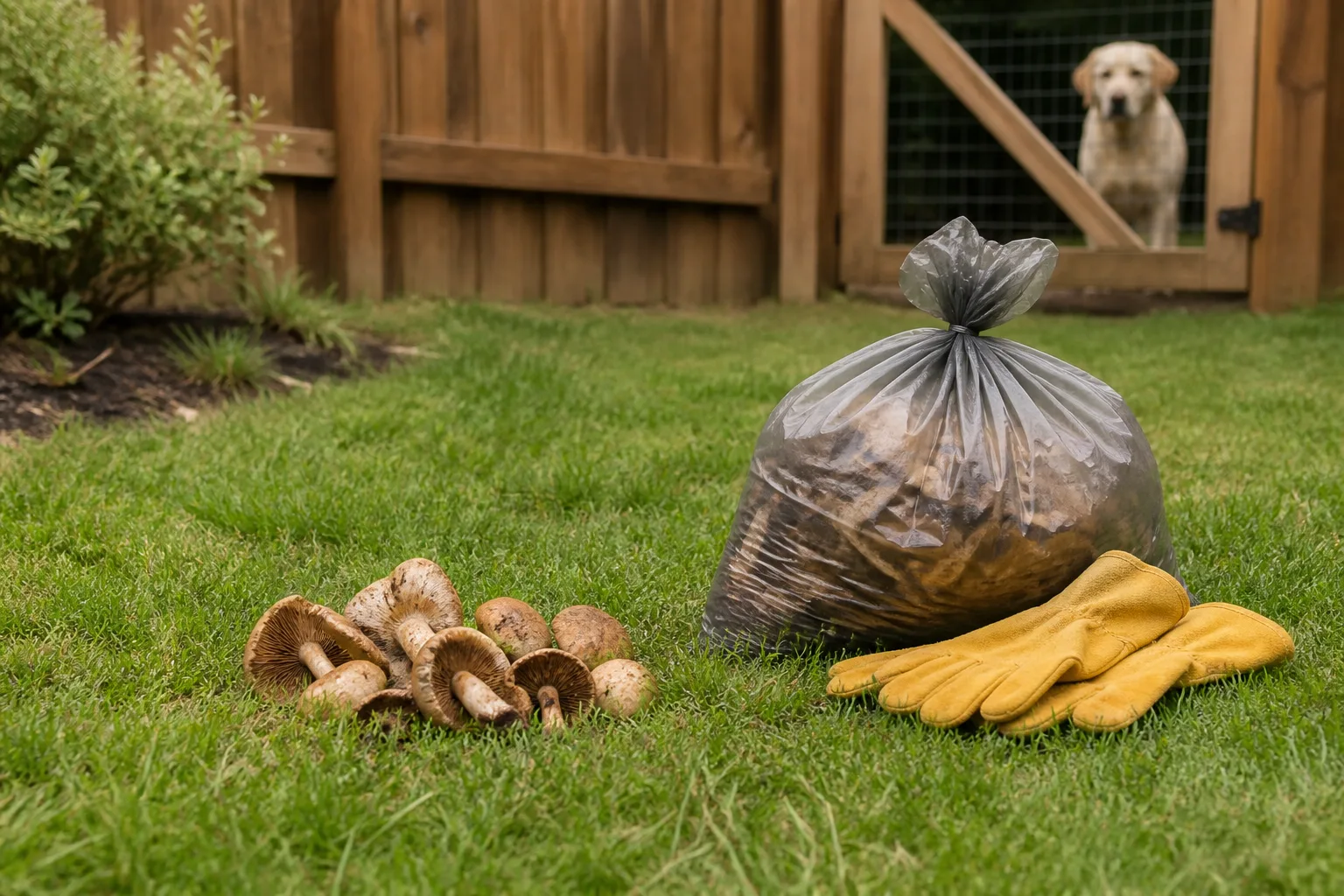
Some are; most scattered lawn decomposers are not deadly—but casual identification fails too often to take chances. The ASPCA warns that wild mushrooms can be toxic to pets and that symptoms may include vomiting, diarrhea, drooling, lethargy, or more severe neurological signs depending on species.
Toxic effects require ingestion for most mushroom poisons; touching caps is not the same risk as eating them, though gloves are still smart when picking. Keep children and dogs away from unknown flushes, remove caps from high-traffic areas, and store picked mushrooms in a closed bag in the trash—not the compost pile, where spores and fragments persist.
If someone eats a wild mushroom, contact Poison Control (1-800-222-1222 in the U.S.) or your local equivalent immediately. For pets, call your veterinarian or the ASPCA Animal Poison Control Center at (888) 426-4435. Bring photos of the mushroom if you can; do not wait for symptoms in suspected Amanita cases.
How to Remove White Mushrooms Safely
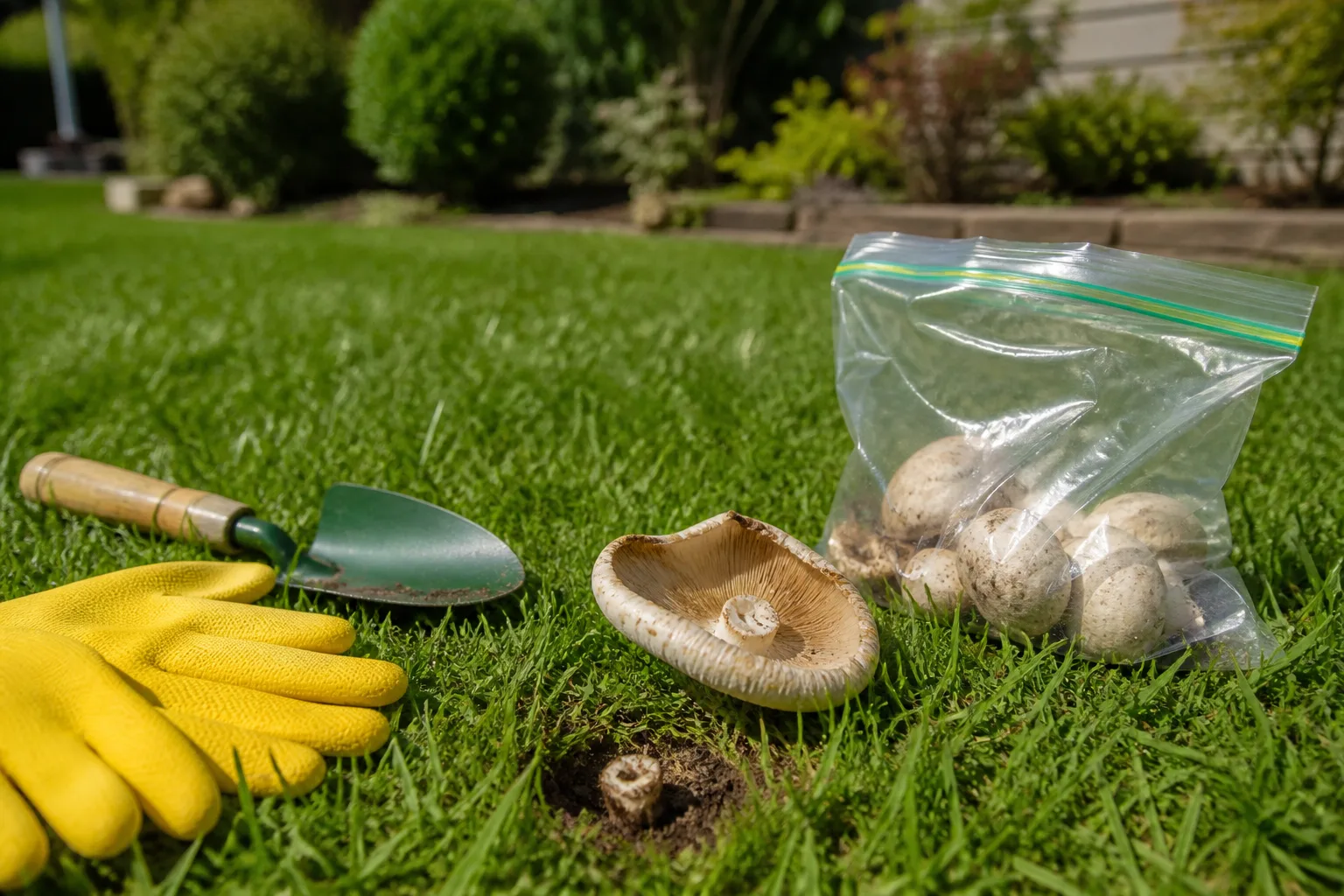
Removal is about access and spore management, not killing the underground network. Expect new flushes if conditions stay favorable—that is normal.
Pick, Bag, and Trash — Not Mow Over Ripe Caps
Hand-pick mature caps before they fully open when pets or children use the area. Wear gloves, place mushrooms in a paper or plastic bag, seal it, and discard in household trash. NC State Extension recommends picking into a bag as a simple alternative to other methods.
Mowing is situational. Mowing closed, young buttons on a dry day may be acceptable in low-risk areas; mowing mature, gilled caps can spread spores across the lawn the way dust spreads from a puffball. Do not treat mowing as a universal fix. Raking scattered caps after picking reduces visibility but, like mowing, does not remove mycelium.
Skip home remedies with unproven fungicidal claims. Dish soap sprays may kill surface tissue briefly but do not address underground networks or food sources—and they are not a substitute for pet-safety removal.
Fungicides labeled for turf diseases generally do not reliably eliminate decomposer mushrooms or fairy rings in home lawns. UC IPM emphasizes cultural management for nuisance fungi rather than expecting chemical eradication. Broad fungicide use can harm beneficial soil fungi that help your grass.
How to Prevent Repeat White Mushroom Flushes
You cannot make a yard spore-free outdoors. You can make fruiting less frequent by changing the conditions mushrooms report.
Reduce excess moisture. Fix irrigation overspray, shorten run times, and improve drainage in low spots. Let the surface dry between waterings when grass health allows. Increase light and air where practical by thinning overhanging branches on heavily shaded turf. Remove fungal food. Rake thick leaf mats, dig out buried wood and old stump grindings, dethatch when thatch is excessive, and pick up pet waste regularly. Relieve compaction with core aeration during your grass type’s recommended window so water infiltrates instead of pooling.
Bag clippings in mushroom-prone shady lawns if wet clumps persist on the surface; in many sunny lawns mulching clippings is fine—match the tactic to whether you are leaving wet thatch piles fungi can exploit. Avoid importing unknown compost into play areas without knowing its source.
When a fairy ring damages turf, follow integrated guidance: improve moisture penetration, consider nitrogen management carefully, and renovate severely affected arcs if grass will not recover. That is slower than spraying caps, but it targets the reason rings persist.
Conclusion
White mushrooms in your yard are usually messengers, not attackers. They tell you fungi are active underground, moisture recently favored fruiting, and organic matter is present for decomposition. That can be compatible with healthy turf—as long as you also rule out chronic wet spots, buried wood, or returning fairy rings that stress grass.
Color alone will not keep pets and children safe. Remove unknown white mushrooms from play areas, never eat wild caps, and fix drainage and debris when the same patch fruits again and again. For most sudden post-rain flushes, the caps fade on their own; the lasting takeaway is what they revealed about shade, water, and soil life beneath your feet.



