9 Best Weed and Feeds for a Thicker, Greener Lawn
Compare nine weed-and-feed products by grass type, season, and weed problem—plus extension-backed timing rules so you do not waste a bag on the wrong week.
The right weed and feed can green up turf and knock down broadleaf weeds in one pass—but only if the bag matches your grass type, your weed problem, and the week on the calendar. Buy the wrong combo, or spread it on the wrong day, and you get yellow stripes, surviving dandelions, and a bag that mostly fertilized weeds you did not have.
This guide compares nine widely available weed-and-feed products, explains when each formula makes sense, and covers the extension-backed timing rules that separate a lush lawn from a stressed one. Prices shift by retailer and season; treat NPK ratios, coverage, and labeled grass restrictions as the stable comparison points.
Quick Picks — Which Weed and Feed Fits Your Lawn?
| Best for | Product | NPK | Type | Coverage | Grass notes |
|---|---|---|---|---|---|
| Overall | Scotts Turf Builder Weed and Feed | 28-0-3 | Post-emergent granular | 5,000 sq ft | Most common cool- and warm-season lawns; not St. Augustine or bentgrass |
| Spring green-up | GreenView Weed and Feed | 24-0-6 | Post-emergent granular | 10,000 sq ft | Established lawns only; strong on dandelion, chickweed, clover |
| Multi-problem lawns | BioAdvanced 5-in-1 Weed and Feed | 30-0-4 | Pre + post granular | 10,000 sq ft | Moss, disease suppression, broadleaf weeds; skip new seed |
| Organic pre-emergent | Jonathan Green Corn Gluten | 10-0-2 | Organic pre-emergent | 5,000 sq ft | Prevents seeds from establishing; will block new grass seed too |
| Crabgrass prevention | Scotts Turf Builder Triple Action | 25-0-2 | Pre + post granular | 4,000 sq ft | Early spring before crabgrass germinates |
| Liquid / spot spray | Sunday Weed and Green | Iron-based | Hose-end liquid | ~1,250 sq ft/bottle | Full-lawn or targeted spray; keep off flowers and vegetables |
| Northern cool-season | Sta-Green Weed and Feed | 22-0-4 | Post-emergent granular | 4,000 sq ft | Fescue, ryegrass, Kentucky bluegrass |
| Southern warm-season | BioAdvanced Southern Weed and Feed | 30-0-4 | 3-in-1 granular | 4,000 sq ft | St. Augustine, bermuda, centipede, zoysia |
| Fall cleanup | Scotts WinterGuard Fall Weed and Feed | 28-0-6 | Post-emergent granular | 4,000 sq ft | Existing fall weeds + late-season feed |
Read the label on every bag before you buy. “Weed and feed” is a marketing category, not one chemistry.
Before You Buy: What Weed and Feed Actually Does
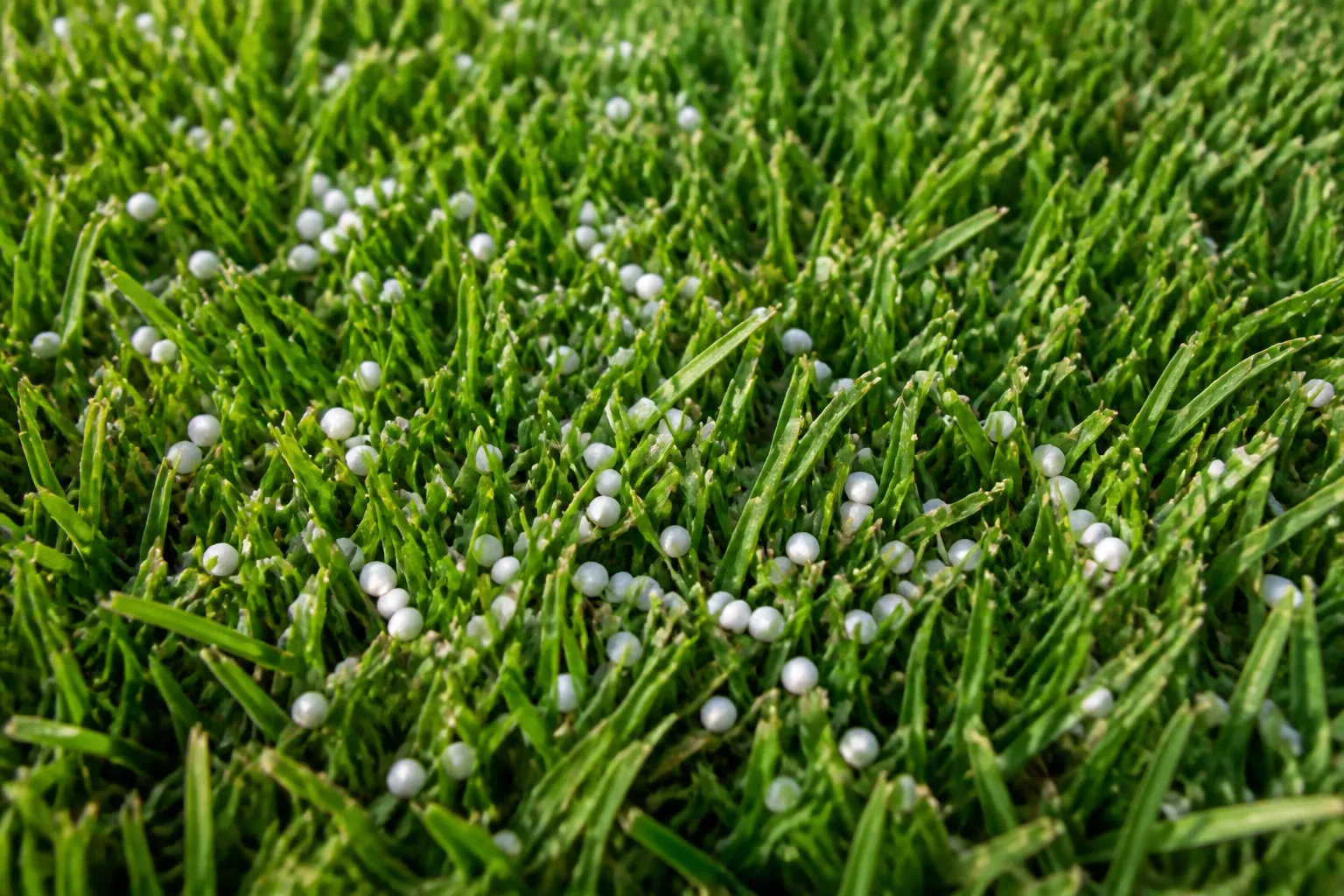
Weed and feed is a granular or liquid product that combines lawn fertilizer with a selective herbicide so you fertilize and treat weeds in one application. The fertilizer portion is usually nitrogen-heavy—typical bags run 20–30% nitrogen with little or no phosphorus—because lawns respond fastest to nitrogen for color and leaf growth. The herbicide portion targets either weeds already growing (post-emergent) or weed seeds about to sprout (pre-emergent), depending on the active ingredients.
That convenience is real. So are the trade-offs. University of Georgia Extension notes that pre-emergence and post-emergence herbicides are applied at different times of year for best results, and the month you should fertilize does not always line up with the month you should treat weeds—especially on warm-season turf waking from dormancy.
Pre-Emergent vs Post-Emergent Formulas
Pre-emergent weed and feed stops many weed seeds during germination. It does not kill mature weeds already in the lawn. Apply too late—after crabgrass or chickweed has sprouted—and you paid for prevention that cannot work retroactively. UGA Extension emphasizes that once weeds are visible, a pre-emergent is the wrong tool.
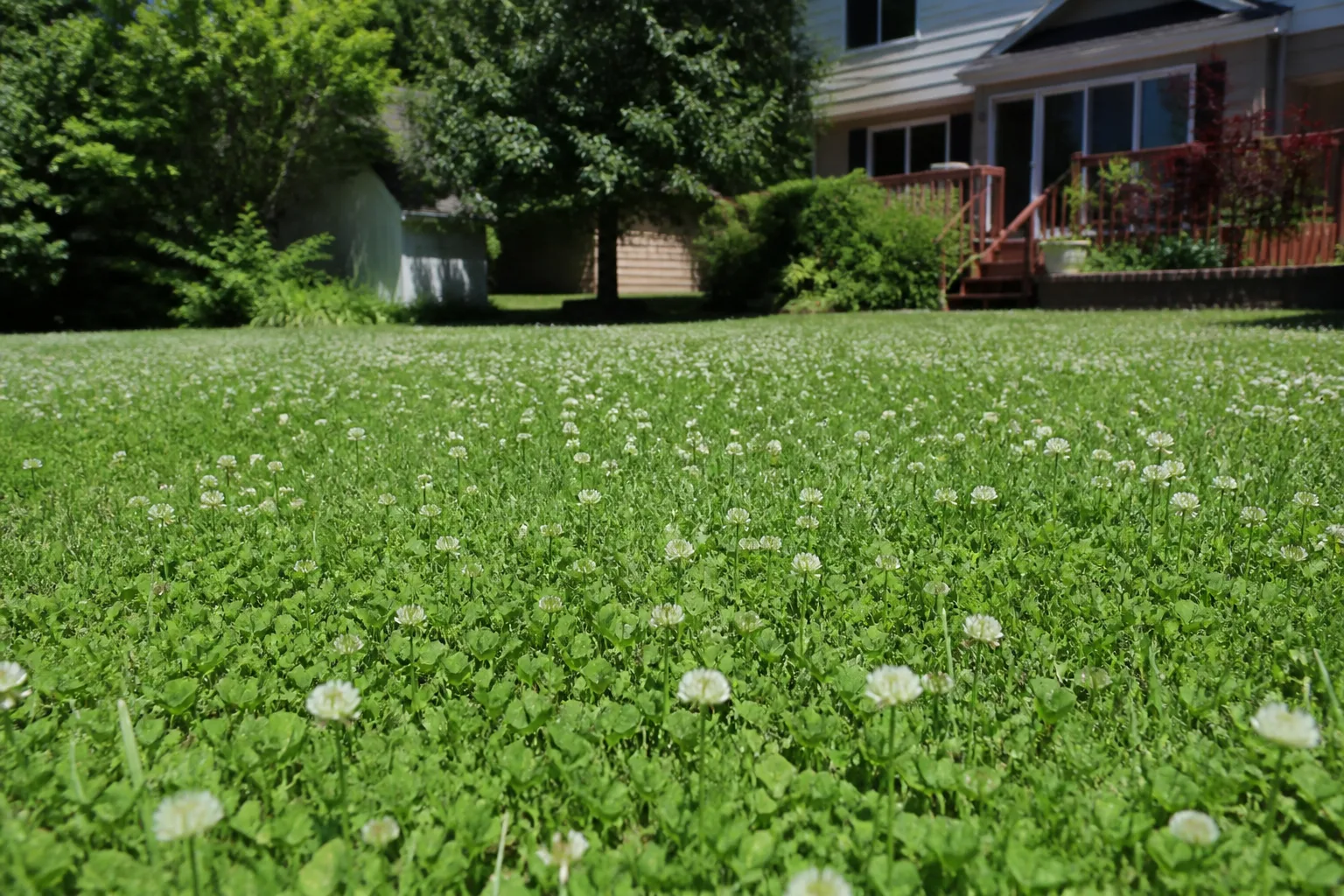
Post-emergent weed and feed kills broadleaf weeds that are actively growing. Most granular post-emergent combos use 2,4-D, MCPP, and sometimes dicamba absorbed through weed leaves. They do little against grassy weeds like crabgrass unless a specific pre-emergent active is also in the bag. For granular broadleaf products, Iowa State Extension stresses that granules must stick to moist weed foliage—early-morning dew or light moisture before spreading—because dry leaves shed granules and waste herbicide.
Combination bags (Scotts Triple Action, BioAdvanced 5-in-1, southern 3-in-1 formulas) try to cover both jobs. They work when your calendar aligns. They disappoint when spring pre-emergent timing and spring fertilizer timing diverge—which extension turf specialists say happens often.
Why Extension Specialists Often Prefer Separate Steps
N.D. State University Extension horticulturist Don Kinzler, writing in AgWeek, argues that most home lawns are not carpeted with weeds, so broadcasting herbicide across the entire yard wastes product, money, and risks collateral damage to nearby trees, shrubs, and vegetable beds. His alternative: fertilize when grass is actively growing, then spot-spray liquid broadleaf herbicide only where weeds appear.
UGA Extension adds a timing wrinkle many combo labels gloss over: on centipedegrass, spring fertilizer should wait until full green-up—but by then, pre-emergent windows for many summer annual weeds have already passed. Weed-and-feed is convenient; it is not automatically the most effective program.
That does not make every combo bag useless. It means you should buy with eyes open—and know when a standalone crabgrass preventer plus later fertilizer, or a fall-only post-emergent pass, will outperform a one-bag-fits-all approach.
How We Evaluated These Weed and Feed Products
Recommendations weigh labeled active ingredients, NPK and release type, stated coverage, grass compatibility, and seasonal fit—not hands-on lab testing in this roundup. We prioritized products homeowners can find at major retailers, cross-checked turf restrictions against UGA Extension weed-control guidance, and flagged formulas that conflict with seeding, new sod, or phosphorus-restricted watersheds.
We also asked a practical question Spruce-style lists often skip: Does this bag solve a problem separate fertilizer cannot? A post-emergent combo earns its place when broadleaf weeds are widespread in an established lawn and timing is right. A pre-emergent combo earns its place when crabgrass history is real and soil temperatures still sit in the prevention window. Otherwise, see when to skip weed and feed below.
Best Overall — Scotts Turf Builder Weed and Feed
Best for: Homeowners who want one reliable granular pass on an established lawn with common broadleaf weeds.
Scotts Turf Builder Weed and Feed remains the default shelf answer for good reason: a 28-0-3 slow-release nitrogen formula paired with broadleaf herbicides that tackle dandelion, clover, plantain, and dozens of other invaders on actively growing turf. Coverage is typically 5,000 square feet per bag—enough for many suburban front yards in one purchase.
It fits Kentucky bluegrass, tall fescue, perennial ryegrass, bermudagrass, zoysiagrass, and centipedegrass on the label, but not St. Augustinegrass or bentgrass—a restriction many shoppers miss. Apply when daytime temperatures sit between 60°F and 90°F, weeds are actively growing, and grass has been mowed at least twice. Many northern homeowners get strong results in late spring; the same bag can work as a fall post-emergent if applied before hard frost while weeds still translocate herbicide into roots.
Application notes: Spread on dew-damp grass so granules adhere to weed leaves. Wait 24 hours before watering in, then irrigate thoroughly. Hold off mowing and keep kids and pets off until grass is fully dry—usually another 24 hours. Overlap slightly on spreader passes, but never double the labeled rate; excess nitrogen burns turf fast in heat.
Trade-off: This is a post-emergent formula. It will not stop crabgrass seeds from germinating later in summer. Pair with a true pre-emergent in early spring if crabgrass is your main enemy.
Best for Spring — GreenView Weed and Feed
Best for: Cool-season lawns waking from winter with early broadleaf pressure and a need for steady nitrogen.
GreenView’s 24-0-6 granular formula targets the spring window when chickweed, henbit, and dandelion explode while turf is still rebuilding. The higher potassium number versus many competitors supports stress tolerance heading into summer—useful on fescue and bluegrass that face heat in July.
At 10,000 square feet of coverage per bag, it often beats Scotts on cost per square foot for larger yards. Slow-release nitrogen reduces the surge-growth spike that invites disease on cool-season lawns pushed too hard in April.
Critical limitation: Like most 2,4-D-based granular combos, it is for established lawns only. Do not apply within months of seeding or sodding; herbicide injury on young grass is common. If you overseeded last fall, wait until the new turf has been mowed three to four times before any post-emergent weed-and-feed—UGA Extension recommends a similar establishment interval.
Best for Most Lawns — BioAdvanced 5-in-1 Weed and Feed
Best for: Lawns fighting broadleaf weeds, moss, and early-season grassy weed pressure in one granular pass.
BioAdvanced’s northern-market 5-in-1 formula stacks pre-emergent prevention, post-emergent broadleaf control, moss suppression, and disease-protection claims into a 30-0-4 slow-release bag covering 10,000 square feet. It is the pick when your lawn checklist reads like a hardware-store aisle: dandelions in the front, moss in shade, and crabgrass history along the driveway.
The trade-off is complexity. You are timing a product that wants early-spring pre-emergent soil conditions while also feeding nitrogen. On thin or drought-stressed turf, stacking this many actives can yellow grass temporarily—normal for many post-emergent combos, but more noticeable when the lawn was already weak.
Skip it on newly seeded areas and read the label for your exact grass species. If moss is the real problem, fixing shade and drainage beats repeating moss-killer every year.
Best Organic — Jonathan Green Corn Gluten Weed Preventer
Best for: Gardeners who want a pre-emergent organic option without synthetic 2,4-D, and who can accept prevention-only weed control.
Jonathan Green’s corn gluten meal formula (10-0-2) feeds lightly with organic nitrogen while inhibiting root formation on germinating weed seeds. It can suppress many common lawn weeds only if applied before they sprout—typically early spring and again in fall for winter annuals, depending on your zone.
Honest expectations: Corn gluten is not a post-emergent. Existing dandelions stay put. Research results vary with moisture and application rate; treat it as a gentle, repeat-use preventer, not a one-shot knockout. It also prevents desirable grass seed from establishing, so never apply before overseeding or patch repair.
The zero phosphorus formula suits yards in watersheds with phosphorus fertilizer restrictions. If your soil test shows adequate P and K, a low-analysis organic preventer plus separate nitrogen later is often the cleaner environmental choice.
Best Preventative — Scotts Turf Builder Triple Action
Best for: Lawns with recurring crabgrass and early broadleaf weeds where you want pre-emergent plus post-emergent in one early-spring bag.
Triple Action’s 25-0-2 formula is built around spring prevention: stop crabgrass seeds, knock down weeds already up, and feed slow-release nitrogen. Coverage runs about 4,000 square feet—smaller than GreenView, so price per square foot is higher.
Success depends on hitting the pre-emergent window as soil warms—often when forsythia blooms in the North, or when soil temperatures approach the 55°F range extension guides use for crabgrass germination. Apply too late and you are mostly fertilizing.
Do not use on new seed or within the establishment window for fresh sod. If you plan to overseed in fall, mark your calendar: pre-emergent residues can block grass seed for months.
Best Spray — Sunday Weed and Green
Best for: Homeowners who want hose-end convenience, targeted spot treatment, or a liquid option when granular stick-to-leaf requirements are hard to meet.
Sunday’s Weed and Green attaches to a garden hose and delivers iron-based nutrition with broadleaf and some grassy-weed control in a liquid film across leaves. Coverage is roughly 1,250 square feet per bottle—plan on multiple bottles for larger lawns or use it strictly as a spot sprayer on problem patches.
Liquids coat weed foliage more evenly than granules on dry afternoons, which can improve control on waxy-leaved weeds. The flip side: iron and herbicide drift can burn or stain flowers, vegetables, and shrubs. Spray on calm mornings, keep the wand low, and rinse accidental overspray immediately.
Reapply every three to six weeks during active growth for stubborn areas—budget accordingly versus one granular pass per season.
Best for Northern Lawns — Sta-Green Weed and Feed
Best for: Cool-season fescue, ryegrass, and Kentucky bluegrass lawns in northern and transition-zone yards with broadleaf weeds.
Sta-Green’s 22-0-4 granular post-emergent is formulated for the cool-season profile: moderate nitrogen, extra potassium, and broadleaf herbicides labeled for northern turf mixes. Retail pricing is typically competitive at big-box stores.
It is a broadleaf post-emergent, not a crabgrass preventer. Yellow nutsedge, crabgrass, and goosegrass need different chemistry. Because the nitrogen is relatively available, avoid application during heat waves—uneven spreading shows up as brown patches within days.
Match application to dew-moist weeds, follow the 24-hour dry/water/mow sequence, and keep the spreader calibrated. A cheap spreader with a stuck gate causes more lawn damage than a mid-tier product choice.
Best for Southern Lawns — BioAdvanced Weed and Feed for Southern Lawns
Best for: Warm-season turf—St. Augustine, bermudagrass, centipedegrass, and zoysia—in the long southern growing season.
Southern lawns face a different weed calendar: winter weeds in mild months, crabgrass and tropical signalgrass in heat, and herbicide sensitivity during spring green-up. BioAdvanced’s southern 3-in-1 (30-0-4, ~4,000 sq ft) targets existing broadleaf weeds, adds pre-emergent prevention, and feeds while warm-season grass is actively growing.
Timing warning from extension turf guides: Warm-season grasses are most vulnerable to herbicide injury when transitioning from dormancy to green. UGA Extension cautions against early nitrogen-plus-herbicide combos on centipedegrass before full green-up. Wait until the lawn has been mowed twice and soil temperatures support active growth—then apply on a moist weed leaf surface and water in per label.
St. Augustine is sensitive to some herbicides other grasses tolerate; verify the label lists your cultivar before spreading.
Best for Fall — Scotts Turf Builder WinterGuard Fall Weed and Feed
Best for: Fall broadleaf cleanup plus late-season nutrition before winter—especially on lawns that skipped spring weed control or revived summer weeds.
WinterGuard Fall Weed and Feed (28-0-6) targets 50+ broadleaf weeds while delivering potassium-backed fall feeding. Kansas State Research and Extension notes that perennials like dandelion move carbohydrates into roots in fall—and translocate herbicides with them, making autumn one of the best windows for long-term broadleaf control.
Apply from mid-September through November in many northern zones while daytime temperatures stay above 60°F and weeds are still actively growing. This is a post-emergent pass; it is not your crabgrass preventer for next spring.
Avoid late fall nitrogen-heavy applications that push lush growth right before frost on cool-season turf. If your lawn is already dormant, save the bag for next year.
Application Rules That Make or Break Results
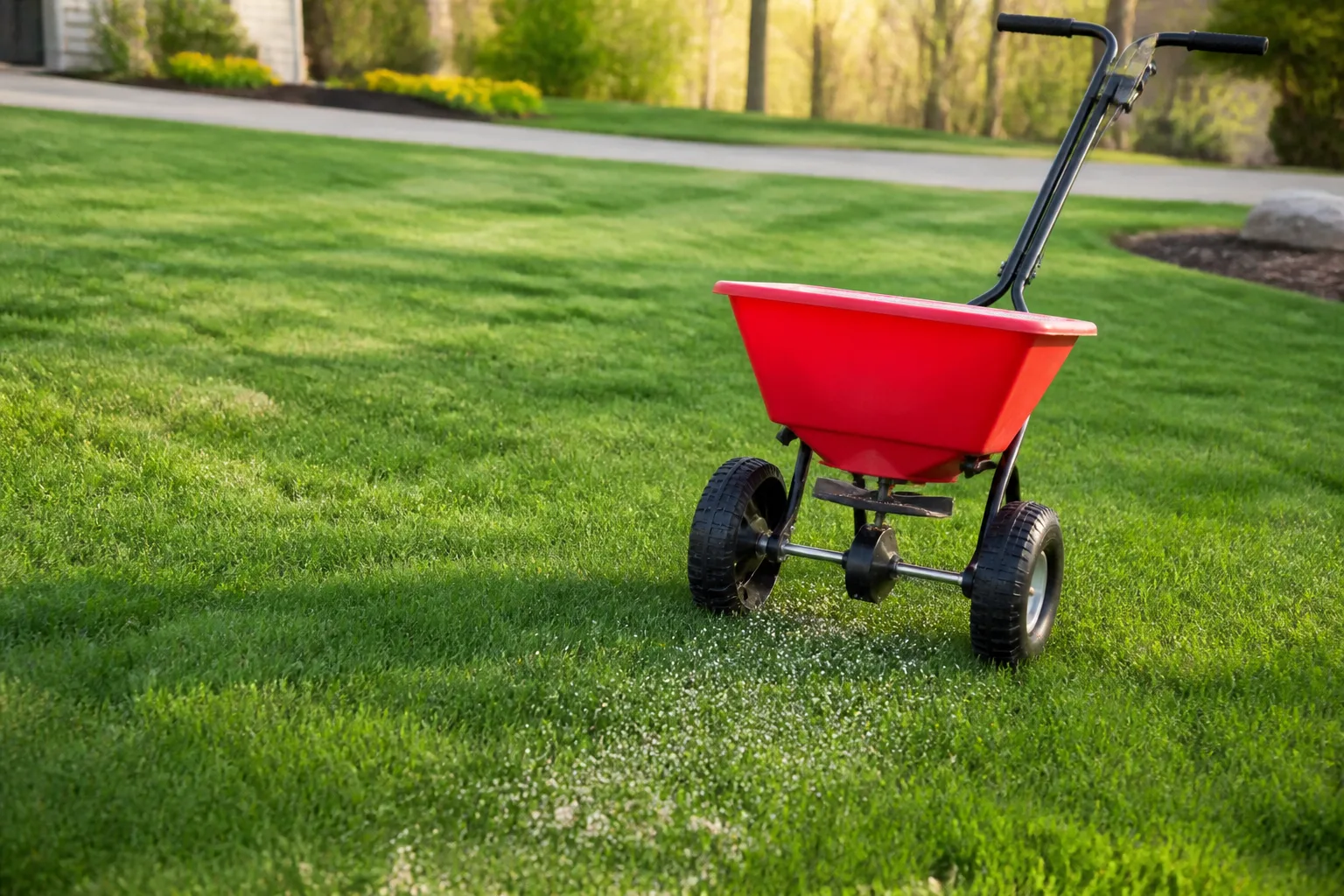
Granular weed-and-feed fails quietly. The bag is not defective—the calendar, moisture, or spreader calibration is. Use this checklist before every application:
Temperature: Most post-emergent combos want 60–90°F daytime air temperatures. Below 60°F, weeds stop taking up herbicide efficiently. Above 90°F, turf stress plus herbicide plus nitrogen equals burn. Bermudagrass often needs the ceiling closer to 85°F.
Grass activity: Apply only when turf is actively growing—usually after the second mow of spring on cool-season lawns, and after full green-up on warm-season grasses. Never treat drought-dormant turf.
Moisture for granules: Spread on dew-damp or lightly moistened weed leaves so granules adhere; then follow label irrigation timing—often wait a day, then water in. Iowa State Extension is explicit: dry weeds shed granules.
Mowing: Mow two to three days before application so weeds have leaf surface, not the day of. Do not mow until grass is dry after treatment—typically 48 hours post-application.
Spreader calibration: Set the gate to the bag’s listed setting for your spreader model. Walk overlapping paths. Shut the gate when turning.
Ornamentals and dicamba: Products containing dicamba can move through weed roots into soil and injure nearby trees and shrubs. UGA Extension warns never to apply dicamba-containing weed-and-feed over ornamental root zones. Keep granules out of flower beds and vegetable gardens.
New lawns: Wait until new seed or sod has been mowed three to four times before post-emergent weed-and-feed. Pre-emergent combos belong on established turf one year or older per most labels.
Phosphorus: Many weed-and-feed bags are low- or zero-phosphorus, which suits most mature lawns and phosphorus-restricted communities. If your soil test shows a phosphorus deficiency—a rarer issue—address it with a targeted product, not a random combo bag.
When to Skip Weed and Feed Entirely
Skip the combo bag when:
- Weeds cover less than 10–15% of the lawn. Spot-spray or hand-pull, then fertilize separately.
- You seeded or sodded this season. Herbicide injury risk is high; see our spring fertilization guide for establishment timing.
- Soil temperatures are wrong for the herbicide type—pre-emergent after crabgrass emerges, post-emergent during a heat wave.
- You need to kill creeping Charlie, nutsedge, or mature crabgrass. Standard 2,4-D weed-and-feed often fails; see our creeping Charlie guide for chemistry that actually matches the weed.
- Your lawn is mostly weeds. Renovation—kill, wait, reseed—beats feeding the weeds you are trying to remove.
- You are in a drought or watering ban. Fertilizer without irrigation stresses turf; herbicides on drought-stressed weeds underperform.
When you skip combo products, the workflow is simple: soil test, fertilize on your grass-type schedule, spot-treat weeds with a liquid selective herbicide, and improve density with mowing height and overseeding so weeds have less bare soil to colonize. That is the program extension agents describe when they say there is a better way than blanket weed-and-feed.
Conclusion
The best weed and feed is not the bag with the boldest front-panel photo—it is the one whose herbicide type, NPK, and grass list match your lawn this month. Scotts Turf Builder Weed and Feed is the reliable all-around post-emergent for many established yards; Scotts Triple Action wins early spring when crabgrass prevention matters; Jonathan Green corn gluten fits organic pre-emergent goals if you accept prevention-only control; BioAdvanced’s southern formula addresses warm-season timing; and Scotts WinterGuard Fall cleans up perennial broadleaves when roots are vulnerable.
Before you spread anything, confirm weed type, grass species, and soil temperature. Moisten weed leaves for granular products, respect dicamba drift near ornamentals, and never treat new seedling turf. When weeds are scattered and the lawn is otherwise healthy, separate fertilizer and targeted spray often beats a combo bag—and leaves you with a thicker lawn that needs less herbicide next year.