Should You Fertilize Grass in Spring?
Is it bad to skip spring lawn fertilizer? Use this grass-type guide, soil-temperature timing, and a 10-minute lawn check before you spread anything.
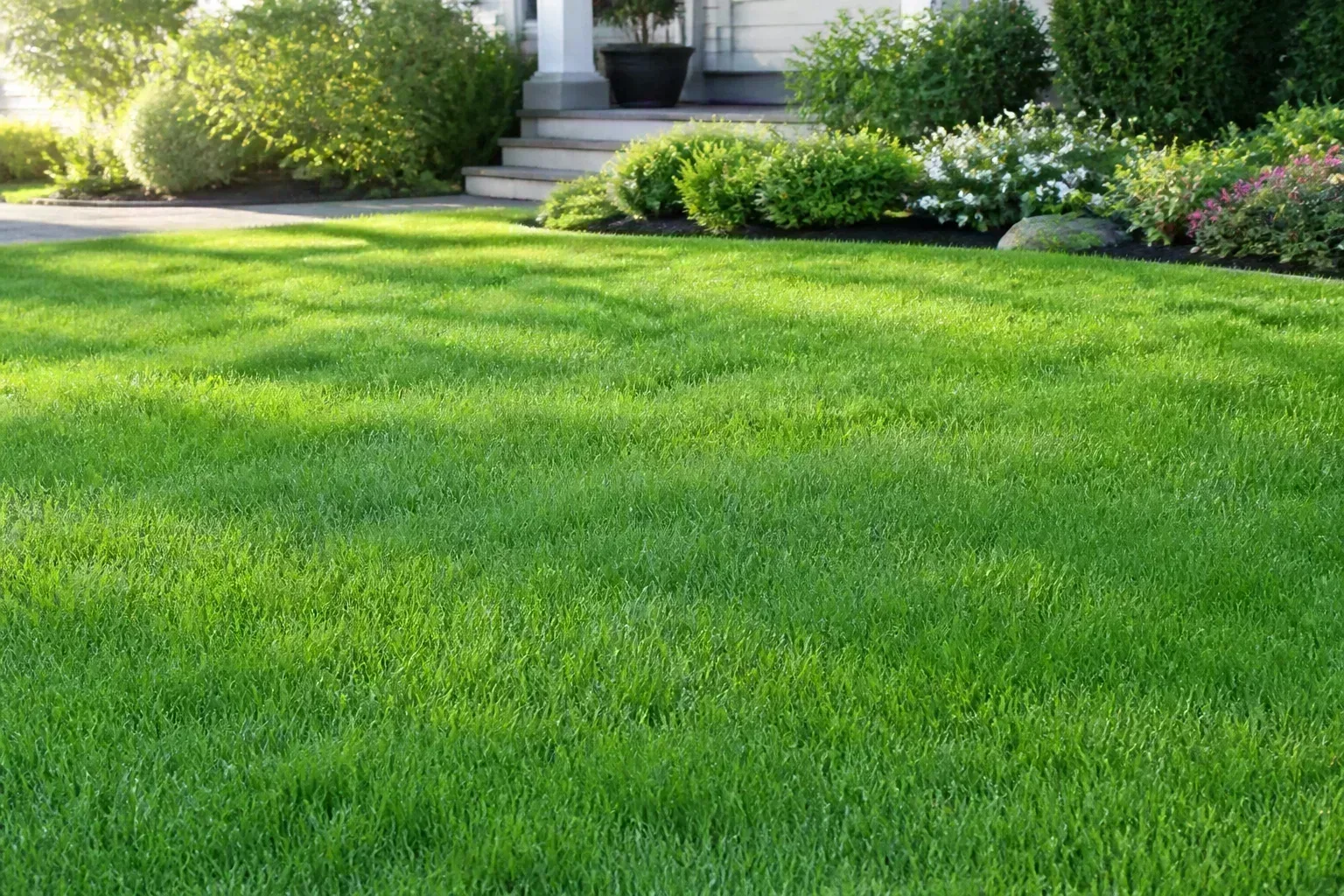
Spring lawn care ads push one message: feed now or fall behind. That urgency sells fertilizer bags, but it is not always good turf advice. Skipping spring fertilizer is not automatically harmful—and for many cool-season lawns that were fed properly in fall, skipping can be the smarter move. For thin, patchy, or warm-season turf waking from dormancy, skipping spring feeding can leave the lawn weak when foot traffic and summer heat arrive.
The useful question is not whether fertilizer is “good.” It is whether your grass type, your soil, and your lawn’s current condition need nitrogen right now—or whether you would be better off waiting, testing, or redirecting your effort to watering, mowing height, or fall nutrition instead.
The Short Answer: It Depends on Grass Type, Fall Care, and Lawn Condition
Healthy, dense cool-season turf that received a solid fall fertilization program can often skip a heavy spring feed without turning into a disaster. Cool-season grasses such as Kentucky bluegrass, tall fescue, and perennial ryegrass build much of their root system and carbohydrate reserves during cooler months. Extension programs consistently rank late summer through fall as the primary feeding window for these grasses in much of the United States.
Warm-season lawns—bermudagrass, zoysiagrass, St. Augustinegrass, and centipedegrass—are a different story. Their peak growth arrives with warm soil and air temperatures in late spring and summer. If you skip feeding while they are actively greening up, the turf may stay thin, pale, and slow to recover from winter injury or traffic.
Patchy, pale, newly seeded, or sodded lawns usually need nutrients during active growth regardless of season. Skipping fertilizer on struggling turf does not teach self-reliance; it usually lets weeds and bare soil win.
When Skipping Spring Fertilizer Is Usually Fine
You can reasonably skip or sharply limit spring fertilizer when most of these are true:
- You grow cool-season grass in a region where fall fertilization is standard practice.
- The lawn is uniformly dense, mows cleanly, and greens up evenly without wide yellow or thin patches.
- You fertilized in fall (typically September through November, depending on zone) with a balanced or nitrogen-focused program.
- A recent soil test shows adequate phosphorus and potassium and does not call for corrective nutrients.
- Local guidelines or environmental programs discourage early-spring nitrogen to reduce runoff.
In that profile, spring effort is often better spent on first mow timing, sharpening blades, fixing irrigation, and spot-repairing thin areas than on another heavy nitrogen hit.
When Skipping Spring Fertilizer Can Backfire
Skipping is riskier when:
- You have warm-season turf entering its main growing season.
- The lawn is thin, patchy, or slow to green after winter.
- You did not fertilize last fall, or you inherited a neglected yard.
- You overseeded or laid sod recently and roots are still establishing.
- A soil test shows low nitrogen availability or other limiting nutrients.
- The grass is actively growing (regular mowing resumed) but color and density lag behind neighbors on similar sites.
If several of those apply, skipping spring fertilizer is less “low maintenance” and more “missed opportunity”—especially before summer use ramps up.
What Spring Fertilizer Actually Does for Turf
Fertilizer is not magic green paint. It supplies macronutrients the soil may not release fast enough for the growth rate you want. For lawns, nitrogen (N) is almost always the nutrient that drives visible response: greener color, faster leaf growth, and quicker recovery from wear.
Phosphorus (P) supports root development and establishment. Potassium (K) helps with stress tolerance and overall plant function. On mature lawns with adequate soil levels, maintenance programs often emphasize nitrogen while applying phosphorus only when a soil test indicates a need—both for plant health and for water-quality protection.
Nitrogen and Green-Up After Winter
When soil temperatures rise and day length increases, cool-season grasses break dormancy and begin pulling nitrogen to rebuild leaf tissue. A modest spring nitrogen application can support that transition—especially where winter was harsh or fall feeding was light.
The problem is dose and timing. Aggressive spring nitrogen on cool-season lawns pushes lush top growth before roots are fully primed for summer drought and disease pressure. Virginia Cooperative Extension’s lawn fertilization guide notes that while small spring nitrogen amounts can benefit cool-season root growth, very aggressive spring programs are counter-productive and raise injury risk from summer disease and drought. Warm-season grasses, by contrast, use spring nitrogen to fuel their primary growth phase.
Why Phosphorus and Potassium Matter Less in Most Spring Feeds
Many bagged “spring lawn” products are high in nitrogen with moderate potassium and sometimes phosphorus. That marketing matches the nutrient lawns most often respond to in spring—but not every lawn needs a complete fertilizer every time.
A soil test may show phosphorus and potassium are already in the “medium” or higher range. In those cases, extension guidance often recommends nitrogen-only maintenance fertilizers rather than repeated 12-4-8 or similar complete formulas. Applying phosphorus when soil levels are adequate wastes money and, in some watersheds, contributes to environmental concerns.
If you have never tested your soil, spring is a excellent time to test first and buy second. See our guide on why grass growth stalls when soil nutrients are wrong for how fertility problems show up above ground.
Cool-Season Lawns: Fall Feeding Matters More Than Spring
If you grow tall fescue, Kentucky bluegrass, fine fescue, or perennial ryegrass, think of your fertilization year as a calendar weighted toward fall, not spring.
Extension research in Virginia puts the optimal cool-season feeding window from mid-August through early November, with timing shifting slightly by latitude. Fall applications support root growth when shoot growth slows, improve winter color in some regions, and build reserves for spring green-up. That is why lawn pros and extension specialists often say fall is when cool-season turf “eats” for the year.
Spring still has a role—but usually as a light, targeted supplement, not the main event.
Light Spring Nitrogen vs Heavy Spring Programs
For cool-season lawns using predominantly quick-release nitrogen, extension tables often suggest roughly 0.5 to 0.7 pound of nitrogen per 1,000 square feet per active month in spring—far less than many four-step retail programs imply if you add heavy early-spring weed-and-feed plus late-spring booster.
A slow-release or water-insoluble nitrogen source (look for WIN on the label) spreads availability over weeks and reduces surge growth and burn risk. Programs using fertilizers with 15% or more slowly available nitrogen may use different monthly totals because the nitrogen releases more evenly.
| Cool-season scenario | Typical spring approach |
|---|---|
| Healthy lawn, strong fall program | Skip or apply one light slow-release feed after full green-up |
| Average lawn, missed fall feeding | One moderate spring application after soil reaches ~55°F |
| Thin or patchy lawn | Spring feed plus overseed/repair; see how to help your lawn grow faster |
| Heavy shade (fine fescue) | Reduce nitrogen rate; prioritize fall feeding after leaf drop |
If You Fertilized Well Last Fall, You May Be Able to Skip
A lawn that received 1 to 1.5 pounds of nitrogen per 1,000 square feet across fall (split across September–November in many programs) often enters spring with enough internal reserves to green up without an immediate feed. Watch the turf, not the marketing calendar.
Skip spring fertilizer on cool-season grass when the stand is thick, weeds are minimal, color is acceptable two to three weeks after green-up, and you plan a disciplined fall program. Do not skip if color stays yellow-green after consistent spring moisture, mowing has resumed but growth is uneven, or you know fall feeding did not happen.
Warm-Season Lawns: Spring Fertilizer Is Harder to Skip
Bermudagrass, zoysiagrass, St. Augustinegrass, and centipedegrass hit their stride when nights warm and soil temperatures climb. In much of the South and transition zone, late spring through summer is the core feeding period—not fall.
If warm-season turf stays pale, slow to spread, or thin after green-up, skipping spring fertilizer often means living with a weak lawn all summer. These grasses do not build the same fall-centric carbohydrate strategy cool-season species do. They need nitrogen when they can use it during long, warm days.
Timing Warm-Season Feeds Around Full Green-Up
Do not fertilize dormant warm-season grass just because the calendar flipped to April. Wait until the lawn is mostly green and actively growing—usually when you need to mow on a normal schedule and soil temperatures at 4 inches depth are consistently warm.
In southern zones without a long dormancy, early to mid-April is a common starting point for the first warm-season feed, but soil and green-up trump dates. Apply a slow-release nitrogen product where possible, water according to label directions, and avoid feeding immediately before heavy rain that could wash granules into storm drains.
Centipedegrass and some zoysiagrass cultivars are lower-nitrogen grasses. Overfeeding in spring can cause thatch, disease, and excessive mowing. Match the product to the species, not to the highest-N bag on the shelf.
Five Signs Your Lawn Needs a Spring Feed
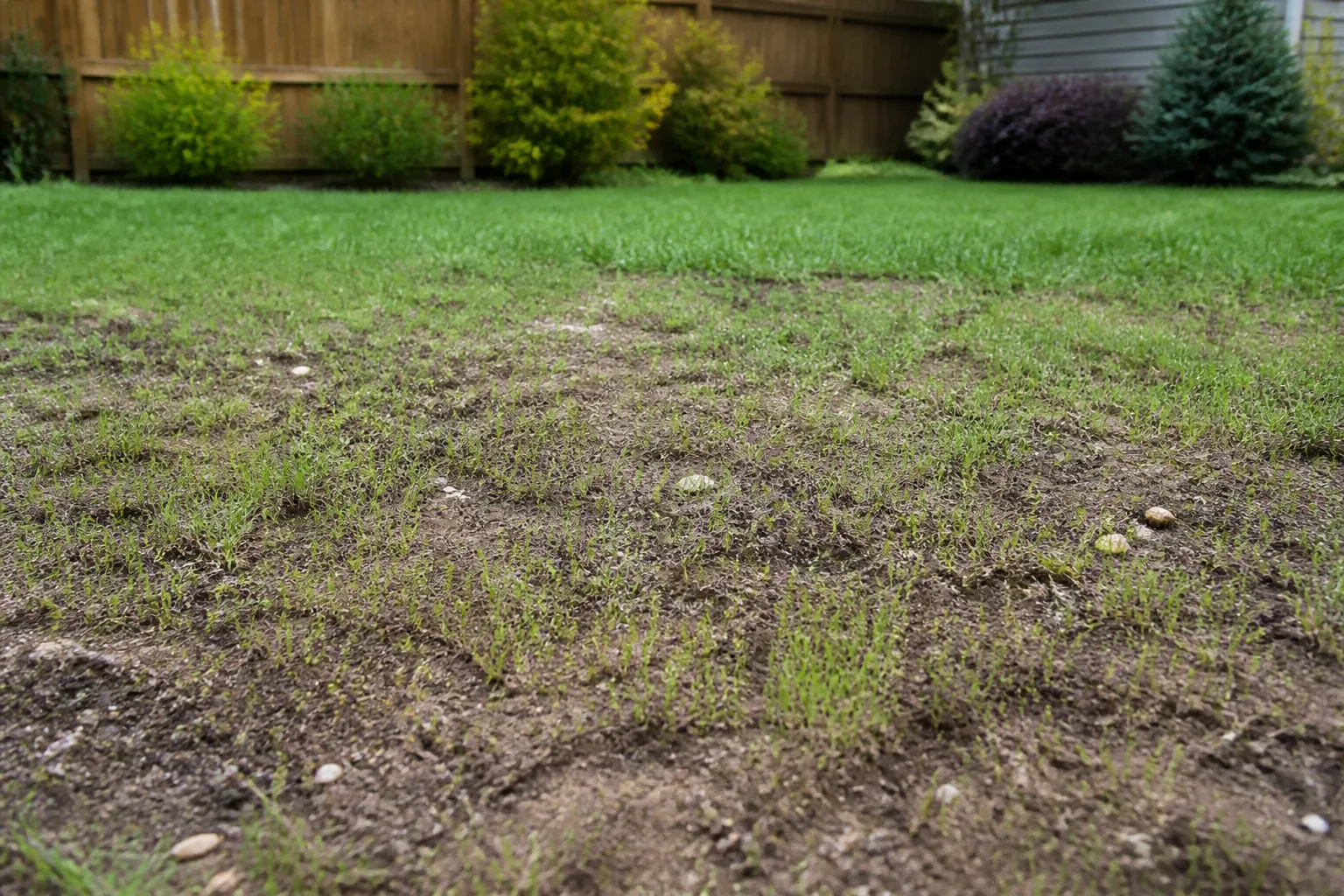
Color alone is a weak diagnostic. Use these signs together:
- Uneven green-up: bright green patches beside dull, slow areas after the rest of the neighborhood has stabilized.
- Thin density: you see soil between blades when you look across the lawn at mowing height.
- Slow recovery: high-traffic zones stay matted or bare long after the rest greens up.
- Shallow roots suggested by stress: wilting or graying footprints soon after normal use, even when watering practices are sound.
- Soil test or history gap: test shows low nitrogen, or you know fall feeding was skipped last year.
Yellow grass is not automatically a fertilizer problem. Iron chlorosis, overwatering, compaction, pet spots, and disease can mimic hunger. If fertilizer “fixes” color for two weeks then problems return, look deeper—our epsom salt for grass guide explains why random additives fail when the limiting factor is not magnesium or sulfur.
Five Situations Where Skipping Spring Fertilizer Is Smart
- Cool-season lawn, strong fall program, good density: redirect effort to mowing high and irrigation tuning.
- Grass still dormant: fertilizer on dormant turf does not help and can concentrate salts in the root zone.
- Frozen or saturated soil: wait until soil is workable and you can water in granular products without runoff.
- Local nutrient restrictions: some municipalities limit phosphorus or early-spring nitrogen—follow local rules.
- You have not soil-tested in three-plus years: spend the spring budget on a test instead of guessing with weed-and-feed.
Skipping is a decision, not neglect—when it is paired with a plan for fall feeding, repairs, or warm-season timing later.
How to Know Your Lawn Is Ready to Fertilize
The worst spring fertilizer mistakes happen before the spreader leaves the garage: too early, on the wrong grass phase, or without knowing what the soil already contains.
Soil Temperature Beats the Calendar
For cool-season lawns, a widely used practical threshold is soil temperature around 55°F (13°C) at rooting depth, measured consistently for several days—not a single warm afternoon. Above that range, roots resume meaningful activity and can take up nitrogen efficiently.
Warm-season grasses generally want warmer soil—often into the 60s°F—before the first significant feed. A soil thermometer pushed a few inches into the lawn is inexpensive and more reliable than “first dandelion” folklore.
Active growth cues that align with soil warmth:
- Regular mowing resumed (not just a one-time scalp).
- New leaf tissue is firm, not just a faint tint on dormant brown blades.
- Footprints bounce back within hours rather than lingering all day.
Run a Soil Test Before You Buy a Bag
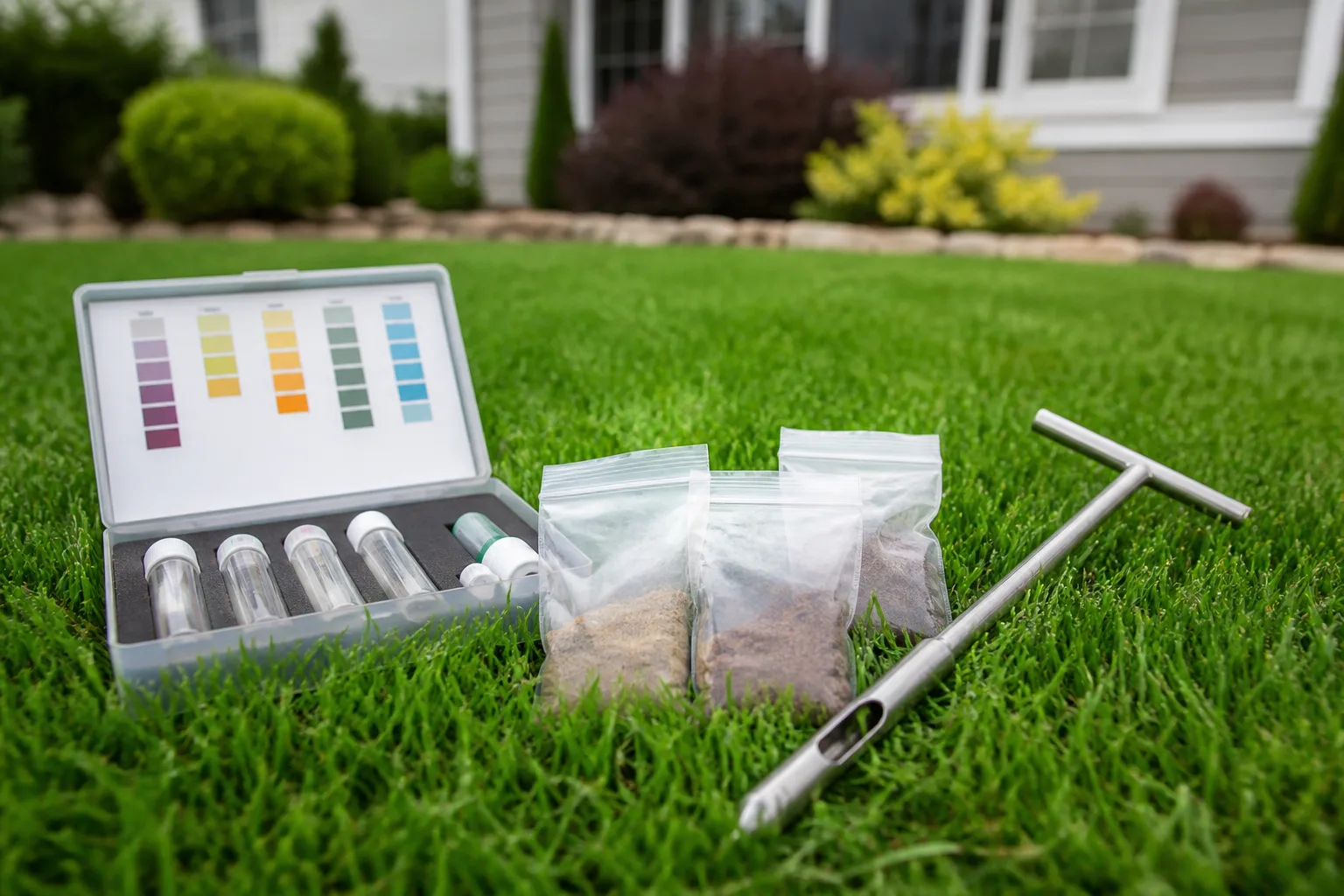
Soil testing is the fastest way to stop buying the wrong fertilizer every spring. Purdue Turfgrass Science and Penn State Extension both recommend periodic testing because nitrogen needs are not reliably predicted from a standard soil test, but phosphorus, potassium, pH, and lime requirements are.
Collect samples from several spots, mix subsamples, and send to your state or regional lab. The report tells you:
- Whether lime or sulfur is needed before fertilizer will work well.
- If phosphorus is needed or should be avoided.
- A nitrogen recommendation range for your grass type.
Retest every three to four years, or sooner if you are correcting major pH or nutrient problems. If you are also seeding this spring, coordinate feeding with how often to water new grass seed so nutrients and moisture support establishment without burn.
Choosing the Right Spring Fertilizer and Application Rate
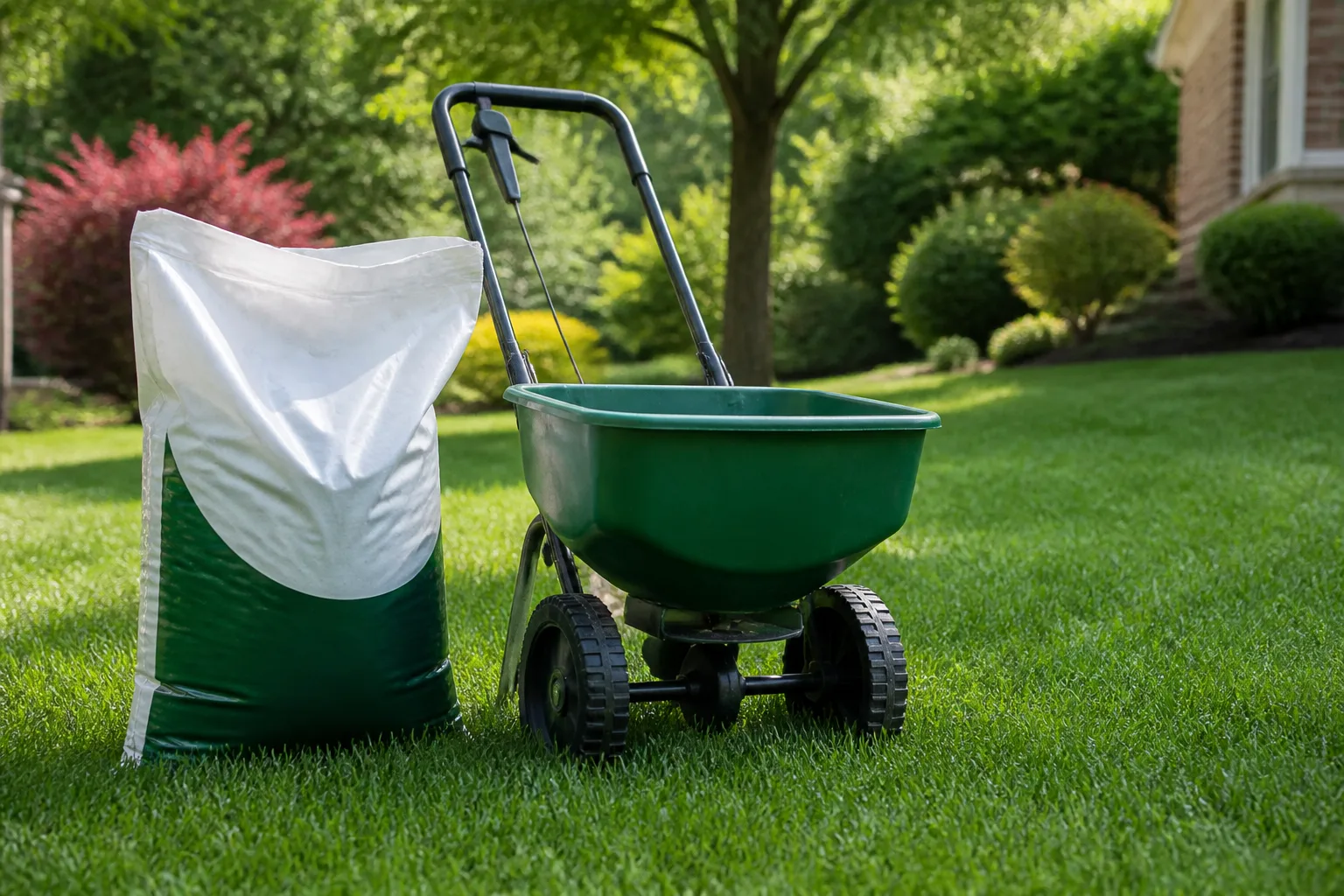
Walk into any garden center and you will see “spring lawn” blends, weed-and-feed combos, organic meals, and liquid concentrates. Simplify the choice with three filters: grass type, soil test, and release speed.
For most established cool-season spring feeds:
- Choose predominantly nitrogen if P and K are adequate.
- Prefer slow-release nitrogen for one even application rather than surge growth.
- Target roughly 0.5 to 0.7 lb N per 1,000 sq ft for a single spring application unless your soil test or extension calendar specifies otherwise.
For warm-season spring green-up:
- Apply after full active growth begins.
- Use species-appropriate rates—centipedegrass and fine zoysia need less than bermudagrass.
- Split applications across late spring and summer rather than one massive dump.
To calculate how much product to use, read the guaranteed analysis on the bag. A 24-0-8 fertilizer is 24% nitrogen by weight. To deliver 0.5 lb of nitrogen per 1,000 sq ft:
Pounds of product = (desired N ÷ % N on bag) × 100
Example: (0.5 ÷ 0.24) × 100 ≈ 2.1 pounds of fertilizer per 1,000 sq ft.
Weed-and-feed products bundle herbicides with fertilizer. They are convenient but narrow in timing—herbicides effective on spring weeds may injure newly seeded areas or conflict with your grass stage. If you are unsure, separate weed control and feeding so each application happens at the right moment.
Liquid vs Granular: Which Method Fits Your Lawn
Both formats work when applied correctly. The choice is about even coverage, equipment, and weather.
Granular fertilizer is forgiving for homeowners with a broadcast or drop spreader. Apply to dry turf, then water in lightly according to the label so granules reach the soil and do not sit on leaves where sun can cause burn. Granular slow-release products fit one-and-done spring feeding on many lawns.
Liquid fertilizer—hose-end bottles or tank sprayers—delivers nutrients in solution for fast foliar and root uptake. It suits smaller lawns and quick correction but demands even walking speed and overlap control. Liquids can scorch if applied in midday heat or at excessive concentration. Many labels recommend applying when grass is dry, then watering after a short drying period.
Neither format fixes poor timing. Liquid on dormant grass and granular before a thunderstorm are equally wasteful.
Common Spring Fertilizing Mistakes That Waste Money or Burn Turf
Fertilizing before active growth. Nutrients sit unused, feed early weeds, or concentrate salts while roots are still waking up.
Heavy nitrogen on healthy cool-season turf. You get a flush of top growth, extra mowing, and a lawn less prepared for summer stress.
Ignoring the soil test. You may add phosphorus you do not need or skip lime when pH locks out nutrients.
Weed-and-feed on newly seeded lawns. Many pre-emergent herbicides prevent desirable grass seed from establishing.
Uneven spreader passes. Striping and dark-green bands are classic signs of overlap errors—calibrate the spreader on a driveway first.
Skipping water-in on granular products. Left on leaf blades in sun, fertilizer can chemically burn tissue and create brown patches.
Feeding before heavy rain. Soluble nitrogen can wash into storm drains and waterways—bad for budgets and local water quality.
If burn or streaking appears, stop applying, irrigate lightly to move product off leaves into soil if the label allows, and avoid further nitrogen until the turf recovers. Persistent damage may need rake-out and spot reseeding in fall.
A Simple Spring Fertilization Decision Checklist
Run this list on a dry afternoon before you buy fertilizer:
- Identify your grass type (cool-season vs warm-season).
- Recall last fall: did you feed? how much?
- Look at density and color across the whole yard, not one photogenic corner.
- Check soil temperature with a thermometer—not just air temperature.
- Pull or review a soil test from the last three years.
- Choose product based on test + species (slow-release N for most spring cool-season feeds).
- Pick a calm day with rain not forecast for 24 hours if runoff is a risk.
- Calibrate spreader or sprayer, apply evenly, water per label.
- Mark your calendar for fall feeding if you grow cool-season grass—that is where long-term lawn quality is built.
If steps 1–5 point to healthy cool-season turf with a solid fall history, skipping spring fertilizer is reasonable. If they point to warm-season green-up on thin turf, plan to feed when growth is active.
Conclusion
Skipping spring fertilizer is not inherently a bad idea. For many cool-season lawns that are already thick and were fed in fall, spring feeding is optional—and heavy spring nitrogen can do more harm than good. For warm-season grasses, thin patches, new seed, or yards that missed fall nutrition, skipping spring feeding often leaves turf weak heading into summer.
Let grass type, soil temperature, soil-test data, and the lawn’s actual condition decide—not a generic four-step bag program. Test soil, confirm active growth, choose slow-release nitrogen when you do feed, and put your biggest cool-season investment back where extension science consistently points: fall.