How to Get Rid of Creeping Charlie in Lawns and Beds
Creeping Charlie spreads by stolons and rhizomes, not just seeds. Learn to ID ground ivy, pull it effectively, and use fall herbicide timing that extension services recommend.
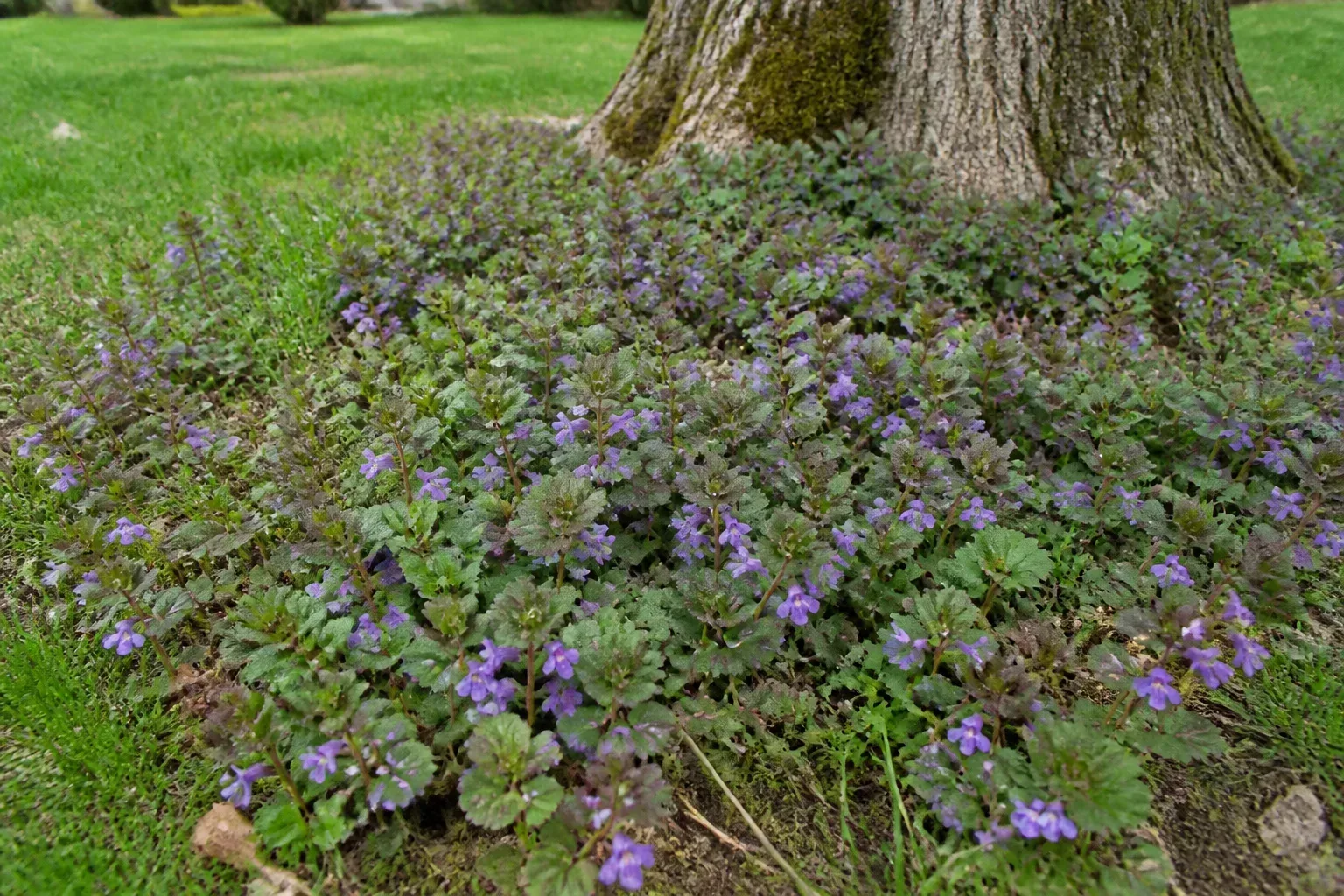
Creeping Charlie — also called ground ivy — is not a grass weed you can shrug off with one spring spray. It is a mint-family perennial (Glechoma hederacea) that spreads by seeds, rhizomes, and creeping stems called stolons that root at every node. Pull the top and leave a fragment behind, and you have a new plant. Spray at the wrong time with the wrong active ingredient, and the mat greens up again by summer.
That persistence is why so many homeowners feel they have “tried everything.” Weed-and-feed granules with only 2,4-D barely touch it. One afternoon of pulling leaves a carpet of fragments. The good news: once you identify it correctly and match your method to the patch size and location, you can knock it back hard — and in many lawns, keep it manageable for years without turning your shade garden into a chemical battlefield.
What Creeping Charlie Actually Is (and Why It Is So Hard to Kill)
European settlers brought ground ivy to North America in the 1800s as a shade-tolerant groundcover and medicinal herb. It still behaves that way: low, dense, aromatic, and aggressive wherever grass struggles. In USDA hardiness zones 3 through 10, it survives winter as roots and stems, then reclaims thin turf each spring.
Scientific Name and Spread Mechanisms
Glechoma hederacea belongs to the Lamiaceae family — the same group as mint and dead nettle. That matters because mint-family weeds share traits that make control frustrating: square stems, opposite leaves, and the ability to regenerate from stem fragments. Unlike annual weeds that die when you break the seed cycle, creeping Charlie keeps a living network in the soil year-round.
Creeping Charlie spreads three ways at once. Seeds ride in on birds and mowers. Rhizomes creep underground. Stolons run along the soil surface and root at nodes. Any piece left in moist soil can restart the colony. University of Wisconsin Extension notes that hand-pulling rarely removes the full stolon network in heavy infestations, which is why small patches are manageable but lawn-wide mats need a broader plan (UW Horticulture: Controlling Creeping Charlie).
Why Shade and Moisture Fuel Infestations
Ground ivy thrives where turf fails: under trees, along north-facing foundations, in low spots that stay damp, and anywhere soil compacts and grass thins. It tolerates sun but wins the competition in shade. If your lawn is chronically wet or you mow too short, creeping Charlie is telling you something about site conditions — not just that you need another bottle of weed killer.
Confirm the Weed Before You Treat It
Misidentification wastes money and can damage desirable plants. Before you buy herbicide or spend a Saturday digging, spend two minutes on field marks.
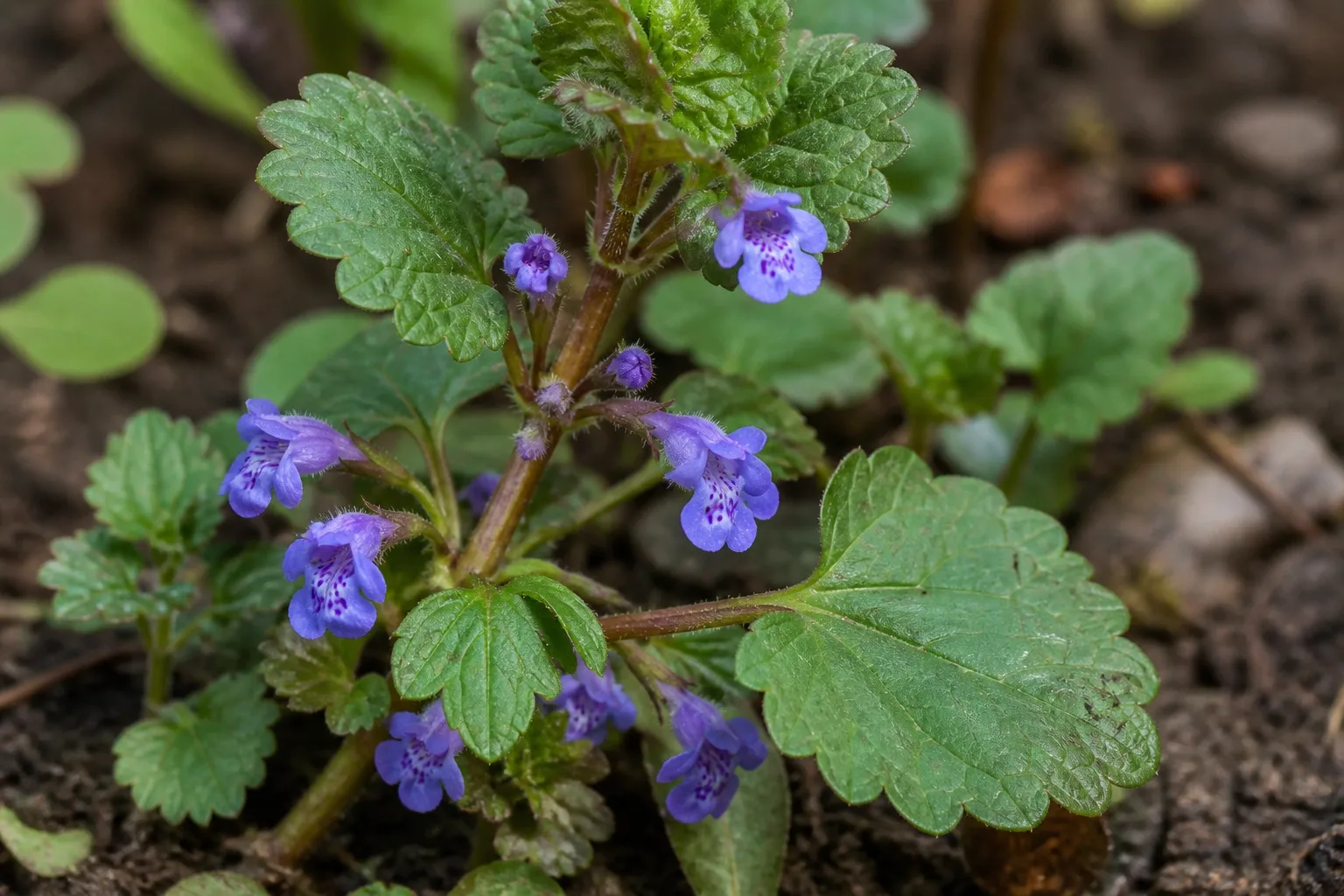
Square stems. Roll a stem between your fingers. Mint-family plants have distinctly four-sided stems; grasses are round.
Kidney-shaped leaves with scalloped edges, arranged in opposite pairs along the stem.
Small bluish-purple funnel-shaped flowers on short stalks in spring.
Strong minty odor when crushed — one of the fastest field tests.
The plant forms a low mat, often staying under a few inches in mowed turf but reaching farther in unmowed shade.
Creeping Charlie vs Creeping Jenny and Common Look-Alikes
This confusion causes real control mistakes. Creeping Jenny (Lysimachia nummularia) is a different species grown as an ornamental groundcover. It has round, smooth leaves without scalloped edges and yellow flowers, not purple. True creeping Charlie never produces yellow blooms. If you see yellow flowers on round leaves, you are not fighting Glechoma hederacea.
Henbit (Lamium amplexicaule) is a winter annual with similar purple flowers but upper leaves that clasp the stem directly — no leaf stalk. Common mallow (Malva neglecta) has roundish leaves but does not spread by running stolons and lacks the sharp mint scent. Dichondra and other low groundcovers can look like a mat from a distance; get close and check stem shape, leaf edges, and smell.
If the weed matches square stems, scalloped opposite leaves, purple spring flowers, and mint aroma, you are dealing with ground ivy. Everything below applies.
Choose the Right Control Strategy
There is no single “best” way to kill creeping Charlie. The right approach depends on how much area is affected, whether you are in lawn turf or a planting bed, and how many years you are willing to stay on it.
| Situation | Best first move | Realistic outcome |
|---|---|---|
| Small patch in lawn (< 10 sq ft) | Hand-pull after soaking soil; repeat monthly | Good control in one season with vigilance |
| Scattered plants in healthy turf | Spot spray with triclopyr-containing product in fall | Strong knockback; monitor edges |
| Dense mat over half the lawn | Fall herbicide series + cultural fixes, or renovate | Multi-year project; may need respray |
| Flower or vegetable beds | Hand-pull, hoe, or smother — no lawn herbicides | Slow but safest for edibles |
| Mostly ground ivy, little grass | Kill all vegetation and reseed | Faster than endless resprays |
For small patches in lawn or beds, hand-pull after soaking soil and repeat monthly — good control is realistic in one season with vigilance. In beds, never broadcast lawn weed killers; products with dicamba, 2,4-D, and triclopyr injure most broadleaf ornamentals and vegetables severely, even at low drift (UW Horticulture). Pull, hoe, or smother instead.
For large lawn mats, hand labor alone rarely clears a continuous infestation. Post-emergent broadleaf herbicides with the right active ingredients, timed in fall after the first frost or spring during bloom, are the most effective tools homeowners have. Expect repeat applications — Polk County Extension notes that a full season or more is common before you see lasting improvement (Polk County Extension: Creeping Charlie Control).
If creeping Charlie covers more than half the lawn and grass is mostly gone, renovation may cost less time than years of herbicide. Kill existing vegetation with a non-selective product labeled for lawn renovation (follow label reseeding intervals), improve drainage and light where possible, then reseed with a shade-tolerant grass mix suited to your region. Wisconsin Extension suggests mid-August through mid-September as prime reseeding windows in the Upper Midwest — the same window that works well for dethatching if you go that route.
How to Remove Creeping Charlie by Hand
Hand-pulling is the safest method for people, pets, pollinators, and neighboring plants — when the job size is realistic. It is also the method most likely to fail if you rush it. Gather gardening gloves, a hand weeder or garden fork, pruners, lawn waste bags, and a hose. Work when soil is moist: after rain or a deep soak. Dry soil snaps stolons and leaves rhizome pieces behind.
Step-by-Step Hand-Pulling Method
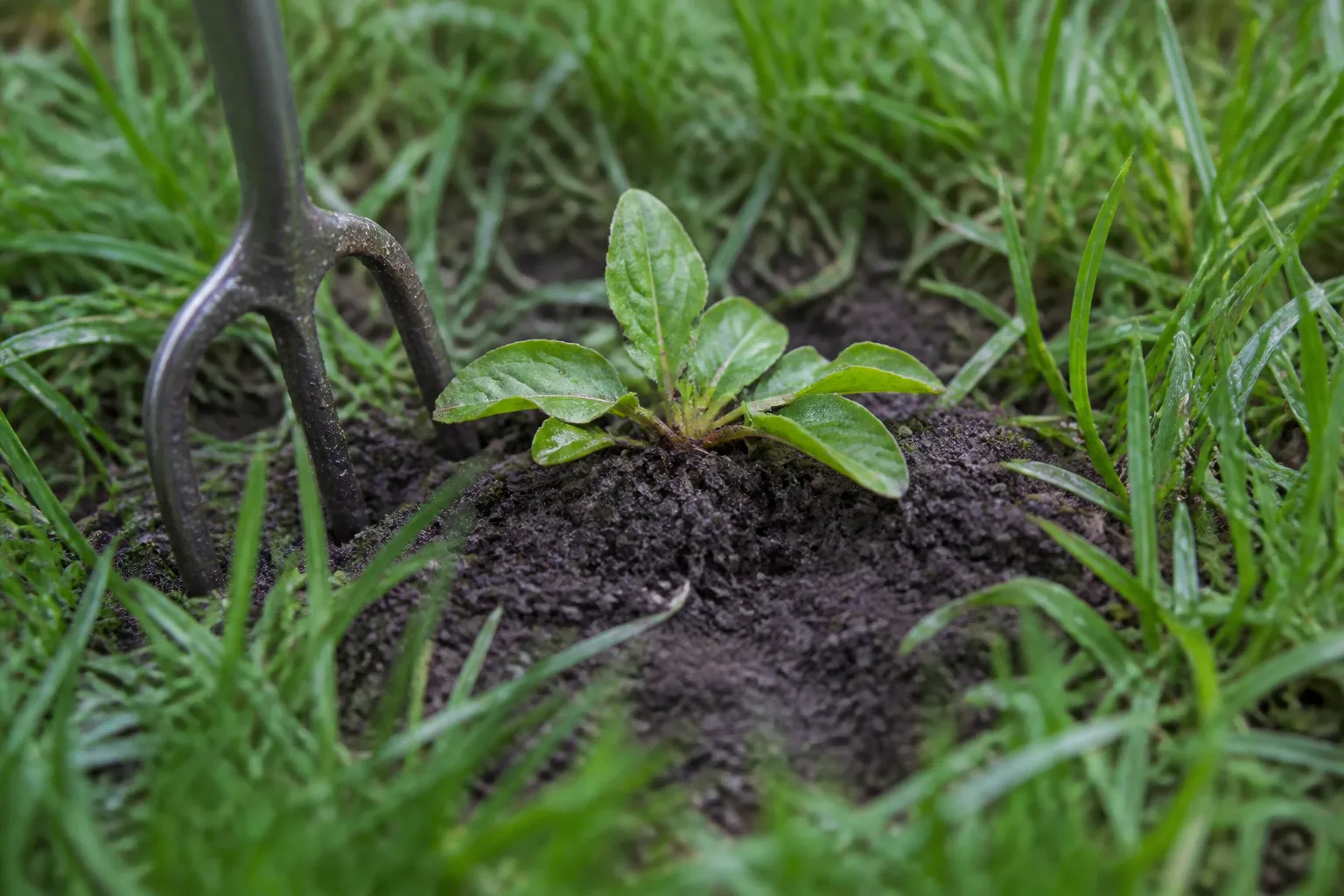
Trim long stems first if the mat is tangled — it exposes where stolons enter the soil. Soak the area for 30 to 60 minutes before you pull. The goal is soft soil that releases the full stolon network, not just top growth.
Loosen soil several inches deep with a fork, working outward from the center of the patch. Grasp stems low and pull slowly, keeping stolons intact so they do not break. Spread the mat flat as you work — ground ivy layers on itself, and hidden stems root at multiple points.
Place every fragment in the trash bag. Do not compost creeping Charlie unless your pile reaches sustained temperatures high enough to kill weed seeds and stems — most home compost does not. Rake the area and inspect with a trowel for white rhizome pieces. Any piece left in moist soil can resprout.
Plan to repeat every two to three weeks through the growing season the first year. Spring pulls before flowering are especially valuable because they starve the root system before the plant invests in bloom and seed.
Chemical Control That Works on Ground Ivy
Herbicides are the most effective tool for large lawn areas — but only if you choose products and timing extension research supports. Always read and follow the EPA pesticide label; it is a legal document, and off-label use is unsafe and ineffective.
Why Standard 2,4-D Products Often Fail
Here is the detail many lawn guides skip: 2,4-D alone has little effect on ground ivy. Polk County Extension states plainly that 2,4-D, the most common active in granular weed-and-feed products, does not control creeping Charlie well (Polk County Extension). If you have sprayed “weed and feed” twice and the purple mat is thicker, the chemistry — not your effort — was wrong.
That does not mean all broadleaf herbicides fail. Combination products that pair 2,4-D with stronger partners can work — but you need to read the fine print. Look for triclopyr on the label, not just the words “weed killer” on the front of the jug.
Active Ingredients and Application Timing
For homeowners treating lawns only, Wisconsin Extension recommends post-emergent products containing triclopyr or sulfentrazone. Many combination broadleaf products also include 2,4-D, dicamba, and mecoprop (MCPP) — check the ingredient panel, not just the front label. Triclopyr is the active most often singled out for ground ivy.
An iron-based alternative: Fe-HEDTA herbicides can provide good to excellent control with fall and spring sequential applications, with less conventional synthetic chemistry — still follow label rates (UW Horticulture).
Liquid formulations generally outperform granular weed-and-feed on ground ivy because they coat more leaf surface. The more leaf area absorbs product, the more herbicide moves into the root system.
Dicamba caution: Do not apply dicamba-containing products in the root zones of shallow-rooted trees and shrubs — it can damage ornamentals. Fall applications also reduce drift risk to sensitive landscape plants compared with breezy spring days (Polk County Extension).
Timing matters as much as chemistry. Creeping Charlie is a perennial storing food in its roots — herbicide applied when the plant is actively translocating sugars downward moves more active ingredient to the rhizomes. Best window: mid to late autumn, after the first frost, when weeds are still green but heading into dormancy. Wisconsin Extension calls this an excellent time for perennial broadleaf weeds (UW Horticulture). Second window: spring, when plants bloom (roughly April through June in many northern lawns). Blooming plants are highly susceptible; a follow-up spray may still be needed.
Apply when temperatures are in the mid-60s to low 80s°F, winds are calm, and no rain is forecast for 24 hours. Do not mow for several days before or after application — more leaf area and uninterrupted uptake improve results (Polk County Extension). Avoid treating during summer drought dormancy or late fall after growth has stopped.
A typical successful program: fall application after frost, spring follow-up at bloom, then monitor and spot-treat edges. Wisconsin Extension is honest that complete elimination may take years of repeat treatment — or you may choose to manage density rather than pursue zero plants.
Non-Chemical Methods Beyond Pulling
Smothering blocks light and air, weakening ground ivy over one to several weeks. Layer cardboard or 10-plus sheets of newspaper over the patch, overlap edges generously, and weight with mulch or stones. Extend coverage at least 12 inches past visible growth — stolons sneak sideways. University of Minnesota turf researchers have documented tarping experiments for herbicide-free creeping Charlie reduction in backyard settings (UMN Turfgrass: Tarping Experiment). Smothering works, but it kills everything underneath — grass included. Budget time to reseed or replant afterward. Check weekly; any green peeking through means the cover shifted or was too thin.
Borax circulates online as an “organic” creeping Charlie cure, but Wisconsin and Iowa State Extension both report it is typically ineffective and risks boron toxicity in soil. Boron does not break down quickly; excess persists and can create bare zones where nothing grows (Iowa State Extension borax FAQ; UW Horticulture). Household vinegar and dish-soap cocktails burn foliage on contact but do not reliably kill rhizomes, so regrowth and turf damage follow. They are not substitutes for triclopyr timing in a serious infestation.
Fix the Site Conditions Ground Ivy Loves
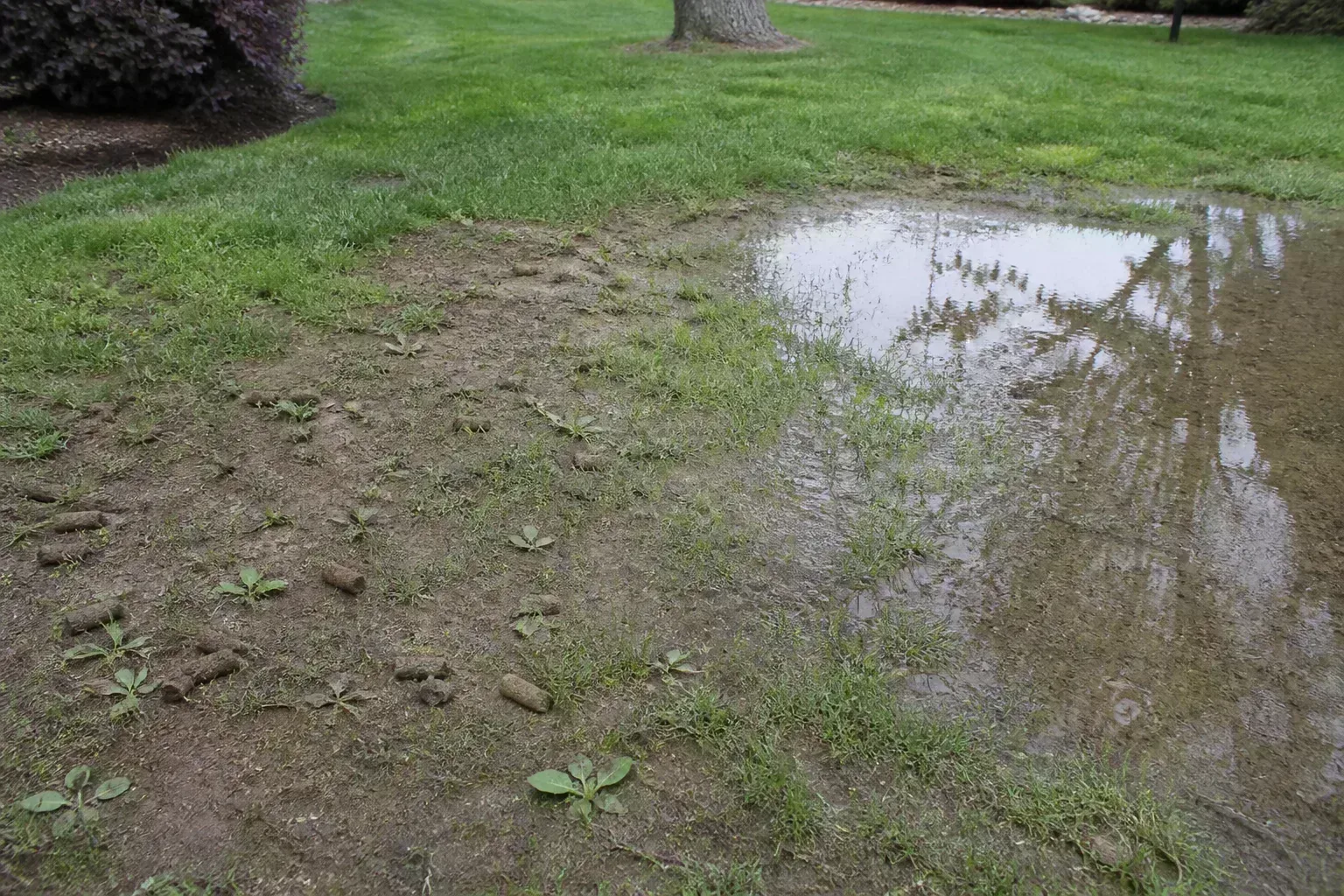
Killing today’s plants without changing tomorrow’s conditions invites reinfestation. Creeping Charlie is often a symptom of shade, poor drainage, and thin turf. Prune lower tree branches to raise light levels — even partial sun shifts competition toward grass. Aerate compacted areas and address grading that pools water. If an area is permanently shady and damp, stop forcing sun-loving turf there. Wisconsin Extension suggests shade-tolerant groundcovers or hostas that compete well instead of a failing lawn strip (UW Horticulture).
Mow high — about 2½ to 3½ inches for most cool-season lawns. Polk County Extension notes that scalping grass invites weeds because turf cannot shade the soil surface (Polk County Extension). Fertilize according to your grass type and soil test. Overseed thin areas in fall after control work; dense grass is the best long-term pre-emergent. Dethatching/power raking can comb out mats of creeping Charlie, but Wisconsin Extension warns it may also spread stem nodes and worsen the problem if fragments redistribute. If you dethatch, do it mid-August through mid-September and be ready to reseed immediately.
Prevent Creeping Charlie From Coming Back
Weekly monitoring the first year after any control program catches reinvasion while patches are still hand-pull size. Walk shady edges in spring when purple flowers make ground ivy obvious. Mark problem corners on a simple yard map if that helps you remember where stolons snuck in last year — shade lines shift slowly, but drainage problems and mower-scalped strips stay predictable.
Avoid overwatering — especially in shade. About one inch of water per week (including rain) is enough for most lawns; soggy soil favors ground ivy over grass.
Clean tools and mower decks if you cut through infested areas before treatment — stem fragments can transport the weed.
Pre-emergent crabgrass products do not stop creeping Charlie; it is a perennial with established roots, not an annual seedling. Prevention is cultural: thick turf, correct mowing, fixed drainage, and quick removal of newcomers.
If you use herbicides, record products and dates so you respect label intervals before reseeding edibles or stressing turf with renovation.
When Keeping Some Ground Ivy Makes Sense
Not every purple flower in the lawn is a crisis. Creeping Charlie provides early-season nectar for bees when little else blooms. University of Minnesota turf scientists note pollinator value as one reason some homeowners tolerate managed patches (UMN Turfgrass: Creeping Charlie and Pollinators). In a bee lawn or low-input shade area, a controlled strip of ground ivy may be preferable to bare soil or constant herbicide cycles.
If children or pets use the yard heavily, or you keep horses or cattle, tolerance is riskier — ground ivy can cause digestive upset in livestock when eaten in quantity. In ornamental beds where you want clean edges, tolerance is also a poor fit.
A practical middle path: control ground ivy in high-traffic lawn areas and allow limited patches in wilder margins — mow before seed set if you want to limit spread. You are managing density, not declaring war on every stem.
Conclusion
Creeping Charlie wins when homeowners treat it like a simple annual weed: wrong chemistry, wrong season, or one pass of hand-pulling on a rooted mat. Identify it by square stems, scalloped leaves, purple spring flowers, and mint scent. Match your method to the site — pull small patches in moist soil, smother beds, or spray lawns with triclopyr- or sulfentrazone-containing products in fall after frost and again in spring bloom. Skip borax and vinegar fantasies; fix shade and drainage; mow high and overseed thin turf.
Complete eradication can take seasons. Many successful lawns settle into monitor-and-treat rather than zero tolerance — and that is still a win compared to the purple carpet spreading unchecked each year.



