How to Prevent and Treat Lawn Fungus
Protect your yard from lawn fungus with a diagnosis-first plan for brown patches, red thread, snow mold, watering, mowing, drainage, and recovery.
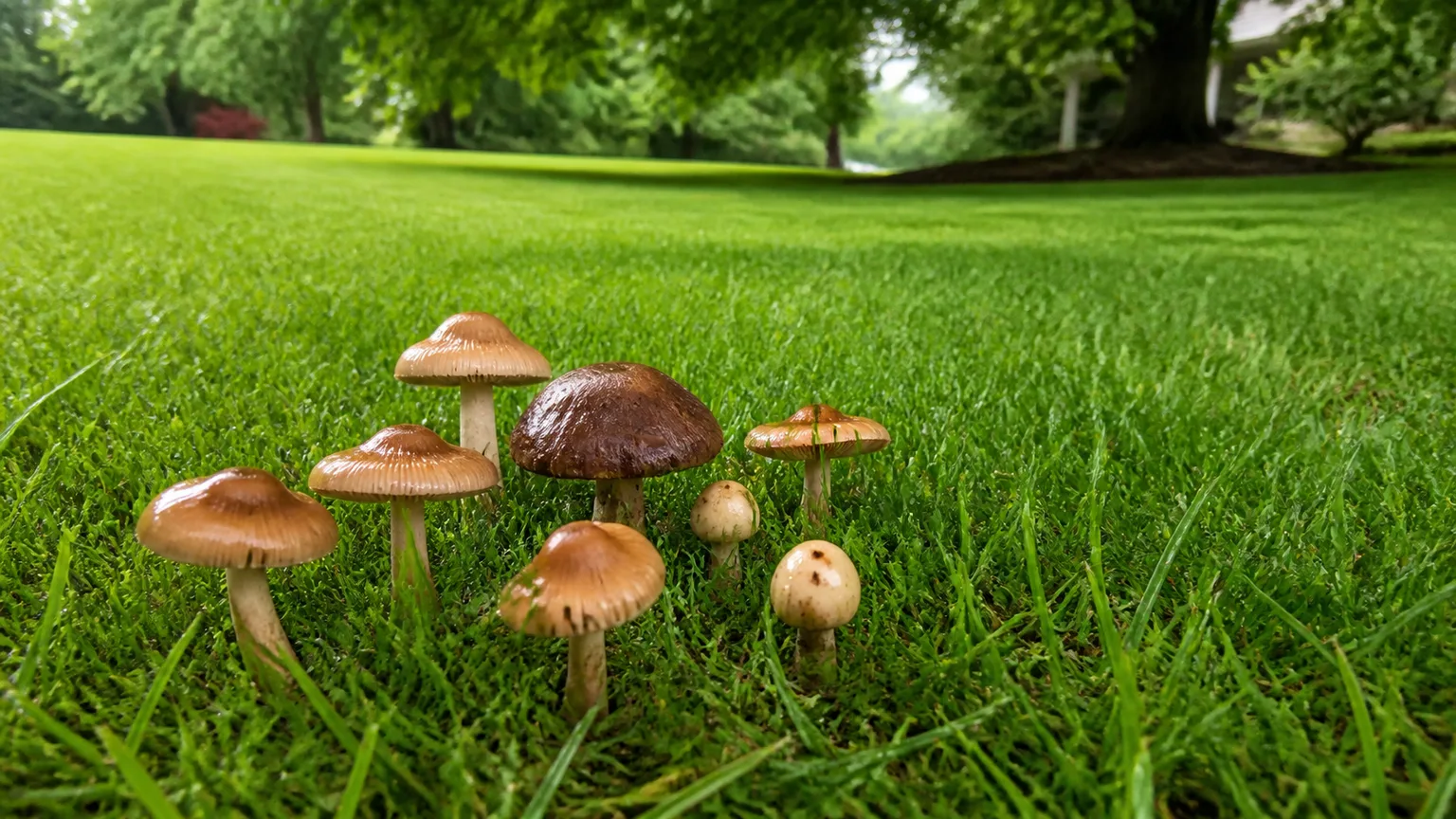
The right way to protect a yard from lawn fungus is to diagnose the pattern first, then shorten the time grass stays wet. Water only when the root zone needs it, irrigate early enough for the blades to dry, mow at the correct height, and avoid pushing lush growth with excess nitrogen during disease-favorable weather. A labeled fungicide can have a place, but it is not a substitute for fixing the conditions that keep an outbreak moving.
That distinction matters because brown grass is a symptom, not a diagnosis. Drought, a broken sprinkler, dog urine, grubs, chemical injury, compaction, standing water, and several fungal diseases can all produce a patch that looks bad from a distance. If you add water to a fungal problem or spray a dry spot, you spend money while the real cause continues.
The short answer: make the lawn less wet and stressed
If you see new discolored patches, start with this sequence:
- Photograph the whole patch and its edge in the morning. Note the grass type, recent rain, irrigation time, mowing, shade, and fertilizer applications.
- Check the soil before watering. Probe several inches down in healthy grass and in the affected area. A dry root zone points you toward drought or irrigation coverage; a persistently wet surface raises disease and drainage concerns.
- Inspect individual blades and the crown. Look for lesions, colored threads, powdery growth, and whether the short growing point at the soil line is firm and alive.
- Stop evening irrigation and high-nitrogen feeding while the patch is actively expanding. These can prolong leaf wetness or create soft, succulent growth.
- Mow only when the lawn is dry. Use a sharp blade, avoid scalping, and clean the mower deck if you have been through a clearly diseased area.
- Decide whether the edge is still moving. A stable patch with living crowns may recover as the weather changes. Continued spread through warm, humid weather is the point at which a local diagnosis and a label-approved treatment become more useful.
“Lawn fungus” is an umbrella term, not one disease. Brown patch, red thread, snow mold, dollar spot, rust, powdery mildew, and fairy rings have different symptoms and different weather patterns. Penn State Extension describes brown patch as a summer foliar disease caused by Rhizoctonia solani and notes that it is most severe on lush, irrigated turf during hot, humid weather. Its brown-patch reference is a useful reminder that the grass type and the weather are part of the diagnosis.
Is the brown or thin patch actually fungus?
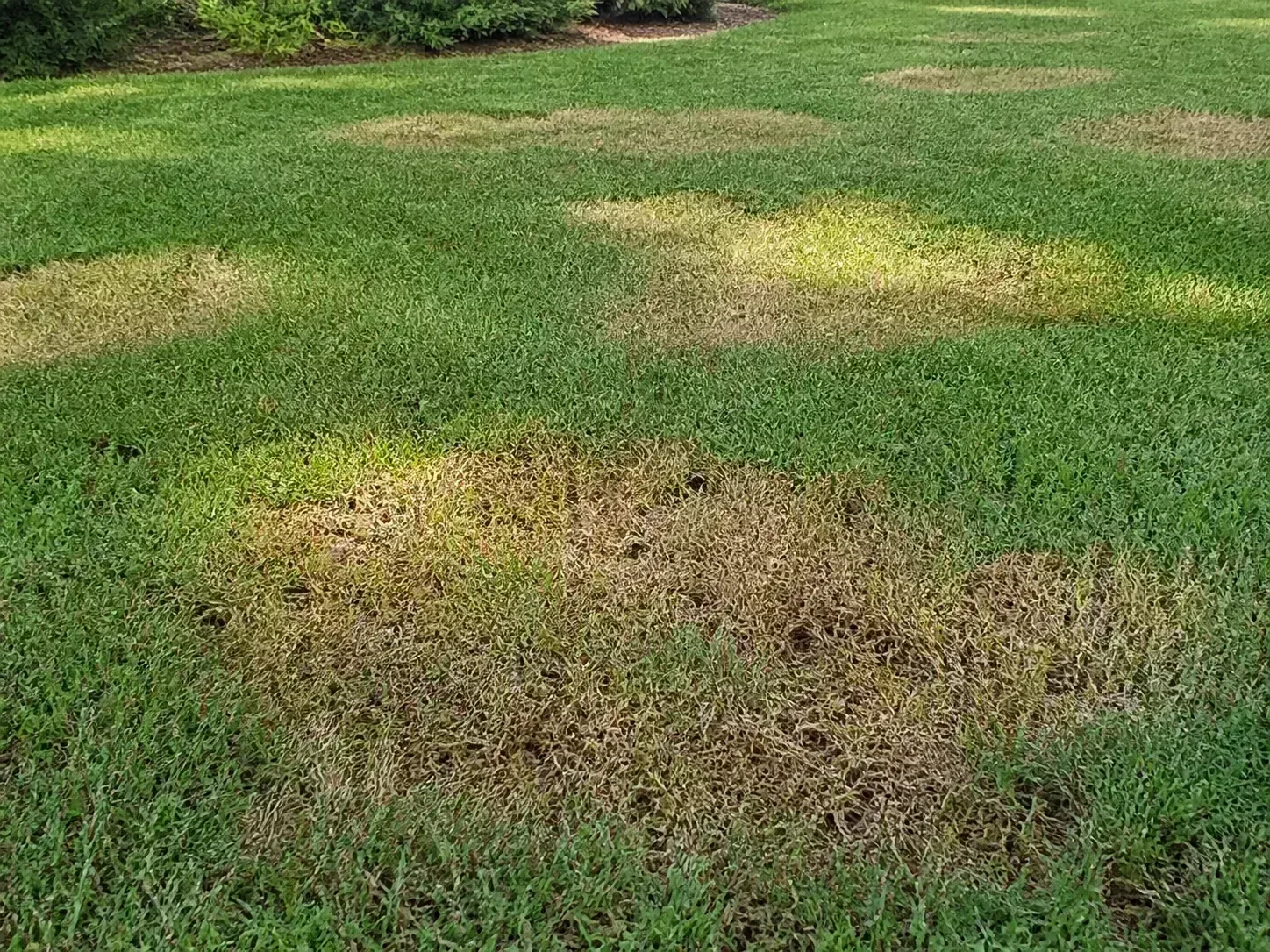
The strongest diagnosis combines appearance, timing, grass type, and moisture. No single clue proves a fungal disease, and the same lawn can have a fungal patch beside a dry sprinkler gap. Start by comparing the affected area with nearby healthy turf rather than looking at color alone.
Match the patch pattern to weather and turf type
Fungal patches often appear after a run of rain, heavy dew, fog, humid nights, or nighttime irrigation. They may be circular, irregular, or merged together; the outer edge can be more active than the center. The pattern becomes more suspicious when the patch expands during wet weather while the soil underneath remains moist.
Drought usually follows a moisture gradient: exposed slopes, sandy soil, tree-root zones, and sprinkler gaps go brown first. Pet urine often creates a small dead or yellow center with a darker green ring around it. Chemical burn may follow the shape of a spill or spread pattern. Insect or grub damage can make turf feel loose because roots have been eaten, while compaction and standing water often produce recurring trouble in the same low-traffic or high-traffic areas.
Grass type changes the disease name and timing. Tall fescue, perennial ryegrass, bentgrass, and occasionally Kentucky bluegrass are common cool-season hosts for brown patch. Warm-season turf can develop a related problem called large patch, which is not simply brown patch shifted onto a different calendar. The Connecticut Agricultural Experiment Station’s lawn disease guidance and local Extension recommendations are better references than a generic treatment schedule when you are unsure which turf you have.
Inspect blades, morning dew, and the crown
Go outside early, before sun and wind erase the evidence. White, cottony mycelium can sometimes be seen between dew-covered blades at the advancing edge of brown patch. It is temporary, so not seeing it at noon does not rule out the disease. Individual tall-fescue blades may show irregular tan lesions with darker borders.
Red thread looks different: thin red or pink threads extend from the leaf tips or weave through small tan patches. Rust produces orange or yellow-brown spore dust that can rub onto shoes or clothing. A white, powdery coating on grass blades points toward powdery mildew, which is more common where shade and poor airflow keep foliage damp.
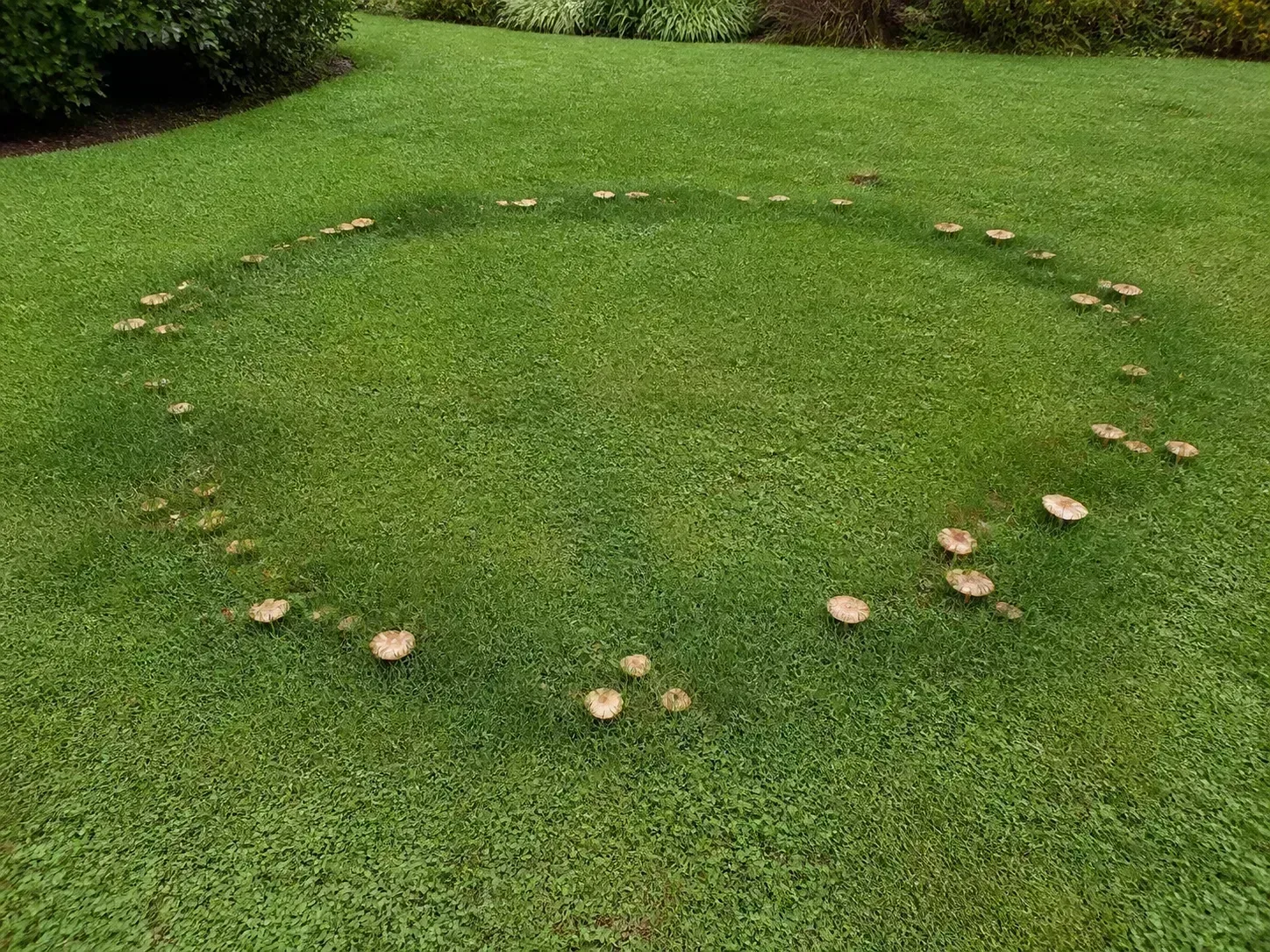
Snow mold appears after snow or prolonged cold, wet conditions as matted, straw-colored or gray-brown patches with fuzzy growth. A ring of mushrooms is a different visual job again. Mushrooms are fruiting bodies, and their presence can reflect buried wood, old roots, or wet organic matter; they do not automatically mean the grass has a foliar disease. Plantura’s lawn guidance distinguishes common lawn mushrooms and fungal lawn problems, which helps prevent an unnecessary fungicide application.
Finally, pull a few plants from the margin and inspect the crown—the short growing point where the blades meet the soil. A firm crown with attached roots can produce new leaves after disease pressure falls. If the crown is black, soft, missing, or lifts easily because the roots are gone, no fungicide can rebuild that plant; plan to repair the area once the cause is under control.
Common lawn fungal problems and their clues
The goal is not to memorize every pathogen. It is to recognize the pattern well enough to choose the safest first action and know when a more exact diagnosis is needed.
Brown patch and large patch
Brown patch usually shows light-brown circular patches ranging from a few inches to several feet across. Under severe pressure, neighboring circles merge and the grass appears dead; in mild cases, the turf is thin and individual leaves show tan lesions. Penn State notes that night temperatures above about 68°F, daytime averages around 80°F or higher, rainy weather, saturated air, high nitrogen, and irrigation can make the disease more severe.
Large patch affects warm-season grasses and often follows cooler, wet periods when the grass is entering or leaving active growth. Damage can begin near the leaf sheath and crown, so do not assume that a summer brown-patch calendar applies to zoysia, St. Augustinegrass, centipedegrass, or bermudagrass. The practical response still begins with dry foliage, moderate fertility, and an accurate label or local diagnostic recommendation.
Red thread, dollar spot, and rust
Red thread often signals a lawn that is growing slowly or is short on available nitrogen, especially when leaves stay damp. The red threads are the giveaway, but the disease may first look like small, irregular tan or pink patches. The Royal Horticultural Society’s red-thread guide recommends improving general turf health and avoiding conditions that leave grass weak; it also shows why a blanket fungicide approach misses the underlying stress.
Dollar spot produces small, coin-sized straw or tan spots that may merge in heavily affected turf. It is favored by leaf wetness and stressed grass, so improve irrigation timing and consistent growth before reaching for a spray. Rust creates orange-yellow dust on blades and often appears when turf is growing slowly in late summer or early fall. Regular mowing removes some affected foliage, while adequate water and fertility help the grass grow through a mild case.
Snow mold, powdery mildew, and fairy rings
Gray snow mold is associated with cool, wet conditions and matted grass beneath snow or wet leaves. Pink snow mold can be more damaging because it may affect crowns as well as leaves. Prevention is mainly a fall job: remove leaves, avoid a long matted canopy going into winter, and do not encourage a late flush of tender growth with excessive nitrogen. Once snow melts, gently rake matted areas so crowns can dry; do not assume a spring spray can undo winter damage.
Powdery mildew looks like a surface coating rather than a brown circular patch. It is most likely in shaded, poorly ventilated turf, especially when grass is kept too long and the leaves do not dry. Opening the canopy to more light and airflow, using a grass type suited to the site, and mowing correctly are more durable fixes than treating symptoms every year.
Fairy rings form arcs or circles of mushrooms, dark green grass, dead grass, or some combination of the three. They are produced by fungi living in the soil and decomposing organic matter. Because the visible mushrooms are not the same thing as a foliar blight, identify the ring pattern before using a lawn fungicide; recurring rings may require soil and turf renovation rather than repeated spraying.
Why lawn fungus takes hold
Fungal organisms may already be present in soil or plant debris. An outbreak begins when the lawn, the weather, and the pathogen line up: a susceptible grass is stressed or overfed, the leaf surface stays wet, and the turf canopy is dense enough for moisture to linger.
Leaf wetness, humidity, and temperature
Roots need water, but fungal infection often depends on moisture on the leaves and sheaths. A short early-morning watering that dries quickly is different from a light evening sprinkle that leaves the canopy wet all night. Heavy dew, fog, rain, and saturated air can create the same leaf-wetness window even when the irrigation system is off.
Temperature is a useful risk signal rather than a perfect trigger. Brown patch is especially associated with hot, humid summer weather on susceptible cool-season turf, while red thread and rust can show up under cooler conditions when growth is slow. Shade, poor air movement, and dense thatch can make a patch stay wet longer than the surrounding lawn, so two areas in the same yard may have very different disease pressure.
Water, nitrogen, shade, and compacted soil
Overwatering is not the only problem. A lawn can be drought-stressed on the surface and poorly drained a few inches down, especially where compacted soil sheds water or tree roots compete with grass. Use a probe, a small soil plug, or catch cups to learn what is happening instead of adding minutes to the timer by guesswork.
Nitrogen deserves the same nuance. A lawn with a real nutrient deficiency can be weak and more vulnerable to red thread, but high-rate nitrogen during hot, humid brown-patch weather creates lush, succulent growth that is easier to infect. Fertilize from a soil test and grass-specific schedule, not from the color of a single diseased patch.
Shade, traffic, thatch, and low spots create additional stress. Grass cut too short has less leaf area and a smaller margin for drought; grass left too long in a damp, shaded pocket dries slowly. The RHS guide to dead lawn patches emphasizes that drought, dog urine, fungal disease, soil problems, and incorrect fertilizer or weedkiller use can all produce similar damage, which is why diagnosis should precede treatment.
What to do in the first 48 hours
Treat the first two days as a fact-finding and moisture-control window. Take a photo from above and another close to the advancing edge. Mark the edge with a few small flags or note its position relative to a path so you can tell whether it is expanding; memory is poor at judging slow changes in color.
Check irrigation coverage with inexpensive catch cups or straight-sided containers placed across the lawn. Compare the affected area with healthy grass, and inspect the soil several inches down. If the root zone is dry, water deeply enough to reach it in the early morning. If the surface is already saturated, do not add water just because the blades are brown.
Skip evening irrigation, foliar products mixed without a label direction, and high-nitrogen “rescue” feeding. Do not aggressively dethatch, core-aerate, or scalp a lawn in extreme heat while the disease is moving; those actions can add stress before they solve a drainage issue.
Mow only after dew has dried, and do not remove more than one-third of the blade in a single cut. If the patch is clearly shedding wet, infected clippings, mow it last, clean the deck and wheels, and avoid carrying clumps into healthy turf. These changes do not cure dead blades, but they can reduce the conditions that keep a living patch under pressure.
Build a lawn routine that limits disease pressure
Prevention works as a system. A lawn with suitable grass, measured irrigation, moderate fertility, dry mowing, and good air movement can still develop a disease during an unusually wet season, but it is less likely to turn one humid week into a recurring problem.
Water early and measure the output
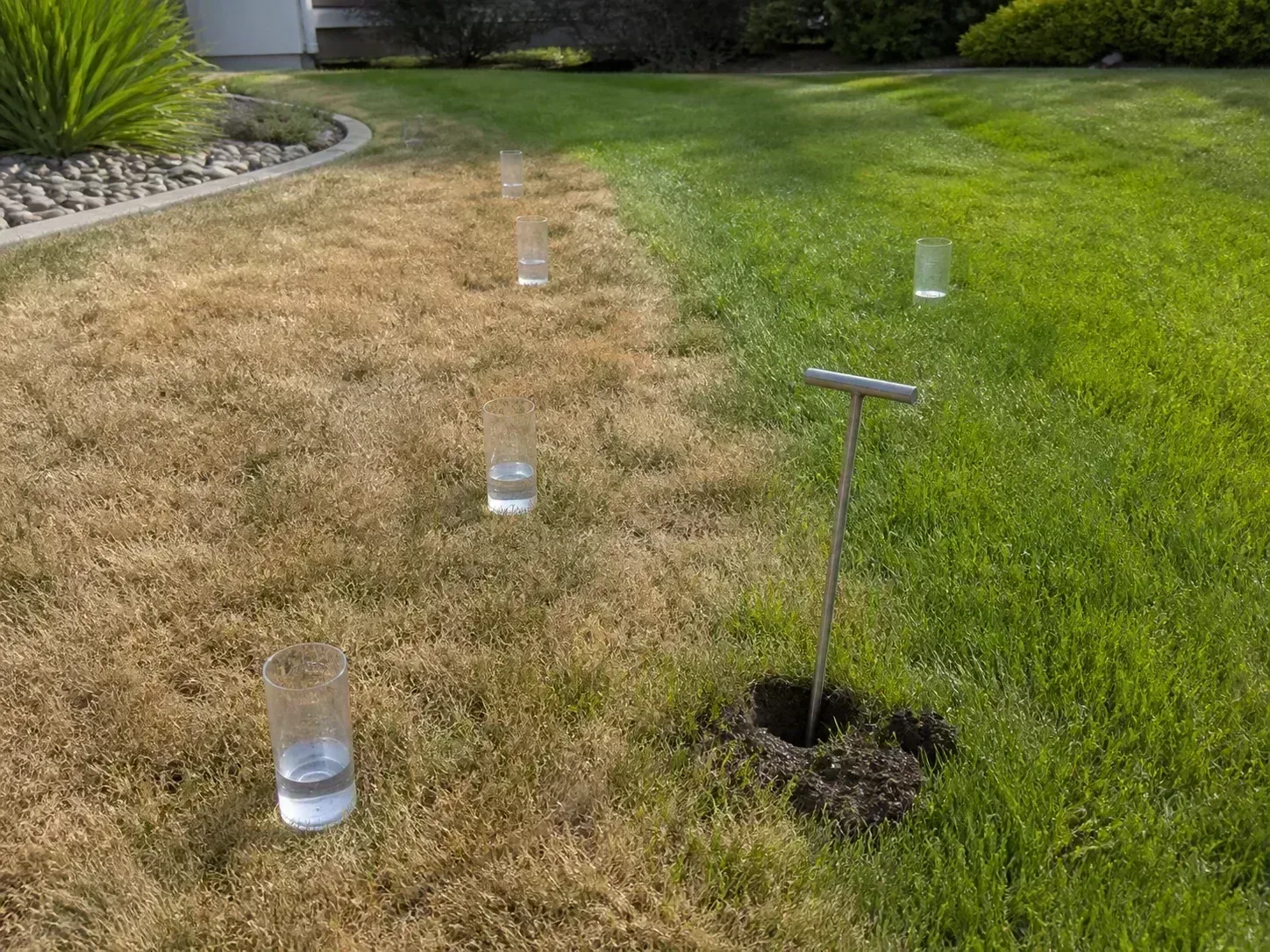
Run irrigation early enough that the grass is dry by evening. Water according to the root zone and weather, not a fixed timer inherited from a different season. Deep, less-frequent irrigation generally encourages a deeper root system than shallow daily sprinkling, but the correct amount depends on grass type, soil, rainfall, shade, and local restrictions.
Use catch cups to compare zones and find broken heads, overspray, and dry edges. A rain gauge helps you account for rainfall, while a screwdriver or soil probe tells you whether the water actually moved into the root zone. If water ponds after a normal irrigation, the problem is not simply a need for more water; it may be compaction, grading, thatch, or a slow-draining soil layer.
Mow dry and manage clippings
Keep the mower blade sharp and use the height recommended for your grass rather than copying a neighbor. Cutting too short exposes crowns to heat and drought, while an overgrown, wet canopy blocks airflow. Make gradual height changes if the grass has become too tall instead of scalping it in one pass.
Mow when foliage is dry whenever possible. Wet mowing can clump the canopy, smear plant material across the lawn, and lengthen the time leaves remain wet. Leaving fine clippings on a healthy lawn is often reasonable, but remove heavy clumps and consider bagging when disease is visibly spreading through wet weather.
Fix drainage, thatch, compaction, and airflow
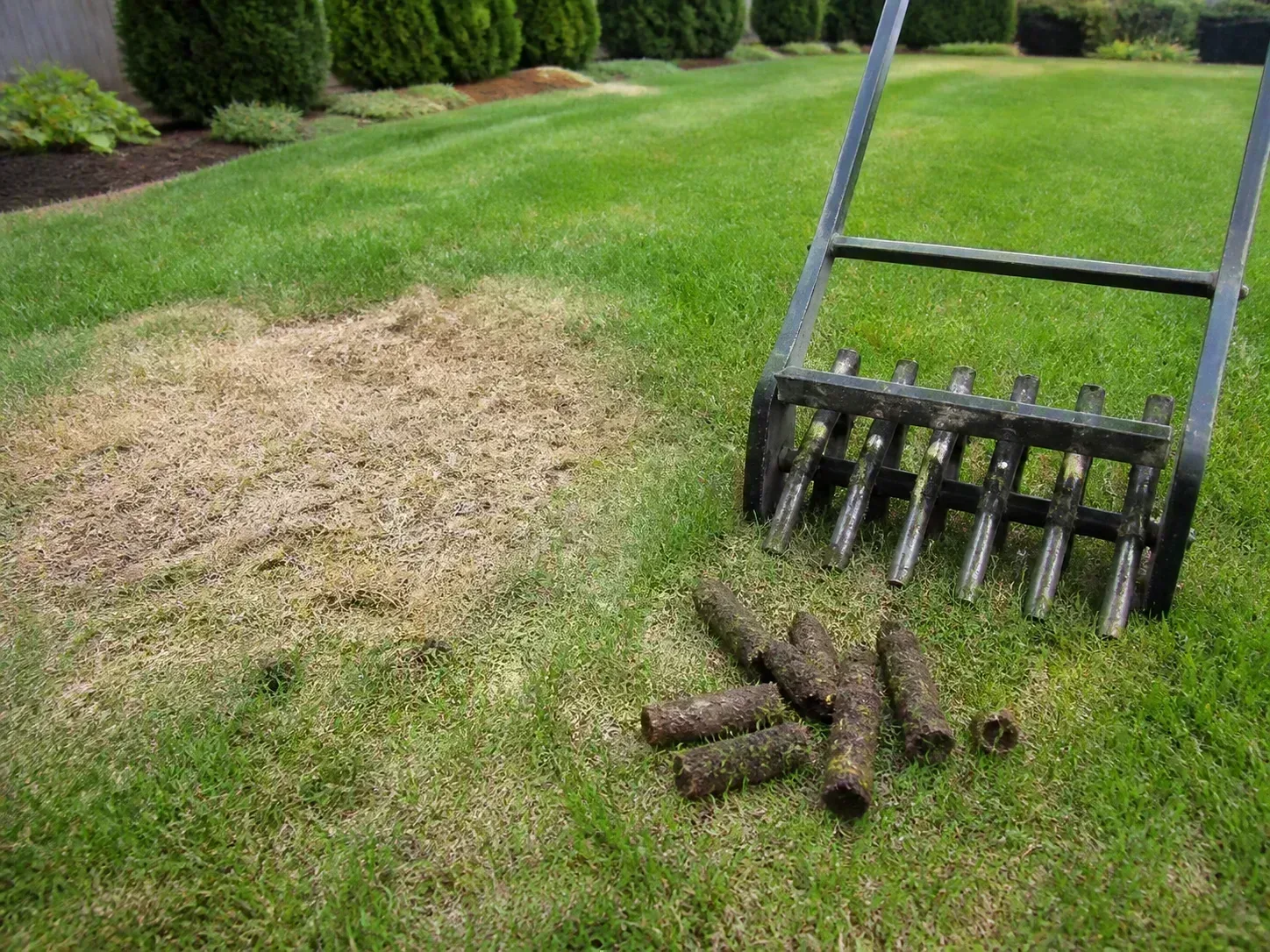
Core aeration is a planned soil-management step, not an emergency treatment for every brown patch. Verify compaction with a probe or by comparing water infiltration in a high-traffic strip with nearby soil. Aerate during the grass’s recommended active-growth window, when the turf can close the holes and recover from the disturbance.
Check thatch by cutting a small wedge and measuring the dense layer between the green blades and mineral soil. A modest thatch layer is normal; a thick, spongy layer that blocks water and air needs a targeted plan. Power-dethatching a heat-stressed lawn simply because it looks brown can tear out living crowns and widen the damage.
Improve airflow by pruning branches or thinning dense edges where appropriate, and do not expect shade-intolerant grass to thrive under a mature tree. If the site is predictably wet or shaded, a more shade-tolerant turf, a rain garden, or a planted bed may be a better long-term use of that space than repeated disease treatments. STIHL’s lawn-disease overview also connects disease pressure with waterlogging, dense growth, mowing too short, shade, leaves left on the lawn, and overfertilizing.
When a fungicide is justified
Fungicide is most reasonable when the disease pattern is convincing, the edge is still spreading, the grass has meaningful value, and favorable weather is likely to continue. A small outbreak in established turf may slow when the canopy dries and temperatures moderate, making cultural changes the better first investment.
If you use a product, start with the current label available in your state. It should list the site and grass species, the disease or pathogen it controls, application rate, timing, personal protective equipment, re-entry interval, and any watering-in requirement. Product registrations and formulations change, so an active ingredient mentioned in an old article is not a universal recommendation.
Do not treat a dog-urine spot, drought stripe, grub injury, salt damage, or chemical burn with fungicide. A product cannot restore dead tissue, correct a broken sprinkler, or replace a missing root system. If children, pets, ponds, edible beds, or a private well are nearby, follow every label restriction and keep people and animals away for the stated interval.
Fungicide timing also matters. Preventive applications may be used on high-value turf with a reliable disease history and a predictable weather window. Curative applications are made after symptoms appear and are most useful early; they protect living tissue and slow spread rather than turning existing brown blades green.
Repeatedly using the same mode of action can select for resistant fungal populations. Penn State explains FRAC codes and advises avoiding excessive use within one group and alternating among different groups. In practical terms, read the FRAC information when it is provided, honor maximum applications and intervals, and ask a local Extension office or licensed professional about the disease-to-active-ingredient match instead of building a spray program from brand names.
Help the lawn recover and repair dead areas
Recovery begins with a simple question: is the patch stable, and are the crowns alive? Old brown leaves may stay brown even after the disease stops. New green shoots from firm crowns, a stable edge, and gradually increasing density are better signs than the color of last week’s foliage.
Give established turf time to regrow when weather improves. Rake only loose, matted material, and avoid tearing at a crown that is still attached. If a patch is bare because the crowns and roots are dead, wait until the grass is in the correct establishment season, then remove loose debris, lightly prepare the surface, and match seed or sod to the existing turf and local climate.
Cool-season lawns often establish best in late summer or early fall as heat eases. Warm-season lawns usually need a regional active-growth window. Keep new seed evenly moist for germination without creating a constantly wet mat, and do not feed a hot, diseased patch heavily just to make it look greener.
Map recurring spots before repairing them. A patch that returns beside a downspout, under a shrub, at a sprinkler overlap, or on compacted foot traffic is giving you a site clue. Replacing the grass without correcting that driver produces a fresh lawn with the same failure built underneath it.
Conclusion: prevent the wetness cycle from repeating
Protect your yard from lawn fungus by making the diagnosis before you make the application. Match the patch to weather and grass type, inspect the blades and crown, water only when the root zone needs it, let foliage dry before night, moderate nitrogen during disease-favorable weather, and mow at a height that keeps the turf growing without creating a dense wet canopy.
Use drainage, airflow, suitable grass, and measured irrigation as the foundation. Reserve fungicide for a confirmed or strongly supported disease that is still spreading, and follow the current label and resistance guidance. If the crown survives, the lawn may regrow as conditions improve; if it does not, repair the area in the right season after fixing the reason the patch developed.



