Want to Compost Your Christmas Tree? Read This First
Yes, you can compost a real Christmas tree—but only after you strip contaminants and cut it small. Step-by-step prep, pile limits, and winter tips.
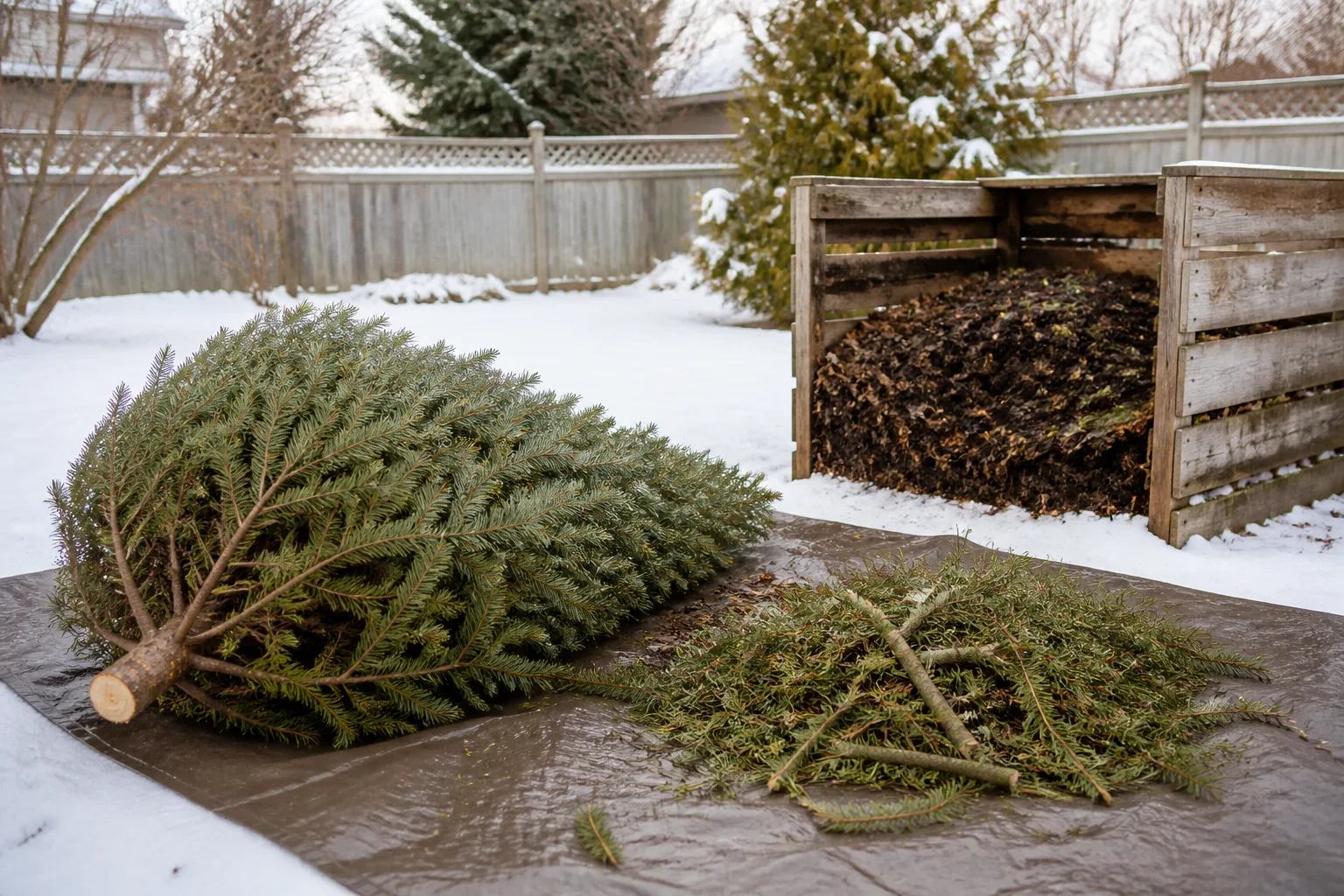
January arrives and your living room smells like dried balsam and vacuumed needles. The lights are boxed up, but the tree is still standing—or leaning—in its stand. Composting feels like the responsible choice: turn holiday décor back into soil instead of sending another bulky trunk to the landfill.
Yes, you can compost a real Christmas tree—fir, spruce, pine, and most other cut evergreens sold for the holidays are plain organic matter. The catch is preparation. Drag a whole tree onto a backyard pile and you get a slow, dry lump that sheds needles for months and may never fully break down in a typical home bin. The step almost everyone skips is not “find a compost pile.” It is reducing the tree to small, clean pieces after you have stripped every non-organic contaminant.
Yes, You Can Compost a Real Tree—If You Prep It First
Roughly 25 to 30 million real Christmas trees are sold in the United States each year, according to the National Christmas Tree Association figures cited by Penn State Extension. Those trees already pulled carbon from the atmosphere while growing on farms. Composting or mulching returns that carbon and woody structure to your soil instead of burying it where decomposition can run anaerobic and release methane—a potent greenhouse gas.
A cut Christmas tree is mostly brown material: high in carbon, relatively low in nitrogen, and rich in lignin, the compound that makes wood stiff. That is excellent for balancing kitchen scraps and grass clippings in summer. In a cold January pile, it is also slow fuel unless you shred it and pair it with nitrogen-rich greens.
Why Tossing the Whole Tree Onto the Pile Fails
Whole trees create three problems at once. Surface area stays tiny relative to volume, so microbes cannot work efficiently. Dryness matters too: after weeks indoors, needles and bark shed moisture; a dry pocket in a pile goes dormant until you rewet it (Epic Gardening). Structure is the third issue: long branches mat together, block airflow, and sit on the pile’s cold outer edge while the core might still be active.
Penn State Extension notes you can compost the whole tree, but cutting it into small pieces—or building a separate brush pile—is what makes the process realistic for home gardeners. That is the gap between “technically compostable” and “actually composted within a year.”
The Step Most People Skip: Size-Reduce Before You Compost
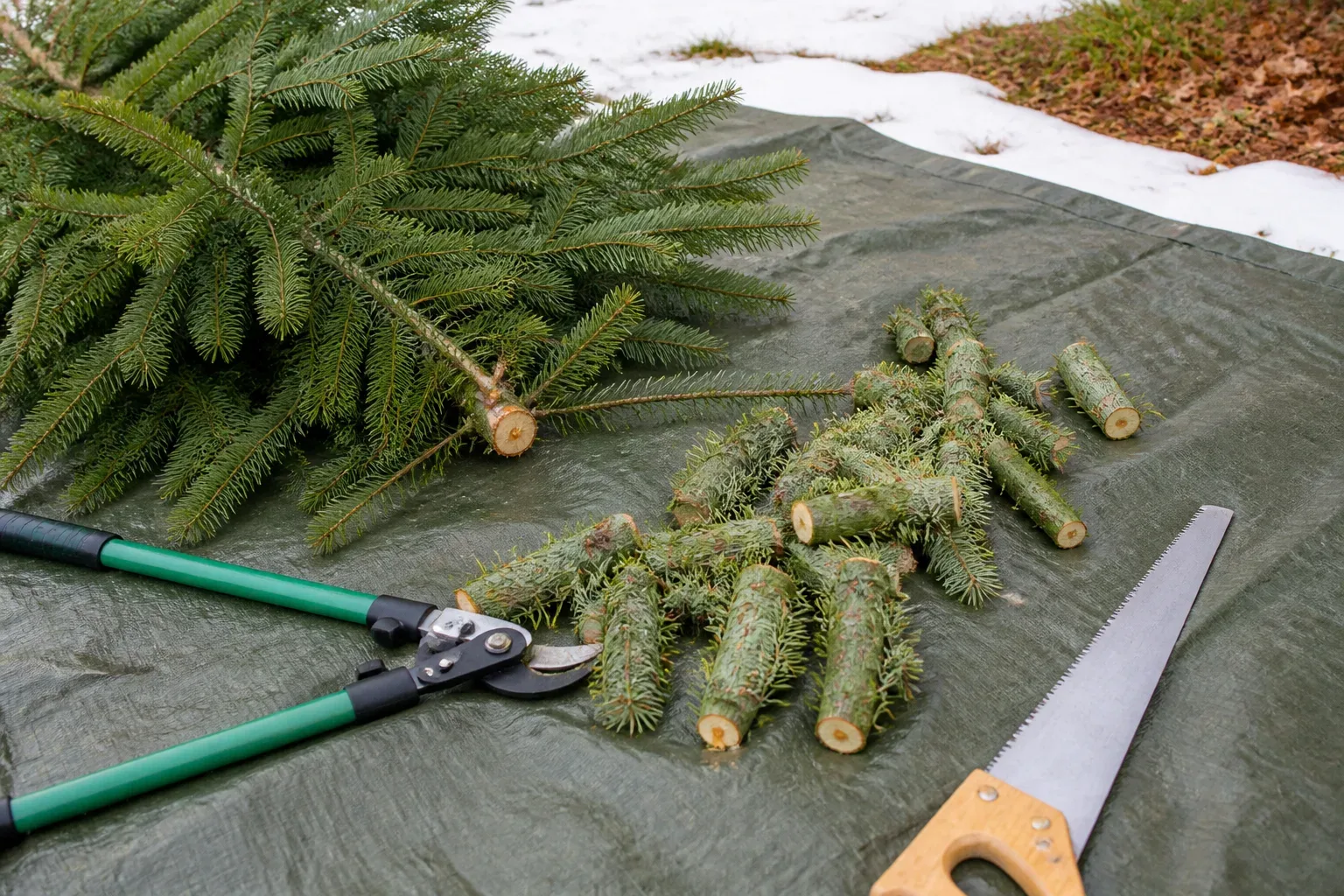
If you remember one task before the tree touches organic waste, make it mechanical breakdown. Strip the stand, lay the tree on a tarp outdoors, and work branch by branch. The goal is not a pretty prune job—it is creating chunks the pile can swallow, heat, and digest.
How Small the Pieces Need to Be
Aim for branch segments between 1 and 3 inches long after you remove them from the trunk. Shorter is better if you have the patience; sawdust and chipper output break down fastest. For the trunk, cross-cut rounds 2 to 4 inches thick. Logs wider than your wrist belong in a brush pile, mulch path, or municipal chipper—not the center of a small bin where they will persist for years.
Needles can go in with the branches, but treat them separately in your mental math: they are waxy, resinous, and slower than they look. More on limits below.
Hand Tools vs Chainsaw vs Chipper
| Method | Best for | Trade-off |
|---|---|---|
| Loppers + hand saw | Most homeowners; branches up to ~1½ in. | Slow but safe; no rental |
| Pruners + chainsaw | Thick trunks; many trees | Chainsaw training required |
| Rented chipper | Large trees; lots of woody waste | Fast uniform chips; rental cost |
Hand tools are enough for a typical 6–7 foot tree. Cut limbs off the trunk with loppers, then shorten each limb into multiple pieces. Use a pruning saw or bow saw on the trunk; stand the trunk upright in a sawbuck or have a helper steady it.
A chainsaw saves time on the trunk only if you already know kickback control, PPE, and fueling basics. Do not learn on a resin-sappy Christmas trunk in icy January.
A chipper—yours or a neighbor’s—turns the entire tree into mulch in minutes. Penn State Extension recommends chipping for long-lasting woody mulch similar to arborist chips. Feed de-limbed material; remove anything metal first. Ear protection, eye protection, and a clear feed zone are non-negotiable.
Strip Every Non-Organic Contaminant First
Size reduction is the step people talk about skipping. Decontamination is the step they forget entirely—and it can ruin a pile faster than a whole trunk.
Before you cut anything, remove:
- Tinsel, garland, and ornament hooks
- Light strings (even LED lines have wire and plastic)
- Plastic tree bags used for removal
- Stand bolts, screws, and water reservoirs
- Popcorn strings, candy canes, and citrus slices used as decor
Shake the tree hard over a tarp. You will be surprised how many hooks hide in the interior. Run gloved hands along branches where kids hung lightweight ornaments.
Flocking, Glitter, and Fire Retardants
Artificial snow (flocking) and heavy glitter are deal-breakers for home compost. Penn State Extension warns flocking can contain ingredients that complicate recycling—those products are not plain cellulose. A lightly flocked tree might be accepted by some municipal chip programs that screen material; it should not go into a backyard pile you plan to spread on edibles.
If you bought flocking spray or glitter branches with composting in mind, choose unflocked trees next year—or commit to curbside green-waste only, with no finished compost on vegetable beds.
Metal Hooks, Wires, and Stand Hardware
Metal does not compost. It rusts, cuts hands during turning, and destroys chipper blades. Pull stand screws from the trunk base; scan for nails from homemade stands. If a hook is embedded too deep to remove, cut that branch out and trash the contaminated section.
Compost, Mulch, or Brush Pile: Pick the Right Path
Not every tree should end in active compost. Use this quick decision guide:
- Hot or actively managed pile with space → Shredded or hand-cut pieces layered with greens
- Need path mulch or bed cover now → Chip branches; use needles as surface mulch
- No time or tools → Brush pile in a back corner for slow decay + wildlife cover
- No yard → Municipal drop-off or curbside green-waste pickup
Epic Gardening suggests checking your pile first: if you are already heavy on browns (leaves, cardboard, wood chips), a whole tree tips the balance and slows everything. In that case, mulch paths or a brush pile is smarter than forcing compost.
Needle Limits and Carbon Balance
Evergreen needles count as brown in compost math even when they look green. Their waxy coating slows breakdown. Oregon State University gardening experts, reviewing common myths, advise keeping evergreen needles to no more than about 10% of a compost pile’s volume at any one time (Oregon State University). A single tree’s needle load can hit that cap fast in a small bin.
Balance needles and woody chips with nitrogen-rich greens: kitchen scraps, coffee grounds, fresh manure (only in hot piles), or alfalfa. The classic target is roughly 3 parts browns to 1 part greens by volume, though home piles tolerate flexibility if moisture and turning stay on track (Cornell Waste Management Institute).
When Mulch Beats Compost
Davey Tree’s residential blog notes chipped Christmas trees make excellent insulating mulch for perennials and rose crowns—sometimes a better January job than pile integration. Cut 1–2 inch branch pieces laid over beds reduce frost heaving when snow cover is thin.
If you lack greens to feed a carbon-heavy load, chip first and compost the fines later when spring grass clippings return.
Layer Tree Material Into a Working Pile
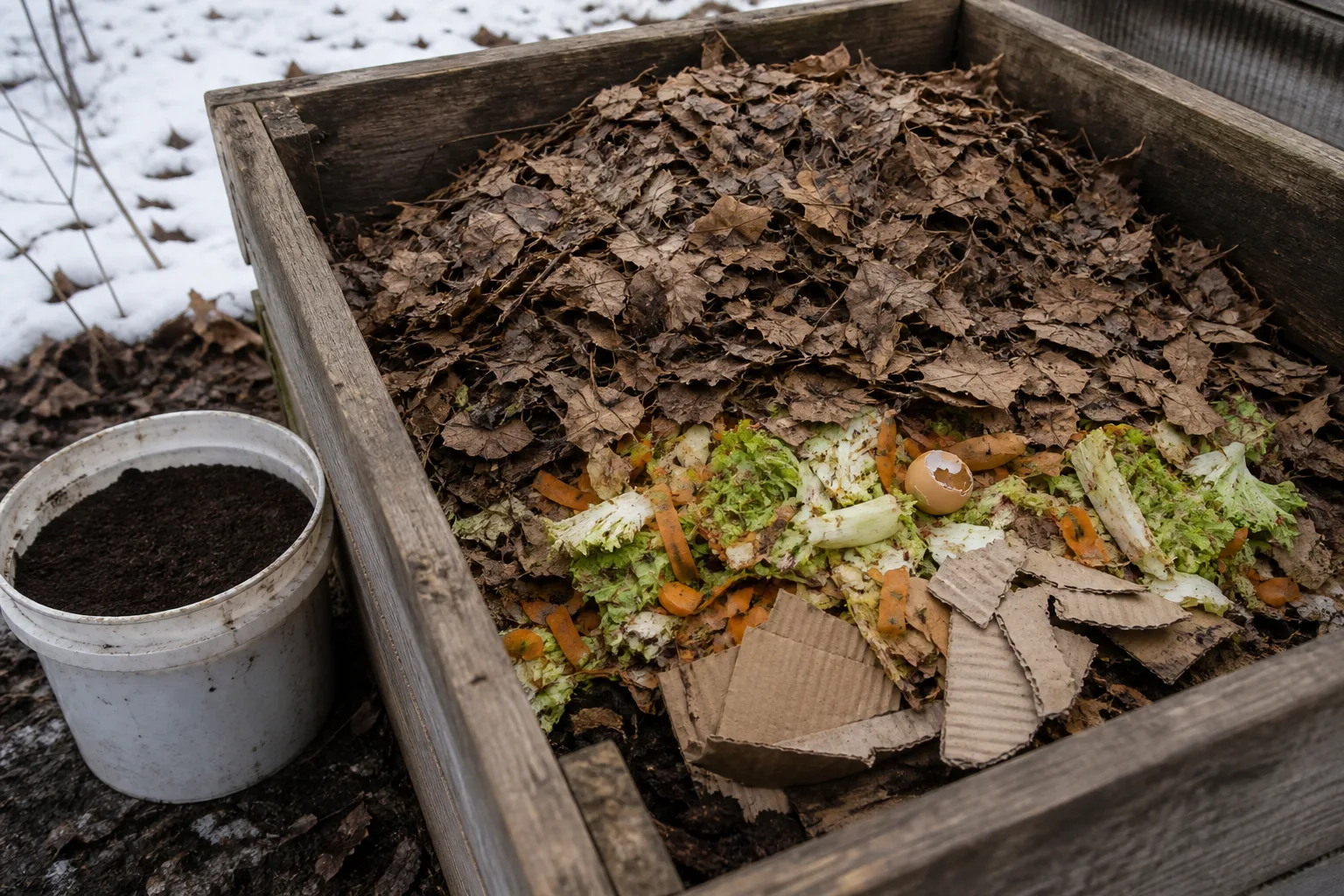
Never dump a single thick layer of tree on top and walk away. Distribute wood through the pile as you build or turn.
- Turn or hollow the pile if it is full—Christmas week generates plenty of kitchen scraps for rebalance.
- Place larger woody pieces near the bottom where heat persists longest.
- Alternate thin layers of branches/needles with greens and finished compost (inoculant).
- Water until the mix feels like a wrung-out sponge—trees are dry after indoor display.
- Turn every few weeks when the pile is above freezing; move outer edges to the hot core.
Browns, Greens, Moisture, and Turning
Microbes need air, moisture, and nitrogen to attack lignin. Dry Christmas wood without greens sits inert. Soaked, anaerobic layers smell sour—add dry leaves or shredded paper and turn.
If you are composting holiday cooking waste simultaneously, bury meat-free scraps under browns to deter rodents. Tree wood alone rarely attracts pests; food scraps do.
What to Expect for Decomposition Time
Hand-cut 1–3 inch branch pieces in a hot, managed pile often soften within 6 to 12 months. Whole thumb-thick chips may take 12 to 18 months. Trunk rounds in a small bin can linger two years or more—another reason to chip or exclude large wood.
Finished compost should look dark and crumbly with no recognizable branches. If you still see bark strips, screen them out for a second cycle or use as mulch.
Composting a Christmas Tree in Winter
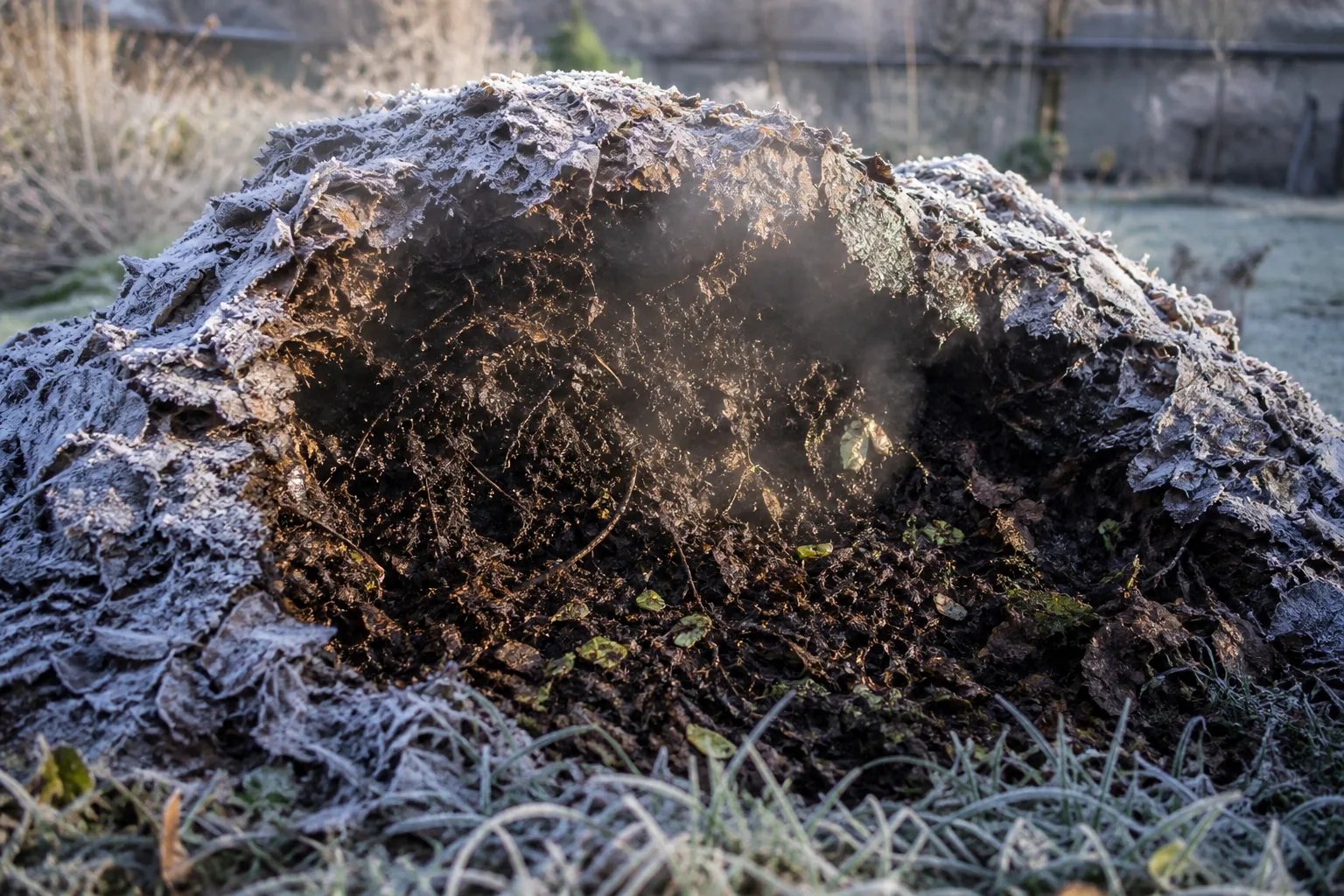
January composting is storage as much as digestion. Below 50°F, microbial activity slows sharply; below 32°F, most backyard piles freeze except perhaps the core of large heaps.
That does not mean you must wait until spring. Add prepped tree material now—it banks for the thaw. Follow cold-weather rules: skip meat, manure, and diseased plant matter when your pile cannot run hot. Our guide on what not to compost in winter walks through temperature thresholds and safe winter inputs.
Coffee grounds from holiday guests and vegetable prep scraps make excellent winter greens paired with tree browns. Store extra dry leaves from fall in trash bags specifically for this post-Christmas browns boost.
Municipal Drop-Off When Home Composting Won’t Work
No chipper, no bin, or an apartment patio? Many towns run January tree recycling: curbside pickup on set dates or central drop-off yards that grind material into public mulch. Penn State Extension notes Pennsylvania alone has more than 1,400 Christmas tree farms—local programs are common in tree-growing regions.
Call your waste district before you flock the tree. Rules vary on stands left on, flocked trees, and wire-bound wreaths. Even when home compost is impractical, municipal grinding keeps wood out of landfills and returns it to landscapes.
Other Yard Uses Before the Pile
Compost is not the only virtuous exit. Penn State Extension lists several:
- Songbird shelter: Prop the stripped tree in a corner with suet or seed ornaments for winter birds.
- Perennial insulation: Lay boughs over hellebores, marginally hardy shrubs, or fall-planted pansies.
- Outdoor firewood: Trunk sections dry for months; resinous wood is for outdoor fire pits, not indoor stoves.
- Pond habitat: In rural settings, weighted submerged trees create fish cover—only with landowner permission.
Using boughs for mulch or insulation reduces what must fit in your compost volume cap—helpful for the 10% needle guideline.
When Not to Compost Your Tree
Send the tree to trash, specialized disposal, or non-food mulch only when:
- It is artificial (metal, plastic, PVC—never compost).
- It is heavily flocked or glittered and you cannot verify municipal acceptance.
- Treated wood, paint, or unknown sprays were applied.
- Your pile is tiny (under ~3 ft³) and already overloaded with browns.
- Local ordinances ban yard waste in home compost.
When in doubt, chip for ornamental paths rather than vegetable beds.
Conclusion
Composting a Christmas tree is one of the best ways to close the holiday loop—if you treat it like raw material, not trash. Strip every hook, string, and flocking product first. Then cut or chip the tree into small pieces before it touches the pile. Balance the woody load with greens, respect the ~10% needle ceiling, and adjust expectations for winter cold.
Skip either prep step and you will fight a dry, slow mat of branches until next December. Do the work once in January and you bank carbon-rich compost for spring beds—while the neighbors wrestle whole trees to the curb.