What Not to Compost in Winter (Before It Ruins Your Pile)
Cold compost piles can't kill pathogens or herbicides. Learn what not to compost in winter—from manure to treated straw—and what to store safely until spring.
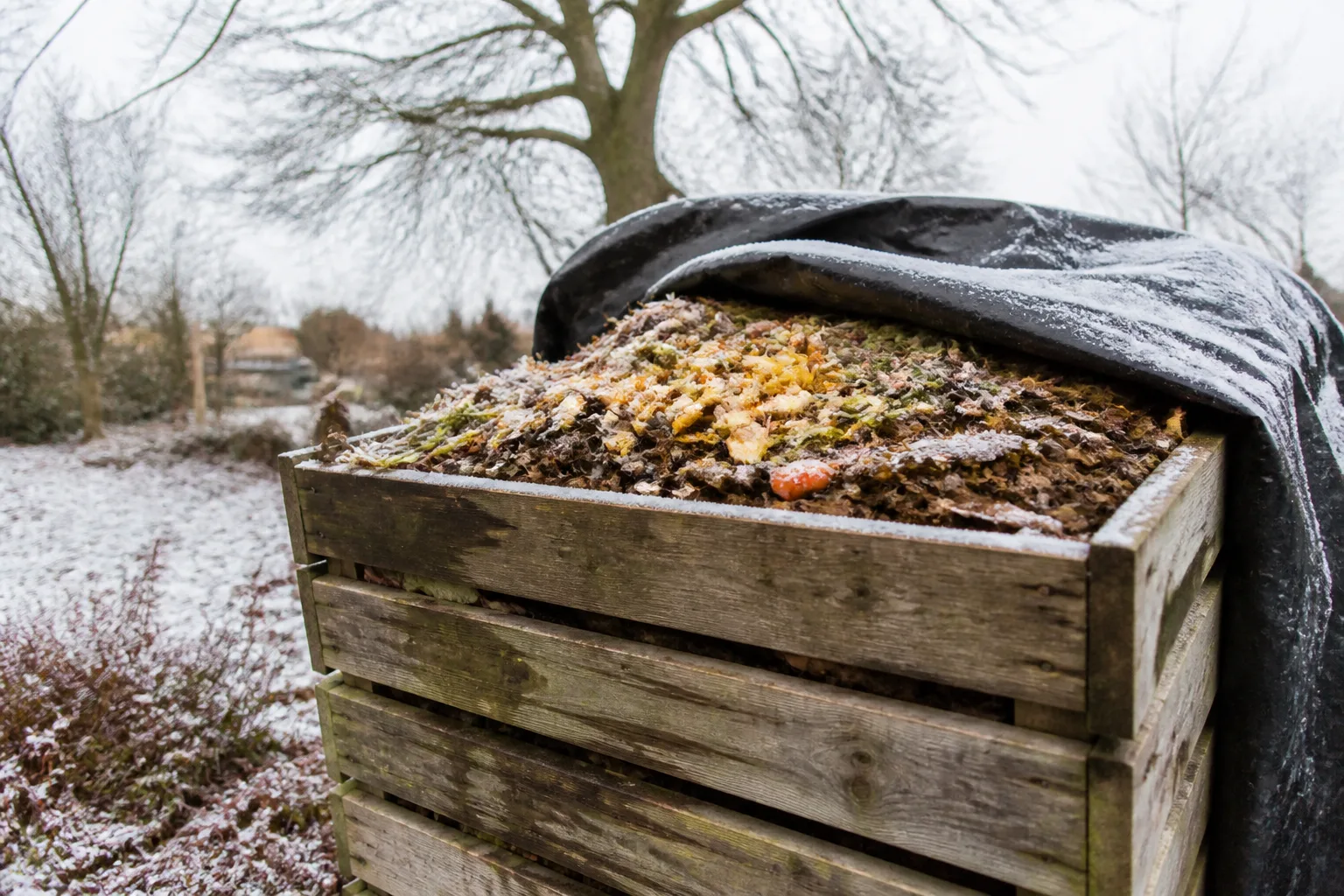
A steaming summer compost pile can hit 140–160°F in the core—hot enough to break down tough scraps, kill most weed seeds, and knock back many pathogens. Drop the same inputs onto a frozen January pile and none of that safety net exists. The pile becomes a cold storage bank: materials sit, partially decompose at the edges, and wait for spring. That seasonal shift is the root of the biggest winter composting mistake—treating a cold pile like a hot one.
The error is not “composting in winter.” It is adding heat-dependent materials—manure, diseased plants, herbicide-treated grass, greasy kitchen waste—when your pile cannot reach the temperatures those materials require. Do that, and the finished compost you spread in April can carry pathogens, weed seeds, persistent herbicides, or pest-attracting residues straight into your vegetable beds. What was supposed to be black gold becomes garbage with garden soil mixed in.
Why Winter Composting Fails Differently Than Summer
Composting is microbial work. Bacteria and fungi consume carbon and nitrogen, release heat, and turn organic matter into humus. In warm weather, a well-built pile generates more heat than it loses. In winter, heat loss wins unless the pile is large, insulated, and actively fed.
What Happens Inside a Cold Pile
Below about 50°F, microbial activity slows noticeably. Below 32°F, the outer layers freeze and decomposition essentially pauses there. The center of a large pile may stay slightly warmer, but most backyard bins and tumblers behave like a paused heap, not a working hot composter.
That is normal—and still useful. Kitchen scraps and shredded leaves you add in February do not disappear immediately, but they are banked for spring. When temperatures rise, thawed material often breaks down quickly. The problem starts when you add inputs that require sustained thermophilic heat to be safe, because a cold pile will never give them that treatment.
Piles under one cubic yard are especially vulnerable. Mark King, organics management specialist at the Maine Department of Environmental Protection, told the Bangor Daily News that small home piles tend to freeze solid and stay inactive through New England winters. Large municipal-scale piles behave differently; do not copy their rules at bin scale.
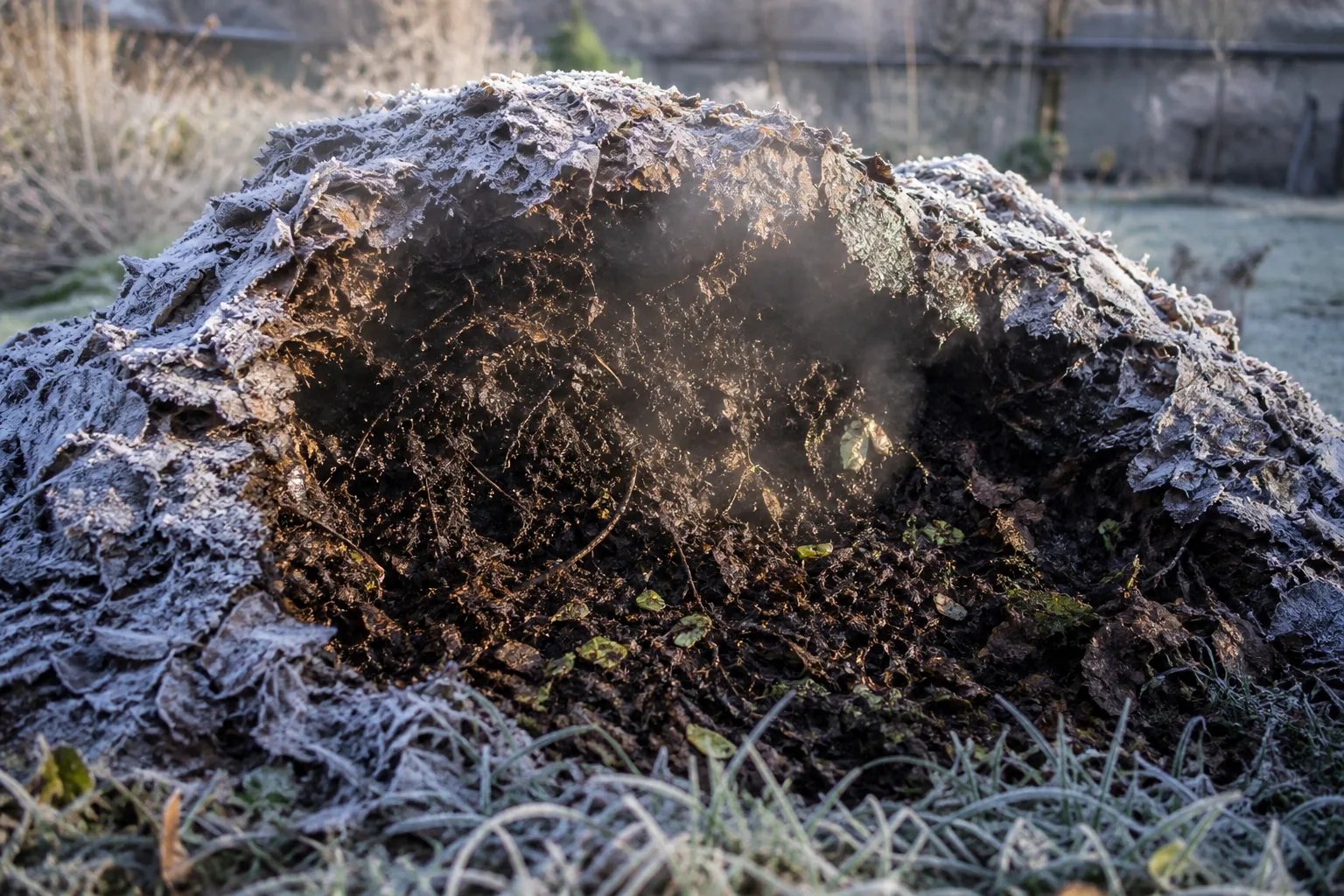
The Temperature Thresholds That Matter
Use these benchmarks when deciding whether an item belongs in your winter pile:
| Temperature range | What happens | Implication for “what not to add” |
|---|---|---|
| 130–160°F (54–71°C) | Thermophilic hot composting | Pathogen reduction, faster breakdown, weed seed kill |
| 50–130°F (10–54°C) | Active but slower decomposition | Fine for most kitchen plant waste if balanced |
| 32–50°F (0–10°C) | Very slow activity | Storage mode; risky for meat, manure, diseased plants |
| Below 32°F | Dormant / frozen | Only safe, low-risk plant materials |
Weed seeds generally need 130–150°F for at least seven days to lose viability—unlikely in a typical winter backyard pile. Many human pathogens in raw manure likewise need sustained heat well above what cold compost achieves. Gardenly’s winter compost guide notes that hot summer cores reach the range needed to kill seeds and pathogens; winter piles usually do not (Gardenly).
The One Mistake That Ruins Winter Compost: Adding Materials That Need Heat
If you remember one rule: in winter, only add what would be safe if it never got hot.
That means plain fruit and vegetable scraps, coffee grounds, eggshells (crushed), shredded leaves, cardboard, and similar low-risk plant waste are fine—they may simply wait until spring. It also means anything that depends on heat for safety should be redirected to trash, municipal yard waste (if accepted), a Bokashi bucket, or a holding area until your pile runs hot again.
Why Low Heat Changes the Risk Calculation
In summer, a mistake often cooks out: a few weed seeds or a small meat scrap might get buried in a 150°F core. In winter, the same inputs persist intact for months. Rodents, attracted by protein and fat, have fewer food options in cold weather. Liquids and wet greens freeze into clumps that turn anaerobic and smelly when they thaw. Herbicides that survive even hot composting will certainly survive a cold one.
Let’s Go Compost, a nonprofit composting education group, emphasizes that winter piles benefit from less turning to preserve whatever core warmth exists, plus heavy brown cover on every food addition (Let’s Go Compost). The trade-off: materials sit longer exposed to pests and weather. Risky inputs have more time to cause damage.
Animal Waste and Pet Manure — Keep Them Out in Winter
This is the single worst winter compost mistake for most home gardeners: adding livestock manure, pet waste, or soiled animal bedding when the pile cannot heat up.
It sounds thrifty—especially when a neighbor offers free horse or chicken manure in late fall. In a hot pile, aged manure can be a fantastic nitrogen boost. In a cold pile, it is a pathogen delivery system.
Pathogens That Survive Cold Compost
Raw manure can harbor E. coli, Salmonella, Campylobacter, and other organisms harmful to people and crops. Thermophilic composting—holding the pile at roughly 130°F or higher for multiple days—is the backyard-scale approach extension services recommend for reducing those risks. A frozen or barely warm winter heap does not come close.
Pet feces from dogs and cats are never appropriate for food-garden compost, winter or summer. Carnivore waste carries parasites such as Toxocara that home compost rarely destroys. Bag it and put it in the trash, or use a pet-waste digester designed for that purpose.
Pest Problems From Bedding and Waste
Manure and bedding attract flies, beetles, and rodents even in summer. In winter, hungry animals work harder to reach food scraps. King told the Bangor Daily News that anything putrescible—material that breaks down quickly and smells—becomes especially odorous in cold piles because it cannot be absorbed into active decomposition (Bangor Daily News).
What to do instead: Store bagged manure in a dry place until spring, then add it in thin layers as your pile reheats. Or sheet-compost it directly on a fallow bed in late spring when soil temperatures rise—not into a frozen January bin.
Herbicide-Treated Straw, Hay, and Lawn Clippings
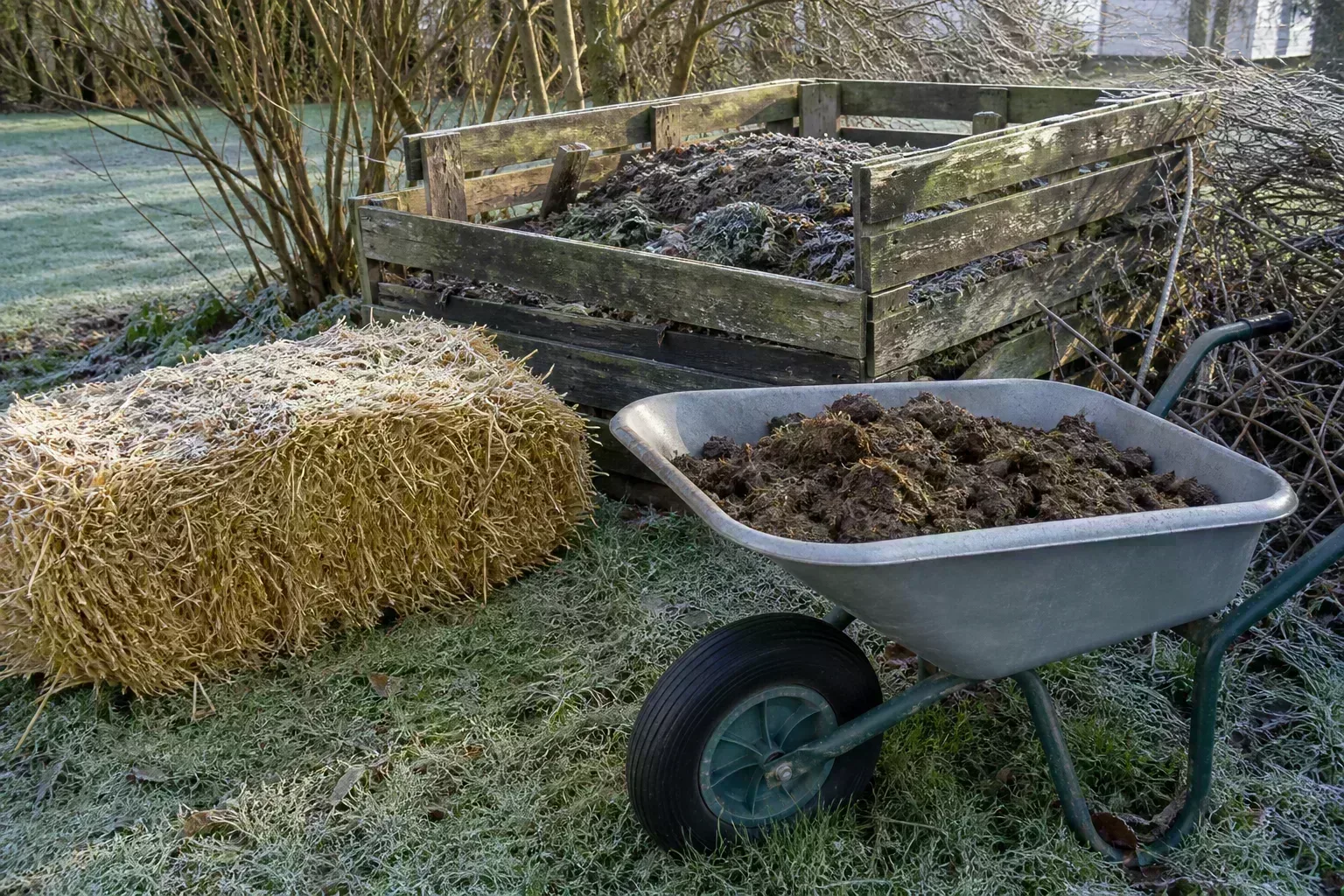
Free straw, hay, or “spent” barn bedding is the second silent wrecking ball. If the grass or grain was treated with persistent herbicides, the chemical can survive the animal, the composting process, and damage your garden the following year.
Persistent Herbicides That Survive Composting
Clopyralid, aminopyralid, and picloram are systemic herbicides used on pastures, hay fields, and lawns. They are formulated to pass through animals without breaking down, which means they concentrate in manure and grass clippings. Washington State University researchers documented clopyralid surviving commercial composting and stunting sensitive crops—including tomatoes, peppers, beans, peas, and many flowers (WSU Soils Program).
Clopyralid is no longer registered for home lawns in Washington, but it remains legal on some hay and grain crops, so manure contamination is still possible. Aminopyralid and similar products have caused compost damage in multiple states when treated grass entered yard-waste streams.
Winter makes this worse. You cannot rely on a cold pile to dilute or biodegrade residues. One bale of treated straw folded into a dormant heap can contaminate the entire batch.
How to Screen Free Materials Before You Accept Them
Before taking free straw, hay, manure, or municipal mulch:
- Ask what herbicides were applied and request product names, not “we sprayed for weeds.”
- Reject materials from treated lawns or unknown forage unless the donor can confirm no persistent herbicides for at least two growing seasons.
- Run a bioassay if you are unsure: mix a small amount of the suspect material with potting soil, plant pea or bean seeds, and watch for cupped, twisted seedlings over two to three weeks. WSU publishes bioassay protocols for gardeners.
- Compost separately any material of uncertain origin—never blend it with your main pile until it passes a grow test.
Treated turfgrass clippings from late-season lawn herbicide applications belong in municipal yard waste (if your facility tests for residues) or the trash—not your winter bin.
Nine More Winter Compost Mistakes Worth Avoiding
Beyond manure and herbicide carriers, these common additions cause disproportionate trouble when piles run cold.
Meat, Dairy, Oils, and Bones
Cooked food, meat, fish, bones, dairy, and greasy scraps attract rodents and go anaerobic without heat. Let’s Go Compost recommends keeping meat and dairy out of open backyard piles year-round; Bokashi fermentation indoors is the practical alternative if you want to recycle those scraps through winter (Let’s Go Compost). Bones break down so slowly they are better discarded or processed separately.
Weed Seeds and Diseased Plant Material
Seed heads, aggressive weeds (bindweed, nutsedge, mugwort), and diseased foliage need hot composting or disposal. In a cold pile, seeds remain viable and pathogens overwinter. Bag seed-bearing weeds for trash or burn where legal. Blighted tomato vines, powdery-mildew-covered squash leaves, and fire-blighted apple prunings should not join a frozen heap—burn, bury deeply away from crops, or send to municipal hot composting if available.
Coated Paper, Walnut Hulls, and Wood Ash
Glossy, metallic, or plastic-coated paper (including some produce stickers and takeout boxes) leaves microplastic fragments as the paper fiber decays. Plain newspaper and brown bags are fine; glittered gift wrap is not.
Black walnut hulls contain juglone, which inhibits many plants. Leaves lose juglone after months of hot composting; hulls take far longer—skip them in winter storage.
Wood ash shifts pH quickly and adds soluble salts. King advised Maine gardeners to limit ashes to no more than a two-gallon pail for an entire winter in a home pile (Bangor Daily News). A cold pile cannot buffer that spike.
Also use caution with: whole citrus peels (slow, acidic—chop small if you include them), large whole eggshells (crush and rinse), excess onion/garlic skins in big batches (can slow microbes), and liquid kitchen waste (drains heat from the pile when poured on frozen compost).
What You Can Safely Add to a Winter Pile
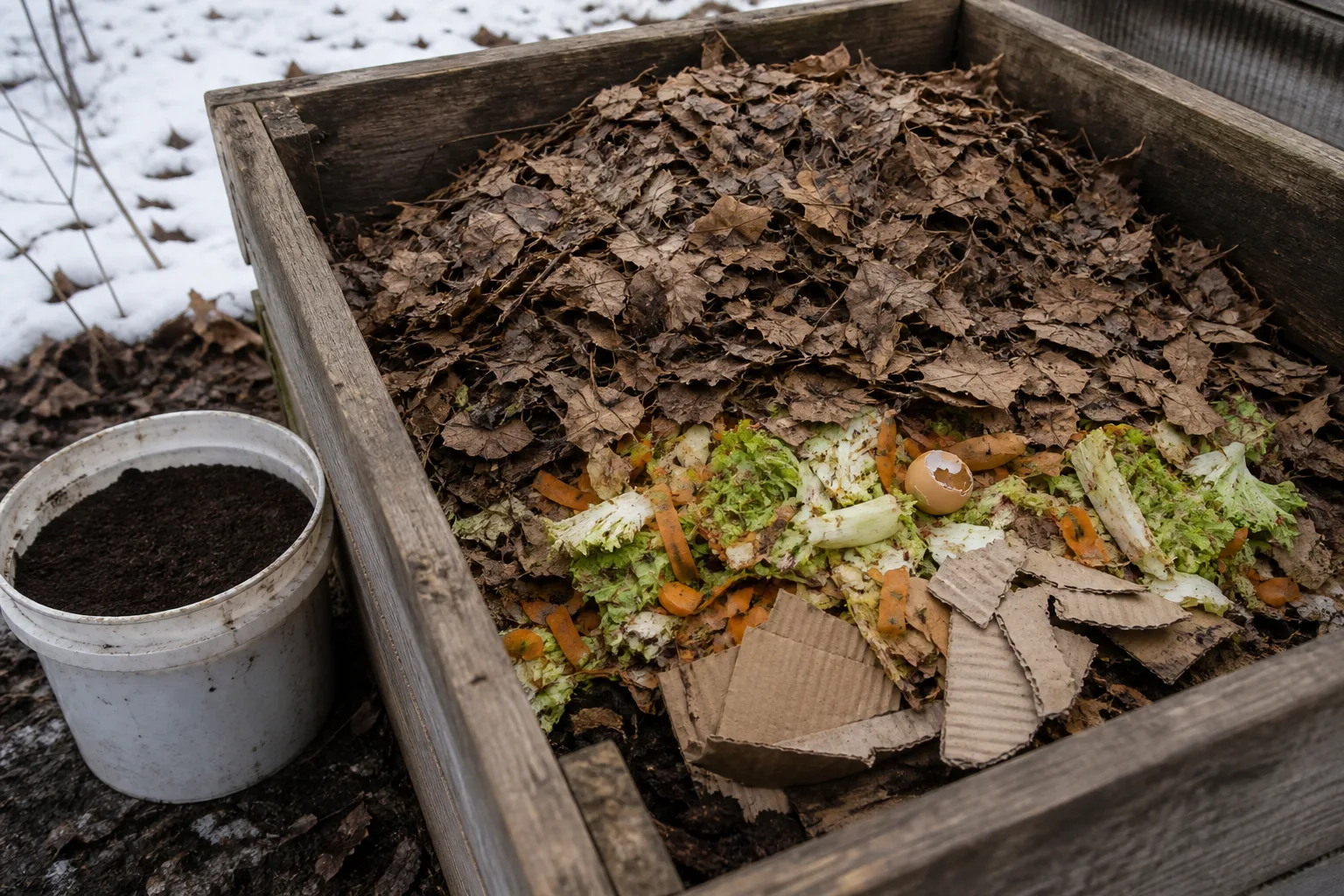
Winter composting is not about stopping—it is about curating inputs and stockpiling browns.
Greens (nitrogen): vegetable and fruit scraps, coffee grounds and paper filters, tea leaves, crushed clean eggshells, spent houseplant trimmings (if pest-free).
Browns (carbon): dry leaves saved from fall, shredded cardboard, plain paper, straw only if herbicide-free, wood chips in modest amounts, dried stalks.
Aim for roughly one part green to four parts brown by volume—more carbon than you use in summer because browns are scarce and excess nitrogen turns sour in the cold. Bury each kitchen addition in the pile center and cap it with a thick brown layer. Cover the pile with a tarp or lid to shed snow and deter rodents while allowing some airflow.
Piles around 3 feet wide and 3 feet tall retain more core warmth than skinny tumblers. If you use a tumbler, expect it to freeze solid; King recommends skipping tumblers for serious winter composting in cold climates (Bangor Daily News). Indoor vermicomposting with red wigglers (55–77°F) is the best year-round option for apartment gardeners (Gardenly).
A Cold-Weather Compost Decision Checklist
Before you toss something on a January pile, run through this:
- Does it need 130°F+ to be safe? (manure, diseased plants, weed seeds, meat/dairy) → Skip or hold.
- Could it carry persistent herbicides? (unknown straw, hay, lawn clippings, free manure) → Test or reject.
- Will it attract animals or smell? (fats, proteins, liquids) → Skip.
- Is it plain plant waste with no chemical history? → Add, buried and covered.
- Is the pile frozen solid? → Keep adding low-risk material; do not turn until a thaw.
- Is the pile soggy or sour? → Add dry browns; ease off wet greens until structure improves.
If you are unsure, default to trash or spring. One avoided mistake beats a season of stunted tomatoes.
How to Salvage or Reset a Contaminated Pile
Odorous, slimy pile: Stop adding greens. Fork in shredded leaves or cardboard, cover, and let it drain during the next thaw. Do not spread unfinished compost on food crops.
Rodent activity: Remove meat or dairy if any was added. Bury future scraps deeper, add hardware cloth around the bin base, and secure the lid.
Suspected herbicide contamination: Do not use the compost on vegetables, herbs, or sensitive ornamentals. Spread a thin test band, grow beans or peas, and watch for distorted growth. If damage appears, discard the batch on non-food ground or contact your extension office for disposal guidance. Prevention—screening free materials—is far cheaper than remediation.
Pathogen concerns from manure: Treat the pile as unfinished and keep it off edible gardens until it has gone through a full hot cycle (multiple days above 130°F) after spring warm-up. When in doubt, use finished compost only on ornamental beds for one season.
Conclusion
Winter composting rewards gardeners who respect the cold. Your pile is doing valuable work as a storage and slow-breakdown system—but only if you feed it materials that do not need summer heat to be safe. Animal waste and herbicide-risk straw and manure are the two mistakes most likely to turn finished compost into a long-term garden problem. Stick to plain plant scraps, hoard dry leaves, cover the pile, and hold questionable materials until spring thermometers climb. The black gold will still be there in April—without the garbage mixed in.