How to Prune Limelight Hydrangeas in Spring
Pruning Limelight hydrangeas too early—or too late—can shrink your bloom show. Use this spring calendar, step-by-step cuts, and flop-prevention framework.
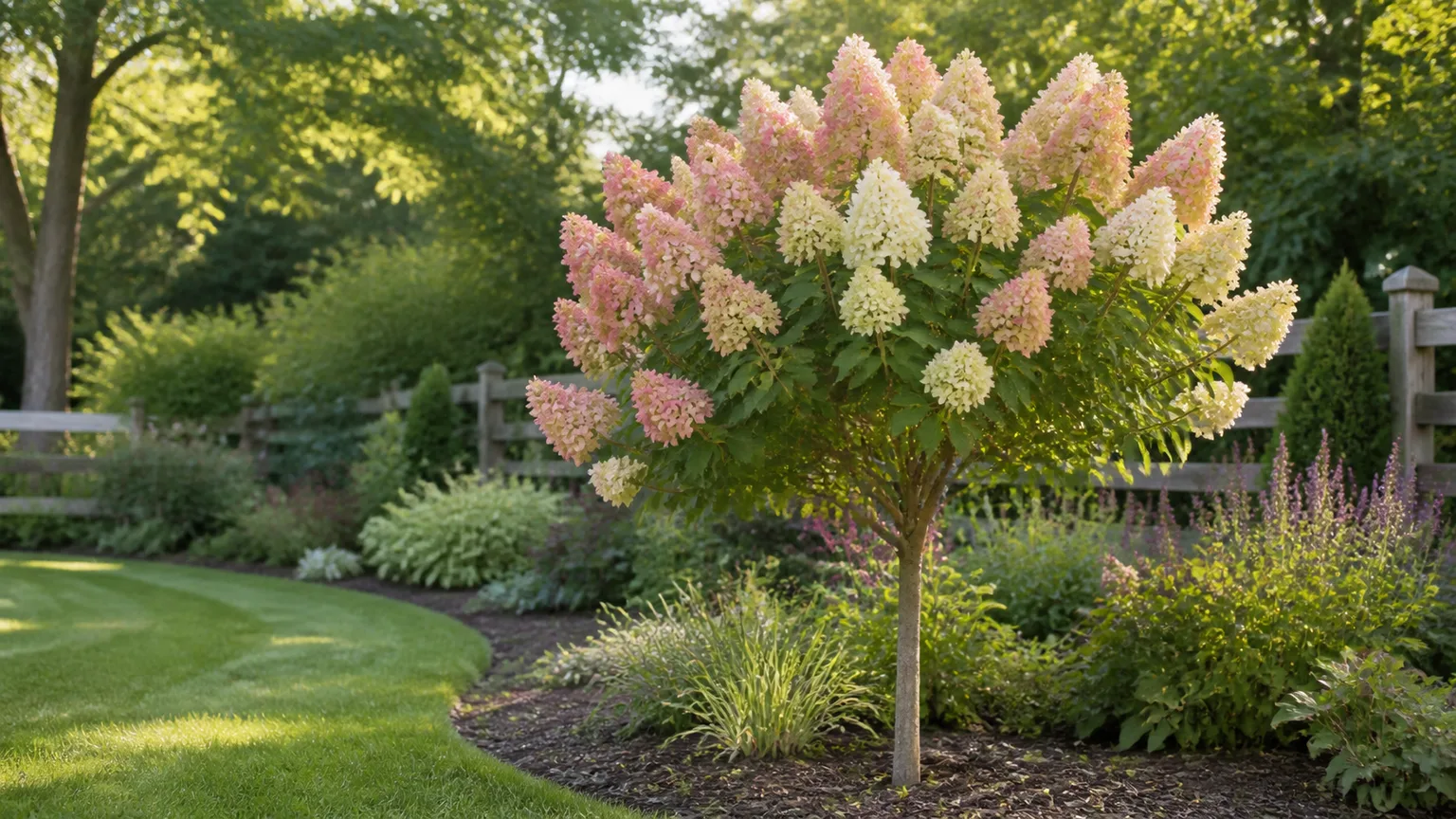
A Limelight hydrangea (Hydrangea paniculata ‘Limelight’) can forgive a lot of garden neglect, but it will not forgive sloppy timing with the pruners. Because Limelight flowers on new wood—stems that grow in the current season—most gardeners assume they can hack it back whenever dormancy feels convenient. That assumption is half right and half dangerous. Cut at the wrong moment in fall, during a January warm spell, or after spring buds have already started extending, and you either waste the plant’s stored energy or remove the shoots that were about to carry this summer’s lime-green panicles.
The goal of spring pruning is not to make the shrub smaller for its own sake. It is to build a sturdy branch framework, open the canopy for air and light, and direct growth into fewer, stronger flowering stems—bigger blooms without a floppy mess after the first heavy rain. This guide walks through the timing window that actually works, the cut sequence professionals use on panicle types, and the bloom-size trade-offs Spruce-style articles usually gloss over in a bullet list.
Why Limelight Blooms on New Wood Changes Every Pruning Decision
Limelight is a panicle hydrangea, not a bigleaf mophead. That botanical detail is the entire pruning calendar. NC State Extension notes that panicle hydrangea flowers on the current season’s growth and can be pruned in late winter or spring without removing last year’s flower buds—because those buds do not exist yet on the woody framework.
New wood means flower buds form on fresh shoots after the plant breaks dormancy. A stem you shorten in late February will push new lateral growth; the terminal buds on those new shoots become the cone-shaped panicles you see in July and August. Wait until May to do your main haircut, and you are often cutting off shoots that already committed to blooming, which is why “I pruned in spring” is not specific enough.
Panicle Hydrangea vs Bigleaf Pruning Timing
If you have pruned mophead or lacecap hydrangeas, reset your instincts. Bigleaf types (H. macrophylla) usually bloom on old wood—buds set on stems produced the previous year. Prune them in late winter and you delete next summer’s flowers. Limelight and other panicle cultivars are the opposite group.
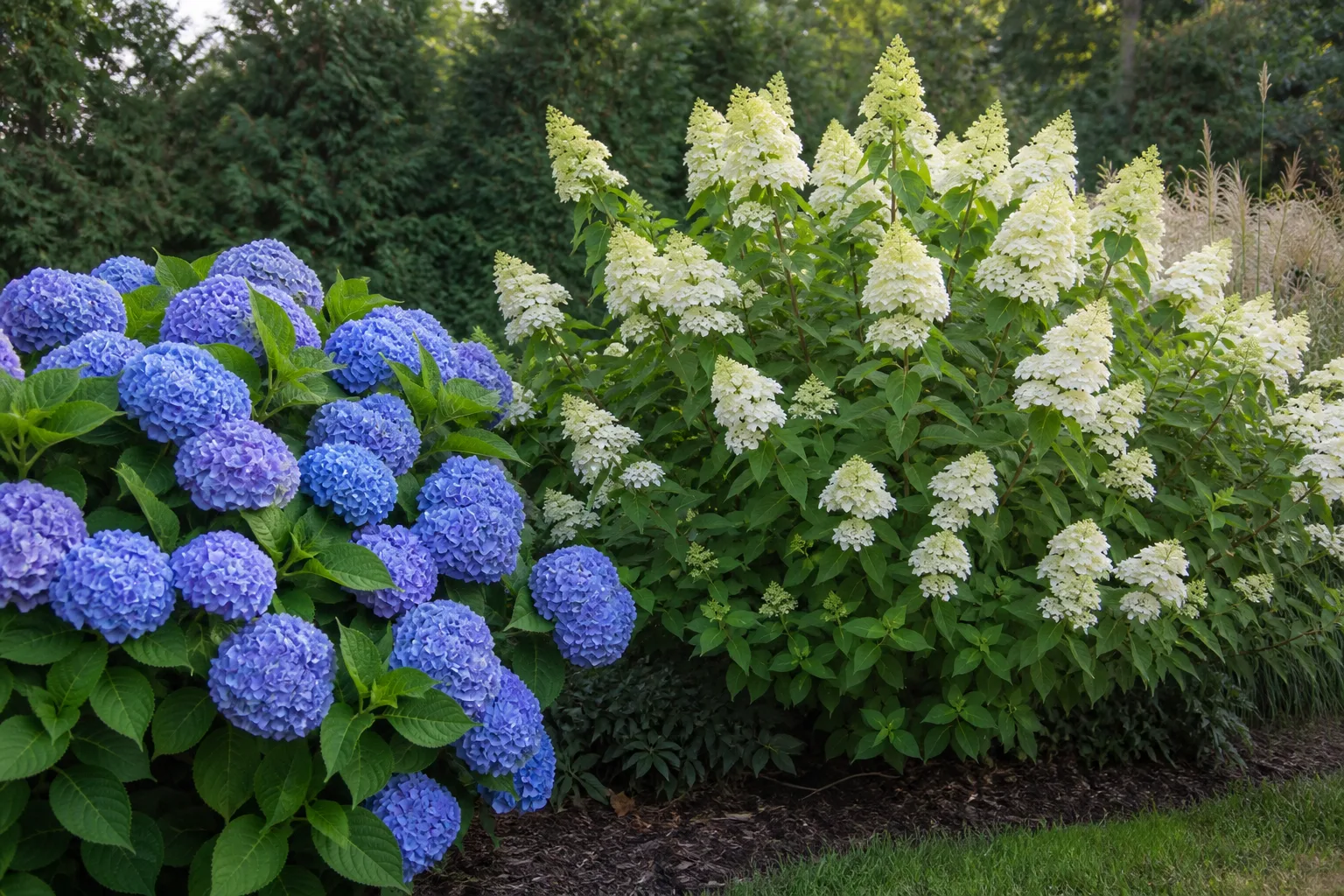
| Hydrangea group | Example cultivars | Flowering wood | Main pruning window |
|---|---|---|---|
| Panicle | Limelight, PeeGee, Little Lime | New (current season) | Late winter to early spring |
| Bigleaf | Endless Summer, Nikko Blue | Old (previous season) | Soon after summer flowering |
Penn State Extension uses this old-wood versus new-wood split as the first decision before any cut. For a full calendar across all common types, see our guide on when to prune hydrangeas. For year-round Limelight placement, water, and feeding, the Limelight hydrangea plant profile covers what happens between pruning seasons.
What “Too Early” Actually Means for Limelight
“Too early” confuses people because Limelight tolerates dormant-season pruning—unlike bigleaf hydrangeas. The risk is not removing flower buds in January. The risk is stimulating soft growth at the wrong time or pruning after buds have already formed on spring shoots.
Fall and Winter Structural Cuts to Avoid
You may remove dead, broken, or diseased branches any time of year. That is safety and sanitation, not seasonal shaping. Structural pruning—shortening live stems for size, thinning the canopy, or renovation-cutting an overgrown shrub—belongs in late winter or early spring, not autumn.
A hard fall cut on live wood can push tender regrowth that does not harden off before frost. Even when that regrowth dies back, the plant spent stored carbohydrates on stems you will cut again in spring. Fine Gardening groups panicle and smooth hydrangeas as new-wood bloomers that are best cut in late winter before growth begins, precisely because they set buds on the same year’s shoots (Fine Gardening). Fall is for raking leaves and noting winter damage, not for turning Limelight into a stub.
Very early winter cuts right after leaf drop sit in a gray zone. They usually will not kill the plant, but they offer no advantage over waiting until you can see bud viability and assess winter-killed tips. Patience costs nothing; premature stimulation can cost bloom quality.
Late-Spring Pruning That Removes This Year’s Flowers
The other “too early” mistake is semantic: pruning too early in the growing season relative to bud development—meaning too late on the calendar. Once Limelight breaks dormancy and extends green shoots, those shoots are the bloom pipeline. Cutting them in late April, May, or June often removes panicles already forming at the tips.
Proven Winners recommends pruning panicle types while dormant, before new growth gets far along. Gardeners who miss the window sometimes panic and shear the plant midsummer, then wonder why blooms are sparse or delayed. If you are already seeing soft green growth several inches long with obvious bud swelling at the nodes, stick to deadwood removal and wait until next year for structural work—unless you are deliberately sacrificing this season’s display to resize an overgrown shrub.
The Best Spring Window for Pruning Limelight Hydrangeas
The sweet spot runs from late winter through early spring, while the plant is still dormant or just beginning to wake up, and before new shoots elongate with visible flower buds. In USDA zones 3–9, where Limelight is hardy, that often means February through April, but your local weather matters more than a fixed month.
Think in three signals, not a date on the calendar:
- Bud swell — fat, plump buds at leaf nodes mean the plant is gearing up; this is your last comfortable week for major cuts.
- Last hard frost — panicle hydrangeas are cold-hardy, but a severe freeze on freshly pruned stubs can blacken tender regrowth. If your area still gets single-digit nights, wait until the worst cold has passed.
- Soil workable — you should be able to walk near the shrub without sinking into mud, which usually aligns with when gardeners are already doing other dormant pruning.
Limelight grows fast—often 1 to 2 feet per year on established plants—so annual light pruning beats a rare massacre. Young shrubs benefit from early training; mature specimens need thinning more than repeated hard cutback. If you planted Limelight in the last two or three years, think of spring pruning as architecture, not rescue: choose three to five main stems, remove competing suckers from the base, and tip-prune lightly so the shrub develops a balanced vase before it reaches eight feet and blocks the window.
How to Read Buds, Frost Risk, and Your Hardiness Zone
Stand back and look at the branch tips before you cut. Live wood shows green or cream color when you scratch lightly with a thumbnail; dead wood is brittle, gray, or black inside. Remove dead tips to live tissue first—winter dieback is common on exposed top branches even in zone 5.
In northern zones, March pruning after the coldest weeks is safer than enthusiastic February work during a false thaw. In mild southern zones, late January or February may be ideal before heat accelerates growth. The wrong move is identical everywhere: shearing after stems are already 6 to 12 inches of soft new growth with pointed bud clusters at the ends.
Gather the Right Tools Before You Cut
Sharp bypass pruners are the default tool for stems up to about three-quarters of an inch thick. Use loppers for older wood up to roughly 1.5 inches, and a pruning saw for anything thicker than your loppers handle cleanly. Bypass blades crush less tissue than anvil pruners, which matters on live hydrangea stems that rot easily when mangled.
Disinfect blades before you start and again after cutting obviously diseased wood. Rubbing alcohol or a household disinfectant used according to label directions is sufficient; let the metal dry before the next cut. Wear gloves and eye protection—spring hydrangea branches snap back.
Lay a tarp under the shrub if you hate raking small twigs. Limelight’s opposite buds mean every cut generates plenty of debris. For tree-form Limelight trained on a single trunk, use the same tools but prioritize the canopy: remove water sprouts along the trunk, keep the crown open, and shorten only the branches that extend beyond your desired head size. The trunk itself should rarely need cutting except to remove damage below the graft or training point.
Step-by-Step Spring Pruning for Bigger Blooms
The sequence below is the same framework used for other panicle types, including PeeGee and tree-form plants described in our Pee Gee hydrangea guide. Type determines timing; sequence determines whether you keep the plant healthy.
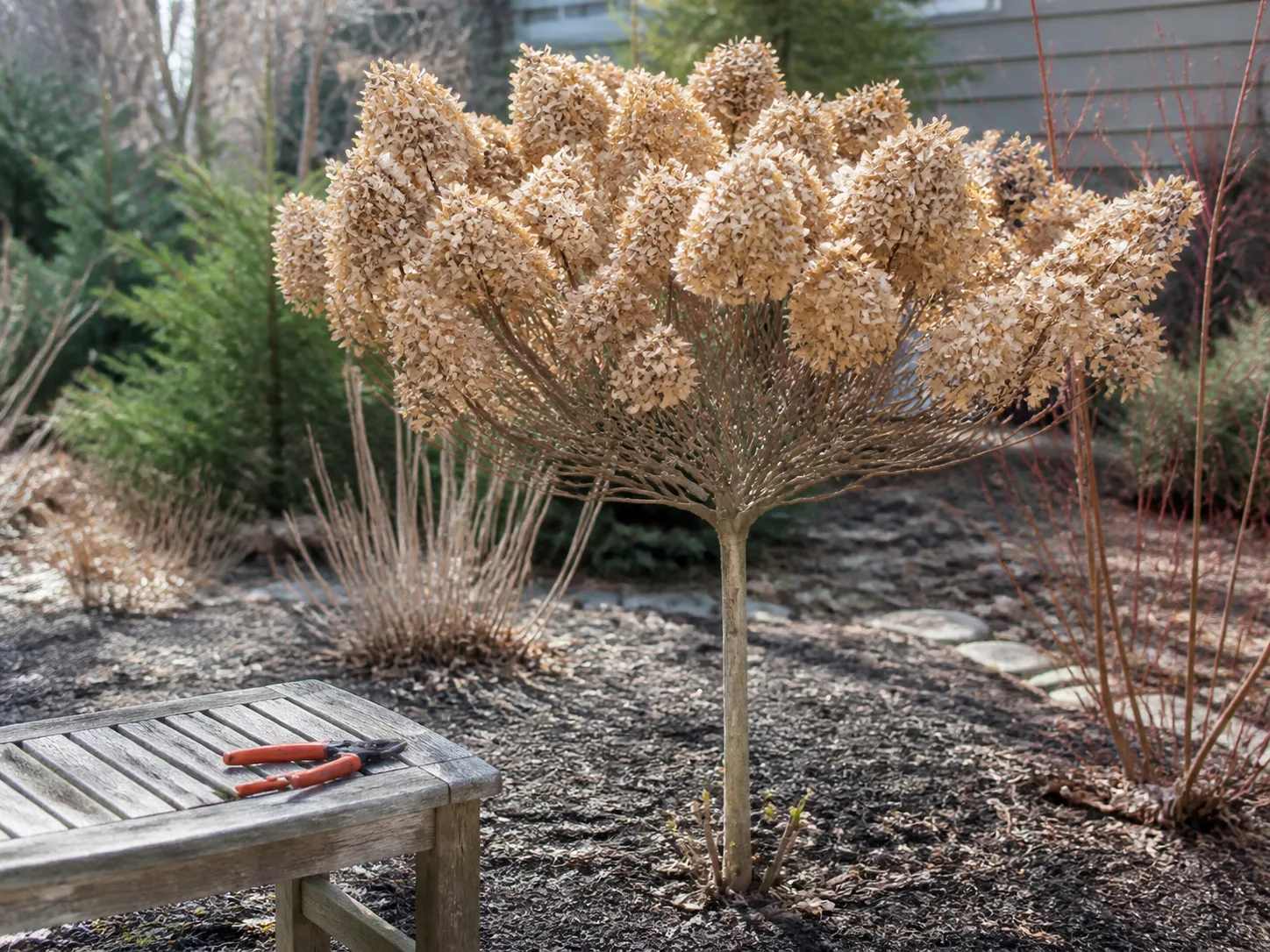
Work top to bottom or outside to inside, but always follow this order:
- Remove dead, damaged, and diseased wood.
- Take out crossing and inward-facing branches.
- Thin congested areas to improve airflow.
- Shorten remaining stems for height and shape.
- Optionally remove side shoots on selected leaders for larger panicles.
- Step back, reassess symmetry, and make final light touch-ups.
Remove Dead, Damaged, and Diseased Wood First
Cut dead stems back to live tissue—usually at a healthy outward-facing bud or to the base if the whole branch failed. Winter-injured tips are common on the tallest stems; do not assume the entire branch is gone. Trace down until you find green cambium.
Diseased wood showing cankers, sunken bark, or blackened pith should be removed several inches into clean tissue. Bag and trash diseased material rather than composting it if you suspect bacterial issues.
Thin Crowded and Crossing Branches
Limelight’s rapid growth produces crowded stems that rub in wind and hold moisture after rain—setup for leaf spots and powdery mildew. Remove branches that cross through the center or grow inward toward the trunk.
Aim for an open vase or layered tree shape with air moving through the middle. You are not stripping the plant naked; you are deleting the branches that compete for the same space.
Shape for Size Without Breaking the One-Third Rule
For routine maintenance, avoid removing more than one-third of live wood in a single spring session. That guideline keeps the shrub from responding with a flood of weak, floppy water sprouts and protects root balance.
Make heading cuts a quarter inch above a bud pair that faces outward—the direction you want new growth to travel. Angle cuts slightly so water runs off the stub; flat cuts on horizontal branches hold moisture and invite rot.
If Limelight has outgrown its spot after years of skipping pruning, a harder renovation is possible on new-wood types—but treat that as a multi-year project, not an annual default. Severe cutback produces fewer, larger blooms on thin stems unless you leave a stub framework (see below).
Pruning Styles: More Panicles vs Bigger Individual Blooms
Limelight can be pruned for quantity or size, not always both at once. Lighter thinning with many flowering shoots yields a cloud of medium panicles. Aggressive removal of side shoots on main leaders concentrates energy into fewer terminal clusters—often the showiest individual flowers.
Stronger main branches with side shoots removed tend to produce bigger panicles; stems loaded with lateral growth produce more but smaller flower heads. Most home gardeners want a middle path: moderate thinning plus selective side-shoot removal on the two or three strongest stems.
Framework Pruning to Stop Flopping Stems
Limelight’s large panicles are heavy, especially after irrigation or rain. If your shrub consistently face-plants in August, the problem is often weak new stems, not lack of fertilizer. Fine Gardening suggests cutting panicle hydrangea stems to a framework of 18 to 24 inches to support new growth—a technique that trades some stem height for sturdier bloom carriers (Fine Gardening).
Leave several established stems at that height rather than cutting everything to the ground. The remaining stubs act like scaffolding; new shoots emerge with thicker bases and better turgor. This is especially useful for original full-size Limelight in windy sites. Compact cultivars such as Little Lime and Limelight Prime need less aggressive framework work because their panicles and stems are naturally shorter—another reason to buy the cultivar that fits the bed instead of fighting an 8-foot shrub with annual hacking. Little Lime tops out around 3 to 5 feet; Limelight Prime typically stays near 4 to 6 feet with sturdier stems bred for earlier bloom. Match your pruning intensity to the label on the pot, not to a neighbor’s full-size specimen.
Summer Deadheading and What to Leave for Winter Interest
Deadheading is optional on panicle hydrangeas. Snipping faded panicles in midsummer can tidy the plant and redirect energy, but it is not required for rebloom the way it can help some reblooming bigleaf cultivars. If you deadhead, cut just below the spent cluster to the first strong pair of leaves—same technique as other hydrangeas.
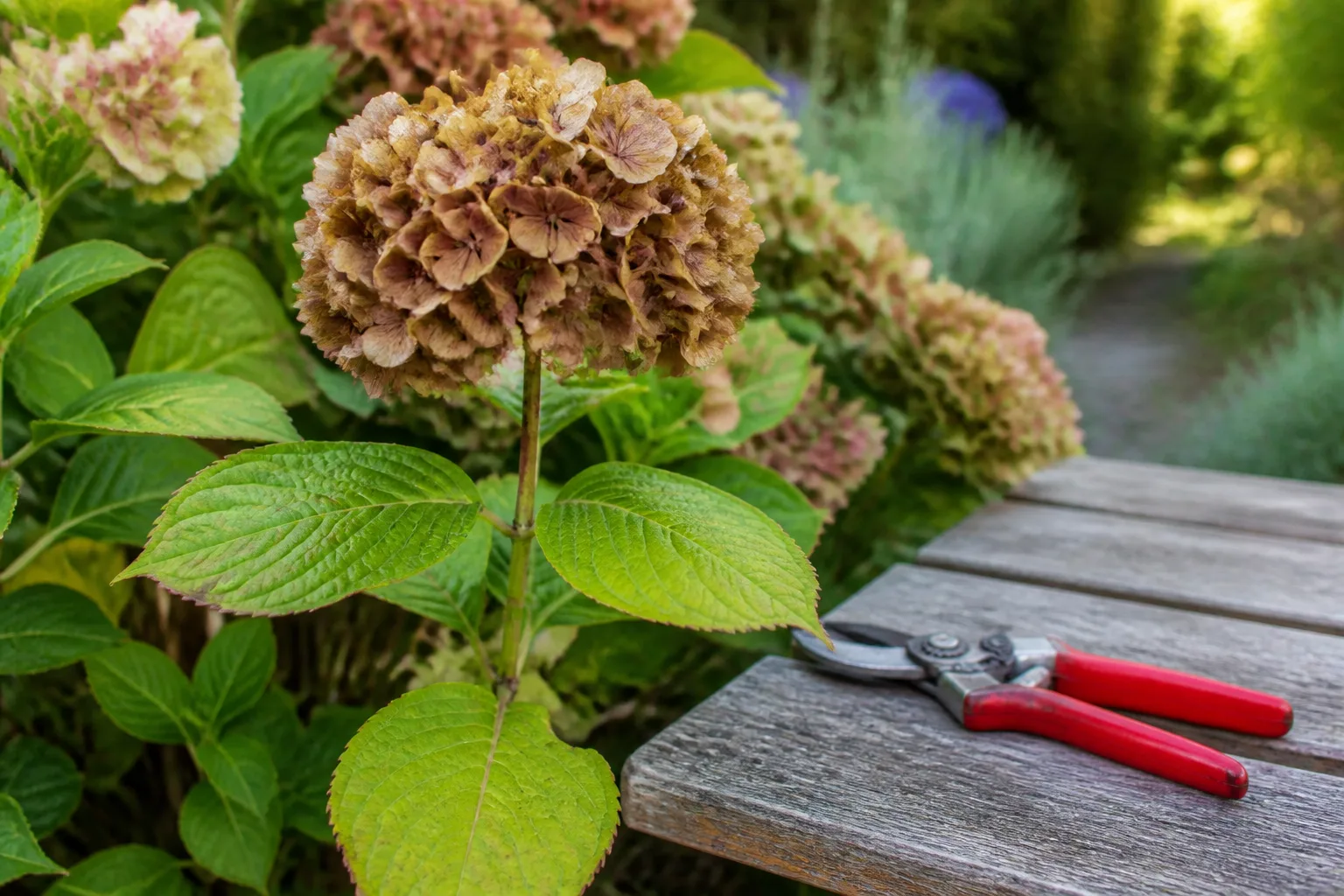
Leave autumn panicles on the plant if you like winter structure or wildlife cover. They fade to tan and pink tones and can be removed during the next spring’s dormant pruning. Do not confuse cosmetic deadheading with structural spring pruning; summer snips should not remove large sections of live framework.
Gardening Know How emphasizes that panicle types tolerate dormant pruning well but still suffer if repeatedly sheared during active growth—keep summer cuts light.
Common Limelight Pruning Mistakes and How to Recover
Treating Limelight like a bigleaf hydrangea is the classic error—waiting until after July flowers fade to do the year’s only prune. You will not kill the plant, but you will remove new wood that was preparing next year’s display on a species that actually wanted a winter haircut.
Shearing into a ball with hedge trimmers creates a dense shell of small twigs and fewer, weaker panicles. Hydrangeas are not yews. Selective thinning beats formal shearing unless you are maintaining a deliberate hedge row of identical panicle plants.
Cutting too late in spring produces the “where are my blooms?” email. Recovery is simple but slow: stop cutting, water during dry spells, mulch the root zone, and accept that this year’s show may be partial. Limelight usually rebounds the following season because new-wood biology forgives one mistimed year better than old-wood types forgive a winter chop.
Removing more than one-third annually without reason shocks the plant into floppy regrowth. If you already over-pruned, stake only as a temporary crutch; focus on building framework over the next two dormant seasons instead of repeating emergency cutback.
Pruning out of impatience during a January thaw can trigger vulnerable shoots. If regrowth blackens after frost, trim to live wood during the proper spring window—do not keep compensating all summer.
Ignoring the one-third rule on a healthy plant year after year keeps the shrub in a cycle of emergency size control. If Limelight is simply too big for the site, the honest fix is transplanting when dormant or replacing it with Little Lime—not annual punitive cutback that produces weak stems and smaller panicles every season.
Conclusion
Limelight hydrangea rewards gardeners who think in seasons and stem biology, not generic “spring cleanup.” Prune while the plant is dormant or just waking, before new shoots with flower buds extend, and keep most maintenance cuts under one-third of live wood. Remove dead and crossing branches first, then thin, then shape for the bloom size you want—bigger panicles on a short framework, or more numerous clusters on a taller natural vase.
Avoid fall structural pruning and late-spring emergency shearing; both waste the growth that panicle hydrangeas use to build their summer show. Match the cultivar to the space, sanitize your tools, and link this annual pass to the wider hydrangea calendar on when to prune hydrangeas and the care baseline in the Limelight plant profile. Get the timing right once, and Limelight becomes one of the most forgiving flowering shrubs in the border—wrong timing is what turns an easy plant into a yearly guessing game.