15 Types of Bamboo to Grow in Your Garden
Compare 15 bamboo types by growth habit, size, color, climate, and garden use—and learn which varieties need a root barrier before you plant.
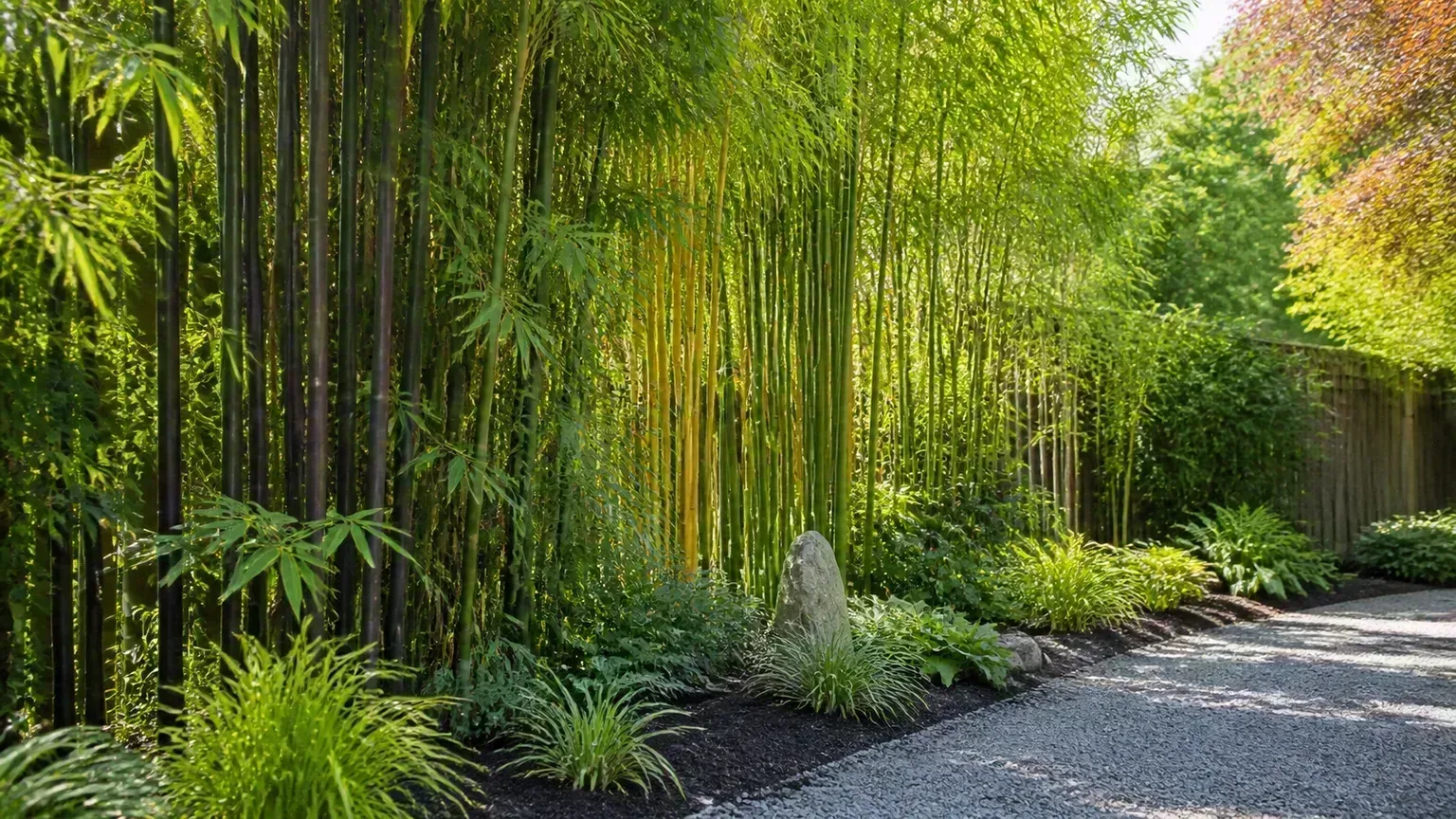
Bamboo can be a graceful evergreen screen, a dramatic black-caned specimen, a low ground cover, or a fast-growing plant that escapes under a fence. The difference is usually not the gardener’s skill; it is the bamboo’s growth habit and whether the planting site matches it.
There are roughly 1,400 to 1,500 described bamboo species in the grass subfamily Bambusoideae, ranging from delicate plants to woody giants. Oxford University’s Plants 400 explains that bamboo grows from underground rhizomes, while Iowa State University’s bamboo research describes the group’s enormous range in size and habitat (Oxford University Plants 400, Iowa State University). You do not need to know all of them. You do need to know whether the plant on your shopping list is a clumper or a runner.
Start With the Growth Habit, Not the Cane Color
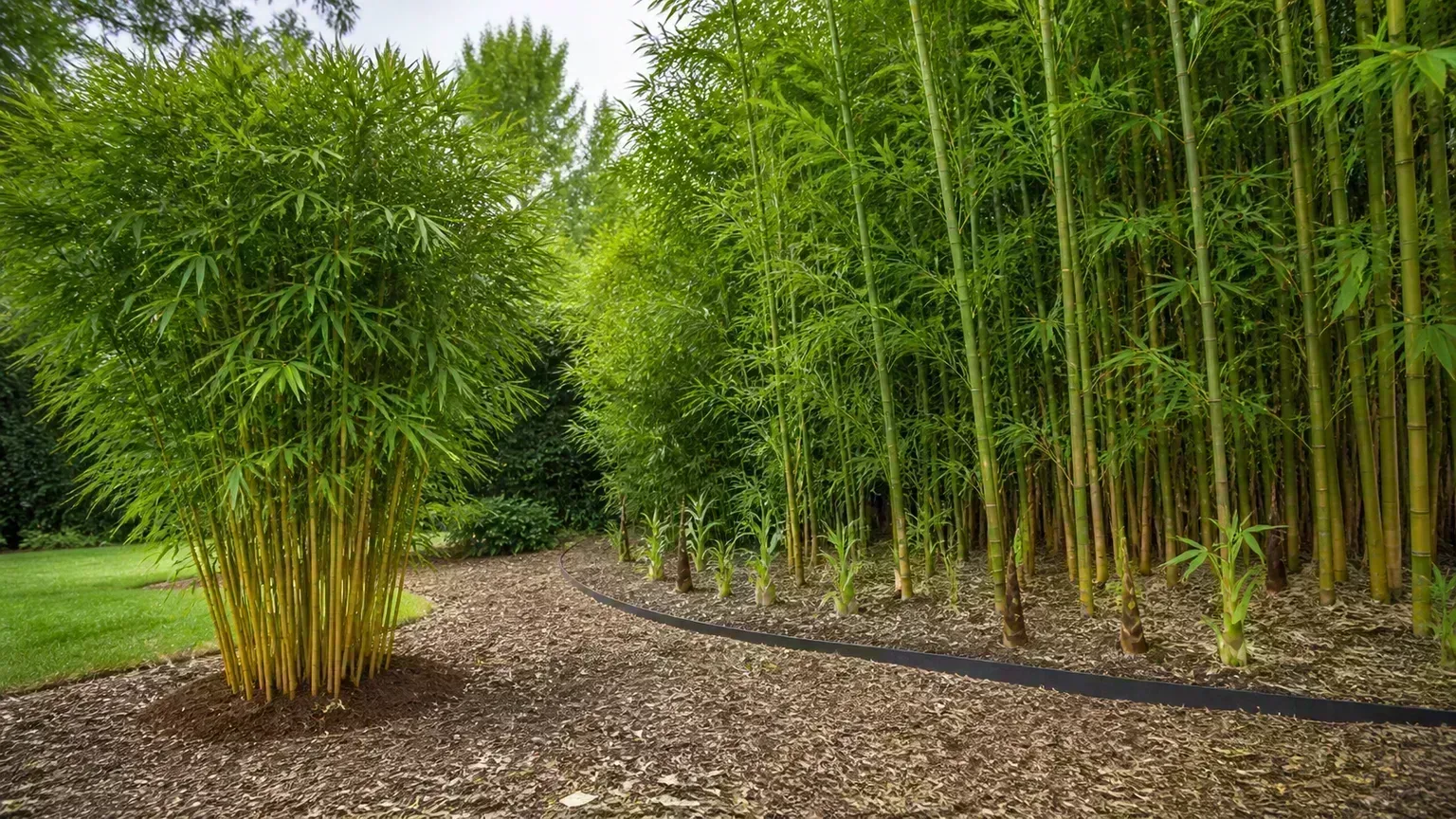
Clumping Bamboo Versus Running Bamboo
Clumping bamboo grows from short, curved rhizomes that keep new culms—bamboo’s upright stems—close to the parent plant. It can become a large, dense clump, but it usually expands gradually enough to manage with space, pruning, or a large container. Fargesia and many Bambusa are common examples.
Running bamboo sends out longer horizontal rhizomes that can produce shoots well away from the original plant. Phyllostachys, Pleioblastus, Sasa, and Sasaella include runners. The Royal Horticultural Society recommends choosing a clumper unless you have ample room, and its bamboo-control guidance explains why even short runners can spread through fertile, moist soil.
“Clumping” is not the same as “can never spread,” and “running” is not a synonym for “bad plant.” A clumper can outgrow a narrow bed, while a runner can work in a designed grove if it is planted with a real containment plan and inspected every year. The useful question is: How much spread can this site safely absorb, and how much maintenance will I actually do?
Why Climate and Soil Change the Risk
A bamboo’s label gives you a starting point, not a guarantee. Warmth, shelter, moisture, fertility, and available space can turn a slow-looking plant into a vigorous one. The RHS notes that some Phyllostachys may initially behave like clump-formers in cool conditions but spread more readily when growing conditions are favorable.
Before buying, check the plant’s mature height and spread for your climate, whether it is suited to full sun or afternoon shade, and whether its rhizomes are described as running. If a seller uses only a common name such as “golden bamboo” or “dwarf bamboo,” ask for the botanical name and growth habit; common names are not reliable containment labels.
15 Bamboo Types Worth Considering
The list below is organized by the decision each bamboo creates. Heights are approximate garden expectations rather than promises: soil, water, winter damage, cultivar identity, and pruning can change the final shape. For any bamboo that is a runner, treat containment as part of the purchase—not as a repair you might do later.
Clumping Bamboos for Contained Screens and Containers
-
Clumping bamboo: Fargesia robusta ‘Campbell’. This upright, relatively narrow Fargesia is a strong choice when you want a cool-climate privacy screen without the long rhizomes of a Phyllostachys. It can reach roughly 12 to 15 feet in good conditions, tolerates more sun than some Fargesia, and works best in fertile soil that drains after watering. Give it consistent moisture while it establishes and enough width for the clump to thicken.
-
Red bamboo: Fargesia nitida. New canes can show red or purple tones before aging toward yellow and green, and the fine foliage makes this a softer screen than a thick timber bamboo. It is a useful candidate for cold-winter gardens, but hot afternoon sun, drying wind, and container drought can brown the foliage. Choose it for an evergreen hedge effect, not for a tropical giant.
-
Asian Wonder: Fargesia robusta ‘Asian Wonder’. This is a medium-sized, non-running selection for gardeners who want colored young canes and a tidy upright outline. It suits a sheltered screen or large container where you can water during dry spells. Verify the exact cultivar on the label because nursery names and botanical descriptions are not always consistent.
-
Umbrella bamboo: Fargesia murieliae. Its arching foliage creates a fountain-like silhouette rather than a rigid wall. It is useful for a shaded or partly shaded screen in a cool to moderate climate, but exposed heat, high humidity, or hot reflected light can make it a poor fit. Give the plant room to arch and do not shear it into a flat hedge unless you are willing to sacrifice its natural form.
-
Silver Bird: Fargesia murielae ‘Silver Bird’. This dense, spreading-in-form clumper has small leaves with a silvery underside that flashes when wind turns the foliage. It works as a textured screen or specimen where you want movement rather than a bold cane display. As with other Fargesia, keep the root zone evenly watered during establishment, especially in a pot or beside paving that reflects heat.
-
Green Panda: Fargesia ‘Green Panda’. Sold under changing Fargesia labels, this selection is valued for its rusty new culms, evergreen foliage, and compact clumping habit. It is a sensible shortlist plant for a smaller, cooler garden, provided the seller gives you a real mature size and not just the word “dwarf.” In hot summer regions, afternoon shade and dependable water are safer than an exposed western wall.
-
Asian lemon bamboo: Bambusa eutuldoides ‘Viridi-vittata’. Yellow-and-green striping makes this a high-contrast screen or patio accent, but it is a warm-climate clumper rather than a universal cold-hardy choice. Use it outdoors where winters are mild, or grow it in a substantial container that can be protected when temperatures fall. A brightly striped cane does not compensate for a plant that freezes back every year.
-
Alphonse Karr: Bambusa multiplex ‘Alphonse Karr’. This clumping bamboo has yellow culms with green striping and can produce pinkish new shoots. It makes a dramatic warm-climate hedge or large-container specimen, and its clumping habit is easier to plan around than a running timber bamboo. Give it sunlight, rich moisture-retentive soil that still drains, and enough headroom for a plant that can become much taller than a patio shrub.
Running Bamboos for Deliberate Groves and Ground Cover
-
Black bamboo: Phyllostachys nigra. The culms start green and darken as they mature, which is why this is one of the most sought-after ornamental bamboos. It is also a runner. The RHS lists Phyllostachys among running bamboos, and its plant profile describes black bamboo as a large evergreen with arching canes (RHS black bamboo profile). Plant it only where a root barrier, open grove, or very large managed space is realistic.
-
Golden bamboo: Phyllostachys aurea. This upright, dense bamboo develops yellow canes in strong light and is often sold as an easy privacy screen. That convenience is deceptive: it is a vigorous runner that can leave a bed through underground rhizomes. It can be beautiful in a contained grove, but a boundary planting without inspection is a poor choice, particularly in a small yard.
-
Crookstem bamboo: Phyllostachys aureosulcata ‘Alata’. Occasional lower culms develop distinctive zigzags, giving this tall, upright runner more character than a standard green screen. It is a choice for a large garden where winter tolerance and architectural stems matter. Plan the barrier before planting and leave access around the perimeter so you can see and cut new shoots.
-
Tortoiseshell bamboo: Phyllostachys edulis ‘Heterocycla’. The swollen, irregular nodes create a tortoiseshell pattern on the lower canes, making this a collector’s plant for a display garden. It is still a Phyllostachys, so its unusual shape does not make it clumping. Use it as a contained specimen, not as a casual foundation planting beside a driveway or shared fence.
-
Variegated bamboo: Pleioblastus fortunei ‘Tsuboi’. White-striped leaves and a low habit make this attractive for edging, large containers, or a bright ground-cover effect. Pleioblastus is a running genus, and short plants can be more difficult—not less—to notice when they move beyond the bed. A pot or a fully monitored root zone is safer than allowing it to mingle with lawn and perennial borders.
-
Dwarf bamboo: Sasaella ramosa. This short bamboo can make a dense, useful cover on a slope, but it is a vigorous runner rather than a maintenance-free miniature. The RHS specifically notes that Sasaella types can form thickets in fertile, moisture-retentive soil. Choose it only when you want ground cover that you can edge, dig, or mow back on a planned schedule.
Large, Tropical, and Specialty Choices
- Giant bamboo: Dendrocalamus giganteus. This is a tropical or subtropical giant for large properties, conservatory-style plantings, and climates where winter does not repeatedly damage new growth. Its scale is measured in tens of feet, not in the height of an ordinary privacy shrub, and its clump can occupy a huge footprint. Iowa State’s overview shows just how broad the bamboo family is, including woody bamboos with massive culms; do not choose a giant species from a photograph without confirming local climate and mature dimensions.
The list is intentionally mixed: some choices are ideal for a small garden, some belong in a large, warm landscape, and some are only responsible when contained. A nursery tag that says “fast growing” is not a benefit until you have decided where that growth is allowed to go.
Match Bamboo to the Job
Privacy Screens
For a cool-climate screen, start with upright Fargesia such as ‘Campbell’ or Fargesia nitida. They build height and density without the long-distance rhizomes associated with Phyllostachys. For a warm climate, Bambusa multiplex cultivars can provide a fuller tropical screen, but they still need width, irrigation, and a site that will not freeze them back.
Contained black, golden, or crookstem bamboo can make the fastest visual screen, but the cost is long-term monitoring. The Bamboo Garden nursery’s type guide separates hardy clumping, timber, mid-sized running, small running, and cold-sensitive groups—an instructive reminder that “bamboo” is a project category, not one maintenance level.
Pots, Patios, and Small Gardens
A large container is often the clearest way to enjoy a bamboo in a small space. Choose a pot at least about 18 inches deep and wide for smaller plants, use a free-draining but moisture-retentive mix, and expect to divide or refresh the root ball every few years. Containers reduce spread, but they do not remove care: bamboo in a pot dries faster, becomes root-bound, and can blow over if the top growth is tall.
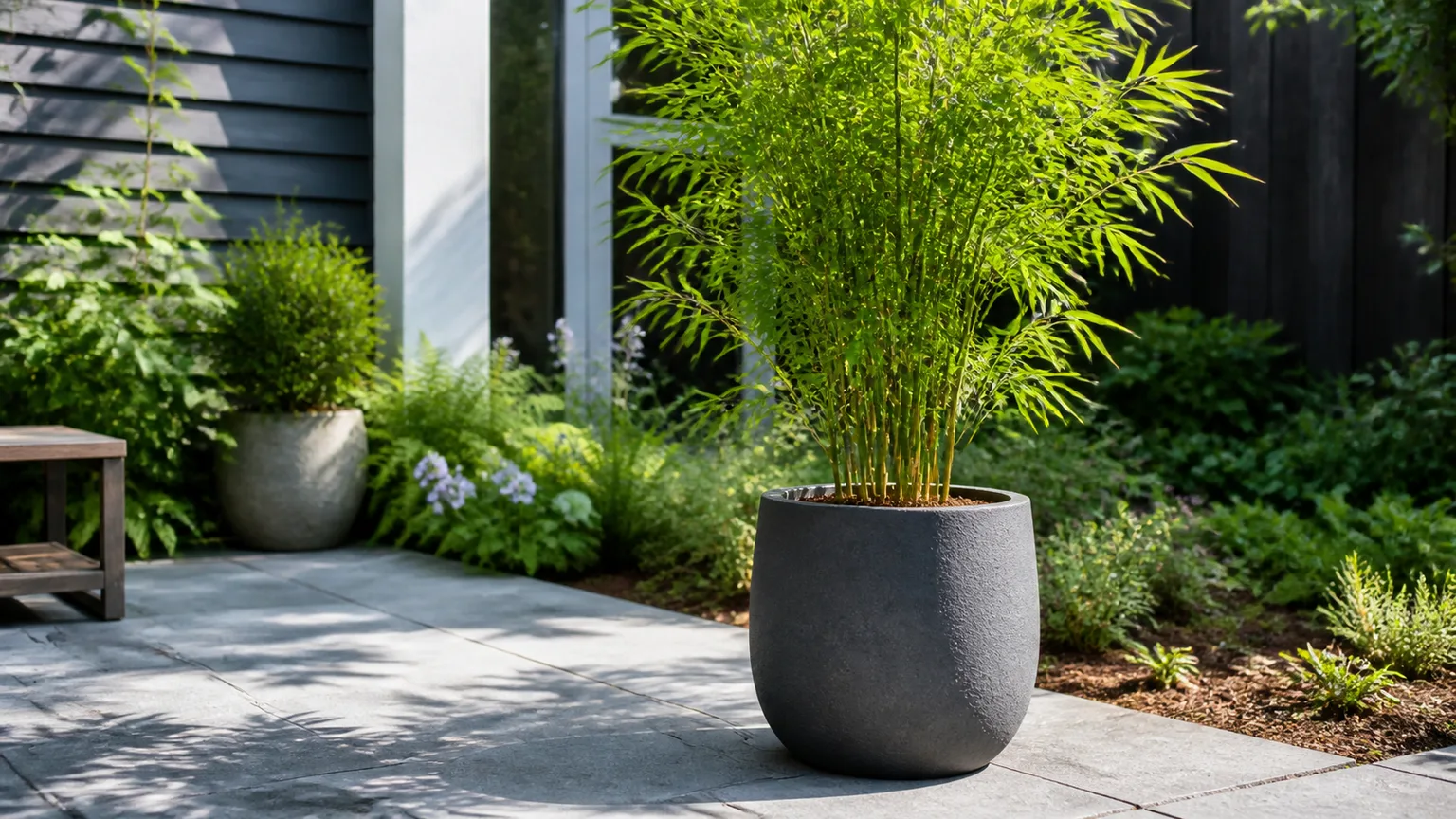
Fargesia is usually the easiest starting point for a small garden. A short runner such as Sasaella ramosa may look safer because it is not tall, but its low rhizomes can creep through a border unnoticed. The practical advantage of a clumper is not that it is immortal and static; it is that its next shoots are easier to predict.
Ground Cover, Slopes, and Wildlife Edges
Low Pleioblastus and Sasaella can cover soil quickly, and native river cane (Arundinaria gigantea) can fit a very different ecological job in parts of the southeastern United States. NC State Extension describes river cane as a native bamboo that grows in dense clumps on moist, well-drained floodplain sites and provides cover and food for wildlife (NC State Extension Plant Toolbox).
Do not substitute an ornamental runner for a native planting without checking local ecology. Fast cover can suppress other plants, move beyond a property, or create a removal job. A slope that is hard to reach is a reason to choose a stable clumper or another ground cover—not a reason to plant the most aggressive bamboo available.
Plant Bamboo So It Stays Where You Put It
Site Preparation and Planting
Most garden bamboos prefer moist, fertile, well-drained soil and shelter from the strongest drying wind. Improve compacted soil before planting, but do not turn a poorly draining bed into a swamp; waterlogged roots lack oxygen, while a dry, hot site can scorch leaves and stall establishment.
Planting in spring gives roots and rhizomes time to establish before winter in many climates. Dig a hole about twice the width of the root ball, set the plant at roughly its original depth, water thoroughly, and mulch without piling material against the culms. Keep new plants watered during dry spells, then reduce the frequency only after you know how quickly that particular soil drains.
Read the label for the mature spread, not just the height. A 15-foot bamboo that remains three feet wide is a different landscape decision from a 15-foot bamboo that forms a broad arching clump. Leave an inspection strip between the plant and a fence, paving, drain, or foundation.
Root Barriers and Containers
If you plant a running bamboo, install the barrier before the root ball goes in. RHS guidance calls for a solid vertical barrier at least 60 centimeters (about 2 feet) deep, ideally deeper for large Phyllostachys, with joints overlapped and sealed and the top left at least 7.5 centimeters (3 inches) above the soil so rhizomes cannot simply climb over it. The barrier should enclose enough room for the plant to mature rather than forcing a giant bamboo into a cramped ring.
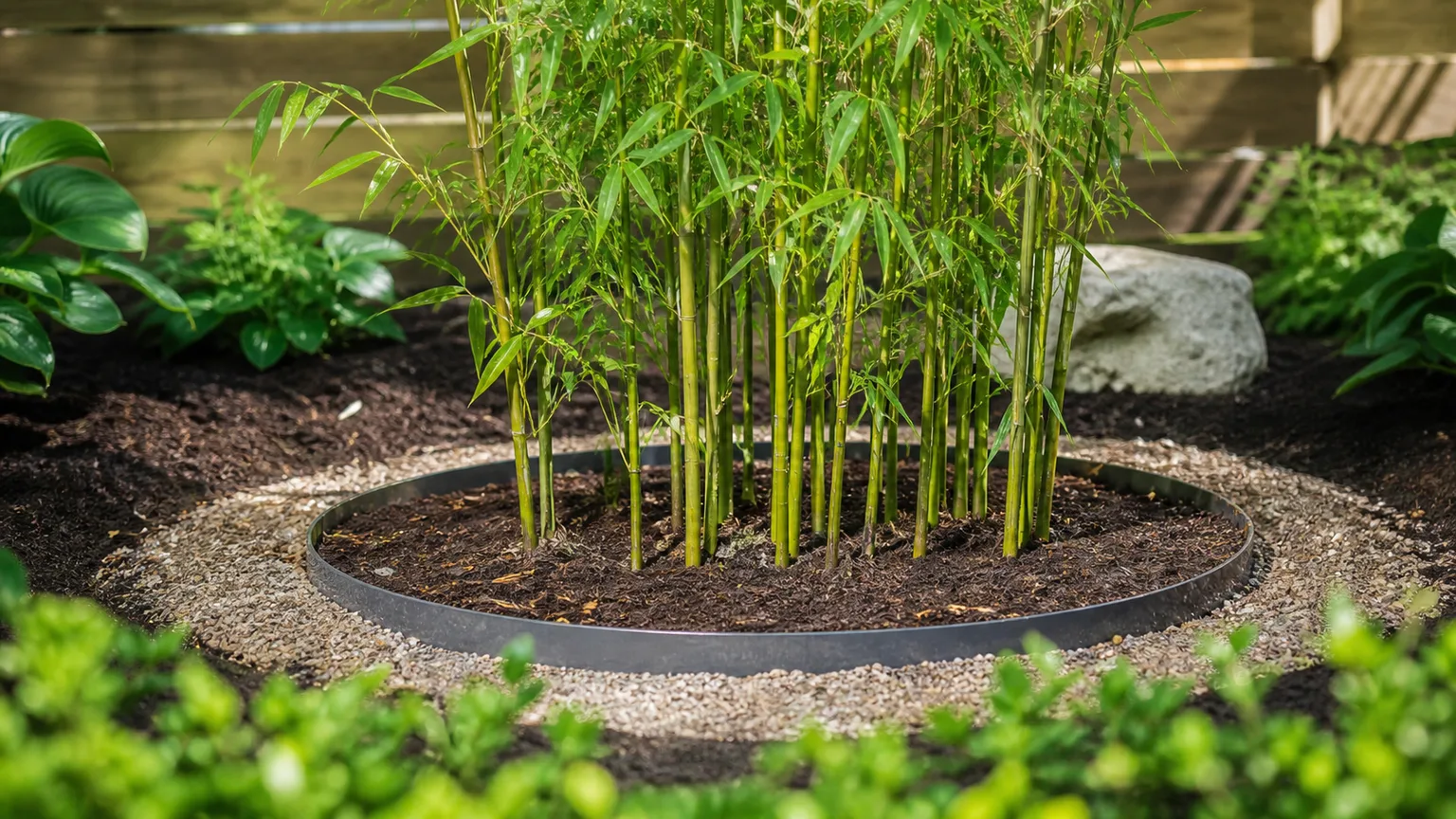
Extension guidance also makes the limitation clear: a barrier is a management system, not a force field. Inspect the exposed lip, remove shoots that appear outside the intended zone, and watch the area just beyond the barrier. Local rules may require containment of running bamboo; Fairfax County, for example, publishes specific containment requirements for property owners (Fairfax County running bamboo guidance).
For a container, use a heavy pot with drainage and a stable base. Do not place the pot directly on soil where a rhizome can exit through a crack or drainage hole and root into the bed. Lift and divide the plant when the container is crowded, and replace a cracked pot before roots escape.
Keep Bamboo Attractive Without Losing Control
Water, Mulch, Feeding, and Pruning
Water deeply enough to moisten the root zone, then adjust the interval to weather and soil. Containers may need frequent checks in summer, while established in-ground clumps usually need extra water only during dry periods. Mulch slows evaporation and protects shallow rhizomes, but it should not hide an inspection trench or cover the barrier’s above-ground lip.
Bamboo rarely needs aggressive shearing. Remove dead, weak, or damaged culms at ground level, thin crowded growth to show colored canes, and shorten side branches only when you are shaping a screen. A clean cut on an unwanted new shoot is easier than trying to force an old woody culm back into place.
Do not fertilize a stressed plant simply because it is growing slowly. Check moisture, light, winter damage, and root crowding first. The RHS notes that fallen bamboo foliage can return silica to the plant and that container-grown plants may need more feeding than established plants in fertile soil (RHS bamboo growing guide).
Annual Spread Checks
The best time to inspect a runner is before it becomes a grove. Walk the full perimeter in spring and again after the main shooting period; look for pointed shoots away from the parent plant, rhizomes approaching the barrier, and gaps at joints. Cut or dig out unwanted rhizome sections completely—leaving a node in the soil can allow regrowth.
If bamboo has already crossed a boundary, do not rototill the area. Breaking a rhizome network into pieces can distribute more viable sections. Alabama Cooperative Extension explains that complete control is difficult because the entire rhizome system must be removed or destroyed, and that follow-up work may take years (Alabama Cooperative Extension System). For a mature grove beside a foundation, drain, or neighbor’s property, get a qualified bamboo-removal or landscape professional rather than relying on a single herbicide application.
Mistakes That Make Bamboo Harder to Manage
Buying by color alone. Black, golden, and striped canes are compelling, but color does not tell you whether the rhizomes run. Look up the botanical name before you put the plant in the ground.
Planting on the property line. A screen belongs near a boundary visually, but that is exactly where an escaping runner becomes someone else’s problem. Set back far enough to leave an inspection path and choose a clumper if you cannot install and maintain a barrier.
Treating a pot as permanent containment. Bamboo can fill a pot, crack a thin container, root through drainage holes, or dry out before you notice. Inspect the base, not just the foliage, and divide on a schedule based on crowding.
Assuming small means harmless. Dwarf runners can spread just as effectively as tall runners; they are simply harder to see. Ground cover is a job description, not a guarantee of restraint.
Using a fixed watering calendar. Bamboo in a windy pot, a shaded clay bed, and a hot sunny border will not dry at the same rate. Check the soil and the plant, especially through the first summer.
Cutting and forgetting. Mowing visible canes may improve the view while leaving the rhizomes alive. If the plant is in the wrong place, plan for excavation and repeated monitoring rather than expecting one haircut to solve it.
Conclusion
The best bamboo for your garden is the one whose growth habit, mature size, and climate fit the space you can actually maintain. For most small gardens, start with a clumping Fargesia or a large, stable container. Choose Bambusa for a warm-climate screen, and reserve Phyllostachys, Pleioblastus, Sasa, and Sasaella for sites where you can install containment and inspect it every year.
Before buying, write down three things: the botanical name, the mature spread, and whether the rhizomes run. That short check is more valuable than the cane color on the label—and it is what lets bamboo remain a garden feature instead of becoming a garden boundary problem.



