10 Best Evergreens for Hedges and Privacy Screens
Compare 10 evergreen hedges for privacy screens—spacing, growth rate, pruning, and zone fit—so you pick a living fence that stays dense without outgrowing your lot.
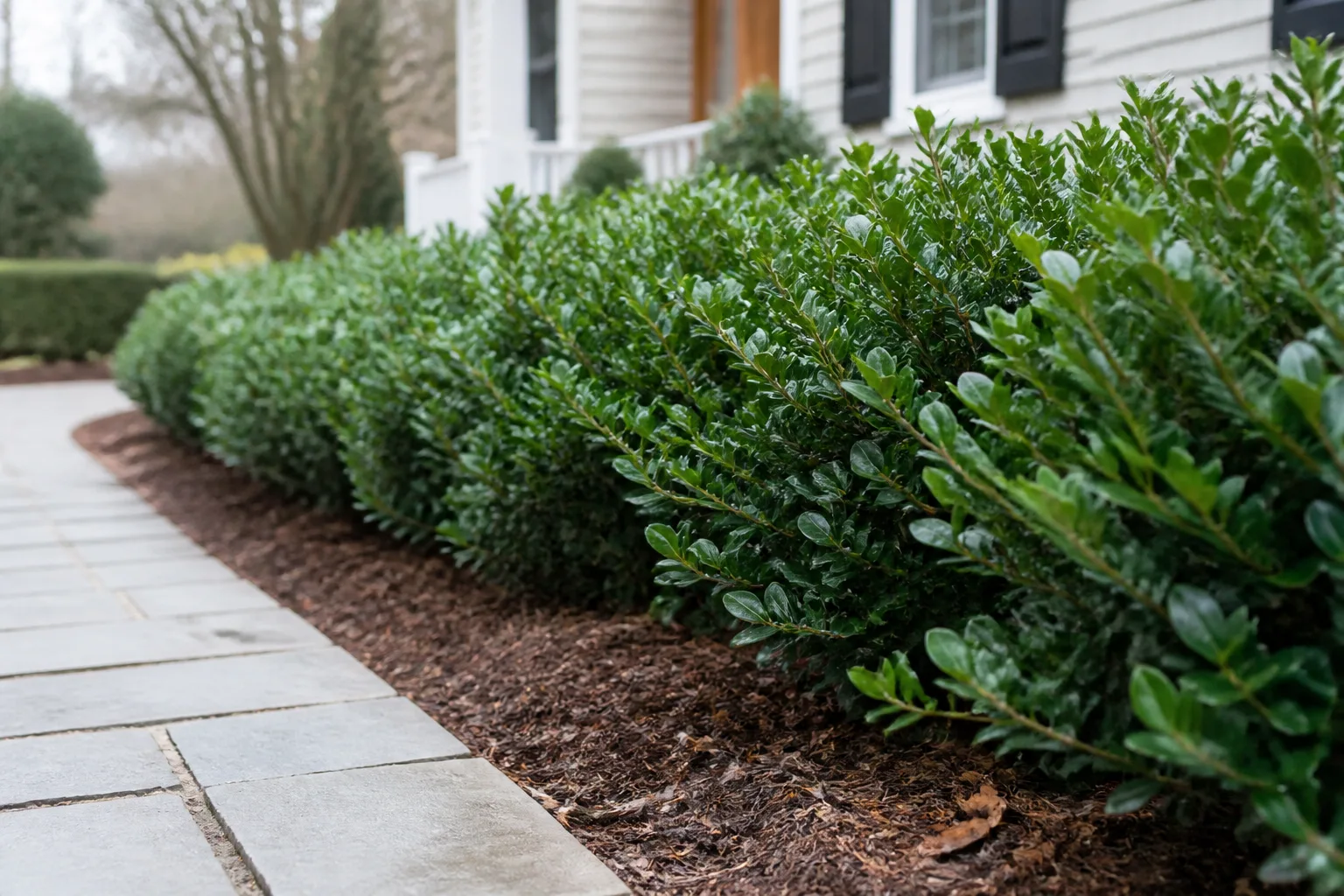
A living privacy screen can soften a yard edge, block a neighbor’s sightline, and look better than a bare fence panel — but only if you match the evergreen hedge to your lot size, climate, and willingness to prune. The wrong pick fills in fast, then spends the next twenty years eating sidewalk space, browning from disease, or dropping needles where your dog walks.
This guide covers 10 reliable evergreen shrubs and trees used for hedges and privacy screens, with the practical details that decide success: mature height and width, realistic spacing, growth speed, shade tolerance, and toxicity where it matters. Use it to shortlist plants, then confirm hardiness for your USDA zone before you buy.
What Makes a Good Evergreen Privacy Hedge
The best privacy hedge is not always the fastest. It is the plant that stays dense at the height you need, tolerates your soil and sun, and remains manageable at mature size without constant rescue pruning.
Visual Privacy vs Wind and Noise Screening
Visual privacy means blocking sightlines — usually from ground level up to about 6–8 feet where neighbors see into your patio or windows. A sheared boxwood wall or mid-height holly row can do that on a modest lot without casting deep shade.
Wind and noise screening demands more mass. Tall arborvitae, Leyland cypress, or multi-row plantings with staggered spacing catch more wind and scatter some high-frequency sound, but they will not replace a solid fence for traffic noise. Dense evergreen hedges also create a psychological buffer even when acoustics change little — worth planning for if your goal is a calmer-feeling yard, not laboratory-grade soundproofing.
For broader backyard privacy strategies beyond hedges alone, see our guide on backyard privacy ideas.
How to Choose the Right Evergreen Hedge
Start with three filters before you fall in love with a nursery photo: mature dimensions, growth rate, and maintenance tolerance.
Match Mature Size to Your Space
Every plant on this list has a tag size and a real-world size. Tags describe ideal conditions; your sidewalk, roofline, and utility easement describe reality. Measure the length of the screen you need and the maximum width you can sacrifice from the property line inward. If the bed is only 4 feet deep, a Green Giant arborvitae hedge (mature spread 12–18 feet per plant) is already the wrong answer — no amount of early pruning fixes a tree bred to get huge.
Write down your target finished height too. Municipal fence rules often cap solid structures around 6 feet on side lots; hedges are sometimes treated differently, but planting something that wants 50 feet because “you will keep it trimmed” rarely ends well. Pick a species whose natural mature height sits at or below your ceiling, then shear for density — not for survival.
Fast-Growth Trade-Offs Most Lists Skip
Fast growers like Leyland cypress and Green Giant arborvitae can add 3–4 feet per year in favorable soil and moisture (NC State Extension). That sounds perfect until year five, when you are trimming monthly, fighting bagworms, or watching canker streaks open up after drought stress.
Slow growers — boxwood, yew, many hollies — may take five or more years to knit into a solid visual screen at chest height, but they hold a crisp line with one or two prunes a year. Treat growth speed as a maintenance invoice, not a virtue. If you need privacy in 24 months and have a wide planting bed, a fast screen can work. If you have a 3-foot-wide foundation strip, choose slow and narrow.
Hedge Spacing and Planting Layout
Spacing errors cause 90 percent of hedge regrets. Plant too close and crowns compete, inner branches die, and disease moves through stagnant air. Plant too far apart and you stare at gaps for years.
Rule of thumb: space plants at one-third to one-half of their mature spread for a formal clipped hedge, or at full mature spread for a naturalistic screen where each plant keeps its own outline. For Green Giant used as a quick screen, NC State notes plantings from about 5 feet apart for a dense row up to 10–12 feet for a looser windbreak — match spacing to how soon you need closure and how wide the bed is.
Staggered rows beat a single straight line for thickness and wind resistance. Offset plants in a zigzag or double row so gaps in the front row align with plants in the back. This improves airflow compared with a tight single-file wall, reduces windthrow on tall conifers, and fills in faster than one sparse line. Call 811 before digging to locate utilities; keep deep-rooted trees away from septic fields and shallow irrigation lines.
Prepare soil once for the whole run: loosen the planting trench, amend only if drainage is poor, and water the root zone through the first two dry seasons — hedges fail in establishment, not in year ten.
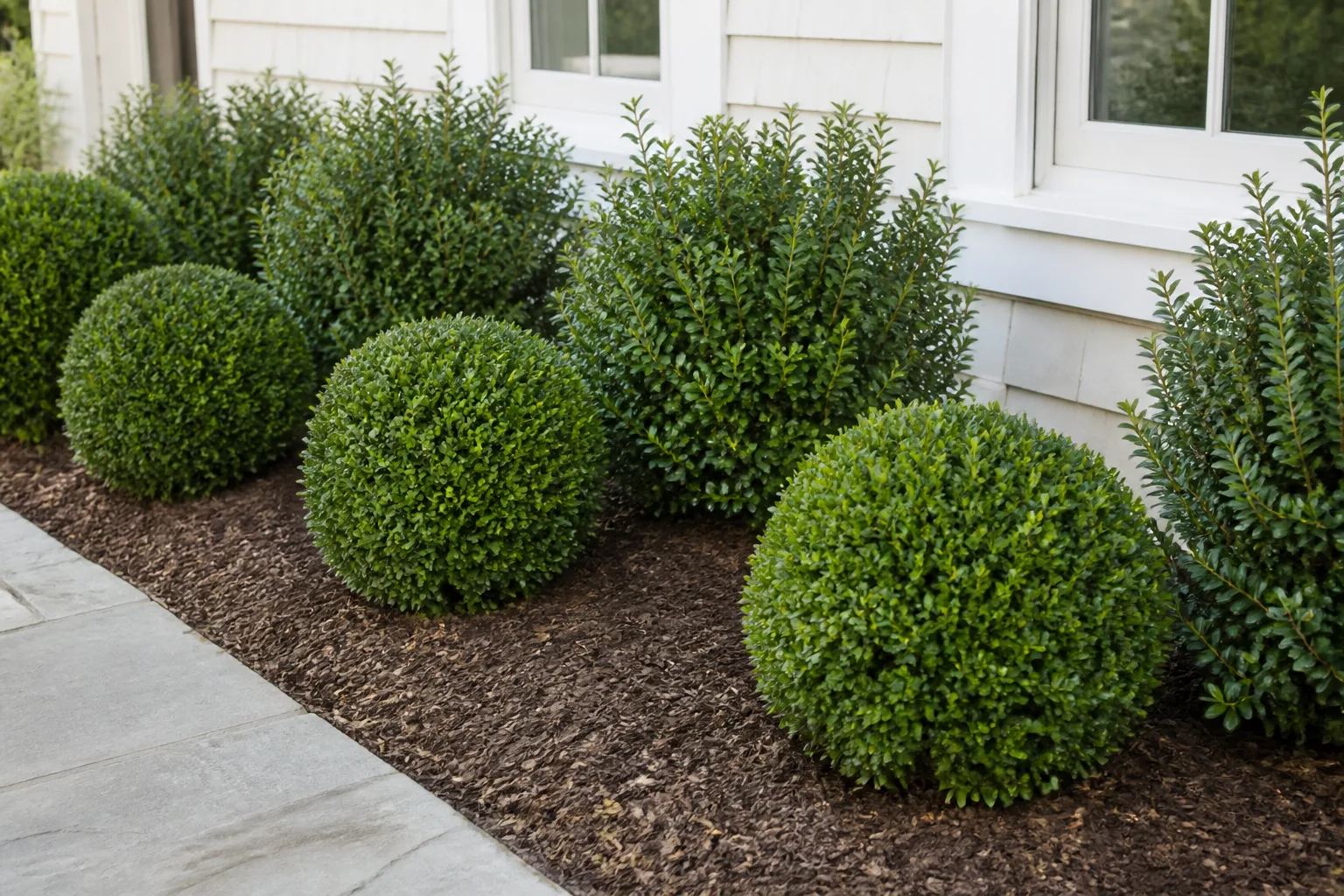
10 Best Evergreens for Hedges and Privacy Screens
The plants below are proven hedge candidates in U.S. landscapes. Hardiness ranges are typical; always verify the cultivar tag against your zone.
Boxwood and Yew — Formal Hedges That Take Shearing
Boxwood (Buxus spp.) is the classic low-to-mid formal hedge — think knee-high borders to 4-foot walls. Tiny evergreen leaves recover cleanly from shearing, hold a line through winter, and suit European-inspired gardens or front-yard structure. Korean boxwood (Buxus sinica var. insularis) and improved hybrids generally handle cold better than old English types in northern gardens. Full sun to partial shade; well-drained soil near neutral pH. Expect slow growth — often less than 6 inches a year — and plan spacing around 12–18 inches for low hedges, 2–3 feet for taller forms.
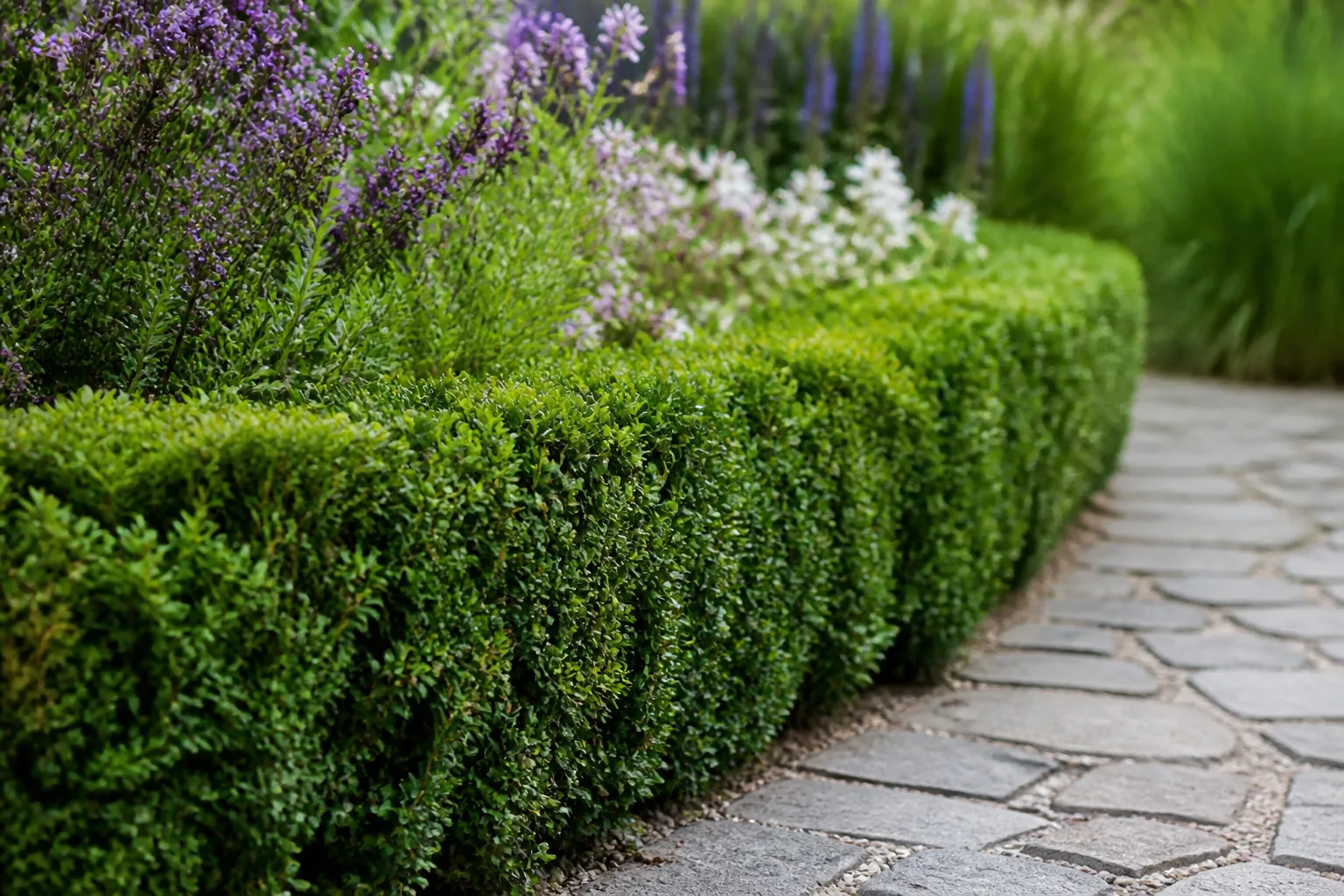
Caution: Boxwood is toxic to dogs, cats, and horses if ingested (ASPCA). It is also susceptible to boxwood blight in humid regions; choose resistant cultivars and avoid overhead irrigation where blight is reported locally.
Yew (Taxus spp.) builds a dense, dark green wall that tolerates heavy shade better than most conifers — valuable on north sides of structures. English yew (Taxus baccata) and Japanese yew (Taxus cuspidata) shear beautifully; overgrown yews can often be cut back hard in late winter and push new growth from old wood. Mature sizes vary enormously by species and cultivar, from 3-foot foundation plants to 15-foot screens. Growth is slow to moderate. All parts except the fleshy aril around the seed are toxic to people and pets (ASPCA yew listing).
Green Giant Arborvitae and Holly — Dense Screens With Structure
Green Giant arborvitae (Thuja ‘Green Giant’) is the go-to fast evergreen screen in much of the Southeast and Mid-Atlantic: deer-resistant, adaptable to clay or sand, and columnar enough for lot lines. NC State reports 3–4 feet of annual growth in optimal conditions, maturing around 40–60 feet tall and 12–18 feet wide — treat it as a tree, not a shrub, unless you commit to lifelong width control. Zones roughly 5–7; does not tolerate salt spray or salty soils. Fewer disease issues than Leyland cypress in many plantings, but bagworms and root rot in wet feet still happen.
Holly (Ilex spp.) gives glossy leaves, stiff branches, and optional red berries for winter interest. American holly (Ilex opaca) and hybrids like ‘Nellie R. Stevens’ build mid-size screens roughly 6–15 feet tall depending on selection. Hollies prefer acidic, well-drained soil; yellowing leaves often mean high pH, not “holly disease.” Female plants need a male pollinator for berries unless you buy a self-fruitful cultivar. Berries are toxic if swallowed; hollies with spiny leaves also snag clothing along tight paths. Space 3–5 feet for hedge forms, wider for tree hollies left natural.
Firethorn, Leyland Cypress, and Japanese Laurel
Firethorn (Pyracantha coccinea and hybrids) is an informal evergreen screen with fierce thorns — excellent security planting, poor choice next to a pool deck. White spring flowers yield orange-red berries persist into winter. Full sun to partial shade; drought-tolerant once established. Fast growth to 8–12 feet; shear after flowering if you need tidy shape. Thorns and berries mean extra care around kids and pets; berries are not snack food.
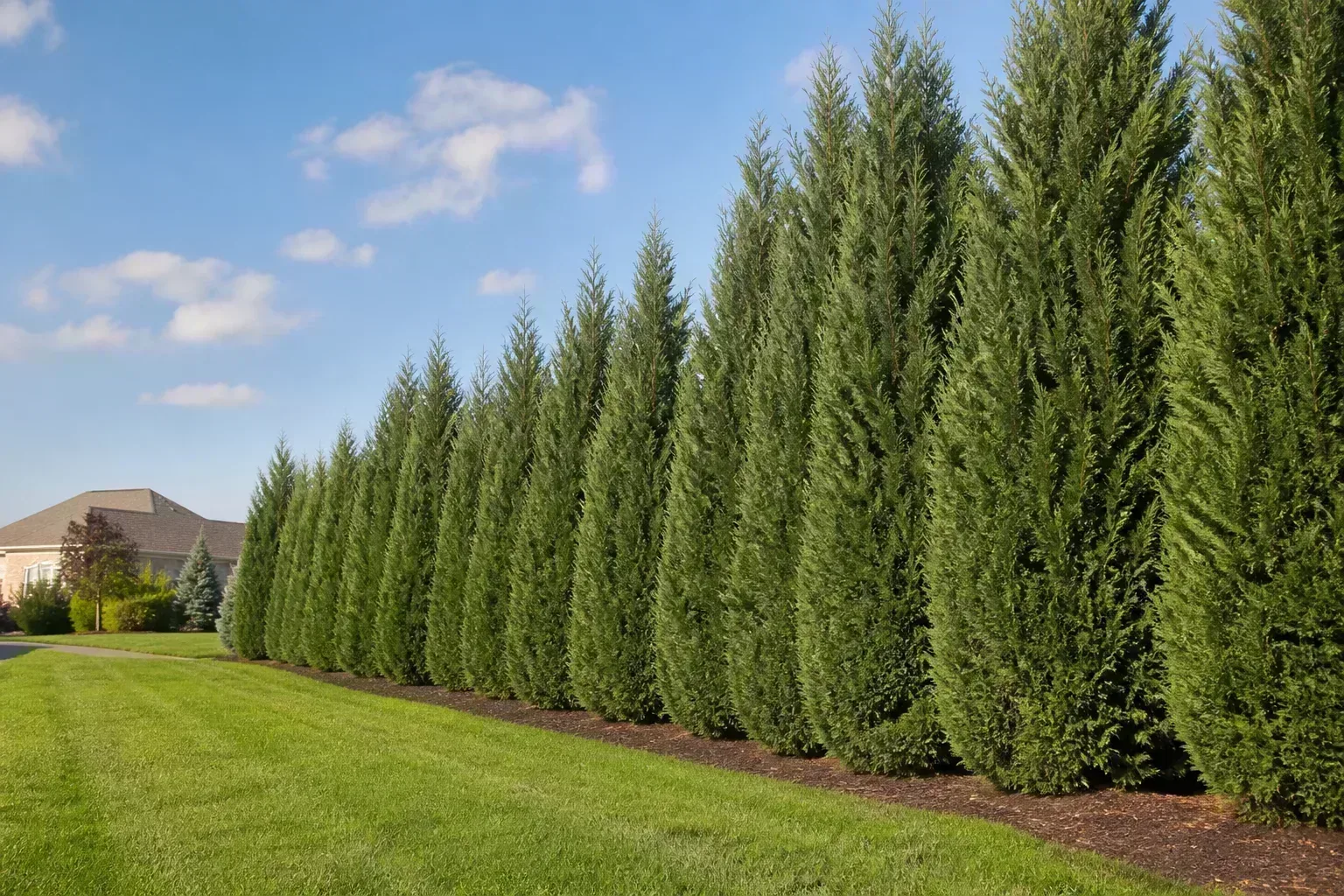
Leyland cypress (× Hesperotropsis leylandii) appears on every fast-hedge list because it grows upright and fills gaps quickly. NC State labels it problematic and urges alternatives: shallow roots, heat stress in hot summers, and severe pest and disease issues including bagworm, Seiridium canker, and root rots (NC State Leyland cypress). Lifespan is often 20–50 years, with many plantings failing earlier in wet or drought-stressed sites. If you still plant it, use only on large properties where mature 50-foot height is acceptable, space for airflow, and plan replacement before the row becomes a brown skeleton. Green Giant is the more resilient fast conifer in many Eastern gardens.
Japanese laurel (Aucuba japonica ‘Variegata’ and cultivars) lights up deep shade where few hedging evergreens thrive. Leathery leaves with gold speckling; red berries on female plants with a male nearby. Slow growth to 6–9 feet; moist, well-drained soil. Not a security hedge — open habit — but invaluable for shaded side yards and under tree canopies. Semi-tender; best in zones 7–10.
Cotoneaster, Heavenly Bamboo, and Privet
Cotoneaster (Cotoneaster lucidus, C. franchetii, and others) offers semi-evergreen to evergreen hedging with red fall berries birds love. C. lucidus (hedge cotoneaster) reaches about 8–10 feet; smaller species stay lower. Berries are toxic to humans and pets in quantity. Hardy roughly zones 4–7 depending on species; may drop leaves in cold winters (semi-evergreen). Little pruning required for informal screens; shear in early spring for formal lines.
Heavenly bamboo (Nandina domestica) is evergreen to semi-evergreen in warm zones, with lacy foliage that reddens in fall and red berry clusters in winter. Grows 5–7 feet fairly quickly; works in Southern and West Coast plantings. Important: Some Nandina cultivars spread by seed and are invasive in parts of the Southeast; choose sterile or low-fruiting cultivars where seed spread is a concern, and check your state invasive plant list. Not a true bamboo — no running rhizomes.
Privet (Ligustrum spp.) is the old reliable tight formal hedge — fast, forgiving of soil, and tolerant of shearing. Common privet and Chinese privet (invasive in many Southeastern states — avoid) have given the genus a bad name; look for selected hedge cultivars appropriate to your region. Evergreen to semi-evergreen depending on zone and species. Expect frequent trimming during the growing season if you want a golf-course wall. Flowers attract bees; berries and leaves are toxic (NC State Ligustrum lucidum). Fine for back-lot screens; skip along bee-allergic seating areas.
Pruning and Maintaining Evergreen Hedges
A privacy hedge fails when the base goes bare and the top flares out like a vase. Taper the profile — wider at the bottom, slightly narrower at the top — so lower branches receive light. Trim sides before reducing height so you do not expose woody stubs that never leaf out again.
When and How to Trim for Density and Health
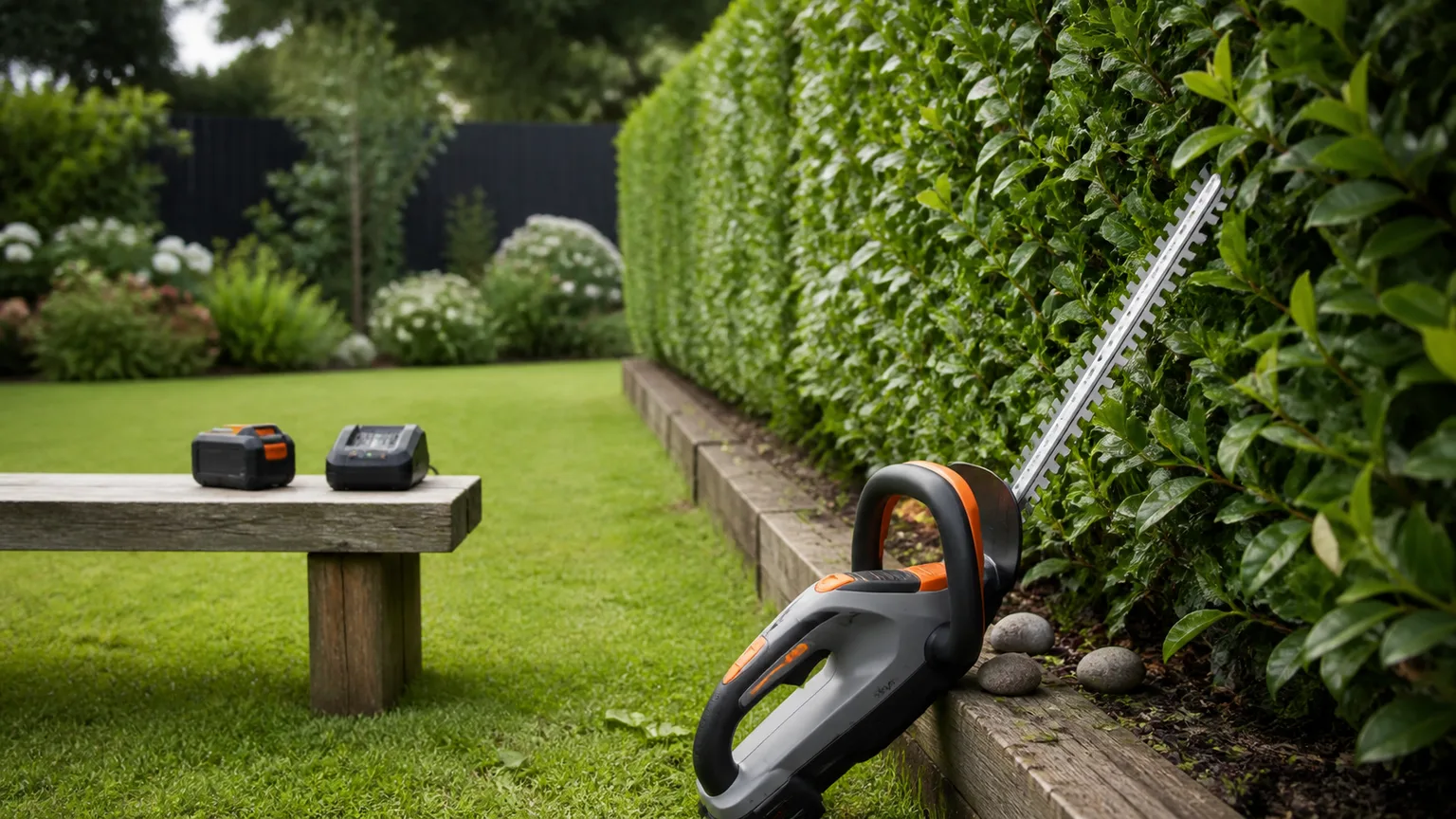
Early spring, before new growth hardens, is the safest window for major cuts on most evergreens. Remove dead, crossing, and inward-facing branches first to open the interior. For formal hedges, follow up with light trims in summer to clean fuzzy growth; fast hedges like privet may need attention every four to six weeks during peak growth.
Do not perform heavy pruning on frozen or drought-stressed plants. Winter cuts on broadleaf evergreens can brown at the edges; summer shearing of conifers is lighter-touch only. Collect clippings — leaving debris on the hedge invites fungal issues. Sharp, clean blades matter; dull hedge trimmers tear leaves and invite disease. For tool selection by hedge type, see our roundup of cordless hedge trimmers.
Toxicity Near Pets, Kids, and High-Traffic Paths
Many classic hedge plants are beautiful precisely because they are defended with toxins. Yew, boxwood, holly berries, privet, firethorn berries, and cotoneaster berries can cause serious illness if eaten (ASPCA, National Capital Poison Center plant guidance). Thorny firethorn and holly add physical hazard along walkways.
If dogs run the fence line, favor Green Giant arborvitae (non-toxic listing) over yew or privet, or place toxic hedges behind interior fencing. Teach children that hedge berries are not food. Position spiny plants away from play zones and mail paths.
Conclusion
The best evergreen hedge for privacy is the one whose mature size fits your bed depth, whose growth speed matches your pruning budget, and whose toxicity profile fits how your household uses the yard. For quick height on a wide lot, Green Giant arborvitae outperforms trouble-prone Leyland cypress in many Eastern gardens. For formal structure in partial shade, boxwood and yew still set the standard. For mid-height glossy screens, holly delivers year-round leaf cover with minimal fuss once soil pH is right.
Measure your space, calculate spacing from mature width — not impatient optimism — stagger rows when you can, and water through the first two years. Do that, and a living screen will block the view you care about without becoming the next project you resent.



