3 Low-Maintenance Groundcover Plants for Yards
Choose the right low-maintenance groundcover for sun, shade, dry soil, or moist beds with honest spread warnings and first-year planting advice.
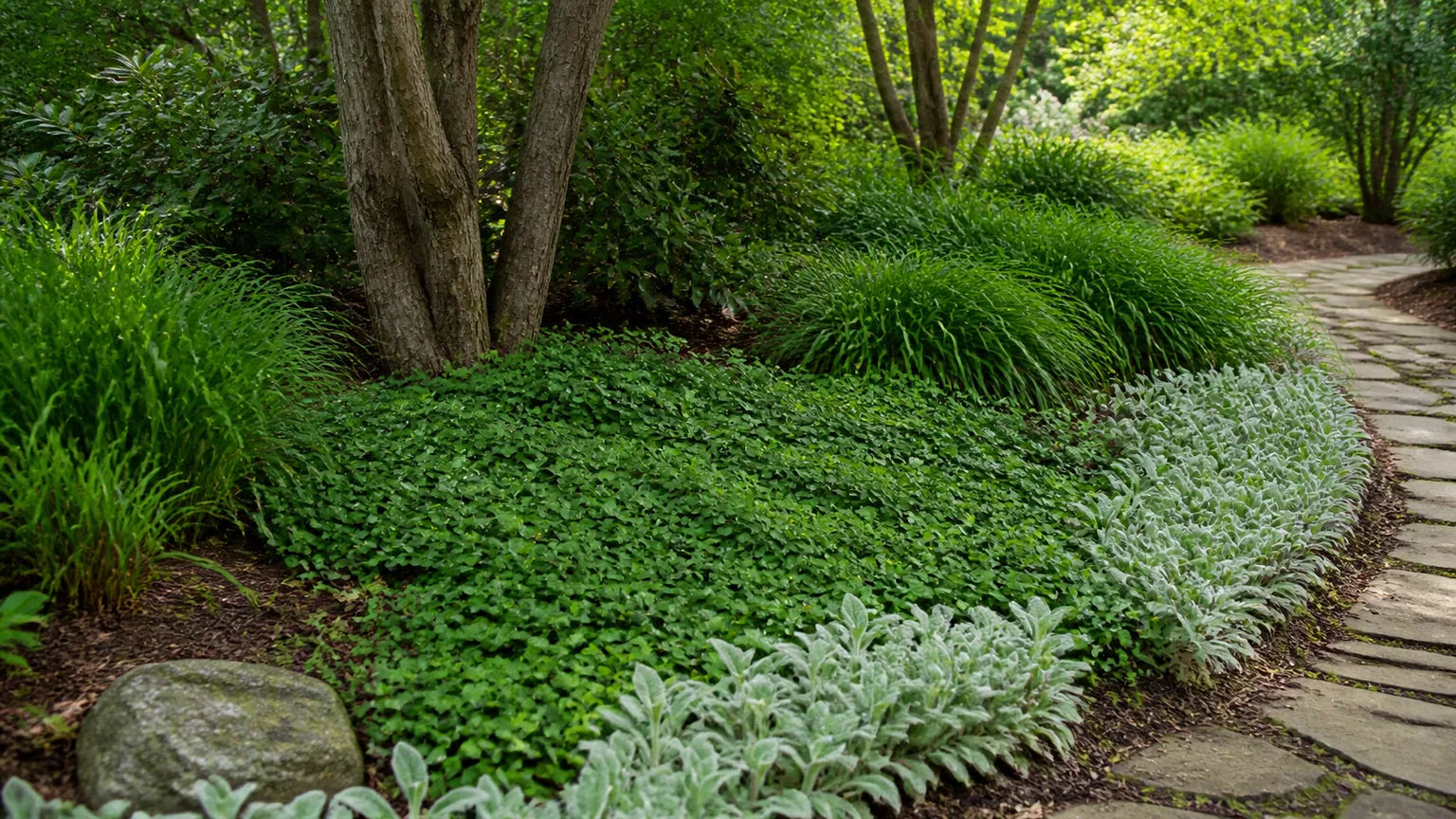
A good groundcover does more than hide bare soil. It softens hard edges, protects soil from pounding rain, and makes a planting bed look designed instead of unfinished. The catch is that “low maintenance” describes the right plant in the right place—not a plant that can ignore its site, its first summer, or its boundaries.
These three choices earn their place for different reasons. Sweet woodruff makes a fragrant, low mat in moist shade. Lamb’s ear brings a silver, tactile carpet to dry sunny borders. Japanese forest grass adds a taller, flowing layer to cool, consistently moist shade. Choose by conditions first and appearance second, and the bed is far more likely to fill in without becoming another chore.
Why a groundcover only becomes low-upkeep after it fits the site
Colorado State University Extension defines useful groundcovers by their ability to stay relatively low and spread, while noting that fast spreaders can become invasive. The same guide points out that groundcovers can add texture, reduce erosion, and act as an alternative to turf, but recommends improving soil and removing perennial weeds before planting. In other words, the plant supplies coverage; the site preparation determines whether that coverage is durable.
Match the plant to light, moisture, and drainage first
Start with the bed at midday, not with the plant label. A site beneath mature trees may be shaded but surprisingly dry because the tree roots take up water, while a low spot beside a downspout may stay wet long after rain. Note how many hours of direct sun reach the soil, whether the surface dries quickly, and whether water stands after a storm.
Then match the three main options to that observation. Sweet woodruff likes moist, fertile, well-drained soil in partial to full shade. Lamb’s ear wants the opposite pattern: full sun or light shade, leaner soil, and excellent drainage. Japanese forest grass bridges the shade category but needs steady moisture and rich soil; it is a poor choice for a hot, dry bank or a puddling clay pocket.
What dense coverage can—and cannot—do for weeds
Once established, a continuous canopy leaves fewer open patches for weed seedlings and shades the soil surface. That can reduce routine weeding, especially compared with a bed of widely spaced shrubs surrounded by bare mulch. It does not smother every perennial weed, erase dormant roots, or prevent windblown seeds from landing.
The most important weed-control window is before planting. Clear perennial weeds while you can still see them, loosen compacted soil without burying chunks of root, and give the new plants enough room to expand. During the first season, pull weeds while they are small; waiting for a groundcover to “win” often leaves the perennial in competition for water just when it is trying to establish.
The three choices at a glance
| Groundcover | Best light | Best moisture pattern | Mature habit | Main upkeep or risk |
|---|---|---|---|---|
| Sweet woodruff | Partial to full shade | Moist but well-drained; tolerates some dry shade with less vigor | About 6–12 inches tall, spreading into a low mat | Can spread aggressively in fertile, moist soil; check local guidance |
| Lamb’s ear | Full sun to partial shade | Dry to medium moisture with very sharp drainage | Low, silver rosettes that widen by creeping stems | Keep leaves dry, thin crowded clumps, and remove flower stalks if desired |
| Japanese forest grass | Part to full shade | Rich, consistently moist, well-drained soil | Arching green mounds roughly 1–1.5 feet tall | Slow to fill; scorch is likely when heat and inconsistent moisture combine |
The table gives you the shortcut, but the failure modes matter more than the height. If a plant’s moisture requirement conflicts with the bed, no amount of mulch will make it low-upkeep. If its spread is a problem for your garden, a fast filler can create more work than the bare patch did.
Sweet woodruff (Galium odoratum) for moist shade
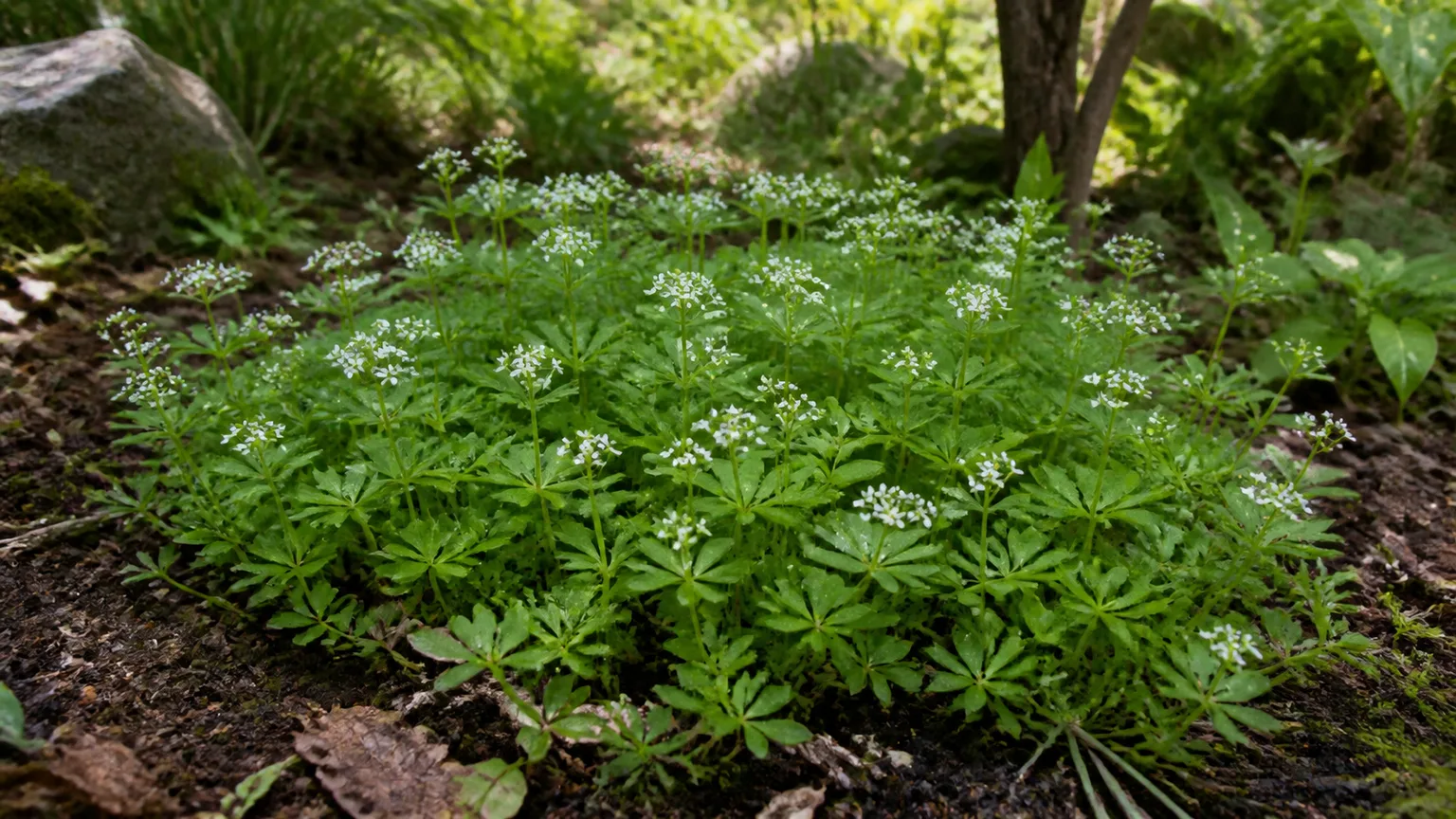
Sweet woodruff is the most carpet-like option here. Its bright green leaves form whorls around slender, sometimes sprawling stems, and small white flowers appear above the foliage in spring. The leaves become sweetly hay-scented as they dry, which gives a shady bed a sensory detail that most foliage groundcovers lack.
What it looks like and where it works
NC State Extension describes sweet woodruff as a 6- to 12-inch plant that can extend to about 2 feet, spreading by rhizomes and seed. Its best role is under shrubs and trees, along a woodland edge, or in a shady border where the soil holds moisture without staying waterlogged. It can tolerate heavy shade, but growth is fuller when the plant has some filtered light and does not dry out repeatedly.
University of Wisconsin–Madison Extension reports that sweet woodruff can survive dry shade, although it will not look as lush as it does in moist soil. That distinction is useful: “shade tolerant” does not mean “indifferent to water.” If tree roots create a dry, competitive site, use sweet woodruff only where you can water during extended summer drought, or choose a plant adapted to drier shade instead.
The plant is deciduous in colder regions, so a patch may retreat in winter and return in spring. That seasonal gap is not failure. Plan the bed with companion plants, leaf mulch, or the texture of tree trunks in mind if you want it to look finished during dormancy.
The spread and maintenance check
This is the choice to make carefully rather than casually. Wisconsin Extension notes that sweet woodruff spreads readily in ideal conditions and can be difficult to remove when stems break during pulling. The Royal Horticultural Society also describes it as vigorous and enthusiastic, with the potential to become a nuisance. NC State Extension notes that it can be somewhat aggressive in optimal conditions.
That does not make it wrong for every yard. It makes the planting location important. Keep it inside a bed with a clear edge, use it where neighboring shrubs can compete with it, and avoid sending it downhill toward a natural area or an unmanaged property line. Check your state or county invasive-plant resources before planting; regional behavior and local restrictions matter more than a universal “invasive” label.
Maintenance is mostly moisture management and boundary control. Water during hot, dry spells before the foliage collapses into dormancy, divide or thin a patch when it crosses the intended edge, and do not add fertilizer just to make it spread faster. The Royal Horticultural Society lists no pruning as necessary, which is another reason it works well in a tucked-away woodland bed—provided that bed can absorb its enthusiasm.
Lamb’s ear (Stachys byzantina) for dry, sunny edges
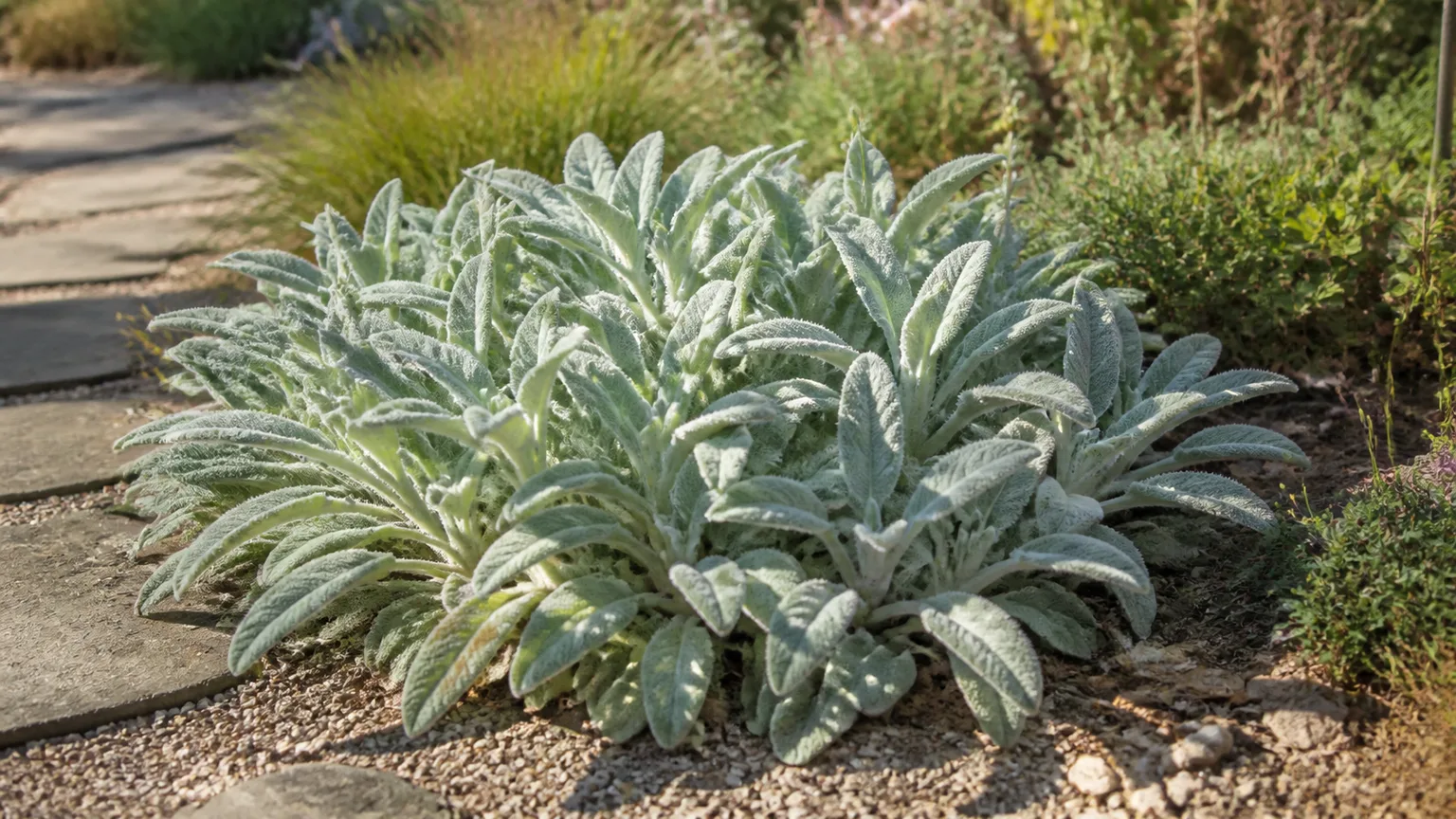
Lamb’s ear solves a different problem: a sunny border that looks pale, hot, or too exposed for lush shade plants. Its low rosettes are covered in soft, silvery hairs, so the plant reads as a light-catching carpet even when it is not blooming. It works especially well beside stone paths, at the front of a perennial border, or around a dry slope where a low silver texture is more useful than another green mound.
What it looks like and where it works
NC State Extension places lamb’s ear in average, dry to medium, very well-drained soil and full sun to partial shade. It is moderately drought tolerant after establishment and generally resistant to deer and rabbits, which makes it a strong candidate for an exposed front edge. In hot climates, a little afternoon shade can protect the foliage, but deep shade usually makes the plant looser and less silver.
The leaves are the main event. Summer flower spikes carry small pinkish-purple flowers, but many gardeners grow lamb’s ear for foliage and remove the stalks to keep the clump compact. Garden Design recommends at least 12 inches of spacing in mass plantings, adjusted for cultivar width, so air can move through the foliage and the plants do not become a damp mat.
Do not put lamb’s ear in the same irrigation zone as thirsty perennials just because the colors look good together. A sunny site with heavy clay can be more difficult than a dry site with gravelly soil: water sits around the crown, leaves stay wet, and the plant loses the very conditions that make it low maintenance.
The spread and maintenance check
Lamb’s ear spreads by stems that root at the nodes and can widen quickly in a favorable bed. It is generally easier to control than an aggressive rhizomatous groundcover because unwanted runners can be lifted and the edge is easy to see, but “easy to remove” is not the same as “will stay exactly where you planted it.” Give it a boundary and thin the outside of the clump rather than letting it grow over a path.
The main care mistake is overhead watering. The fuzzy leaves can hold moisture, and NC State Extension warns that wet leaves and high-humidity summers can invite disease. Water at the soil line, water in the morning when possible, and improve drainage before reaching for fertilizer. Garden Design also recommends removing spent flower stalks and thinning crowded growth to improve airflow.
Divide an overcrowded clump in spring, particularly when the center begins to die out. In cold climates, foliage may die back; wait until early spring to remove the old material so the crown has some winter protection. A nonflowering cultivar can reduce deadheading, while a flowering type gives you summer spikes and a greater chance of self-sowing. Choose the version that matches your tolerance for tidying.
Japanese forest grass (Hakonechloa macra) for cool, moist shade
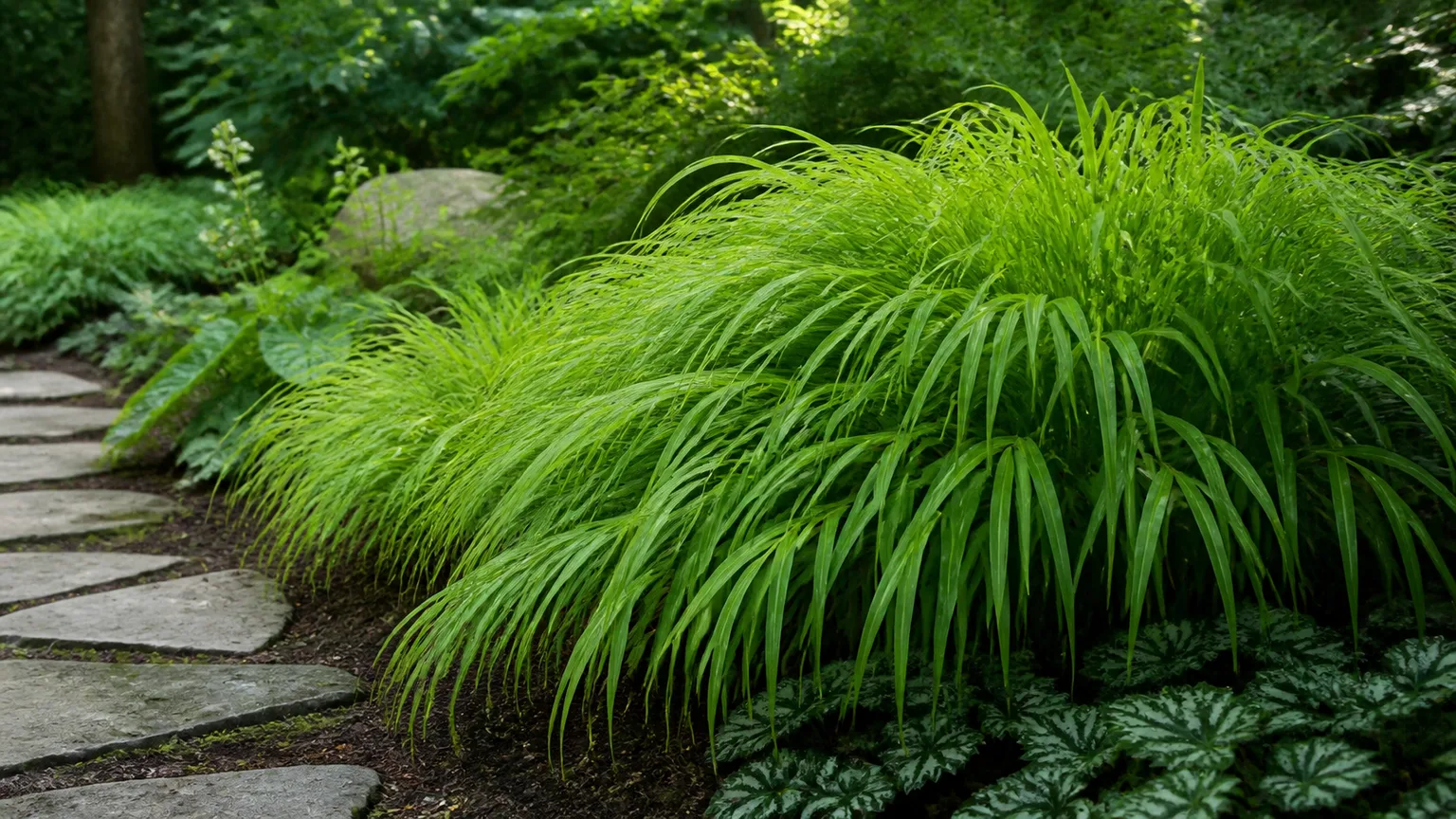
Japanese forest grass is technically taller than many plants people picture as groundcover, but its arching habit makes it excellent at covering soil. The green-leaf form looks like a soft fountain laid across the ground: mounds overlap, blades spill toward a path, and a mass planting moves gently in the breeze without needing flowers to carry the design.
What it looks like and where it works
NC State Extension describes Japanese forest grass as a dense, spreading, cascading perennial about 1 to 1.5 feet tall and 1 to 2 feet wide. It prefers rich, consistently moist, well-drained soil and part to full shade. Use it along a shaded walkway, on a gentle woodland slope, around rocks, or beneath trees where the soil is moist rather than bone dry.
This is the best choice of the three when you want height and movement instead of a flat carpet. It also gives you a useful design layer beside shrubs: the grass can cover the soil at the base, while taller plants provide a backdrop. The green form is quieter than gold or variegated cultivars and can be massed for a more unified, landscape-scale effect.
There is an important climate limit. NC State Extension notes that the leaves may scorch when heat arrives and moisture becomes inconsistent, and that the plant may struggle with hot southern summers. It also does not perform well in poorly drained soil, heavy clay, or very dry soil. If the site is hot and exposed, lamb’s ear is the more honest recommendation; if the site is shady but dry, do not assume this grass will solve it.
The spread and maintenance check
Japanese forest grass spreads by rhizomes and stolons, but NC State Extension does not consider it invasive. Its slow growth is the trade-off for that relatively measured behavior. A newly divided plant may take time to become a convincing patch, so plant it when you can provide establishment moisture rather than expecting instant coverage.
Once established, the routine is simple. Cut the dormant foliage to the ground in late winter or early spring before new blades emerge, keep the root zone evenly supplied during dry heat, and divide in spring only when the clump has outgrown its space. Deer resistance and generally low pest pressure add to its appeal, but those benefits do not compensate for a dry, scorching location.
How to establish a fuller groundcover bed
Groundcovers fill in fastest when they begin with a clean, prepared root zone. Before planting, remove perennial weeds, test how quickly water drains, and correct the site’s main problem. Add organic matter where soil is compacted and low in structure, but do not use compost to turn a poorly drained pocket into a wet one; drainage has to be solved at the site scale.
Spacing, watering, and first-year expectations
Use the plant’s mature width, not the size of the nursery pot, to set spacing. Closer spacing fills a bed sooner but costs more and can increase crowding; wider spacing saves money but leaves more open soil for weeds during the first season. For a tidy border, leave enough room for the mature leaves to touch without piling over one another. For a naturalized patch, a little more overlap is acceptable if you can weed between plants while they establish.
Water new plants thoroughly at planting and check the root zone regularly during the first growing season. The goal is not a permanently saturated bed; it is consistent moisture while roots move beyond the original container. Sweet woodruff may need extra water in a dry spell, lamb’s ear should be allowed to dry between waterings, and Japanese forest grass should not swing from wet to dry in hot weather.
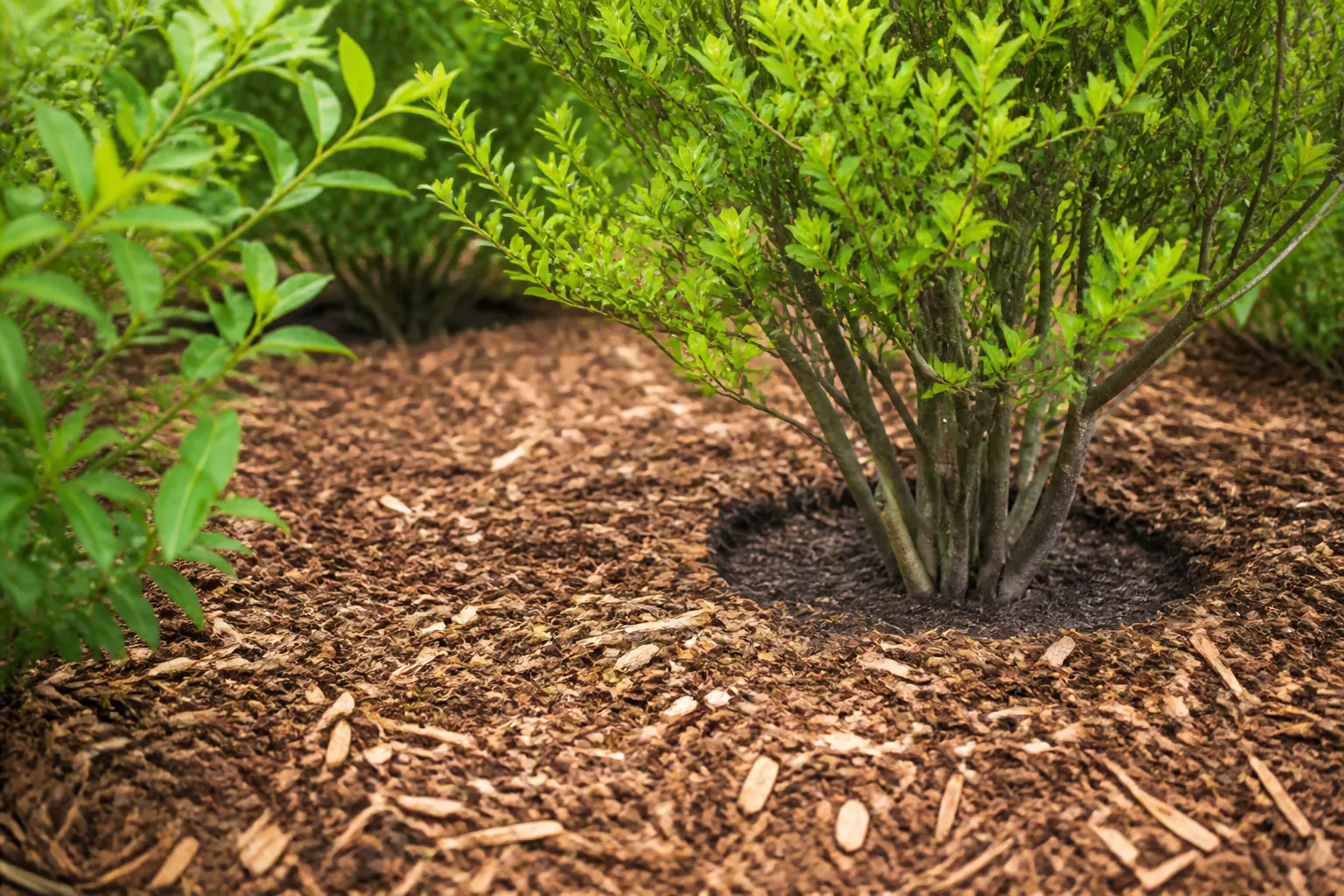
Mulch can hold moisture and reduce the amount of bare soil exposed to weed seeds, but keep it off crowns and stems. A thin, even layer is easier to manage than a deep pile that buries a low plant. As the groundcover expands, pull mulch back from the foliage so the plant—not the mulch—becomes the living cover.
Weed control, airflow, and edge maintenance
The first year is when hand weeding pays for itself. Pull weeds after rain when the soil is workable, use a narrow trowel around shallow roots, and avoid disturbing established groundcover more than necessary. If weeds keep returning from one perennial root system, solve that root problem instead of repeatedly scattering more mulch over it.
Airflow is the second maintenance lever. Thin lamb’s ear when the center becomes crowded, avoid wetting its leaves, and do not plant any groundcover so tightly that foliage stays damp overnight. Sweet woodruff generally needs little pruning, while Japanese forest grass gets its main cleanup once at the end of winter. The best low-upkeep schedule is the one that matches the plant’s natural rhythm instead of forcing every groundcover into the same haircut routine.
Keep an edge that you can inspect. A spade-cut trench, stone border, or clear path makes it obvious when sweet woodruff or lamb’s ear is crossing the line. Trim or divide before the patch becomes tangled with shrubs, lawn, or drainage channels. That small seasonal check is easier than reclaiming an entire border after runners and rhizomes have disappeared under mulch.
A simple decision guide for your yard
Choose sweet woodruff when the bare patch is shady, the soil is reliably moist but drains, and you want a low green mat with spring flowers and fragrance. Skip it—or confine it more carefully—if the bed borders a natural area, you are in a region where it is flagged as invasive, or you want a plant that stays clump-shaped.
Choose lamb’s ear when the site is sunny, dry to moderately moist, and sharply drained. It is the most visually distinctive option for a path edge and the best fit for gardeners who want silver foliage, deer resistance, and drought tolerance after establishment. Skip it in wet clay, humid beds with poor air movement, or any location where overhead irrigation is unavoidable.
Choose Japanese forest grass when the site is shaded, cool, and consistently moist, and you want a taller groundcover with movement. It is the slowest filler of the three, but that restraint is useful in a bed where you want a broad mass without constant boundary work. Skip it in hot, exposed, dry soil or in a pocket that stays waterlogged.
If none of those conditions matches your yard, do not force the list. A groundcover that tolerates your actual light and water pattern will outperform a fashionable plant placed in the wrong bed. Take a week to observe the site, then buy enough of the right plant to create a connected planting rather than sprinkling isolated specimens through bare soil.
Conclusion
The fuller, greener yard is built by matching the plant to the problem. Sweet woodruff brings a low fragrant mat to moist shade but needs a spread check. Lamb’s ear brightens a dry sunny edge with silver foliage but punishes wet leaves and poor drainage. Japanese forest grass creates a graceful, taller carpet in cool moist shade, provided it is not asked to survive heat, drought, or standing water.
Prepare the soil, remove perennial weeds, water new plants until they establish, and leave enough space for mature growth. Then inspect the edges and thin or divide before a small maintenance task becomes a bed-sized repair. That is what low upkeep looks like in practice: fewer emergencies because the original choice fits the site.