How to Kill Weeds With Salt Safely
Salt can kill weeds in driveway cracks, but it is non-selective and persists in soil. Learn safe mix ratios, application steps, and better alternatives.
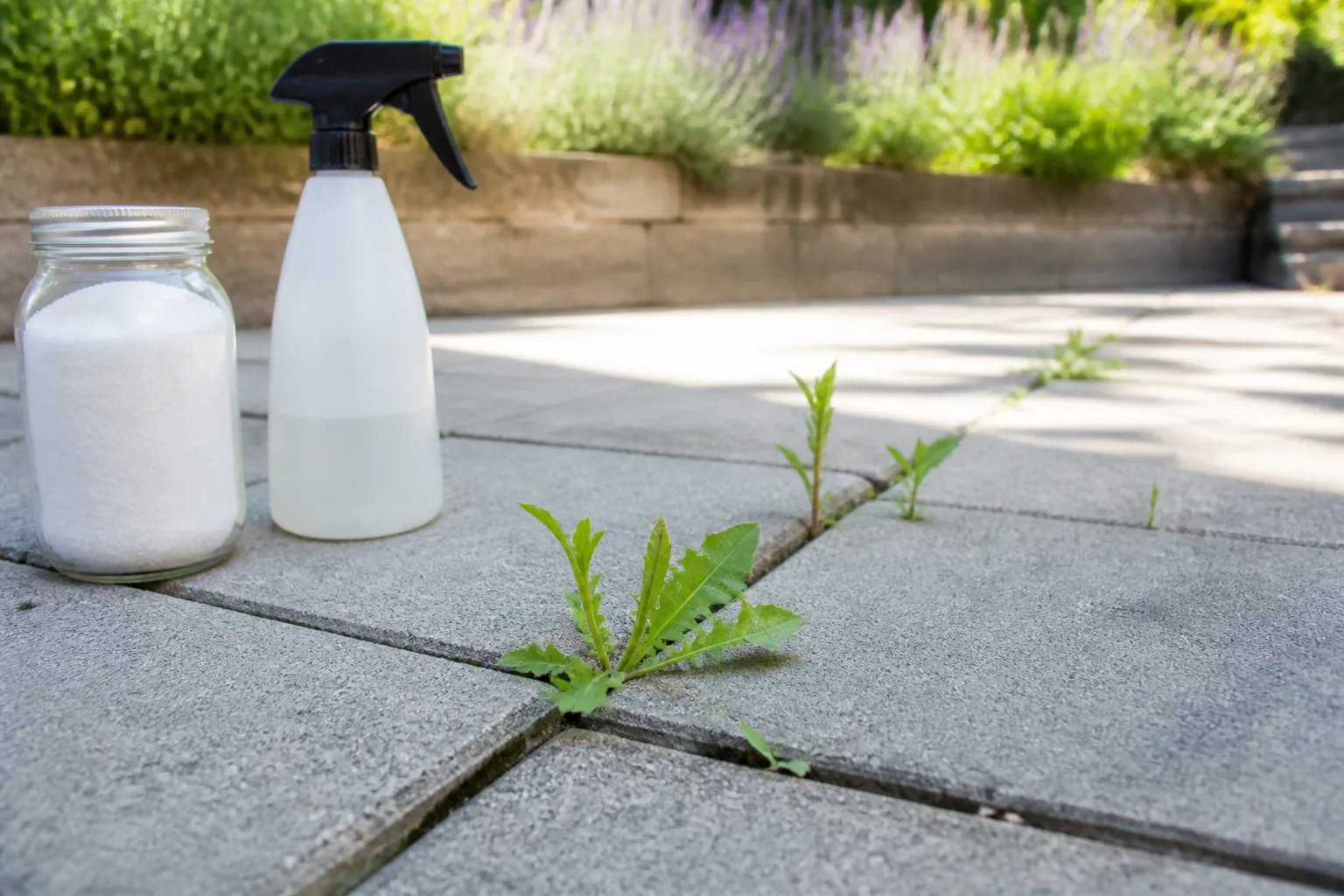
Table salt can kill weeds, but it should be treated as a last-resort, non-selective contact treatment for isolated hardscape—not a lawn product, garden-bed fix, or permanent soil sterilizer you can casually repeat. Sodium chloride damages the foliage it touches and can leave sodium in soil long after the weed looks finished.
The decision that matters is not whether salt works. It does, on contact. The decision is whether your site can tolerate sodium, whether runoff will reach grass or planting beds, and whether the weed is small enough that a contact treatment is worth the soil trade-off. Get those three answers right and salt may help with a stubborn crack weed. Get them wrong and a quick patio cleanup can become a bare lawn edge or a planting area that struggles for seasons.
The Short Answer: Salt Works, but Only in the Narrowest Hardscape Spots
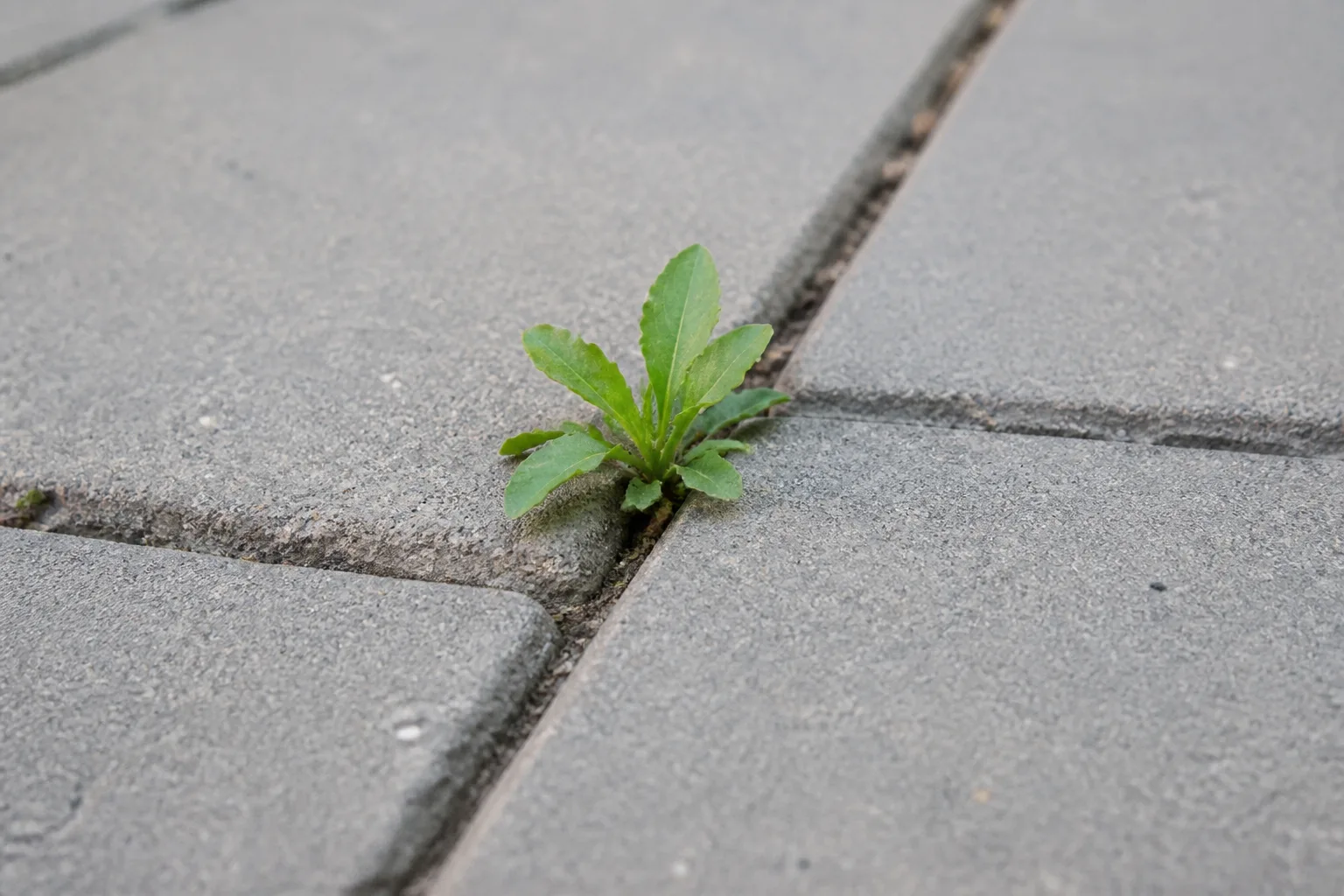
Use salt only on small, isolated weeds growing in sidewalk cracks, paver joints, driveway seams, or bare gravel where you do not plan to grow anything soon and where water will not carry the residue into lawn or garden soil. Mix salt with water, apply directly to the weed’s foliage on a calm day, and use the smallest amount that might do the job.
| Weed location | Salt decision | Better first choice when it does not fit |
|---|---|---|
| Isolated paver or sidewalk crack | Possible for a small weed if runoff is controlled | Hand-pull or scrape the crown |
| Driveway seam beside lawn | High risk; use only with shielding and no slope toward turf | Remove root, repair joint, or use boiling water |
| Lawn or turf | Skip salt; grass will be injured | Identify the weed and use turf-safe control |
| Vegetable bed or perennial border | Skip salt; sodium persists in soil | Hand-pull, hoe, mulch, or bed-appropriate plan |
| Large perennial or grassy weed | Expect regrowth | Dig the root or choose a labeled product for the site |
| Area you want to replant soon | Skip salt | Mechanical removal and joint repair |
This map prevents the most expensive mistake: reaching for pantry salt because it is handy rather than because the surface and drainage can absorb the consequences. The same treatment that may be tolerable on one weed in a mortar seam becomes a liability when it is poured along a patio edge that drains into a flower bed.
The Northwest Michigan Invasive Species Network is blunt on this point: table salt will kill plants, but it can also damage the next thing you try to plant in that spot—and possibly several plantings after that. Treat salt as a phytotoxic tool with soil memory, not as a harmless kitchen shortcut.
How Salt Kills Weeds
Sodium chloride is highly soluble. When it contacts plant tissue in a strong enough concentration, it disrupts the water balance inside cells. In practical terms, salt pulls moisture from foliage and creates osmotic stress that can brown and collapse the leaves you treated. That is why salt solutions are usually sprayed or poured onto green growth rather than broadcast dry across a bed.
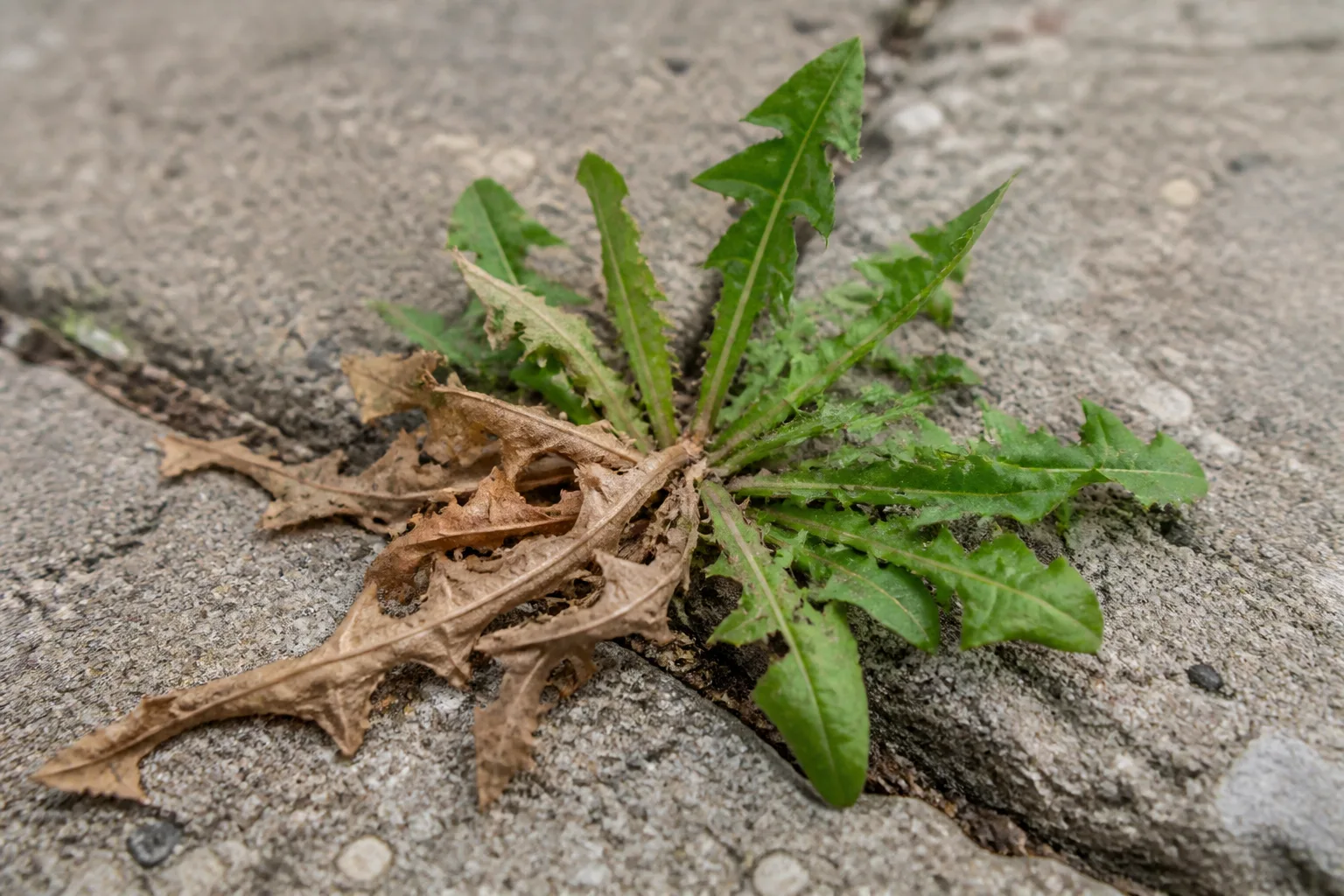
Salt can also enter the soil and make it harder for roots to take up water even when the ground looks moist. The Missouri Botanical Garden explains that salt in soil may be absorbed by roots and cause direct toxic effects, with symptoms such as marginal leaf burn, stunting, reduced vigor, and decline that may not show up immediately. Foliage contact and root-zone sodium are separate injury routes, and a treatment that browns the top does not tell you what happened underground.
Foliar Burn Versus Root-Zone Sodium
A contact effect injures the green tissue the solution reaches. A soil effect changes what can grow in that place later. Salt does both when enough of it moves off the target. That is why the safest applications aim at leaves and crowns in tight cracks while avoiding puddles that soak into joints, gravel pockets, or soil at the patio edge.
“Natural” and “selective” are not synonyms. Salt does not distinguish weed from turf, seedling, shrub, or tree root. If spray drifts, splashes, or runs downhill, wanted plants can be injured too. Rural Sprout’s salt weed killer guide makes the same practical point: salt is effective, non-selective, and easy to spread beyond the target—especially when rain moves a treated crack toward beds or lawn.
Use Table Salt, Not Epsom Salt or Mystery Crystals
For weed control, you want sodium chloride—ordinary non-iodized table salt or plain rock salt without added minerals marketed for other jobs. Check the label. Epsom salt is magnesium sulfate, not sodium chloride. It is sometimes sold for garden use as a magnesium supplement, but it is a different compound with different behavior in soil and is not the product this method describes.
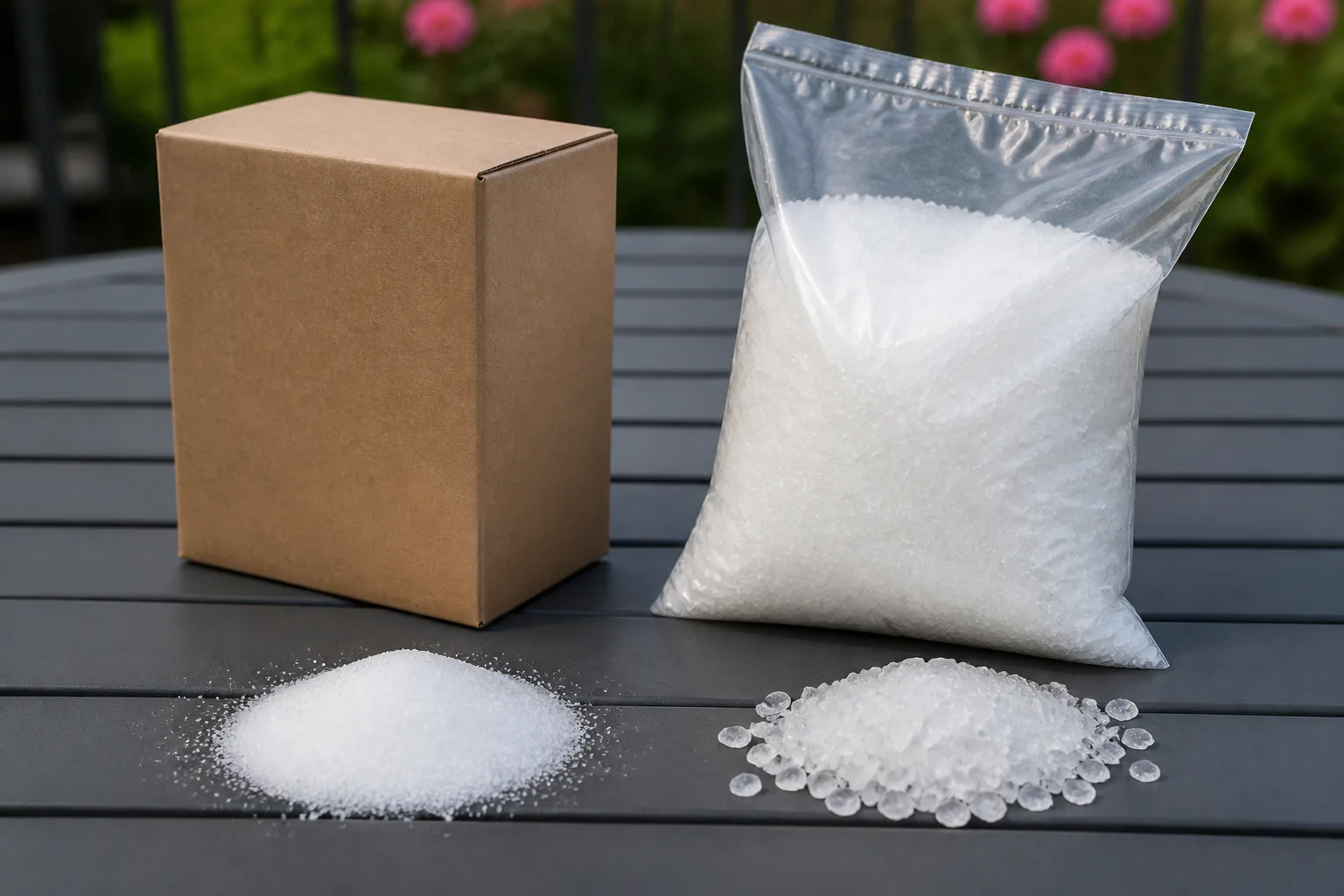
Sea salt and specialty culinary salts are still mostly sodium chloride, but additives, coarse grain size, and cost make plain table or rock salt the sensible choice when you have already decided the site warrants the risk. Do not assume “salt” in a pantry or garage bin is interchangeable. Magnesium sulfate will not substitute for the sodium-based contact and soil effects discussed here.
If a social-media recipe calls for Epsom salt plus vinegar plus dish soap, treat that as a separate—and generally discouraged—formula. The ISN notes that combination recipes are not supported by evidence that they outperform the strongest single ingredient, and Epsom salt at herbicidal concentrations can still create long-term soil problems.
Where Salt Belongs—and Where It Does Not
The safest use is defined by what you are willing to lose and where water goes next. In a narrow hardscape joint with no nearby plantings and no downhill lawn, a tiny salt treatment may be acceptable. In mixed landscapes, salt is usually the wrong tool.
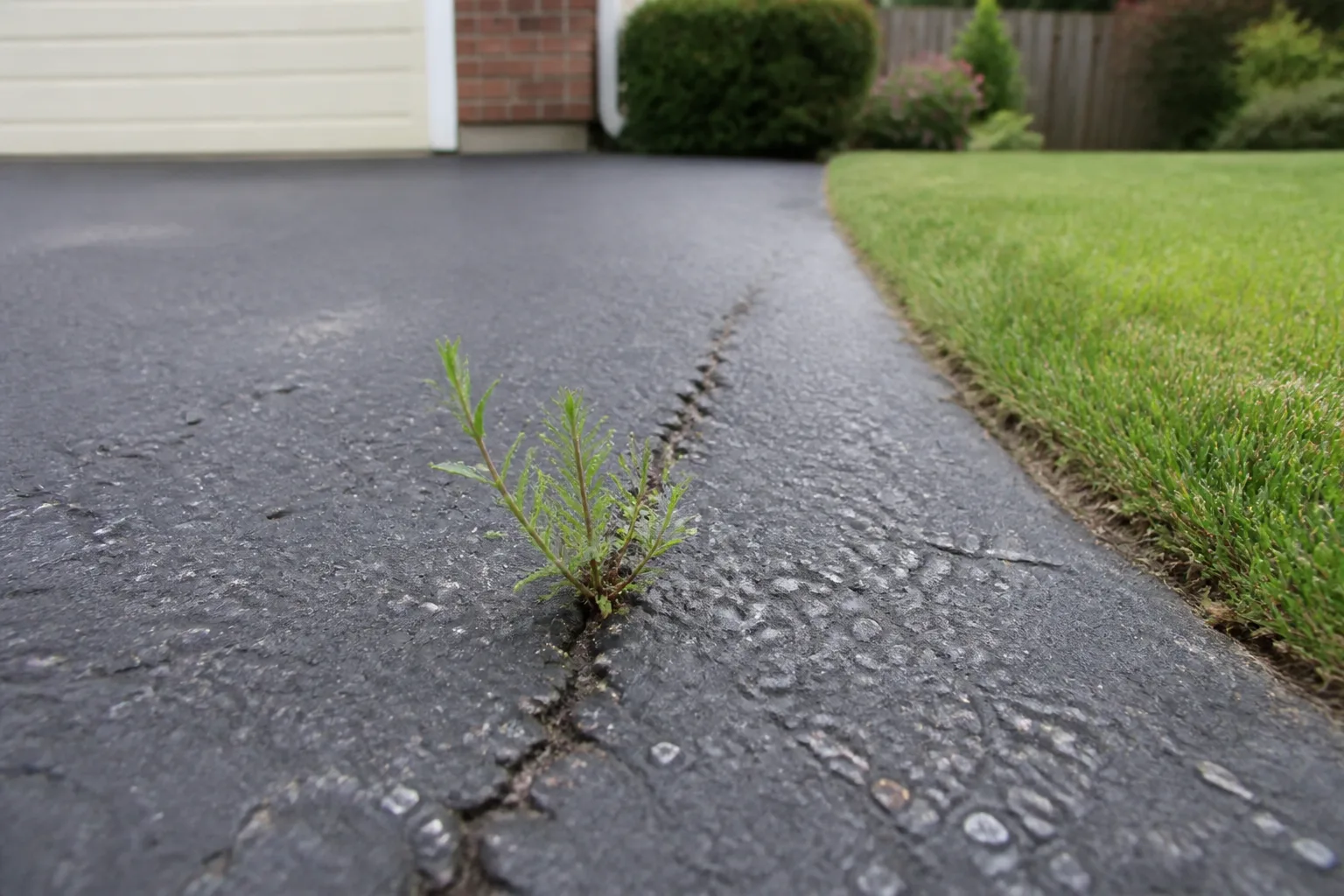
Driveway Cracks, Pavers, and Bare Gravel
Salt is most defensible on weeds in asphalt seams, concrete cracks, paver joints, and gravel paths where the goal is bare surface and collateral soil damage is limited. Epic Gardening’s natural weed control guide describes salt’s narrow hardscape role: it can dry roots in pavement cracks and discourage short-term regrowth where you are not trying to preserve planting soil.
Before mixing anything, inspect the joint. Wide gaps filled with soil, moss, and composted debris behave more like tiny garden beds than true hardscape. Scrape out loose organic matter first. If the weed is easy to lift with a narrow weeding knife, mechanical removal is often faster and leaves less sodium behind than a salt soak.
For more on keeping joints weed-free after removal, see our guide to natural solutions for weeds between pavers and grass in driveway, patio, and sidewalk cracks.
Skip Lawns, Beds, and Anything Downhill From Plantings
Do not use salt as a broadcast lawn weed killer. Grass is a plant. Sodium that reaches turf can create pale or dead patches and may persist in soil long enough to complicate recovery. Keep salt away from vegetable gardens, herb beds, perennial borders, shrub lines, and tree root zones.
Slope matters as much as distance. A crack that looks isolated on a dry day can send salty water toward a bed edge, lawn strip, or storm drain when rain arrives. The Missouri Botanical Garden recommends avoiding planting in drainage paths where runoff collects, and that advice applies twice when you are the one adding sodium to the surface.
Colorado State University Extension’s natural weed elimination guidance notes that a pinch of salt at a plant base can kill weeds but also render soil uninhabitable for months—acceptable only between pavers or on driveways, not in productive garden soil. That is the boundary to respect.
Salt-and-Water Mix Ratios by Site Risk
Salt is usually mixed with water so it coats foliage and moves into crowns more evenly than dry crystals alone. There is no EPA-labeled pantry rate for sodium chloride weed control, so treat published ratios as risk bands, not guarantees.
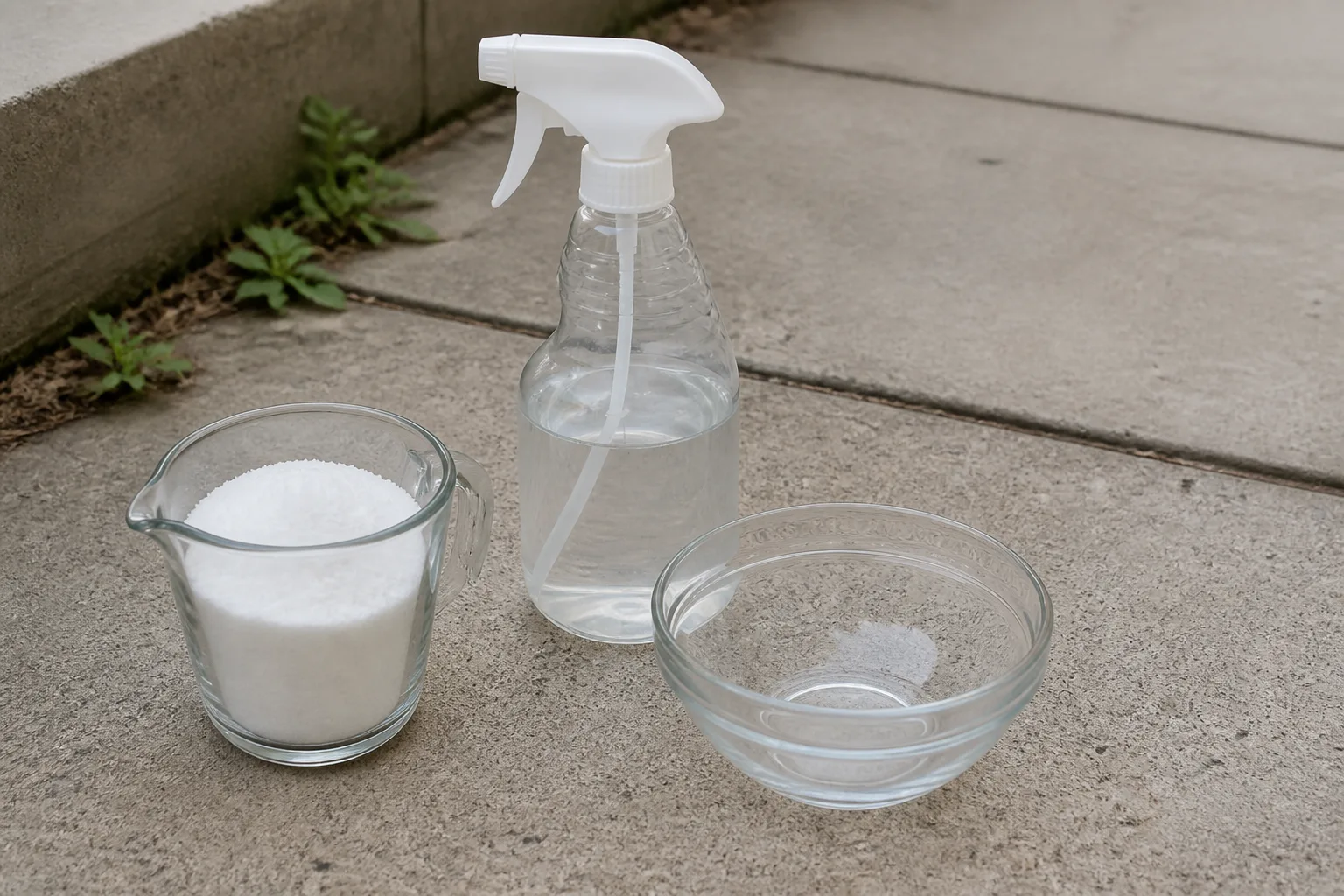
Weaker mixture for higher-risk edges: about 1 part salt to 2 parts water by volume when the crack sits near wanted plants or soil you might care about later. This is still non-selective. It is not safe for lawns or beds. It simply reduces the amount of sodium you introduce when the hardscape is close to a planting edge.
Stronger mixture for bare hardscape only: about 2 parts salt to 1 part water, or up to 3 parts salt to 1 part water, only where long-term soil productivity is not a goal—think an unused gravel pad, a wide driveway seam, or an area you never intend to plant. Stronger mixes increase foliar burn and the odds that sodium will remain in the crack’s soil pocket.
| Site profile | Suggested starting band | Stop and choose another method if |
|---|---|---|
| Tight paver joint, flat patio | 1:2 salt to water | Runoff path toward bed or lawn exists |
| Driveway crack away from plantings | 2:1 salt to water | Weed is large, grassy, or perennial |
| Unused gravel or asphalt pad | Up to 3:1 salt to water | You may want vegetation there later |
| Any lawn or garden soil | Do not use salt | — |
Dissolve salt completely in warm water before filling a dedicated spray bottle. Label the bottle clearly and store it away from cooking supplies. Never reuse a food container without labeling, and never increase concentration just because the first spray did not kill a mature taproot.
Step-by-Step: Apply Salt Without Salting Your Yard
- Confirm the site. The weed must be in hardscape or bare gravel with no downhill lawn, bed, or storm drain in the runoff path. If the site fails this test, stop here.
- Identify the weed. Small annual seedlings are the most reasonable targets. Large perennials and running grasses usually need root removal or a different plan.
- Choose a calm, dry window. Wind increases drift. Rain soon after application can move sodium where you did not intend it to go.
- Protect nearby plants. Hold cardboard between the spray path and any wanted foliage, edge planting, or lawn strip.
- Mix only what you need. Start with the weaker ratio unless the site is truly bare hardscape with no future planting value.
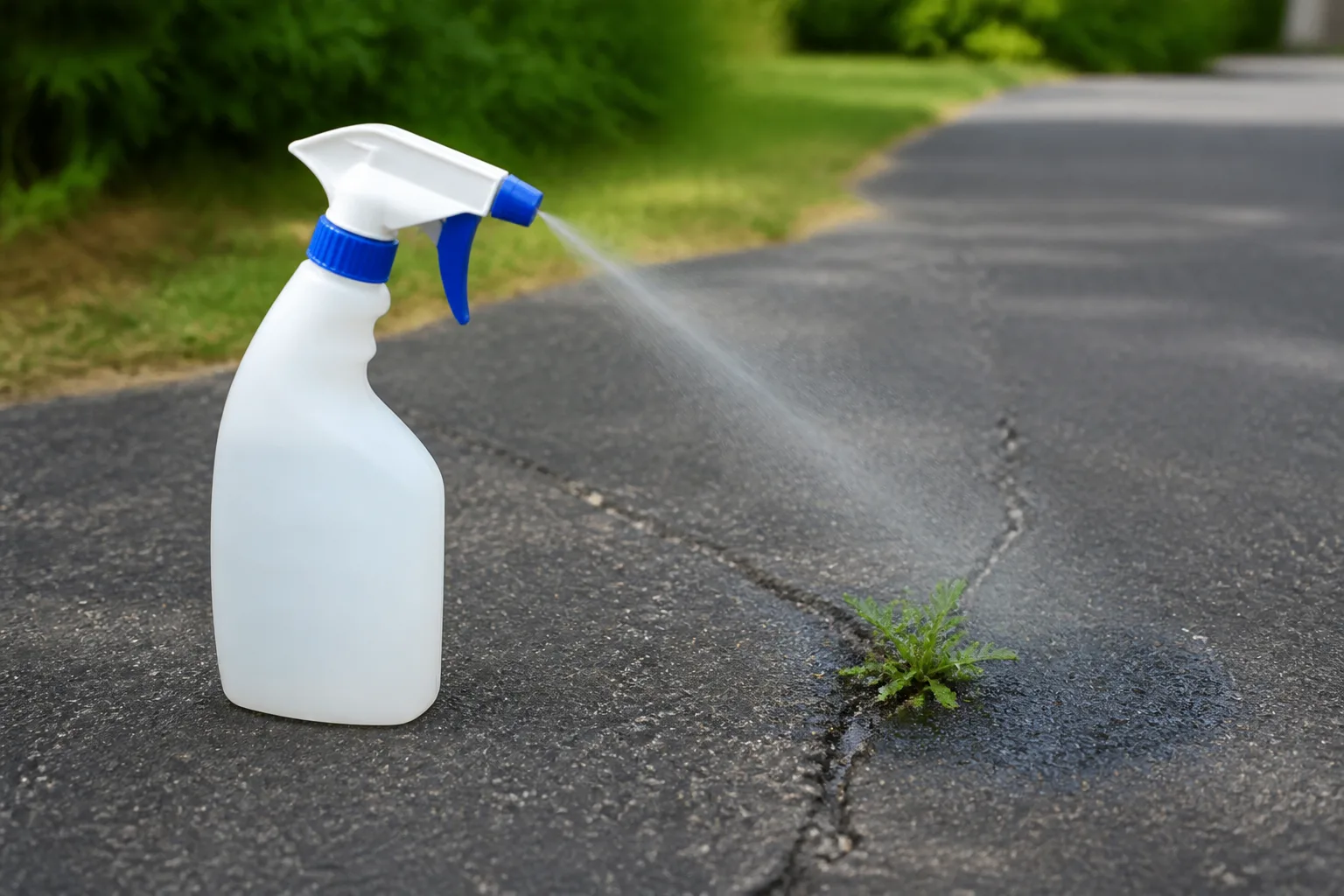
- Apply to foliage, not the whole joint. Coat the leaves and crown. Avoid flooding the crack until puddles form and soak sideways into soil.
- Rinse accidents immediately. If solution splashes onto concrete toward a bed edge, absorb and dilute it with clean water while keeping runoff away from plantings.
- Wait, then inspect. Check in several days, then again after a week. Remove dead material and scrape the crown if the weed collapses. Do not automatically remixed a stronger batch.
If desirable plants sit close to the target, some guides suggest watering them generously after treating an isolated weed so any stray salt in the soil surface is diluted downward. That only helps on well-drained sites and is not permission to use salt in beds. On compacted or poorly drained soil, extra water may not move sodium away from roots effectively—the same limitation the Missouri Botanical Garden notes for leaching salt injury.
Which Weeds Respond—and Which Will Come Back
Salt is most useful when the weed is small, soft-leaved, and trapped in a crack. Weed biology matters more than the fact that the product came from the kitchen.
Young Annuals in Open Joints
Seedling chickweed, lambsquarters, bittercress, and similar annuals in paver gaps can collapse quickly when foliage is coated thoroughly. They have limited root reserves and little tissue to recover from. Even here, complete coverage matters more than a stronger formula.
If the plant lifts easily after rain, pull it. Salt is most justified when the crown is wedged deep in a narrow seam and hand tools cannot reach the base without damaging pavers.
Perennials, Grasses, and Taproot Weeds
Be skeptical with dandelion, plantain, nutsedge, bindweed, quackgrass, Bermuda grass, and other persistent weeds. Salt may brown the top while roots, rhizomes, stolons, or tubers remain alive underground. A dead-looking leaf rosette is not proof the root system is gone.
For perennials in hardscape, scrape out the crown, brush away loose soil, and monitor for regrowth. Repeating stronger salt on the same seam is more likely to build sodium in the joint than to finish a deep root. If the same weed returns twice, switch to mechanical removal, boiling water on a precise pour, or a labeled product matched to the site.
Why Salt Stays in Soil Longer Than the Weed Looks Dead
Sodium chloride does not break down through microbial action the way organic matter does. Once enough salt enters a soil pocket, the main ways it leave are leaching with moving water and dilution over time. On well-drained sand or gravel, some sodium may move deeper with heavy irrigation or rainfall. On compacted clay or a flat patio base with poor drainage, it can remain concentrated near the surface.
That persistence is why invasive-species educators and extension writers treat table salt as a poor herbicide choice for any place you want living soil again. The ISN warns that salting can damage not only the current weed but future plantings in the same spot. Road-salt injury guides from institutions such as the Missouri Botanical Garden show how sodium can affect plants indirectly through runoff and root uptake long after the original application.
Repeat applications multiply the problem. Each new treatment adds more sodium to the same crack, gravel pocket, or edge seam. A single spot treatment may fade from view after a season on a well-drained path. Three or four “touch-ups” on the same joint can create a dead zone that outlasts the weed you were chasing.
Salt Compared With Vinegar, Boiling Water, and Flame Weeding
No single non-selective method is best everywhere. Salt’s distinctive weakness is soil persistence. Its narrow strength is targeted dehydration in places where you accept bare hardscape.
Vinegar is also a contact treatment. Household 5% vinegar often burns young leaves without killing mature perennial roots. Horticultural vinegar is stronger and more hazardous to handle. Vinegar can affect soil pH temporarily but does not leave sodium behind the way salt does. See our guides on does vinegar kill weeds and I tried vinegar as a weed killer for a fuller comparison.
Boiling water ruptures plant cells on contact and leaves no chemical residue once it cools. It is a strong choice for a few weeds in an isolated crack if you can pour precisely without scalding yourself or splashing wanted plants. It may still miss deep perennial roots.
Flame weeding heats foliage quickly and works well on hardscape weeds when fire risk, local regulations, and nearby mulch make it appropriate. It usually does not kill deep roots on the first pass but avoids salting soil. For driveway and patio context, our grass in driveway, patio, and sidewalk cracks guide covers flame, boiling water, and mechanical options in more detail.
Popular online recipes that combine salt, vinegar, and dish soap are not supported by evidence that they outperform the strongest single ingredient—and they can combine sodium persistence with acid burn and unnecessary runoff risk from soap near waterways.
What to Do When Weeds Return—or Salt Spreads
Regrowth usually means one of four things: incomplete foliage coverage, a perennial root system, wash-off before the treatment worked, or a joint that keeps collecting soil for new seeds. Diagnose the pattern before mixing a stronger batch.
If a small annual collapses in a crack, remove the dead top and scrape the crown. If new shoots emerge from the same point, the underground structure is still alive. Dig or pry when possible instead of adding more salt.
If weeds keep appearing along an entire seam, fix the seam. Brush out organic debris, refill with the appropriate joint sand or stabilizing material, improve edging, and reduce the bare soil that seeds need. Our natural solutions for weeds between pavers guide walks through that longer-lasting approach.
If salty water reached a planting bed or lawn edge, stop applying salt in that zone. On well-drained soil, slow, deep irrigation with clean water may help move some sodium below the root zone, but do not flood compacted soil or send contaminated runoff toward another bed. Watch nearby plants for salt-injury symptoms such as marginal browning, needle tip burn, stunting, or wilting despite moist soil.
Better Tools for Lawns, Beds, and Long-Term Hardscape Control
For lawns, identify the weed first and protect the grass. Hand-pull isolated broadleaf weeds after rain, improve turf density, and use products labeled for your grass type when chemical control is necessary. Our how to get rid of weeds in your lawn guide covers identification and turf-safe strategy. Salt has no place in that system.
For garden beds, pull weeds while small, mulch exposed soil, and use bed-appropriate tools rather than sodium. If you need a pantry-item comparison for hardscape only, see our baking soda weed killer guide—which shares salt’s non-selective risks but differs in chemistry and soil behavior.
For hardscape maintenance, combine removal, joint repair, and occasional contact treatments. Boiling water, careful vinegar use, or a labeled herbicide for the specific surface may fit better than repeated salting. A three-ingredient DIY spray is not automatically safer simply because the ingredients are common; evaluate runoff, selectivity, and root biology instead. See three-ingredient DIY weed killer for how those recipes behave in real use.
The durable principle is integrated weed management: remove what is there, reduce bare soil, block new germination, and reserve sodium-based treatments for the rare crack where collateral soil damage is acceptable.
Conclusion
Salt can kill weeds, but it earns that result with non-selective contact damage and sodium that can linger in soil. Use it only on small, isolated weeds in hardscape cracks or bare gravel, start with the weakest mixture that fits the site, keep runoff away from lawns and beds, and treat regrowth as a signal to remove roots or repair joints—not as a reason to keep salting the same spot.
If the weed is in a lawn, vegetable garden, flower bed, tree root zone, or downhill from plantings you want to keep, skip salt and choose hand removal, mulch, boiling water, or a labeled product matched to the weed and location. The best salt application is the smallest one you never have to repeat.