Does Vinegar Kill Weeds? When It Works and Fails
Does vinegar kill weeds? Learn why it burns young foliage, when roots survive, which concentration risks injury, and when pulling or mulching works better.
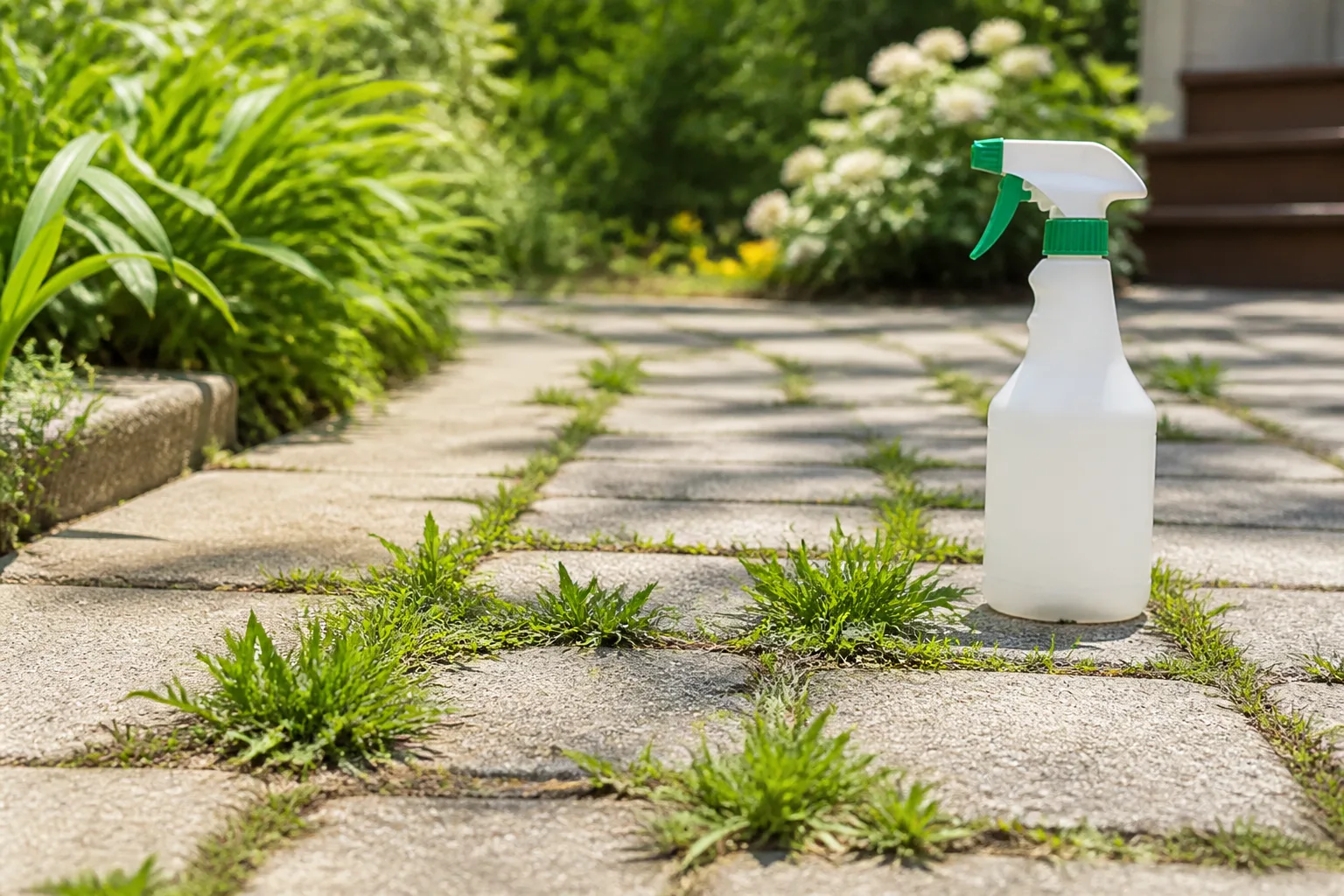
Yes, vinegar can kill some weeds—but “kill” needs a qualifier. Vinegar acts as a contact herbicide: the acetic acid damages the green tissue it touches, so a small weed can wilt quickly after a thorough spray. It usually does not travel down into the root system, which is why a mature dandelion, bindweed, thistle, or grass may look dead and then send up new growth.
The practical answer is to match the method to the weed. Vinegar is most useful for a small flush of very young annual weeds in an isolated, non-planted spot such as a patio crack. If the weed is flowering, deeply rooted, spreading through a bed, or growing beside a plant you want to keep, pulling, hoeing, repeated cutting, or smothering is usually the better first move.
The short answer: vinegar burns leaves, not every root
Acetic acid breaks down the plant’s surface tissue and causes rapid drying. That visible burn can be satisfying, but it is not proof that the whole plant is gone. USDA Agricultural Research Service research describes vinegar as a burn-down treatment whose action begins by destroying cell membranes and desiccating the foliage.
The distinction matters because annual and perennial weeds solve the same problem in different ways. A newly germinated annual may have only a few leaves and a small root system, so damaging all of its foliage can end the plant. A perennial has stored energy below ground—in a taproot, crown, rhizome, tuber, or bulb—and can use those reserves to replace leaves after the spray dries.
Household vinegar is therefore a quick top-growth treatment, not a dependable permanent weed killer. It can be reasonable when the target is young, the spray can be kept off everything else, and you accept that a second treatment or a different method may be needed.
| Situation | What vinegar is likely to do | Better expectation |
|---|---|---|
| Tiny annual seedlings in a patio crack | Scorch exposed leaves quickly | Good short-term cleanup; watch for new seedlings |
| Larger annual weeds | Burn or discolor top growth | May need repeat treatment or removal before seed set |
| Dandelions, bindweed, thistle, or other perennials | Damage leaves while roots survive | Remove or repeatedly weaken the plant |
| Lawn weeds among desirable grass | Injure any grass the spray touches | Do not broadcast; use a targeted non-chemical method |
| Weeds in a planted bed | Burn weeds and possibly nearby crops | Hand-pull, hoe carefully, or smother bare areas |
How acetic acid damages weed foliage
Plants need an intact leaf surface to control water loss. Acetic acid disrupts that surface and injures cells, so exposed leaves lose moisture faster than the plant can replace it. Warm sunlight can make the result appear faster, but the active ingredient still has to contact enough green tissue to matter.
That last point is easy to miss. A spray that beads on a waxy leaf, lands only on the top of a dense grass clump, or reaches one side of a plant may produce patchy damage. A plant with healthy, untouched growing points can keep going even when the outer leaves look brown.
This is why vinegar is described as non-selective. It does not know the difference between a weed and a seedling, herb, flower, or lawn grass. Any green tissue in the spray pattern can be injured. The CSU Extension horticulture explanation recommends complete foliage coverage for target weeds and a physical barrier when desirable plants are close.
Which weeds are most vulnerable
The best target is a small annual weed that has recently emerged and is growing in a place where no desirable foliage is exposed. Purdue’s summary of USDA research reports that 5- and 10-percent solutions killed susceptible weeds during the first two weeks after emergence, while older plants required stronger treatments. Treat that as a growth-stage finding, not as a home recipe or a guarantee for every species.
Young annual weeds are the best target
Young annual weeds are the plants most likely to have a small enough root system that severe leaf damage finishes the job. Examples can include early purslane, spurge, knotweed, and other seedlings that have only a few leaves. They are easiest to catch in the open spaces between pavers, along an isolated gravel edge, or in an empty bed before new plants are installed.
Look for the size and stage, not just the name. A weed with two to four fresh leaves, no flowers, and no obvious woody or creeping base is a more plausible vinegar target than a tall plant with a thick crown. If you can lift it with a hand fork in a few seconds, pulling may still be more certain and may save you from spraying at all.
Mature perennials often grow back
Dandelion, bindweed, Canada thistle, quackgrass, and other persistent weeds are poor candidates for a one-time vinegar spray. Their leaves may collapse, but the root system can remain alive. The RHS guide to weeding beds notes that perennial weeds often regrow from extensive roots and that careful digging, repeated cutting, or long-term smothering may be needed.
A taproot or rhizome also changes how you respond after spraying. Do not assume brown leaves mean you can compost the plant safely; remove persistent roots and seedheads from the site, and keep them out of a home compost bin if they could survive. If the weed is intertwined with a valued perennial, repeatedly cutting new shoots can weaken it without coating the crop in acid.
Choose a vinegar concentration safely
Read the acetic-acid percentage on the container before you use it. Ordinary kitchen vinegar is typically about 5 percent acetic acid. Products sold as horticultural or herbicidal vinegar are often much stronger, commonly in the 10- to 30-percent range, and are not food products.
Higher concentration can increase burn-down power, but it also increases the chance of severe injury to skin and eyes. Purdue Consumer Horticulture and the USDA ARS research summary warn that solutions at 11 percent or higher can burn skin and cause serious eye injury. The right response is not to mix a stronger formula at home; it is to use only a product labeled for the intended site and follow every label direction.
| Product type | Useful way to think about it | Main caution |
|---|---|---|
| Household vinegar near 5% | Limited contact burn on very young weeds | Often inadequate for mature weeds; still injures nearby foliage |
| Labeled horticultural vinegar | A stronger herbicidal product with a defined use pattern | Treat as a pesticide; use the label’s PPE, site, and application rules |
| Homemade vinegar mixtures | An improvised formula with uncertain coverage and risk | Do not assume “natural” means selective, safe, or permanent |
The percentage alone is not a complete performance prediction. Species, leaf age, coverage, weather, spray volume, and the number of applications all influence the result. NC State Extension’s review of acetic-acid research emphasizes that the useful window can be narrow and that stronger is not automatically better for every weed or situation.
When and where vinegar makes sense
Spray only when the weed is actively growing and the foliage is dry. You want a rain-free period long enough for the product to remain on the leaves; rain or irrigation soon after application can wash it away before it has done its work. A warm, sunny, still day can improve visible burn-down, but avoid conditions that increase drift or expose you to heat stress while wearing protective equipment.
Location is just as important as weather. An isolated crack in a concrete path is much easier to treat precisely than a weed growing inside a flower bed. A gravel strip beside a fence may be manageable if the spray can be directed down and away from ornamental stems; a lawn full of clover or a vegetable row is a poor place for a broad spray because the plants you want to keep are in the same spray zone.
The safest use case is a target that is small, young, clearly unwanted, and separated from desirable plants. If you cannot tell what the plant is, identify it before spraying. Some volunteers are useful wildflowers, and an unknown plant with a taproot or spreading habit may need a root-removal plan rather than a quick leaf burn.
How to spray vinegar precisely
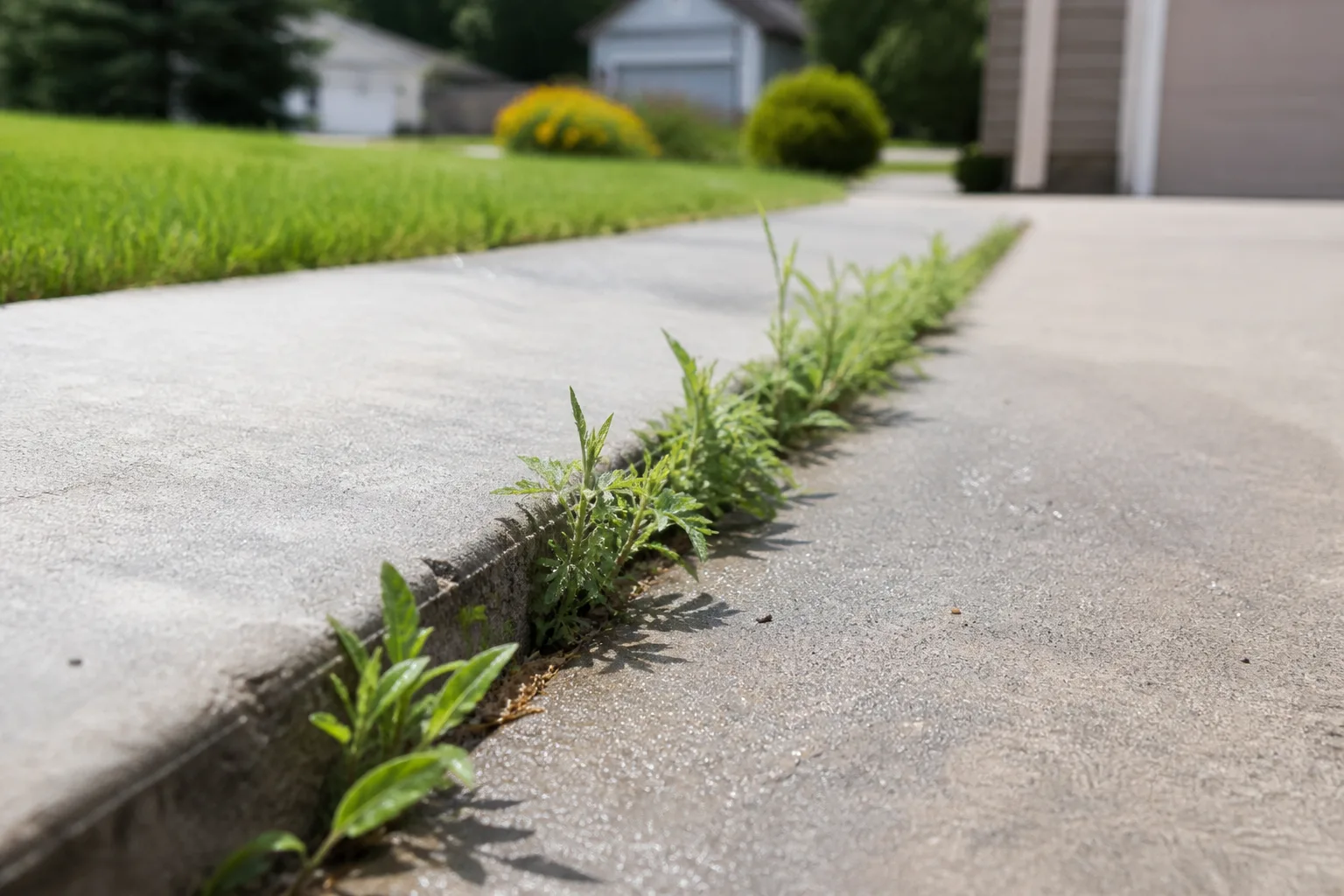
Treat even household vinegar as a plant-killing product, not as harmless kitchen water. The goal is a controlled application to the weed’s green tissue, with no drift onto nearby plants, skin, eyes, pets, toys, or surfaces that could be damaged.
- Check the label and the site. Confirm the acetic-acid percentage, permitted use, required protective equipment, and any re-entry or disposal instructions. Do not use a food vinegar product as though it were a labeled herbicide, and do not dilute or strengthen a product unless its label tells you to.
- Choose a calm, dry window. Avoid rain, irrigation, strong wind, and wet foliage. If the target is beside an ornamental, wait until you can isolate it with cardboard or another physical shield.
- Use a dedicated, clearly identified sprayer. Keep the nozzle low and close to the weed. A narrow stream or coarse spray is easier to control than a fine mist that drifts across the bed.
- Cover the foliage evenly. Spray until the target leaves are thoroughly wetted, not until the liquid is running down into the soil. Turn or pull aside surrounding grass only if doing so does not spread seed or disturb the crop’s roots.
- Stop when the target is covered. Do not keep spraying because the leaves have not browned yet. Give the treatment time to work, then reassess after the weather has stayed dry. If the plant recovers, change the method rather than automatically escalating the concentration.
The CSU Extension blog’s practical guidance suggests using a barrier near ornamentals and taking care with complete coverage. That is especially important in a bed where a single overspray can create a ring of scorched leaves that looks worse than the original weed.
Vinegar versus pulling, hoeing, and smothering
Vinegar is not automatically the safest “natural” option. The safest method is the one that controls the weed while disturbing the fewest desirable plants, exposing you to the least hazard, and leaving the soil in the best condition for the next crop.
Pull or hoe when roots matter
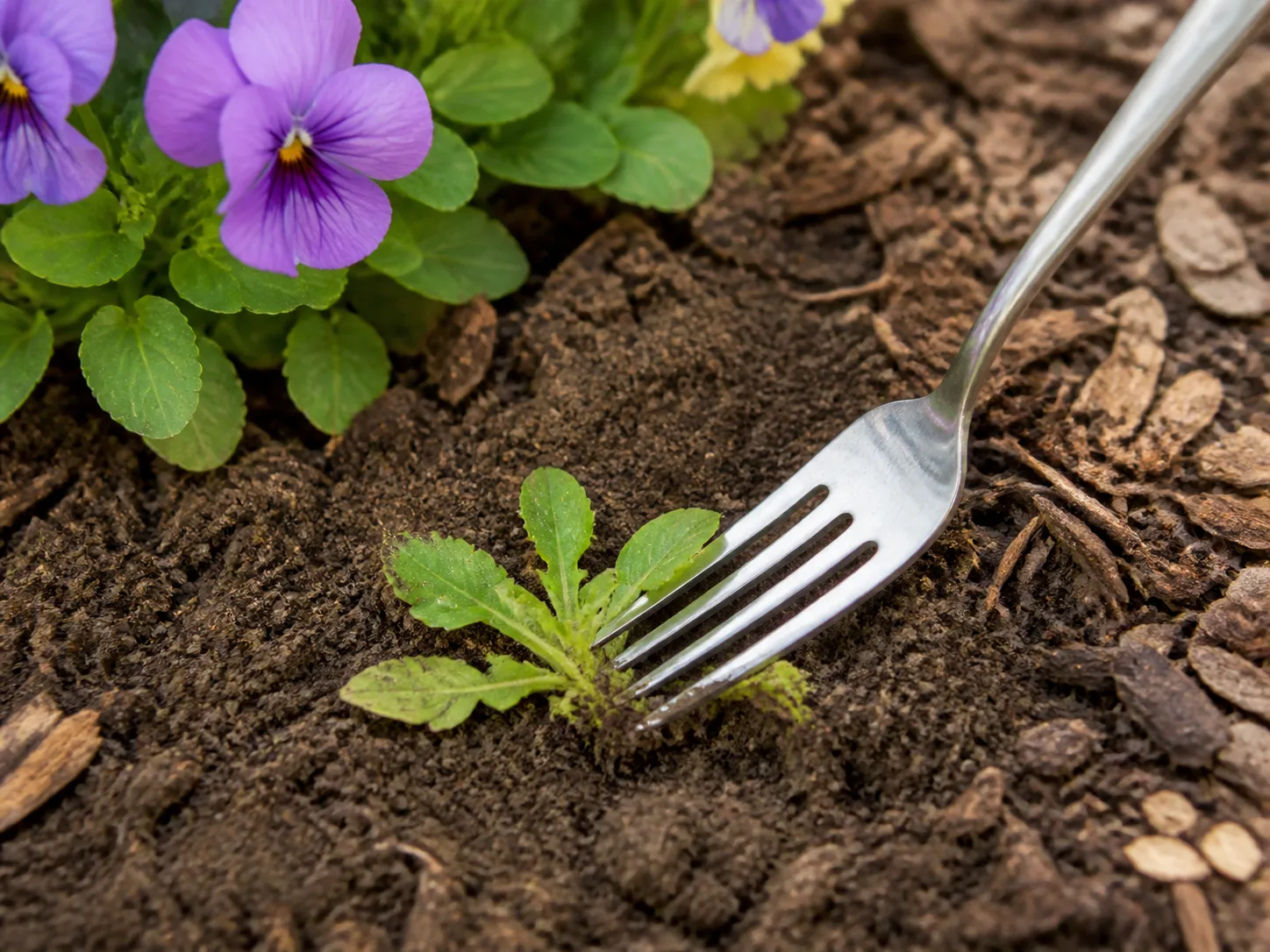
Hand-pulling is usually the best first choice for a single dandelion, a few seedlings in a raised bed, or a weed growing close to a prized plant. Pull after the soil is slightly moist, grip low on the stem, and ease the plant out instead of snapping the top away from the root. For deep-rooted weeds, a hand fork can loosen the soil and help you lift more of the root without chopping it into pieces.
Hoeing is efficient for rows and empty beds full of small annuals. Run the blade just below the soil surface so you sever seedlings with minimal disturbance, then do the job on a dry day so exposed roots desiccate. The RHS bed-weeding guidance recommends identifying the weed, hoeing young annuals, and using a fork for larger or persistent perennial weeds.
Smother a patch when it is too dense to hand-weed
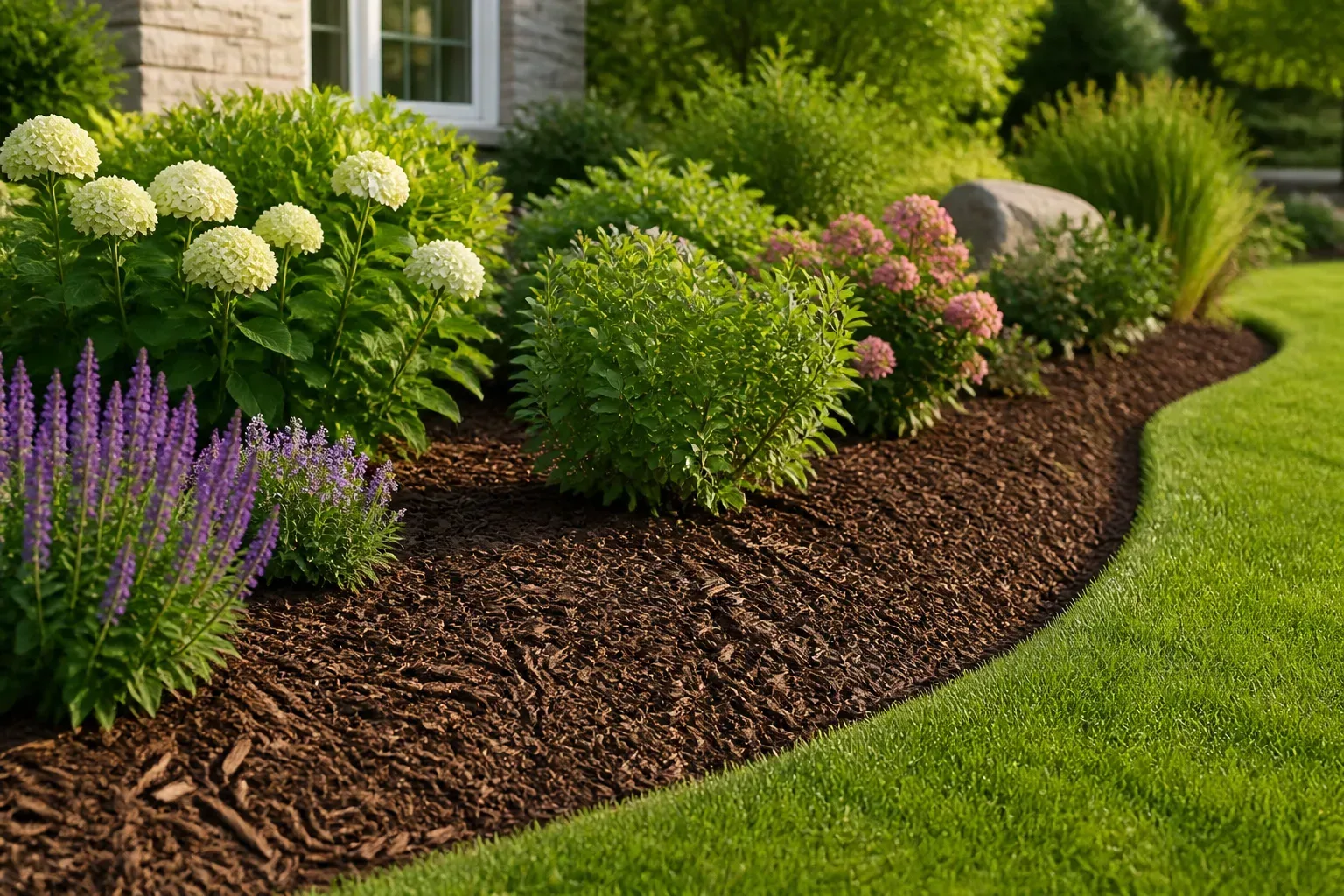
If dozens of weeds are emerging in an empty bed, spraying each leaf is tedious and risks uneven coverage. Covering the patch with overlapping cardboard followed by mulch blocks light and reduces new germination while the existing plants run out of stored energy.
Smothering takes time. Annual weeds may collapse in a season, while persistent perennials can need much longer and may require repeated cutting before the cover goes down. Keep the cover away from the crowns and stems of plants you are keeping, and inspect the edges because weeds often find the smallest opening.
Why common vinegar recipes disappoint
Many homemade recipes focus on ingredients rather than the weed’s biology. Adding salt, soap, or another pantry ingredient can make a spray feel more powerful, but it does not turn a contact treatment into a root-killing one. It can also create new problems: salt-containing mixtures can make soil harder to replant, soap can burn foliage, and extra ingredients complicate exposure and label questions.
The same caution applies to essential oils and “natural” additives. USDA ARS research found little or no consistent advantage from adding orange oil or canola oil in the tested acetic-acid treatments. That does not mean every labeled adjuvant is useless; it means you should not assume an improvised additive is necessary or beneficial.
Do not judge a recipe by how fast a leaf turns brown. A fair test asks whether the target stays gone, whether new shoots emerge from the root, whether nearby plants were injured, and whether the treatment created more work next month. If the answer is “brown today, back next week,” root removal or suppression is the better tool.
Protect soil, plants, pets, and people
Vinegar’s acidity is not the main reason to spray casually. The immediate hazards are contact with skin and eyes and the non-selective injury to any green plant in the spray path. Stronger acetic-acid products deserve the same seriousness you would give any labeled pesticide, even if their marketing uses words such as natural or organic.
Wear the protective equipment listed on the product label, especially eye and skin protection for concentrated products. Keep children and pets away during application and until the label’s re-entry guidance allows access. Store the container in its original labeled package; do not transfer it into a food or drink container.
Protect nearby plants with distance, a shield, and a low-drift nozzle. Do not spray over roots, stems, or edible leaves simply because the product is diluted. If wind shifts, stop. If the only way to reach the weed is to coat the crop, do not spray that weed.
Soil behavior is different from foliage injury. Acetic acid breaks down relatively quickly in soil, so a small accidental drop is not the same as permanently acidifying a bed. That does not make repeated blanket spraying a good soil-management strategy: the spray can still injure roots and seedlings at the surface, and the lack of lasting weed control may keep you applying it again and again.
Plan for regrowth and prevention
Check the site again after the treated leaves have dried and after the next rain. If the weed is still present, look for a living crown or fresh shoots rather than assuming the first treatment failed because the spray was weak. A surviving perennial needs a different plan: dig out the roots where practical, or remove new top growth repeatedly so the plant cannot rebuild its reserves.
Preventing the next flush is usually more valuable than finding a stronger spray. Remove weeds before they flower and seed, close bare spaces with healthy plants, and keep a mulch layer over exposed soil. The RHS non-chemical weed-control guidance recommends hand removal, repeated cutting, smothering, and barriers as ways to reduce weeds without relying on chemical treatments.
Timing helps on every surface. Hoe or pull seedlings while they are small, repair gaps between pavers where soil accumulates, and check the edges of beds after wind or heavy rain. In a lawn, improve the conditions that leave bare patches—appropriate mowing, watering, and reseeding—so there is less open ground for new weeds to occupy.
The goal is not a permanently sterile garden. A “weed” is simply a plant growing where you do not want it, and some volunteers support wildlife or protect bare soil. Remove weeds that compete with crops, invade paths, spread aggressively, or create a safety problem; leave harmless plants in low-conflict areas when that choice reduces work and benefits the garden.
A practical vinegar-or-not checklist
Before you reach for the sprayer, answer these questions:
- Is the plant definitely unwanted? If not, identify it first.
- Is it a young annual with only a few leaves? If it is mature, flowering, woody, or spreading underground, expect regrowth.
- Can you keep the spray off every desirable plant? If not, pull, hoe, cut, or cover instead.
- Is the product labeled for this use, and do you understand its concentration and protective equipment? If not, do not apply it.
- Is the weather dry and calm long enough for contact? If not, wait.
- What will you do when the next seedlings appear? Pair the immediate cleanup with mulch, tighter planting, edge repair, or a repeat-weeding route.
If the answers are yes, a careful spot treatment may be reasonable for a small, isolated weed flush. If several answers are no, skip vinegar. A hand fork beside a prized plant or cardboard and mulch over an empty bed will usually give you more control with fewer surprises.
Conclusion
Vinegar can kill young weeds by burning the foliage it touches, but it is not a universal or permanent weed killer. It works best as a narrow, targeted tool for small annual weeds in places where no desirable plant is exposed; it works poorly as a one-time answer for mature perennials, lawns, and planted beds.
Identify the weed, read the product label, protect people and nearby plants, and decide whether the roots need to be removed or weakened. In many gardens, the durable answer is not a stronger vinegar spray—it is catching seedlings early, pulling what you can, smothering dense patches, and keeping bare soil covered.