Grow Healthier Kale: 7 Companion Plants That Fight Pests Naturally
Seven kale companion plants that deter aphids, cabbage worms, and whiteflies—plus spacing, bed layouts, and crops to keep at a distance.
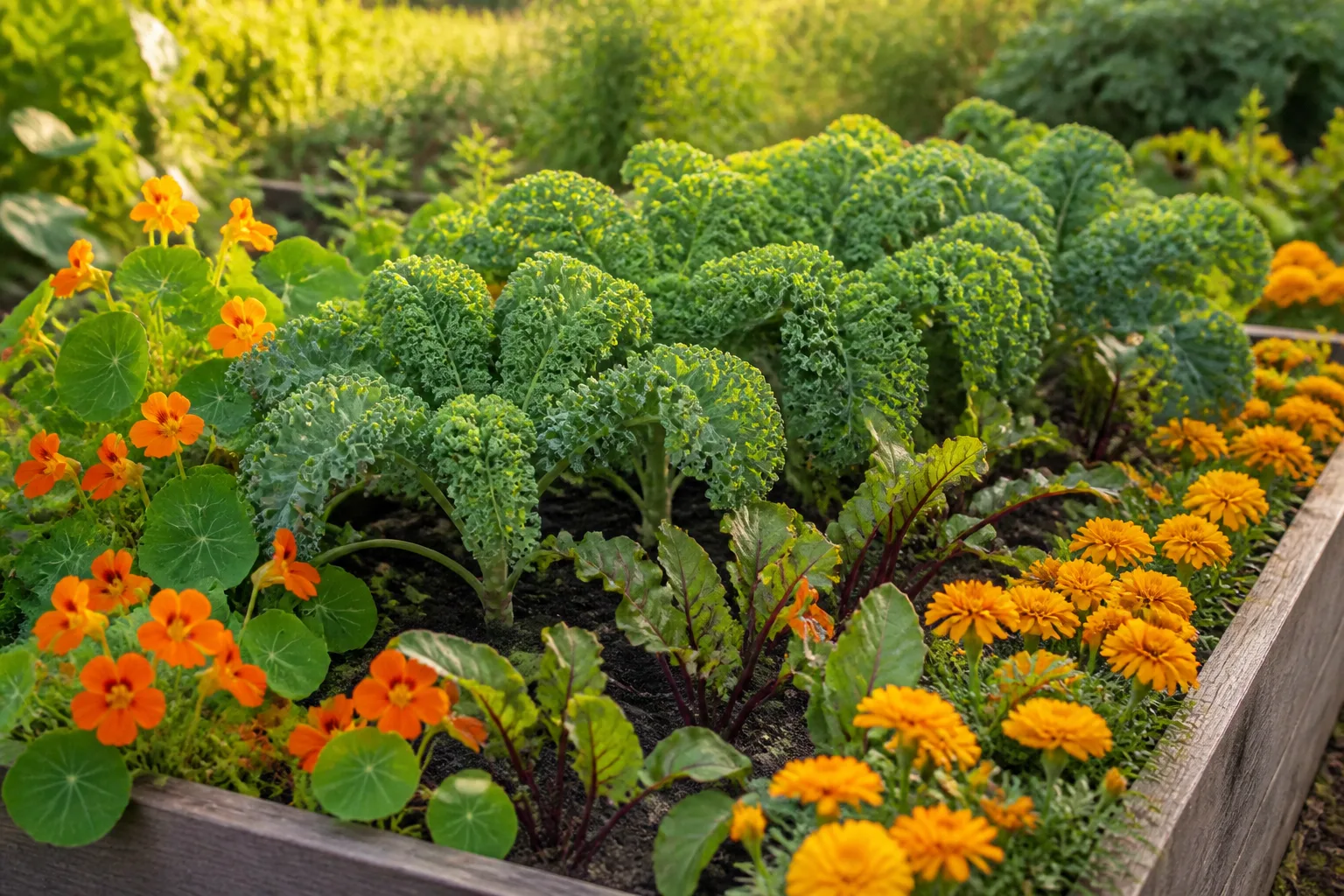
Kale (Brassica oleracea var. acephala) is one of the most forgiving cool-season crops you can grow—until the aphids arrive. Then the cabbage white butterflies. Then the flea beetles that turn tender leaves into lace. You do not need a spray schedule for every week of the season if you build a bed where specific neighbors do real jobs: distract pests, confuse their search, fill a different soil layer, or feed the insects that eat the insects chewing your greens.
These seven kale companion plants—nasturtiums, beets, rosemary, marigolds, rhubarb, beans, and onions—each earn their spot for a different reason. None of them replaces rotation, scouting, or row cover. Together they make kale easier to grow in a raised bed, row garden, or mixed edible border.
What companion planting can—and cannot—do for kale
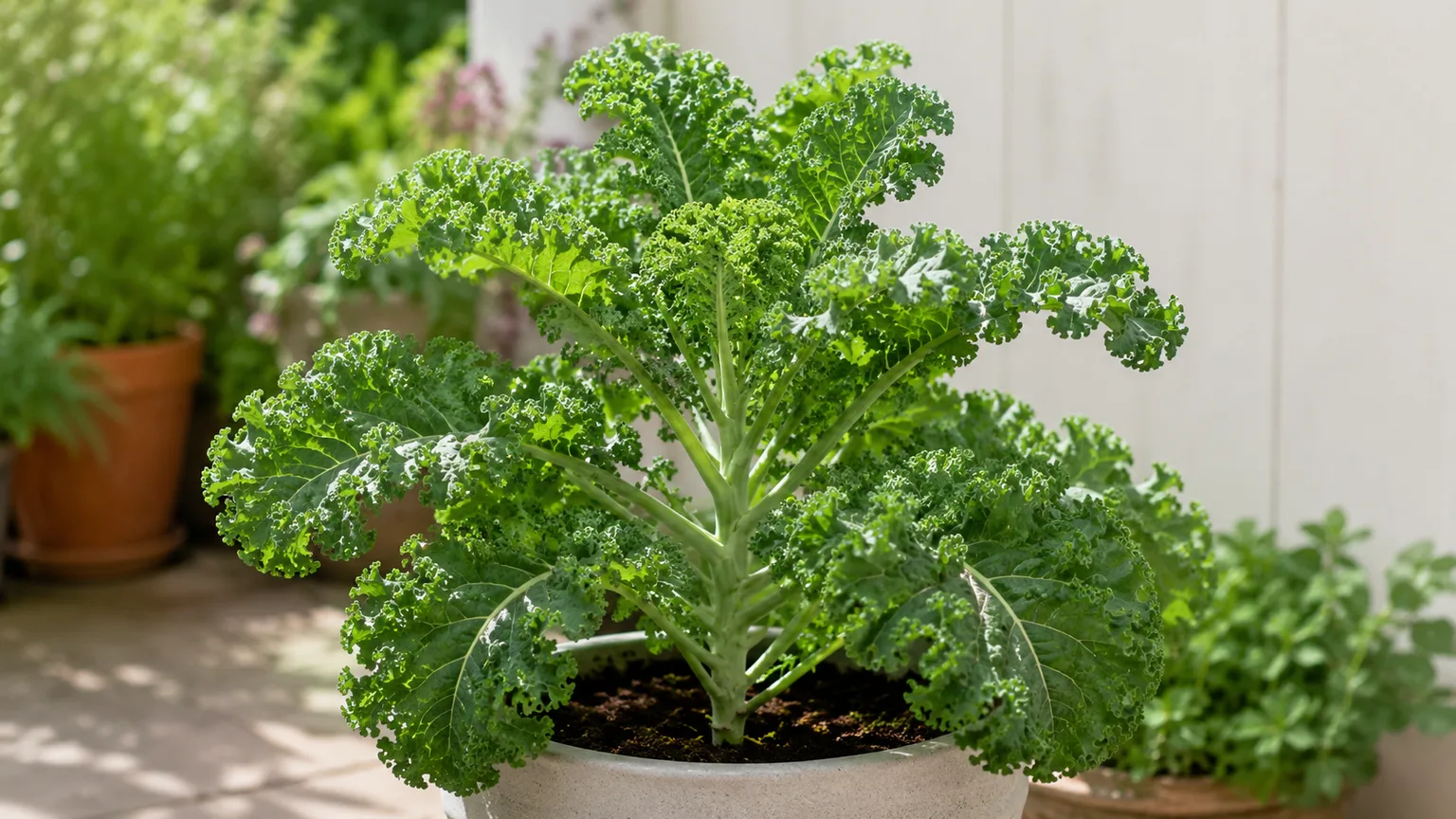
Companion planting means growing two or more crops near each other because the combination helps one or both plants—through pest confusion, trap cropping, soil cover, nitrogen contribution, or efficient use of space. RHS Chief Horticulturist Guy Barter’s overview of companion planting frames it as polyculture that can deter insects and use space efficiently, but notes benefits vary by crop and garden—not every pairing works every time.
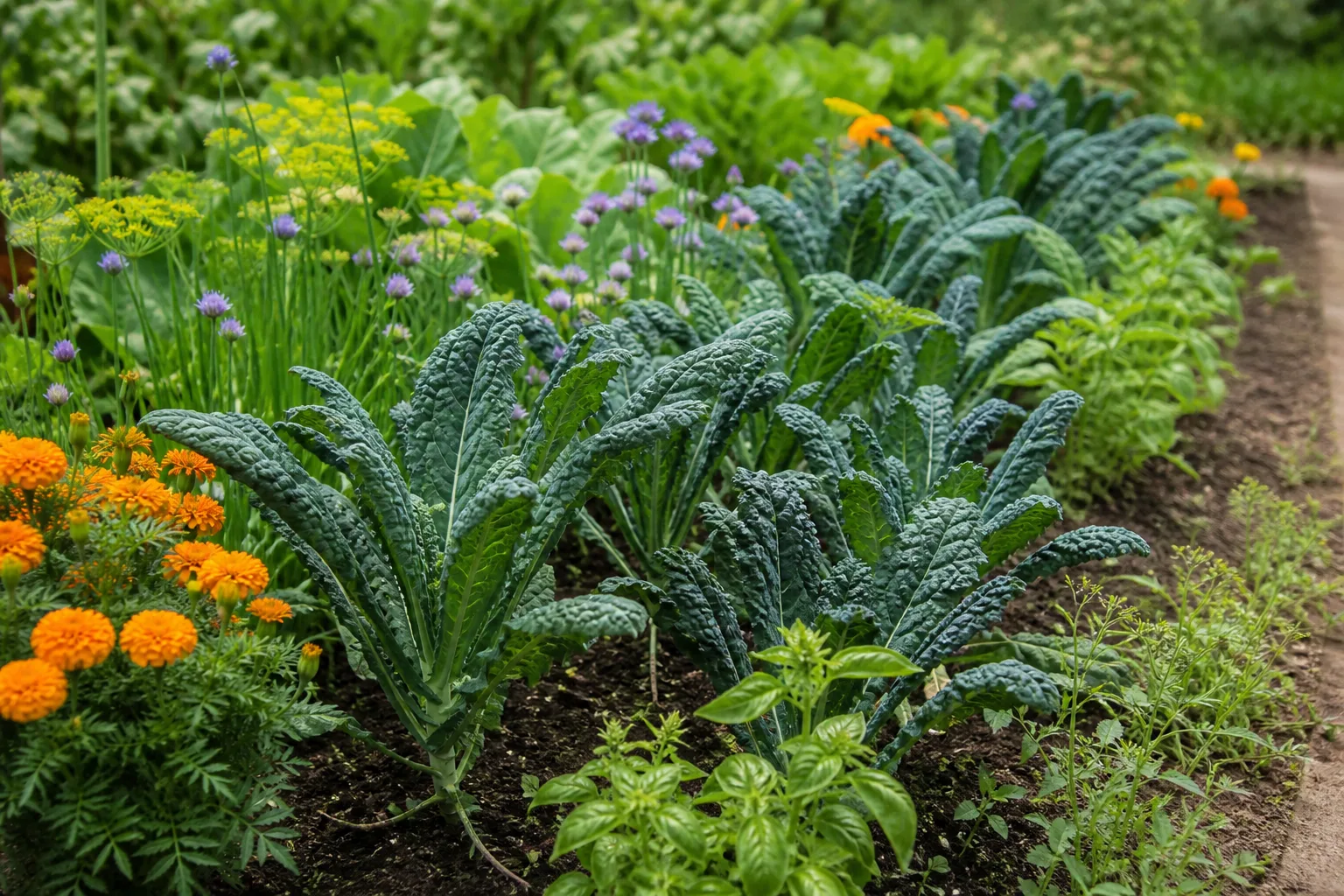
For kale, companions help most when they address aphids, imported cabbageworms, cabbage loopers, flea beetles, and whiteflies while plants are still establishing. University of Minnesota Extension’s guide to companion planting in home gardens treats many pairings as long-standing gardener practice with research backing some combinations more strongly than others. That is the right mental model: companions are one layer in an integrated plan, not a magic shield.
How kale actually uses neighboring plants
Kale is a heavy feeder with shallow, fibrous roots and a long harvest window from autumn through spring in mild climates. The RHS kale growing guide recommends 30–60 cm (12–24 in) spacing for mature plants so leaves get light and air—crowding invites fungal problems and makes pest scouting harder. Neighbors earn their place when they do at least one of these jobs:
- Act as trap crops so pests concentrate on one removable plant (nasturtiums)
- Confuse brassica pests with strong scent (rosemary, onions, marigolds)
- Attract beneficial insects with pollen and nectar (flowering marigolds, bolting herbs)
- Use a different root zone so harvest happens without root fights (beets)
- Fix nitrogen or cover soil between kale rows (beans, low companions)
- Provide afternoon shade for young leaves in hot sun (mature rhubarb canopy)
No border of marigolds removes the need to rotate brassicas, scout twice weekly in peak season, or remove wormy leaves before larvae move to the next plant. Treat companions as leverage, not a substitute for basic garden hygiene.
Set up your kale bed before you pick companions
Spacing, timing, and rotation rules
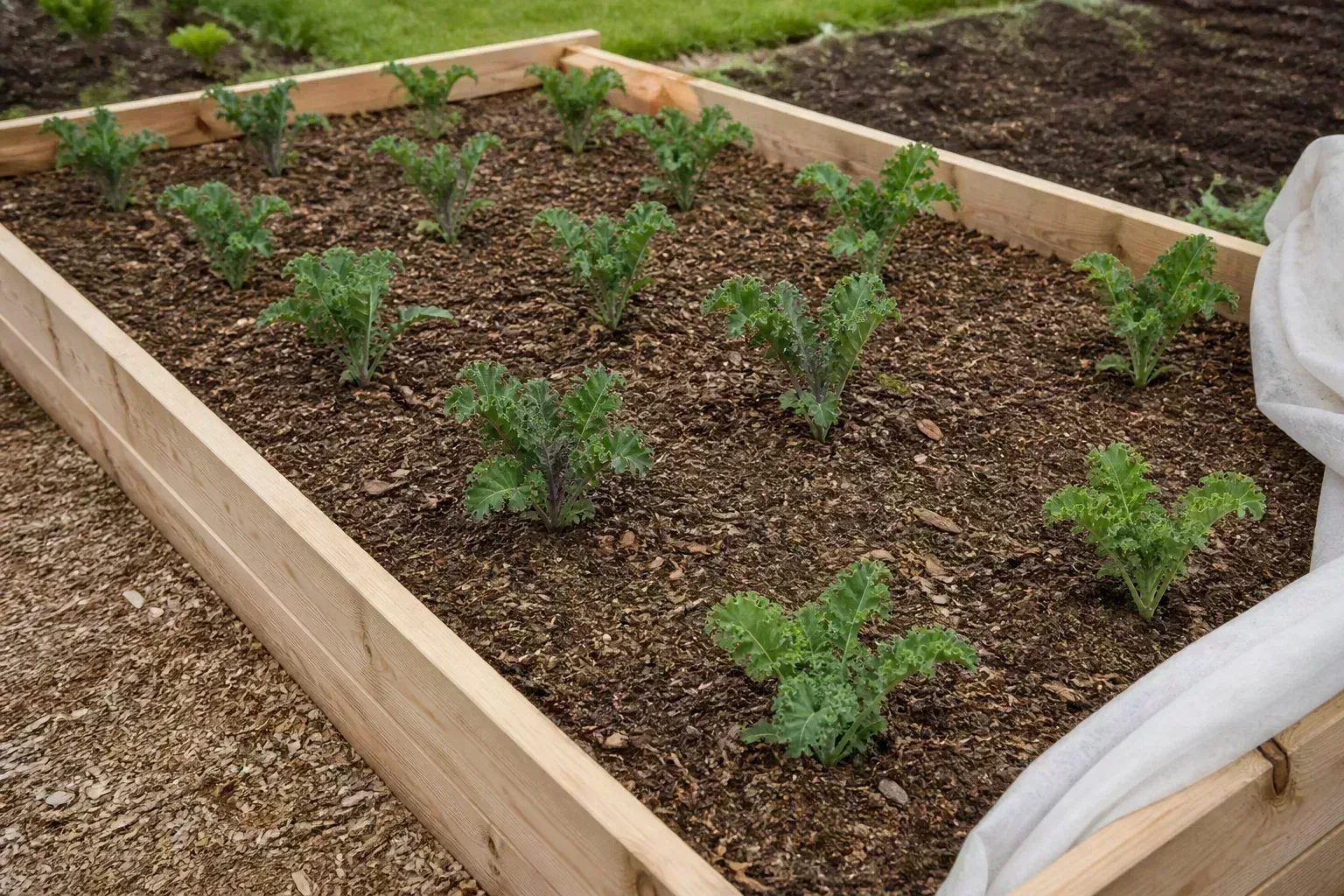
Give each kale plant 12–18 inches within the row and 24–36 inches between rows in ground beds. In a 4×8 foot raised bed, plan six to eight kale plants on offset centers so mature leaves do not smother neighbors. Sow or transplant kale in spring (as soon as soil is workable) and again in late summer for fall and winter harvests—the same windows that work for most cool-season vegetables.
Do not follow kale with cabbage, broccoli, cauliflower, or Brussels sprouts in the same bed the next season. Brassicas share pests and soil diseases; a three-year gap is a practical minimum in small gardens. If you are mapping the whole vegetable calendar, our companion planting vegetable garden layout guide helps place cool-season blocks before summer heat arrives.
Soil fertility, moisture, and row cover basics
Work compost or balanced organic fertilizer into the top 6–8 inches before transplanting. Kale wants rich, well-drained, consistently moist soil—drought stress invites aphids and produces tough, bitter leaves. Keep a 2–3 inch mulch layer after soil warms; companions like nasturtiums and beans add living mulch once they spread.
Lightweight row cover over young kale for the first 3–4 weeks blocks egg-laying moths while soil companions establish. Kale is harvested before it needs pollination, so you can leave cover on longer than you would for squash or cucumbers—just vent on hot afternoons so plants do not cook. Remove or lift cover when you need to hand-pollinate companion flowers, or when plants need full airflow at maturity.
Nasturtiums: the trap crop that takes pest pressure first
Nasturtiums (Tropaeolum majus) are the highest-return companion for pest-prone kale. Cabbage white butterflies and loopers often lay eggs on nasturtium leaves first, concentrating damage on one sprawled plant you can pull, bag, and compost away from the bed. That is classic trap cropping—sacrifice one plant so you inspect one place instead of every kale leaf.
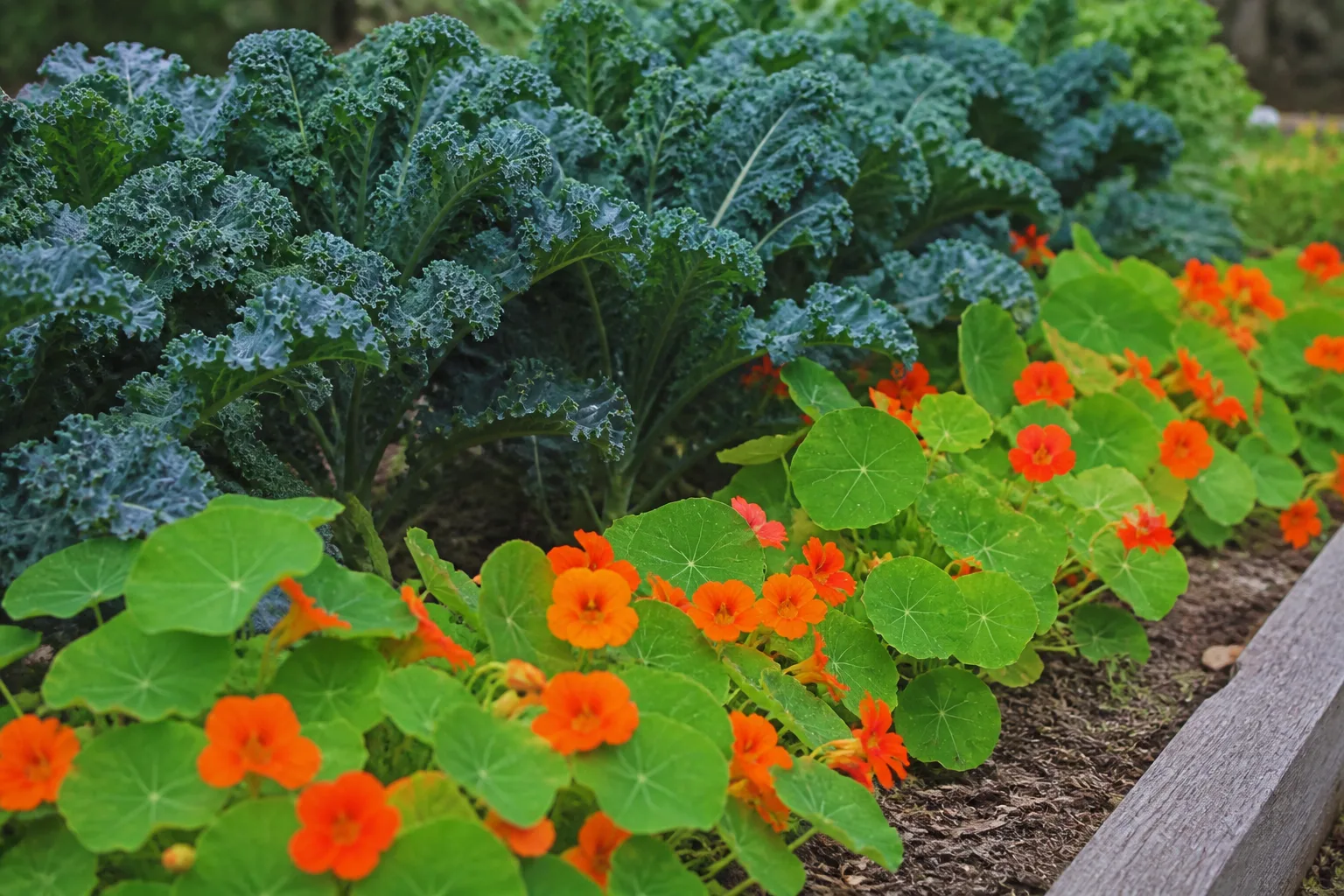
The peppery scent may also confuse some flying pests, and nasturtium flowers feed ladybirds, hoverflies, and tiny parasitic wasps that hunt aphids on kale. An Iowa State study on companion planting for sustainable pest control found nasturtium alongside thyme and onion reduced cabbage looper and imported cabbageworm damage on broccoli—a brassica cousin that shares kale’s pest list.
How to plant: Sow nasturtiums 6–12 inches from kale stems on the south or west edge where they can trail outward without climbing the kale. Use trailing varieties as ground cover between rows; bush types fit tight raised beds. Inspect trap plants twice weekly—if you let infested nasturtiums sit, they become a nursery for the next generation of worms.
Bonus harvest: Flowers and young leaves are edible with a peppery bite—excellent in salads beside blanched kale ribbons. Replace spent trap plants mid-season; they are annuals and cheap to resow.
Beets: different roots, same row
Beets (Beta vulgaris) are space-efficient kale companions because their taproot grows deep while kale roots stay shallow in the top few inches. They do not compete heavily for the same soil layer, and you can harvest beet roots while kale keeps producing leaves above.
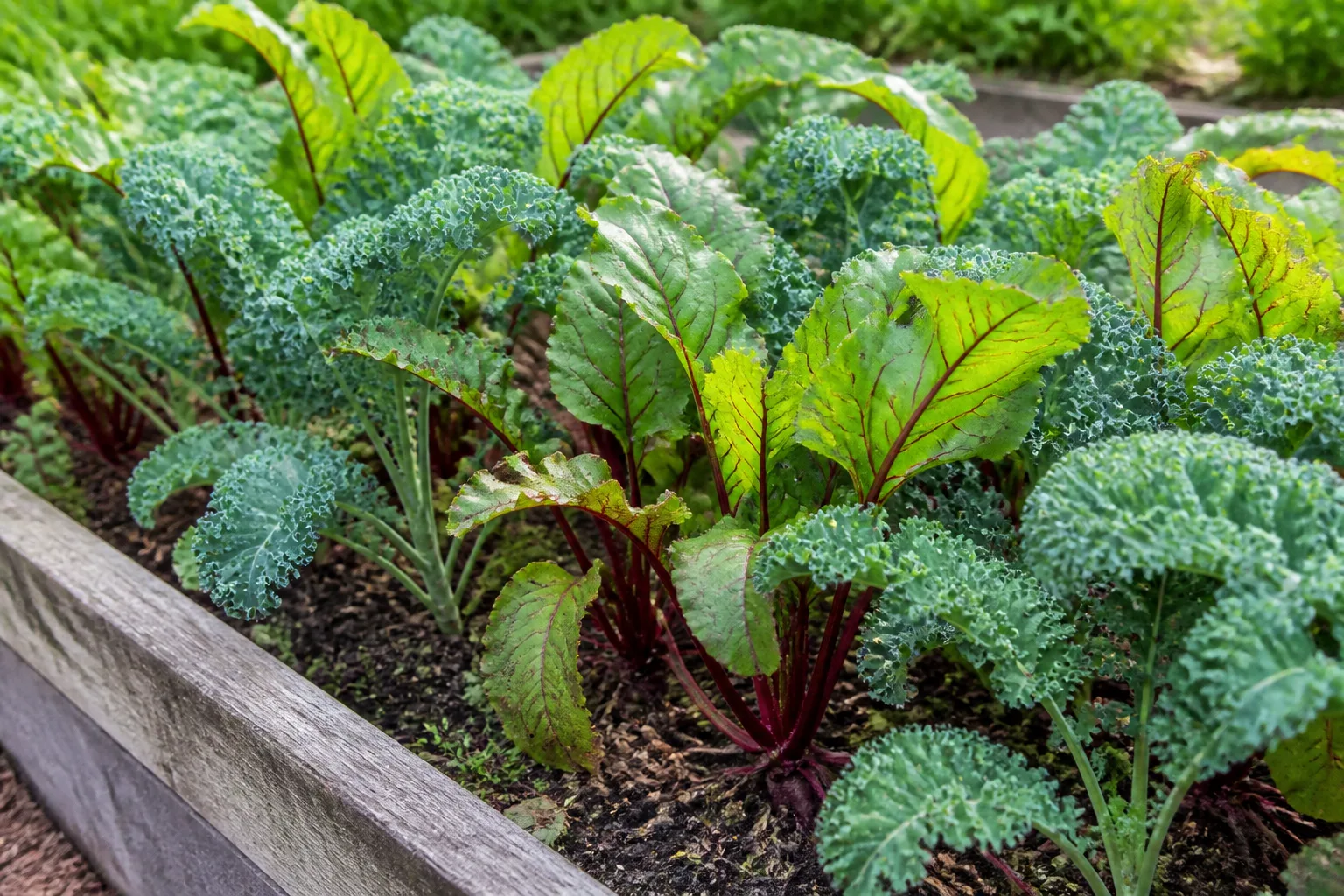
Beets also improve bed use in small gardens. Sow beet seeds in rows between kale plants or in the gaps while kale transplants are still small—about 4 inches apart for greens, 6 inches for full roots. By the time kale leaves expand, beets are halfway to harvest. Penn State Master Gardener material on good-neighbors companion planting notes that deep-rooted and shallow-rooted pairings are a classic efficient-space strategy.
Practical tip: Beet greens contain minerals and organic matter. Instead of composting every thinned leaf, chop them as living mulch around kale stems—just keep mulch an inch away from kale crowns to avoid rot. Both crops prefer loose, moist soil, so prep the bed once at planting rather than sidedressing heavily mid-season.
Rosemary: fragrant pest confusion at the bed edge
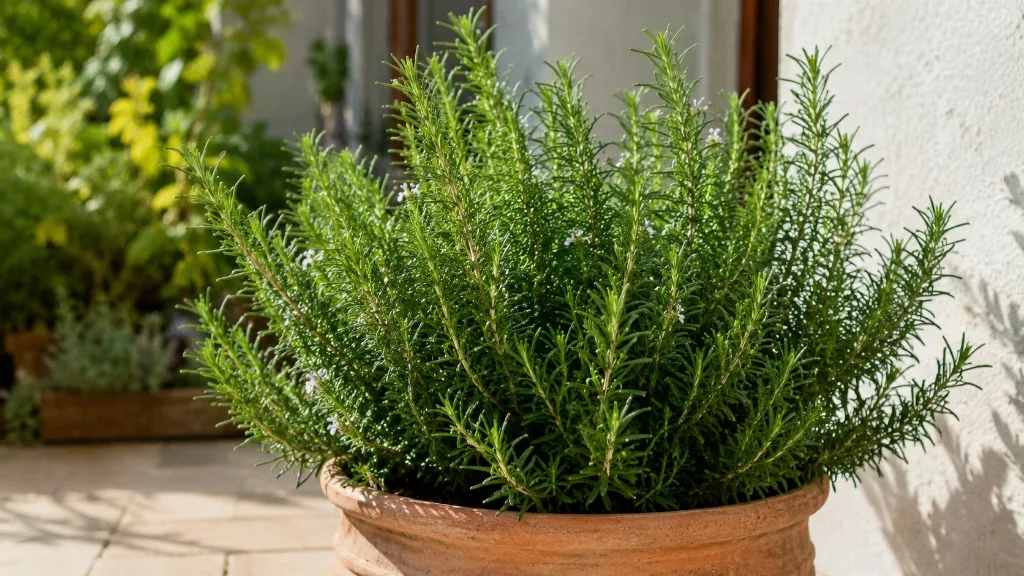
Rosemary (Salvia rosmarinus) releases aromatic oils that may help deter aphids, cabbage moths, and other brassica-targeting insects. It is a woody Mediterranean herb that wants sharp drainage and infrequent deep watering—very different from kale’s steady moisture needs.
Grow rosemary in a container set beside the kale bed, not in the same row where daily kale watering would rot rosemary roots. A 12–16 inch pot on the sunny south edge gives you scent at pest-flight height without root conflict. Clip sprigs for cooking and brush the foliage when you walk past—disturbing leaves releases more volatile oils.
Rosemary is perennial in USDA zones 8–10; in colder zones, move pots indoors before hard frost or treat rosemary as an annual sacrifice plant. Pair it with thyme or sage at the bed corner if you want a permanent scented border—same planting rules apply.
Marigolds: border color with research behind some claims
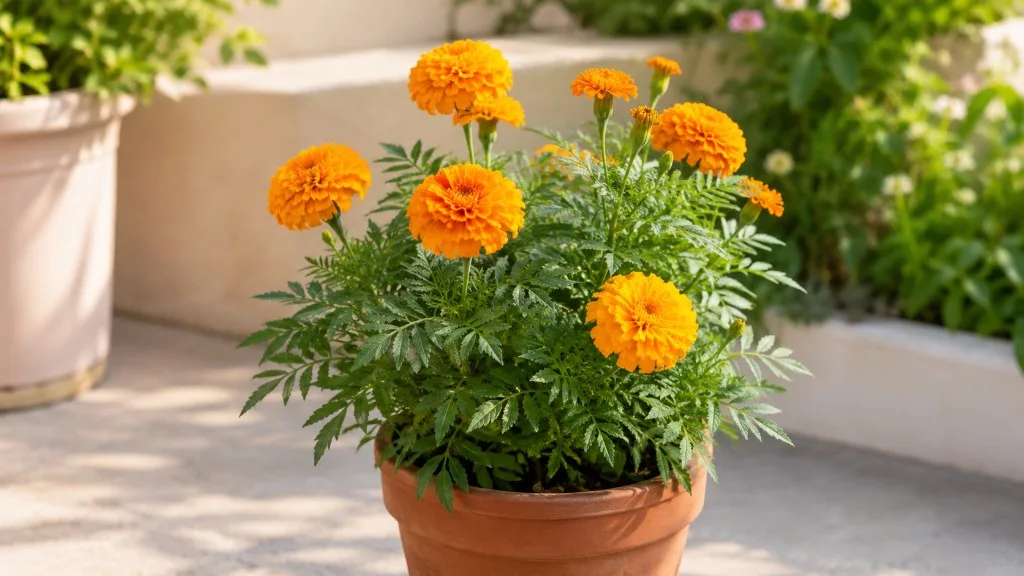
French marigolds (Tagetes patula) are the classic kale-border flower. Their resinous scent may deter aphids, whiteflies, and some moths, and their blooms attract ladybirds, parasitic wasps, and hoverflies. RHS companion planting guidance notes that Tagetes can reduce glasshouse whitefly on nearby crops, with the volatile limonene—also found in citrus peel—identified as part of the mechanism.
A PLOS ONE study on companion planting with French marigolds found airborne limonene from marigolds protected tomato plants from whiteflies in greenhouse trials. That is not a kale field trial, but it supports the idea that marigold chemistry can affect flying pests—not just folklore.
French marigolds vs. pot marigolds near kale
Plant French marigolds (Tagetes) along the path side or outer bed edge every 12–18 inches as a low strip you can replace if caterpillars chew them down. Pot marigolds (Calendula officinalis) are excellent for attracting beneficial insects and work well at corners, but they are a different genus with different chemistry—use both if you like the look, but do not assume identical pest effects.
Honest limit: Marigolds are not reliable solo control when worm pressure is high. Pair them with nasturtium trap plants, handpicking larvae into soapy water, or Bt (Bacillus thuringiensis) on young caterpillars. Mixed plantings also reduce pest buildup compared to kale monocultures, as RHS notes—even without a scented border.
Rhubarb: afternoon shade for young kale in hot gardens
Rhubarb (Rheum rhabarbarum) is an unexpected kale partner for gardens with hot afternoon sun. Kale appreciates full sun in cool regions, but young leaves can scorch when temperatures spike above 85°F (29°C). Mature rhubarb’s large leaves cast dappled shade at the base of the bed—enough to soften afternoon heat without turning the plot into deep shade.
Plant baby kale transplants around the north side of established rhubarb crowns, leaving 24 inches between rhubarb and kale so both root systems have room. Rhubarb is a long-term perennial; kale is annual or biennial—harvest kale before rhubarb fully leafs out in spring if you need maximum sun for early growth, then let rhubarb canopy help summer-sown kale.
Some gardeners report rhubarb’s oxalic acid may deter aphids and whiteflies. That effect is anecdotal and weak compared to trap cropping—treat shade as the main benefit. Never eat rhubarb leaves; they are toxic. Harvest only the stalks for pie and compote.
Beans: nitrogen, weed cover, and trellis trade-offs
Beans—especially pole beans on a trellis—are popular kale companions because legumes partner with Rhizobia bacteria to fix nitrogen in root nodules, as WVU Extension explains on legume nitrogen fixation. Kale is a nitrogen-hungry leafy crop, so extra fertility helps leaf production. Beans also shade soil and suppress weeds between kale rows when sown as a living ground cover.
The trade-off is timing and shade. Kale wants cool weather; beans sprint in summer heat. The pairing works best when you trellis pole beans on the north side of the bed so vines do not steal light from kale. Bush beans fit between young kale plants in spring if you harvest beans before kale canopies close the row.
Disease note: Avoid harvesting beans when foliage is wet—fungal spores spread easily. Water at the base with drip or soaker hose so kale and bean leaves stay drier. If beans get heavy rust or mosaic, pull them promptly so problems do not linger near fall kale.
Onions and alliums: low-profile scent barriers
Onions, garlic, shallots, and leeks release sulfur compounds that may confuse brassica pests searching by scent. The Iowa State brassica companion study linked onion plantings to reduced worm damage on broccoli—useful evidence for kale beds, too.
How to plant: Set onion sets or garlic cloves at row ends or in a line 8–10 inches from kale stems. Alliums take little horizontal space and fit neatly in small plots. Green onion scallions can fill gaps between young kale transplants and harvest before kale leaves expand.
Alliums want full sun and well-drained soil, matching kale’s basic needs better than rosemary’s drought preference. Avoid planting alliums directly on top of kale’s shallow roots—edge placement keeps both crops happy. For a deeper dive on timing bulbs, see how onion culture compares to other cool-season crops in our how long do onions take to grow guide.
Kale companions to avoid in the same bed
Brassica clusters, heat lovers, and allelopathic troublemakers
Companion rules are guidelines, not laws—but some pairings fail often enough to skip.
Other brassicas in tight clusters: Cabbage, broccoli, cauliflower, Brussels sprouts, and kohlrabi share kale’s pests and diseases. Planting them shoulder-to-shoulder creates one-stop shopping for cabbage worms and aphids. If space forces grouping, separate blocks by 10–15 feet when possible, add nasturtium trap rows, and scout twice weekly. Our broccoli companion plants guide covers the same brassica pest toolkit from a slightly different crop angle.
Heat-loving heavy feeders: Tomatoes, peppers, eggplant, squash, melons, and sweet corn want summer heat and different fertility timing than cool-season kale. They also grow tall and bushy, stealing light at the wrong season. Keep them in the summer block, not the spring kale row.
Fennel: Secretes compounds that inhibit many garden plants. Grow it across the garden or in a pot—not beside kale.
Strawberries: Perennial, moisture-loving, and prone to slugs in the same damp conditions kale prefers. They compete for space and do not help with brassica pests.
Large mint patches: Mint repels some insects but spreads aggressively by runners. If you want mint near kale, grow it in a buried pot or separate container.
For the science behind why some pairings work and others do not, our does companion planting actually work guide walks through evidence without treating every chart as gospel.
Sample bed layouts for spring and fall kale
4×8 foot spring bed (six kale plants):
- Center: kale transplants on 15-inch centers in two offset rows of three
- South edge: nasturtiums trail outward; French marigolds every 18 inches
- North edge: rosemary and thyme in pots at corners
- Between kale while young: beet row sown at planting; onion sets at row ends
- Optional north trellis: pole beans sown after last frost, harvested by midsummer
4×8 foot fall bed (eight kale plants for winter harvest):
- Center: kale transplants on 12-inch centers for smaller winter leaves
- Corners: rhubarb crowns on the southwest corner for afternoon shade (established plants only)
- Path side: garlic cloves planted October for next summer harvest
- Trap strip: nasturtiums resown late August along the south edge
Walk the bed twice weekly with a bucket of soapy water. Flip kale leaves to check for velvety green imported cabbageworms, looping cabbage loopers, and clusters of gray aphids. Drop larvae into the bucket; pull heavily infested nasturtium leaves or whole trap plants. Catching pests at ⅓-inch length is far easier than saving leaves already tunneled with frass.
Conclusion
Healthier kale with fewer pest emergencies comes from matching companions to jobs, not planting random flowers and hoping. Nasturtiums sacrifice themselves as trap crops. Beets and onions use different space layers and scents. Marigolds and rosemary add chemistry and beneficial-insect habitat at the edges. Beans feed soil and cover ground when trellised north. Rhubarb softens harsh afternoon sun on young leaves.
Build those pieces into a bed with proper kale spacing, rotation, and row cover on young plants—and you will spend less time fighting insects and more time harvesting leaves worth eating. Start with one trap crop and one scented border this season; add layers as you learn what your local pest pressure actually looks like.



