How Long Do Onions Take to Grow? Full Timeline
How long do onions take to grow? Learn the timeline from seed, set, or transplant, what controls bulb formation, and how to harvest and cure onions.
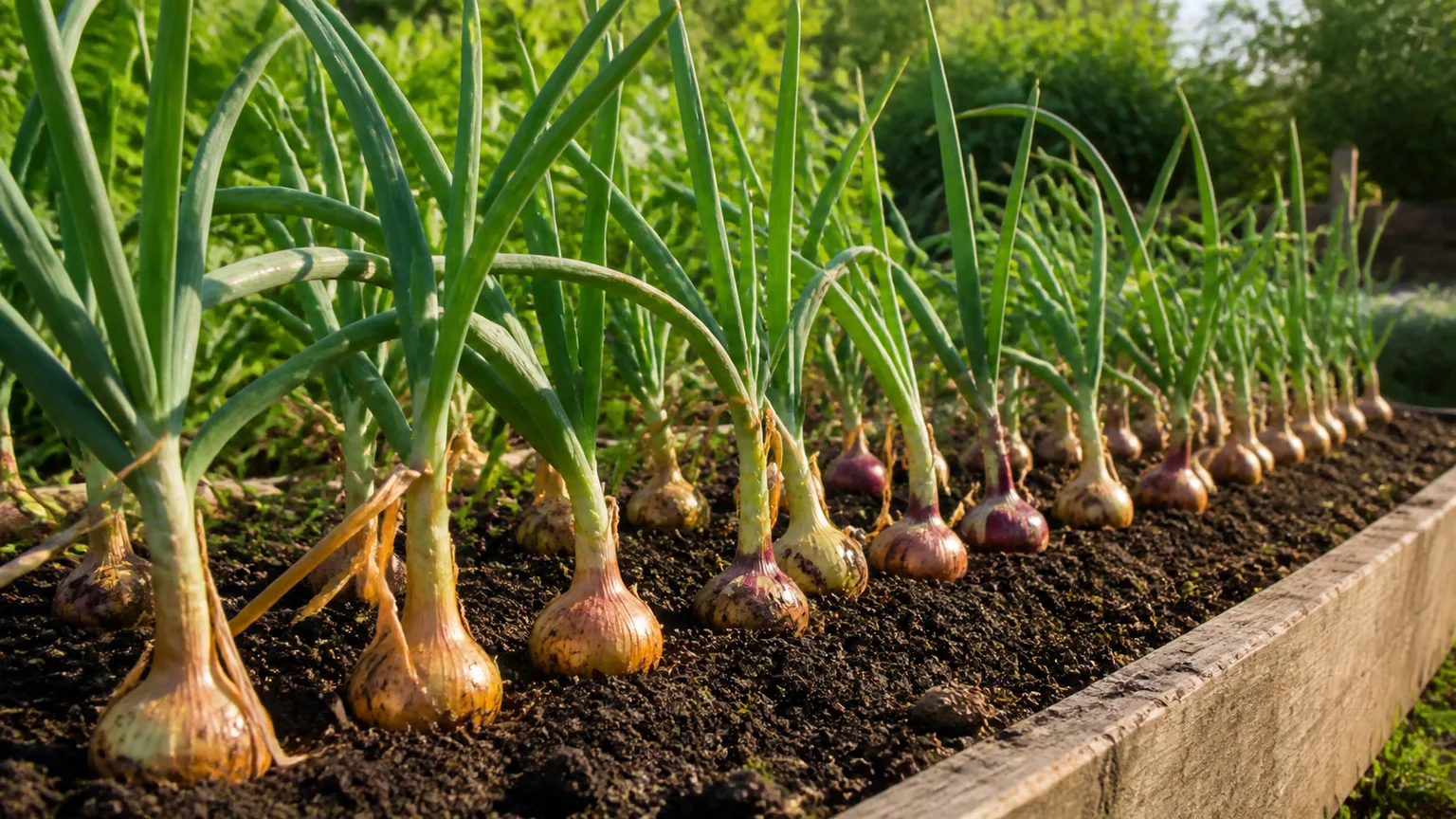
Most dry bulb onions take about 100 to 120 days to mature after planting, but that is a planning range, not a promise. Seeds need extra time to germinate and build leaves; sets and transplants start with a head start. Variety, day length, planting date, temperature, water, spacing, and your harvest goal can move the finish line by several weeks.
The fastest way to estimate your own harvest is to combine the variety’s “days to maturity” with the plant’s stage. If the leaves are still upright and green, the onion may be building the leaf area it needs to size the bulb. If the tops are beginning to soften and tip, the crop is moving into harvest territory. If you want storage onions, you also need curing time after the bulbs leave the soil.
The Short Answer: Most Dry Bulb Onions Need 100 to 120 Days
For a typical home garden, plan on roughly three to four months for a dry bulb onion, counted from planting a set or transplant, or from direct sowing in favorable conditions. Utah State University Extension gives a 100- to 120-day maturity range for bulb onions, while green onions can be ready much earlier, sometimes around 50 days from seed (Utah State University Extension’s onion guide).
That range describes the crop, not the entire calendar from seed packet to pantry. A seed-started onion may spend several weeks germinating and growing indoors before transplanting. A set is an immature bulb, so it can look “faster” because much of the early development happened before you bought it. A storage onion also needs one to several weeks of drying and curing after harvest before it is ready for long-term storage.
The practical estimate is therefore:
- Green onions: harvest when the tops are usable, often in about 50 to 70 days from seed or sooner from sets.
- Bulb onions from sets: commonly about 90 to 120 days after planting, depending on variety and conditions.
- Bulb onions from transplants: often about 90 to 120 days after planting out, with the seedling phase occurring earlier under protection.
- Bulb onions from seed: commonly about 100 to 175 days from sowing to mature bulbs, depending on whether you direct-sow, start indoors, and choose the right variety.
Those figures overlap because “mature” can mean a usable fresh onion, a full-size bulb, or a cured storage onion. Your target matters as much as the calendar.
Why Your Onion Timeline May Be Longer or Shorter
Onions do not simply grow at a fixed speed until a timer rings. They first build leaves, then use those leaves to enlarge a bulb after the variety receives the right day-length signal. A plant with more healthy leaves before bulbing generally has more capacity to make a large bulb, while a crowded, drought-stressed, or repeatedly weeded-out crop may need more time and still finish smaller.
The number printed on a seed packet is also tied to a particular variety and starting point. “110 days” may be measured from direct seeding, transplanting, or another point defined by the seed company. Read the packet’s wording, then compare it with what the plant is doing. The University of Illinois Extension’s onion profile notes that onions can be grown from seed, sets, or transplants and that late planting can lead to small bulbs or no bulb formation at all.
Weather changes the pace, too. Cool conditions are useful while onions establish, but cold stress, waterlogged soil, drought, or a sudden heat wave can interrupt growth. A dry spring can produce small bulbs even if the harvest date arrives on schedule; a wet late season can delay drying and reduce storage quality even when the bulbs are large enough to pull.
The Onion Growth Timeline, Stage by Stage
An onion’s timeline makes more sense when you watch for transitions rather than counting days alone.
Germination and Leaf-Building
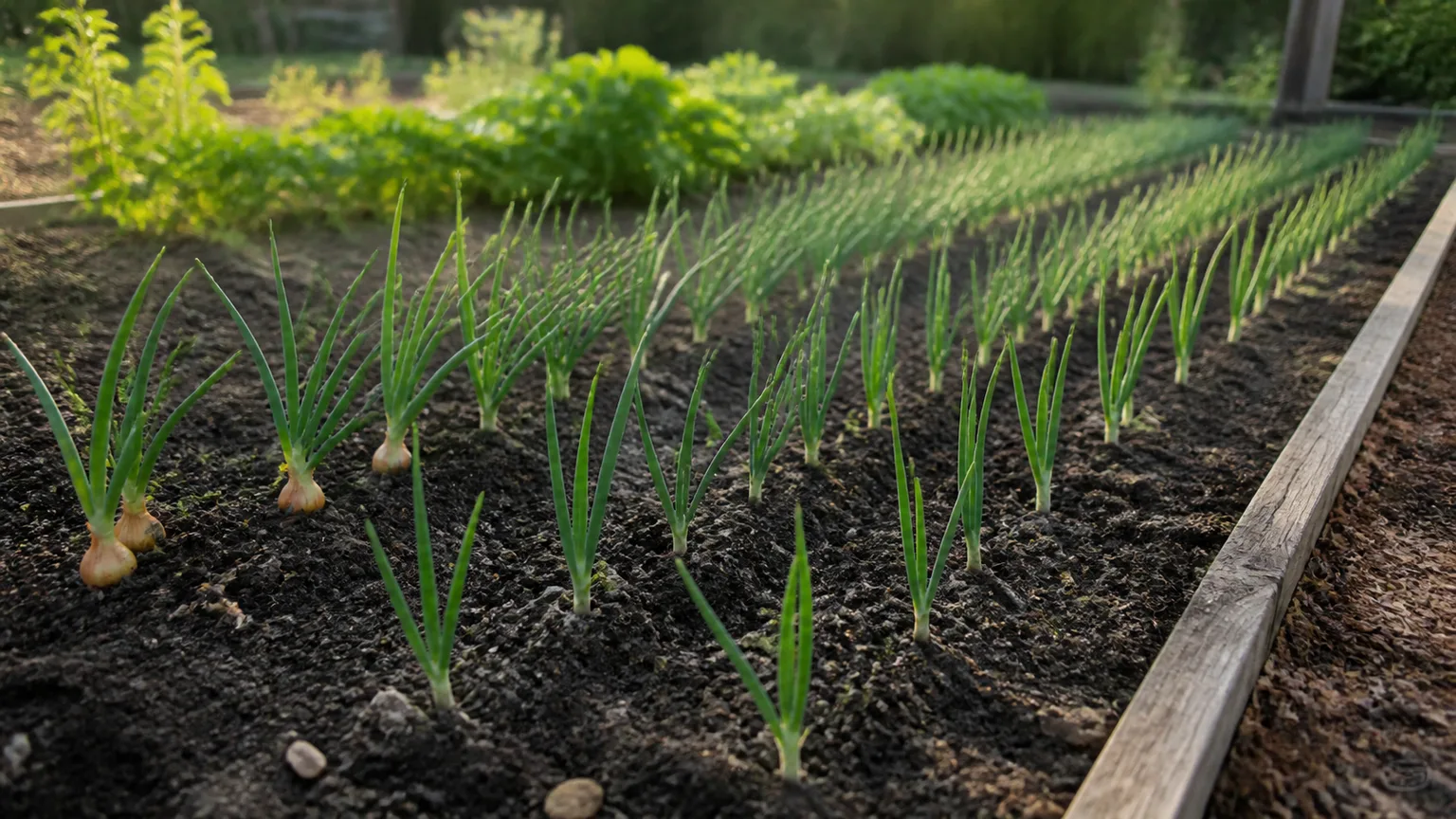
Seeds can take roughly two to three weeks to emerge in the garden, depending on soil temperature and moisture. The young plant then invests in roots and narrow leaves. This is the slow-looking part of the crop, and it is when weeds cause outsized damage because onions have shallow roots and compete poorly.
Sets skip most of germination but still need to establish roots and leaves after planting. Transplants also need time to recover from being moved. Neither method starts with a mature bulb; the plant still needs a healthy leaf canopy before it can size the bulb well.
Keep the soil evenly moist while seeds emerge and seedlings establish. Avoid crusted soil, deep cultivation, and aggressive thinning that tears roots. Thin direct-sown plants before they begin competing or bulbing, leaving enough room for the final bulb size you want.
Bulb Enlargement
Bulbing begins when the plant experiences the day length required by its variety. The base of the plant swells gradually as leaves continue to feed it. At this point, a bulb showing above the soil is not a problem: onions naturally develop at the surface, and piling soil over the shoulder can hold moisture against the neck.
Consistent water is especially important during enlargement. Utah State University Extension warns that drought stress reduces yield and bulb size, while excess water near maturity delays curing and creates storage problems. Keep the root zone moist but not saturated, and improve drainage rather than compensating for heavy soil with more frequent watering.
Maturity and Curing
As a dry onion matures, the neck begins to soften and the leaves lose their upright posture. The bulb’s outer layers start drying into papery skin. That is the transition from active growth to harvest preparation, not a sign that the plant should be forced to finish.
Penn State Extension describes common dry-onion harvest timing as when roughly one-third to one-half of the tops have fallen over, with curing needed before storage. This balances bulb size against the risk of leaving a nearly mature crop in wet soil for too long (Penn State Extension’s onion production guide).
Day Length and Variety Set the Bulb Clock
The most important timing detail many gardeners miss is photoperiod: onions initiate bulbs when daylight reaches the duration their variety is bred to use. More fertilizer cannot make a long-day onion bulb properly in a location where the seasonal light signal does not fit, and planting a short-day onion in a northern garden can produce a bulb that starts too early or sizes differently than expected.
Short-Day, Intermediate-Day, and Long-Day Onions
Choose the day-length class that matches your latitude and the seller’s regional recommendation. In broad terms, short-day onions suit southern latitudes, long-day onions suit northern latitudes, and intermediate-day types cover a middle band. The exact fit depends on cultivar and location, so use a local extension recommendation or a seed supplier’s regional guidance rather than relying only on the color or name of the onion.
Day length also explains why planting late can be a bigger mistake than simply losing a few weeks. If the onion has not built enough leaves before the bulbing signal arrives, it may form a small bulb and stop sizing. If you plant a variety outside its adapted region, it may keep making leaves without a useful bulb or begin bulbing before it has enough leaf area.
Which Starting Method Gets Onions to Harvest Fastest?
The right choice depends on whether your priority is speed, selection, or maximum bulb size. Sets are convenient and forgiving for a first crop, transplants can produce strong full-size bulbs, and seed gives you the widest variety selection but demands the earliest and most careful start.
Growing Onions From Seed
Seed is usually the slowest route on the calendar because you must count germination and early growth. It is also the most flexible route: you can choose a day-length-appropriate cultivar, sow successions for green onions, or start seedlings under protection before planting them outside.
For large dry bulbs, start seeds early enough that the plant can establish a substantial leaf canopy before bulbing begins. Penn State Extension notes that transplants are started under cover roughly 10 to 12 weeks before field planting in its production guidance; home gardeners can use the same principle without treating the number as universal. The right schedule depends on local frost dates, variety, and whether you have a bright, cool place for seedlings.
Direct-sown onions need careful thinning. Close plants compete for water and nutrients, and high-density planting reduces bulb size unless you provide unusually consistent care. The young thinnings are useful as scallions, so thinning does not have to feel like waste.
Growing Onions From Transplants or Sets
Transplants are a strong choice when you want large dry onions without managing the earliest seedling stage. Choose sturdy, healthy plants and set them at the same final spacing you would use for a mature crop. They may pause briefly after planting, but a good root system and a correct planting window can put them ahead of late direct-sown seedlings.
Sets are the easiest starting material to handle. Small, firm sets are generally a better choice for dry bulbs; very large sets are more likely to bolt, especially when exposed to cold conditions early in the season. Large sets are often best harvested as green onions rather than held for a long storage crop. The University of Illinois Extension explains this distinction in its guidance on sets, bolting, and dry-bulb production.
The key distinction is that sets are not a shortcut around variety selection. Sets are frequently sold by color rather than clearly named cultivar, which makes day-length fit harder to confirm. If you want predictable storage onions, named seed or transplant varieties provide more information.
Conditions That Keep Onions on Schedule
Onions are not difficult, but their shallow roots leave little margin for neglect. The crop stays on track when the bed drains quickly, moisture does not swing from drought to flooding, and weeds are removed before they overtake the narrow leaves.
Sun, Soil, and Spacing
Give onions a sunny, open bed and loose soil that drains after rain. Utah State University Extension recommends fertile, well-drained soil with organic matter and a final spacing of roughly 3 to 4 inches for bulb onions. Penn State’s production guide emphasizes friable soil, good water infiltration, and a soil pH range around 5.8 to 6.6 for commercial production; a home gardener should use a local soil test rather than blindly adding amendments.
Do not bury the bulb shoulder as it develops. Plant seeds about a quarter to half an inch deep, and set sets or transplants so the growing point is close to the surface. Crowding is a quiet yield problem: plants may look healthy but make smaller bulbs because each plant has less light, water, and room.
Water, Feeding, and Weed Control
Keep the soil consistently moist during leaf and bulb growth, watering deeply enough to reach the onion’s shallow but spreading root zone. Drip or soaker irrigation makes it easier to wet the soil without keeping the foliage damp for long periods. As the tops begin to fall and the crop approaches maturity, taper off irrigation; continued wetness can delay curing and increase rot risk.
Use a soil test to guide fertilizer. Onions need nutrients to make leaves, but late heavy nitrogen can keep pushing soft green growth when the bulb should be finishing and can reduce storage potential. Apply any side-dressing early enough for the plant to use it, and stop treating fertilizer as a rescue for a wrong variety or a late planting.
Weed shallowly and often, especially during the first two months. Pulling large weeds later can disturb onion roots, while allowing weeds to shade the crop can slow leaf production before bulbing. A thin organic mulch can conserve moisture and reduce weed pressure, but keep it loose around the neck and do not use wet material that holds water against the bulbs.
What Slows Growth or Stops Bulbs From Forming
Slow growth is not one diagnosis. Check the plant, soil, and calendar before adding anything. A crop with healthy leaves but no swelling may have a day-length mismatch or may not have reached the bulbing window yet; a crop with thin, pale, stalled leaves is more likely dealing with competition, drought, poor roots, or nutrient limitations.
Late Planting, Wrong Variety, and Bolting
Late planting can leave plants too small when day length triggers bulb formation, resulting in small onions. The wrong day-length class can prevent a useful bulb from forming or cause bulbing before enough leaves develop. These are planning problems, not problems that extra water or fertilizer can reliably correct.
Bolting means the onion sends up a flower stalk. Cold exposure followed by warming can trigger it, and large sets are more prone to bolting than small sets. Once a flower stalk is obvious, the bulb usually will not store as well; harvest that onion for fresh use when it is usable instead of waiting for a perfect storage bulb.
Other delays have a more direct fix. Improve drainage in soggy soil, rewater gradually after drought, thin crowded seedlings, remove weeds before they seed, and inspect for thrips or onion maggots if leaves are silvery, twisted, collapsing, or plants are dying in patches. Rotate onion-family crops if disease or soil pests have been persistent. Extension guidance from Utah State and Illinois both treats crop rotation, moisture management, and sanitation as part of long-term onion production rather than one-season fixes.
How to Tell When Onions Are Ready to Harvest and Cure
The right harvest moment depends on what you plan to do with the onion. A green onion is ready when the stalk is large enough to use. A fresh bulb onion can be lifted as soon as it reaches a useful size. A storage onion needs mature skins and a dry neck, but it should not be left in wet soil simply to chase the last possible ounce of size.
Use Size, Tops, Necks, and Skins Together
For green onions, pull individual plants whenever the stems are usable. Harvesting a few at a time also gives neighboring onions more room to enlarge. For fresh bulb onions, loosen the soil and lift a test bulb when the shoulder looks full; taste and texture matter more than a perfect calendar date.
For storage onions, look for several cues together:
- The tops are beginning to yellow and fall rather than staying rigid and dark green.
- The neck is softening and drying, with no wet, thick tissue where leaves join the bulb.
- The bulb has reached the expected size for the variety and is firm.
- The outer skin is beginning to turn papery.
Do not bend the tops over by force to manufacture maturity. If the crop is healthy, let the plant transition naturally. When the weather is dry and the tops have tipped, lift or loosen the bulbs carefully and let them dry with air circulation. Avoid bruising, because damaged bulbs are more likely to rot in storage.
Utah State’s harvest-and-handling guidance cautions that leaving onions in the field too long can expose them to rain, rot, and late-season freezing. Home gardeners can use the same trade-off: lift when the crop is physiologically mature and the weather offers a drying window, rather than waiting indefinitely for every top to be completely flat (Utah State University Extension’s harvest guide).
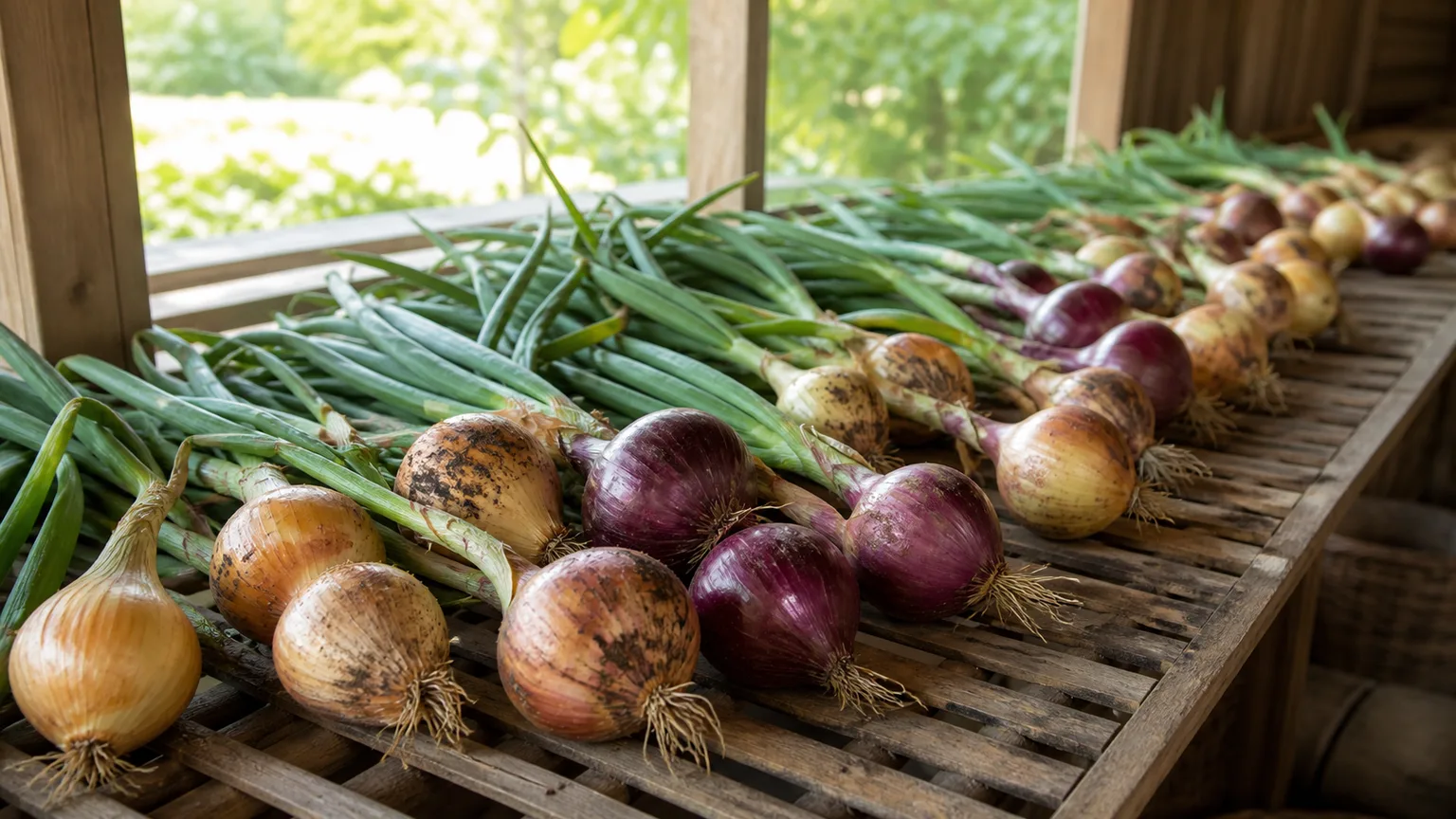
For curing, spread onions in a single layer in a dry, airy, shaded place. Keep the tops attached while the outer skins finish drying, and allow roughly two to three weeks when conditions are moderate; wetter or cooler weather takes longer. GrowVeg’s practical harvest guidance recommends moving onions under cover when rain threatens and waiting for papery skins, shriveled tops, and dry roots before storage (GrowVeg’s onion harvest and storage guide). Once cured, trim loose roots and tops, then store only firm, dry bulbs in a cool, dry, well-ventilated place. Use soft, thick-necked, or damaged onions first.
Conclusion
If you need one planning number, give dry bulb onions 100 to 120 days under good conditions, then adjust for the starting method and the variety’s day-length class. Seeds take longer on the calendar because they must germinate and build leaves; sets and transplants usually reach a usable bulb sooner, but they are not immune to poor timing, drought, crowding, or bolting.
The best harvest date comes from reading the plant: healthy leaf growth first, a swelling bulb next, then softening necks and drying tops. Keep water steady during enlargement, stop pushing nitrogen late in the season, and give storage onions a proper curing period. That approach produces a more accurate timeline—and better onions—than counting backward from a single date on the calendar.



