How Often to Water a Lemon Tree in Every Season
Learn how often to water a lemon tree in the ground or a container, how to test soil, adjust for heat and rain, and avoid root rot.
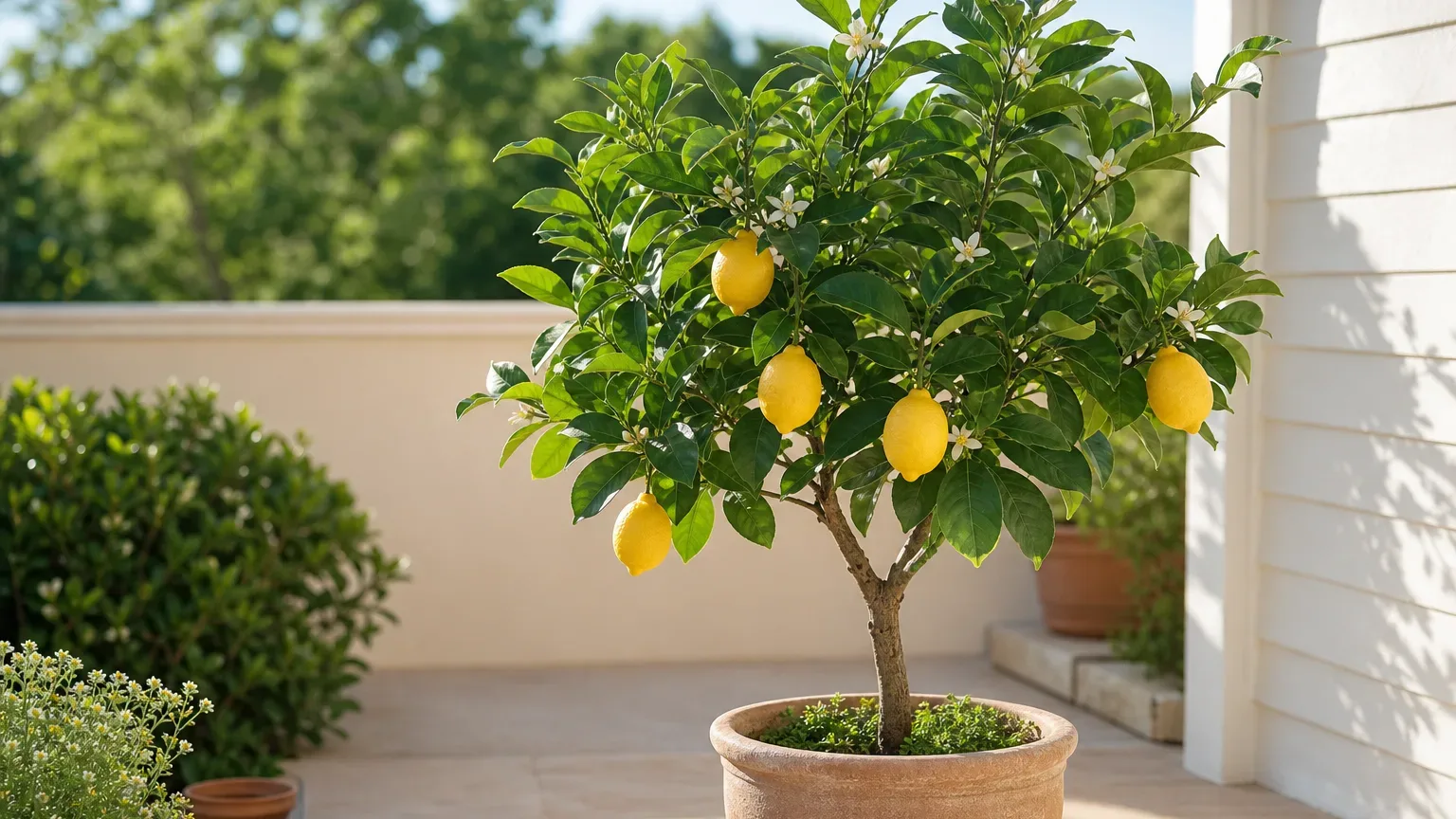
The best lemon tree watering schedule is not a date on the calendar. It is a repeatable check of the root zone followed by a slow, thorough watering when that zone has begun to dry. A new tree in the ground, a mature tree in a garden bed, and a lemon tree in a patio pot can all need different amounts of water in the same week.
As a useful starting point, water a newly planted in-ground lemon tree two or three times a week for about four weeks, then move to deeper, less frequent irrigation as roots spread. An established tree in a hot, dry summer often needs a deep watering about every 7–10 days, while a container tree may need checking every day and watering whenever the upper 2–3 inches of mix are dry. Rainfall, soil, temperature, pot size, and drainage should always override those starting points.
The short answer: water by root-zone dryness
Lemon trees need consistent access to moisture, but their roots also need air. Watering a little every day keeps the surface looking damp while leaving the deeper root zone unevenly wet; soaking a waterlogged pot again can suffocate roots. The goal is a full wetting of the active root zone followed by enough drying that roots are not sitting in saturated soil.
The most reliable rule for a container is to push a finger or wooden skewer 2–3 inches into the mix, away from the trunk. Water when that layer is approaching dry, then soak the mix until water drains from the holes. For a tree in the ground, probe beneath the canopy rather than judging the exposed surface. Mulch can make the top look dry or damp without telling you what is happening several inches down. A practical citrus-watering interview published by Martha Stewart makes the same useful distinction: the surface can look dry while the soil below is still wet.
For established outdoor citrus, UC Integrated Pest Management gives a useful hot-summer benchmark of about 4–6 inches of water per month, split into applications according to soil type; in hot summer climates, it suggests irrigating roughly every 7–10 days. That is a planning benchmark, not a command to deliver the same amount in every yard. (UC IPM’s citrus-watering guidance)
A starting schedule for new, established, and potted trees
Use this table to choose your first check interval, then let the soil and weather decide what happens next.
| Lemon tree situation | Start by checking | Typical starting point | What changes it |
|---|---|---|---|
| Newly planted in ground | Before each planned watering | 2–3 times weekly for about 4 weeks | Rain, clay soil, heat, wind, and whether the root ball is drying |
| Established in ground | Every few days during hot weather | Deeply about every 7–10 days in a hot, dry summer | Rainfall, soil texture, canopy size, mulch, and season |
| Container outdoors | Daily in hot sun; every few days in mild weather | Water when the upper 2–3 inches are dry | Pot size, mix, drainage, wind, terracotta, and root crowding |
| Container indoors or overwintering | At least weekly at first | Water after partial dry-down, often less frequently in cool winter conditions | Light, room temperature, airflow, humidity, and pot drainage |
Newly planted in-ground trees
The first month is about keeping the original root ball from drying while the tree begins to root into the surrounding soil. At planting, wet the soil to at least 3 inches deep. Then water two or three times a week for roughly four weeks, checking the soil before each application rather than adding water automatically. This initial routine is consistent with UF/IFAS home-citrus guidance. (UF/IFAS Home Citrus)
Direct early irrigation around the root ball, but do not create a permanent puddle against the trunk. A newly planted tree can have a small root ball in otherwise dry native soil, so a brief rain may wet the surface without supplying the root ball evenly. Conversely, heavy clay or a low spot may stay saturated for days; in that case, skip the next watering and fix drainage instead of following the schedule.
Rain counts. UF/IFAS advises waiting two days after a single rain event of about one-half inch or more because the soil should still have useful moisture. Treat that as a starting rule for a well-drained site, not a replacement for checking the root zone. A short storm on a sloped bed may provide less usable water than the rain gauge suggests, while slow rain on heavy soil may keep roots wet much longer.
Established in-ground trees
Once roots have moved beyond the original planting hole, shift from small applications near the trunk to slow irrigation across the area under the canopy and toward the drip line. Citrus roots are relatively shallow, and UC IPM recommends moving emitters farther from the trunk as an established tree’s root system expands. (UC IPM)
In a hot, dry summer, begin by checking every 7–10 days. If the soil is still damp several inches down, wait. If the soil is dry well below the mulch and the tree is in full sun, water deeply and reassess after a week. Sandy soil may need smaller, more frequent applications; clay soil may need more time between applications so that air returns to the pore spaces.
The canopy is a better guide than the trunk diameter for where to put water. A mature tree’s feeder roots are not concentrated at the trunk, so a narrow ring of daily water at the base can keep the wrong part of the soil wet. Keep irrigation off the trunk and distribute it over a broad root zone.
Container-grown lemon trees
Pots have far less soil volume than a garden bed, and a lemon tree in a small container can move from adequately moist to dangerously dry much faster. Start by checking a newly acquired tree several times a week in active growth; in hot sun or wind, check it daily until you know its drying pattern. Water when the upper 2–3 inches are dry or nearly dry, not merely because the calendar says it is watering day.
The pot must have open drainage holes, and the tree should not sit in a cachepot or saucer full of water. The Royal Horticultural Society recommends regular summer watering for container citrus, partial drying before winter watering, thorough drainage, and never leaving a pot standing in water. (RHS citrus growing guide)
Pot size matters as much as tree size. A large lemon tree in a shallow nursery pot may dry quickly, while a small tree planted into an oversized container can remain wet for too long. Repot only into a slightly larger container when the roots are crowded or the mix has broken down; overpotting creates a larger wet reservoir around a smaller root system.
The moisture test that tells you to water
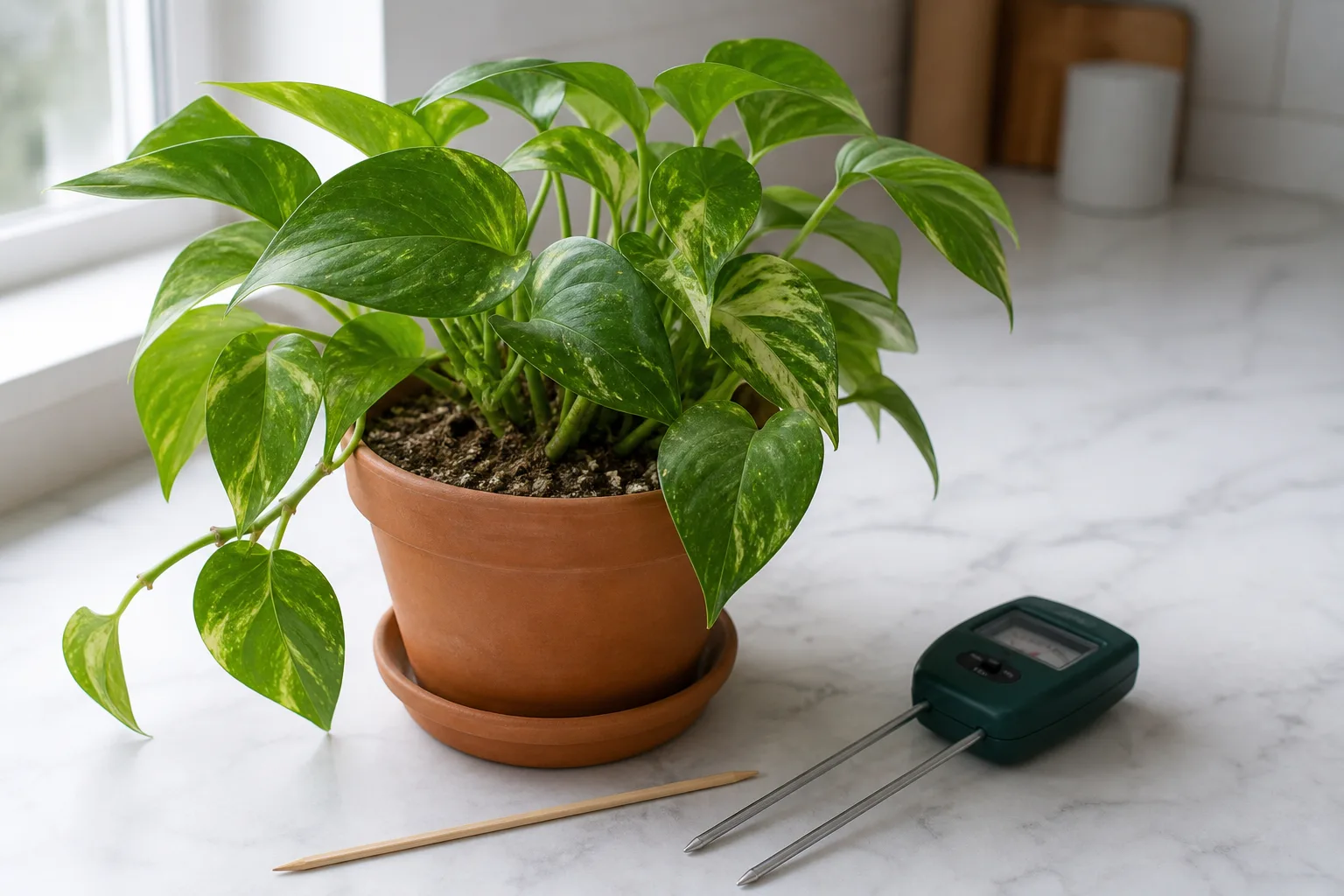
Check the soil before you check the leaves. For a container, insert a finger, bamboo skewer, or plain wooden chopstick 2–3 inches into the mix several inches away from the trunk. Pull it out and feel for cool, damp mix; a dry surface alone is not enough evidence to water. A moisture meter can add a second reading, but it should not replace inspecting the mix and checking whether the pot drains.
For an in-ground tree, use a narrow trowel or soil probe beneath the outer half of the canopy. Avoid probing immediately beside the trunk, where water may collect and roots may be less active. If the soil is moist at the test depth, wait and check again in a day or two. If it is dry and crumbly through the active root zone, water slowly enough that it soaks rather than runs across the surface.
Use pot weight and drainage as second checks
Lift the container after watering, if it is small enough to handle safely, and remember its heavy, fully hydrated weight. Check it again before the next watering. A pot that still feels heavy while the top is dry may contain plenty of moisture deeper down; a light pot with a dry skewer is much stronger evidence that it needs water.
Watch what happens when you pour. If water rushes out of the bottom immediately while the center of the root ball stays dry, the mix may have pulled away from the pot wall, become compacted, or turned hydrophobic. Apply water in two or three slow passes, allowing each pass to soak in, and inspect the drainage holes if the problem repeats. Do not solve poor wetting by watering every day.
How much water to apply and how to apply it
Water at the soil line, slowly. The aim is to wet the root zone evenly, not to splash the leaves, trunk, or fruit. Overhead irrigation keeps foliage wet and can promote leaf spotting; both UC IPM and practical citrus-care guidance favor directing water to the soil with drip, microspray, or another low, controlled method.
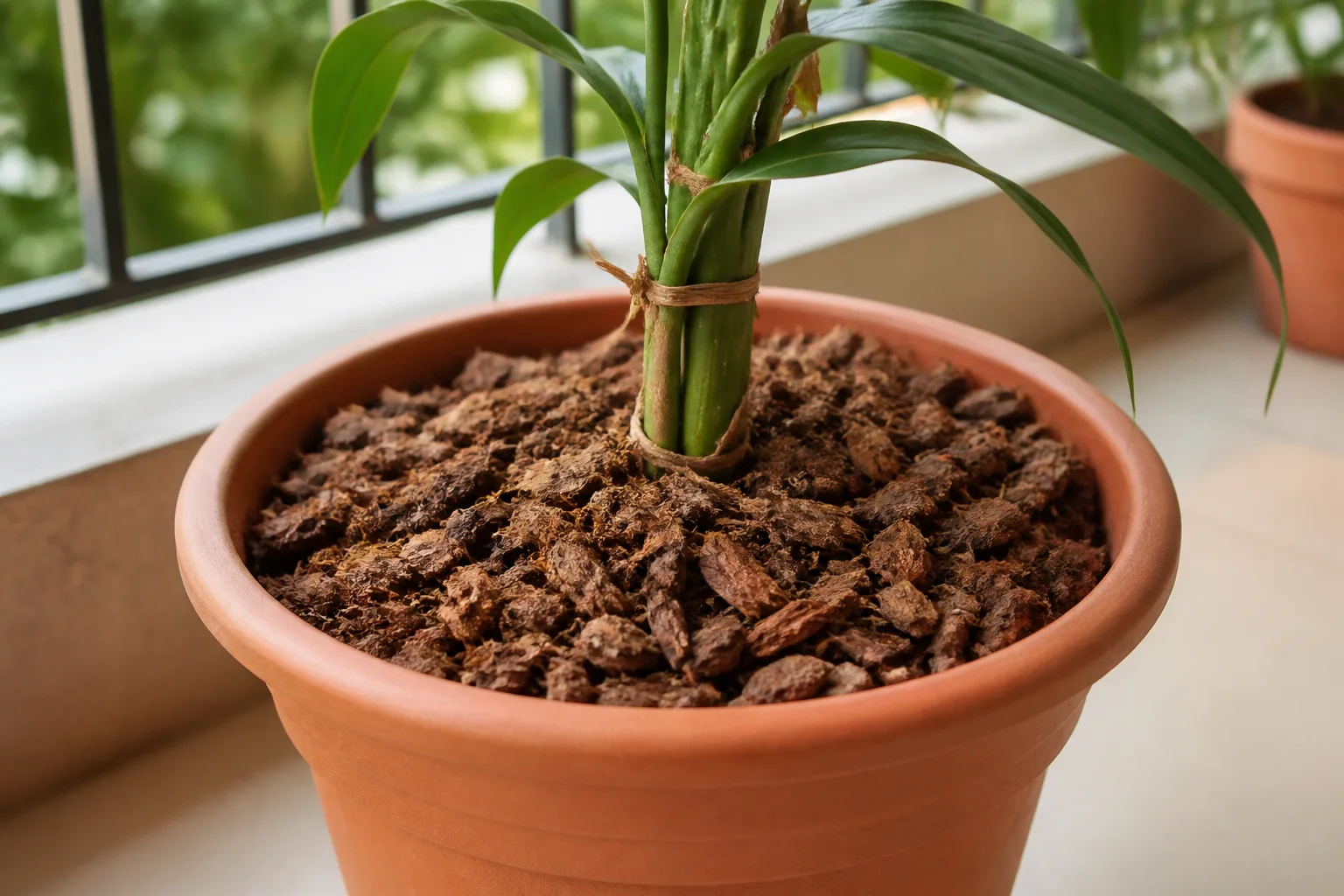
In-ground watering
For an established tree, place drip emitters, a soaker hose, or a slow-running hose under the canopy and extend the wetting area toward the drip line. Move the hose periodically if one spot becomes saturated. The correct amount is the amount that wets the root zone to the depth you are targeting without causing runoff, standing water, or a soggy trunk flare.
The 4–6-inch monthly summer figure from UC IPM is easiest to understand as total water reaching the soil, including useful rainfall. A rain gauge or straight-sided catch can helps you learn how long a hose or irrigation system takes to deliver a known depth. Measuring once is better than guessing gallons forever because tree size, slope, soil, and application pattern all change how far water moves.
For a new tree, keep the first applications focused enough to wet the root ball, then gradually widen the wetted area as new roots move outward. For an established tree, a broad, slow soak is more useful than a small puddle at the trunk. Stop if water begins to run off, wait for it to infiltrate, and resume at a slower rate.
Container watering
Water across the surface of the mix rather than dumping one stream against the trunk. Continue until a little water exits the drainage holes, then wait a few minutes and empty the saucer or cachepot. That flushes the entire root ball instead of wetting only one channel, while the drainage step prevents roots from sitting in water.
Do not use a fixed number of cups for every lemon tree. A cup may be too little for a large patio container and too much for a small pot with a stressed root system. The useful measurement is whether the mix was fully wetted and drained, followed by how long it took to reach the next partial dry-down.
If water beads on the surface or flows around the edges, stop and rehydrate the mix gradually. A root ball that is bone dry can repel the first splash. Repeated daily splashes keep the outside wet while the middle stays dry, which is one reason a tree can look thirsty even though its pot feels damp.
Adjust the schedule for weather, soil, and season
Heat, sun, and wind
High light and heat increase water loss, but they do not prove that a tree needs water at that moment. Check a potted lemon tree in the morning during heat waves and again after a windy day if it is in a small or porous container. A hot wall, dark pot, exposed balcony, or constant wind can shorten the interval; a large shaded pot or humid, still corner can lengthen it.
Keep a lemon tree in the bright light it needs for strong growth and fruiting, but protect a container from extreme reflected heat and give it enough stability that wind does not loosen the root ball. Do not move a tree from indoor light directly into intense outdoor sun just because it looks thirsty. Acclimate it gradually; scorched leaves are a light-transition problem, not a signal to pour on more water.
Rainfall, soil texture, and winter
Count substantial rain, then inspect the root zone before irrigating. Water may drain quickly through sandy soil, while clay or compacted fill may stay wet long after the surface looks normal. Improving drainage and organic-matter structure is more durable than trying to compensate for a poorly drained planting site with a more complicated timer.
Winter changes the equation. A container citrus tree kept cool and bright indoors generally uses water more slowly than one growing outdoors in summer. RHS guidance says to let the compost partially dry before watering in winter, then water thoroughly and allow excess to drain; yellowing or leaf drop in a wet winter pot is a warning to check the roots rather than water again. (RHS citrus problems guide)
An indoor tree beside a heater or in a warm, bright room may still dry faster than a cool overwintering tree. Check the mix instead of assuming that “winter” means the same interval in every home. Water temperature close to room temperature is less disruptive than an icy pour, but drainage remains more important than the exact water source.
Underwatering versus overwatering: read the root zone first
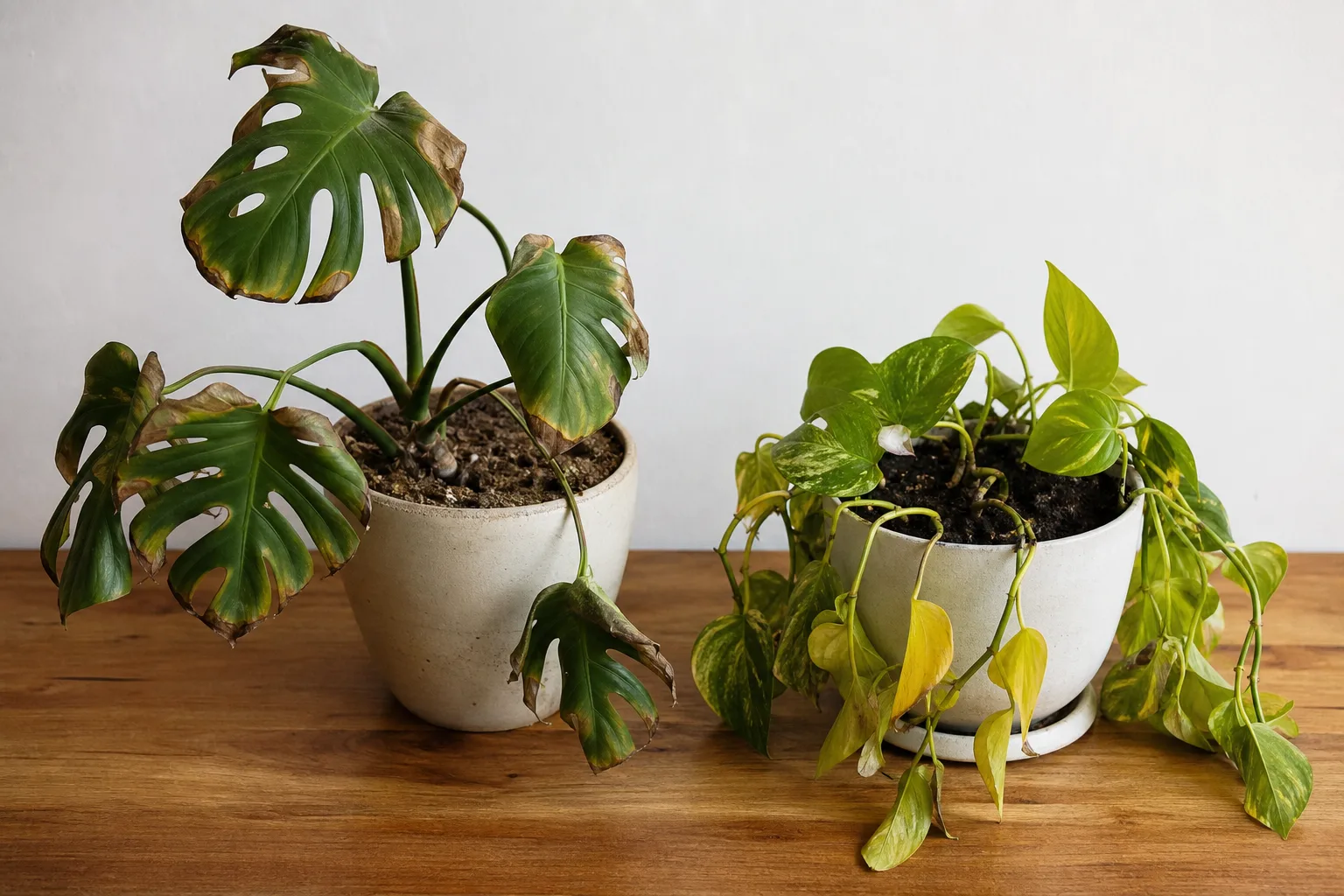
Lemon trees can respond to opposite watering mistakes with similar leaf drop. A yellow leaf or a wilted branch is not enough to diagnose the cause; pair the symptom with soil moisture, pot weight, drainage, recent rainfall, and the smell and condition of the roots.
Signs of underwatering
A thirsty tree usually has a dry root zone, a noticeably light container, curled or limp leaves, dry leaf edges, and sometimes flowers or young fruit that drop during stress. Gardening Know How notes that citrus can drop leaves after being allowed to become very dry and then watered again, which makes delayed drought damage confusing. (Gardening Know How’s citrus water guide)
If the soil is genuinely dry, water slowly until the root zone is wet, not just the surface. For a severely dry container, water in stages so the mix can absorb it; a second pass may be needed after several minutes. Do not respond to drought stress with a heavy dose of fertilizer or hard pruning. Stabilize moisture first and wait for new growth to show whether the tree is recovering.
Signs of overwatering and root rot
Overwatering is a pattern of wet soil plus declining roots, not simply the fact that water was applied. Persistent yellow leaves, leaf drop while the mix remains wet, a sour smell, fungus or algae on constantly damp soil, and soft or dark roots all raise the likelihood of root stress. RHS lists roots that are too wet or too dry among causes of yellow leaves and identifies excessive winter watering as a common cause of leaf loss in container citrus.
If the mix is still wet, stop watering and confirm that the drainage holes are open. Move a container out of a water-filled saucer, improve airflow, and inspect the roots if decline continues. Healthy roots are usually firm; mushy or darkened roots should be trimmed with clean tools before repotting into a clean, appropriately sized container with a free-draining citrus mix. A tree with advanced root loss may not recover, so prevention is safer than trying to keep a calendar.
How to fix a lemon tree that is already stressed
Change one variable at a time so you can tell what helped. First identify whether the root zone is dry or wet. If it is dry, rehydrate gradually and repeat the soil check before watering again. If it is wet, stop adding water, empty standing water, and solve the drainage problem before adjusting fertilizer, pruning, light, or humidity.
Do not cut off a large amount of healthy foliage because a tree lost leaves. Remove only dead, broken, diseased, or clearly damaged growth once you know the tree is stable. A sudden move from shade to harsh sun, a large repot, heavy pruning, and a strong fertilizer application can compound stress. The recovery goal is not a perfect-looking tree this week; it is a root system that can resume producing healthy new growth.
If the tree has been dry long enough for the mix to shrink from the pot wall, check whether water is actually reaching the center. If a container remains wet for many days, test the drainage holes and inspect whether the pot is oversized or the mix is compacted. If roots are soft or smell sour, treat that as a root problem rather than an ordinary watering-schedule problem.
Maintenance choices that quietly change watering needs
Mulch reduces evaporation in an in-ground planting, but it does not replace a moisture check. Spread a loose layer over the root zone, keep it away from the trunk, and pull it back when you probe the soil. Thick mulch touching the trunk can keep the crown damp and hide a drainage problem.
Fertilizer and water work together, but fertilizer is not medicine for drought or root rot. Feed only a hydrated, actively growing tree and follow the citrus-fertilizer label for the plant’s size and climate. Avoid feeding a wilted tree with dry roots or a waterlogged tree with damaged roots; salts and additional stress can make recovery harder. RHS recommends citrus-specific feeding during active growth and seasonal adjustments rather than treating every symptom as a nutrient shortage. (RHS citrus growing guide)
Even moisture helps a lemon tree maintain flowers and developing fruit, but watering cannot compensate for insufficient light, poor pollination conditions, cold damage, nutrient deficiency, or a tree that is too young to bear. Some young fruit drop is normal because the tree cannot carry every fruit it initiates. Keep the root zone steady, then evaluate light, temperature, feeding, pests, and cultivar before increasing water.
For a container tree, a slightly larger pot is not automatically better. A pot that is much larger than the root ball holds a large volume of wet mix that the tree cannot use quickly. Choose a container with generous drainage, a coarse mix that holds some moisture but drains freely, and enough weight to keep the canopy stable without turning the root zone into a reservoir.
Conclusion
Water a lemon tree deeply enough to wet its active root zone, then wait for measurable partial dry-down before watering again. Newly planted trees need closer attention while they establish; established trees usually need deep irrigation at wider intervals; container trees need more frequent checks because their soil reservoir is small.
Use the calendar only as a reminder to inspect. Probe 2–3 inches in a pot, check several inches of soil under an in-ground canopy, count meaningful rain, and watch whether the container drains. A lemon tree with dry soil needs a slow rehydration; a tree with wet, declining roots needs less water and better drainage. That soil-first rhythm does more for strong roots and dependable fruit than any fixed weekly rule.



