How to Keep Birds From Eating Grass Seed
Birds treat fresh grass seed like an open buffet. Learn five lawn-pro-tested ways to hide, cover, and protect seed through germination—without harming birds.
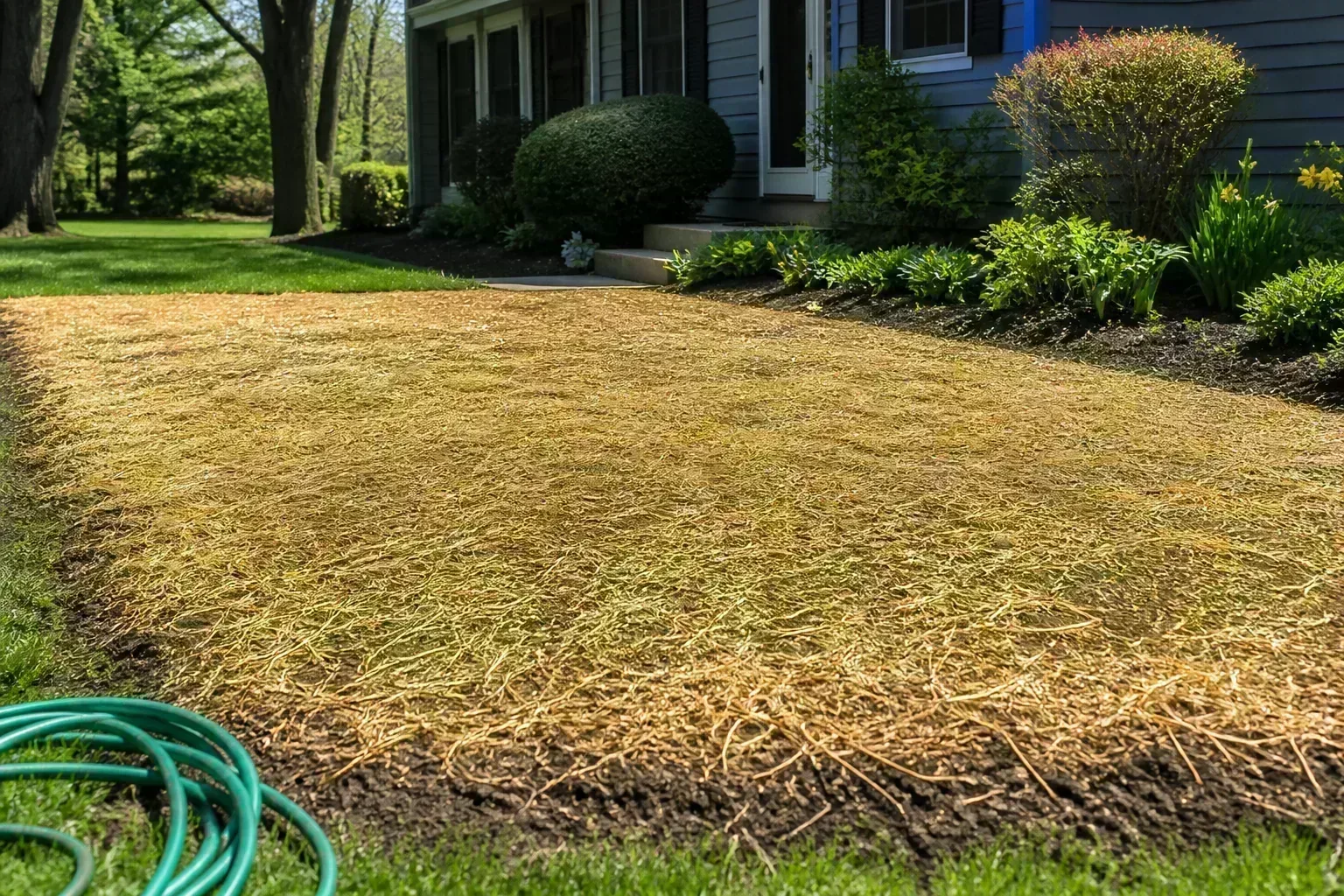
You spread grass seed, water it in, and by morning a flock of sparrows has turned the patch into a buffet line. Birds are not evil lawn saboteurs—they are efficient visual foragers, and a freshly seeded yard looks like food scattered on a plate. The fix is not a permanent war on wildlife. It is a short establishment window where you hide seed, speed germination, and use physical barriers until seedlings anchor.
Spring seeding brings extra bird pressure because many species are feeding heavily before nesting, and cool-season lawns are often sown on bare or thin soil that is easy to scan from above. The five tactics below are what turf managers reach for after the spreader is empty: light mulch, safe netting, proper burial, moving scare tools, and a feeder redirect. None of these require harming birds, and all work better when paired with good how to plant grass seed fundamentals.
Why birds target freshly sown lawns
Birds eat grass seed for the same reason they hit a feeder: high-energy food with almost no hunting cost. Turf seed sitting on dark, moist soil reflects light and contrasts sharply with the background. Sparrows, starlings, mourning doves, robins, and pigeons are common culprits on residential lawns, though the exact cast changes by region and season.
Most small birds still prefer insects or wild seeds when those are abundant. The problem peaks when your lawn is the easiest calorie on the block—especially right after broadcasting on bare renovation soil or thin overseed patches. Birds rarely uproot anchored seedlings; they vacuum loose seed before roots form.
When the risk actually drops
Pressure is highest in the first 7 to 14 days after sowing, while seed remains loose on the surface. Once seed imbibes water, sends a root, and blades emerge, the meal looks less like birdseed and more like turf. Gardening Know How notes that bird interest usually fades after germination begins and seedlings are visible, though slow species in a blend can extend the vulnerable window.
Fast germination is your best ally. Perennial ryegrass may sprout in five to ten days in favorable soil; Kentucky bluegrass can take two to three weeks. Until the slowest species in your mix has a fair chance to emerge, treat the area as bird-attractive. Our how long grass seed takes to grow timeline helps set expectations by species.
Win the job before birds show up
Scare tactics fail when the seed is still naked on the soil. Hide and anchor first; flash and noise second.
Plant at the right time with quality seed
Better Homes & Gardens recommends seeding in late spring or late summer/early fall when moderate temperatures and rainfall shrink the days seed sits exposed. Spring works for cool-season grasses when soil is warming and you can irrigate consistently, but summer heat makes young seedlings—and exposed seed—vulnerable to drying between bird visits.
Buy seed with a high germination percentage and low weed-seed count on the label. Birds eat cheap seed as readily as premium, but fast, uniform germination closes the buffet sooner. Match species to sun and traffic; wrong grass in shade will stay thin no matter how many decoy owls you rotate. If you are filling bare spots, read when to overseed bare patches before you choose a date.
Bury seed lightly and firm the soil first
After broadcasting, rake lightly so most seed disappears into the top 1/8 to 1/4 inch of soil. Better Homes & Gardens suggests raking until only about 10 percent of seed remains visible—enough to confirm even coverage, not enough to advertise lunch from the air.
Roll or tamp for seed-to-soil contact on bare areas. NC State Extension recommends hand-raking or dragging, then rolling lightly to firm the surface so seed meets moist mineral soil. Seed buried too deep will not germinate; seed left on top is what birds see. If you are overseeding into existing turf, scratch the surface so seed reaches soil, not just thatch.
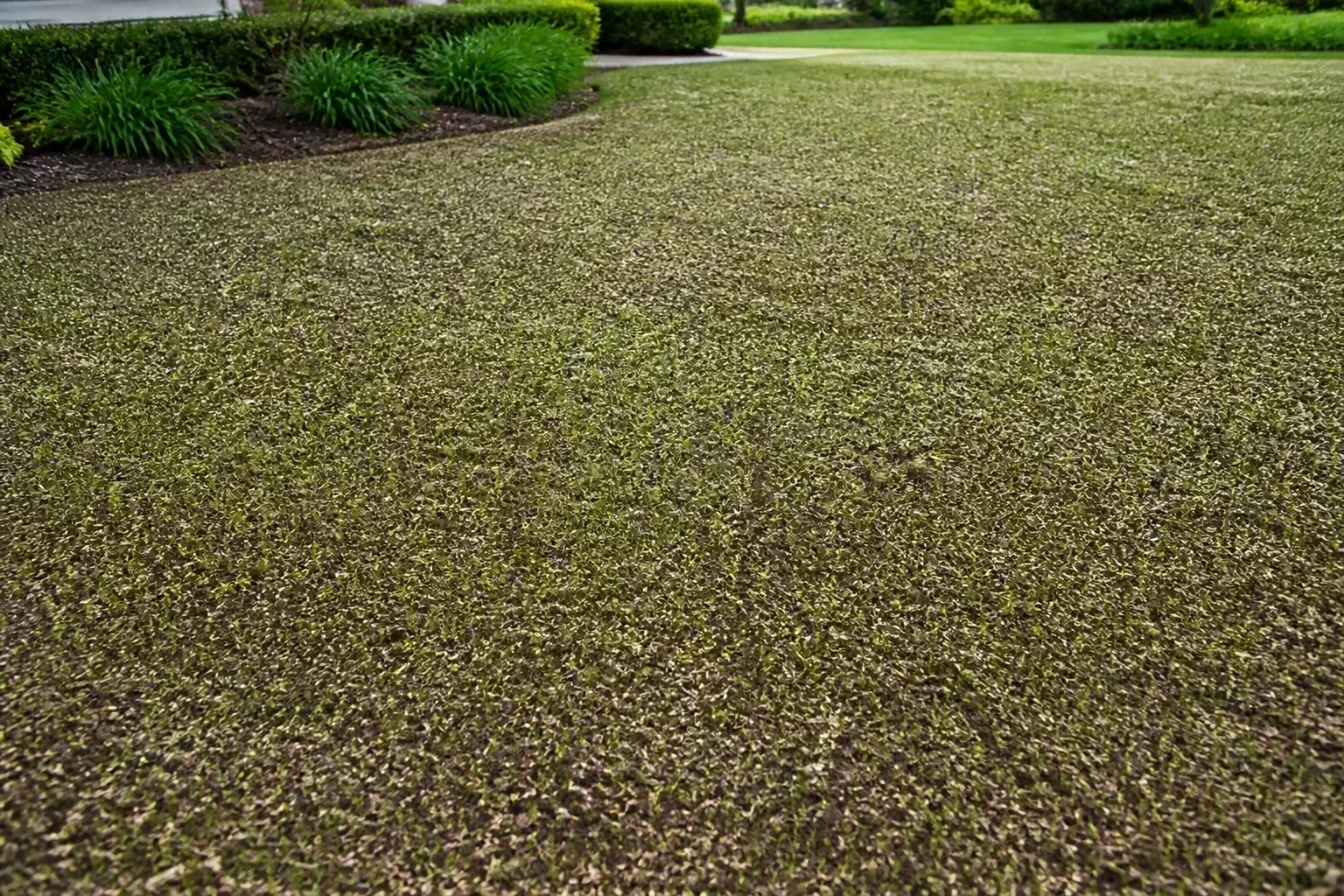
Tip 1: Top-dress with straw, leaves, or fine compost
A thin organic cover breaks the visual cue birds use to find seed and holds moisture in the seed zone—a double win. Gardening Know How recommends top-dressing with weed-free straw, peat moss, or fine compost at roughly 1/8 to 1/4 inch (3 to 6 mm) depth immediately after sowing.
Spread evenly the same day you seed. You should still see soil between pieces of straw at a glance. Water gently to settle the mulch without washing seed into gutters. On slopes, mulch also reduces erosion until roots knit the soil.
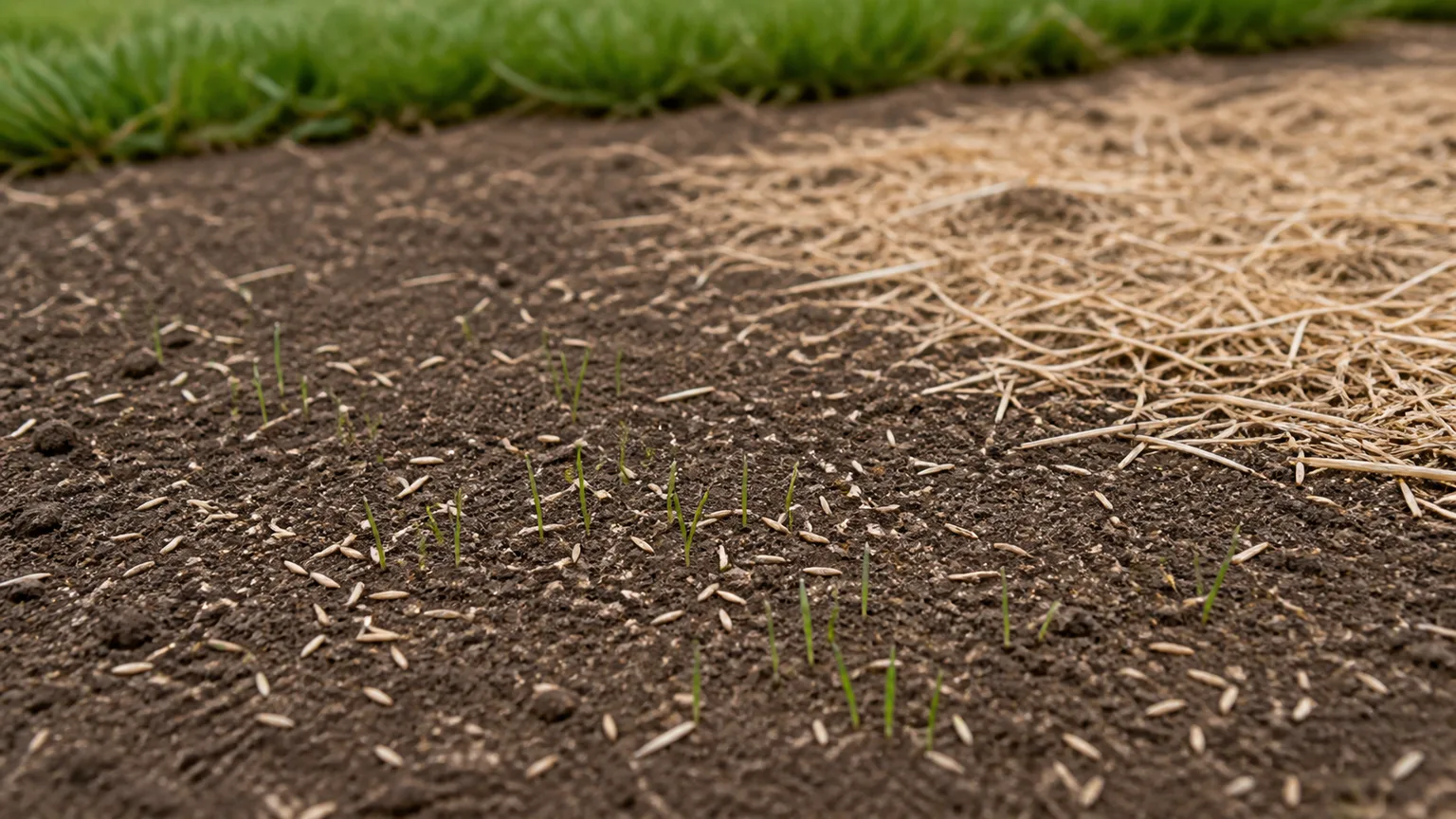
Straw vs hay—and how much to apply
Use straw, not hay. Hay is cut with seed heads attached and can import a weed crop that outlasts your turf repair. Wheat straw and rice straw harvested after grain removal are standard lawn choices.
Penn State Extension recommends 80 to 100 pounds of straw per 1,000 square feet on level ground—about two 40-pound bales per 1,000 square feet, matching common retail advice. NC State Extension suggests one bale per 1,000 square feet for warm-season turf and one to two bales for cool-season lawns, with excelsior netting on windy sites. Steep banks need the higher end of the range.
Too little straw will not hide seed or hold moisture; too much smothers seedlings and invites disease. NC State warns that seedling diseases increase when lawns are mulched too heavily. If you cannot see soil flecks through the layer, pull some back. Finely shredded leaves work in a pinch; peat moss and compost hold water well but can crust when dry—break crusts lightly if they form. Pelletized paper mulches from garden centers spread cleanly and are weed-free, though they cost more than straw.
Tip 2: Net or blanket the seeded bed
When bird pressure is heavy—near feeders, on open bare soil, or after starlings have already found the spot—physical exclusion beats shiny tape. Netting, erosion blankets, and commercial seed blankets let light and water through while blocking beaks.
Safe bird netting height and anchors
Stretch bird netting over the seeded area on low hoops, stakes, or a frame so the mesh sits several inches above the soil, not draped on the ground. Gardening Know How warns that netting laid directly on soil can entangle birds and small mammals. Elevated netting blocks access from above while allowing you to water underneath.
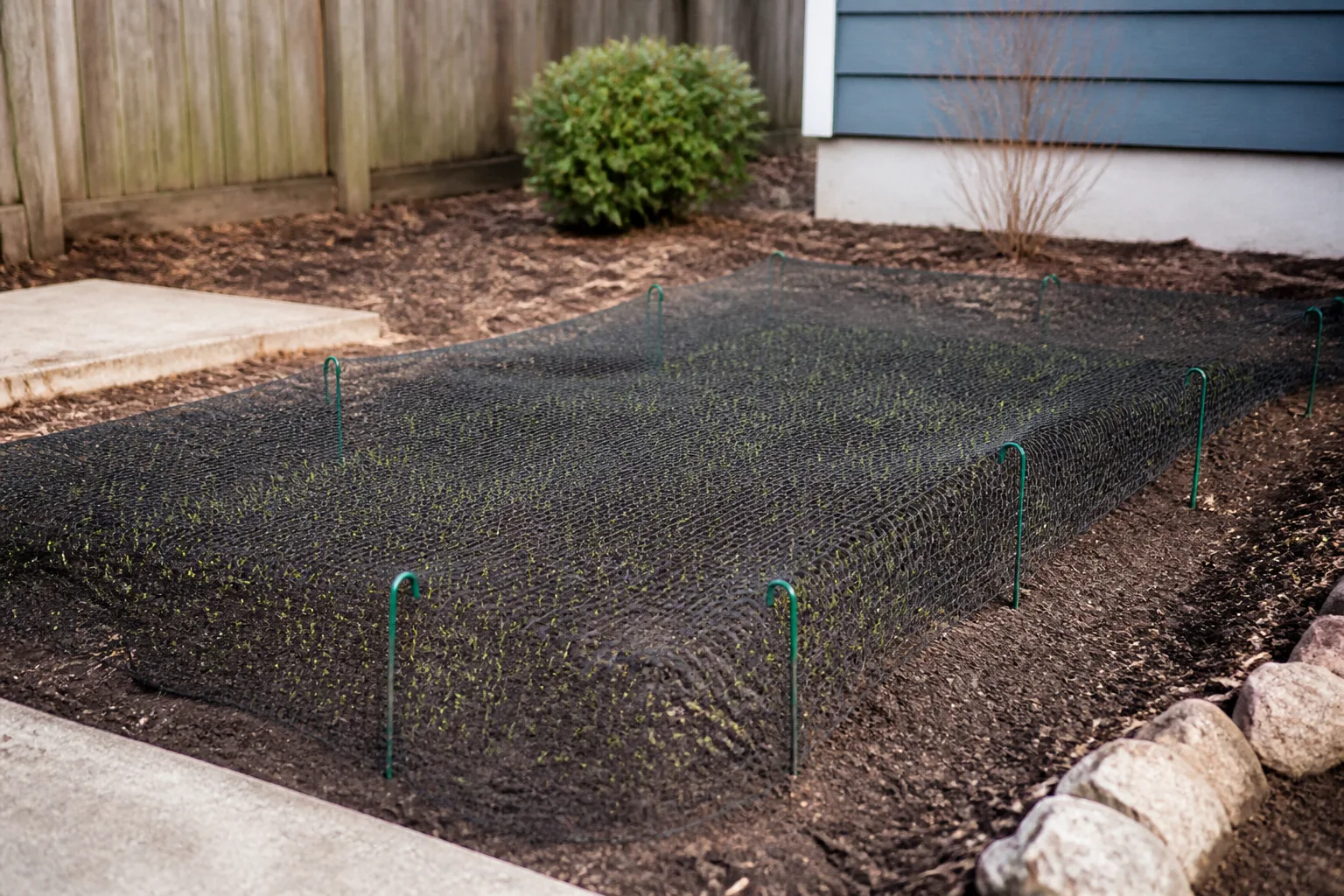
Stake edges every few feet on windy days. Check daily for trapped animals. Remove netting as soon as seedlings are up and rooted enough to resist pecking—usually within two weeks for fast species, longer if Kentucky bluegrass is in the blend. Netting is temporary infrastructure, not a summer-long lawn feature.
Erosion blankets and seed blankets
On slopes or high-value renovations, woven erosion blankets or burlap-style seed blankets anchor seed against washout and birds simultaneously. Penn State Extension notes that mats and covers provide uniform, weed-free coverage but must be pinned and removed soon after germination so light reaches seedlings and disease does not build under warm, wet fabric.
Floating row cover laid loosely over small patches can work for a week if you lift it once blades appear. Pre-made seed blankets that include mulch and tackifier are convenient for patch kits; follow the label on whether to remove or let them biodegrade.
Tip 3: Oversow slightly, then rake in the surplus
Birds will steal some seed on almost any lawn. Sowing a little extra within label limits compensates for loss without encouraging you to skip cover. On bare soil, use the upper end of the recommended rate for your species; on overseeding, follow the bag’s overseed line—not the new-lawn rate.
Oversowing without burial is feeding birds efficiently. Combine extra seed with light raking and mulch so surplus grain disappears. NC State cautions that very high seeding rates can produce weak, disease-prone seedlings; do not double seed to avoid straw. If half your seed vanished before you covered it, you may need to reseed bare zones after the first flush—see why grass seed isn’t germinating for telltale patterns.
Tip 4: Add motion and reflection as backup deterrents
Reflective tape, pinwheels, foil flags, wind chimes, and decoy owls can buy time while mulch and netting do the real work. Birds habituate quickly to static objects. Movement and changing reflections trigger caution longer than a plastic owl frozen on a post.
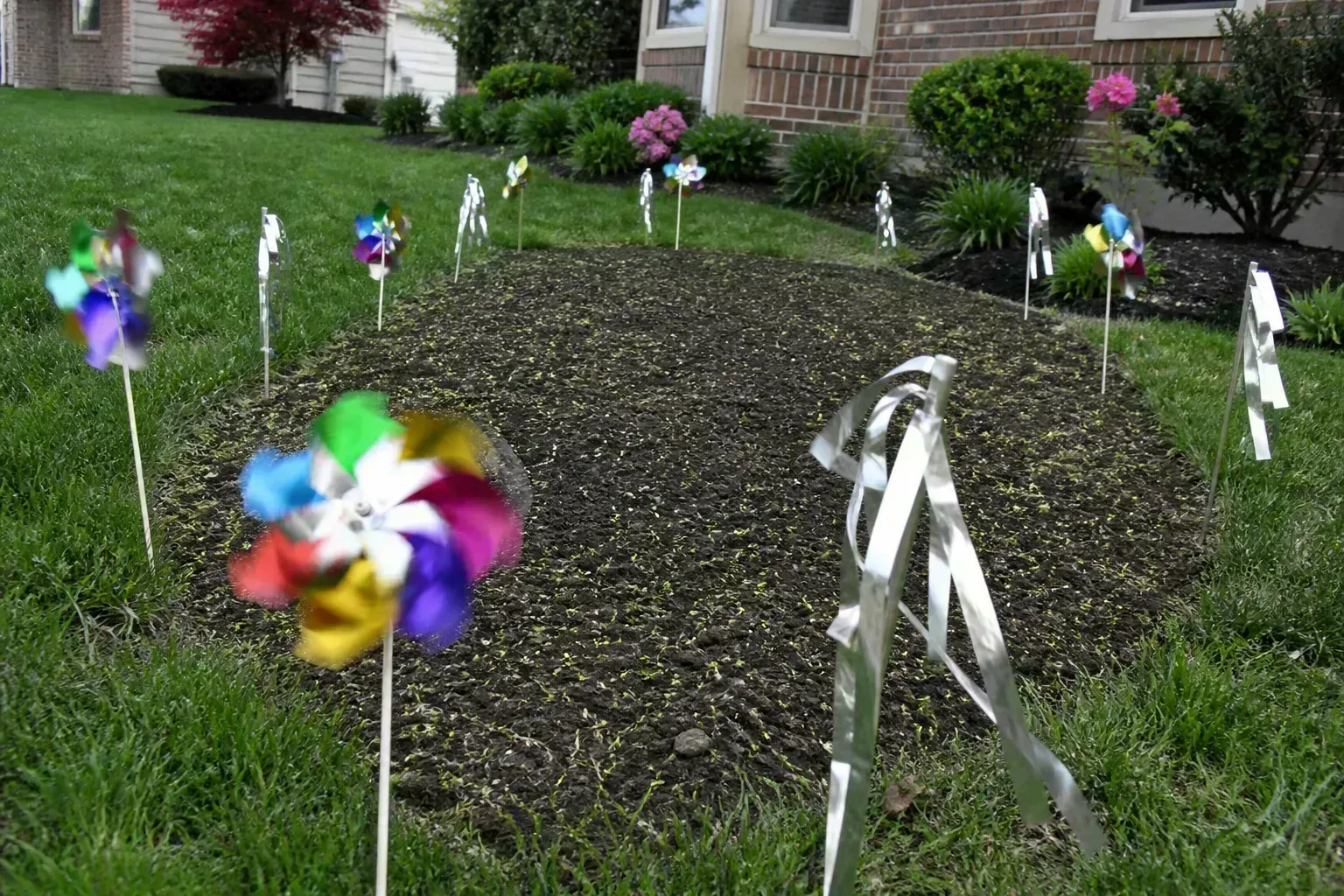
Why decoys need to move
Relocate decoys every two to three days and vary the type of stimulus—swap tape for a moving pinwheel, add a fluttering flag, or run a motion-activated sprinkler on a low cycle if water restrictions allow. Combine tactics; single-trick yards become bird gyms within a week.
Keep deterrents humane and legal. Do not use sticky repellents, poisons, or traps on seed beds. Most North American yard birds are protected under the Migratory Bird Treaty Act; harassment is fine, injury is not. Scare tools are adjuncts, not replacements for cover.
Tip 5: Steer hungry birds toward a feeder buffer
If you maintain feeders or baths, birds already route through your yard. During the germination window, move feeders to the far side of the property—or temporarily offer high-quality seed there while the lawn is covered. A full feeder does not guarantee birds will ignore turf, but it reduces random foraging on exposed patches.
Resume normal feeder placement once seedlings are established. Long term, birds in the lawn are allies; they eat grubs and caterpillars in mature turf. You are only managing a two-to-three-week establishment conflict, not banning wildlife from the garden.
How long protection needs to last
Plan on 7 to 21 days of active protection, depending on species mix, soil temperature, and weather. Cool, wet springs lengthen germination; warm, irrigated fall seeding may need less time. Maintain consistent light watering throughout—dry seed on the surface is both bird-visible and dead.
When to remove mulch, nets, and covers
Remove or pull back netting and floating covers when roughly 60 to 80 percent of seedlings are visible and 1 to 2 inches tall. Leave straw in place if it is thin and soil shows through; excess straw can be raked off after the first mowing. Penn State notes excess straw should be removed following establishment when it mats or shades new growth.
Mow for the first time when grass reaches about three to four inches and seedlings resist a gentle tug—often three to five weeks after germination for fast species. By then, bird visits shift from seed theft to insect hunting.
Mistakes that help birds—or kill germination
Skipping cover because “I’ll scare them off” leaves seed visible. Using hay imports weeds. Netting on the soil risks entanglement. Thick straw blocks light and fuels disease. Planting in midsummer heat keeps seed exposed longer while irrigation struggles. Overwatering floats uncovered seed into low spots where birds concentrate.
Another common error is removing mulch the day the first ryegrass sprout appears when the blend still contains slow Kentucky bluegrass. Keep protection until the slowest species in the bag has had a fair germination window. If birds persist on a small patch after you did everything right, a quick reseed with immediate straw cover beats fighting the flock bare-handed.
Conclusion
Birds eat grass seed because it is visible, loose, and nutritious—not because your lawn is cursed. Cover seed the day you sow, using a light straw or compost top-dress at extension-backed rates, add elevated netting where pressure is high, rake and firm before you mulch, and treat scare tactics as rotating backup. Redirect feeders during the germination window, water consistently, and pull covers once seedlings anchor.
Do those steps and spring seeding stops feeling like a donation program for the neighborhood sparrows. Your reward is a uniform stand that fills in before weeds do—and birds back on bug patrol where you want them.



