How to Keep Wasps Out of Your Garden Next Year
Learn how to keep wasps out of your garden next year with five fall actions: map nests, seal shelter, remove attractants, clean safely, and monitor in spring.
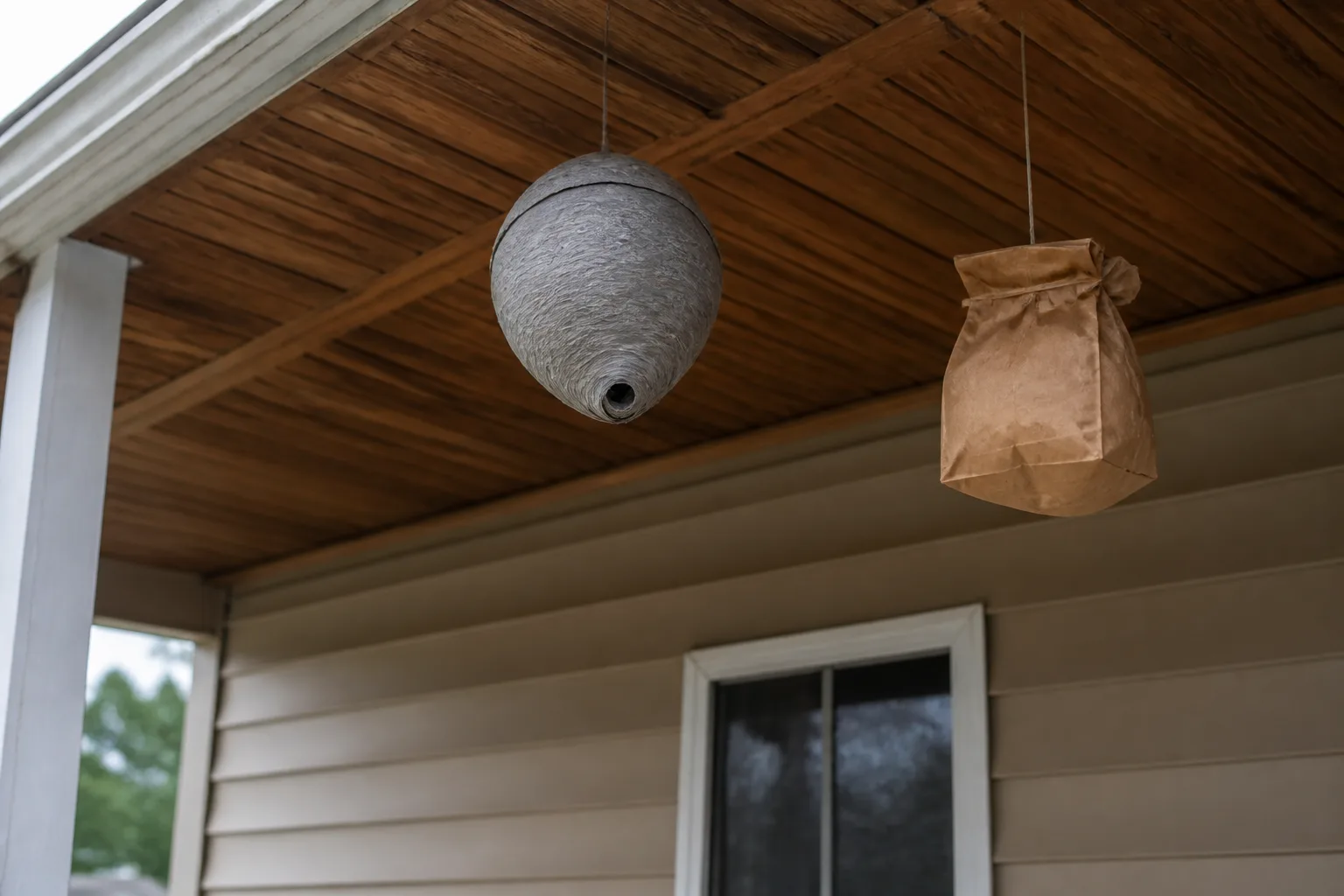
The most useful fall wasp-prevention job is not spraying every insect you see. It is finding the places and resources that make your property worth revisiting, then closing the highest-risk gaps before warm weather wakes overwintering queens.
Start with a quiet inspection from a safe distance. Mark where you saw steady nest traffic, remove food that keeps wasps circling, repair building openings, and leave an out-of-the-way nest alone if it is helping your garden more than it is endangering people. This approach will not guarantee a wasp-free yard—no honest plan can—but it can make next year’s first nest easier to spot and the places you use most less attractive.
First, identify what kind of wasp problem you have
“Wasps” covers a huge range of insects, and a few wasps feeding on flowers are not the same problem as a colony defending a nest beside the back door. Before you clean, seal, mow, or set a trap, decide whether you are seeing a nest, a food-related gathering, or solitary wasps that are simply passing through.
Social wasps and solitary wasps need different responses
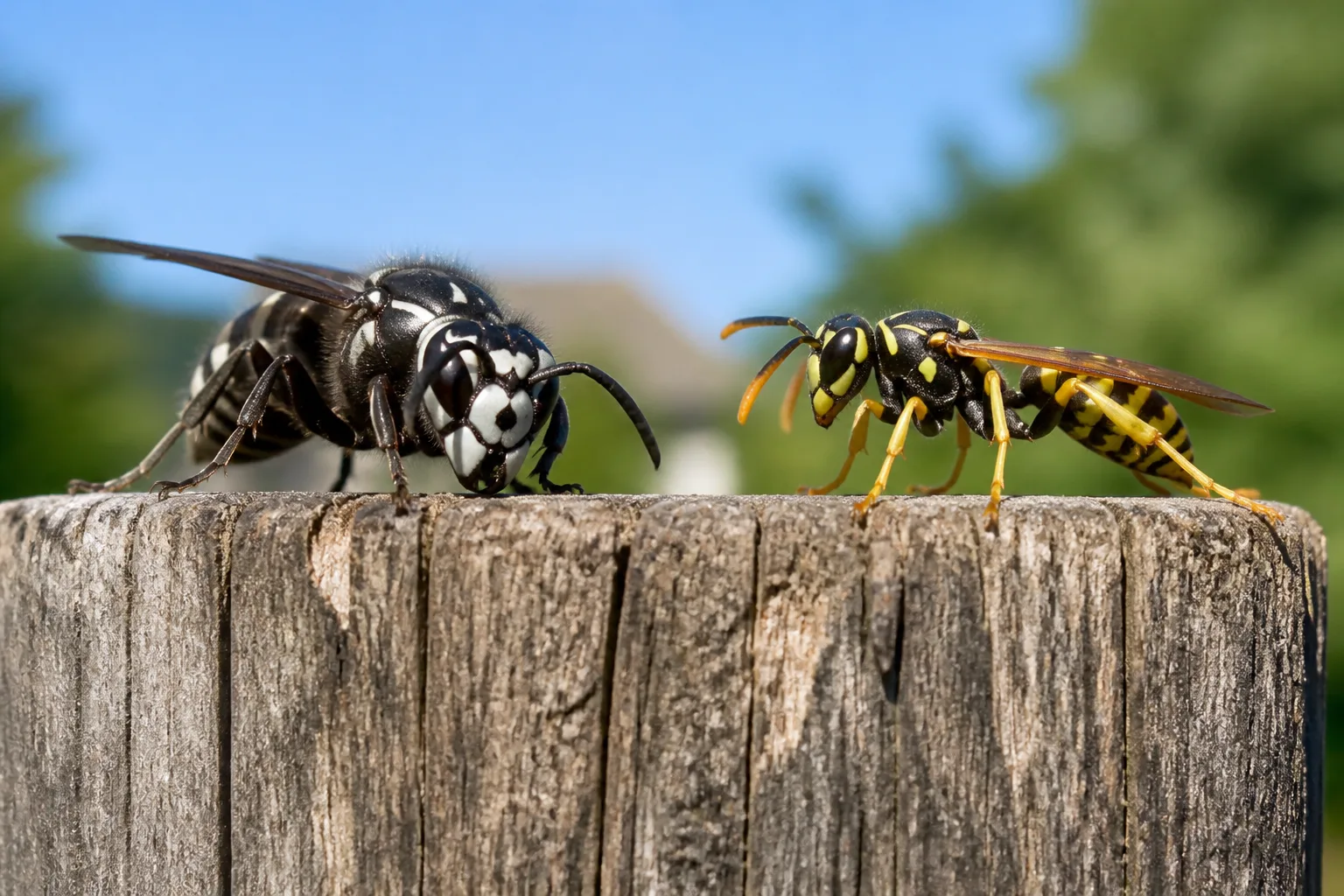
Social wasps share a nest and raise a brood together. Paper wasps, yellowjackets, and hornets are the groups most likely to create a noticeable defensive zone around a colony, especially when a person approaches the nest, opens a nearby grill, runs a mower over an entrance, or trims vegetation across the flight path. The Royal Horticultural Society’s wasp guidance explains that social wasps also provide useful garden services by feeding developing larvae with other invertebrates.
Solitary wasps usually make individual nests rather than one large shared colony. Many are unlikely to sting unless handled, and some hunt caterpillars or other insects for their young. A wasp-sized insect near a flower, a mud tube, or a small hole is therefore not enough evidence to justify broad treatment; look for repeated traffic to one entrance and a defensive reaction before treating the whole garden as a pest site.
Ground nest, open paper nest, or hidden void?
Nest architecture gives you a better clue than color alone. Ground-nesting yellowjackets may use an old animal burrow, a gap under a slab, or a concealed lawn opening. Paper wasps often build a small, open, umbrella-like comb under an eave, railing, leaf, bench, or piece of garden furniture. Hornets and some yellowjackets build larger enclosed paper nests in trees, shrubs, or structures.
Hidden nests are the ones that create recurring indoor surprises. Paper-wasp queens can use roof returns, soffits, attic spaces, cracks, and other protected voids for winter shelter, while a few wasps appearing at a window may be emerging from an attic rather than flying in from the garden. USU Extension’s paper-wasp identification and management page lists eaves, pipes, benches, play equipment, and plants among possible nesting sites, so inspect the places where people and wasps are most likely to cross paths.
Why fall prevention works—and what it cannot prevent
Most social-wasp colonies in temperate climates are seasonal. Workers, males, and the old queen die as the season ends, while newly mated queens leave the nest and spend winter in protected places such as cavities, bark, leaf litter, or below-ground shelter. They emerge in spring, choose a site, and begin a new colony; they do not normally move back into last year’s paper comb.
That distinction matters because a nest in the same corner next year does not prove that the old nest “called” the wasps back. The site may simply offer the same combination of shelter, warmth, dry overhead protection, and easy access to food. Savvy Gardening’s paper-wasp overview notes that most paper-wasp colonies do not survive winter and that nests are generally used for one season, while the RHS describes how young queens leave to seek shelter elsewhere.
Fall work can therefore reduce the odds of a repeat in a building, patio, or garden path, but it cannot stop queens from arriving from neighboring yards. It also cannot remove a nest that is still active, make a food-rich fruit tree invisible, or turn a shaded, undisturbed woodpile into an unsuitable shelter overnight.
Treat “now” as a seasonal condition rather than a date on the calendar. In a cold region, it may mean after regular frosts when activity is clearly declining; in a warm region, it may mean late in the local nesting season after observing the nest for several days. A warm spell can briefly reactivate insects, so do not assume a single cool morning proves a nest is empty.
1. Map active and abandoned nests before cold weather
Make one slow circuit of the garden, house, garage, shed, and patio. You are not trying to inspect a nest up close; you are building a map that tells you which places need a future barrier, which areas should be avoided during cleanup, and which spots deserve a spring check.
Look from the edge of the area for a repeated stream of insects entering one opening or returning to one paper structure. Record the location with a simple note such as “under north eave,” “hole beside retaining wall,” or “inside open fence rail.” Include what people do nearby: children play there, a mower passes over it, fruit is harvested there, or the door is opened several times a day.
Check the undersides of eaves and awnings, shed rafters, porch ceilings, the backs of shutters, the underside of deck rails, hollow furniture legs, open pipe ends, seldom-used grills, dense shrubs, tree cavities, and old ground holes. Do not move cushions, tarps, firewood, pots, or rocks into a new position until you have looked for insects using that shelter.
When to leave a nest alone
An out-of-the-way nest can be a working part of the garden rather than an emergency. Adult wasps feed on nectar, and workers collect insects or carrion for larvae; the RHS identifies social wasps as useful predators that can reduce caterpillar and aphid pressure. If the nest is away from doors, paths, play areas, pets, and regular work, the lowest-risk choice may be to mark it and leave it until the colony dies naturally.
Leaving it alone does not mean ignoring it. Tell everyone in the household where it is, keep trimmers and lawnmowers away from a ground entrance, and recheck the area from a distance as the season changes. If you leave the nest, plan to remove the shelter attractant or block the access point only after the colony is confirmed inactive and only when you can do so without climbing, opening a void, or disturbing another animal.
When to call a professional
Call a qualified pest professional instead of experimenting when anyone in the household has a serious sting allergy, the nest is large, high, inside a wall or attic, below ground in a high-traffic area, or close to a doorway. A nest that appears small can still contain defensive insects, and a hidden colony cannot be made safe simply by sealing the visible crack.
Professional help is also sensible when you cannot identify the insect or when repeated activity indoors suggests a structural void. Do not climb a ladder with a spray can, open a grill that may conceal a nest, or ask someone with a known allergy to “just knock it down.” If you suspect an invasive hornet covered by a local alert, observe from a distance, take a photo only if you can do so safely, and follow your state agriculture or extension service’s reporting instructions.
2. Remove old nests only after activity stops
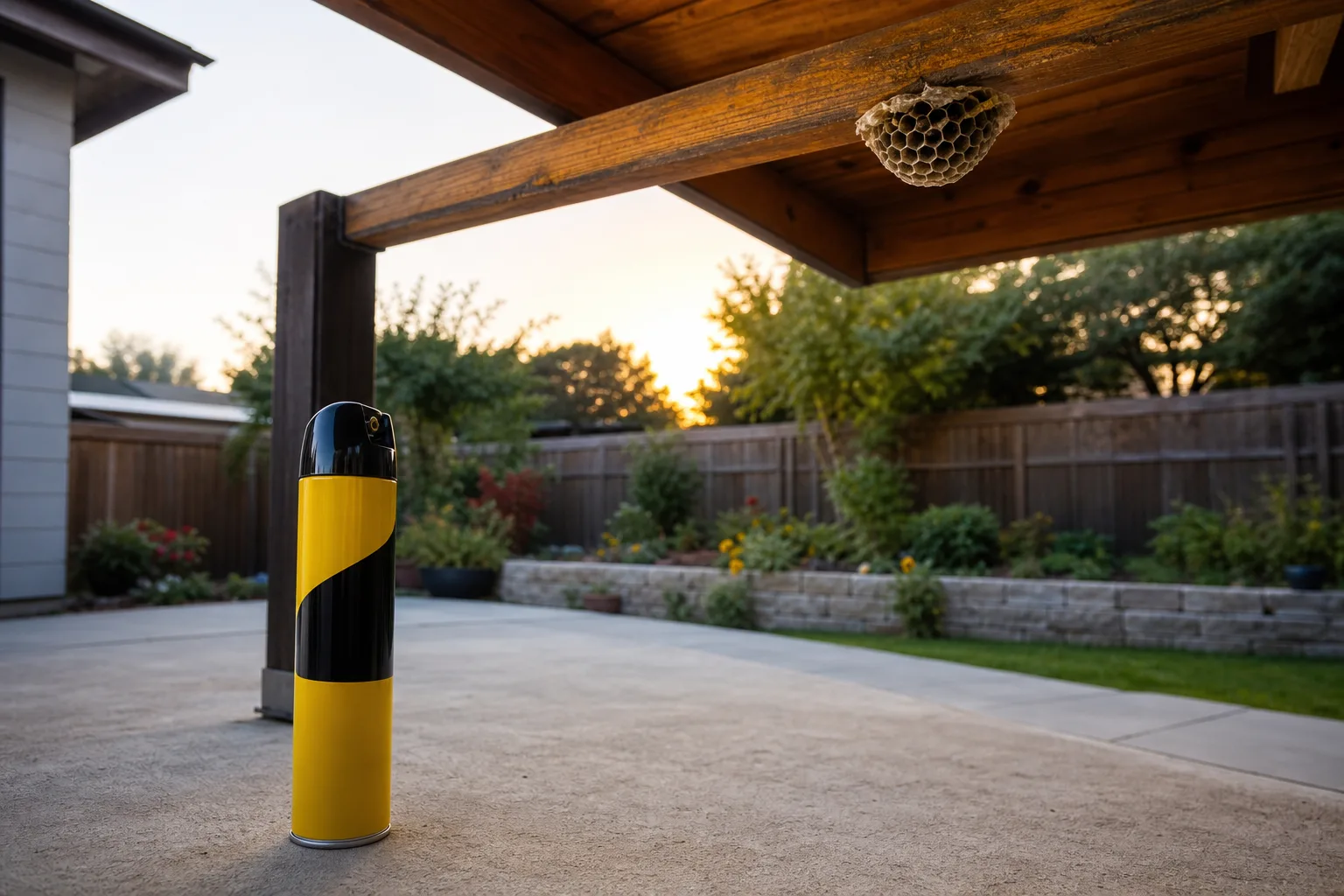
An old paper nest is not usually a nest that will be reoccupied, but removing it can still be useful. It lets you inspect the attachment point, see whether a crack or sheltered ledge needs repair, and avoid mistaking last year’s structure for a live colony during the next spring inspection. It is a housekeeping step, not a guaranteed repellent.
Use activity—not a convenient date—as your safety test. Watch the area from a distance during a suitable warm part of the day, then check again after the weather has cooled. If you see traffic, movement on the comb, or wasps entering a nearby opening, treat the site as active and leave it alone. Gardeners’ World notes that a small nest is easier to manage early, but waiting until winter can make an out-of-the-way nest safer to remove; the same source also recommends protecting individual fruit rather than allowing a whole harvest to become a feeding station.
If a clearly inactive, low, exposed nest is within your ability to reach from the ground, wear closed clothing and eye protection, keep other people away, and use a long-handled tool so your face and hands are not beside the structure. Do not stand directly beneath it, do not use a ladder for a questionable nest, and do not burn, flood, crush, or spray an active nest. Put removed material in a sealed bag or follow the disposal directions for any product previously used at the site.
Clean the attachment point without disturbing wildlife
Once the nest is gone and the surface is quiet, wash the attachment area with ordinary soapy water and let it dry. This removes residue and gives you a clean surface on which to notice a crack, a loose fascia board, an open pipe, or a gap behind a shutter. It does not sterilize the garden, and it is not a reason to scrub every natural surface where insects might shelter.
Pause before removing a nest from a tree cavity, birdhouse, woodpile, or dense perennial clump. An apparently empty paper structure may be beside a bird, bat, or other wildlife shelter, and a fallen nest can be left to break down if it is not creating a hazard. The safest cleanup is targeted: remove what threatens people or equipment, then preserve the rest of the garden’s useful structure.
3. Seal the places queens use for winter shelter
Exclusion is the most durable building-level fix when wasps repeatedly appear indoors or around the same roofline. Start outside and work methodically around fascia-to-roof joints, soffit returns, attic vents, window screens, door frames, utility penetrations, weep holes, siding gaps, and open ends of tubular rails or furniture.
Use a durable sealant, fine insect screen, weatherstripping, or a repair material suited to the opening and the building surface. The goal is to prevent insect entry without blocking ventilation, drainage, or a route used by birds and bats. A blob of expanding foam in an active vent is not a repair plan; it can create moisture, fire, or maintenance problems even if it closes one wasp-sized gap.
Never seal an opening while insects are actively using it. Watch the route first, and inspect the connected attic, wall void, or crawlspace for wildlife before closing anything. If wasps are already inside a structure, exclusion may need to follow professional treatment or removal; sealing the outside can trap insects inside or redirect them into occupied rooms.
Inspect eaves, soffits, sheds, screens, and pipes
Give extra attention to warm, protected surfaces that face the afternoon sun. A mated queen needs a sheltered place to survive winter, and a building can offer a more stable cavity than exposed vegetation. Pest Control Technology’s entomology reference describes recurring overwintering-queen problems in rooflines, soffits, wall openings, and other protected structural spaces; it identifies exclusion around those entry points as the long-term solution.
For a shed or potting room, repair torn screens, fit doors tightly, cap or screen open rails, and store tarps, cushions, and unused equipment so they do not create layers of sheltered voids. For the house, do not forget attic windows, chimney areas, roof returns, and ceiling fixtures where insects can follow light or warmth. A few wasps on a sunny wall are not proof of a nest, but the same traffic at a crack over several days deserves investigation.
4. Remove food and water that keep wasps returning
You cannot remove every food source from a living garden, and you should not try. You can remove the artificial concentrations that turn a patio, trash area, or harvest table into a reliable feeding station.
Wasps’ food preferences change across the season. Early in colony growth, workers collect protein such as other insects to feed larvae; later, as colonies mature and the demand for brood food changes, workers are often much more noticeable around sugar. The RHS describes this shift from insect prey to sugary substances, and Gardening Know How’s yellowjacket prevention guidance highlights spilled soda, fallen fruit, meat scraps, pet food, and sticky honeydew as common attractants.
Manage fruit, aphids, trash, compost, and pet food
Pick up fallen peaches, plums, grapes, figs, and other soft fruit as it drops instead of leaving a fermenting patch beneath the tree. Harvest ripe fruit promptly, remove split or damaged fruit, and protect a small number of valuable clusters with fine mesh when practical. Wasps can enlarge openings in hard-skinned fruit after birds or other animals break the skin; soft fruit can be entered more readily. Gardeners’ World’s fruit guidance describes this damage pattern and the value of protecting individual fruits.
Keep picnic food covered, rinse sticky recycling, close trash lids, store pet food indoors, and clean up meat or fish scraps after outdoor cooking. Cover fresh kitchen scraps in a lidded compost system, but do not pour sugary drinks or large amounts of fruit waste into an open heap beside the seating area. If your compost needs air, use a ventilated but secure bin rather than sealing it so tightly that the compost process fails.
Inspect plants under heavy wasp activity for aphids, scale, or other honeydew-producing insects. The wasps may be using the sticky plant as a sugar source rather than nesting there. Wash small aphid colonies from sturdy plants, prune badly infested tips when appropriate, or use a plant-safe control that fits the crop and label; do not coat every flowering plant with an insecticide just because wasps are foraging.
Water can also bring insects to a yard, but “remove all water” is the wrong goal for a wildlife-friendly garden. Instead, move or cover water containers near eating areas, fix sugary or food-contaminated spills, and keep pet bowls away from the busiest seating path. A clean birdbath or pond may support biodiversity without being the reason wasps are circling your table.

Traps are a limited tool, not a whole-yard answer. A baited trap may reduce the number of wasps immediately around a small patio, but it will not remove a nest, and the RHS notes that it is unclear whether traps reduce local numbers or attract more wasps from farther away. Put one only where its placement and bait cannot endanger children, pets, or non-target insects, and stop relying on it if the nest location remains unknown.
5. Clean the garden without destroying useful habitat
Autumn cleanup should make human-use areas safer and remove obvious pest attractants, not turn every bed into bare soil. Wasps are only one reason to plan the cleanup: leaf litter, hollow stems, old wood, and dense vegetation also shelter beneficial insects, spiders, birds, and other wildlife.
Divide the property into three zones. In the first zone—doors, paths, play spaces, mower routes, outdoor kitchens, and harvest tables—remove fallen fruit, clutter, thick grass around known traffic lanes, and anything that hides a nest entrance. In the second zone—eaves, sheds, fences, grills, and furniture—repair gaps, store loose items, and clear the narrow strip where people reach, sit, or work.
The third zone is the habitat area. It can retain leaf cover, stems, brush, and seed heads away from the places people use most. That separation gives you a safer path and a more resilient garden without pretending that a completely tidy landscape is automatically a wasp-free landscape.
What to cut back and store now
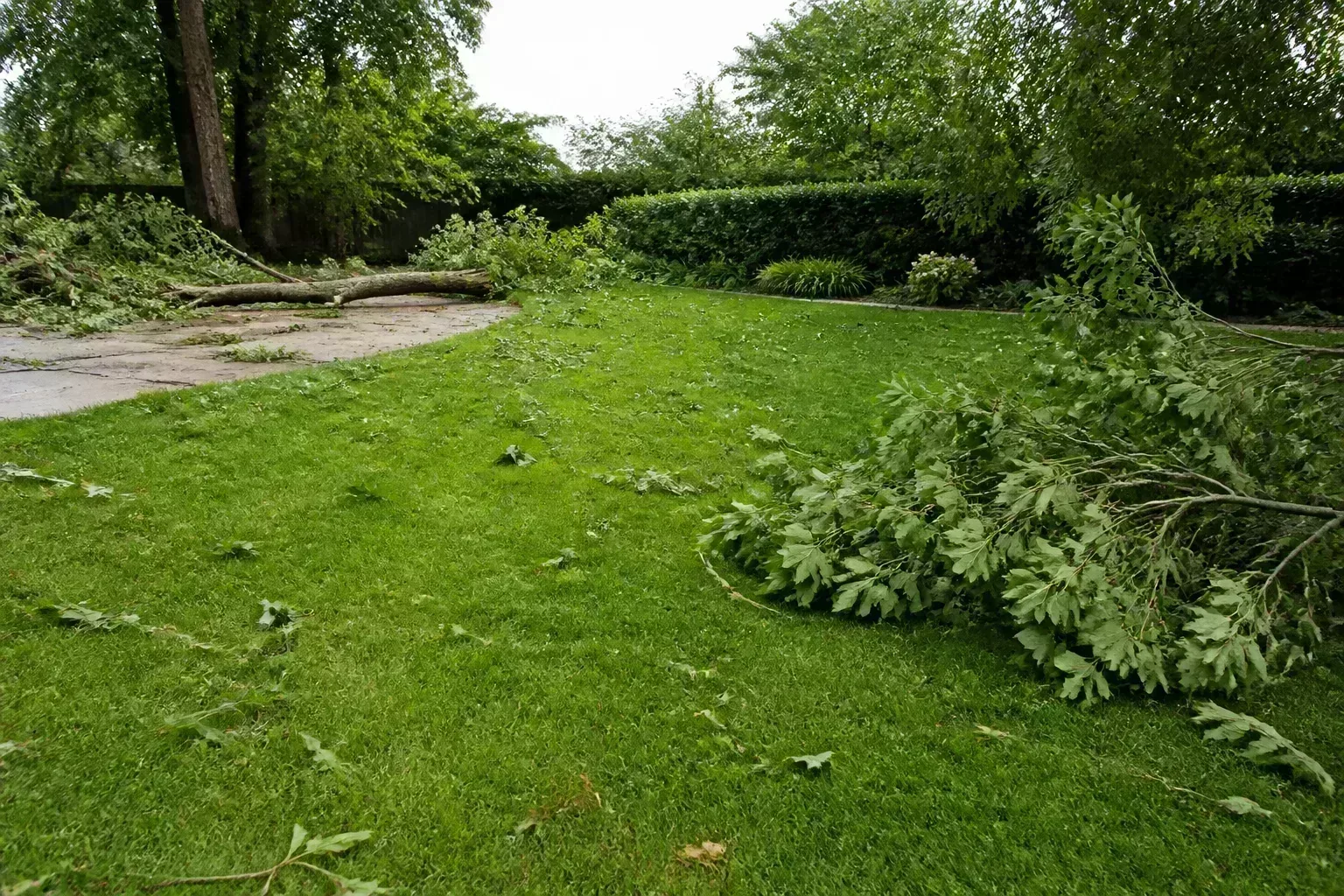
Cut or remove dead material when it is diseased, heavily infested, blocking a path, touching the house, or hiding an identified nest. Clear dense growth from around eaves, shed doors, and equipment, but do the work in short sections and look before putting your hands or tools into foliage. Keep a marked buffer around any active ground or aerial nest until it is inactive or professionally handled.
Store cushions, tarps, overturned pots, empty birdhouses, unused grills, and garden furniture where they stay dry but can still be inspected. Move firewood away from the house and stack it so you can see the base. Do not make large piles of pruning debris beside a door, and do not carry an unknown nest or insect-filled branch through the house for disposal.
Late-season pruning deserves restraint. Remove dead and broken wood when needed, but do not shear every perennial, tree, or shrub simply to make the garden look empty. Some plants are more vulnerable to cold after late pruning, and some seed heads provide winter food or cover; schedule structural pruning according to the plant and local climate rather than using wasp prevention as a reason for a blanket cutback.
What to leave for winter wildlife
Leave a portion of healthy leaf litter, hollow stems, and standing seed heads in a low-traffic part of the property. Solitary wasps and many other beneficial insects use natural cavities, and a garden that supports predators can experience fewer pest outbreaks over time. This is not a promise that biodiversity will repel social wasps; it is a reminder that responsible prevention distinguishes a risky nest from a useful insect passing through.
If a leaf pile or brush stack is beside the patio, move it only after checking for wildlife and insects. Do not rake blindly into a suspected ground nest, pour fuel or pesticide into a hole, or fill every small opening in soil. Once an inactive hole is confirmed and the location is a trip or mower hazard, repair it with appropriate soil and improve the surrounding site so it does not remain a hidden cavity.
Build a spring monitoring plan
Fall repairs work best when spring inspection is already on your calendar. When your region has a sustained warm spell and insects begin flying again, walk the same route you mapped in autumn. Look for small new paper combs under sheltered surfaces, fresh traffic to a wall opening, or a ground entrance in a quiet lawn edge.
The first nest a queen starts is small, which makes detection easier than waiting for a mature colony. That does not make it automatically safe to remove: a small active nest is still a defensive nest, and the safest response depends on who uses the area, your confidence in the identification, and whether the nest is reachable without a ladder or close approach.
Use a weekly five-minute check through the early nesting period, staying outside the flight path and using binoculars or a phone camera with zoom rather than leaning into the site. Log the location, approximate size, activity, and nearby food source. If the same eave or shed corner receives attention again, improve the barrier after the site is quiet, not while wasps are entering.
Here is a simple seasonal handoff:
| Timing | Safer job | Pause or escalate when |
|---|---|---|
| Late season | Map traffic, cover food, pick up fallen fruit | A nest is active or in a high-traffic zone |
| Cool weather | Remove clearly inactive exposed nests; wash attachment points | Activity continues, the nest is high, or a void is involved |
| Winter maintenance | Repair screens, roofline gaps, shed doors, and clutter | Sealing would block ventilation or wildlife access |
| First warm spell | Recheck the map and look for small new nests | You cannot identify the insect or activity is indoors |
If you see a very large, unusual hornet or repeated attacks on another wasp nest, do not catch it or approach for a better photograph. Reporting systems differ by location; a state agriculture department or university extension service can tell you what evidence is useful. For example, the Washington State Department of Agriculture’s wasp-nest monitoring guidance asks observers to keep distance, document activity safely, and report suspected invasive hornets through the state program.
What not to rely on for a wasp-free garden
Repellent plants, essential-oil sprays, fake nests, and bait traps may have a narrow role around a patio, but none replaces nest identification, exclusion, sanitation, or safe professional removal. Plants such as mint, lavender, basil, or lemongrass can make a seating area pleasant and may change local insect activity, but they are not a force field and should never be used to justify leaving an active nest beside a door.
Fake nests are especially easy to overread. A decoy may influence a queen that is still choosing between exposed sites, but it will not move a ground-nesting yellowjacket colony, clear a hidden wall void, or make an established nest safe. Consider it optional decoration with uncertain results, not the first or only fall action.
Do not apply insecticide preventively to flowers, eaves, soil holes, or every crack. A pesticide can harm beneficial insects, contaminate surfaces, and create exposure risks when the problem is simply a few foraging wasps. If a treatment is genuinely needed, use a product labeled for that exact site and target, follow the label, keep people and pets away as directed, and choose professional help when the nest or your health makes DIY control unreasonable.
The same caution applies to homemade remedies. Coffee grounds, vinegar, smoke, burning, flooding, and strong fragrance do not solve a colony hidden in a structure, and some can injure plants or wildlife. Start with the evidence in front of you: a food source, a shelter gap, an active nest, or a normal foraging visit. Then choose the smallest intervention that addresses that evidence.
Conclusion
To keep wasps from returning next year, use fall to change the conditions they can actually use. Map active and inactive nests, leave safe out-of-the-way colonies alone, remove clearly inactive exposed structures, seal building gaps only after checking for insects and wildlife, and keep fallen fruit, food waste, pet food, and sticky spills from concentrating activity around people.
Clean the paths and work areas while preserving a separate habitat zone, then repeat your inspection during the first warm spell of spring. If the nest is active, high, hidden, underground in a dangerous location, or connected to a sting allergy, distance and professional help are part of prevention—not a failure to do the job yourself. The goal is not an artificial wasp-free ecosystem; it is a garden where useful insects can forage away from the places your household needs to use safely.



