How to Kill Bermuda Grass in 5 Different Ways
Get rid of Bermuda grass without guesswork. Compare digging, plastic, mulch, glyphosate, and selective herbicides by site, timing, risk, and follow-up.
Bermuda grass is easy to love when you want a heat-tolerant, traffic-tough lawn and remarkably frustrating when it appears in a flower bed or a cool-season lawn. The reason is structural: it does not rely on one root crown. It spreads through above-ground stolons, underground rhizomes, and, in many types, seed. Miss one living runner or rhizome and the patch can rebuild.
The right method depends on what is growing beside it. Digging is the safest choice around flowers but labor-intensive. Clear plastic can treat an empty sunny area without herbicide, while a nonselective herbicide is more practical for a replacement lawn that you are willing to renovate. A selective grass herbicide may suppress Bermuda grass in some ornamental beds or tall-fescue lawns, but product labels and desirable-grass tolerance decide whether it is actually appropriate.
First, identify the grass and map the infestation
Before removing anything, trace where the grass starts and where it is going. Bermuda grass is a warm-season perennial commonly identified by its low, spreading habit, narrow blades, and stout runners. NC State Extension describes Cynodon types as grasses that spread by both stolons and rhizomes, with strong heat, drought, salt, and wear tolerance but poor shade tolerance. NC State’s Bermudagrass profile is a useful identification check if you are unsure whether the invader is Bermuda grass, zoysia, or nimblewill.
Walk the edge of the patch and look for three things: runners lying on top of soil or mulch, new shoots emerging several inches away from the visible clump, and pale seed heads that show the plant is reproducing above ground as well. Mark the outermost runner with a stick or a small flag, then inspect a wider ring around it. Starting at the green center and ignoring the runners is how a supposedly contained patch survives.
Why Bermuda grass returns
Each spread route demands a slightly different response. Stolons can cross mulch, pavement, and bed edges before rooting at nodes. Rhizomes hide below the soil surface and can resprout after the leaves are pulled or mowed. Seed matters most in open, disturbed soil; it can establish a new plant even when no runner visibly crosses the border.
This is why “kill the leaves” is not the same as “remove Bermuda grass.” A contact treatment can brown the top while leaving underground tissue alive. A barrier can stop a runner but do nothing about seed that lands inside the bed. Treat the infestation as a system: remove or weaken the existing plant, close the route it used to enter, and revisit the site while the grass is actively growing.
Choose the method by location and what must survive
Use this quick decision rule before you choose a product or rent equipment:
| Your situation | Best first method | Main trade-off |
|---|---|---|
| A few runners in an established flower bed | Digging and repeated inspection | Slow, but the lowest risk to desirable plants |
| An empty bed or lawn area in full summer sun | Solarization | Requires clear plastic, heat, and several weeks |
| A future bed that can remain covered | Opaque smothering | Takes longer and fails if edges or holes let in light |
| A whole lawn you plan to replace | Nonselective herbicide plus renovation | Kills desirable plants too and requires label-compliant replanting |
| Bermuda grass mixed through tall fescue or some ornamental beds | Selective grass herbicide, only if labeled | Usually a repeated suppression program, not a one-time cure |
If the grass is mixed with turf you want to keep, do not reach automatically for a broad-spectrum lawn killer. NC State notes that digging or using a sod cutter can control an unwanted perennial turfgrass, while a nonselective herbicide will also kill the desirable turf it touches. Virginia Tech likewise describes selective Bermuda-grass control in tall fescue as a program that combines cultural practices with repeated, label-directed treatments rather than a single spray.
Method 1: Dig out the sod and rhizomes
Physical removal is the most dependable first choice for a small bed invasion, a few lawn patches, or any place where nearby flowers, shrubs, vegetables, or trees make spray drift unacceptable. Work after rain or deep irrigation has softened the soil, but not while the ground is muddy enough to smear and compact.
For isolated runners, follow each stolon back to its rooted nodes. Use a garden fork or hori hori to loosen the soil around the crown, then lift from below rather than yanking the leaf tips. For a larger patch, mow or trim it short so you can see the perimeter, cut a clean outline, and remove the top layer with a spade or rented sod cutter. A practical raised-bed conversion documented by Growing in the Garden removed roughly 4 to 6 inches of the surface before adding overlapping barriers, while also cautioning that some rhizomes can be deeper.
Shake soil off only if you can capture every fragment. Keep removed sod and rhizomes out of a home compost pile unless you know the material will be fully destroyed by a reliable process; a warm-looking pile is not proof that every living node has died. Bag the material, let it dry completely where it cannot contact soil, or use the disposal route recommended by your local waste service.
Best use and limits of digging
Digging is excellent for precision and poor for huge areas. It can disturb desirable plant roots, bring dormant seeds to the surface, and leave a rough, bare patch that new weeds quickly occupy. It also cannot promise that the soil is seed-free. Think of the first pass as removing the established network, not as earning permission to stop looking.
After the area is clear, rake through the top few inches by hand and remove visible white or tan rhizome pieces. Do not rototill an infested bed: chopping rhizomes into many pieces can turn one patch into several. Recheck the cleared soil in two or three weeks during warm active growth and remove any new shoots while they are small.
Method 2: Solarize with clear plastic
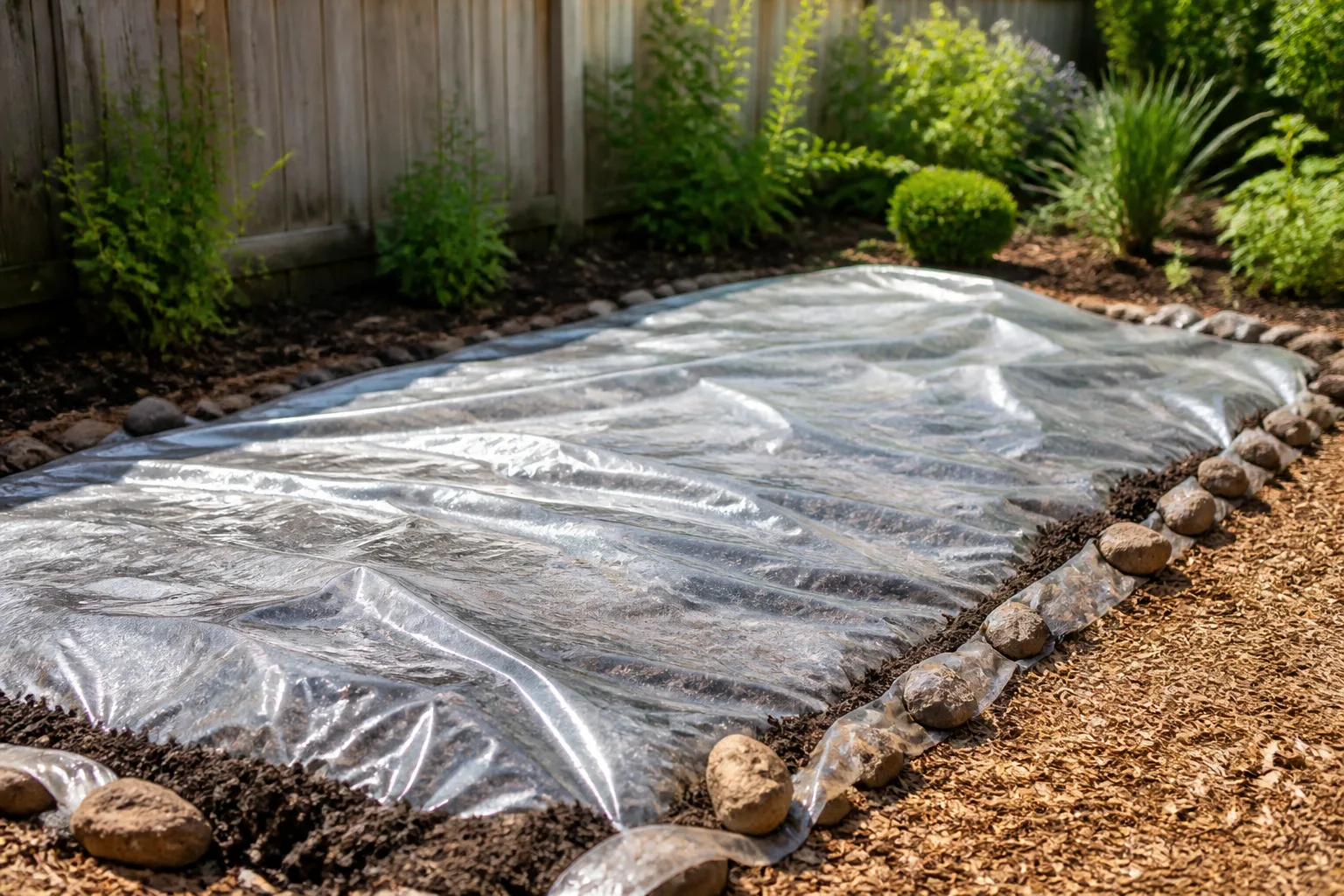
Solarization uses sunlight trapped beneath tight, transparent plastic to heat moist soil. It is a strong chemical-free option for an empty garden area, future bed, or lawn section that can remain unusable during the treatment window. It is not a practical choice beneath established flowers or a mature lawn you need to keep open.
UC IPM explains that solarization works best during a hot, sunny period and that clear plastic is generally more effective than black plastic for transmitting solar energy into the soil. Under favorable conditions, the upper soil can become extremely hot, and the method can control many weed seeds and some near-surface perennial structures. However, solarization is less reliable against perennial weeds when their rhizomes sit deep; UC IPM specifically notes that Bermuda-grass rhizomes may be controlled when they are close to the surface, not that every buried fragment is guaranteed to die. Read the UC IPM solarization guidance for the evidence and limitations.
How to solarize without leaving escape routes
Start by removing debris, mowing or trimming the grass close, and leveling the soil. Water the area thoroughly, then cover it quickly so the moisture stays in the soil. Use clear, transparent plastic rather than cloudy film, and extend the sheet beyond the outermost visible runners. Bury the edges in a shallow trench or weigh them continuously so wind cannot lift a corner.
Keep the plastic tight against the ground. Air pockets, folds, holes, and uncovered strips are cooler escape lanes. UC IPM reports that four to six weeks of summer heating is often used, while cooler, cloudy, or windy sites may need up to eight weeks. If you have a soil thermometer, check the upper soil rather than judging success by brown leaves; the target is sustained high heat in the upper several inches, not merely a hot sheet on a mild day.
When you remove the plastic, disturb the soil as little as possible. Deep digging can bring untreated seed to the surface, and a careless edge cleanup can move surviving rhizomes into the newly treated area. Plant or cover the soil promptly, and inspect the perimeter after the first irrigation or rain.
Method 3: Smother with opaque cover and mulch
Smothering kills by withholding light rather than by heating the soil. It works well when an area can be covered for a long stretch: a future raised bed, a temporary garden expansion, or a section being converted to a path. Use an opaque tarp for a more durable cover, or layer plain cardboard beneath mulch when you want the cardboard to break down into the soil system.
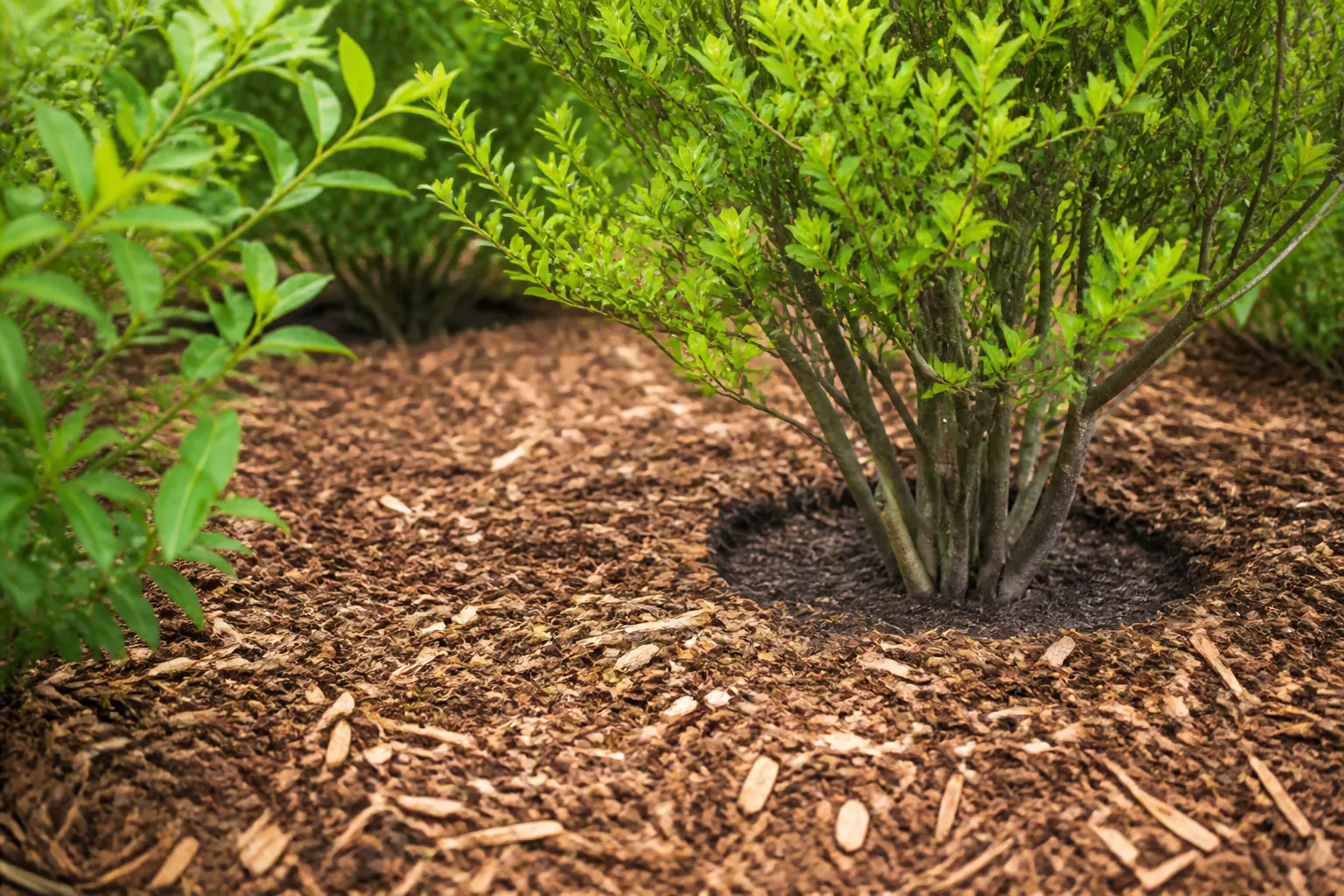
Cut the grass low, water the ground, and cover beyond the outermost stolons. Overlap cardboard or separate pieces of material generously—six inches is a useful minimum—and secure the seams with staples, stones, or enough mulch to prevent wind from lifting them. A thin, scattered layer is not a smothering treatment. Use a continuous opaque surface, then add a deep, even mulch layer to keep light from reaching gaps.
Landscape fabric can help under a new bed or path, but do not treat it as a permanent Bermuda-grass shield. Grass can exploit seams, holes, exposed edges, and places where wind lifts the material. Seeds that land on top can also germinate in accumulated mulch. LawnStarter’s flower-bed guide makes the practical point that barriers work best with monitoring, edging, and early removal of breaches.
The time requirement depends on the cover, climate, and vigor of the patch. Inspect after several weeks, but do not uncover simply because the top looks dead. A live rhizome can wait for light. For a difficult, established infestation, leave the cover through the main warm growing period, then remove it during a cool or dormant window and watch for regrowth before planting.
Method 4: Spot-treat with a nonselective herbicide
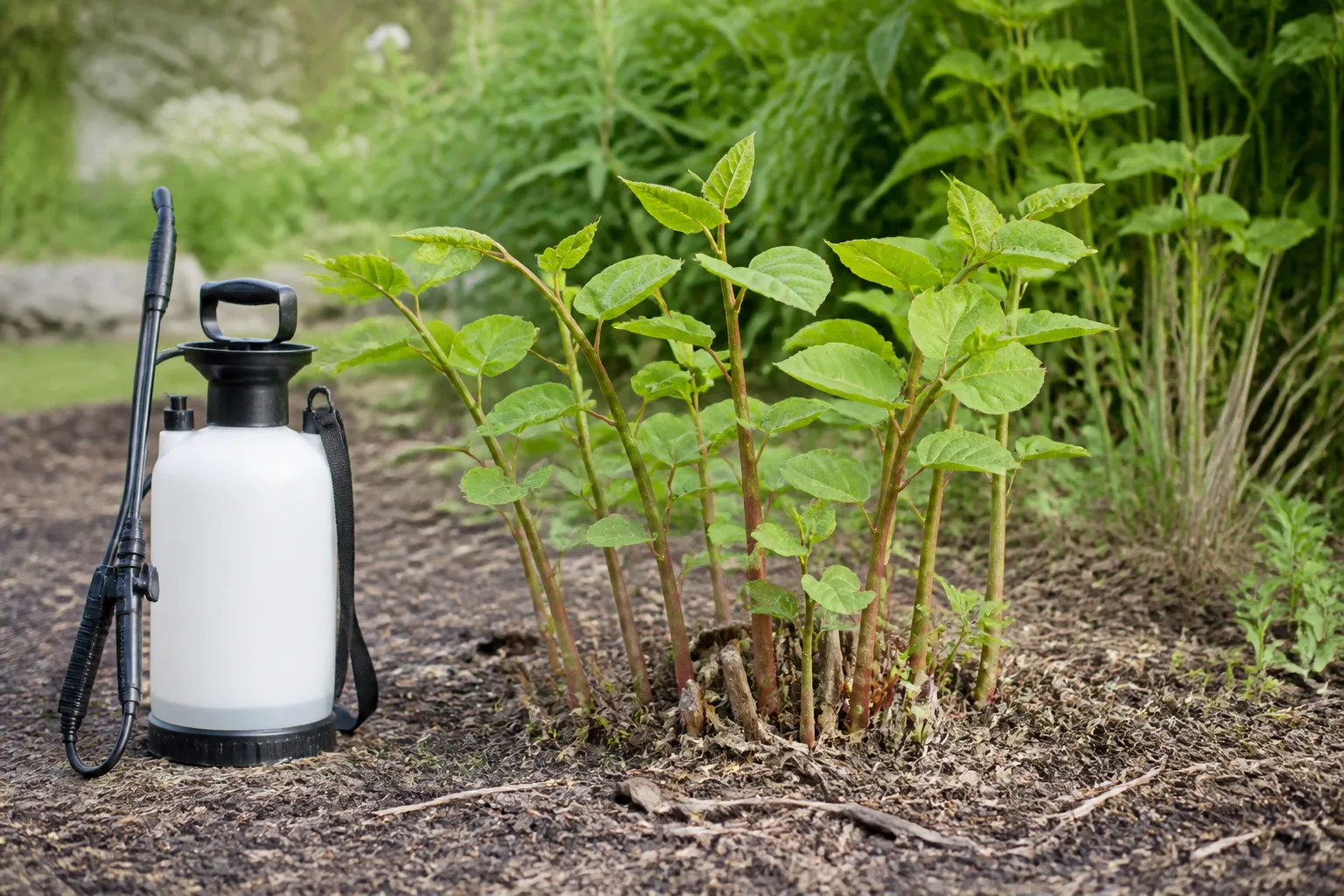
A nonselective systemic herbicide containing glyphosate can make sense when the entire target area may be killed and renovated: a Bermuda-grass lawn being replaced, a bare strip between beds, or a discrete patch well away from plants you want to save. It is the wrong tool for broadcast spraying through a mixed lawn, ornamental bed, vegetable garden, or tree-root zone where the spray can reach desirable foliage.
Systemic herbicides need living, actively growing foliage to move into the plant. Do not spray drought-stressed or dormant Bermuda grass and assume it is dead because it turns brown. Virginia Tech’s renovation strategy for contaminated cool-season turf uses a first treatment, a regrowth period, and a follow-up treatment before reseeding or resodding; that sequence illustrates the important principle: encourage the hidden plant to reveal itself, then deal with the second flush.
Follow the product label for the exact target site, application rate, weather limits, protective equipment, re-entry interval, and planting restrictions. Labels change by formulation and jurisdiction, and the fact that an active ingredient controls Bermuda grass somewhere does not authorize every product for every lawn, bed, or crop. NC State also places responsibility on the user to verify current regulations and label directions.
Choose a calm, dry period allowed by the label. Keep children, pets, and bystanders away from the treatment area, prevent drift toward ponds and desirable plants, and clean the sprayer according to the label before it is used around anything you intend to keep. Do not mow immediately before or after a systemic treatment if the label or local extension guidance advises leaving enough leaf area for uptake.
Safer ways to paint or shield nearby plants
In an established flower bed, a small amount of nonselective herbicide can sometimes be applied by wiping or painting the solution onto Bermuda-grass leaves rather than spraying overhead. That technique still carries risk: a wet glove, dripping brush, or breeze can transfer product to a flower or shrub. Use a dedicated applicator, isolate the target stems, and shield desirable foliage with a rigid barrier if the label permits that application method.
The safest answer around edible plants is often physical removal or a labeled selective product, not creative mixing. Never add vinegar, dish soap, salt, or household cleaners to an herbicide to make it “stronger.” Those mixtures can increase plant injury, create off-target damage, and do not solve the underground-rhizome problem.
Method 5: Use a selective grass herbicide where the label allows
Selective grass herbicides are designed to injure or kill certain grassy weeds while sparing labeled broadleaf ornamentals. Products containing active ingredients such as sethoxydim or fluazifop-P-butyl are used in some ornamental settings, but “selective” never means safe for every flower, vegetable, turf type, or climate. Check the actual product label for Bermuda grass, the specific crop or ornamental site, and any interval before planting or harvest.
In lawns, the problem is harder because both the weed and the desired plant are grasses. A product that suppresses Bermuda grass in tall fescue may injure Kentucky bluegrass, fine fescue, or a mixture. Virginia Tech’s selective Bermuda-grass control publication lists several research-based programs using different active ingredients and stresses that trade names are not exclusive, maximum rates can change with repeated treatments, and the label must control the decision.
Why tall fescue needs a program, not one spray
If Bermuda grass is mixed into tall fescue, cultural control is part of the treatment, not an optional extra. Virginia Tech reports that tall fescue maintained around four inches can shade Bermuda grass enough to suppress it, while shorter mowing reduces that advantage. The extension publication also describes late-summer and early-fall treatments as generally more effective than spring or early-summer programs in its transition-zone context because weakening Bermuda grass before winter improves the odds of reduction.
That does not mean every lawn should be left at exactly four inches or that a northern timing calendar can be copied into a hot, humid, or desert climate. It means you should identify your desirable turf, mow at the upper end of its recommended range, keep it dense with species-appropriate irrigation and fertility, and follow local extension guidance for any selective program. If the lawn contains several grass species, ask a turf specialist before spraying a product that is only tolerated by tall fescue.
Expect bleaching, temporary turf injury, or visible thinning with some selective programs. Fill openings at the correct reseeding or sodding window, observing every label restriction. A lawn that stays thin gives surviving Bermuda grass light and bare soil, undoing the work of suppression.
Bermuda grass in flower beds: a careful removal sequence
Flower beds need a precision plan because the cost of a mistake is a dead perennial, damaged shrub, or contaminated edible crop. Start at the lawn edge and work inward. Mow or trim the lawn on its normal schedule, then hand-pull or dig any stolons that have crossed the border before they root at multiple nodes.
For an established clump, loosen soil with a fork and lift the crown and rhizomes. Do not pull so hard that the stem snaps. Sift the immediate root zone by hand, put every fragment into a bag or drying container, and refill the hole with clean soil or compost. If the invasion is widespread, remove the plants you can protect, cover the empty area by solarization or smothering, and replant only after the treatment is complete.
Install edging after removal, not as a substitute for it. A physical barrier that extends roughly six inches below grade and rises above the soil line can slow underground and above-ground spread, but the exact depth depends on soil movement, bed height, and the barrier design. Keep mulch below the top of the edging, close gaps at corners, and inspect the lawn side weekly during warm growth. A buffer strip of mulch, stone, or open soil makes a new runner easier to spot; it does not make the grass unable to cross.
How to repair the area after removal
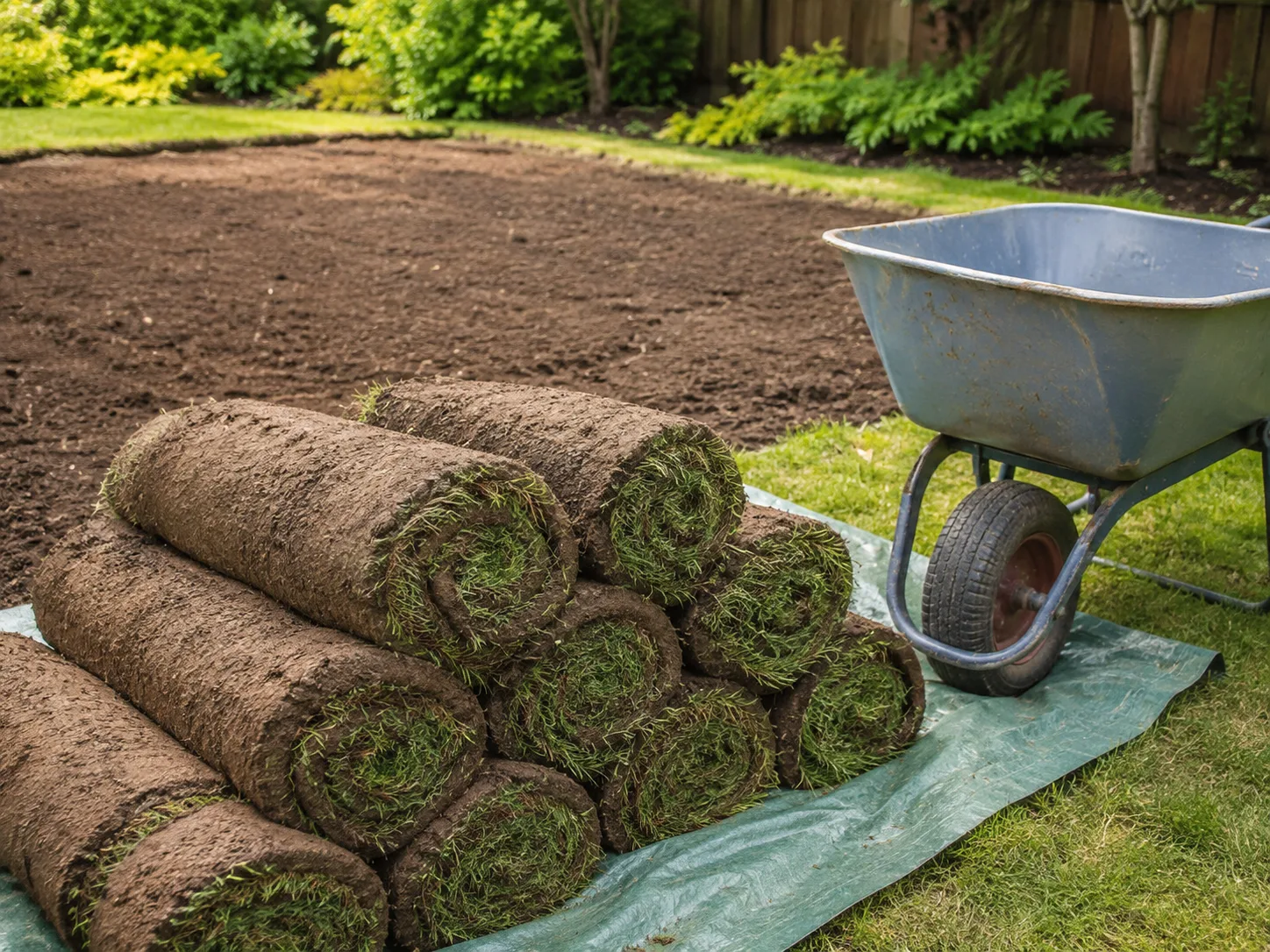
The repair step decides whether the cleared space stays cleared. Remove the dead surface material, level the soil, and choose a replacement that fits the site rather than leaving bare ground for months. In a lawn, reseed or resod when the desired grass is naturally able to establish; in a bed, plant after any herbicide’s label-required interval and keep the mulch layer even.
If you are repairing a cool-season lawn, fall is commonly the best establishment window for tall fescue and similar grasses, but local soil temperature and moisture matter more than a universal calendar date. If you are repairing a warm-season lawn, wait for active growth and suitable soil warmth. Use LeafyPixels’ guide to choosing grass seed as a starting point, then match the selection to your region, sun, drainage, and the grass already in the lawn.
Water new seed according to its stage rather than flooding the old infestation zone. Keep foot traffic off the repair until roots anchor, mow only after the new grass reaches the appropriate height, and do not spread live Bermuda fragments with a mower or string trimmer. A clean, dense replacement canopy is a control tool because it reduces the light and space available to new shoots.
Prevent runners from crossing back
Prevention is a weekly edge habit, not a single installation. During warm, active growth, inspect the first few inches of mulch and soil along the lawn-bed border. Pull a runner before it roots, then follow it back to its source. If a runner has already rooted inside the bed, remove the entire rooted section rather than cutting it at the border and leaving nodes behind.
Keep edging visible and stable after freeze-thaw cycles, heavy rain, settling soil, or mulch refreshes. Make corners overlap or meet tightly, and do not let mulch bridge over the barrier. If you use landscape fabric, treat seams and exposed edges as maintenance points, not as invisible permanent walls.
For a cool-season lawn, mow high enough to help the desirable turf shade the soil and avoid chronic drought stress. Virginia Tech’s research-based guidance places tall fescue around 3.5 to 4 inches during selective Bermuda-grass control. For any lawn, use sharp mower blades, avoid scalping, and keep the canopy dense. This LeafyPixels lawn-thickening guide covers the related mowing, watering, and repair decisions.
Clean soil and plant fragments from a sod cutter, mower deck, shovel, and trimmer before moving from an infested area to a clean lawn. Keep clippings out of beds when seed heads are present, and do not use infested sod as fill elsewhere. These small hygiene steps prevent a successful removal project from becoming the source of the next patch.
What not to do
Do not rely on vinegar. It can scorch exposed leaves, but a contact burn is not a dependable treatment for rhizomes and stolon nodes. The same warning applies to boiling water in a planted bed: it damages whatever roots and soil organisms are in the heat path.
Do not salt the soil. Salt can injure the plants you want later and move with water beyond the target patch. It creates a soil-repair problem without giving you a reliable solution for deep perennial tissue.
Do not rototill an established patch. Tilling can break rhizomes into smaller pieces and spread them through the working depth. If you must cultivate after treatment, do it shallowly and only after the cover or herbicide program is complete.
Do not mow repeatedly and call it eradication. Mowing can reduce height and seed-head production, but Bermuda grass stores energy below ground. In a desirable cool-season lawn, mowing high can help shade it; in a Bermuda-only area you want to replace, mowing alone is not a killing method.
Do not assume a brown patch is a dead patch. Water and watch the treated area during warm growth. New shoots around the perimeter or through a seam are evidence that the treatment needs follow-up, not proof that the original method was useless.
Do not spray by common name alone. Product names, formulations, permitted sites, and turf tolerances vary. The label is the controlling source for application, and local extension or a licensed professional can help when the target turf is mixed or the bed contains valuable plants.
How long control takes and when to repeat
Use this timeline to set expectations:
| Stage | What you may see | What to do |
|---|---|---|
| First day | Mowed, dug, covered, or treated foliage | Record the perimeter and remove loose fragments |
| Two to four weeks | New shoots from missed nodes or surviving rhizomes | Dig or treat the new growth while it is small; keep covers sealed |
| Four to eight weeks | Solarized or smothered area ready for inspection in good conditions | Remove cover carefully and disturb soil as little as possible |
| Remainder of the growing season | Edge runners, seedlings, and dormant-looking patches | Inspect weekly and deal with every breach before seed set |
| Next growing season | Regrowth from deeper tissue or new seed | Repeat the least risky method and repair the barrier or replacement turf |
Small, isolated runners can be controlled in one or two careful sessions. A lawn-wide infestation usually takes a season of renovation or a selective suppression program, and severe sites can need follow-up in later years. Virginia Tech explicitly frames Bermuda-grass control as programmatic and says complete control is unlikely in its cool-season lawn context. That is a useful standard: aim for a steadily shrinking population and a stronger replacement, not a dramatic one-day claim that the soil is sterile forever.
If you have tried one method twice and the perimeter keeps expanding, stop repeating the same step blindly. Re-map the patch. You may be treating seed emergence when rhizomes are the real problem, leaving a shady edge uncovered, mowing the desired turf too short, or using a selective product on a grass it cannot safely tolerate. Change the sequence, not just the quantity.
Conclusion
The best way to kill Bermuda grass is the method that fits the site you are willing to sacrifice and the plants you need to protect. Digging is the precise choice for small flower-bed invasions. Solarization or smothering can clear an empty sunny area without herbicide. Nonselective herbicide belongs in a deliberate renovation, while selective products are label-dependent tools for mixed lawns and planted beds—not universal shortcuts.
Whichever method you choose, remove the visible plant and then manage its routes back in. Close gaps with stable edging, keep the replacement lawn dense, mulch beds evenly, clean tools between areas, and inspect during warm growth. Bermuda grass is persistent, but a location-specific plan with honest follow-up is much more reliable than a single spray, a shallow pull, or a promise of permanent eradication.



