How Long Does Grass Seed Take to Grow?
Learn how long grass seed takes to sprout and fill in, with timing by grass type, soil-temperature targets, watering cues, mowing rules, and fixes.
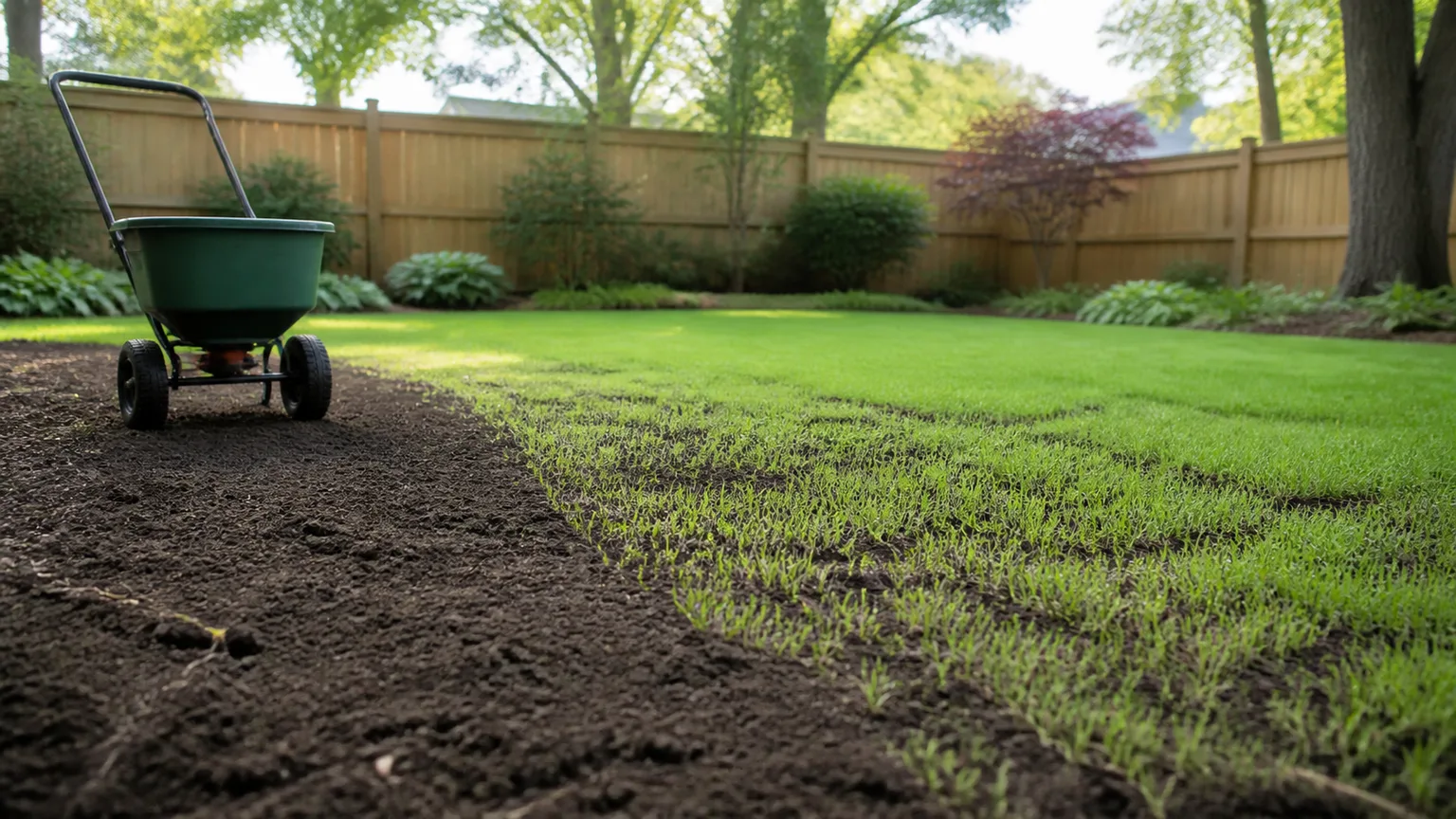
Most grass seed sprouts in 5 to 30 days, depending mainly on the grass type and the soil temperature. Perennial ryegrass can show green in under a week, while Kentucky bluegrass or zoysia may take several weeks even when the seed is viable.
That is only the germination stage. A new lawn usually needs 3 to 8 weeks to become tall and rooted enough for its first careful mowing, and it may take longer to become dense enough for regular foot traffic. The LawnGuru grass-seed timeline is useful for setting that expectation, while extension guidance emphasizes that establishment rate changes with planting date, seedling density, management, and the growing environment.
The broader seed-starting principle is the same: match the seed and its timing to the growing conditions instead of forcing every variety to the same deadline. Fine Gardening’s seed-starting guidance makes that relationship clear across different kinds of seed, and it is especially useful to remember when a lawn blend contains grasses with different emergence speeds.
If you are waiting on bare soil, do not judge the project by the calendar alone. Check the grass species on the bag, the temperature in the soil—not just the air—and whether the top layer is staying moist without becoming muddy. Those three details explain most “late” lawns.
The short answer: sprouts in days, a lawn in weeks
Here is a realistic way to read the clock:
- Days 1–3: The seed absorbs water and begins the internal changes that lead to germination. Nothing visible may happen.
- Days 4–10: Fast grasses can send out roots and first shoots; slower grasses may still look dormant.
- Days 10–21: Many fescues, blends, and warm-season grasses begin to show more consistently, although emergence can be uneven.
- Weeks 3–4: A well-timed stand may be tall enough for a first high mower setting, but the roots are still developing.
- Weeks 4–8: The lawn becomes more usable as roots deepen and gaps begin to close. Kentucky bluegrass, zoysia, and poorly timed seed can take longer.
These are checkpoints, not promises. A cold snap can pause cool-season seed, and warm-season seed may sit in cool ground until the soil reaches its lower threshold. A seed blend can also look patchy at first because its fastest species appears before its slower companion.
Germination is not the same as an established lawn
Germination means the seed has absorbed enough water for the embryo to resume growth, send out a first root, and push a shoot toward the surface. Emergence is the moment that shoot becomes visible. Establishment is the longer process in which the plant makes more leaves, builds roots, survives mowing, and begins to cover the soil.
Confusing those stages creates two common mistakes. Someone sees a few green threads and stops watering, even though a mixed lawn may still contain slower seed below the surface. Someone else sees green after two weeks and starts walking, mowing low, or applying fertilizer before the roots can tolerate the stress.
The NC State Extension guide to establishing a new lawn makes the same practical distinction: seeds need moisture to emerge, and seedlings still need correctly timed watering, fertilizing, and mowing to develop adequate early growth. Think of the first green as proof that the process has started, not proof that the lawn is finished.
Timing by grass type
The table below gives useful home-gardening expectations under suitable conditions. Treat the ranges as a planning tool, not a guarantee; seed coating, cultivar, seed age, soil temperature, planting depth, and moisture can move the result toward either end.
| Grass type | Typical first sprouts | Soil temperature and timing clues |
|---|---|---|
| Perennial ryegrass | 5–10 days | Cool-season seed; reliable in roughly 50–65°F soil |
| Tall fescue | 7–14 days | Cool-season seed; often prefers soil around 60–70°F for quick emergence |
| Kentucky bluegrass | 14–30 days | Slow to start; keep watering a blend while waiting for it |
| Bermuda grass | 10–30 days | Warm-season seed; fastest when soil is consistently warm, often about 70–90°F |
| Centipedegrass | 14–30 days | Warm-season seed; do not plant into cool spring soil and expect quick growth |
| Zoysia grass | 21–30 days | Warm-season and notably slow; warm soil and patience are essential |
The practical germination chart from LawnGuru puts perennial ryegrass at the fast end, tall fescue in the middle, Kentucky bluegrass later, and zoysia later still. These differences matter when a bag contains more than one species: the first green you see may be ryegrass acting as an early cover while bluegrass or fescue is still germinating.
Do not use the quickest species in a mixture as the deadline for every other species. If a blend promises both perennial ryegrass and Kentucky bluegrass, a green haze at day seven does not mean the bluegrass failed. Continue the early moisture routine through the slower variety’s expected window.
Soil temperature controls the calendar
Grass seed responds to conditions in the seedbed, so soil temperature is a better decision tool than a date on the calendar. Cool-season grasses generally germinate in cool soil, with about 50–65°F a useful working range for many common home mixtures. Warm-season grasses generally need soil at least around 65°F, and they are more dependable once the ground is consistently warmer.
Air temperature can mislead you. A sunny afternoon may feel warm while the soil remains cold, especially in spring; a warm-looking fall day may hide soil that is already cooling. Conversely, a warm-season seed packet put down during a brief warm spell can stall again when several cool nights pull the soil back below the species’ useful range.
The Colorado State University Extension lawn-care guidance also shows why site conditions matter: soil, species, weather, shade, and exposure change how much water and care a lawn needs. Temperature is not the only variable, but it is the first one to check when the calendar says “should be up” and the ground says otherwise.
How to measure soil temperature before seeding
Use a soil thermometer, pushing it into the depth where most of the seed will sit—about 2 inches is a practical reading for a lawn seedbed. Take readings in several locations, including a shaded edge and the sunniest part of the area, because tree shade and walls can create different microclimates. Check on more than one day instead of deciding from a single warm afternoon.
If your readings are below the grass type’s lower range, waiting is often safer than watering a dormant seedbed for weeks. If the soil is within range but the top layer is drying, moisture is the next problem to solve. If it is within range and consistently damp but the soil is puddled or sour-smelling, reduce irrigation and improve drainage before adding more seed.
Choose the planting season by grass type
The best sowing window gives a seed enough time to germinate and build roots before the next major stress. This is why the same seed can perform well in one season and fail in another even when the gardener follows the same watering routine.
Cool-season grasses
Perennial ryegrass, tall fescue, fine fescue, and Kentucky bluegrass grow most actively in cool conditions and are usually best seeded in late summer or early fall. The soil is still warm enough for germination, while cooling air reduces the risk that tiny seedlings will be pushed straight into summer heat. NC State Extension lists mid-August to mid-October as a broad cool-season seeding window for North Carolina, with the exact timing shifting by location.
Early spring can work when the seedbed is ready and the soil has warmed, but it is a compromise. The seedlings have less time to develop before hot weather, and spring weeds may compete for the same light, water, and space. If you must seed in spring, prepare the soil well, sow as early as local conditions allow, and be especially consistent with moisture as temperatures rise.
Warm-season grasses
Bermuda grass, zoysia grass, and centipedegrass need warmer soil and active summer growth. Late spring to early summer is usually the useful window, once the ground has warmed reliably and there is enough growing season left for roots to develop before cold weather or dormancy.
Putting warm-season seed down too early does not give it a head start. It can sit in cold, wet soil, where emergence is delayed and the seedbed may crust, wash, or stay vulnerable to rot. A later sowing into genuinely warm soil can produce faster visible growth than an earlier sowing into marginal conditions.
Local climate still matters more than a generic month. Use your seed label, regional extension recommendations, and actual soil temperature together. A transition-zone lawn may need a different decision from a northern cool-season lawn or a southern warm-season lawn, and a shady yard may never perform like a sunny test plot.
Prepare the seedbed so roots can start
Preparation often determines whether a seed germinates evenly. Clear sticks, stones, dead vegetation, and thick thatch. Correct obvious hollows that collect water, break up severe compaction, and finish with a surface that is smooth enough for consistent seeding but loose enough for a root to enter.
For a bare area, lightly firm the soil after grading so it does not collapse into deep footprints or ruts when watered. Then rake the surface again just before spreading seed. The goal is a fine, crumbly seedbed, not a fluffy layer that will settle unevenly and bury some seed while exposing other seed.
Test soil before applying lime or fertilizer if the lawn is large, the soil is unusual, or the area has a history of poor growth. NC State Extension notes that pH and nutrient problems can limit root development and that excess amendments can also inhibit growth. A soil test is more useful than adding lime or a “starter” product simply because the lawn looks slow.
Seed depth and seed-to-soil contact
Grass seed needs contact with moist soil, but most lawn seed should not be buried deeply. After spreading, rake lightly so seed settles into the surface rather than sitting entirely on top or disappearing under a heavy blanket of soil. Seed that is visible everywhere may dry too quickly; seed hidden under a thick layer may not have enough stored energy to reach the surface.
On an existing lawn, dense thatch or compacted soil can leave seed perched above the root zone. Core aeration or a light surface preparation can open pathways, but do not churn up a healthy lawn aggressively just to follow a routine. The correct intervention depends on whether the problem is compaction, thatch, bare soil, slope, or simply poor timing.
If erosion is likely, apply a thin, weed-free mulch such as clean straw and secure it against wind. NC State Extension recommends light mulch when erosion or moisture loss is a concern; thick, wet mulch can block seedlings, hold excessive moisture, and create disease-friendly conditions. After heavy rain, look for seed that has moved downhill rather than assuming an empty patch never contained seed.
Water from sowing until roots take hold
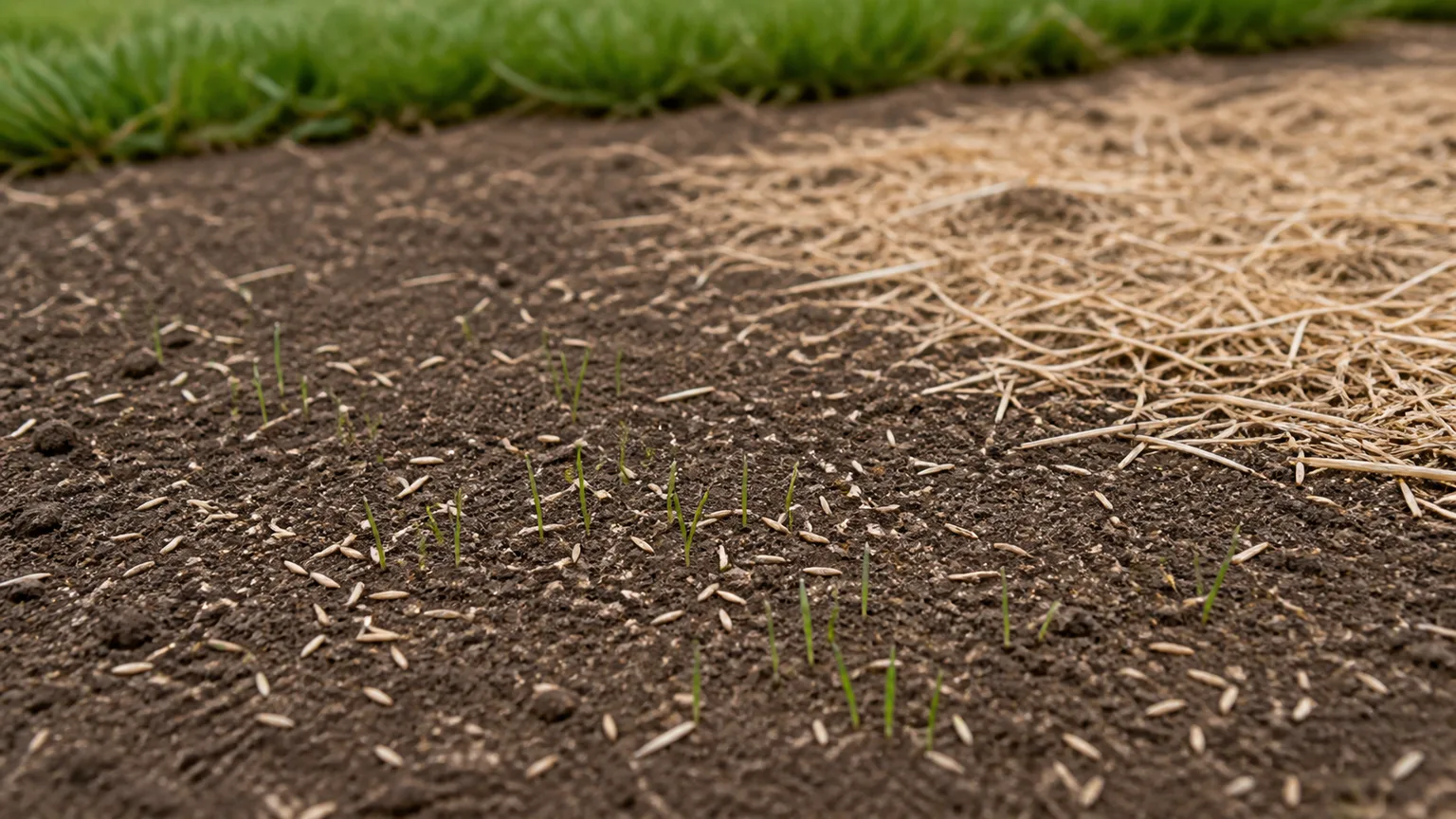
During early germination, the target is a consistently moist seed zone, not a deep irrigation event that leaves puddles. NC State Extension recommends keeping the top half-inch moist and watering lightly two to three times a day for roughly the first 15–20 days, with adjustments for rain, wind, sun, soil texture, slope, and runoff.
Use a gentle spray that does not scatter seed. Shorter cycles are useful on sandy or exposed soil; heavier clay, shade, or cool weather may need fewer applications. The surface should feel damp when checked, but water should not run down a slope or remain ponded. If water is moving seed into clumps, lower the application rate and split the irrigation into shorter passes.
The most damaging pattern is repeated wet-dry cycling. A seed can absorb water, begin growing, and then be stopped by a dry surface before its first root is anchored. Check the soil at seed depth, not only the color of the surface; a dark top can hide dry soil underneath, while a green tint or damp-looking crust can hide poor oxygen conditions below.
Once the grass is taller and has been mowed several times, begin shifting toward deeper, less frequent watering that moistens the developing root zone. Colorado State University Extension recommends watering according to root depth, soil type, weather, and the lawn’s actual signs of stress rather than a fixed number of days. A young stand needs a gentler transition than mature turf, so do not make the change immediately after the first few shoots appear.

The week-by-week grass seed timeline
The visible part of the process is delayed because the first work happens inside the seed and below the soil. Use the timeline below to decide what to do, but let the species and conditions on your site set the boundaries.
Days 1–7: changes you cannot see yet
During the first few days, viable seed is absorbing water and shifting from dormancy into active growth. The first root, or radicle, is more important than a visible blade at this stage. Do not rake, roll, or walk across the seedbed to look for progress; disturbing the surface can move seed away from the moisture it needs.
Fast perennial ryegrass may show tiny green tips toward the end of this period when soil is in range. Tall fescue can begin emerging as well, but Kentucky bluegrass and most warm-season seed may still show little or nothing. Keep the watering pattern steady unless rain has already provided enough moisture.
Days 8–21: first shoots and uneven emergence
This is when many lawns begin to look alive. First shoots may be thin and separated, with bare soil still visible between them. That is not automatically a failure: seedlings are small, and mixed seed often emerges in waves.
Look for a pattern rather than isolated blades. If green appears in lines that match the spreader’s passes, check whether the rate was uneven. If green appears only in low spots, inspect for seed movement. If a shady strip remains empty while sunlit ground fills in, compare soil temperature, moisture, and the amount of direct light before adding fertilizer.
Continue protecting the area from foot traffic and pets. A seedling that is standing upright can still have a shallow root system. Pressing the soil, dragging a hose, or repeatedly turning a mower wheel through it can create compaction and bare tracks that take much longer to fill than the original germination delay.
Weeks 3–8: roots, density, and first use
The stand should begin shifting from individual threads to a more continuous green surface. New leaves appear, roots extend farther into the soil, and the lawn starts using water differently. This is also the stage when impatience causes damage: heavy fertilizer, low mowing, and frequent walking can force or injure growth before the root system is ready.
Some grasses become mowable around the third or fourth week in ideal conditions, while Kentucky bluegrass, zoysia, cool weather, shade, or an imperfect seedbed can push that milestone later. A new lawn is ready for limited use based on height, rooting, and firmness—not simply because a certain number of days have passed.
First mowing and feeding for young turf
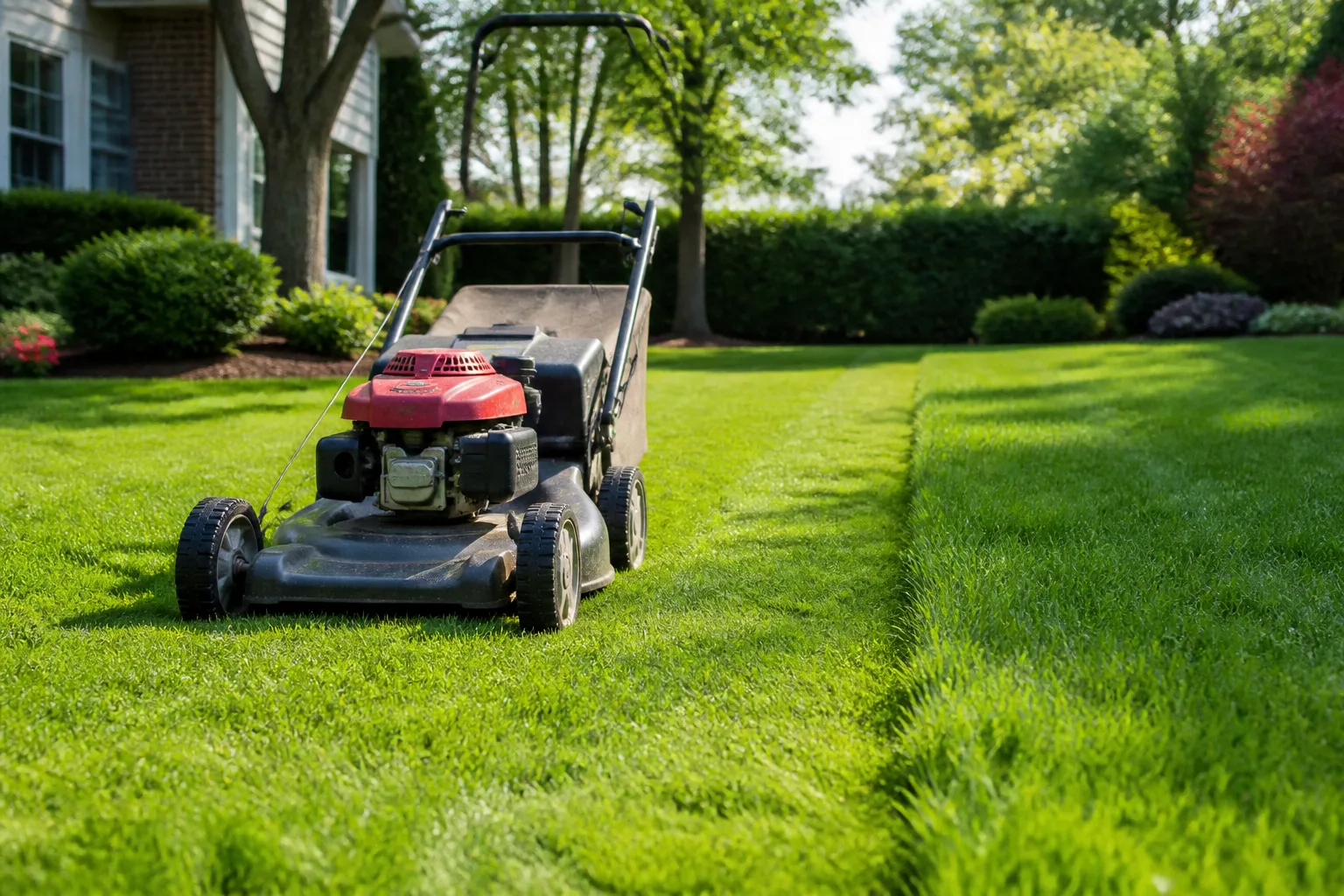
Mow by height rather than by date. NC State Extension recommends beginning when turf is about 50 percent taller than the desired cutting height. If your intended cut is 3 inches, that means waiting until the grass is about 4.5 inches tall, then removing no more than one-third of the blade in a single pass.
Use a sharp mower blade, mow when the plants and soil are dry, and avoid turning sharply on the new stand. Set the deck higher for the first cut if needed. Scalping young grass exposes the soil, reduces leaf area, and gives weeds more opportunity while the turf is still trying to build roots. The Colorado State University mowing guidance likewise stresses the one-third rule and warns that mowing too short reduces stress tolerance.
Fertilizer is not a rescue treatment for late germination. If a soil test shows a need, use a product appropriate for new turf and follow its label. NC State Extension places a follow-up application when seedlings are about 1–2 inches tall, roughly three weeks after emergence, and cautions against overstimulating turf with excess nitrogen. Feeding a drought-stressed, waterlogged, or poorly rooted lawn can create more problems than it solves.
Do not apply a weed killer to a brand-new lawn unless the product label specifically allows that use and the grass has reached the required maturity. Hand-pull isolated weeds when practical, improve the seedbed and mowing routine, and wait until the turf is established before choosing a selective herbicide. The best weed control at this stage is often a suitable grass, even emergence, correct height, and enough density to shade the soil.
Diagnose no, slow, or patchy growth
If you are past the upper end of the expected window for your species, troubleshoot in this order instead of reseeding immediately.
- Confirm what you planted. Find the species, cultivar or blend, coated-seed percentage, and labeled germination information on the bag. A slow bluegrass component can be mistaken for failed seed when the faster ryegrass component has already emerged.
- Check soil temperature. Measure the seedbed at about 2 inches in several locations. Cool-season seed below its useful range may be waiting; warm-season seed in cool ground may remain inactive until conditions change.
- Check moisture at the seed zone. If the top half-inch is dry, the schedule is too light or too infrequent for current weather. If it is saturated, reduce irrigation, correct runoff, and look for drainage or compaction problems.
- Inspect the surface. Look for a hard crust, buried seed, exposed seed, clumps, washouts, bird disturbance, or seed that has collected at the bottom of a slope. Fix the cause before spreading more seed over the same failure.
- Evaluate light and competition. Shade from trees, buildings, or an existing canopy can cool the soil and slow growth. Tree roots can also compete for water. A persistently dark, wet, or bare strip may be a site problem rather than a seed problem.
- Consider seed viability. Old seed, heat-damaged seed, damp storage, and a low germination percentage can produce a thin stand even when temperature and watering were correct. If the packet is old or storage was poor, test a small sample before committing to a full reseed.
Patchiness does not always call for a whole-lawn restart. Once you know whether the missing areas are caused by erosion, compaction, shade, or low coverage, rake only the affected spots, improve contact, and reseed at the label rate. Over-seeding heavily can create crowded seedlings that compete for water and nutrients, so more seed is not automatically a faster lawn.
If the grass is green but weak, focus on rooting rather than chasing color. Keep mowing high, avoid unnecessary nitrogen, water deeply only after the stand can tolerate the transition, and give the roots time to occupy the soil. If the site cannot supply suitable light, drainage, or temperature for the chosen grass, changing the species or using sod may be more sensible than repeating the same seed-and-wait cycle.
Conclusion: give the seed the conditions its species needs
Grass seed usually sprouts in 5–30 days, but a lawn that can be mowed and used takes several weeks more. Perennial ryegrass and tall fescue are often among the first to show; Kentucky bluegrass and zoysia are slower; warm-season grasses need genuinely warm soil before the clock starts moving.
For the best result, match the species to the site and season, measure soil temperature, create firm but fine seed-to-soil contact, keep the upper seed zone moist without puddling, and delay mowing, fertilizer, and normal foot traffic until the stand is tall and rooted enough to handle them. When growth seems late, check temperature, moisture, surface contact, erosion, light, and seed quality in that order. The right correction is usually more specific than simply adding water or more seed.