How to Manage a Large Vegetable Garden Without Stress
Learn a practical system for managing an 800-square-foot vegetable garden: map crops, rotate families, suppress weeds, prioritize tasks, and let failures go.
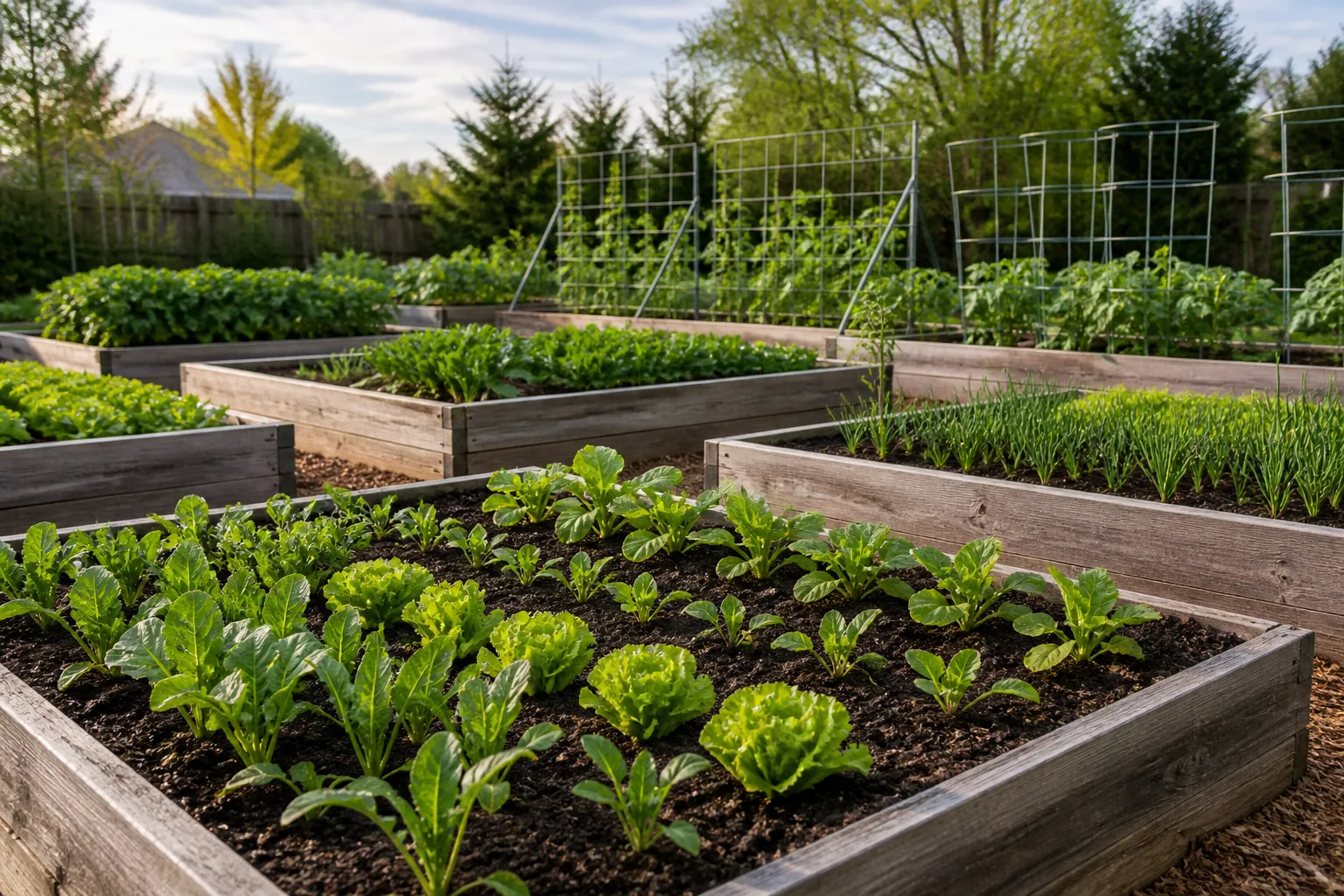
An 800-square-foot vegetable garden is large enough to feed you well and large enough to expose every weak decision in your system. If the beds are crowded, the hose is on the wrong side, the tomatoes have no boundary, or you plant more greens than you can eat, the garden starts assigning you work before you have chosen it.
My goal is not to make the garden maintenance-free. That is not realistic. My goal is to make the work visible, repeatable, and limited. I decide what deserves space, put crops where I can reach them, prevent avoidable jobs, and give myself permission to stop spending time on a crop that is not responding.
Start With a Map, Not a Wish List
Before I buy seeds, I draw the garden to scale. A narrow plot might be 80 feet by 10 feet; a set of raised beds might occupy the same area in a completely different pattern. The exact shape matters less than recording the fixed facts: paths, gates, water access, shade, trellises, perennial plants, and any bed that cannot be reached from both sides.
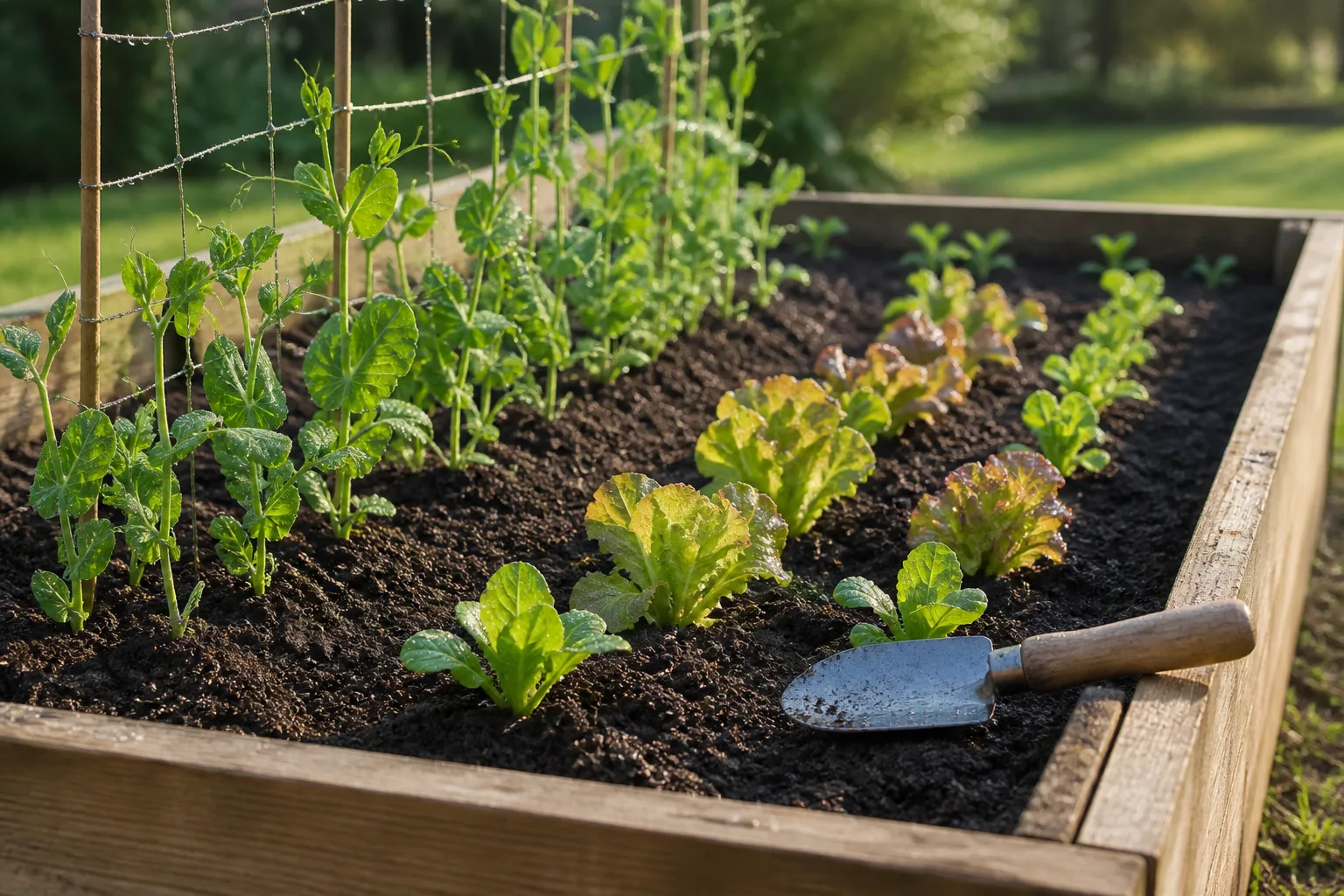
I use graph paper or a spreadsheet with one square representing one foot. Each block gets a crop, plant family, expected height, spacing, planting date, and approximate harvest window. That last field is important. A plant that occupies a bed for four months is a different commitment from a radish or baby-leaf crop that can be replaced in a few weeks.
The RHS guidance on planning a vegetable garden makes the same practical point from another angle: choose what you actually want to eat, consider how much time you have, and plan for the harvest seasons rather than trying to grow everything. The University of Minnesota’s crop-planning guidance also emphasizes working backward from the crop you want, its spacing, the number of plants or beds, and its harvest window. A map turns those ideas into a decision you can see.
Decide What Earns Space
I rank crops with three questions: Will we eat it fresh? Is it expensive or disappointing to buy? Can we use the harvest before it becomes waste? A fourth question protects my time: How much attention does this crop require compared with the value it returns?
This is how I avoid planting six long rows of a vegetable just because I like it in theory. If the freezer is still full from last year, one short row may be enough. If a crop is cheap at the market but a homegrown version is dramatically better the same day it is picked, it may deserve more room. The RHS planning advice specifically warns that excess produce can end up in the compost, so I would rather underplant and buy a little extra than nurture food I cannot use.
Divide the Garden Into Work Zones
I place crops according to how I work, not only according to how attractive the plan looks. Seed rows, containers, and newly transplanted crops belong near the path I use most because they need frequent moisture checks. Trellised crops go where their height will not shade shorter crops, usually on the north side of a bed in the Northern Hemisphere. Herbs and perennial plants get a defined edge so they do not quietly take over annual space.
I keep thirsty crops and drought-tolerant crops from sharing one automatic watering routine. Young seedlings may need frequent checks while established tomatoes, beans, and squash need deeper watering at a different rhythm. A simple division into a frequent-check zone, a trellis zone, a rotation zone, and an empty-bed or succession zone is more useful than a label for every square foot.
Paths are working infrastructure. A path wide enough for a hose, harvest basket, and two feet saves time every week and keeps me from compacting the soil by stepping into beds. I mark beds on the map even when the plants are obvious in May; in August, after foliage overlaps and a crop has been removed, the record is what keeps the plan intact.
Turn Last Year’s Notes Into This Year’s Rotation
Crop rotation sounds like an expert-only task until it is reduced to moving plant families between a few blocks. I divide the annual garden into three or four broad sections, then record the family that occupied each one. The following year, I move those family groups to the next block rather than planting the same group in the same soil.
The RHS crop-rotation guide explains why this helps: crop-specific pests and diseases can build up when the same host plants return repeatedly, and different crops draw on soil nutrients in different ways. The RHS examples group brassicas, legumes, onions, roots, and the potato family, then move those groups through a three- or four-year pattern.
Rotation is not a magic eraser for a contaminated site, badly drained bed, infected seed, or pest that flies in from somewhere else; it is a pressure-reduction tool. In a small plot where a perfect four-year rotation is impossible, moving a family one block farther, using a container for a repeat crop, or giving a bed a season without that host is still more thoughtful than ignoring the record.
Use Plant Families, Not Crop Names
The names on seed packets are too specific for a quick rotation map. I use short family labels:
- Potato family: tomatoes, peppers, eggplants, and potatoes.
- Cucurbit family: cucumbers, squash, melons, and pumpkins.
- Brassicas: cabbage, kale, broccoli, collards, cauliflower, turnips, and radishes.
- Legumes: beans and peas.
- Alliums: onions, garlic, shallots, and leeks.
- Roots and leaves: carrots, beets, lettuce, spinach, chard, and similar crops that do not need the same rigid rotation pattern in every garden.
I keep perennials such as asparagus and rhubarb outside the annual rotation map. I also note exceptions rather than forcing a false precision: a leafy salad crop is not the same management problem as a long-season brassica, and a cucumber grown on a trellis still belongs to the cucurbit family even though it occupies less floor space.
My record for each bed is only a few lines: family, variety, sowing or transplant date, first harvest, end of harvest, disease or pest notes, and whether I would grow it again. Those notes prevent a common planning failure—remembering the crop but forgetting the disease, the amount of waste, or the weeks of support and harvesting it required.
Build a Weekly Workload You Can Actually Finish
Overwhelm comes from treating every garden job as equally urgent. I use three layers instead: a short daily check, a weekly patrol, and a monthly reset. Each layer has a stopping point.
The Daily Check: Water and Weather
Water is the job I check most often, but I do not water every bed just because a calendar says it is watering day. I look at the forecast, inspect the plants most likely to suffer, and test the soil at root depth. If the soil is still moist and the plants are holding themselves normally, I move on. If it is dry, I water that zone thoroughly enough to reach the active roots rather than sprinkling the whole garden by habit.
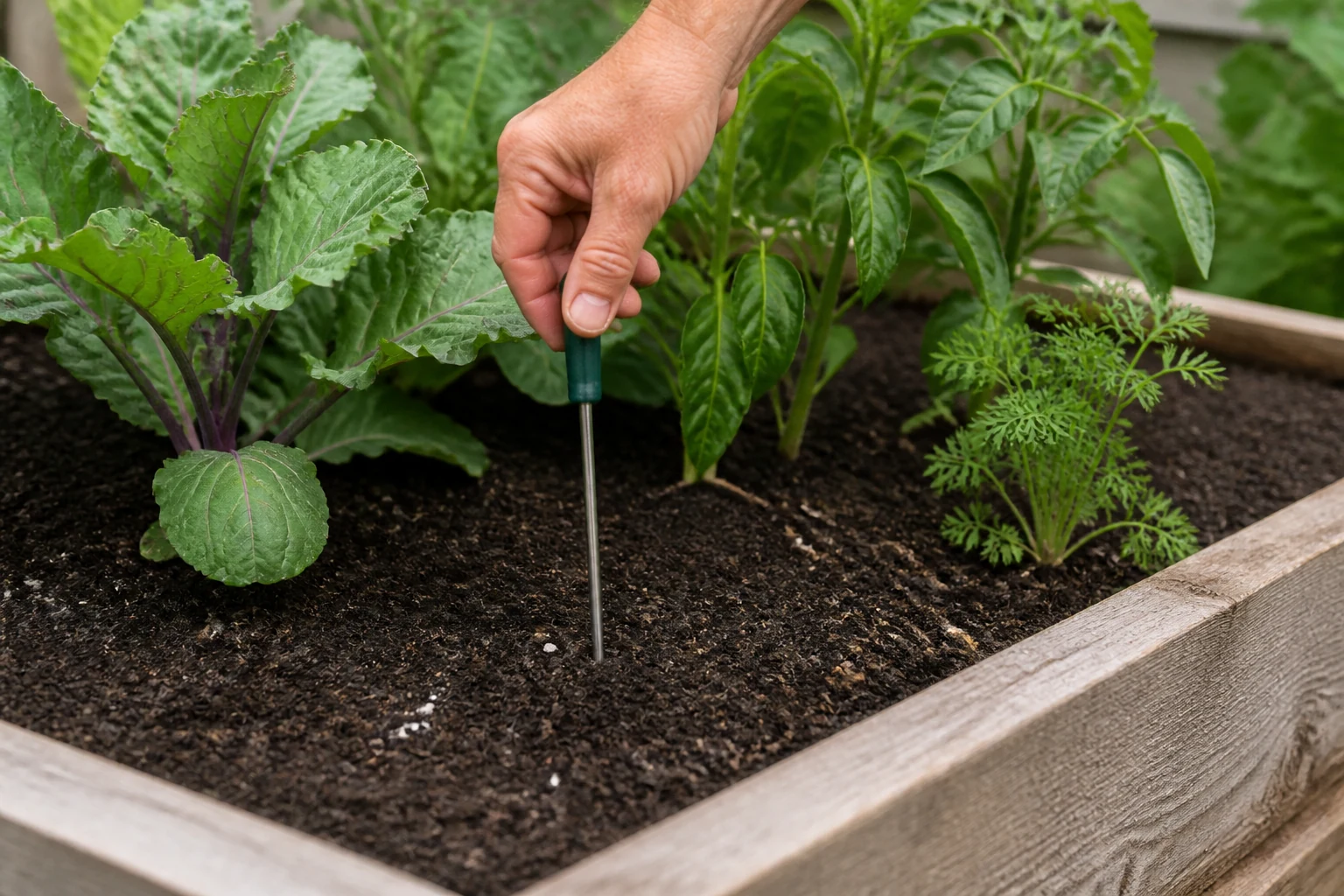
Newly sown rows are the exception because their shallow seed zone can dry quickly. Containers, transplants, and plants in full sun also move to the front of my route during hot, windy weather. Once a crop is established, I prefer a slower root-zone soak to repeated light splashes, while taking soil type into account: sandy soil may need attention sooner than heavier soil, and compacted soil may shed water instead of absorbing it.
I water when the plants can use the moisture and the soil surface will not remain needlessly wet. In a heat wave, I check more than once. After meaningful rain, I skip the automatic round and inspect instead. BBC Gardeners’ World offers a similar priority rule for hot, dry weather: give the neediest containers and plants attention first, and do not spend scarce water on plants that are already past their useful display. The rule is simple: respond to conditions, not guilt.
The Weekly Patrol: Weed, Scout, and Harvest
Once a week, I walk the same route slowly. I look underneath leaves, check stems and supports, notice holes or discoloration, and harvest everything that is ready. Harvesting is maintenance: oversized beans and zucchini hide problems, ripe fruit attracts pests, and a full basket tells me whether the planting quantity matches our appetite.
I pull small weeds while the soil is damp, especially after rain or irrigation. I do not promise myself a weed-free garden; I prevent weeds from reaching the stage where they seed, shade a crop, or become difficult to remove. BBC Gardeners’ World’s seasonal maintenance advice makes the same useful distinction by recommending that annual weeds be removed before they set seed and that persistent perennial weeds be weakened repeatedly rather than treated as a one-pass job.
The patrol ends when the route is complete, not when every weed in the property has disappeared. If one bed has a serious issue, I record it and make it the next focused project. That keeps a problem visible without allowing it to swallow the entire afternoon.
The Monthly Reset: Records and Succession
Once a month, I spend a longer block updating the map and choosing one system-level improvement. I might mark the bed where a crop was removed, start a quick succession of lettuce, order a missing trellis, test soil, sharpen pruners, or cover an empty row. I choose one because five half-finished improvements create more mental clutter than one finished one.
This is also when I compare the garden to the household, not to an imaginary ideal. Did we use the chard? Did the second bean sowing extend the harvest or create a glut? Was the tomato row productive enough to justify its pruning and tying? The answers determine next year’s quantities.
Prevent Weeds Before They Become a Project
Weeds are not only an appearance problem. They compete with garden plants for moisture, nutrients, and light, which is why Penn State Extension’s weed-management guidance treats prevention and control as an ongoing management problem. I use layers rather than expecting one material to solve everything.
Empty beds get covered. Growing beds get planted at sensible spacing. Paths get a surface that can be topped up. The exposed strip around a seed row gets brief, deliberate attention until the crop is large enough to compete. When I know a bed will sit empty, an opaque seasonal cover or clean cardboard can stop light reaching emerging weeds, but I remove it before planting and inspect for slugs or hidden pests.
The most effective weed control is often the least dramatic: do not leave large areas of bare soil, do not let annual weeds mature seed, and do not create a maze of narrow spaces that cannot be reached by a hoe or hand. The supplied competitor is right that prevention saves labor, but prevention works best as a layout decision made before weeds appear, not as a last-minute layer dumped over a crowded bed.
Mulch the Right Way
I apply mulch after removing existing weeds and after the soil is warm enough for the crop. If I mulch too early in a cool spring, I can slow the warming that roots need. If I wait until weeds are tall, I have already accepted a harder removal job.
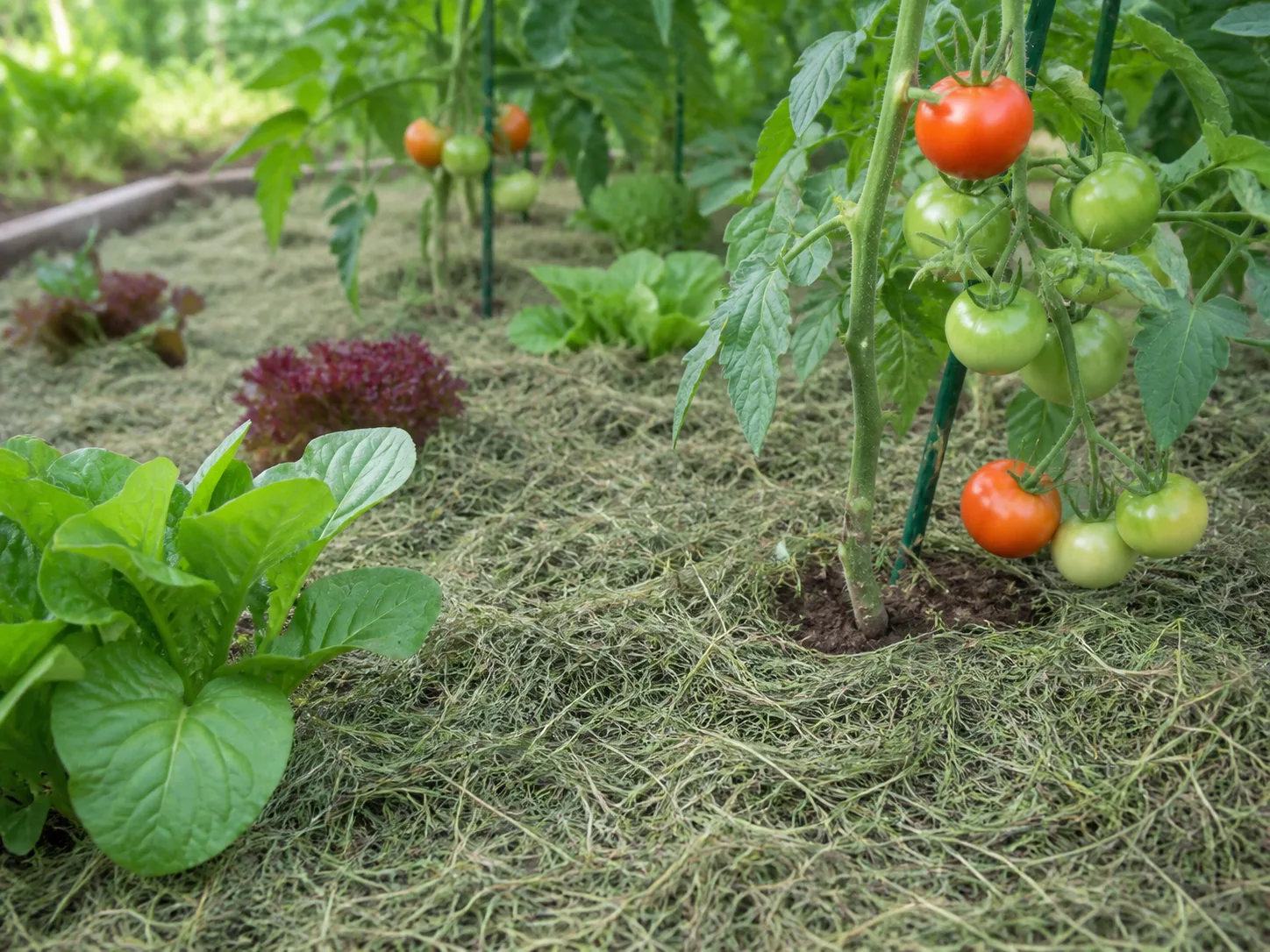
For a general organic mulch, a settled 2- to 3-inch layer is a useful working range. Penn State Extension’s mulch guidance explains that this depth can smother young weed seedlings, reduce evaporation, and still allow water to move into the soil; thinner layers may not work well, while excessively thick layers often waste material. I spread it around established plants, not over direct-sown rows, and leave a small clear collar around stems.
Mulch is not fertilizer insurance. Clean straw, shredded leaves, and arborist chips each behave differently, and fresh or contaminated material can create new problems. I use material I can identify, keep it off stems, and watch the bed after rain. A mulch layer that stays saturated, hides slugs, or blocks a seedling is not helping simply because it is thick.
When I direct-sow, I wait until seedlings are sturdy and visible before mulching close to them. That small delay prevents a windblown layer from burying the crop I was trying to protect.
Use Covers and Paths Strategically
I spend money and effort on paths because they reduce repeated work. A stable path keeps mud out of the harvest basket and lets me scout without stepping on roots. Cardboard under a path covering can help suppress light, but it is not a substitute for removing perennial weeds with persistent roots.
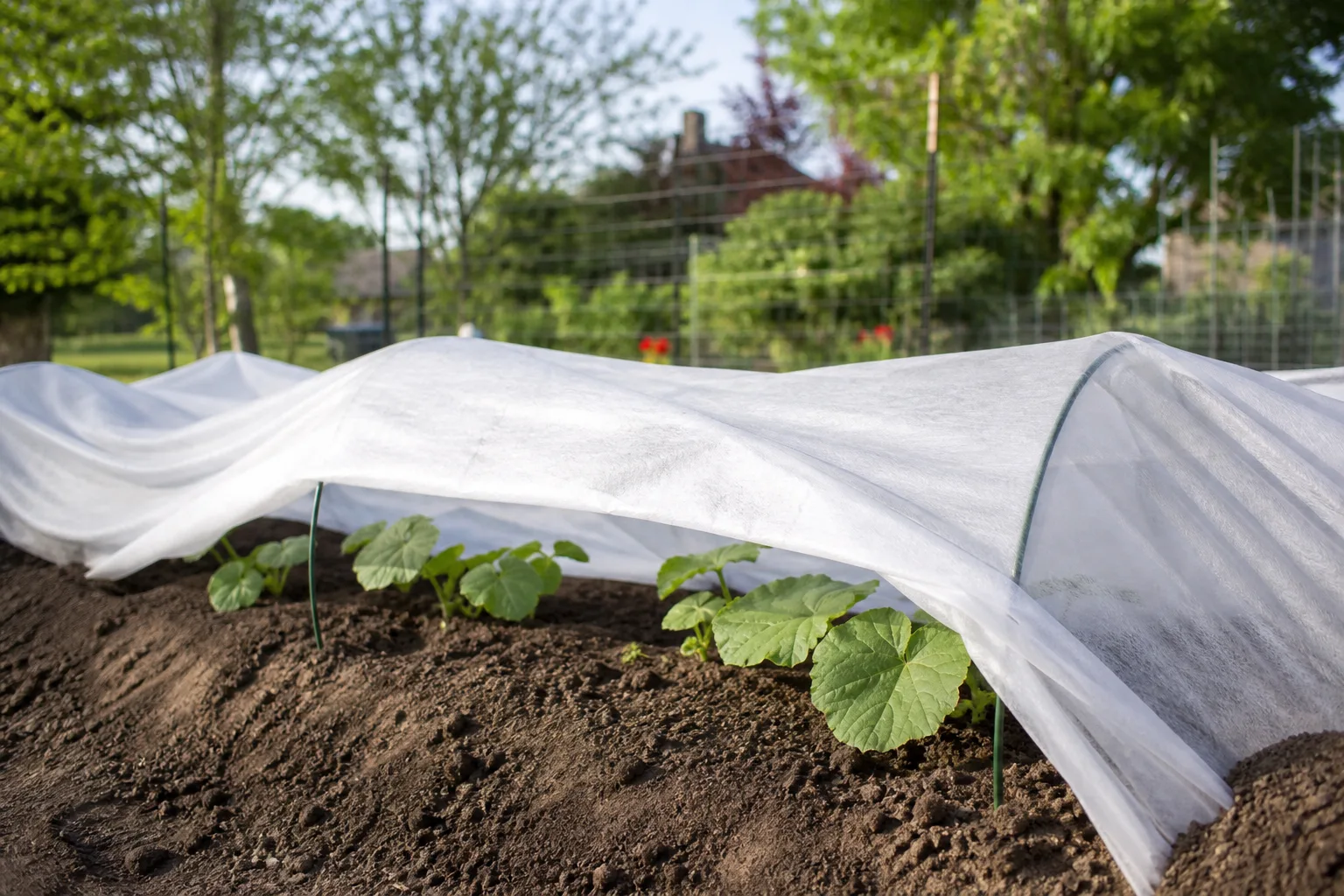
Row cover is another form of labor prevention. It protects vulnerable young plants from some early insect pressure and can reduce the number of emergency interventions later. Fine Gardening’s practical vegetable-garden barrier advice stresses that the edges must be sealed so insects cannot simply walk underneath. I remove or open covers when the crop needs pollination, ventilation, or access, and I do not treat a cover as a guarantee against every pest.
I avoid building the whole garden around permanent fabric or plastic because it may obstruct planting, trap moisture, or make soil amendment awkward in a productive bed. The best surface matches the job and can be inspected easily.
Feed the Soil From Evidence, Not Anxiety
Weak growth does not automatically mean a plant needs fertilizer. I first check moisture, root space, sunlight, crowding, pests, disease, and whether the variety is simply slow. Adding more inputs before identifying the problem can waste money and create a new imbalance.
I use a soil test as a baseline instead of guessing from color or adding compost every time I feel behind. The University of Minnesota’s soil-testing guidance gives a useful general benchmark for testing organic matter, pH, phosphorus, and potassium every two to three years, with more frequent testing when a known issue is being corrected. Exact intervals and recommendations should follow the laboratory and extension service appropriate to the garden’s region.
Compost is valuable, but it is not chemically neutral. In its compost-testing guidance, University of Minnesota Extension shows that compost sources can vary in nutrients, pH, carbon-to-nitrogen ratio, and soluble salts. That is why I use finished compost in measured amounts and pay attention to what the soil test says. “More organic matter” is not a complete nutrient plan.
I protect the soil by avoiding traffic when it is wet, keeping it covered between crops, and leaving healthy roots in place unless they are hosting a disease I need to remove. When a plant fails, I decide whether the residue is clean enough for composting or belongs in disposal according to local extension advice. Soil care prevents more work next season.
Give High-Maintenance Crops a Clear Boundary
Every garden has one crop that can take over the schedule. In mine, that crop is usually the indeterminate tomato. It grows upward and outward, needs support, asks to be tied and inspected, and produces a harvest that can arrive faster than a household can process.
I set a limit before planting. The number is based on how much we eat, how many supports I can maintain, and how much time I want to spend harvesting—not on how many seedlings survive. I place the trellis or cage before the plant becomes large, and I keep tall plants where they will not shade the rest of the bed or block the path.
The same rule applies to squash, cucumbers, beans, and any crop with a habit of crossing boundaries. A support system is not decoration; it is a decision about where future foliage, fruit, and hands will go. If a crop cannot fit the space or the available support, I grow less of it or choose a more compact variety.
Prune and Support Tomatoes on a Schedule
I check indeterminate tomatoes twice a week during their fastest growth. That is enough time to catch a loose tie, a branch falling into the path, or a sucker that will be easier to remove now than later. I do not strip every leaf or prune because a plant looks untidy. I remove growth that creates a genuine access, support, airflow, or harvest problem.
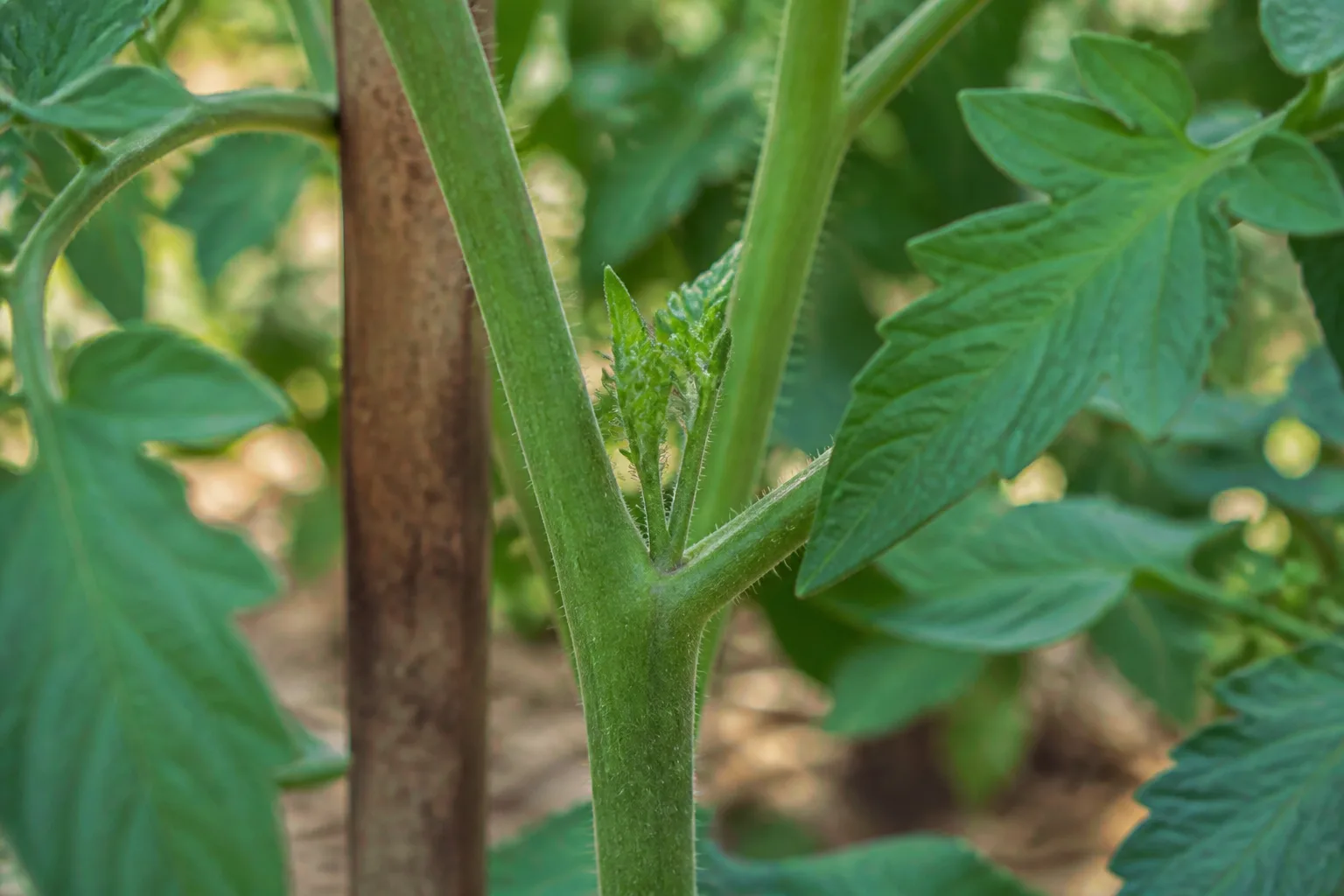
Determinate and indeterminate tomatoes do not deserve the same routine. Determinate plants reach a more compact size and set much of their crop in a shorter window; aggressive pruning can remove productive growth. Indeterminate plants keep extending, so tying and selective sucker removal can make them easier to manage. I check the variety label before applying a rule I learned from a different tomato.
I tie stems loosely, keep fruit-bearing branches supported, and remove diseased leaves with clean pruners rather than dragging them through the canopy. If a plant reaches the top of its support late in the season, I may top it because the structure has reached its practical limit. As the local frost window closes, I put my attention on fruit that can realistically mature.
This boundary keeps tomatoes from becoming a guilt project. A plant can be healthy and still be more work than I want. Choosing a smaller number of well-supported plants is often a better garden decision than planting a thicket and hoping future energy will appear.
When a Crop Fails, Make a Decision
Failure becomes overwhelming when I keep reopening the same question without a deadline. My decision ladder is simple:
- Identify the pattern. Are seedlings disappearing, leaves being chewed, the whole row wilting, or only one plant struggling? Look at the underside of leaves, stems, soil moisture, and roots when appropriate.
- Try one proportionate correction. Add a barrier, adjust irrigation, improve access, thin the planting, remove a clearly diseased plant, or correct the support. I do not change five variables at once.
- Set a review date. Give a quick-growing crop a short interval and a slow crop a longer one, but write the date down. “I will see how it goes” is not a plan.
- Choose the exit. If the crop is not improving, pull it, cover the bed, sow a quick replacement, or leave the space for a cover crop. Record what happened so the same experiment does not return disguised as optimism.
This is not giving up on gardening. It is protecting the opportunity cost of the bed. A failing row occupies water, attention, and physical access that could go to a crop already showing it can thrive. The replacement does not need to be ambitious; a short succession of greens, a cover crop, or a mulched resting bed can be a successful use of the space.
I separate a crop failure from a personal failure. Weather, pest cycles, disease, seed quality, and timing all matter. The useful response is to improve the next decision: plant fewer of the vulnerable crop, use a barrier earlier, rotate its family, choose a different variety, or stop growing it in that location.
Triage Pests and Disease Before Spraying
I do not treat “something is wrong” as a diagnosis. I take a close look, photograph the damage, and ask whether the pattern is chewing, sucking, spotting, wilting, nutrient-related, or mechanical. I check whether the problem is spreading, whether beneficial insects are present, and whether the plant is still producing enough to justify intervention.
My first responses are usually mechanical: remove a badly damaged leaf, hand-pick a visible pest, rinse a sturdy plant, improve spacing, or use a properly secured row cover. Fine Gardening’s practical guidance includes checking the undersides of leaves and using a firm spray of water against some soft-bodied pests; that is a useful low-cost first step, not a promise that water solves every infestation.
If a product is warranted, I use the label and local extension guidance as the authority for the crop, pest, rate, protective equipment, harvest interval, and pollinator precautions. I do not spray a mystery problem on a schedule. A treatment that misses the pest’s life stage, never contacts the pest, or is used on the wrong crop can add cost and risk without rescuing the plant.
My threshold is practical: if the plant is growing, producing, and the damage is stable, I monitor. If damage is spreading, the crop is young, or neighboring plants are threatened, I act sooner. Scouting is about finding a reasoned next step before the problem becomes expensive, not finding a reason to spray.
A Simple 800-Square-Foot Weekly Checklist
I keep the checklist short enough to use during a busy week. The exact minutes change with weather and crop stage, but the sequence prevents me from spending an hour on a low-priority task while a newly seeded row dries out.
| Cadence | Priority actions | Stop condition |
|---|---|---|
| Daily or weather check | Inspect new seeds, transplants, containers, and the driest zone; water only where the soil and forecast call for it. | The priority plants have adequate moisture and no urgent damage. |
| Twice weekly | Check tomato supports, fast-growing vines, ripe fruit, and any crop already showing a problem. | Supports are safe, harvest is collected, and new damage is recorded. |
| Weekly patrol | Walk every bed, pull small weeds, scout leaf undersides, harvest, and remove obvious debris. | Every bed has been seen once; unfinished work is written down. |
| Monthly reset | Update the map, review quantities, plan a succession, test or amend soil when evidence supports it, and finish one system improvement. | One improvement is complete and the next decision is clear. |
| Seasonal change | Remove spent crops, cover or mulch empty beds, clean supports, and record what to repeat or avoid. | The next season has a starting map rather than a blank page. |
When the week is unusually busy, I ask: What will suffer first? What task prevents the most repeat work? What can fail without taking the garden with it? The answers are usually water for vulnerable plants, a quick weed or support intervention, and an experiment past its review date.
That last question protects the whole system. A garden is not a list of promises I made in spring; it changes with rain, heat, harvest, pests, and the amount of time I actually have.
Conclusion
An 800-square-foot garden becomes manageable when I stop trying to give every plant equal attention. I map the site before buying seeds, grow quantities we can use, put frequent-check crops near the path, and rotate plant families using records instead of memory.
Then I protect the time I have. Mulch and covers prevent repeat work, soil tests keep me from feeding by anxiety, and a daily/weekly/monthly rhythm makes the garden predictable without turning it into a rigid calendar. High-maintenance crops get boundaries before they become jungles.
Most importantly, I give failure a deadline. If a crop does not respond to one sensible correction, I reclaim the bed and learn from the record. The goal is not a spotless garden or a perfect harvest; it is a productive place that gives more food, skill, and pleasure than stress.