How to Identify and Remove Milk Thistle Safely
Identify milk thistle by its white-marbled leaves, remove the taproot safely, handle flowers and seedheads, and prevent seedlings from returning.
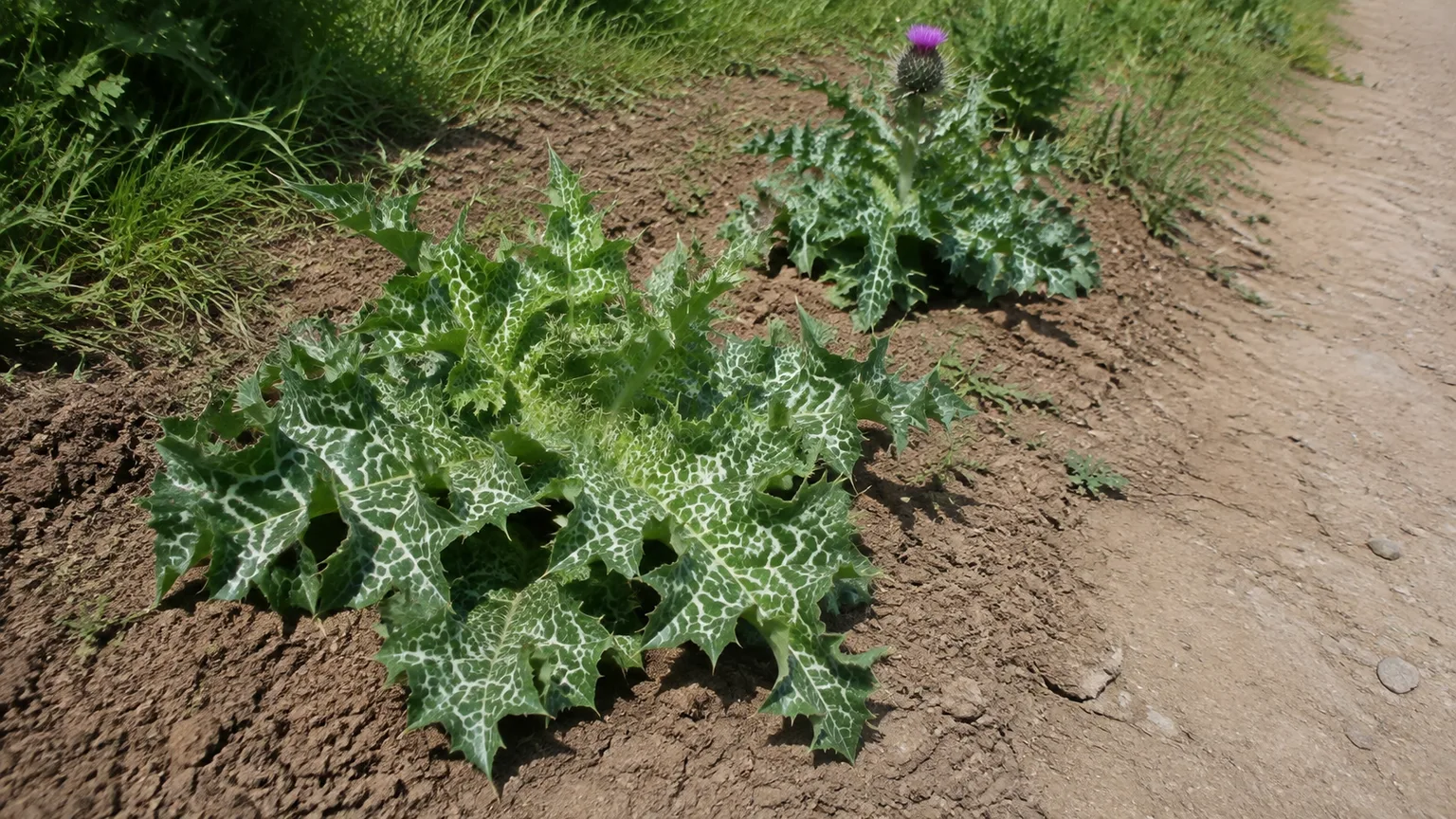
If a weed has a broad, glossy rosette, fierce spines, and white veins that look painted onto the leaves, treat it as a possible milk thistle until you identify it. Milk thistle (Silybum marianum) is easiest to control before it sends up a flower stalk, and the job becomes much harder once purple flowerheads have released seed.
The practical goal is not to win a single dramatic battle with a shovel. It is to prevent this year’s plant from adding to the soil seed bank, remove the crown and taproot when possible, and return often enough to catch new seedlings. The plant is a winter annual or biennial, so a patch that seems to disappear after flowering may simply be setting up the next generation.
Milk thistle is regulated as a noxious weed in some places, while it is treated as a garden weed elsewhere. Check your county or state rules before moving a large infestation, applying an herbicide, or disposing of it near livestock. The King County milk thistle profile is a useful example of how local requirements can differ from general garden advice.
Quick answer: control the plant before it seeds
For one or a few milk thistle plants in a garden bed, put on thick gloves, loosen the soil, and dig below the crown to remove as much of the taproot as you can. If the soil is dry or compacted, water the area the day before so the root comes out with less force; do not yank hard enough to break it or lose your balance among the spines.
Use this sequence:
- Confirm the species from the leaf pattern, growth habit, stem, and flower—not from “thistle” alone.
- Work before flowers open whenever possible, when the plant is still a rosette or just beginning to bolt.
- Protect your skin and eyes. Long sleeves, sturdy gloves, closed shoes, and eye protection are sensible around mature plants.
- Dig under the crown and lift the taproot rather than only cutting the leaves.
- Bag any flowerheads or seedheads immediately. Do not shake them into a bucket, wheelbarrow, or compost pile.
- Check the area again in fall, winter, and spring, because old seed can germinate over more than one season.
For a lawn, pasture, roadside, or broad infestation, the right answer changes. Repeated mowing can prevent seed production in turf when done at the correct height and frequency, but one pass often leaves enough plant tissue to regrow. Herbicide may be justified in a large patch, yet the product, site, season, grazing interval, and risk to nearby plants must all match the label.
Confirm it is milk thistle
Milk thistle belongs to the sunflower family, Asteraceae. The USDA Plants Database entry for Silybum marianum and the Royal Horticultural Society profile describe a robust annual or biennial with a large basal rosette, spiny lobed leaves, and purple flowerheads. In practical terms, you are looking for an architectural plant that is much larger and more conspicuously marked than many ordinary lawn thistles.
Do not identify it from a purple flower alone. Several thistles and other weeds bloom purple, and a young rosette can be difficult to name from one blurry photograph. Take a photo from above and from the side, showing the whole rosette, stem, leaf surface, and flowerhead if present; a local extension office or weed-control program can help confirm a questionable specimen.
The giveaway: a white-marbled, spiny rosette
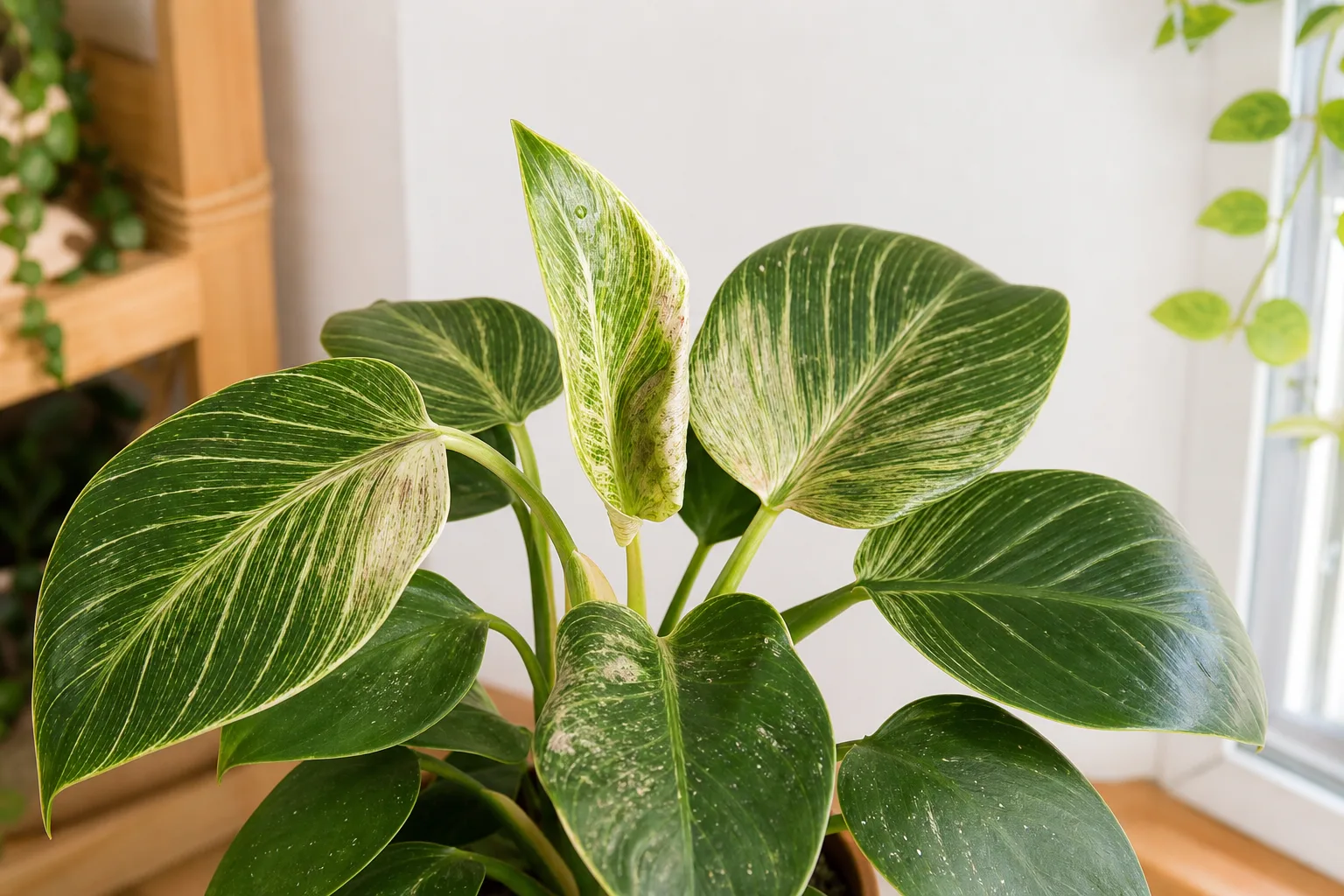
The most useful clue is the foliage. Milk thistle leaves are dark green, glossy, deeply lobed, and marked with bold white marbling or veins. Their edges carry stiff spines, and the plant’s leaves, stems, and flower bracts remain hazardous even when the plant is small. The rosette can spread broadly across the soil before a central stem rises.
As it matures, the plant can reach roughly 1 to 1.5 meters under suitable conditions, although size varies with moisture, soil, competition, and climate. It favors full sun and disturbed, well-drained ground such as roadsides, vacant soil, field edges, ditches, and overgrazed areas. A tall plant has a sturdy, usually hairless stem and a single purple to magenta flowerhead at the end of a branch, surrounded by sharp bracts.
The King County identification guide notes that a plant can produce more than 6,000 seeds and that seeds may remain viable for more than nine years. Those figures are not a reason to panic over one seedling; they are a reason to remove a plant before seed production and to expect follow-up seedlings after the visible plant is gone.
How to separate it from look-alike thistles
The common name “thistle” is a poor diagnosis. Milk thistle, bull thistle, musk thistle, Scotch thistle, and native thistles can overlap in habitat and flower color, but their control and legal status may differ. The Alabama Cooperative Extension System comparison points out that mature milk thistle has solitary purple flowerheads, hairless non-winged stems, and stiff bracts that tend to curve downward.
| Feature | Milk thistle | Musk or bull thistle | Why it matters |
|---|---|---|---|
| Young leaves | Large, glossy, boldly white-marbled | Usually green without milk thistle’s strong white network | The rosette is often your best early clue. |
| Mature stem | Generally hairless and not winged | May be winged, hairy, or more heavily armed | A side view helps confirm the identification. |
| Flower | Solitary purple or magenta head | Shape and posture vary; musk thistle often nods | Flower color by itself is not enough. |
| Growth habit | Large basal rosette, then a tall central stalk | Some species branch or spread differently | The whole plant matters more than one leaf. |
If the plant is valuable native habitat or you are unsure whether it is a native thistle, pause before removing every specimen. Compare it with a regional weed guide or ask an extension specialist. Removing a regulated invasive is different from removing a native plant that happens to have spines.
Understand the life cycle before choosing a method
Milk thistle often germinates in fall or winter, forms a low rosette through the cool season, bolts in spring, and flowers from late spring into summer. In some climates it behaves as a winter annual; elsewhere it may take two growing seasons to flower. After seed production, the parent plant dies, but its seeds remain the real long-term problem.
The taproot helps the rosette survive dry conditions and makes shallow hoeing unreliable. A cut-off crown may have enough stored energy to produce new leaves or a short flowering shoot. That is why “I cut it down and it came back” is a normal observation, not evidence that the weed is indestructible.
Why timing beats brute force
The best general window is before the flower opens, with the rosette and early-bolt stages offering different advantages. A young rosette is low, accessible, and relatively easy to dig. An early-bolting plant is more obvious and still has not scattered mature seed, but it may require a deeper, more deliberate cut below the crown.
Late action is still worthwhile. If flowers are present, carefully remove the heads first, contain them, and then decide whether digging, cutting, or a labeled treatment is safest for the site. Do not leave a flowering stem on the ground while you gather tools; thistle heads can continue to dry and release seed after cutting.
Choose control by site and infestation size
The correct method depends less on whether you prefer “natural” or “chemical” control than on what you are trying to protect. A hand shovel is precise in a perennial border but impractical across an acre. A broadleaf herbicide may spare established grass but injure clover, wildflowers, vegetables, shrubs, or young trees. A nonselective product can clear a bare gravel edge while damaging every green plant it touches.
Small numbers in a bed or border
For one to several plants, manual removal is usually the most controllable option. It avoids drift, lets you protect neighboring flowers, and removes the weed before you have to manage a broad patch. Choose a cool part of the day, especially in a hot climate, and work when the soil is moist but not muddy.
If the bed is heavily mulched, do not assume the weed has no root. Milk thistle can emerge through gaps and thin mulch wherever a seed reaches soil and receives enough light. Pull the mulch back, expose the crown, and dig from the side so the shovel or weeder passes below the taproot rather than slicing through it.
For a garden tool decision, the LeafyPixels guide to choosing weeding tools can help you compare a narrow trowel, forked weeder, hori hori, or long-handled tool. The important feature here is control and depth, not the brand of tool.
Lawns, pastures, roadsides, and large patches
Start by mapping the patch and separating desirable vegetation from bare ground. In a lawn, the objective may be to stop seed production while preserving turf. In a pasture, you also have to account for grazing animals, forage legumes, hay timing, and product restrictions. Along a roadside or fence line, preventing spread to neighboring land may matter more than making the ground look perfectly bare.
In large areas, begin with the least infested edges and work toward the densest center. Clean mower decks, boots, trailers, and tools before moving to an uninfested area. If plants are already in seed, do not mow them simply to make the site look tidy; mowing can distribute seed and create a larger problem.
Remove young plants by hand
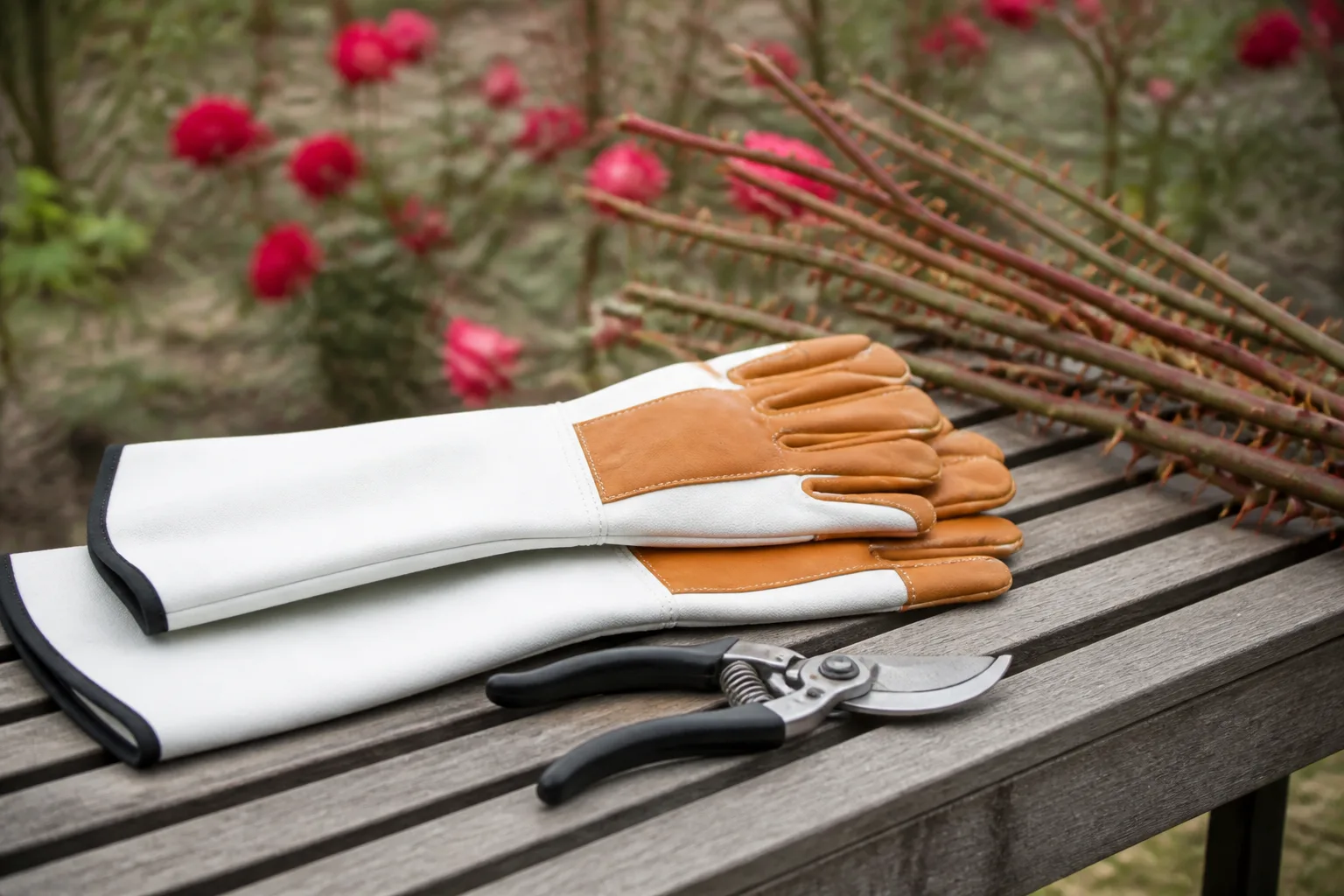
Wear thick thorn-resistant gloves, long pants, sleeves, and closed shoes. Eye protection is useful when you are working under a tall plant or cutting stiff stems, and children and pets should stay away from the work area. A thorn-protection glove reference image shows the kind of long-cuff coverage that is more appropriate than thin fabric gloves.
The safe digging and disposal sequence
- Inspect before touching. Find the crown at the center of the rosette and look for flower buds or open heads.
- Clear a small working circle. Move mulch and loose debris without brushing against the leaf edges.
- Loosen the soil deeply. Insert a narrow shovel or fork several inches away from the crown, then work inward from multiple sides.
- Lift the root slowly. Keep the crown intact and pull upward only after the surrounding soil has opened. If the root snaps, search the hole for the remaining section and plan to revisit it.
- Collect every head. Put flowers and seedheads directly into a sturdy bag. Do not carry them loose in a wheelbarrow.
- Check the hole and surrounding soil. Look for small rosettes that were hidden under the parent plant or mulch.
- Clean tools and shoes. Brush or rinse away soil and plant fragments before leaving the area.
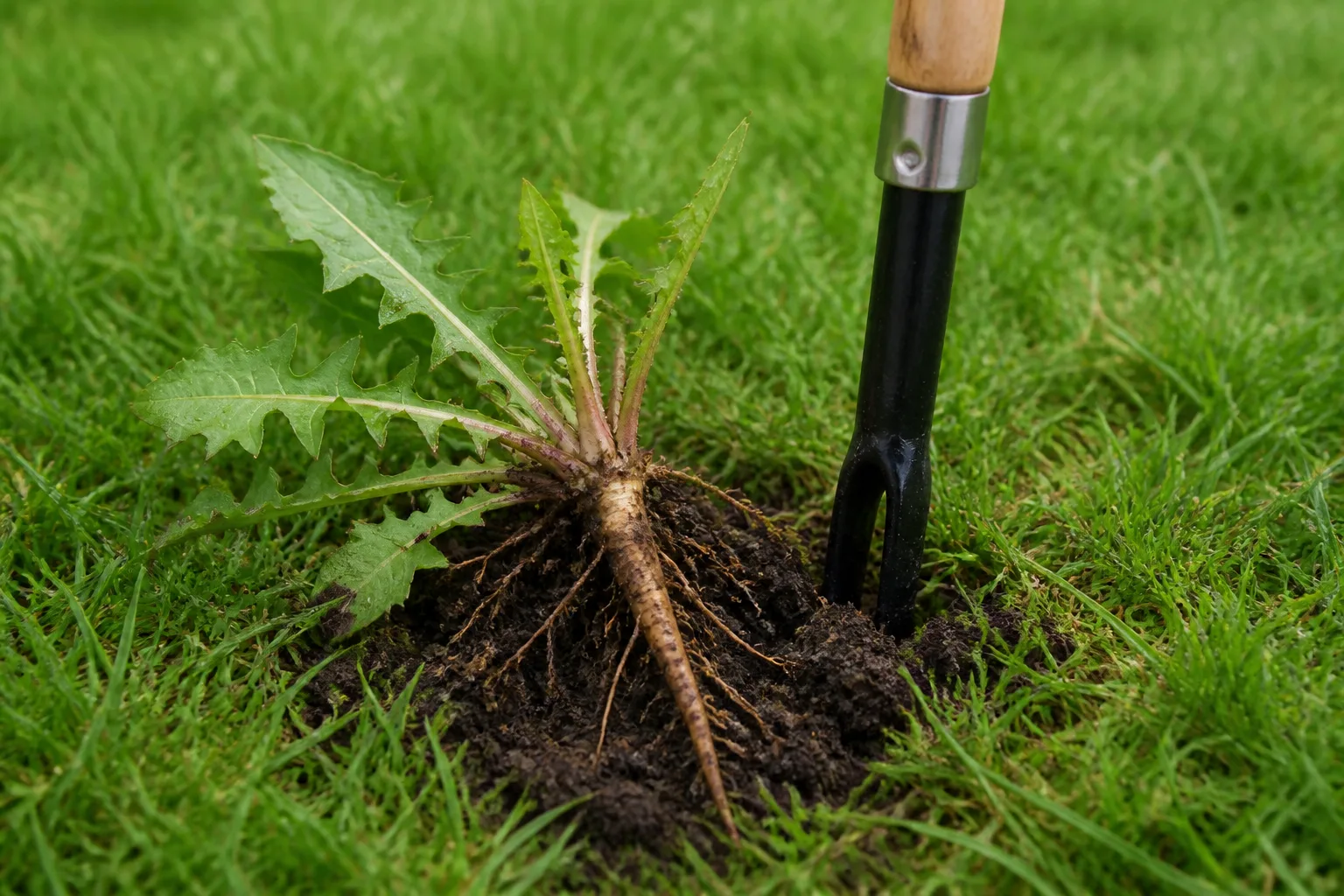
The technique is the same principle used for any taprooted weed: work below the crown instead of only stripping off the leaves.
Put non-seeding roots and leafy debris in the disposal stream allowed by your municipality. Flowerheads and seedheads deserve extra caution. King County advises removing those reproductive parts from compost; Homes & Gardens’ milk thistle guidance likewise recommends bagging milk thistle rather than sending it to a home compost pile. Unless your local waste authority gives a specific high-heat or invasive-weed process, bag seeding material and use the approved trash or green-waste route.
For a small garden patch, Melinda Myers’ thistle advice adds a useful practical detail: pull when the soil is moist, remove the entire root, and reduce future work by acting before seed set. Her suggestion to let non-seeding weeds dry thoroughly before composting is more permissive than the conservative rule for flowerheads and seedheads; when in doubt, keep all reproductive material out of home compost.
What to do if milk thistle is flowering or seeding
Once a flower opens, the priority changes from “pull the plant perfectly” to “contain the reproductive material.” Put on protective clothing, place a bag over the head if you can do so without shaking it, and cut below the head with clean pruners. Keep the bag upright and closed. Then remove the remaining stem and root if the ground and surrounding plants allow it.
If the head has already turned fluffy or brown, assume it can shed seed. Avoid windy conditions, dragging the plant, or using a leaf blower. If a seedhead breaks apart, do not rake aggressively across the area; collect what you can and mark the spot for repeated monitoring.
Do not burn or compost invasive plant material unless local authorities specifically allow that method and you can meet their safety and temperature requirements. A backyard compost pile is not automatically hot or consistent enough to destroy every seed. The safest household rule is simple: no milk thistle flowers or seedheads in ordinary compost.
Milk thistle has also been used as an herbal plant, but medicinal tradition is not a reason to harvest an unknown roadside specimen. The National Center for Complementary and Integrative Health’s milk thistle information explains that evidence and safety depend on the preparation and use. Do not feed removed plants to animals or make a home remedy from a plant treated with herbicide or collected where contamination is possible.
Does mowing work?
Mowing is a management tool, not a guaranteed kill. One low cut can leave the crown and taproot alive, and milk thistle may push new shoots from buds below the cut. The Alabama Extension guidance describes mowing as limited control because regrowth can still flower and produce seed.
In a maintained lawn, repeated mowing before flowerheads mature can help reduce the plant’s ability to set seed and may gradually weaken it, especially when the turf is thick enough to compete. Mow on the lawn’s normal schedule and height rather than scalping the entire area. Bag clippings if flowering plants are present, and clean the mower before entering clean turf.
For a rough field or pasture, mowing must be timed to the plants’ growth stage and repeated often enough to catch regrowth. That can be difficult, and mowing may harm desirable vegetation or spread seed if done after heads form. If mowing is your only option, inspect the site again within a few weeks instead of treating the first cut as completion.
When herbicide is justified—and how to reduce risk
Consider herbicide when the infestation is too large to dig, the plants are inaccessible, or repeated mechanical control is not protecting the site. Treating a few plants in a mixed flower border is often a poor trade because many broadleaf herbicides can injure the plants you want to keep. Hand removal or a shielded spot treatment may be more precise.
The usual target is an actively growing rosette or early-bolting plant, before the flower opens. The Pacific Northwest Pest Management Handbooks list several labeled active ingredients and emphasize site restrictions, drift precautions, residual effects, and timing. In grass, a selective broadleaf product may preserve turf better than glyphosate, but “selective” does not mean safe for every nearby broadleaf plant.
Before buying or mixing anything, read the current label for your exact product and site. Confirm all of the following:
- the product is labeled for milk thistle or the applicable weed group;
- the site is approved, such as lawn, pasture, rangeland, non-crop area, or garden edge;
- the timing and weather conditions fit the label;
- the product will not harm nearby trees, shrubs, clover, vegetables, or native flowers;
- grazing, haying, replanting, and harvest intervals are understood;
- wind, temperature, rain, and spray drift are within label limits.
Do not increase the rate because a plant looks tough, combine products casually, or use a pasture product in a vegetable bed. Avoid spraying drought-stressed plants or dry, dusty soil when the label warns that uptake will be poor. Keep people and animals out for the stated interval, store leftovers in the original container, and dispose of containers through the approved local program.
The Alabama Cooperative Extension thistle-control guide is especially useful for pasture readers because it explains why fall rosettes and late-winter or early-spring treatments can be effective, and why clover may be injured. Those timing observations do not replace your local label or state rules.
Prevent seedlings from returning
Removal exposes the next weakness: bare soil. Milk thistle favors disturbed ground, so a newly cleared patch can invite another flush of seedlings unless you replace the cover. In a bed, replant with well-adapted perennials or a dense groundcover after you have removed the roots and checked the area. In a lawn, repair thin turf and correct compaction, mowing, or watering problems that leave open soil.
Mulch can reduce light at the soil surface, but it is not a permanent barrier and it does not erase existing seeds. Apply a consistent layer around desirable plants without burying their crowns, and pull new rosettes as soon as they appear. The LeafyPixels guide to whether mulch prevents weeds covers the trade-offs between mulch depth, soil contact, and maintenance.
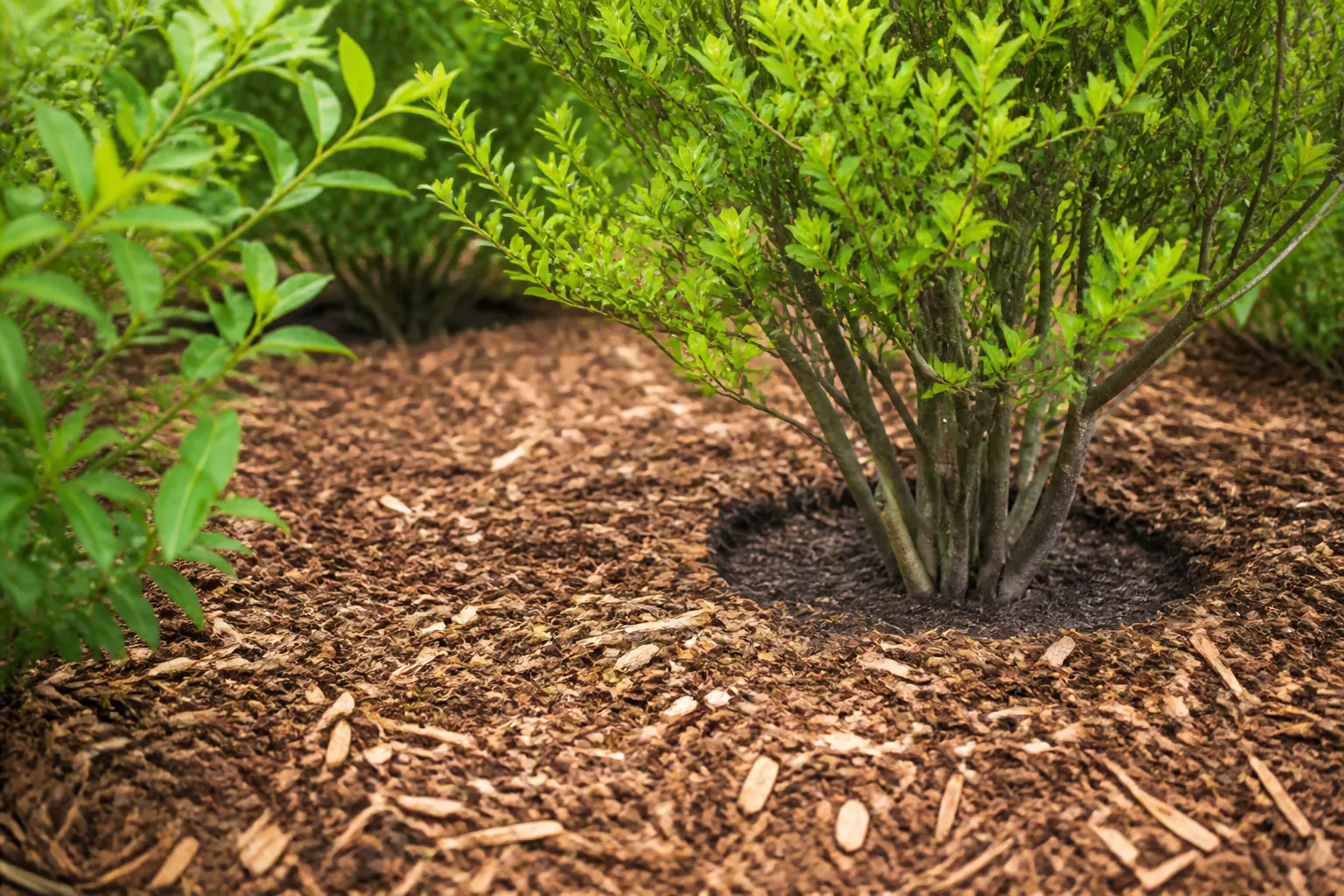
Mulch helps close the open-soil opportunity, but scouting is still necessary when a persistent seed bank is present.
Use a simple return schedule:
- Within two weeks: inspect the old plant’s crown and any disturbed soil for regrowth.
- In fall and winter: look for new round seedlings and small rosettes after rain.
- In spring: remove rosettes before stems elongate and search beyond the original patch.
- Before summer seed set: walk the entire edge, including fence lines, paths, and mower-turn areas.
Do not import topsoil, hay, compost, or fill from an unknown source into a clean bed beside an infestation. Avoid moving seed-bearing plants, soil, or equipment to a new property. If the patch is next to a pasture, coordinate control with the land manager so the replacement cover and grazing plan do not create another bare-soil cycle.
Common mistakes that prolong an infestation
Pulling only the leaves. A shallow tug removes the rosette’s visible growth but can leave the crown and taproot. Dig below the center, especially in compacted soil.
Mowing after seedheads form. A mower can spread mature seed across a lawn or field. Remove or contain flowering plants first, then choose a timing that prevents new heads from opening.
Composting the whole plant. Ordinary compost is not a reliable seed-destruction system. Keep heads out of the pile and follow your local disposal instructions.
Treating a look-alike without checking. Native thistles and other spiny plants are not interchangeable. White marbling, stem structure, and flowerhead details should agree before you act.
Spraying a broadleaf herbicide across a mixed border. The same chemistry that controls milk thistle can damage clover, wildflowers, shrubs, and vegetables. Shielded spot treatment or manual digging may protect more of the garden.
Stopping after the parent plant dies. A dead adult does not prove the site is clean. Seeds can germinate later, and soil disturbance can bring them to the surface. Keep the patch on your seasonal walk list for several years.
Leaving the ground bare. A cleared circle is an invitation to the next seedling. Replace the cover with healthy turf, mulch, or suitable plants that can compete without becoming invasive themselves.
Conclusion: stop seed production, then rebuild coverage
Identify milk thistle by the combination of white-marbled spiny leaves, a broad basal rosette, a sturdy stem, and a purple flowerhead—not by flower color alone. Remove small plants before flowering by digging below the crown, contain every flowerhead and seedhead, and use mowing or a labeled herbicide only when the site, timing, and collateral risks make sense.
The lasting solution is a sequence: prevent this plant from seeding, remove as much root as practical, clean the tools that touched it, close the bare-soil gap, and inspect again through the next growing seasons. That approach is slower than a one-time shortcut, but it gives you the best chance of reducing the seed bank without trading one weed problem for damaged turf, injured garden plants, or a larger contaminated patch.