How to Grow and Care for a Coffee Plant
Grow Coffea arabica indoors with practical guidance for light, moisture, humidity, feeding, pruning, brown leaves, yellow leaves, and fruit.
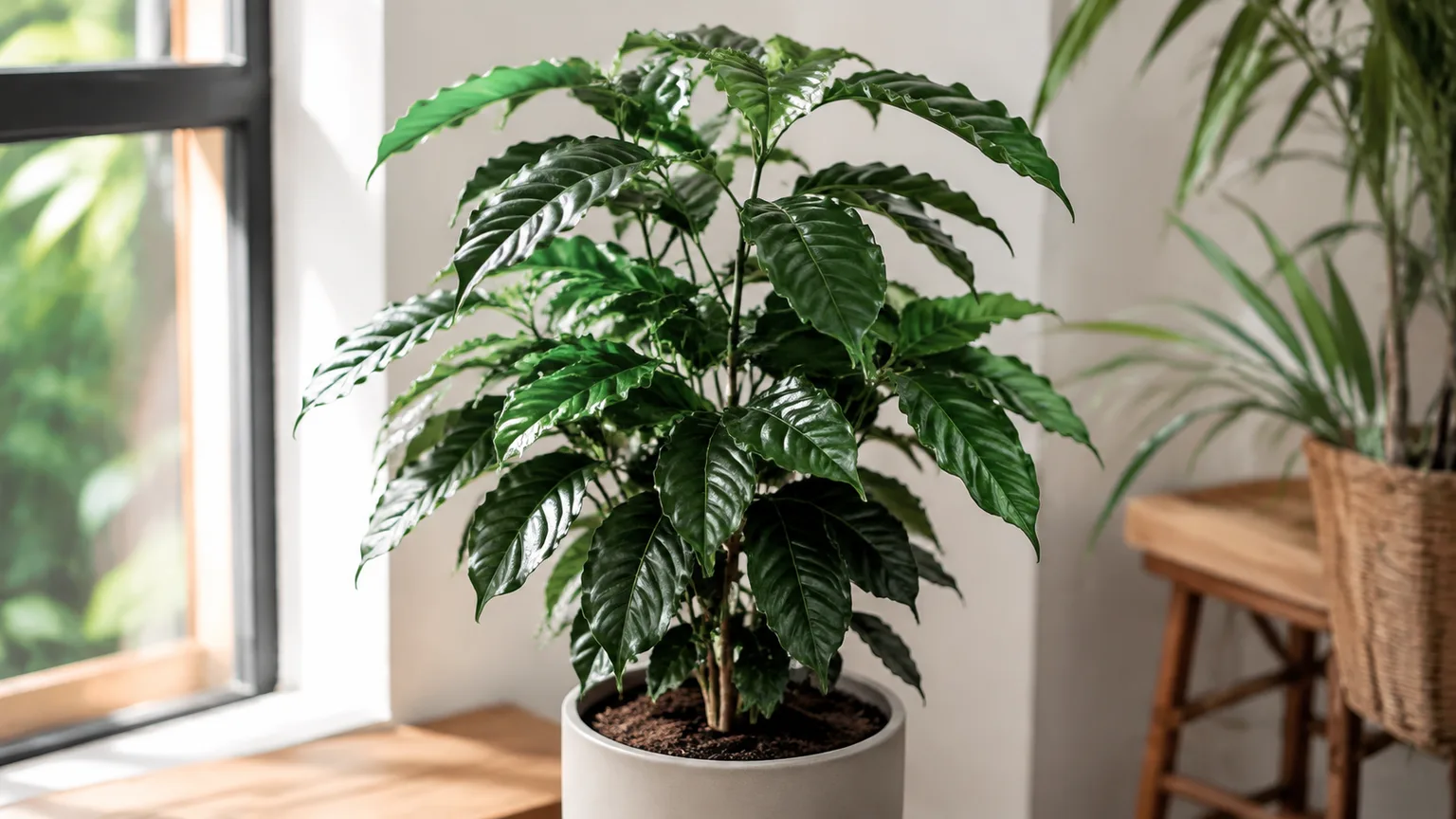
A coffee plant is a surprisingly handsome houseplant even if you never harvest enough beans to fill a mug. Coffea arabica grows as an evergreen shrub with glossy, ribbed leaves; mature plants can produce fragrant white flowers followed by red coffee cherries. In a pot, it is a long-term foliage plant first and a coffee crop second.
The reliable formula is simple but not careless: give it bright filtered light, an airy root zone that stays lightly moist, steady warmth, and enough humidity to prevent the leaves from drying at the edges. The biggest mistake is treating “moist” as “wet.” Coffee roots need water, but they also need oxygen.
Start with the right coffee plant and realistic expectations
Most plants sold as coffee houseplants are Coffea arabica, also called Arabian coffee. The species is an upright tropical shrub native to Ethiopia; the Missouri Botanical Garden profile describes glossy elliptical leaves, jasmine-scented white flowers, and fruits that mature from green through red. In a container, the plant is usually kept far smaller than a landscape specimen, but it can still become a substantial floor plant over time.
Buy a vigorous plant with evenly green leaves, active buds or new growth, and no cottony insects tucked into leaf joints. A crowded nursery pot may contain several seedlings; separating them is possible, but do it only when the root ball is moist enough to release without tearing fine roots. If your goal is beans, ask which species and cultivar you are buying. If your goal is a beautiful indoor plant, a healthy arabica seedling is the better starting point than a stressed bargain plant covered in fruit.
There are three different goals, and they require different patience: keeping foliage healthy, getting flowers, and producing a useful harvest. A coffee plant can manage the first goal in an ordinary bright home. Flowering usually requires a mature plant and a long period of consistent care, while a single indoor plant rarely yields enough processed coffee for a full pot.
Choose the best indoor or outdoor location
Indoors, place the plant close to a bright window with a sheer curtain or some distance between the foliage and intense afternoon sun. An east window is often an easy fit; a bright south or west window can work if the glass does not turn the leaves hot and the plant is acclimated gradually. Rotate the pot a quarter turn every week or two so the plant does not lean toward the light.
Outdoors, coffee prefers a protected position with filtered sun or light shade, especially where afternoon heat is strong. It can enjoy a summer on a shaded patio, but moving a plant from a dim room directly into outdoor sun is a fast route to scorch. Increase outdoor light over a week, starting in bright shade and checking leaves the next day for bleached or crispy patches.
How much light coffee plants need
Think bright but softened, not gloomy and not baking. A coffee plant in weak light often produces long spaces between leaves, thin stems, and a leafy topknot; a plant in harsh direct light can develop tan patches and dry brown margins. The University of Washington’s Elisabeth C. Miller Library specifically connects spindly growth with inadequate light and recommends a bright eastern or protected southern exposure.
If natural light is poor, use a grow light on a timer and keep it far enough away that the leaves stay comfortably cool. A light meter is useful, but you can also watch the plant: new leaves should arrive at a reasonable size, stems should not stretch dramatically, and the plant should remain balanced after you rotate it. Do not solve weak light by moving a stressed, dry plant into the strongest sun in one step; correct the watering first, then acclimate it.
Build an airy, acidic potting mix
Coffee plants like organic-rich soil that holds some moisture but drains freely. A practical container mix is two parts quality potting mix or coco-based mix, one part fine orchid bark or compost, and one part perlite or pumice. The exact recipe matters less than the result: when you squeeze a handful, it should hold together briefly and then crumble rather than form a muddy ball.
Use a pot with a real drainage hole. Do not add a layer of gravel at the bottom as a substitute for drainage; it reduces the depth of usable root-zone mix and can leave water perched above it. A slightly acidic mix is appropriate, but do not pour acidifying products into the pot based on a guess. If growth is poor despite good light and drainage, test the mix or use a fresh, reputable potting medium instead of repeatedly adding amendments.
Keep the soil surface free of fallen leaves and fruit. Organic debris pressed against wet stems can stay damp and invite fungus gnats or rot. A thin top-dressing of bark can be decorative, but leave a small gap around the trunk and make sure it does not prevent you from checking moisture.
Water by root-zone moisture, not the calendar
Water when the upper portion of the mix has begun to dry, then water thoroughly until a little runs from the drainage hole. Empty the saucer after several minutes. The goal is a root ball that is evenly moist but never continuously saturated; the Missouri Botanical Garden guidance uses the same consistently-moist-but-not-soggy distinction.
Before watering, push a finger or wooden chopstick several inches into the pot, not just across the surface. If the tool comes out cool and damp with mix clinging to it, wait. If the top is dry and the middle is only faintly moist, water. A small pot in a sunny window may need attention twice a week in summer; a large pot in a cool room may take much longer. Pot size, mix, light, season, and airflow control the interval.
When a dry root ball repels water, do not keep adding small sips to the surface. Water slowly around the entire pot, pause, and repeat until the mix absorbs it and drains. If water races down the sides, the mix may be compacted or hydrophobic; repotting into a fresh airy mix is safer than keeping the plant on a cycle of shallow wetting and deep drying.
Keep temperature and humidity steady
Arabica coffee comes from warm, humid highland conditions, not from a frost-tolerant climate. The botanical garden’s indoor guidance gives a useful target of about 70–80°F by day and 60–65°F at night, and notes that leaf drop can occur when temperatures fall below 55°F. NASA’s coffee plant overview likewise describes coffee as a tropical flowering shrub that needs high humidity and cannot withstand freezing temperatures.
Keep the plant away from heating vents, air-conditioning blasts, cold window glass, and doors that open onto freezing weather. Humidity around 50–60 percent is a comfortable target, but stability and airflow matter more than chasing a number. A hygrometer tells you whether the room is actually dry; leaf tips alone cannot distinguish low humidity from salt buildup, root trouble, or irregular watering.
Misting leaves may make them look fresh for a few minutes, but it does not reliably raise room humidity. A room humidifier is more effective. A correctly built pebble tray can modestly improve the air immediately around the foliage: the pot must sit above the water on pebbles, never in standing water. Keep enough air movement that leaves dry naturally and the plant does not sit in a stagnant, constantly wet pocket.
Fertilize for leaves without salt buildup
Feed during active growth in spring and summer with a complete liquid fertilizer diluted according to the label, or use a controlled-release product intended for container plants. A balanced formula with micronutrients is a sensible default; a high-nitrogen feed can support foliage but will not compensate for weak light or poor roots. Water the soil first if it is very dry, then fertilize so concentrated salts do not hit dehydrated roots.
Reduce or stop routine feeding when growth slows in winter, especially if the plant is in a dim room. Pale new growth can reflect insufficient light, root damage, or a nutrient issue, so do not respond with repeated fertilizer applications until the root zone and light have been checked. Excess fertilizer can cause brown margins, a white crust on the soil, and root stress.
Used coffee grounds are not a dependable fertilizer for a potted coffee plant. Fresh grounds can mat together, alter moisture movement, and encourage mold. If you want to use a coffee-related soil amendment, composted material is safer, but a measured complete fertilizer is easier to control in a container.
Prune for a compact, branching plant
Prune in spring or when the plant resumes active growth after winter. Use clean, sharp pruners to remove dead stems, weak growth, crossing branches, and leaves that are fully damaged. For a bushier shape, cut just above a healthy leaf node; new growth can emerge below the cut when light and nutrition are adequate.
Do not remove half of a small or recently stressed plant just to make it look compact. A coffee plant needs living leaves to rebuild roots and shoots. If the plant is tall and bare below, improve light and pinch the growing tips over time rather than making one severe cut. Remove no more than about one-third at a time unless you are correcting a serious problem, and sanitize pruners between plants.
Repot when roots, not the calendar, say so
Repot when roots circle densely around the root ball, emerge from drainage holes, dry out unusually fast, or push the plant unstable. Late winter or early spring is a useful window because the plant is approaching active growth, but a severely waterlogged or root-bound plant should not wait for a perfect date. Choose a container only one or two sizes larger; a huge pot stays wet around a small root ball and raises the risk of rot.
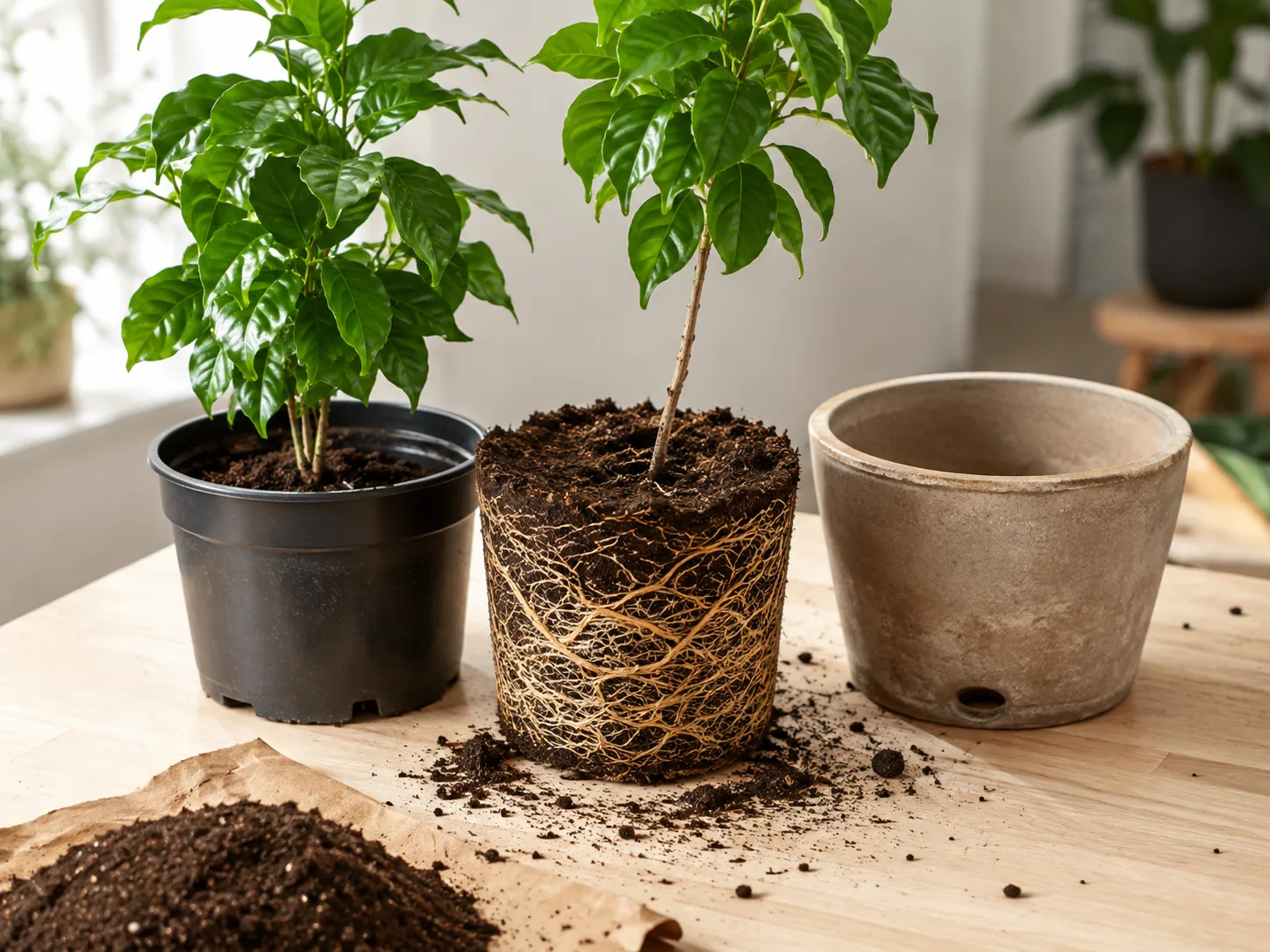
Slide the plant out and inspect before you decide what to do. Healthy roots are generally firm and pale tan to cream; dark, mushy, foul-smelling roots need to be trimmed back to firm tissue with clean scissors. Set the plant at the same depth, fill around the root ball without burying the trunk, and water once to settle the mix. Do not fertilize immediately after a major root trim; give the plant time to resume growth.
Propagate coffee plants from cuttings
Stem cuttings are a practical way to clone a plant you already like, although success is not guaranteed. Take a 4–6-inch section from a healthy, non-flowering stem during active growth. Remove the lower leaves, keep one or two pairs at the top, and make the lower cut just below a node.
Insert the cutting into a small pot of damp, airy propagation mix such as perlite blended with coco or fine potting mix. A rooting hormone is optional, not magic. Cover the pot with a clear bag or dome to slow moisture loss, but keep the plastic off the leaves and open it briefly each day so stale, saturated air does not encourage rot.
Put the cutting in bright indirect light, warmth, and evenly damp—not soaked—media. New growth is encouraging but does not prove a strong root system; tugging on the cutting can break new roots. After several weeks, check for resistance or gently inspect the edge of the pot. Acclimate a rooted cutting to normal room humidity before moving it into a larger container.
Grow coffee plants from fresh seed
A roasted grocery-store coffee bean will not sprout. Seeds must be fresh and viable, ideally taken from a ripe coffee cherry or purchased as fresh green seed from a reputable source. Epic Gardening’s coffee guide notes that viability declines as green seed ages, so old decorative beans are a poor experiment.
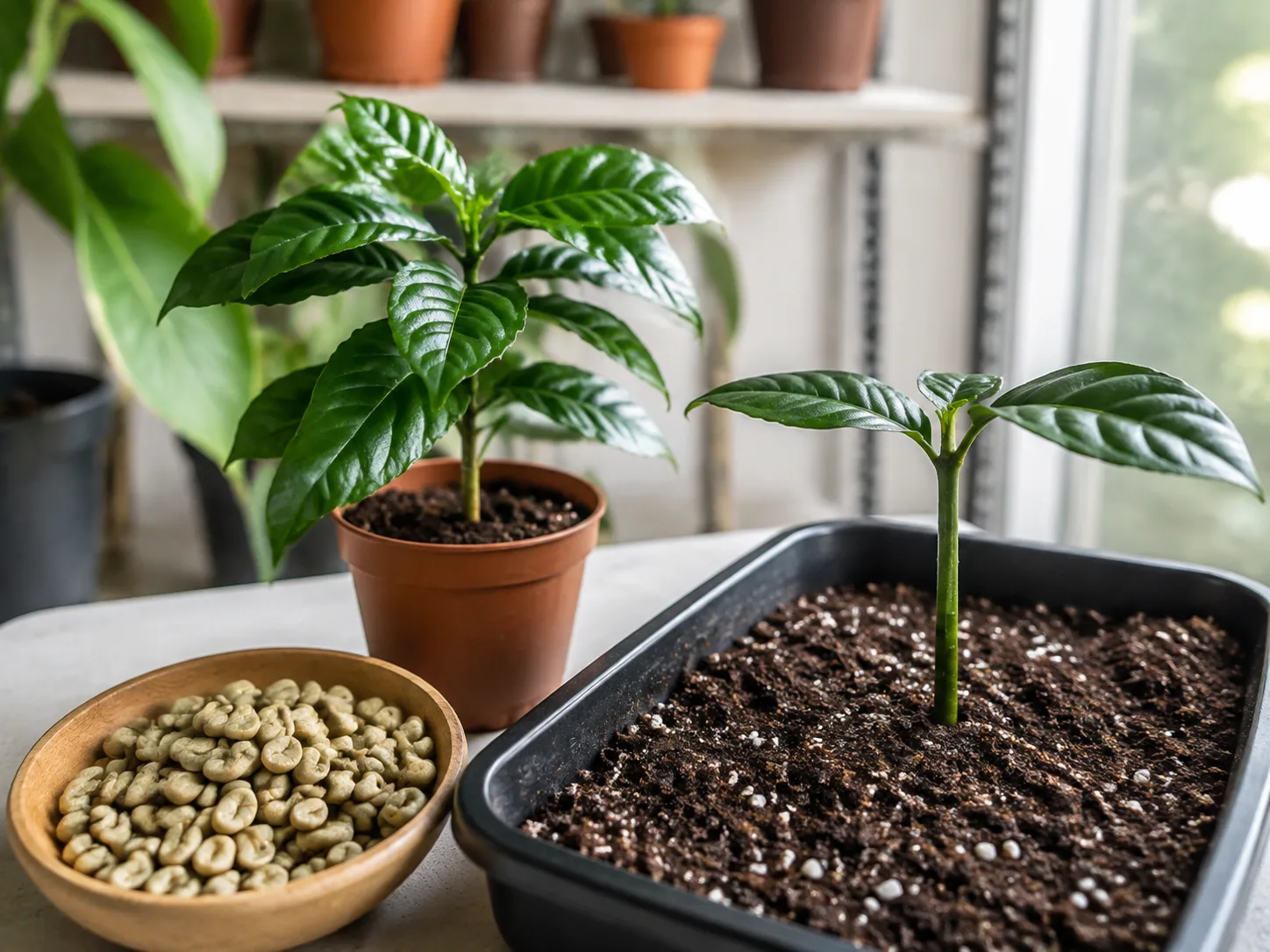
Remove the fleshy cherry, rinse the seed, and soak it for about 24 hours. Sow it shallowly in a sterile, well-draining medium, keep it warm, and maintain steady moisture. Avoid burying it deeply or placing the pot in harsh sun while it germinates. Germination can take several weeks and may be uneven, which is why starting more than one seed improves your odds.
Once seedlings have several true leaves, pot them separately. Increase container size gradually rather than moving a tiny seedling into a large tub of wet soil. Young coffee plants need bright filtered light, warmth, and careful moisture checks; a permanently wet seed-starting tray can kill seedlings before they establish.
Encourage flowers and fruit indoors
A coffee plant needs maturity before it can flower. A healthy indoor plant may take roughly three to five years, depending on its starting size, genetics, light, root space, and growing conditions. No care routine can make a young plant bloom on demand. If a mature plant stays vegetative, look first at light, seasonal consistency, and whether winter conditions are so warm, dim, and wet that the plant never gets a clear rest period.
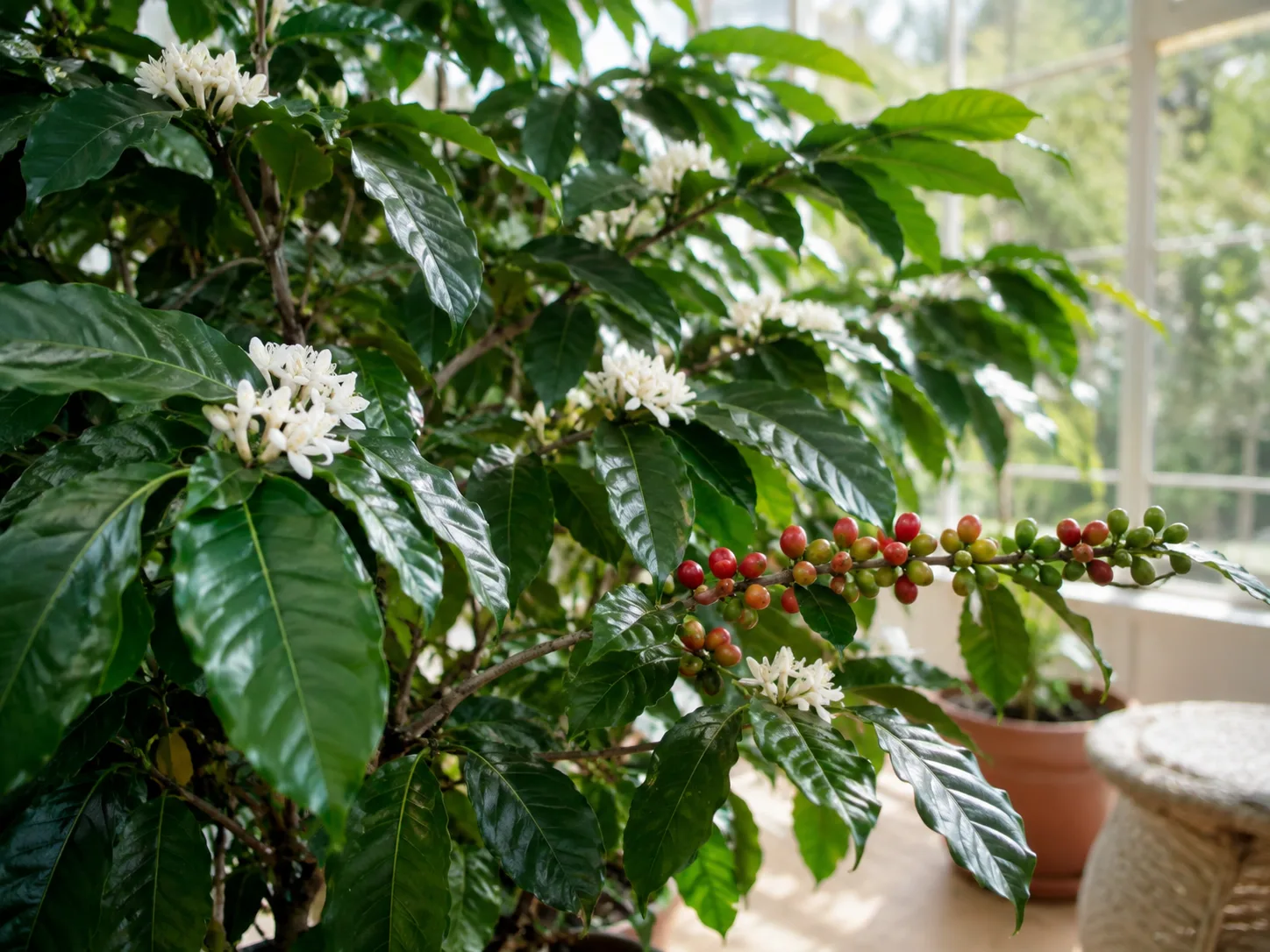
Flowers appear in small white clusters near the leaf joints and are often described as jasmine-like in fragrance. They are short-lived, so inspect the plant daily when buds open. Keep watering consistent while it is flowering, but do not keep the pot wetter than usual in an attempt to protect blossoms.
Pollination and coffee cherries
Many arabica plants are self-fertile, so one plant can set fruit if it flowers well. That does not mean every flower becomes a cherry. Poor light, sudden temperature changes, drought, root stress, and a plant that is simply too young can all reduce fruit set.
If flowers open indoors and you want to improve the odds, gently move air around the plant with a fan on low or brush the flower clusters very lightly with a clean, soft artist’s brush. This is an optional assist, not a replacement for strong growth. After fruit sets, cherries take months to mature and may ripen unevenly on the same branch.
Harvest and process cherries safely
Harvest cherries when they are fully colored—usually deep red for arabica—and feel mature rather than green and hard. Pick ripe fruit by hand instead of stripping an entire branch. The pulpy fruit can be eaten by people in small amounts, but the valuable coffee seed inside still needs processing, drying, hulling, roasting, grinding, and brewing.
Home processing is a project, not an instant reward. Remove the pulp, ferment or wash away the sticky coating, dry the seeds thoroughly, remove the parchment layer, then roast carefully in a well-ventilated place. A kitchen harvest from one houseplant is likely to be tiny, and it may not taste good simply because the plant produced fruit. Treat the first harvest as a learning experiment and keep the plant’s ornamental health as the main goal.
Keep cherries, green seeds, roasted beans, grounds, and fertilizer away from pets. Coffee plant identity can be confusing because “coffee tree” is also used for unrelated ornamental species; caffeine-containing coffee products are a known pet hazard. If a cat or dog chews fruit or swallows coffee beans or grounds, contact a veterinarian promptly rather than trying to induce vomiting at home. VCA Animal Hospitals’ caffeine-toxicity guidance is a useful reference for why exposure needs professional advice.
Diagnose brown tips, spots, and crispy leaves
Brown tips are a symptom, not a diagnosis. Check the pattern before changing care: dry, papery tips on many leaves suggest low humidity, inconsistent watering, or fertilizer salts; bleached tan patches on the window-facing side suggest sun scorch; dark expanding spots suggest wet foliage, poor airflow, or disease; brown edges with a limp plant suggest the root ball has become too dry.
Start with the least disruptive checks. Feel the mix several inches down, inspect the saucer for standing water, look for crusty fertilizer residue, and examine both sides of leaves and the leaf joints. Move a sun-scorched plant farther from harsh glass, flush or replace salt-loaded mix, and correct the watering pattern. Existing brown tissue will not turn green again, but clean new growth tells you whether the fix is working.
If spots continue to spread, isolate the plant, remove badly affected leaves, keep water off the foliage, and improve air movement. Do not spray a stressed plant with several products at once; you can create more leaf damage and lose the ability to identify the original cause.
Fix yellow leaves, drooping, and leaf drop
Older leaves yellowing one at a time can be normal turnover, but widespread yellowing is a reason to inspect the root zone. Soil that stays wet for many days, a sour smell, dark soft roots, and a plant that wilts even though the pot is wet point toward root stress. Allow the mix to dry slightly more between waterings, and repot if roots are rotting rather than simply withholding water from a failing root system.
Yellow leaves with very dry mix and crispy edges point in the opposite direction: the plant is not receiving water consistently. Rehydrate a severely dry pot gradually, then return to deep watering when the upper mix begins to dry. Do not water by leaf droop alone; coffee can recover from a single wilt, but repeated wilting costs leaves and slows establishment.
Sudden leaf drop often follows a move, cold draft, abrupt sun change, or a sharp shift in watering. Stabilize the environment first. Remove only leaves that are fully dead, check for pests, and wait for new growth before pruning heavily or increasing fertilizer.
Prevent pests, root rot, and other setbacks
Inspect a coffee plant weekly, especially where leaves meet stems. Aphids may cluster on soft new growth; scale can look like small fixed bumps; mealybugs resemble white cottony flecks. Sticky honeydew, distorted new leaves, stippling, or fine webbing are reasons to quarantine the plant before the problem spreads to nearby houseplants.
Start with physical control: rinse foliage if the potting mix can be protected, wipe pests from stems with a cotton swab, and remove badly infested leaves. If you use insecticidal soap or another product, follow its label, test a small area, and keep the plant out of strong sun until treated foliage dries. Neem and other products are not automatically safe just because they are marketed as natural.
Root rot is usually a root-zone problem before it is a product problem. Prevent it with a drainage hole, an airy mix, a pot sized to the root ball, and a saucer that gets emptied. When diagnosing a decline, inspect roots instead of adding fertilizer, misting, or pesticide to a plant that may simply be suffocating below the soil.
Protect a coffee plant through winter
Bring an outdoor coffee plant inside before nights approach 55°F, and much earlier if frost is possible. Inspect every leaf joint and the pot rim for pests, rinse the foliage if needed, and quarantine the plant from your collection for a week or two. A sudden move from bright outdoor shade to a dim heated room can cause leaf drop, so place it in the brightest available filtered light and transition gradually when possible.
Winter care is a balancing act. Indoor heat lowers humidity while reduced light slows water use, so keep the air from becoming desert-dry but avoid compensating with a constantly wet pot. Check moisture deeper than the surface, pause routine fertilizer during slow growth, and keep the plant away from radiators and cold panes.
Conclusion
Successful coffee plant care is mostly about consistency: bright filtered light, an airy slightly acidic mix, deep watering followed by a partial dry-down, steady warmth, and enough humidity without stagnant wetness. Prune gradually, repot only when roots need space, and treat propagation as a patient experiment rather than a guaranteed shortcut.
If you want coffee cherries, start with a mature, vigorous plant and realistic expectations. Flowers and fruit are rewarding signs that the plant’s needs are being met, but a healthy crop is a longer project than keeping the glossy foliage attractive. Watch the root zone, respond to symptoms by checking evidence, and the coffee plant can become a dependable long-lived houseplant.