Spring Onion Care Guide: Grow Scallions in Pots
Allium fistulosum
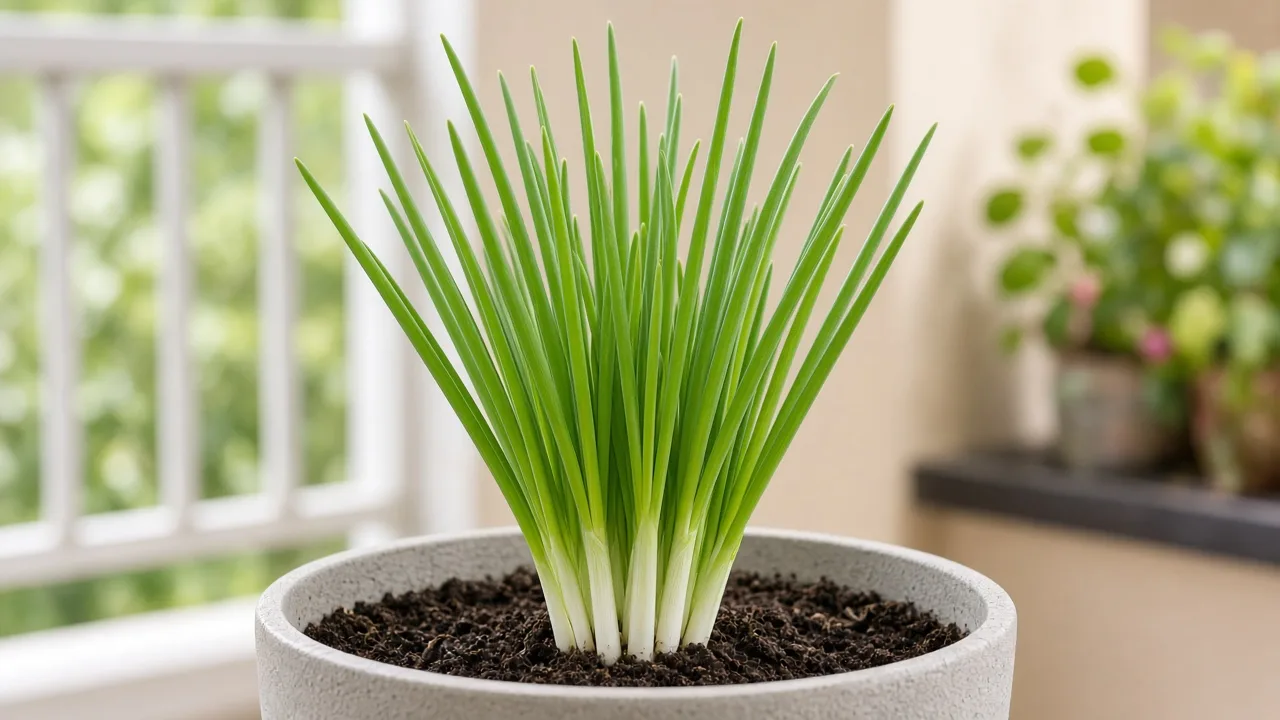
Grow spring onions (scallions) in wide containers with full sun, well-drained soil, steady moisture, seed or regrown bases, and cut-and-come-again harvests.
Spring Onion Care Guide: Grow Scallions in Pots
Start with wateringThe most common care mistake for Spring OnionWatering guide → →Spring Onion care essentials
Light
Water
Keep mix evenly moist for shallow roots, like a wrung-out sponge, without leaving the base soggy. Water when the top 2–3 cm feels dry, then soak until excess drains. Steady moisture keeps leaves tender; long dry spells make growth tough and can push plants toward bolting.
Soil
Loose, fertile, well-drained loam or sandy loam with moderate compost; pH about 6.0–7.0. Avoid heavy clay and constantly waterlogged media.
Humidity
Temperature
Fertilizer
About Spring Onion
Spring Onion is native to East Asia (widely cultivated), typically reaches Hollow leaves and white shanks typically 20–40 cm at kitchen harvest; clumps can reach about 50–100 cm if left to mature indoors, with moderate — often about 60–80 days from seed to first harvest; cut-and-come-again regrowth in a few weeks growth. Spring Onion has a clump forming perennial bunching onion, usually grown as an annual vegetable for green tops growth habit and part of the Amaryllidaceae family. It is also known as Scallion, Green Onion, Hari Pyaz, Welsh Onion, and Bunching Onion.
| Detail | Information |
|---|---|
| Also known as | Scallion, Green Onion, Hari Pyaz, Welsh Onion, Bunching Onion |
| Native region | East Asia (widely cultivated) |
| Mature size | Hollow leaves and white shanks typically 20–40 cm at kitchen harvest; clumps can reach about 50–100 cm if left to mature |
| Growth rate | Moderate — often about 60–80 days from seed to first harvest; cut-and-come-again regrowth in a few weeks |
| Growth habit | Clump Forming Perennial Bunching Onion, Usually Grown As An Annual Vegetable For Green Tops |
| Scientific name | Allium fistulosum |
| Family | Amaryllidaceae |
Spring Onion Care Guide: Grow Scallions in Pots
Spring onion care starts with the right mental model: you are growing tender green tops and slender white shanks, not waiting for a large storage bulb to swell. Allium fistulosum — scallion, green onion, hari pyaz, Welsh or Japanese bunching onion — forms clumps of hollow leaves above a narrow shank. Shallow roots and a short path to first harvest make it one of the easiest kitchen crops on a sunny balcony, as long as drainage and spacing stay honest.
The Spring Onion plant hub summarizes species traits for your climate; this page is the full-path overview before you open topic guides on light, watering, and soil.
Spring onion care at a glance
Give spring onion full sun where possible, steady moisture in the top few centimetres of mix, loose well-drained soil near pH 6.0–7.0, and close but not crowded spacing in a wide planter. Sow seed, plant divisions, or restart grocery bases with roots attached; harvest young while shanks are pencil-thick, or snip leaves and leave a short white base for regrowth.
The RHS describes Welsh onion (Allium fistulosum) as an edible bulbous perennial in fertile, well-drained soil in full sun, with a clump-forming habit and moist but well-drained moisture needs. Gardening Know How notes many scallion crops are ready in about 60 to 80 days from planting when plants reach roughly a foot (31 cm) tall — a useful benchmark, though your season and variety will shift that window.
What spring onion is (and what it is not)
Kitchen language mixes “scallion,” “green onion,” and “spring onion.” For LeafyPixels, spring onion means bunching onion (Allium fistulosum): it does not depend on daylength to form a big bulb the way many bulb onions (Allium cepa) do. That difference matters on terraces — you are not matching long-day vs short-day onion types to latitude; you are managing moisture, sun, and harvest timing for leafy regrowth.
Allium fistulosum vs bulb onion (Allium cepa)
Bulb onions are bred to swell underground and store; bunching onions stay slim and are valued for continuous leaf and shank harvest. The Spruce identifies green onions as Allium fistulosum perennials with tubular leaves and a rapid growth rate, often 60 to 80 days from seeding to harvest. If you accidentally treat fistulosum like a bulb crop — wide spacing for bulbs, dry-down before harvest — you will get tough leaves and early flowering instead of tender scallions.
Clump habit, shallow roots and cut-and-come-again harvests
Plants spread as clumps. Roots stay relatively shallow, so the mix surface dries fast on warm terraces. Gardening Know How emphasizes that shallow root systems require constant moisture and weed protection. Harvest by pulling whole young plants or by cutting leaves and leaving 2–5 cm of white base in the soil for regrowth — the hub’s grower notes match how most kitchen gardeners use hari pyaz. Repeated hard stripping without recovery time weakens clumps; light, regular harvests usually keep growth tender longer than letting plants oversize.
Cool-season timing in India and warm climates
Spring onion is cool-friendly, not heat-proof. Gardenate lists Allium fistulosum with a typical soil temperature range of 10–20°C for sowing and harvest in about two to three months, with advice to grow in a sheltered, sunny spot and avoid letting plants go too dry.
India does not share one sowing calendar. Transfer the principle: sow or transplant so most growth happens while days are mild and nights are not punishingly hot.
North Indian winter and hill districts
Cool hill regions and much of the north Indian winter give the longest outdoor window for troughs and window boxes. Succession sowings every few weeks inside that cool stretch extend harvests instead of one glut.
Coastal and tropical lowlands
Warm lowlands often do better in late autumn through winter, or in a brief cooler pre-summer slot where local nights stay mild. Peak summer heat on exposed terraces pushes drought stress, tough leaves, and flower stalks. Afternoon shade may help containers survive, but it rarely replaces choosing a cooler sowing month. When a thick flower stalk appears, snip it promptly so energy returns to leaves — details on ongoing trimming sit in the Spring Onion pruning guide.
Light and temperature
For stocky, green growth, prioritize bright light. The RHS positions Welsh onion in full sun. The Spruce recommends at least six hours of direct sunlight on most days for green onions, noting they can handle a bit of shade but remain healthiest in full sun. Weak indoor windowsills rarely deliver enough intensity for thick shanks; year-round indoor projects usually need supplemental lighting — see the Spring Onion light guide for placement and grow-light limits.
Green onion seeds often need soil at least around 45°F (7°C) to germinate, with warmer soil speeding emergence, per The Spruce’s temperature notes. Established plants tolerate a range of humidity if drainage prevents crown rot.
Water and root-zone moisture
Quality hinges on even moisture near shallow roots, not occasional floods. The Spruce advises regular watering as soon as soil starts to dry, with mix consistently moist but not soggy because waterlogged crowns rot quickly. Gardening Know How recommends shallow watering throughout the short growing season for scallions.
On terraces, check the top 2–3 cm of mix daily in warm weather; water thoroughly when it feels dry and the pot feels light, until drainage runs clear. Long dry spells produce limp, folding leaves and can encourage premature flowering. The Spring Onion watering guide walks through overwatering versus underwatering signs and the first fix when you are unsure.
Soil, pH and spacing in containers
Target loose, fertile, well-drained mix near pH 6.0–7.0, in line with hub data and RHS guidance for chalk, loam, or sand types that stay moist but well-drained. Heavy clay or constantly soggy media fail fast on bunching onions.
Spacing is horizontal as much as vertical. Gardening Know How suggests sowing about ¼ inch (6 mm) deep and thinning or transplanting to roughly 2 to 3 inch (5–8 cm) spacing. Crowded clumps compete for water and yield pencil-thin shanks. Mix recipes, compost rates, and drainage tests live in the Spring Onion soil guide.
Starting plants: seed, divisions and kitchen regrowth
Seed is economical for containers: sow about 6 mm deep, keep mix evenly moist through germination, and thin once seedlings have a few leaves. Divisions or small bunching sets transplant about 2.5 cm deep with intact roots. Kitchen regrowth from grocery scallions works for a few cycles — stand trimmed bases with roots in moist mix or water briefly, then plant into fertile mix before nutrients run out.
The Spruce describes regrowing from store-bought scallions by keeping root ends in water then planting in potting soil, with several harvest cycles possible before flavor fades. For sowing cadence, variety choice, and division timing, use the Spring Onion propagation guide. The Spring Onion repotting guide explains why “moving up a pot” is usually the wrong frame — you sow or divide into the season’s final container instead.
Containers, depth and drainage
Roots are shallow but clumps need width. Planters at least about 15 cm deep work when the pot is long or wide enough for a row or grid; window boxes and troughs suit scallions well. Unglazed clay can help shed excess moisture on rainy balconies, but drainage holes matter more than pot material. The Spruce notes green onions grow well in pots because the root system is fairly small, provided water does not sit in saucers. Shallow, overcrowded containers dry unevenly and encourage rot at the crown.
Harvest timing and quality
Harvest when shanks are young and mild — often pencil thickness. The Spruce suggests starting when plants are about 6 to 8 inches tall and as wide as a pencil, either pulling whole plants or cutting leaves as needed. Pull-and-replace suits stir-fries; cut-and-come-again suits garnishes if you leave enough base for regrowth.
If you grow clumps as perennials in mild climates, avoid stripping the first season bare so roots establish; thereafter trim leaves as needed. Flavor and texture decline after several regrowth cycles or once flowering begins — plan a fresh sowing rather than nursing exhausted clumps through summer heat.
Feeding without pushing bolting
Mature compost at planting usually carries most nutrition for home scallions. If leaves pale after light and moisture look correct, feed lightly with balanced nutrition rather than heavy nitrogen alone — lush, weak growth bolts sooner under heat stress. Timing, products, and burn signs are in the Spring Onion fertilizer guide.
Common spring onion care mistakes
Treating fistulosum like a bulb onion leads to wrong spacing, wrong harvest expectations, and confusion about daylength.
Letting containers bake dry on sunny terraces produces tough shoots and early flower stalks. Shallow mix needs more frequent checks than in-ground beds.
Crowding seedlings yields thin shanks that compete for water; thin to the spacing your trough can support.
Ignoring flower stalks diverts energy from leaves — remove them promptly.
Regrowing grocery bases in water forever starves plants; move to fertile mix within a week or two of root growth.
Assuming kitchen safety equals pet safety — alliums are not pet forage (see below).
Pets, balconies and kitchen trimmings
Spring onion is human food, not a pet-safe ornamental. The ASPCA lists onion (Allium cepa) as toxic to dogs, cats, and horses, with toxic principles including N-propyl disulfide and signs such as vomiting and hemolytic anemia. Bunching onions share the same family chemistry; keep pots, regrown scraps, and trimmings out of reach, and contact a veterinarian after meaningful ingestion.
When to use this page vs other Spring Onion guides
Use this overview to choose season, container size, and whether to start from seed, division, or kitchen regrowth. When one variable needs depth, open the matching topic page: light for sun and supplemental lighting, watering for moisture diagnostics, and soil for mix, pH, and spacing math.
Use fertilizer when growth is pale after temperature and water look correct. Use propagation for sowing cadence and divisions, repotting for seasonal container workflow, and pruning for harvest cuts and flower-stem removal — not ornamental hedge trimming.
Related Spring Onion guides
Start at the Spring Onion plant hub for the species profile and grower notes. Terrace growers should read Spring Onion watering next because shallow pots dry faster than raised beds. Before your first sowing, read Spring Onion soil and Spring Onion propagation together — soil prep and seed placement are one continuous job for tender shanks.
Conclusion
Good spring onion care is full sun, steady shallow-root moisture, wide drained containers, and harvest while shanks are still young. Center Allium fistulosum in your plan — not bulb-onion daylength rules — and sow or transplant into the coolest realistic window your locality offers. Pull whole plants for one-off meals, or cut leaves and leave a short base for regrowth until flavor fades or heat pushes flowering.
When growth turns tough or floppy, fix light, spacing, and watering swings before chasing fertilizer. Keep allium plants and trimmings away from pets. The cluster guides below this overview carry step-by-step detail for each lever.
How to care for Spring Onion?
When should you water Spring Onion?
Keep mix evenly moist for shallow roots, like a wrung-out sponge, without leaving the base soggy. Water when the top 2–3 cm feels dry, then soak until excess drains. Steady moisture keeps leaves tender; long dry spells make growth tough and can push plants toward bolting.
- Press a finger into the top 2–3 cm of mix - Water when the top 2–3 cm feels dry, then soak until excess drains.
- water when it feels dry and the pot feels light - Water when the top 2–3 cm feels dry, then soak until excess drains.
- then irrigate until drainage runs clear - Water when the top 2–3 cm feels dry, then soak until excess drains.
- Drain excess water - Water when the top 2–3 cm feels dry, then soak until excess drains.
What soil works best for Spring Onion?
Loose, fertile, well-drained loam or sandy loam with moderate compost; pH about 6.0–7.0. Avoid heavy clay and constantly waterlogged media.
- 40% quality vegetable potting mix or screened loam - Loose, fertile, well-drained loam or sandy loam with moderate compost; pH about 6.0–7.0.
- 30% mature compost - Loose, fertile, well-drained loam or sandy loam with moderate compost; pH about 6.0–7.0.
- 30% perlite, coarse sand, or fine grit - Loose, fertile, well-drained loam or sandy loam with moderate compost; pH about 6.0–7.0.
Grower notes for Spring Onion
Bunching onion, not a storage bulb crop
Spring onion (Allium fistulosum) is the Welsh or Japanese bunching onion — it forms slender white shanks and hollow green leaves without swelling into a large storage bulb like Allium cepa. That means you are not matching daylength to latitude the way bulb-onion growers do. Focus on steady moisture, sun, and spacing for tender tops instead of waiting for bulbs to size up.
Start from seed, sets, or kitchen scraps
Seed is economical for containers — sow about 6 mm deep and thin seedlings to roughly 2–3 cm apart once they have a few leaves. Bunching sets or small divisions transplant easily about 2.5 cm deep. You can also regrow grocery scallions by planting trimmed bases with roots in moist mix; expect a few harvest cycles before flavor fades.
Use a wide, moderately deep pot
Roots are relatively shallow but clumps need horizontal room. Planters at least about 15 cm deep and wide enough for a row or grid — a window box or trough works well. Crowded plants produce thinner shanks. Drainage holes matter more than decorative height; scallions fail fast in waterlogged soil.
Full sun keeps growth stocky
Place containers where they receive at least six hours of direct sun daily when weather allows. Weak light yields floppy, pale leaves. Indoor windowsills rarely deliver enough intensity for thick shanks; use strong supplemental lighting if you grow year-round inside.
Harvest young and cut for regrowth
Pull whole plants when shanks reach pencil thickness, or snip green leaves leaving about 2–5 cm of white base in the soil for regrowth. Regular light harvest delays bolting better than letting plants oversize. Remove flower stalks promptly if they appear so energy stays in the leaves.
Pet-aware note for Spring Onion
Spring onion is a kitchen crop, not a pet-safe ornamental. Allium species contain compounds that can damage red blood cells in cats, dogs, and horses. The ASPCA lists bulb onion (Allium cepa) as toxic; bunching onions share the same family chemistry. Keep pots, trimmings, and regrown scraps out of reach, and contact a veterinarian after meaningful ingestion.
Toxic to cats and dogs
Spring onion (Allium fistulosum) shares allium toxins with bulb onion; the ASPCA lists Allium cepa as toxic to cats and dogs. Keep plants and trimmings away from pets.
Culinary use does not make spring onion safe for pets. Allium species contain N-propyl disulfide and related compounds that can cause hemolytic anemia in cats, dogs, and horses. Prevent access to foliage, bases, and kitchen trimmings.
Watering Spring Onion
For Spring Onion, press a finger into the top 2–3 cm of mix; water when it feels dry and the pot feels light, then irrigate until drainage runs clear and water check containers daily in warm weather; shallow pots may need water every one to two days, while larger troughs often need about 3–5 cm of water per week. Containers dry faster than in-ground beds in summer; cut back only when growth slows in cool weather or after a heavy harvest cycle.
| Detail | Information |
|---|---|
| How often | Check containers daily in warm weather; shallow pots may need water every one to two days, while larger troughs often need about 3–5 cm of water per week |
| How to check | Press a finger into the top 2–3 cm of mix; water when it feels dry and the pot feels light, then irrigate until drainage runs clear |
| Seasonal changes | Containers dry faster than in-ground beds in summer; cut back only when growth slows in cool weather or after a heavy harvest cycle |
Signs of overwatering
- yellowing leaves while mix stays wet
- soft, rotting bases at the crown
- sour smell from saturated container mix
Signs of underwatering
- limp, folding hollow leaves
- thin, tough shoots
- premature flower stalks from drought stress
Soil & potting for Spring Onion
Use a mix of 40% quality vegetable potting mix or screened loam, 30% mature compost, 30% perlite, coarse sand, or fine grit for Spring Onion. Excellent drainage is essential; bunching onions rot quickly in soggy, poorly aerated mix. Target soil pH around 6.0–7.0. Repot no routine repotting — sow seed or plant divisions in the final container or bed for the season; perennial clumps can be lifted and divided every few years in mild climates, ideally in cool-season sowing in local spring or autumn where winters are mild enough for overwintering clumps outdoors.
| Detail | Information |
|---|---|
| Recommended mix | 40% quality vegetable potting mix or screened loam, 30% mature compost, 30% perlite, coarse sand, or fine grit |
| Drainage | Excellent drainage is essential; bunching onions rot quickly in soggy, poorly aerated mix |
| Soil pH | 6.0–7.0 |
| Repotting frequency | No routine repotting — sow seed or plant divisions in the final container or bed for the season; perennial clumps can be lifted and divided every few years in mild climates |
| Best season to repot | Cool-season sowing in local spring or autumn where winters are mild enough for overwintering clumps outdoors |
Signs it needs repotting
- clumps are crowded with less than about 2–3 cm between plants
- the planter is shallower than about 15 cm
- drainage holes are blocked or the pot sits in standing water