Spring Onion Light Needs: Full Sun Hours Guide
Spring Onion Light Needs: Full Sun Hours Guide
Spring Onion Light Needs: Full Sun Hours Guide
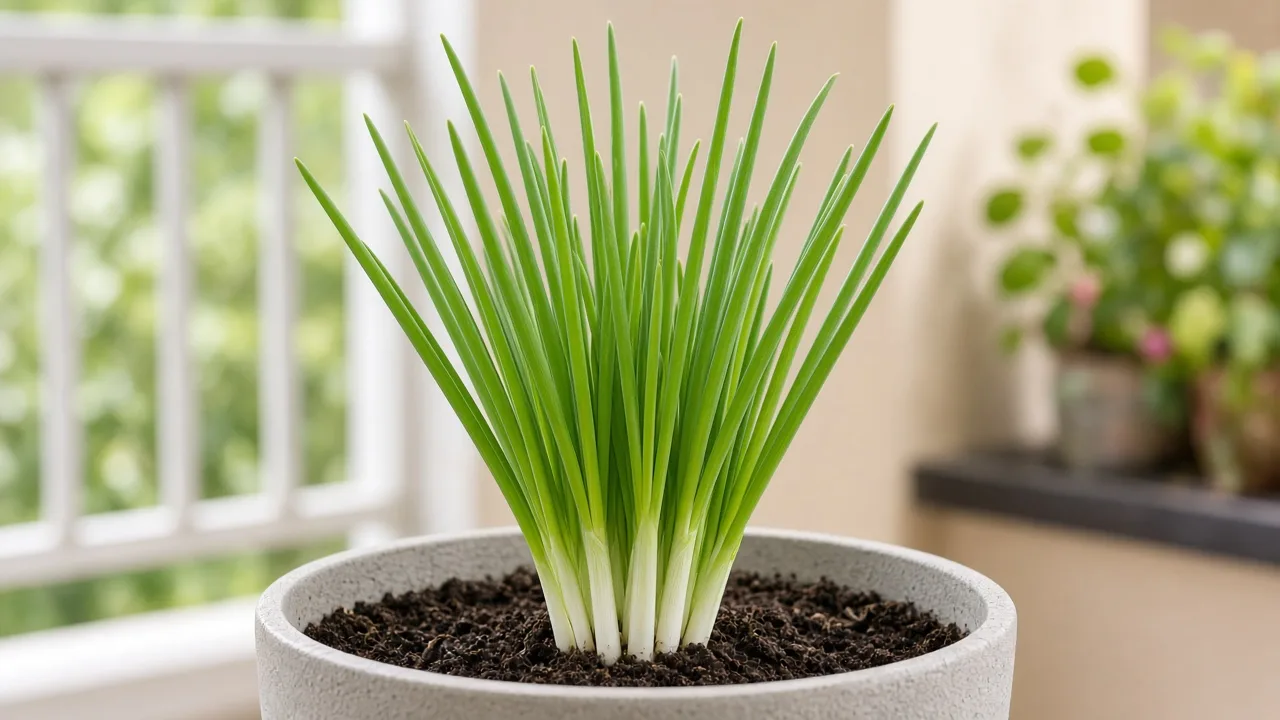
Spring onion (Allium fistulosum — scallion, green onion, hari pyaz) is grown for tender hollow leaves and slender white shanks, not a storage bulb. Every harvest cycle depends on leaves catching enough direct sun to rebuild tissue after you snip tops or pull young plants. Without that brightness, scallions stay pale, floppy, and thin even when watering and soil look correct.
Start with the Spring Onion overview for identity, spacing, and harvest timing. This page covers how much light bunching onions need, where to place troughs and window boxes, when brief afternoon shade helps hot containers, and the first fixes when growth looks weak.
Spring onion light needs: the quick answer
Plan for at least six hours of direct sun on the pot or row most days while plants are actively growing. RHS lists Welsh onion (Allium fistulosum) in full sun with south- or west-facing exposure. Wilson Garden Pots gives the same practical target for container scallions: a spot with at least six hours of direct sunlight each day, with grow lights when a balcony or windowsill falls short.
That matches the LeafyPixels hub guidance for patio scallions: weak light yields floppy, pale leaves, while steady sun keeps growth stocky. Spring onion is a leafy kitchen crop with shallow roots — light quality shows up in the tops within a week.
At least six hours of direct sun for stocky shanks
Full sun means unobstructed light long enough to cast a sharp hand shadow on the mix from mid-morning through afternoon. Six hours is a workable minimum for pencil-thick shanks in a wide planter. More clear-sky time on a cool-season terrace usually speeds regrowth after cut-and-come-again harvests, as long as moisture stays even.
Bunching onion, not a daylength bulb crop
Unlike bulb onions (Allium cepa), Allium fistulosum does not need daylength matched to latitude for bulbing. You are not choosing long-day vs short-day types for spring onion light planning. Success still requires bright exposure, but fertilizer and spacing matter more than photoperiod tricks used for storage onions.
Why light drives hollow-leaf quality
Scallion leaves are hollow tubes that photosynthesize along their length. Dim sites push plants to stretch toward the brightest gap, which reads as limp, pale tops — not the crisp hari pyaz texture you want in salads. Gardening Know How notes scallions’ shallow root systems and short season; those roots cannot chase water deep in a pot, so the plant cannot compensate for chronic shade by mining resources below.
Sun fuels cut-and-come-again regrowth
When you snip green tops and leave a short white base, new leaves must rebuild from stored energy plus fresh photosynthesis. Low light slows that turnaround from “a few weeks” toward “barely worth the pot space.” Bright sun after each light harvest keeps flavor mild and texture tender longer before plants exhaust themselves.
Low, clumped leaves compete for the same photons
Crowded clumps shade their own neighbors at the soil line. Even on a sunny railing, plants spaced tighter than about 2–3 cm can behave like a partial-shade crop. Pair good light with spacing guidance from propagation and thin seedlings so each shoot sees sky.
How much sun spring onions need each day
Full sun versus partial shade outcomes
Aussie Green Thumb summarizes scallion culture as full sun for species A. fistulosum, with some afternoon protection where intense sun might wilt leaves. Treat partial shade as a slower, thinner harvest path, not equal to open terrace sun. A north-facing courtyard that never passes the shadow test may still produce garnish-height greens if you sow thick and harvest young, but shanks stay thread-like.
UF/IFAS recommends siting a vegetable garden where it receives at least six hours of direct sunlight daily — the same baseline that supports onions and other leafy crops in the same bed. If your scallion trough shares a dim corner with shade-loving ornamentals, move the edible pot instead of expecting fistulosum to adapt.
Best placement on terraces, balconies, and window boxes
The morning–noon–afternoon shadow test
On a clear day, check three times: does sun hit the planter at 9 a.m.? Is midday light blocked by parapets, water tanks, or laundry racks? Does late-afternoon sun still reach the leaves? Spring onions are low; a wall that shades only the afternoon can drop daily totals below six hours even when the balcony feels bright to you.
Place the outer sunniest railing ahead of decorative pots. In-ground beds on rooftops often outperform courtyards because they sit above rim shadows — as long as drainage stays open per soil guidance.
Wide shallow planters and rim shadows
The hub recommends planters at least about 15 cm deep but wide enough for a row or grid. A deep narrow pot in shade behaves worse than a shallow trough in full sun because leaf area, not root depth, limits yield. Wilson Garden Pots ties container scallions to that bright placement plus slightly acidic, well-drained mix — light and drainage fail together when pots sit in saucers on dark, heat-soaked tile.
Seasonal light strategy for India and tropical growers
Cool-season sowings in open sun
In hot lowlands, the best light strategy is often when you sow. Cool rabi or winter terrace windows give long, bright days without the leaf-scorch stress of pre-monsoon heat. Give those sowings all the sun the site offers — mild air makes long sun hours an asset for 60–80 day harvests noted on the plant hub.
Avoid assuming one global planting month; match your brightest cool weeks to sowing dates in overview and local practice.
Afternoon shade on hot containers only
Where intense tropical sun wilts hollow leaves on black plastic pots, afternoon shade is heat management, not a license to grow scallions in permanent dim corners. Aussie Green Thumb suggests full sun with afternoon protection when leaves might burn. Slide pots back to the brightest morning-to-midday arc once weather cools. Shaded all summer, expect tough tops and earlier flower stalks from stress.
Indoor windowsills and grow lights for regrowth projects
Kitchen regrowth from grocery bases can sprout on a bright sill, but most Indian flats lack the intensity for thick shanks year-round. Wilson Garden Pots advises supplementing with artificial grow lights when natural light is insufficient. Use full-spectrum LEDs on a 12–14 hour timer for regrowth trays, then move divisions to outdoor full sun when nights are mild.
Treat indoor scallions as a short bridge — flavor and vigor fade after a few cut cycles without greenhouse-level light. For ongoing production, sow seed in the sunniest outdoor trough per repotting (final container, not repeated moves).
Warning signs of too little light
Watch for pale green to yellowish leaves, exaggerated leaning toward the window, thin shanks at harvest, and slow regrowth after snipping. Leggy tops with adequate nitrogen often trace to shade before you blame feed. Fix placement on the next sowing; mature clumps do not recover full thickness if you only rotate the pot a few degrees.
Warning signs of too much sun or heat glare
Midday wilting on dry mix in full sun is usually a watering signal on hot tile, not a call to move plants to deep shade permanently. Tip burn on young seedlings moved straight from nursery shade to open terrace means harden off over several days. Bolting — a stiff flower stalk — follows heat and drought stress more often than “too much light” alone; remove stalks promptly per pruning guidance so energy returns to leaves.
Light working with watering and soil
Sun drives transpiration from hollow leaves. A full-sun trough in warm weather may need daily moisture checks while a shaded pot dries slowly yet still yields poor shanks. Loose, drained mix lets roots breathe when radiation is high; waterlogged crowns rot quickly regardless of brightness. Align six-hour sun with even moisture — the combination keeps scallions mild and upright.
When to use this page vs other Spring Onion guides
- Spring Onion overview — species identity, sowing windows, and harvest basics before you tune light.
- Spring Onion watering — moisture checks when full sun dries shallow mix faster.
- Spring Onion soil — drainage and pH; soggy mix failures mimic “bad light” weak growth.
- Spring Onion fertilizer — nitrogen after you confirm the trough is bright enough.
- Spring Onion propagation — seed and regrowth starts in the sunniest final pot.
- Spring Onion repotting — why scallions stay put after planting and how pot depth interacts with heat.
- Spring Onion pruning — flower stalk removal and harvest cuts that depend on renewed photosynthesis.
Related Spring Onion guides
- Spring Onion overview — bunching onion framework for balconies and kitchen regrowth
- Spring Onion watering — even moisture when bright sun pulls water from shallow mix
- Spring Onion soil — loose drains so sun-fed tops stay healthy
- Spring Onion propagation — sow and regrow in the brightest spot you have
- Spring Onion pruning — harvest and de-bolting when light returns energy to leaves
Conclusion
Spring onion rewards steady direct sun on a fixed, bright site. Aim for six or more hours of unobstructed light on Allium fistulosum while growth is active, run the morning–noon–afternoon shadow test before you sow, and use brief afternoon shade on hot containers only as heat relief — not as a full-time location. Read pale, floppy tops as a placement problem on the next batch if this trough was too dim. When shanks stay upright and regrowth after cutting feels quick, your light matches bunching onion biology; when plants bolt or wilt in heat, adjust season, water, and container heat before you blame the sun alone.