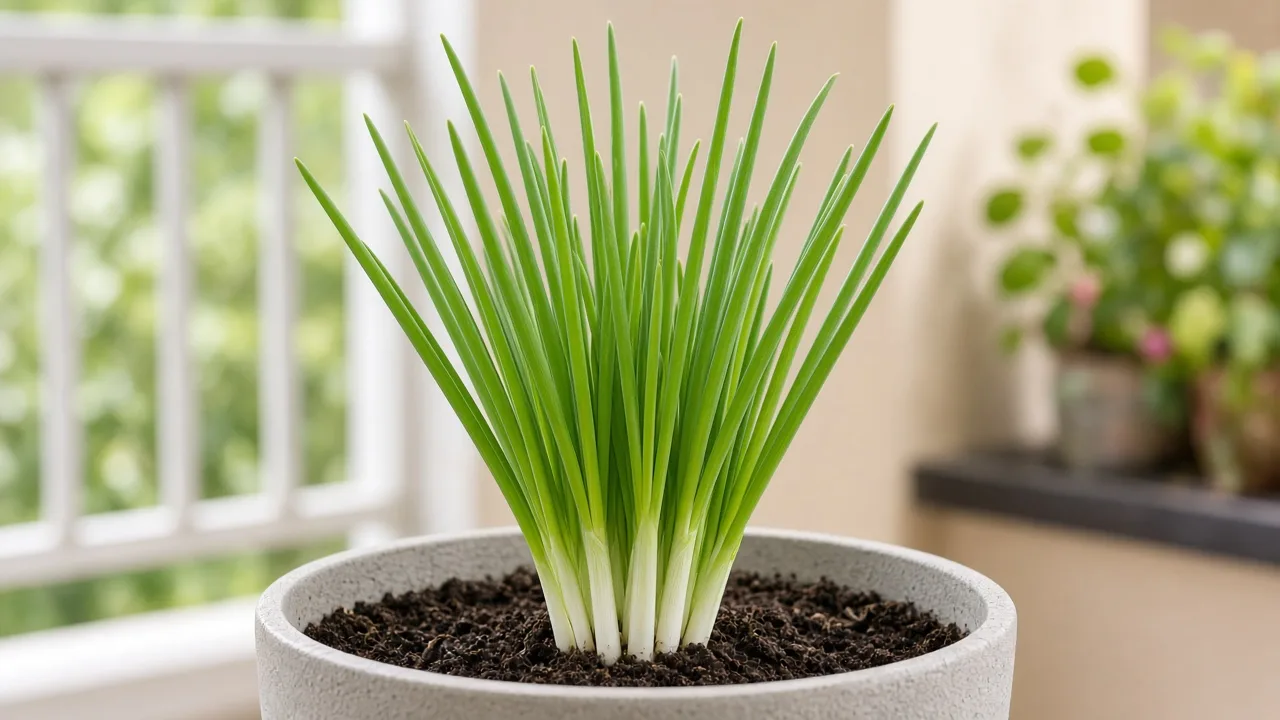
Browse general houseplant problems or use our diagnosis tool for Spring Onion.
Spring Onion problems
Use the guides below to diagnose and fix common issues on Spring Onion. Each problem page explains why it happens on this species and what to do first.
Keep mix evenly moist for shallow roots, like a wrung-out sponge, without leaving the base soggy. Water when the top 2–3 cm feels dry, then soak until excess drains. Steady moisture keeps leaves tender; long dry spells make growth tough and can push plants toward bolting. In practice, water check containers daily in warm weather; shallow pots may need water every one to two days, while larger troughs often need about 3–5 cm of water per week. Press a finger into the top 2–3 cm of mix; water when it feels dry and the pot feels light, then irrigate until drainage runs clear. Containers dry faster than in-ground beds in summer; cut back only when growth slows in cool weather or after a heavy harvest cycle.
What light does Spring Onion need?
Spring Onion needs bright, indirect light for steady indoor growth.
Is Spring Onion toxic to pets?
Spring Onion is toxic to cats, dogs, and horses. Keep out of reach of curious pets and choose pet-safe alternatives for accessible spots.
How do I propagate Spring Onion?
Propagate Spring Onion from healthy stem or root divisions during active growth.
What soil is best for Spring Onion?
Use loose, fertile, well-drained loam or sandy loam with moderate compost; pH about 6.0–7.0. Avoid heavy clay and constantly waterlogged media. A good mix includes 40% quality vegetable potting mix or screened loam, 30% mature compost, 30% perlite, coarse sand, or fine grit. Excellent drainage is essential; bunching onions rot quickly in soggy, poorly aerated mix.
When should I repot Spring Onion?
Repot Spring Onion no routine repotting — sow seed or plant divisions in the final container or bed for the season; perennial clumps can be lifted and divided every few years in mild climates, ideally in cool-season sowing in local spring or autumn where winters are mild enough for overwintering clumps outdoors. Signs it needs a bigger pot: clumps are crowded with less than about 2–3 cm between plants, the planter is shallower than about 15 cm, drainage holes are blocked or the pot sits in standing water.
Written by Sai AnanthLead content writer at LeafyPixels. B.Pharmacy graduate from Andhra University with a background in pharmacognosy, turned indoor gardening writer after a long-time plant hobby became a research-led resource for home growers.View Sai Ananth's profile · Reviewed by LeafyPixels Review Board
This Spring Onion problems problem guide was researched and written by Sai AnanthLead content writer at LeafyPixels. B.Pharmacy graduate from Andhra University with a background in pharmacognosy, turned indoor gardening writer after a long-time plant hobby became a research-led resource for home growers.View Sai Ananth's profile. Problems symptoms on Spring Onion, lookalike causes, and step-by-step fixes are cross-checked against extension pest, disease, and care references before publication.
We prioritize sources that hold up under scrutiny:
University cooperative extension bulletins and fact sheets (Penn State, Clemson, UMD, NC State, and similar programs)
Botanical garden and horticultural society publications
Peer-reviewed plant science and veterinary toxicology references where pet safety matters (including ASPCA Animal Poison Control)
Established reference works on indoor plant culture
The LeafyPixels editorial team then reviews the draft for clarity, step-by-step usefulness, and fit with real apartment and home conditions-not ideal greenhouse setups. When guidance changes materially, we update the page and note the revision date.